
Managing Malnutrition Globally and Locally Pediatric Hospital Medicine
Managing Malnutrition Globally and Locally Pediatric Hospital Medicine July 31, 2016 Sarah White – Children’s Hospital Los Angeles/USC Mark Corden – Children’s Hospital Los Angeles/USC Parmi Suchdev – Emory University/CDC

We have no relevant financial relationships with the manufacturers(s) of any commercial products and/or provider of commercial services discussed in this CME activity. We do not intend to discuss an unapproved/investigative use of a commercial product/device in my presentation.
Learning objectives: • Identify key similarities and differences between the management of malnutrition in LMIC and failure to thrive in the US • Recognize and manage refeeding syndrome • Identify and treat micronutrient deficiencies common in malnutrition (Vitamins A, D, Iron and Zinc) • Identify common pitfalls when malnutrition fails to respond to standard treatment
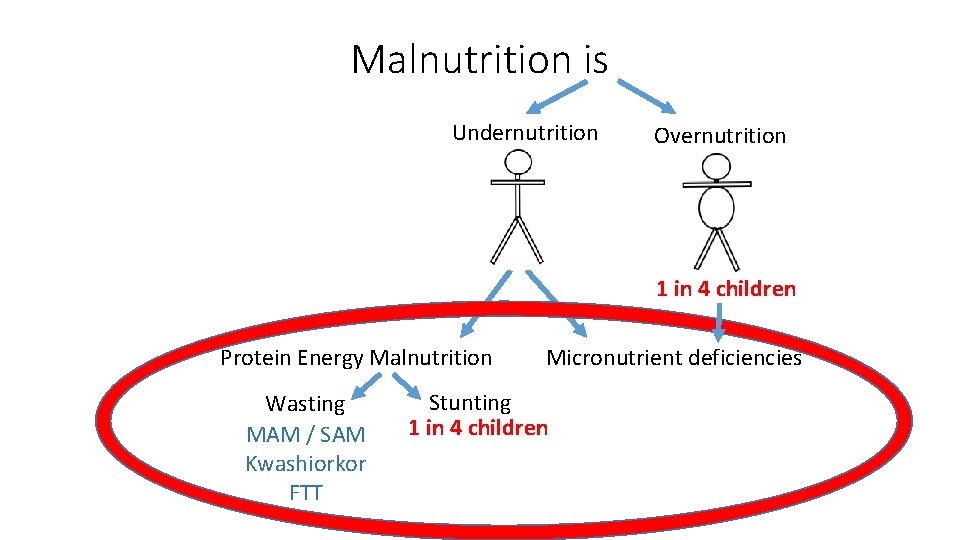
Malnutrition is Undernutrition Overnutrition 1 in 4 children Protein Energy Malnutrition Wasting MAM / SAM Kwashiorkor FTT Micronutrient deficiencies Stunting 1 in 4 children
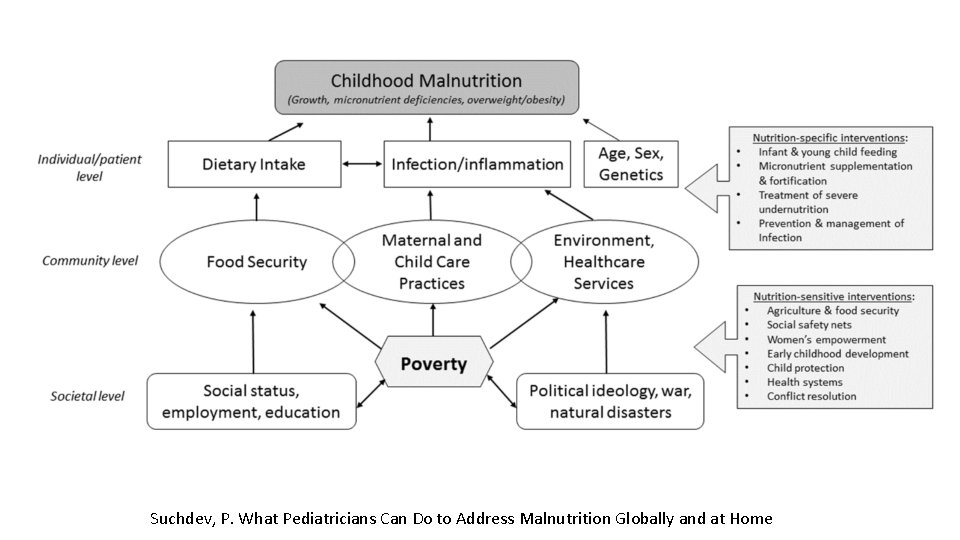
Suchdev, P. What Pediatricians Can Do to Address Malnutrition Globally and at Home
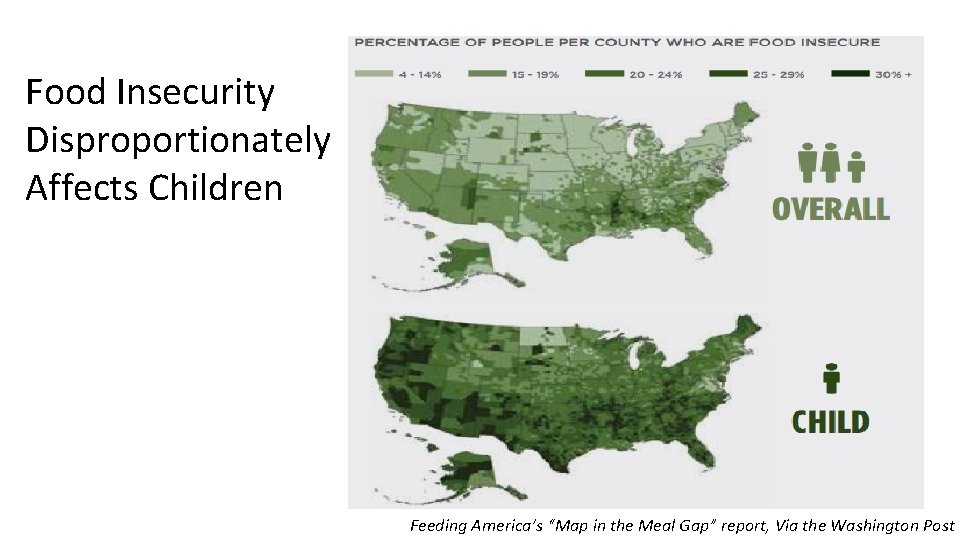
Food Insecurity Disproportionately Affects Children Feeding America’s “Map in the Meal Gap” report, Via the Washington Post

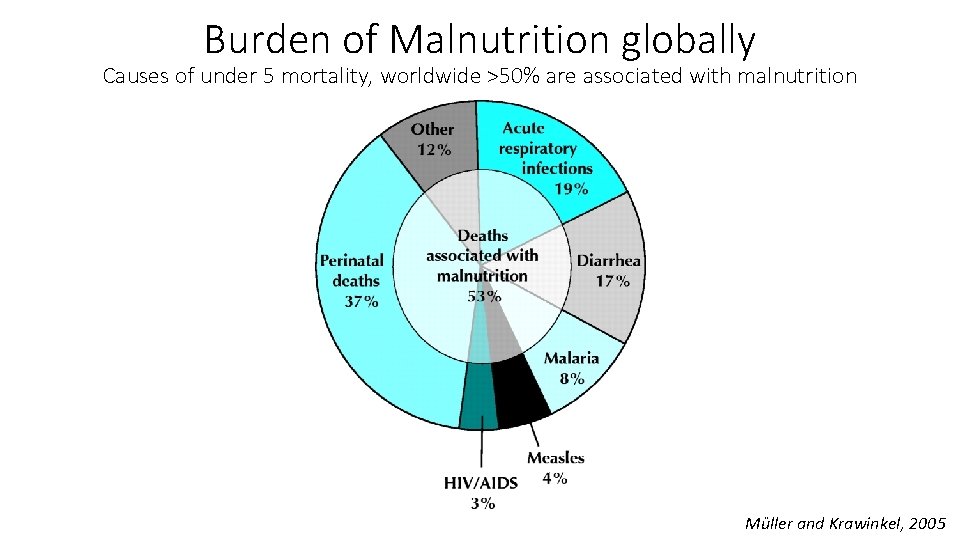
Burden of Malnutrition globally Causes of under 5 mortality, worldwide >50% are associated with malnutrition Müller and Krawinkel, 2005
Burden of Malnutrition Locally • Hospitalized children are at highest risk for undernutrition • Up to 50% of hospitalized children are undernourished • Micronutrient deficiencies are common • 14% of US toddlers are iron deficient • Hispanic children in the USA experienced significantly higher prevalence of stunting (6. 1% versus 2. 6%) • Micronutrient deficiencies are likely under-recognized
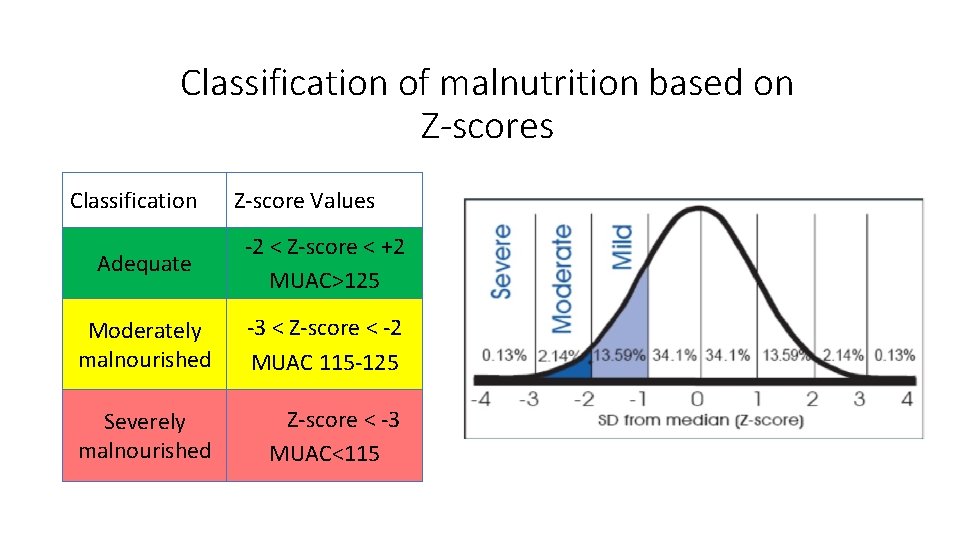
Classification of malnutrition based on Z-scores Classification Z-score Values Adequate -2 < Z-score < +2 MUAC>125 Moderately malnourished -3 < Z-score < -2 MUAC 115 -125 Severely malnourished Z-score < -3 MUAC<115
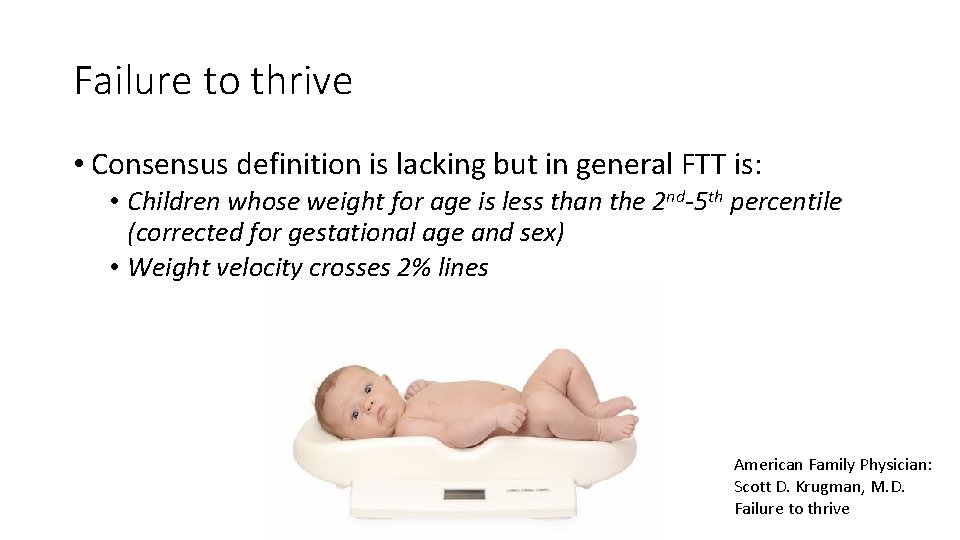
Failure to thrive • Consensus definition is lacking but in general FTT is: • Children whose weight for age is less than the 2 nd-5 th percentile (corrected for gestational age and sex) • Weight velocity crosses 2% lines American Family Physician: Scott D. Krugman, M. D. Failure to thrive
Case presentation: You are in clinic and a mother brings in her 15 month old child with a concern for diarrhea for 2 days and poor appetite. • Divide into groups, one representing a rural clinic in a LMIC, the other representing a community clinic in the US, and answer these questions: • What anthropomorphic tools will you use to define the level of malnutrition and why? • What criteria will you use for admission and why?
Anthropomorphic measurements and indices
Anthropomorphic measurements: • Growth chart • Weight for Height Z-scores • MUAC: Mid upper arm circumference
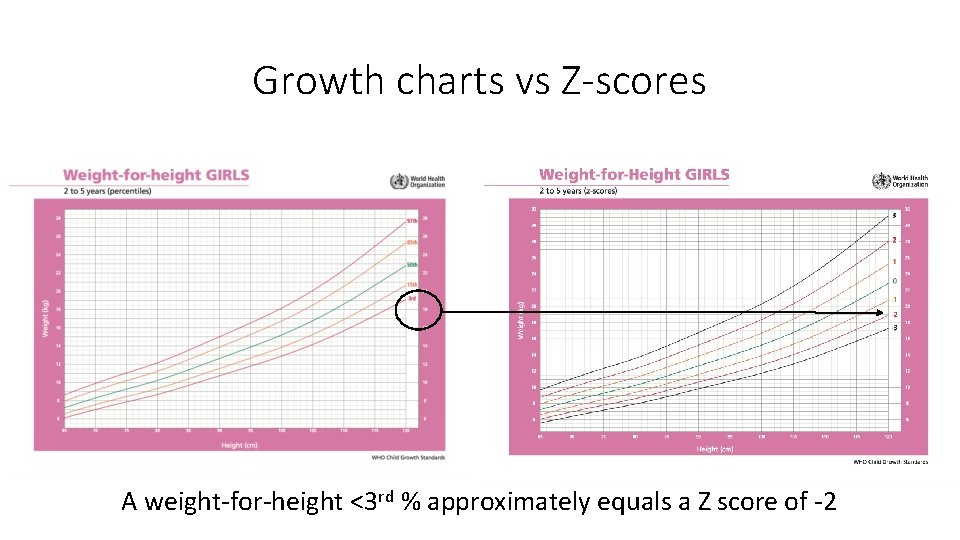
Growth charts vs Z-scores A weight-for-height <3 rd % approximately equals a Z score of -2
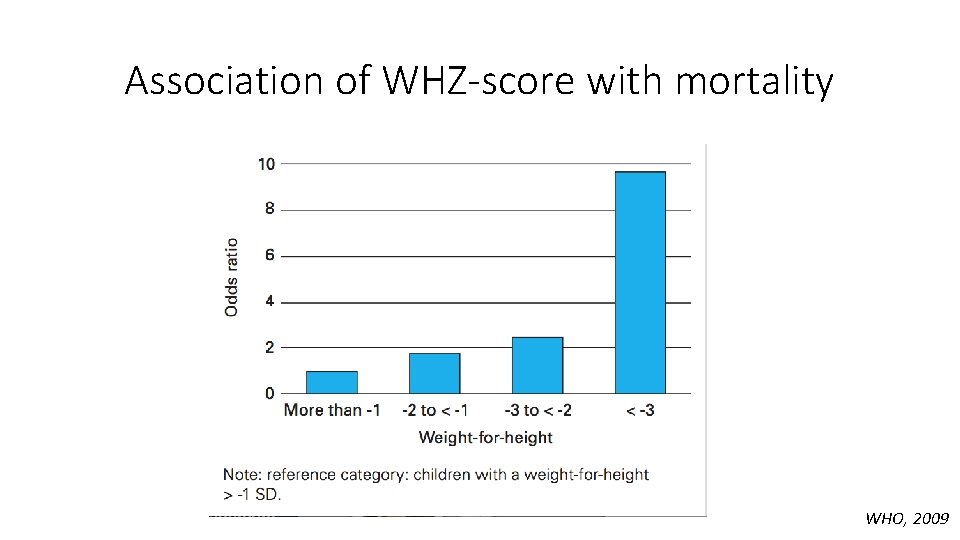
Association of WHZ-score with mortality WHO, 2009
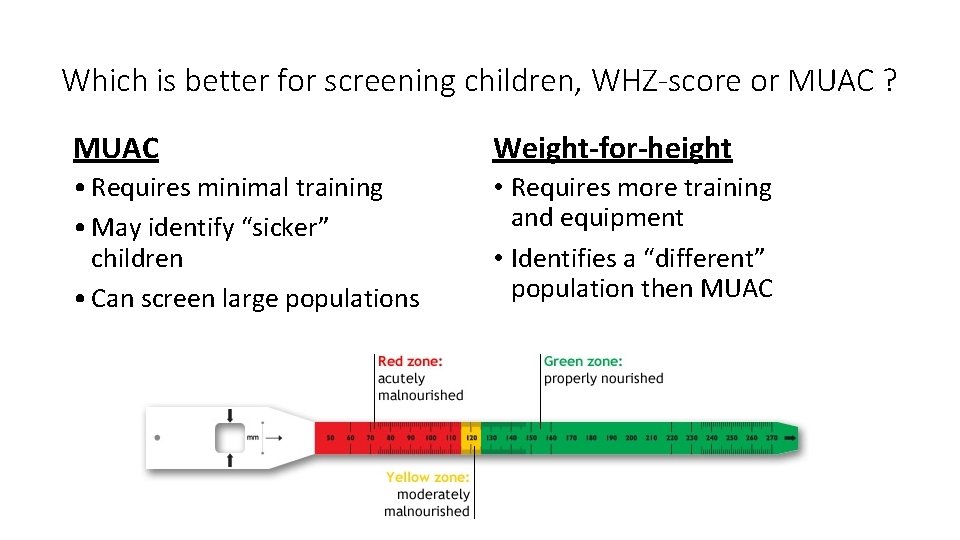
Which is better for screening children, WHZ-score or MUAC ? MUAC Weight-for-height • Requires minimal training • May identify “sicker” children • Can screen large populations • Requires more training and equipment • Identifies a “different” population then MUAC
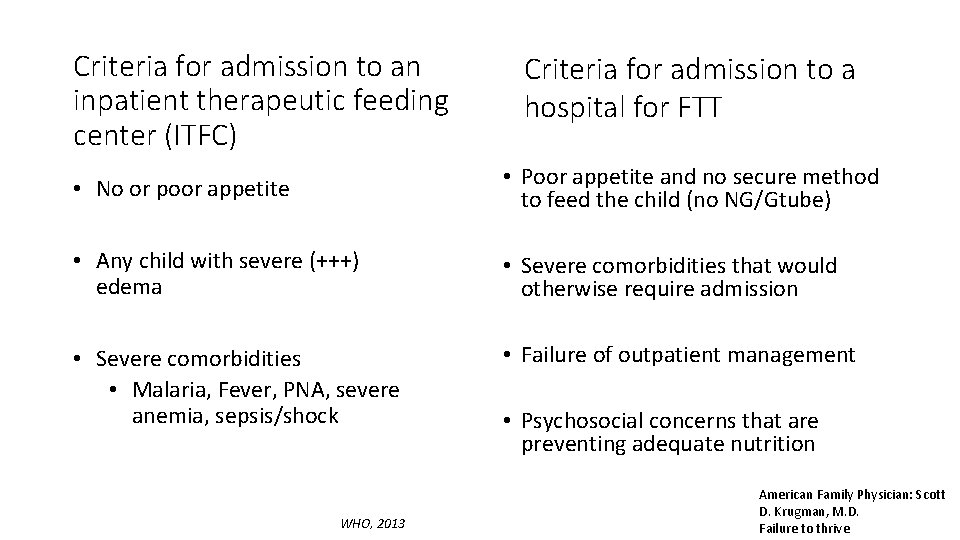
Criteria for admission to an inpatient therapeutic feeding center (ITFC) Criteria for admission to a hospital for FTT • No or poor appetite • Poor appetite and no secure method to feed the child (no NG/Gtube) • Any child with severe (+++) edema • Severe comorbidities that would otherwise require admission • Severe comorbidities • Malaria, Fever, PNA, severe anemia, sepsis/shock • Failure of outpatient management WHO, 2013 • Psychosocial concerns that are preventing adequate nutrition American Family Physician: Scott D. Krugman, M. D. Failure to thrive

Case continued: Her WHZ-score is <-3. You have admitted the child for further care. • Divide into groups, one representing a malnutrition treatment center in a refugee camp in your LMIC, the other representing a tertiary hospital in the US, and answer these questions: • What formula will you initiate and why? • How many Kcals per kg will you initiate feeds at?
Formula
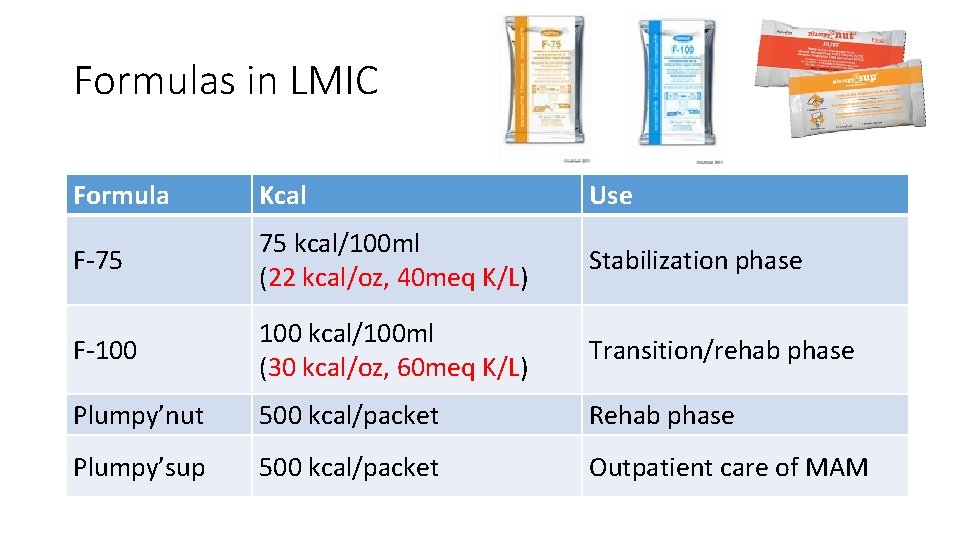
Formulas in LMIC Formula Kcal Use F-75 75 kcal/100 ml (22 kcal/oz, 40 meq K/L) Stabilization phase F-100 kcal/100 ml (30 kcal/oz, 60 meq K/L) Transition/rehab phase 500 kcal/packet Rehab phase 500 kcal/packet Outpatient care of MAM Plumpy’nut Plumpy’sup
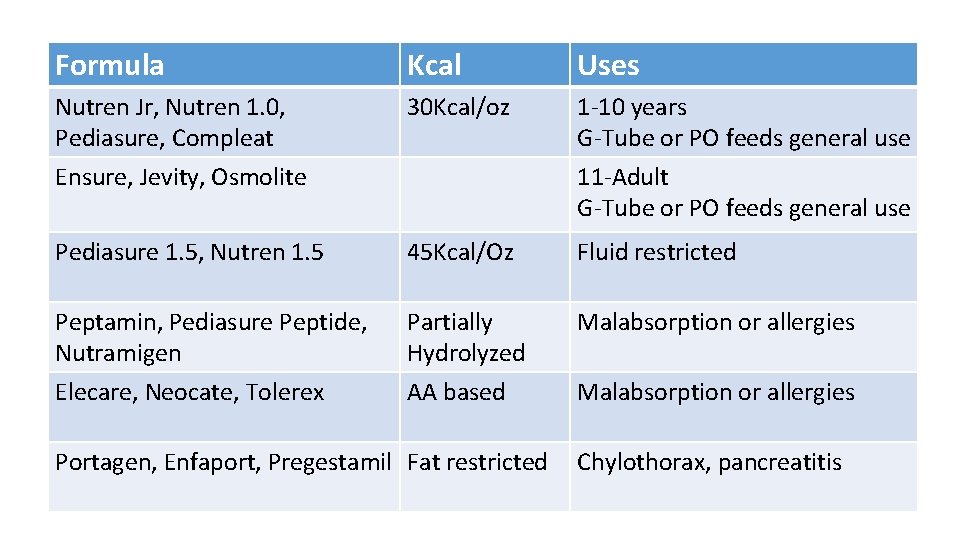
Formula Kcal Uses Nutren Jr, Nutren 1. 0, Pediasure, Compleat Ensure, Jevity, Osmolite 30 Kcal/oz 1 -10 years G-Tube or PO feeds general use 11 -Adult G-Tube or PO feeds general use Pediasure 1. 5, Nutren 1. 5 45 Kcal/Oz Fluid restricted Peptamin, Pediasure Peptide, Nutramigen Elecare, Neocate, Tolerex Partially Hydrolyzed AA based Malabsorption or allergies Portagen, Enfaport, Pregestamil Fat restricted Chylothorax, pancreatitis
Treatment Phases • Stabilization Phase (~1 -3 days) • Give ~80 -100 kcal/kg/day until appetite returns and any serious comorbidities are treated. PO/NG 8 x/day • Transition phase (~3 -7 days) • Give ~100 -135 kcal/kg/day. PO 8 x/day • Rehab phase • F-100 + RUTF, or RUTF + table foods • Give ~150 -220 kcal/kg/day to provide rapid catch-up growth
Case Continued: On hospital day 2 you are called by the nurse because the child has developed respiratory distress, tachycardia and is responsive only to vigorous stimulation. Blood Glucose is 79. • Divide into groups, one representing a malnutrition treatment center in a refugee camp in your LMIC, the other representing a tertiary hospital in the US, and answer these questions: • What are your immediate concerns given the child’s deterioration? • How will your management change based on the above answer?
Refeeding Syndrome
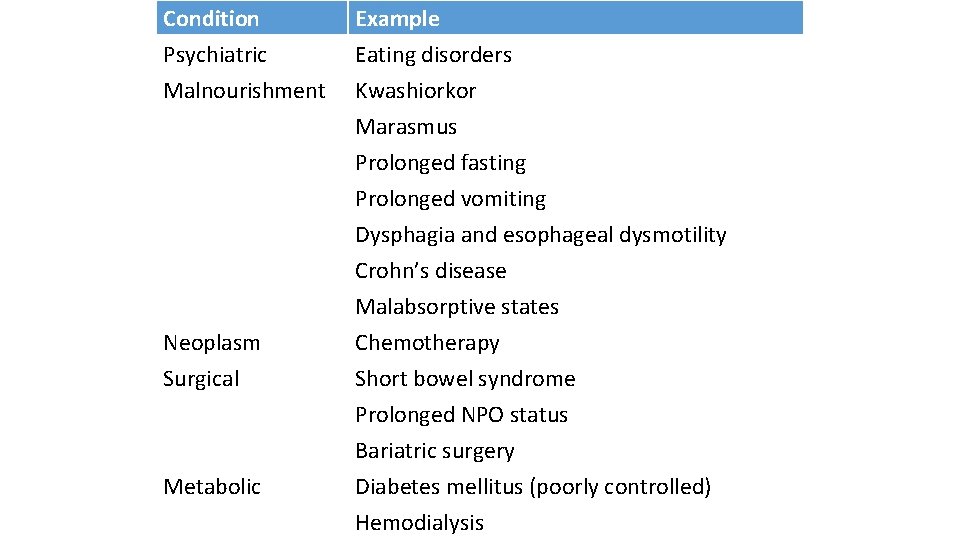
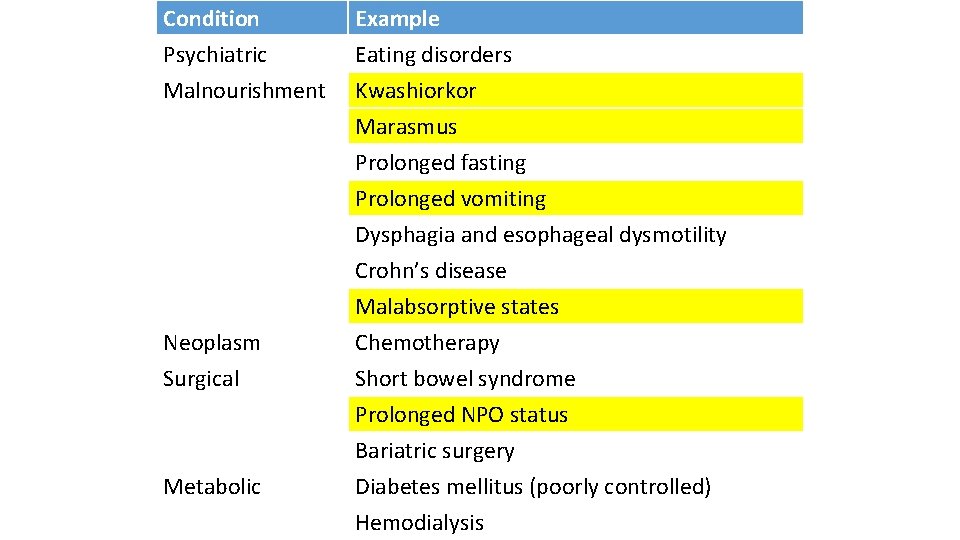
Refeeding Syndrome (RFS) • Who: • starved, malnourished patients (for as little as 48 hours!) • the more severely malnourished, the greater the risk
Condition Psychiatric Malnourishment Example Eating disorders Kwashiorkor Marasmus Prolonged fasting Prolonged vomiting Dysphagia and esophageal dysmotility Neoplasm Surgical Metabolic Crohn’s disease Malabsorptive states Chemotherapy Short bowel syndrome Prolonged NPO status Bariatric surgery Diabetes mellitus (poorly controlled) Hemodialysis
Condition Psychiatric Malnourishment Example Eating disorders Kwashiorkor Marasmus Prolonged fasting Prolonged vomiting Dysphagia and esophageal dysmotility Neoplasm Surgical Metabolic Crohn’s disease Malabsorptive states Chemotherapy Short bowel syndrome Prolonged NPO status Bariatric surgery Diabetes mellitus (poorly controlled) Hemodialysis
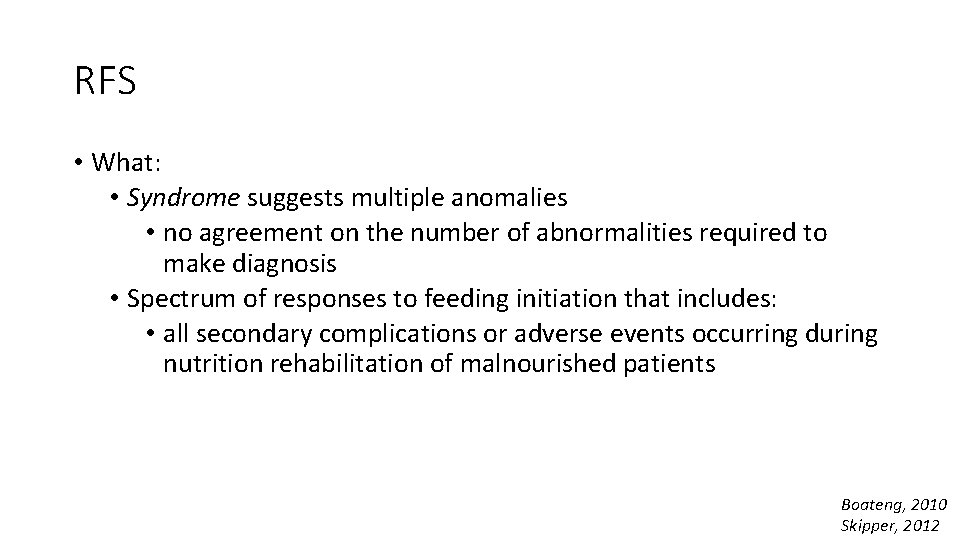
RFS • What: • Syndrome suggests multiple anomalies • no agreement on the number of abnormalities required to make diagnosis • Spectrum of responses to feeding initiation that includes: • all secondary complications or adverse events occurring during nutrition rehabilitation of malnourished patients Boateng, 2010 Skipper, 2012
RFS • When: • usually occurs within first 5 days of refeeding • Where: • all clinical settings (ICU, wards, outpatient treatment centers)
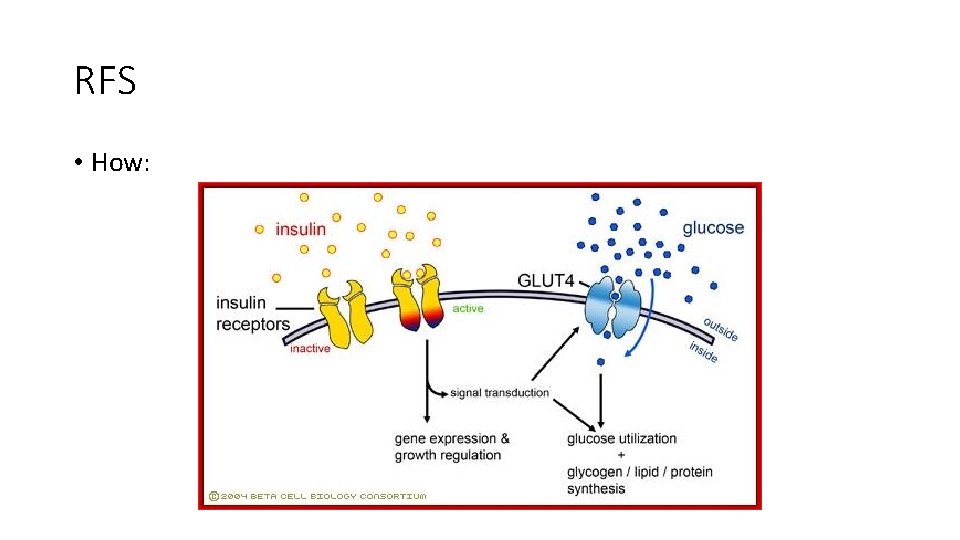
RFS • How:
Monitoring for RFS • No consensus guidelines • US • Electrolyte monitoring – minimally once per day • Phos, Mg, K, glucose • Resource-limited settings (RLS) • Watch for fluid overload • chronic protein deficiency • rapid administration of nutrition • Assess HR, RR, hepatomegaly, and JVP • Consider decreasing the volume or frequency of feeds temporarily
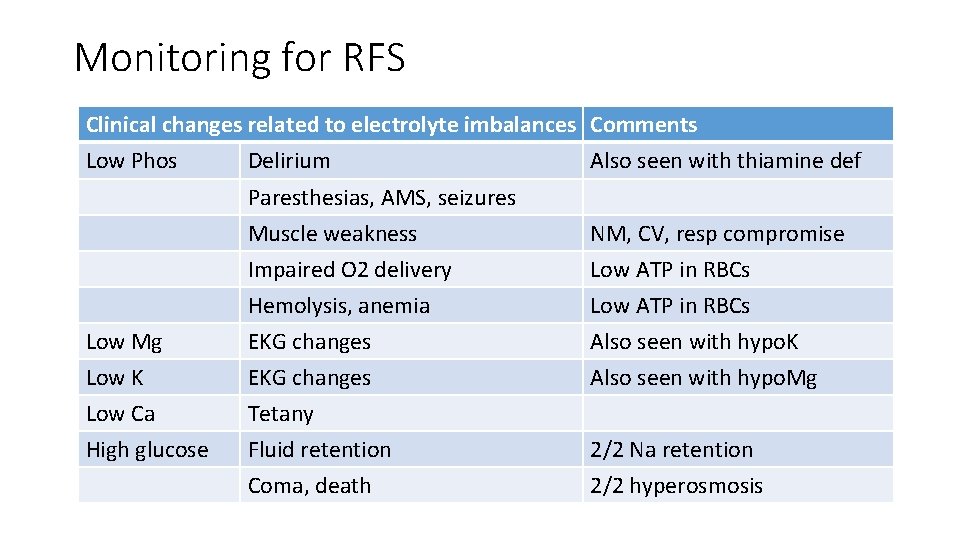
Monitoring for RFS Clinical changes related to electrolyte imbalances Comments Low Phos Delirium Also seen with thiamine def Paresthesias, AMS, seizures Muscle weakness Low Mg Low K Low Ca High glucose Impaired O 2 delivery Hemolysis, anemia EKG changes Tetany Fluid retention Coma, death NM, CV, resp compromise Low ATP in RBCs Also seen with hypo. K Also seen with hypo. Mg 2/2 Na retention 2/2 hyperosmosis
Monitoring for RFS Clinical changes related to electrolyte imbalances Comments Low Phos Delirium Also seen with thiamine def Paresthesias, AMS, seizures Muscle weakness Low Mg Low K Low Ca High glucose Impaired O 2 delivery Hemolysis, anemia EKG changes Tetany Fluid retention Coma, death NM, CV, resp compromise Low ATP in RBCs Also seen with hypo. K Also seen with hypo. Mg 2/2 Na retention 2/2 hyperosmosis
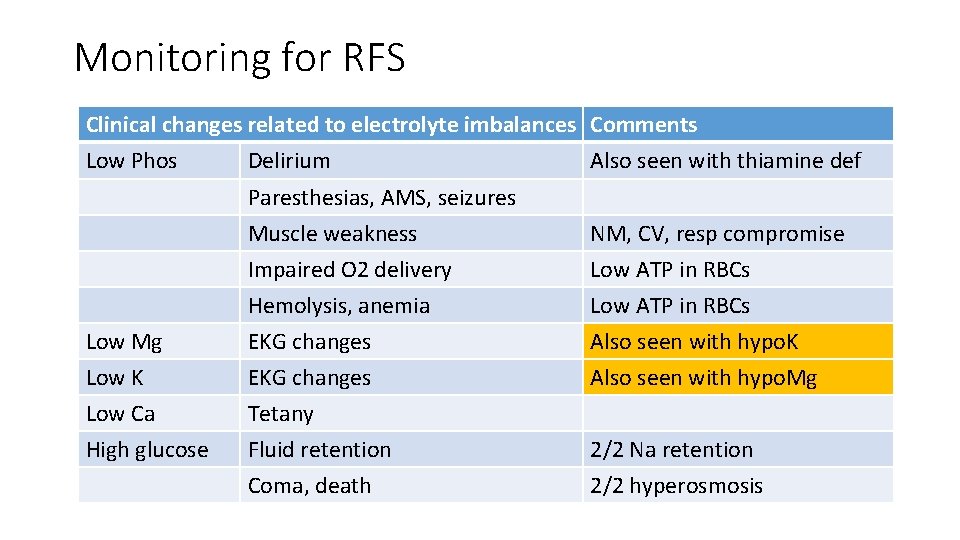
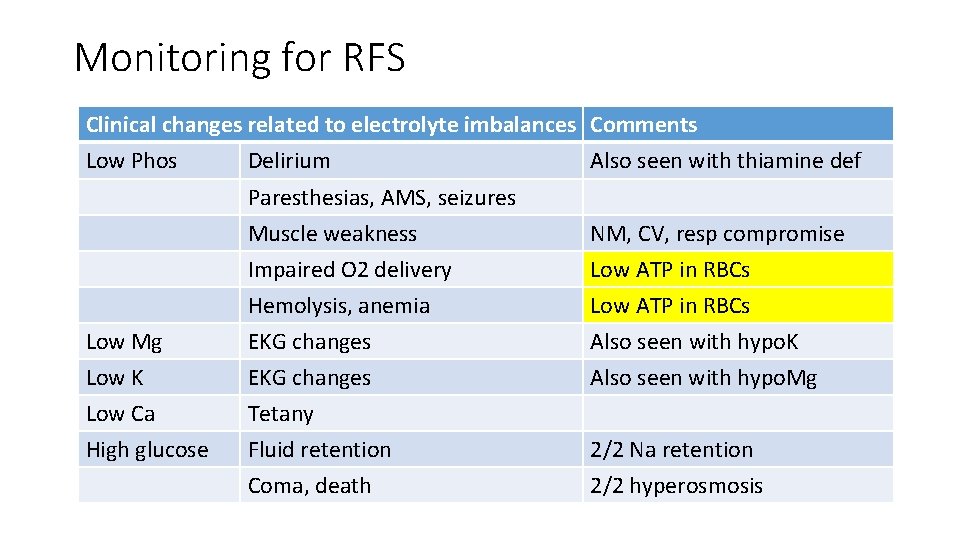
Monitoring for RFS Clinical changes related to electrolyte imbalances Comments Low Phos Delirium Also seen with thiamine def Paresthesias, AMS, seizures Muscle weakness Low Mg Low K Low Ca High glucose Impaired O 2 delivery Hemolysis, anemia EKG changes Tetany Fluid retention Coma, death NM, CV, resp compromise Low ATP in RBCs Also seen with hypo. K Also seen with hypo. Mg 2/2 Na retention 2/2 hyperosmosis
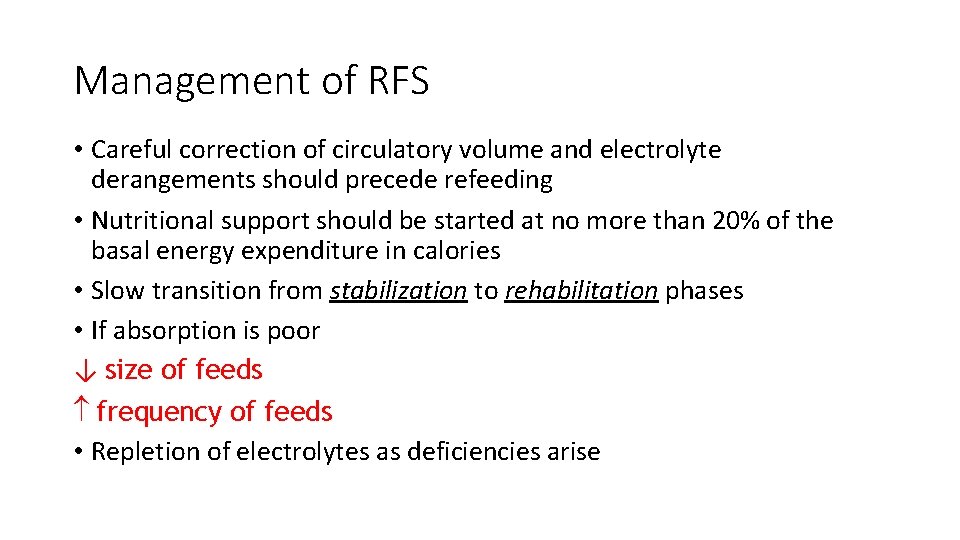
Management of RFS • Careful correction of circulatory volume and electrolyte derangements should precede refeeding • Nutritional support should be started at no more than 20% of the basal energy expenditure in calories • Slow transition from stabilization to rehabilitation phases • If absorption is poor ↓ size of feeds frequency of feeds • Repletion of electrolytes as deficiencies arise

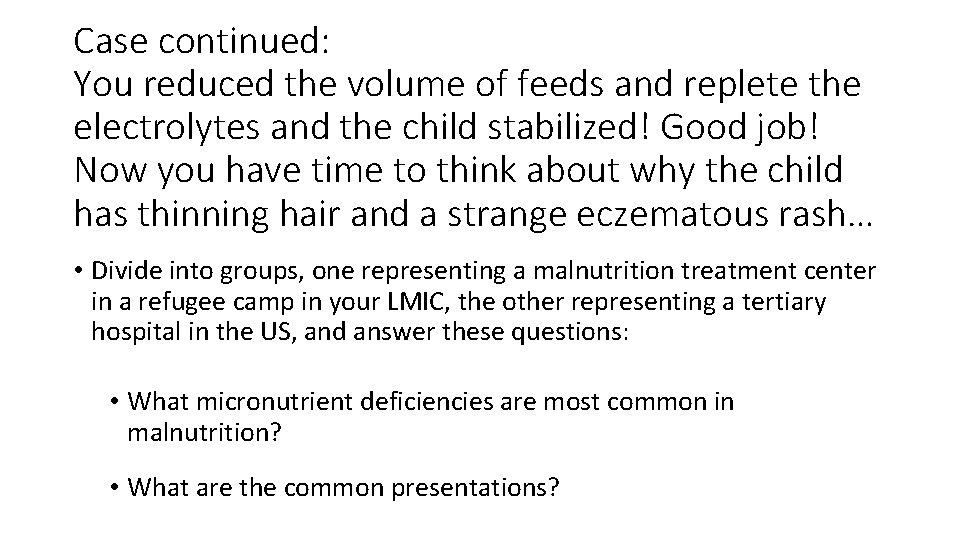
Case continued: You reduced the volume of feeds and replete the electrolytes and the child stabilized! Good job! Now you have time to think about why the child has thinning hair and a strange eczematous rash… • Divide into groups, one representing a malnutrition treatment center in a refugee camp in your LMIC, the other representing a tertiary hospital in the US, and answer these questions: • What micronutrient deficiencies are most common in malnutrition? • What are the common presentations?

Micronutrient Deficiencies
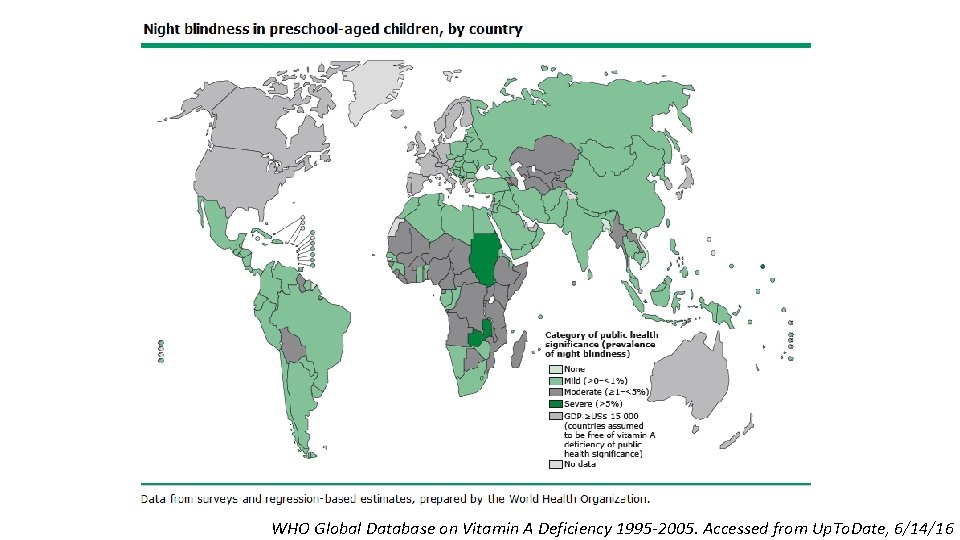
WHO Global Database on Vitamin A Deficiency 1995 -2005. Accessed from Up. To. Date, 6/14/16
Vitamin A • Vitamin A deficiency is very common • 4. 4 million with xerophthalmia, which can cause blindness • Breakdown of mucosal and skin barriers leading to increased infections • Low-dose vitamin A is more effective then a single high dose at: • Reducing the mortality of children with edema • Reducing the incidence of severe diarrhea • Decreasing the incidence of respiratory infection • F-75, F-100 or ready-to use therapeutic foods have enough!
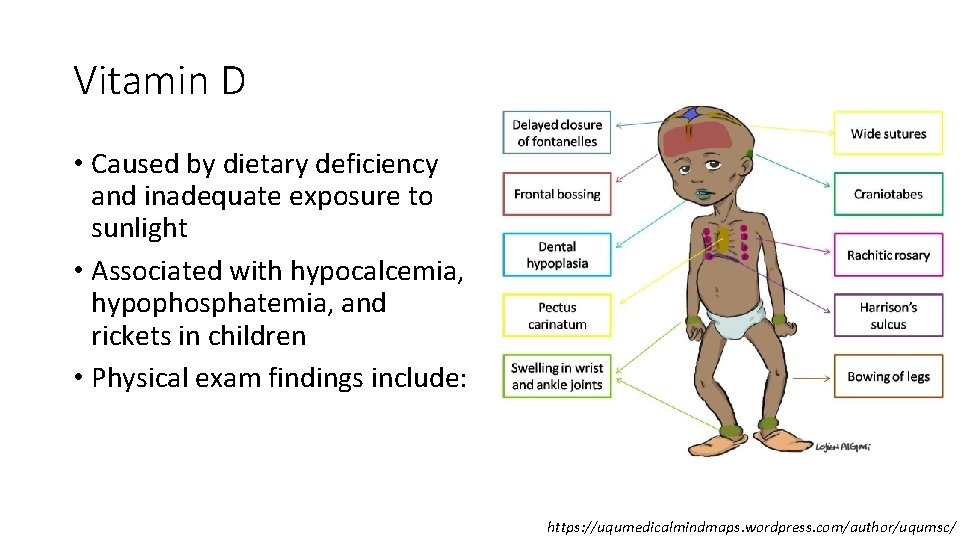
Vitamin D • Caused by dietary deficiency and inadequate exposure to sunlight • Associated with hypocalcemia, hypophosphatemia, and rickets in children • Physical exam findings include: https: //uqumedicalmindmaps. wordpress. com/author/uqumsc/
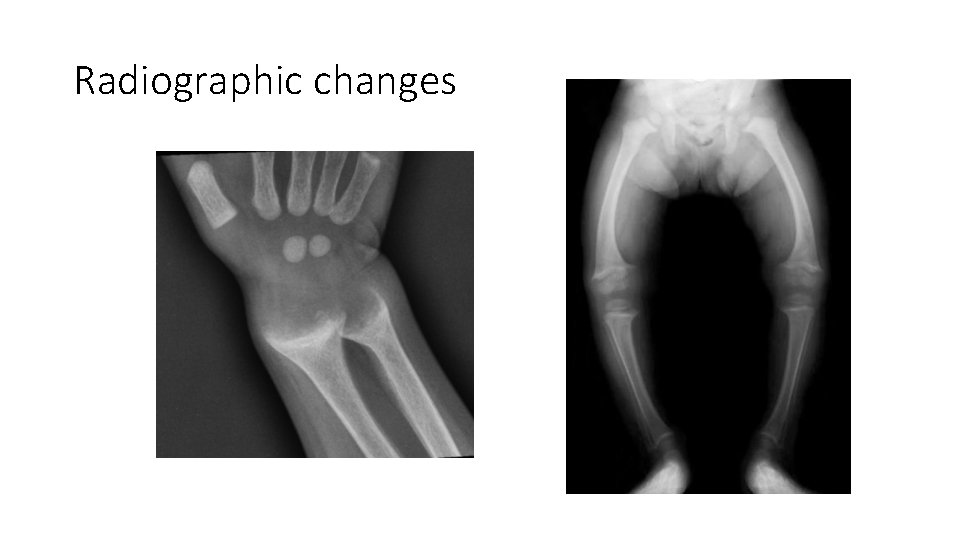
Radiographic changes
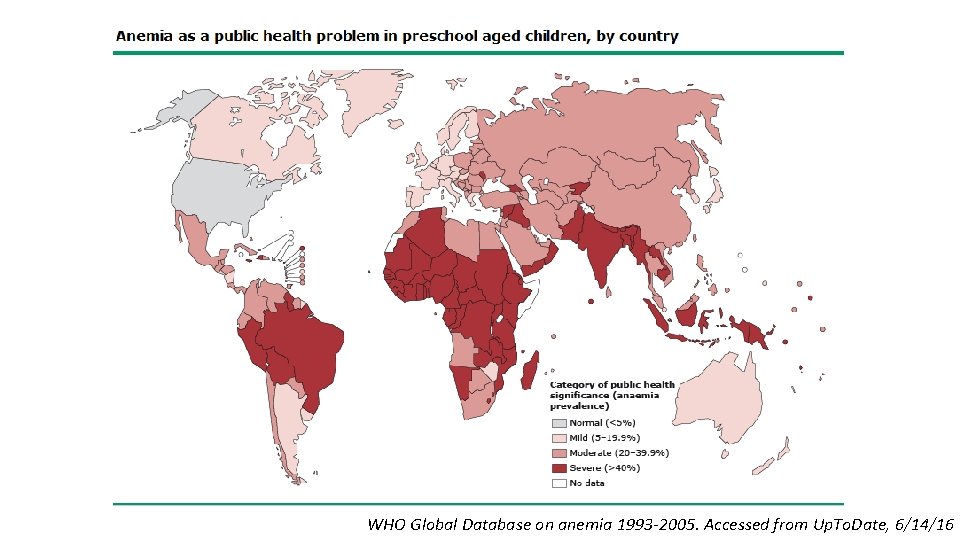
WHO Global Database on anemia 1993 -2005. Accessed from Up. To. Date, 6/14/16
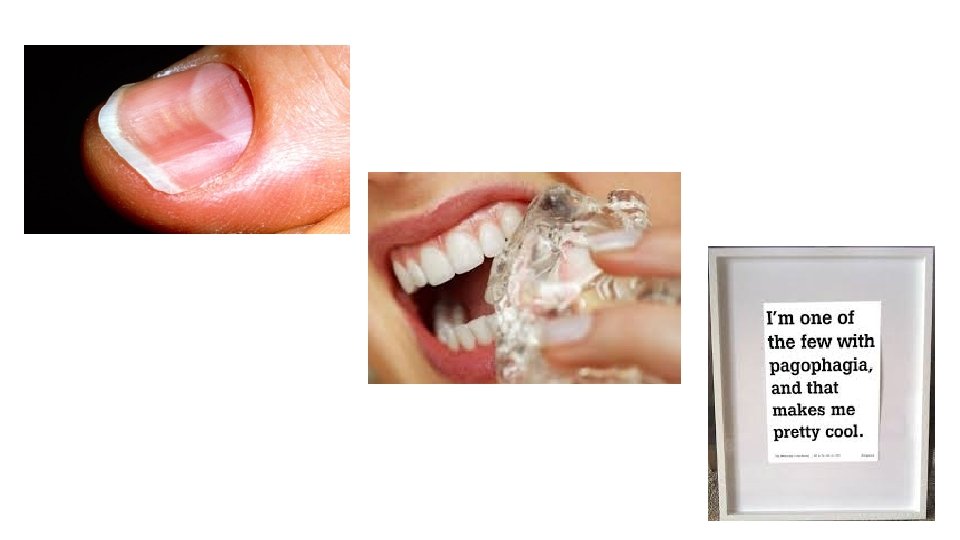
Iron • Iron deficiency anemia = most common nutritional deficiency in children • Children with severe malnutrition are almost always deficient in iron • Mild to moderate asymptomatic • Severe deficiency • • • Lethargy, irritability Poor feeding Pallor Tachypnea Impaired psychomotor and mental development
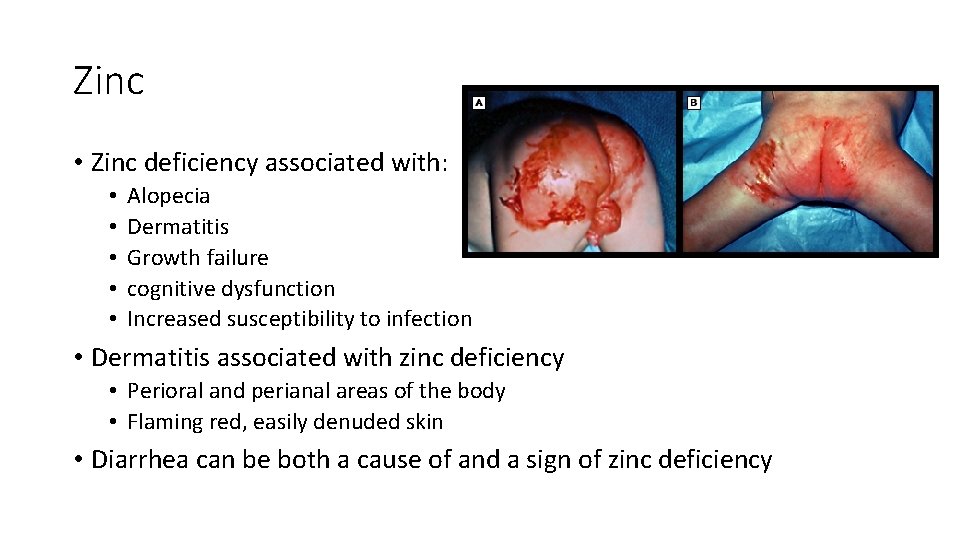
Zinc • Zinc deficiency associated with: • • • Alopecia Dermatitis Growth failure cognitive dysfunction Increased susceptibility to infection • Dermatitis associated with zinc deficiency • Perioral and perianal areas of the body • Flaming red, easily denuded skin • Diarrhea can be both a cause of and a sign of zinc deficiency
When to Supplement? • Vitamin A • Children on RUTF get adequate amounts of Vitamin A • Vitamin D • May be given at higher doses x ~6 wks, then reduced to maintenance dose • In the setting of clinical evidence of rickets, calcium should be supplemented along with vitamin D • Iron is not given during the initial phase of treatment • Elemental iron is begun as the rehabilitation phase starts, continued for 3 mo • Zinc • Children on RUTF get adequate amounts of zinc


Case continued: Despite supplemented nutrition your patient continues to display poor weight-gain • What else is there to consider? • How would you expand your evaluation and or what other treatments would you add?
Commonly reported problems (and causes) • Poor appetite • Missed infection (TB, HIV, Kala Azar…) • Deficiencies (K, Mg, Zn)
Commonly reported problems (and causes) • Poor appetite • Missed infection (TB, HIV, Kala Azar…) • Deficiencies (K, Mg, Zn) • Continuing diarrhea • • Large feeds Wrong composition (high lactose, high osmolarity) Untreated small bowel overgrowth Nutrient deficiencies delaying gut repair (Zn, folic acid)
Commonly reported problems (and causes) • Poor appetite • Missed infection (TB, HIV, Kala Azar…) • Deficiencies (K, Mg, Zn) • Continuing diarrhea • • Large feeds Wrong composition (high lactose, high osmolarity) Untreated small bowel overgrowth Nutrient deficiencies delaying gut repair (Zn, folic acid) • Slow recovery • Too little energy and nutrients for rapid growth • Not fed to appetite
Antibiotics: Routine Amoxicillin currently recommended for all children with severe acute malnutrition in low and middle-income countries • NEJM 2016: “Routine Amoxicillin for Uncomplicated Severe Acute Malnutrition in Children” • Double-blind placebo controlled trial in Niger • 2399 children with uncomplicated SAM were assigned to either an Amoxicillin arm or a placebo arm • Found no difference in nutritional recovery between the groups • Among children who recovered, the time to recovery was significantly shorter with amoxicillin than with placebo, 28 days versus 30 days • Amoxicillin significantly decreased the over- all risk of a transfer to inpatient care and the risk of a transfer within the first 2 weeks Isanaka, 2016

References 1) Black, RE et al. Maternal and child undernutrition and overweight in low-income and middle-income countries. Lancet 2013; 382(9890): 427 -51 2) Boateng AA, Sriram K, Meguid MM, Crook M. Refeeding syndrome: treatment considerations based on collective analysis of literature case reports. Nutrition 26 (2010) 156– 167 3) Feeding America’s “Map the Meal Gap” 4) Guideline: updates on the management of severe acute malnutrition in infants and children. World Health Organization, 2013 5) Müller O, Krawinkel M. Malnutrition and health in developing countries, CMAJ 2005; 173: 279 -286 6) Iriart C, Boursaw B, Rodrigues GP, Handal AJ. Obesity and malnutrition among Hispanic children in the United States: double burden on health inequities. Rev Panam Salud Publica. 2013; 34(4): 235 -43. 7) Isanaka S, Langendorf C, Berthé F, et al. Routine Amoxicillin for Uncomplicated Severe Acute Malnutrition in Children. N Engl J Med 2016; 374: 444 -453 8) Mehta NM, Corkins MR, Lyman B, et al. Defining Pediatric Malnutrition A Paradigm Shift Toward Etiology. Related Definitions. J Parenter Enteral Nutr. 2013 Jul; 37(4): 460 -81 9) Skipper A. Refeeding Syndrome or Refeeding Hypophosphatemia: A Systematic Review of Cases. Nutrition in Clinical Practice 2012; 27(1): 34 -40 10) The State of the World's Children. New York: UNICEF; 1998. 11) Suchdev, P. What Pediatricians Can Do to Address Malnutrition Globally and at Home. Emory University, Pediatrics Nutrition, International Child Health –In Press
- Slides: 58