
Managing Learning Environments 1 Goal To learn how

- Slides: 26
Managing Learning Environments 1
Goal: To learn how to design effective lessons. 2
Objectives: 1. Identify three basic components of a lesson and explain how they are related to each other. 2. Write a properly-stated objective. 3. Identify a variety of activities that can be used to accomplish learning objectives. 4. Describe assessment and its importance in learning. 5. Construct a basic lesson plan. 6. Describe the purpose of a grading rubric and 3 how it can be constructed.
Objectives: 1. Identify three basic components of a lesson and explain how they are related to each other. 2. Write a properly-stated objective. 3. Identify a variety of activities that can be used to accomplish learning objectives. 4. Describe assessment and its importance in learning. 5. Construct a basic lesson plan. 6. Describe the purpose of a grading rubric and 4 how it can be constructed.
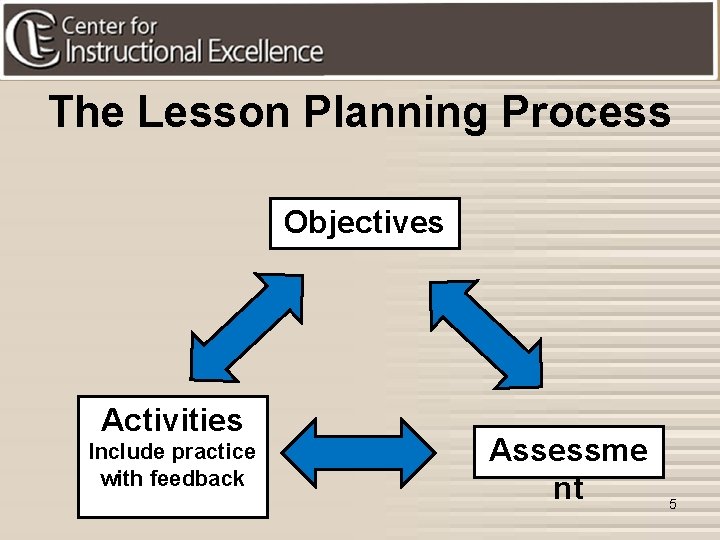
The Lesson Planning Process Objectives Activities Include practice with feedback Assessme nt 5
Objectives: 1. Identify three basic components of a lesson and explain how they are related to each other. 2. Write a properly-stated objective. 3. Identify a variety of activities that can be used to accomplish learning objectives. 4. Describe assessment and its importance in learning. 5. Construct a basic lesson plan. 6. Describe the purpose of a grading rubric and 6 how it can be constructed.
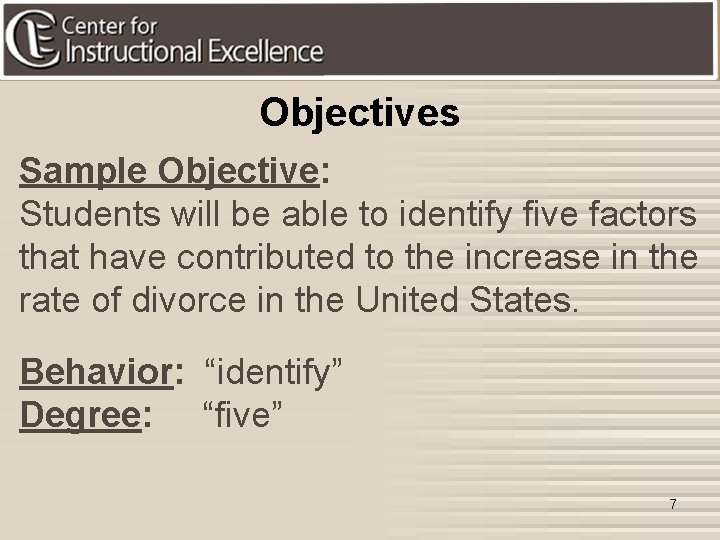
Objectives Sample Objective: Students will be able to identify five factors that have contributed to the increase in the rate of divorce in the United States. Behavior: “identify” Degree: “five” 7
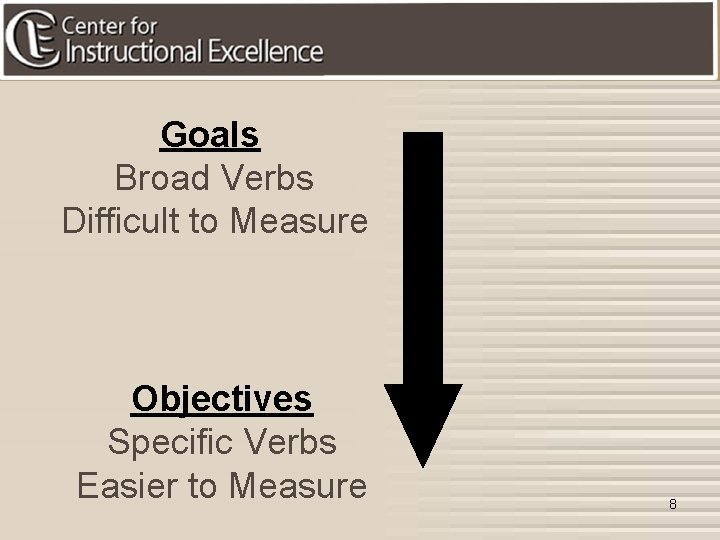
Goals Broad Verbs Difficult to Measure Objectives Specific Verbs Easier to Measure 8
Sample Goals 1. Establish good study habits and time management skills so that you can work effectively and efficiently. 2. Students will develop knowledge of the major sociological theories and theorists. 9
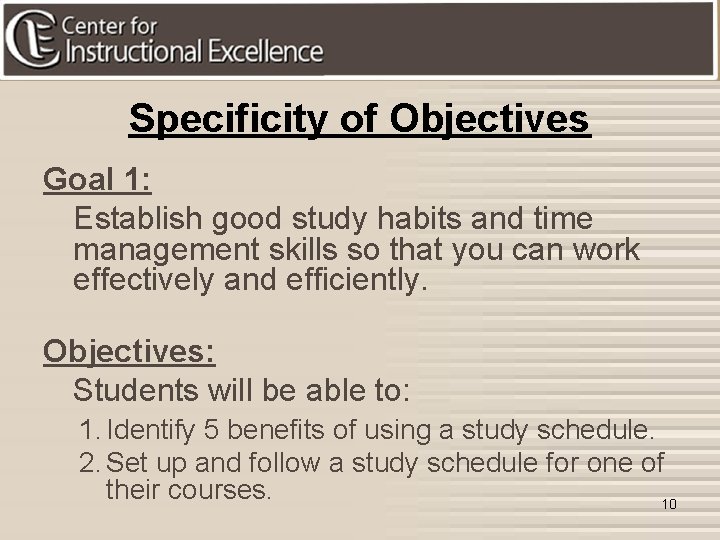
Specificity of Objectives Goal 1: Establish good study habits and time management skills so that you can work effectively and efficiently. Objectives: Students will be able to: 1. Identify 5 benefits of using a study schedule. 2. Set up and follow a study schedule for one of their courses. 10
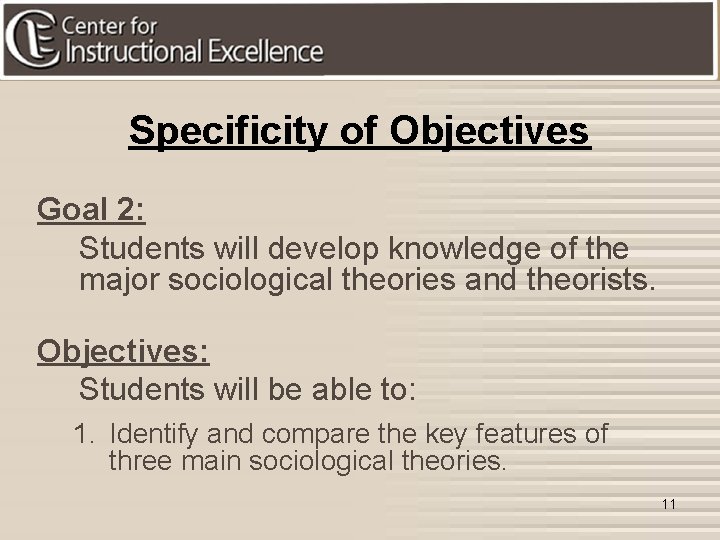
Specificity of Objectives Goal 2: Students will develop knowledge of the major sociological theories and theorists. Objectives: Students will be able to: 1. Identify and compare the key features of three main sociological theories. 11
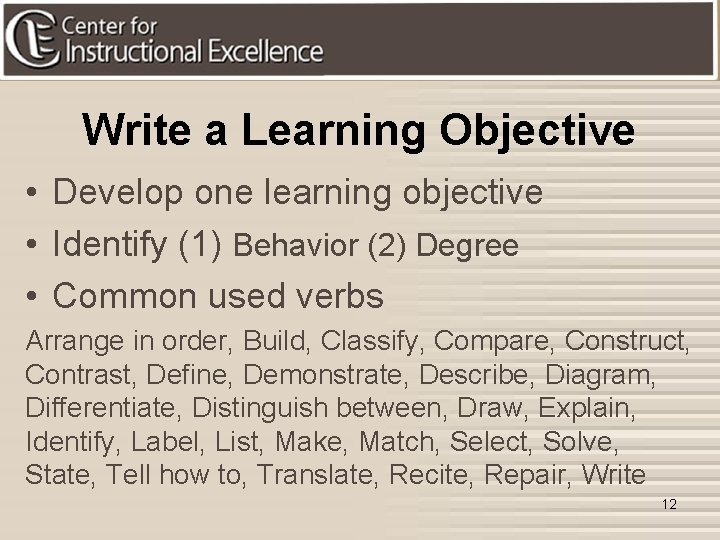
Write a Learning Objective • Develop one learning objective • Identify (1) Behavior (2) Degree • Common used verbs Arrange in order, Build, Classify, Compare, Construct, Contrast, Define, Demonstrate, Describe, Diagram, Differentiate, Distinguish between, Draw, Explain, Identify, Label, List, Make, Match, Select, Solve, State, Tell how to, Translate, Recite, Repair, Write 12
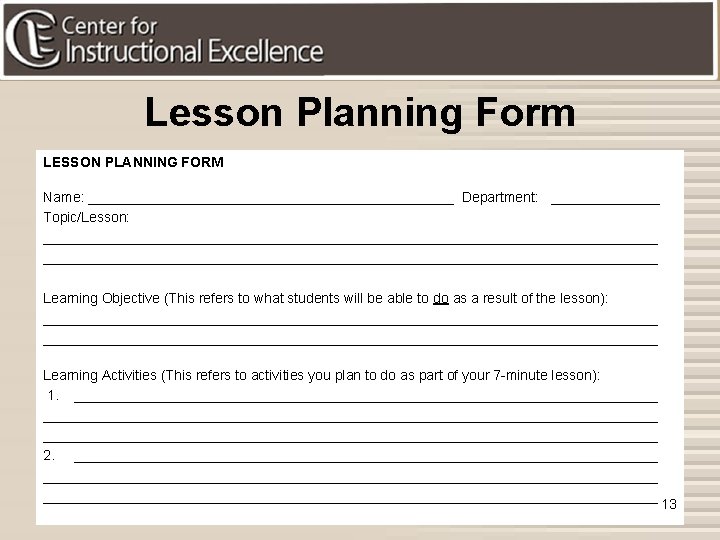
Lesson Planning Form LESSON PLANNING FORM Name: ________________________ Department: _______ Topic/Lesson: _______________________________________________________________________________ Learning Objective (This refers to what students will be able to do as a result of the lesson): _______________________________________________________________________________ Learning Activities (This refers to activities you plan to do as part of your 7 -minute lesson): 1. _______________________________________________________________________________ 2. _______________________________________________________________________________ 13
Objectives: 1. Identify three basic components of a lesson and explain how they are related to each other. 2. Write a properly-stated objective. 3. Identify a variety of activities that can be used to accomplish learning objectives. 4. Describe assessment and its importance in learning. 5. Construct a basic lesson plan. 6. Describe the purpose of a grading rubric and 14 how it can be constructed.
Guidelines for Selecting Instructional Activities 1. Potential to help students master the stated objectives. 2. Actively involve students in learning and practicing the behaviors stated in the objectives. 15
Objectives: 1. Identify three basic components of a lesson and explain how they are related to each other. 2. Write a properly-stated objective. 3. Identify a variety of activities that can be used to accomplish learning objectives. 4. Describe assessment and its importance in learning. 5. Construct a basic lesson plan. 6. Describe the purpose of a grading rubric and 16 how it can be constructed.
Assessment • How will I know if students have achieved the learning objectives of a particular lesson or an entire course? • What am I willing to accept as evidence that students have achieved the objectives? 17
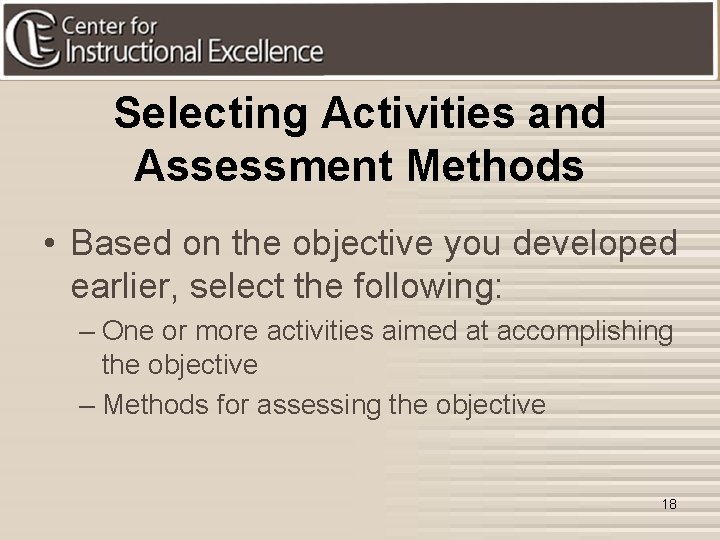
Selecting Activities and Assessment Methods • Based on the objective you developed earlier, select the following: – One or more activities aimed at accomplishing the objective – Methods for assessing the objective 18
Objectives: 1. Identify three basic components of a lesson and explain how they are related to each other. 2. Write a properly-stated objective. 3. Identify a variety of activities that can be used to accomplish learning objectives. 4. Describe assessment and its importance in learning. 5. Construct a basic lesson plan. 6. Describe the purpose of a grading rubric and how it can be constructed. 19
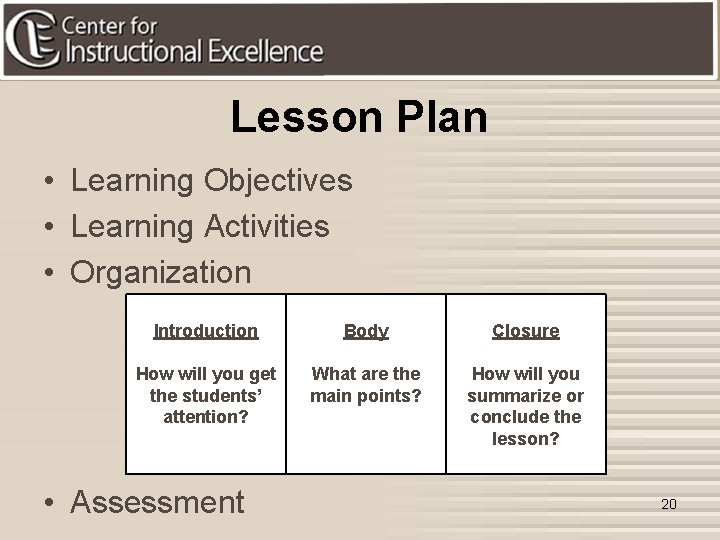
Lesson Plan • Learning Objectives • Learning Activities • Organization Introduction Body Closure How will you get the students’ attention? What are the main points? How will you summarize or conclude the lesson? • Assessment 20
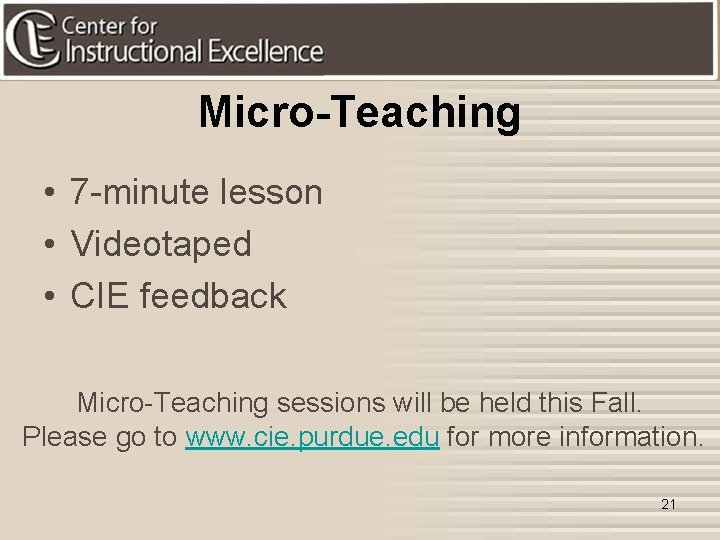
Micro-Teaching • 7 -minute lesson • Videotaped • CIE feedback Micro-Teaching sessions will be held this Fall. Please go to www. cie. purdue. edu for more information. 21
Objectives: 1. Identify three basic components of a lesson and explain how they are related to each other. 2. Write a properly-stated objective. 3. Identify a variety of activities that can be used to accomplish learning objectives. 4. Describe assessment and its importance in learning. 5. Construct a basic lesson plan. 6. Describe the purpose of a grading rubric and how it can be constructed. 22
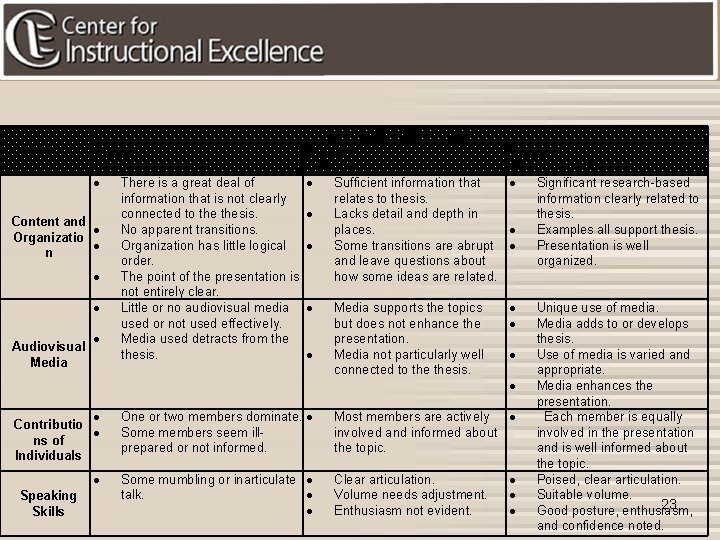
Levels of Achievement Criteria 1 -point 2 -points Needs Improvement Adequate There is a great deal of Sufficient information that is not clearly relates to thesis. connected to thesis. Lacks detail and depth in Content and No apparent transitions. places. Organization has little logical Some transitions are abrupt n order. and leave questions about The point of the presentation is how some ideas are related. not entirely clear. Little or no audiovisual media Media supports the topics used or not used effectively. but does not enhance the Media used detracts from the presentation. Audiovisual thesis. Media not particularly well Media connected to thesis. 3 -points Meets Expectations Significant research-based information clearly related to thesis. Examples all support thesis. Presentation is well organized. Contributio ns of Individuals One or two members dominate. Some members seem illprepared or not informed. Most members are actively involved and informed about the topic. Some mumbling or inarticulate talk. Clear articulation. Volume needs adjustment. Enthusiasm not evident. Speaking Skills Unique use of media. Media adds to or develops thesis. Use of media is varied and appropriate. Media enhances the presentation. Each member is equally involved in the presentation and is well informed about the topic. Poised, clear articulation. Suitable volume. 23 Good posture, enthusiasm, and confidence noted.
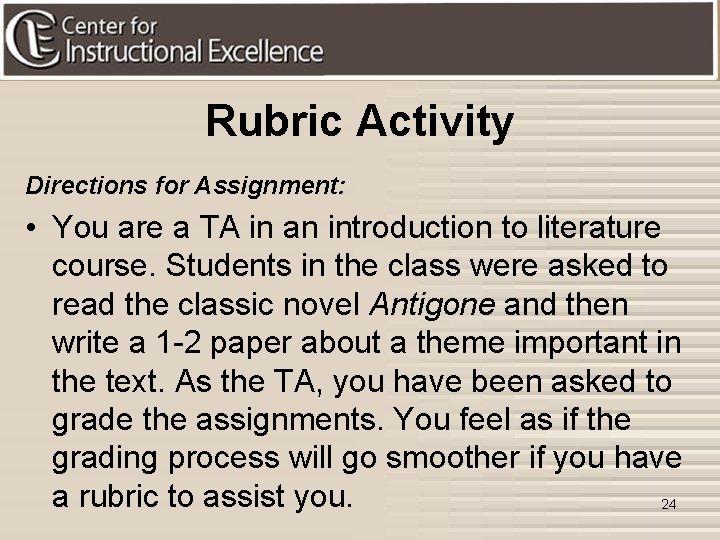
Rubric Activity Directions for Assignment: • You are a TA in an introduction to literature course. Students in the class were asked to read the classic novel Antigone and then write a 1 -2 paper about a theme important in the text. As the TA, you have been asked to grade the assignments. You feel as if the grading process will go smoother if you have a rubric to assist you. 24
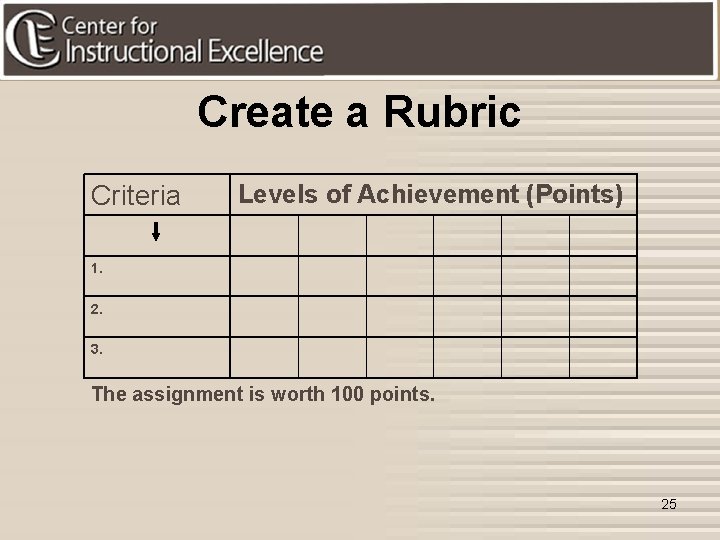
Create a Rubric Criteria Levels of Achievement (Points) 1. 2. 3. The assignment is worth 100 points. 25
Before We Conclude • Complete Post-Survey items 12 -17 26