
Managing for Results Capacity in Higher Education Institutions
- Slides: 37
Managing for Results Capacity in Higher Education Institutions NORHED seminar in Addis Ababa 13 – 14 March 2014 Lill-Ann Bjaarstad Medina Senior Adviser Department for Quality Assurance, Norad
A two days mission • Give input to your finalization of the Results Frameworks for NORHED Projects based on the principles in Results Based Management. • Introduce basic principles in Risk Management • Making an inventory of indicators that may be helpful in completing your the Project’s Results Frameworks • Suggesting common indicators for the NORHED to make it possible to aggregate essential information into consolidated reports on the results of the Programme 2
Why should we focus on results ? • Verification - Documentation • Accountability - Reporting • Legitimacy - Communication • Strategic management towards results 3
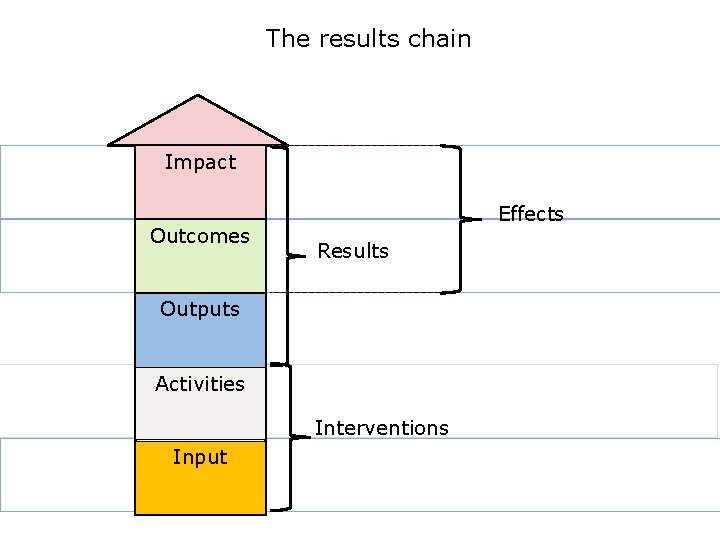
Results Based Management (RBM) A method with various uses; • Strategic Planning of interventions (resources and activities) to give intended results and desired effects • Monitor how resources and activities translate into deliverables and whether these have the intended effects (outcomes) • Learn to be able to change interventions to achieve better results (“what works? ”) 4
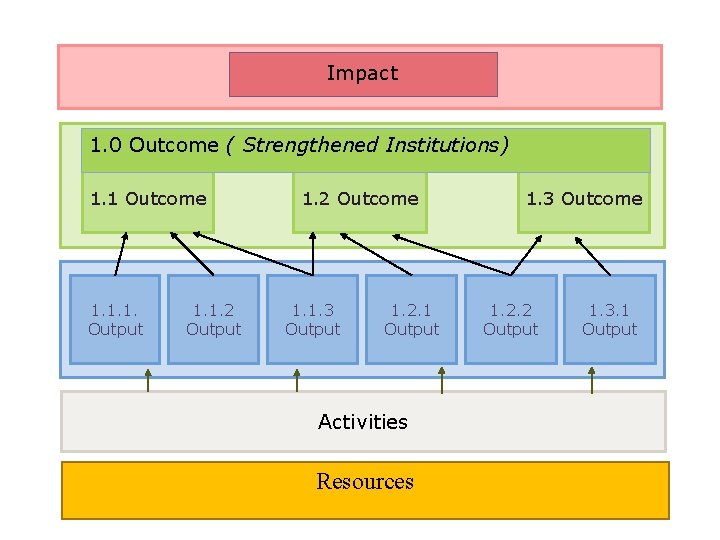
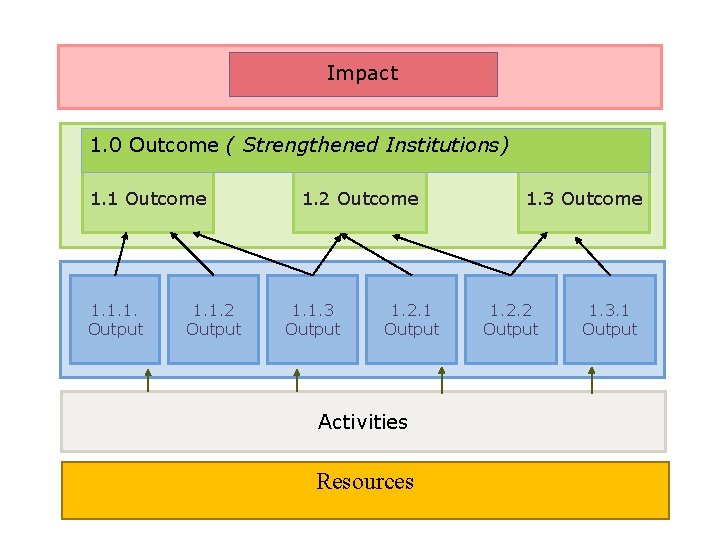
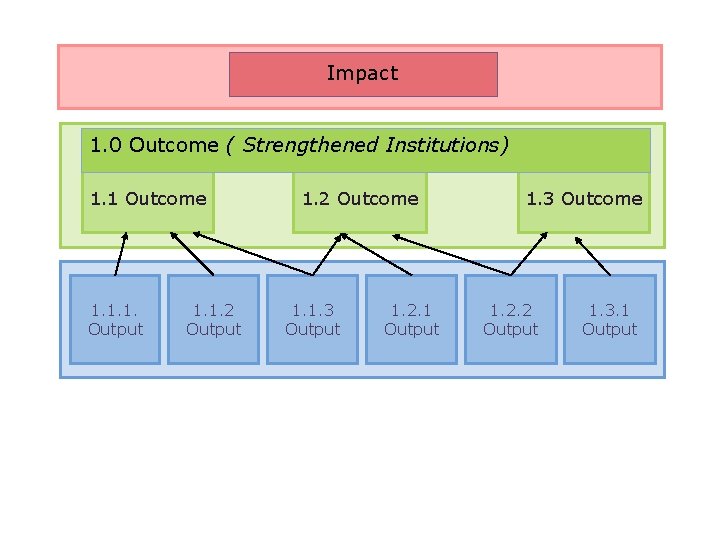
Impact 1. 0 Outcome ( Strengthened Institutions) 1. 1 Outcome 1. 1. 1. Output 1. 1. 2 Output 1. 2 Outcome 1. 1. 3 Output 1. 2. 1 Output Activities Resources 1. 3 Outcome 1. 2. 2 Output 1. 3. 1 Output
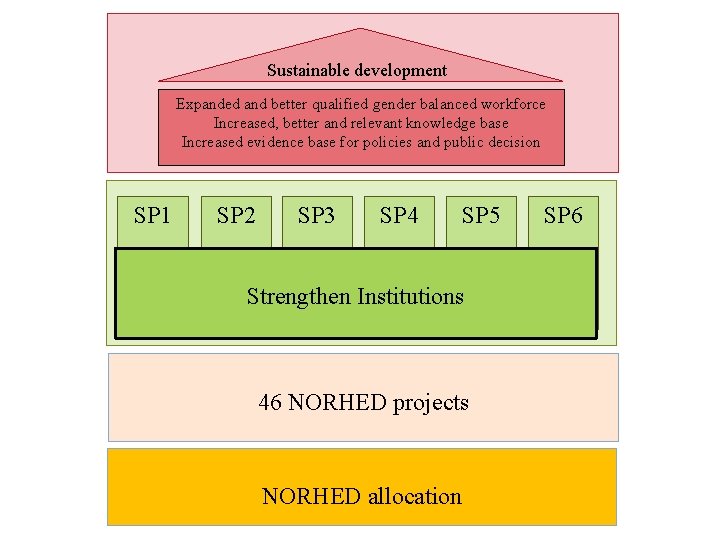
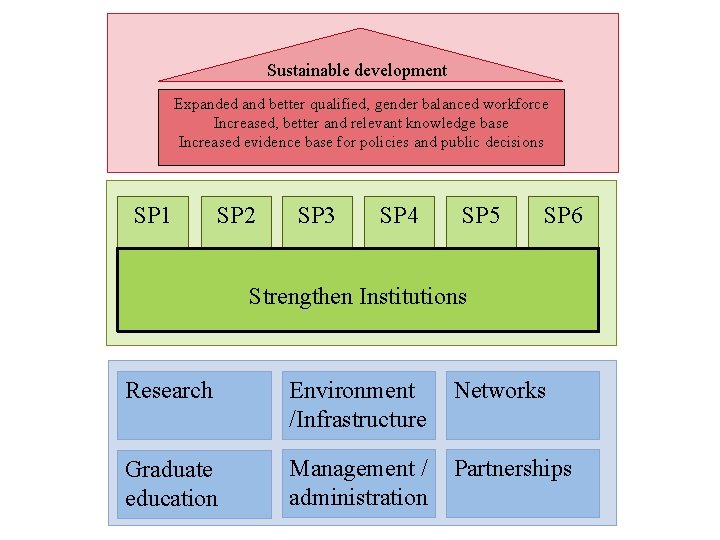
Sustainable development Expanded and better qualified gender balanced workforce Increased, better and relevant knowledge base Increased evidence base for policies and public decision SP 1 S SP 2 SP 3 SP 4 SP 5 SP S SSS SP 2 Strengthen Institutions 46 NORHED projects NORHED allocation 6 SP 6 SSS
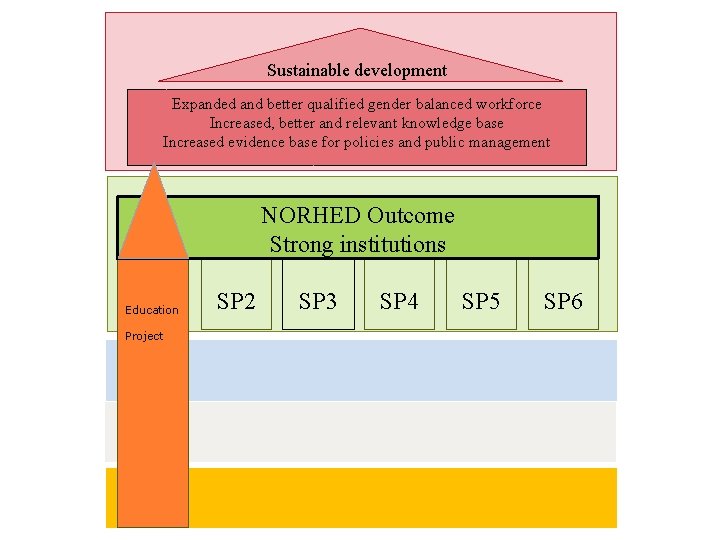
Sustainable development Expanded and better qualified gender balanced workforce Increased, better and relevant knowledge base Increased evidence base for policies and public management NORHED Outcome Strong institutions S Education Project 7 SP 2 SP 3 SP 4 SP 5 SP 6
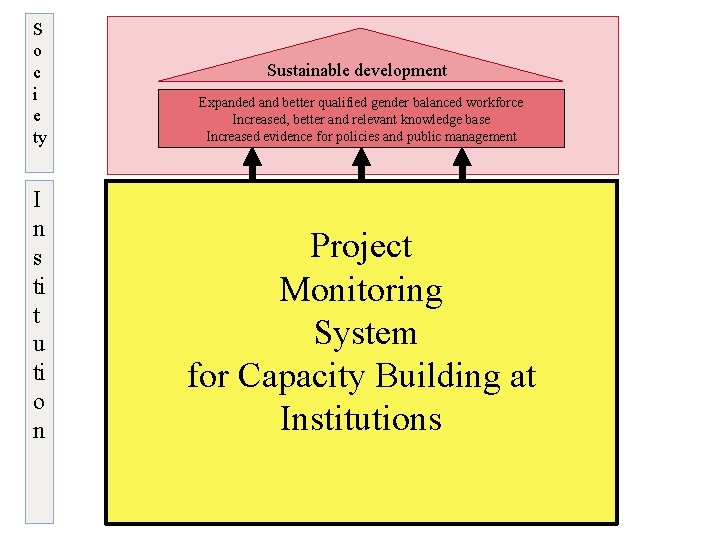
S o c i e ty Expanded and better qualified gender balanced workforce Increased, better and relevant knowledge base Increased evidence for policies and public management I n s ti t u ti o n Project Monitoring System for Capacity Building at Institutions 8 Sustainable development
Strategic Management towards Results Part I “To make a strategy you need to know where you are going” 9
A change in mind set Managing towards results A shift of focus • From what we do to what we want to achieve • From how we do things to why we do it - although it is not irrelevant how we do things Towards a results culture ………. 10
The results chain Impact Outcomes Effects Results Outputs Activities Interventions Input 11
Impact 1. 0 Outcome ( Strengthened Institutions) 1. 1 Outcome 1. 1. 1. Output 1. 1. 2 Output 1. 2 Outcome 1. 1. 3 Output 1. 2. 1 Output Activities Resources 1. 3 Outcome 1. 2. 2 Output 1. 3. 1 Output
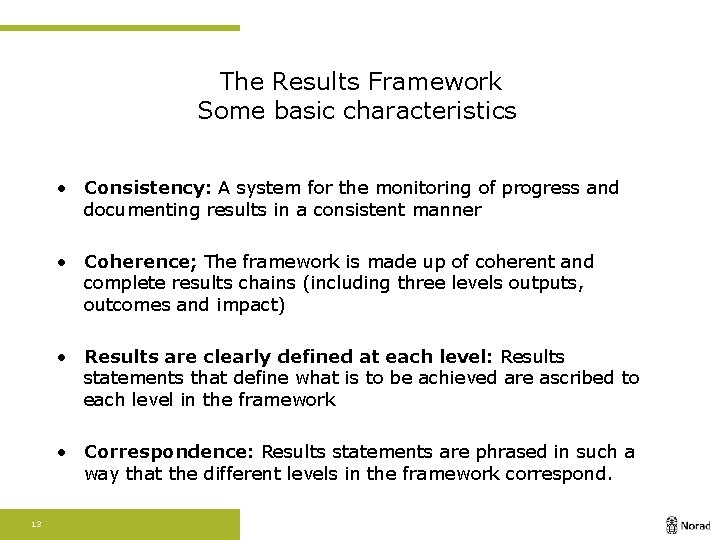
The Results Framework Some basic characteristics • Consistency: A system for the monitoring of progress and documenting results in a consistent manner • Coherence; The framework is made up of coherent and complete results chains (including three levels outputs, outcomes and impact) • Results are clearly defined at each level: Results statements that define what is to be achieved are ascribed to each level in the framework • Correspondence: Results statements are phrased in such a way that the different levels in the framework correspond. 13
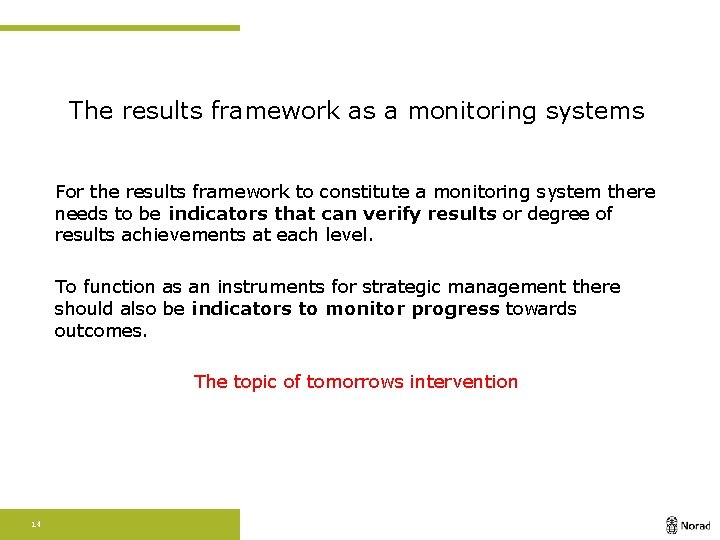
The results framework as a monitoring systems For the results framework to constitute a monitoring system there needs to be indicators that can verify results or degree of results achievements at each level. To function as an instruments for strategic management there should also be indicators to monitor progress towards outcomes. The topic of tomorrows intervention 14
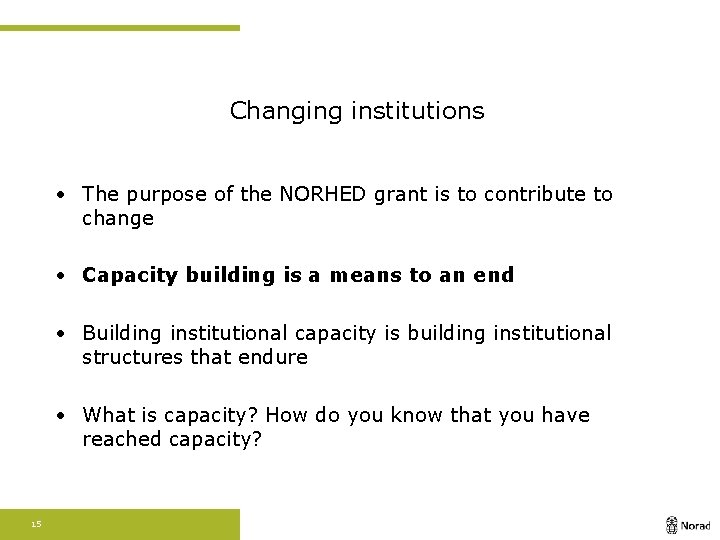
Changing institutions • The purpose of the NORHED grant is to contribute to change • Capacity building is a means to an end • Building institutional capacity is building institutional structures that endure • What is capacity? How do you know that you have reached capacity? 15
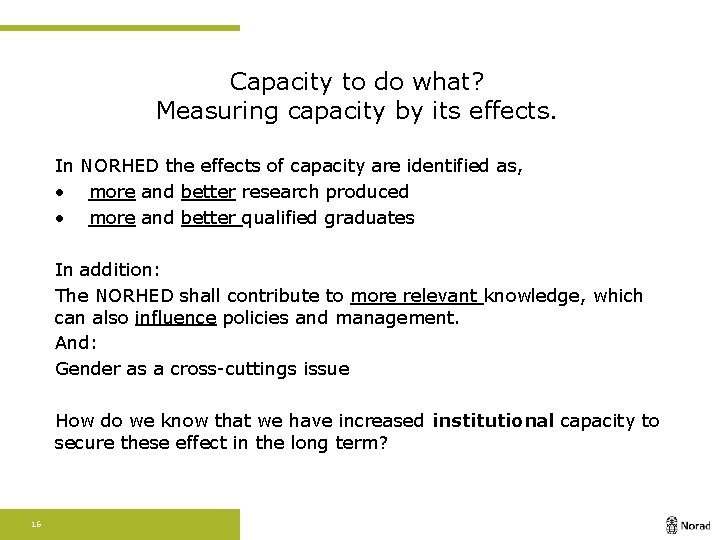
Capacity to do what? Measuring capacity by its effects. In NORHED the effects of capacity are identified as, • more and better research produced • more and better qualified graduates In addition: The NORHED shall contribute to more relevant knowledge, which can also influence policies and management. And: Gender as a cross-cuttings issue How do we know that we have increased institutional capacity to secure these effect in the long term? 16
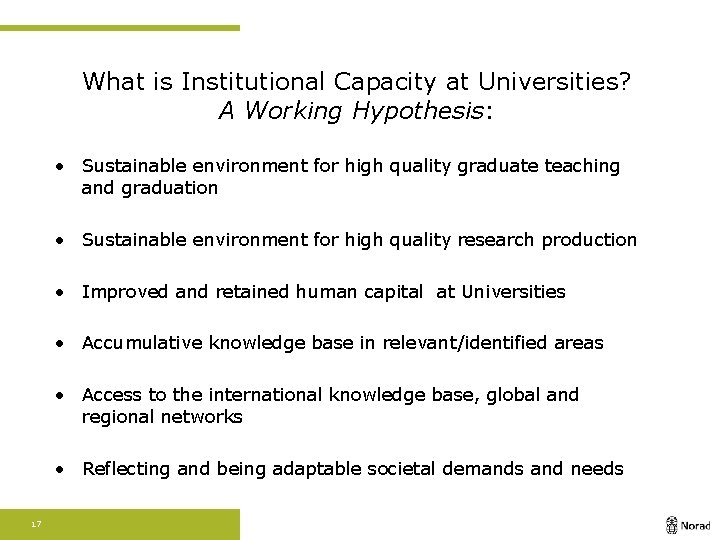
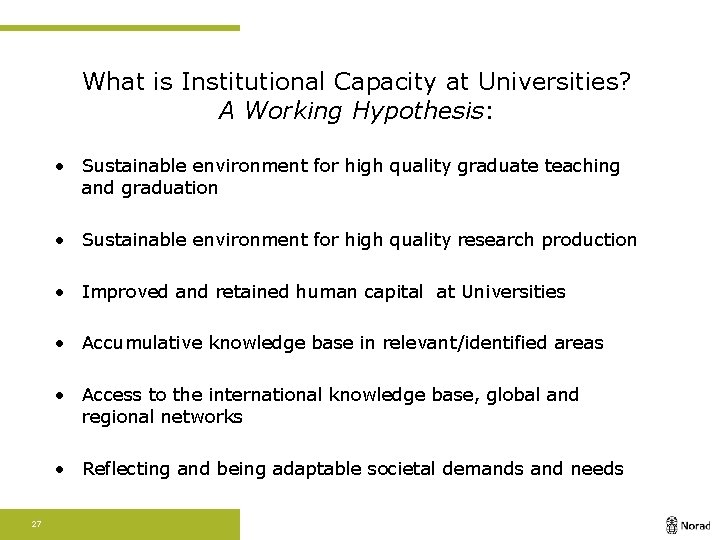
What is Institutional Capacity at Universities? A Working Hypothesis: • Sustainable environment for high quality graduate teaching and graduation • Sustainable environment for high quality research production • Improved and retained human capital at Universities • Accumulative knowledge base in relevant/identified areas • Access to the international knowledge base, global and regional networks • Reflecting and being adaptable societal demands and needs 17
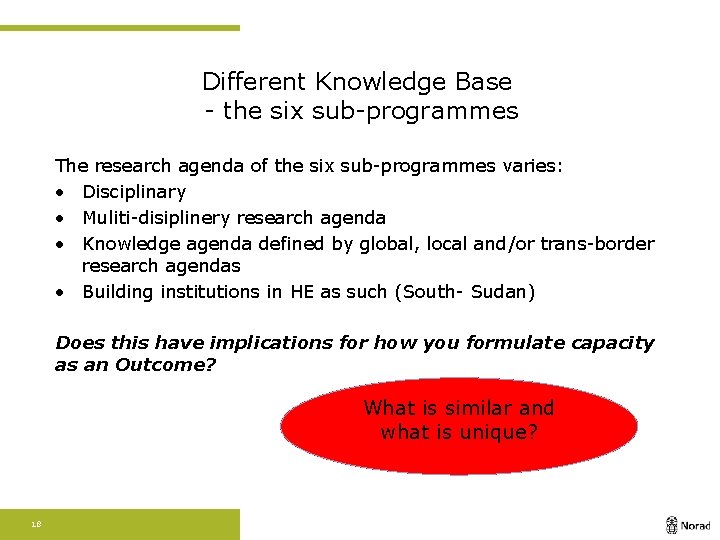
Different Knowledge Base - the six sub-programmes The research agenda of the six sub-programmes varies: • Disciplinary • Muliti-disiplinery research agenda • Knowledge agenda defined by global, local and/or trans-border research agendas • Building institutions in HE as such (South- Sudan) Does this have implications for how you formulate capacity as an Outcome? What is similar and what is unique? 18
Strategic Management towards Results Part II “If you want to make a good strategy you need to know where you are - and what it takes to get where you are going”. 19
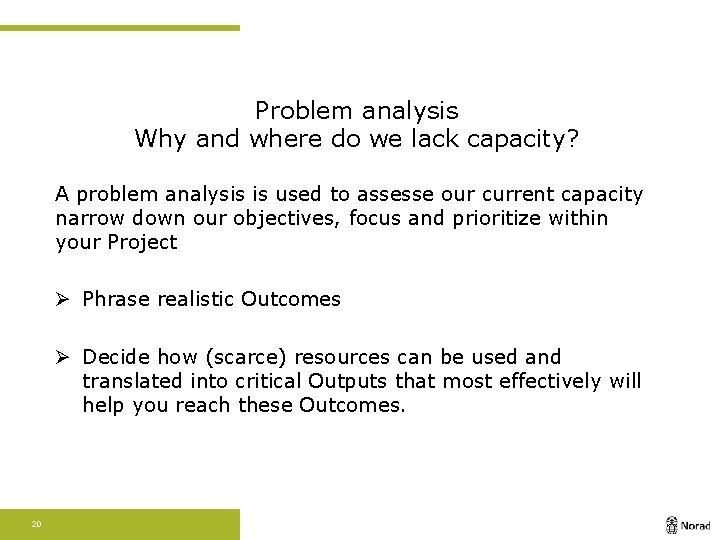
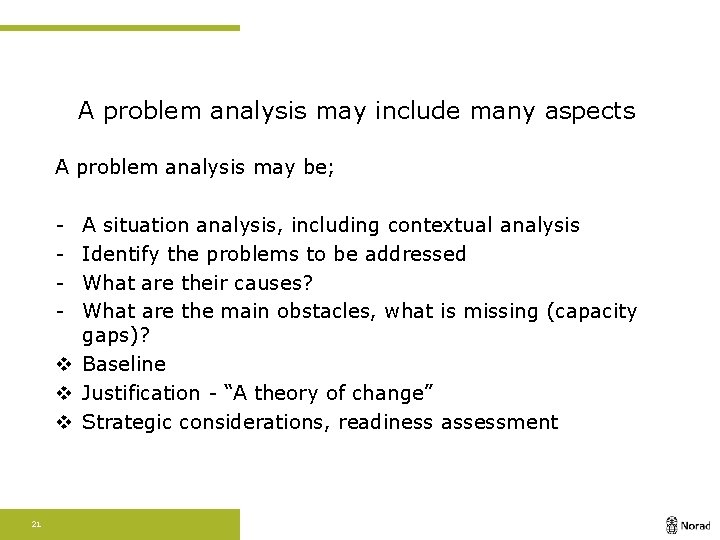
Problem analysis Why and where do we lack capacity? A problem analysis is used to assesse our current capacity narrow down our objectives, focus and prioritize within your Project Ø Phrase realistic Outcomes Ø Decide how (scarce) resources can be used and translated into critical Outputs that most effectively will help you reach these Outcomes. 20
A problem analysis may include many aspects A problem analysis may be; - A situation analysis, including contextual analysis Identify the problems to be addressed What are their causes? What are the main obstacles, what is missing (capacity gaps)? v Baseline v Justification - “A theory of change” v Strategic considerations, readiness assessment 21
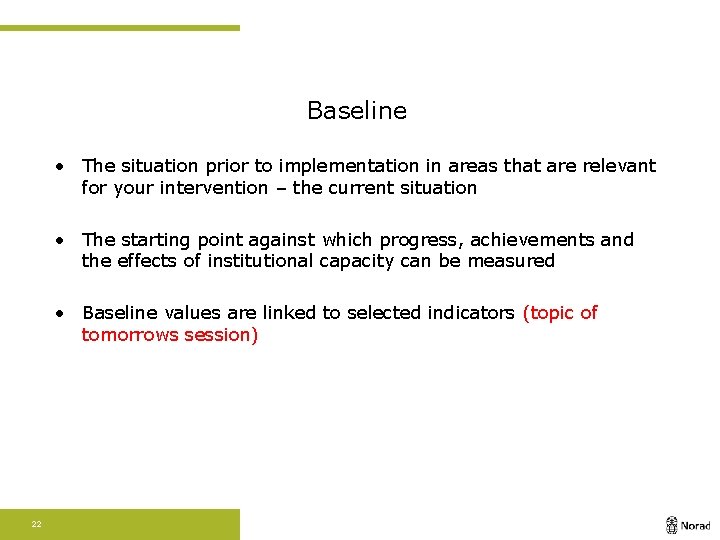
Baseline • The situation prior to implementation in areas that are relevant for your intervention – the current situation • The starting point against which progress, achievements and the effects of institutional capacity can be measured • Baseline values are linked to selected indicators (topic of tomorrows session) 22
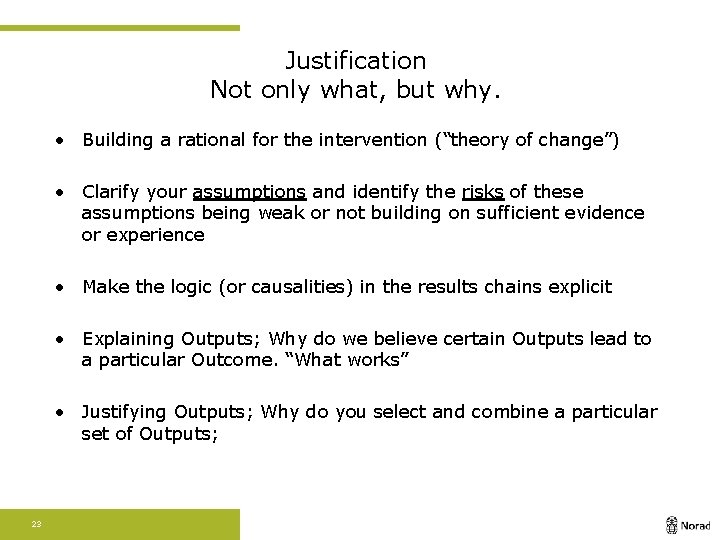
Justification Not only what, but why. • Building a rational for the intervention (“theory of change”) • Clarify your assumptions and identify the risks of these assumptions being weak or not building on sufficient evidence or experience • Make the logic (or causalities) in the results chains explicit • Explaining Outputs; Why do we believe certain Outputs lead to a particular Outcome. “What works” • Justifying Outputs; Why do you select and combine a particular set of Outputs; 23
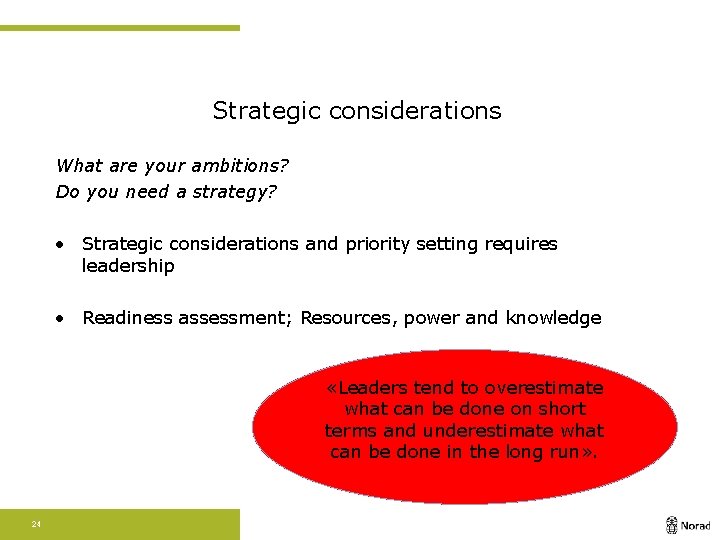
Strategic considerations What are your ambitions? Do you need a strategy? • Strategic considerations and priority setting requires leadership • Readiness assessment; Resources, power and knowledge «Leaders tend to overestimate what can be done on short terms and underestimate what can be done in the long run» . 24
Today’s mission Phrasing results statements • How do we phase strengthened capacity as clear Outcomes ? • Based on a Problem analysis, how do we identify essential Outputs that are needed to get there? • How do we select essential Outputs to be included in our framework and reported upon? 25
Impact 1. 0 Outcome ( Strengthened Institutions) 1. 1 Outcome 1. 1. 1. Output 1. 1. 2 Output 1. 2 Outcome 1. 1. 3 Output 1. 2. 1 Output 1. 3 Outcome 1. 2. 2 Output 1. 3. 1 Output
What is Institutional Capacity at Universities? A Working Hypothesis: • Sustainable environment for high quality graduate teaching and graduation • Sustainable environment for high quality research production • Improved and retained human capital at Universities • Accumulative knowledge base in relevant/identified areas • Access to the international knowledge base, global and regional networks • Reflecting and being adaptable societal demands and needs 27
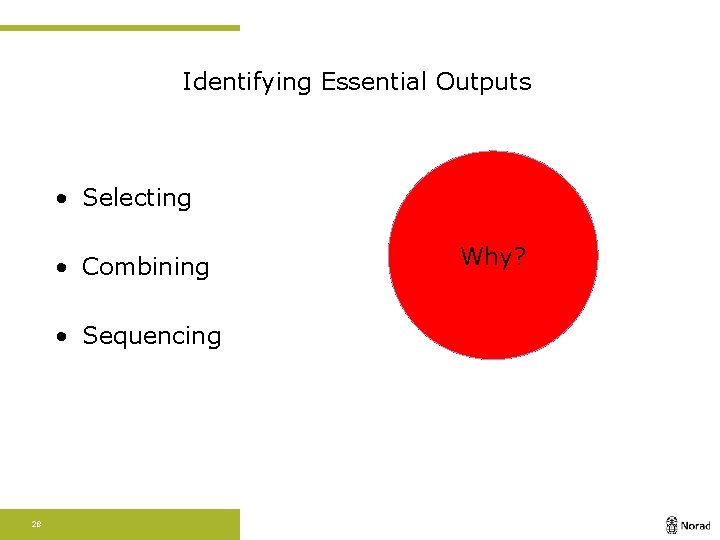
Identifying Essential Outputs • Selecting • Combining • Sequencing 28 Why?
Sustainable development Expanded and better qualified, gender balanced workforce Increased, better and relevant knowledge base Increased evidence base for policies and public decisions SP 1 SP 2 SP 1 29 SP 3 SP 4 SP 5 Strengthen Institutions SP 6 Research Environment /Infrastructure Networks Graduate education Management / administration Partnerships
Risk Management Risk management as a method to address the risks of not reaching planned results. Project risks; Ø Including management risks v Not including “corporate risk”; political and reputational risks and risks for own staff 30
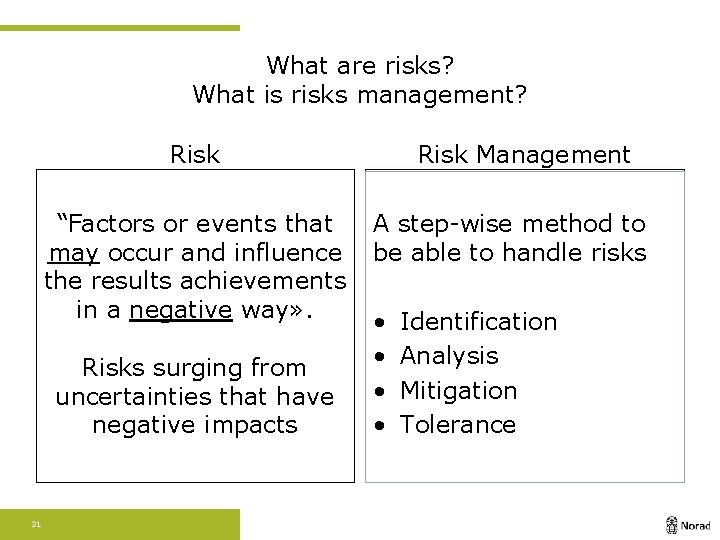
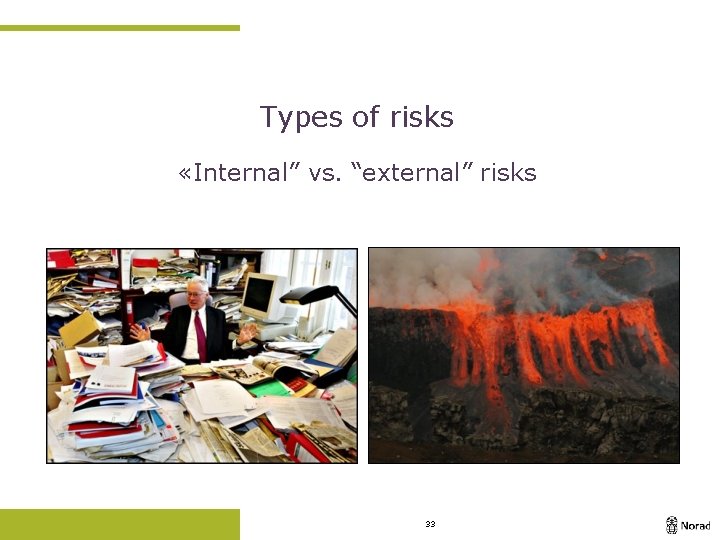
What are risks? What is risks management? Risk “Factors or events that may occur and influence the results achievements in a negative way» . Risks surging from uncertainties that have negative impacts 31 Risk Management A step-wise method to be able to handle risks • • Identification Analysis Mitigation Tolerance
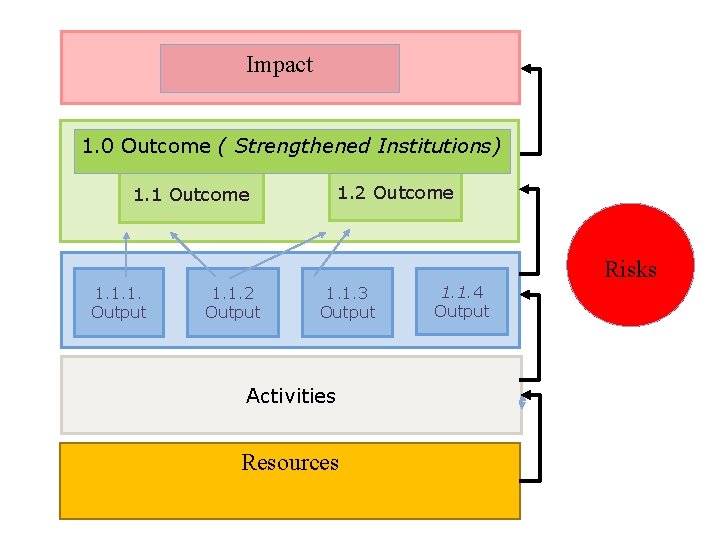
Impact 1. 0 Outcome ( Strengthened Institutions) 1. 2 Outcome 1. 1. 1. Output 1. 1. 2 Output 1. 1. 3 Output Activities Resources 1. 1. 4 Output Risks
Types of risks «Internal” vs. “external” risks Interne risiko Eksterne risiko 33
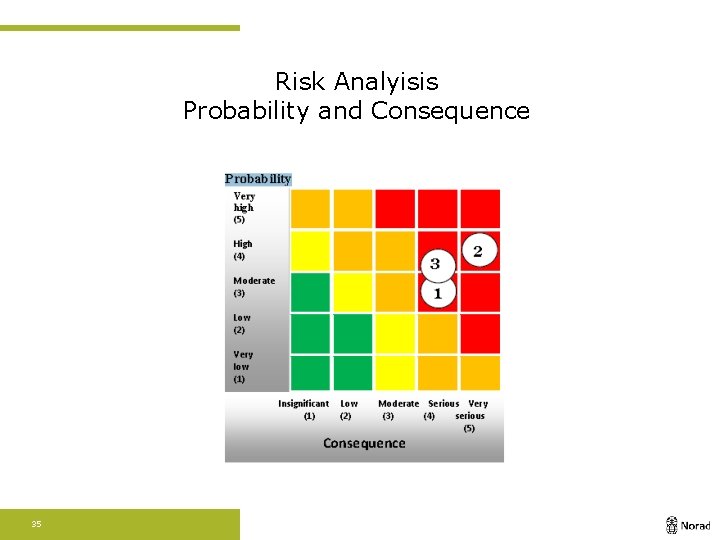
Main Principles in Risks Management • Risks must include both aspects; uncertainties and negative impact on achievement of results • Risk management divides into “phases” (identification, assessment, mitigation and tolerance) of which all are necessary elements • Assessment of probability and consequences to help identify the most significant risks to be prioritized when introducing mitigating measures 34
Risk Analyisis Probability and Consequence 35
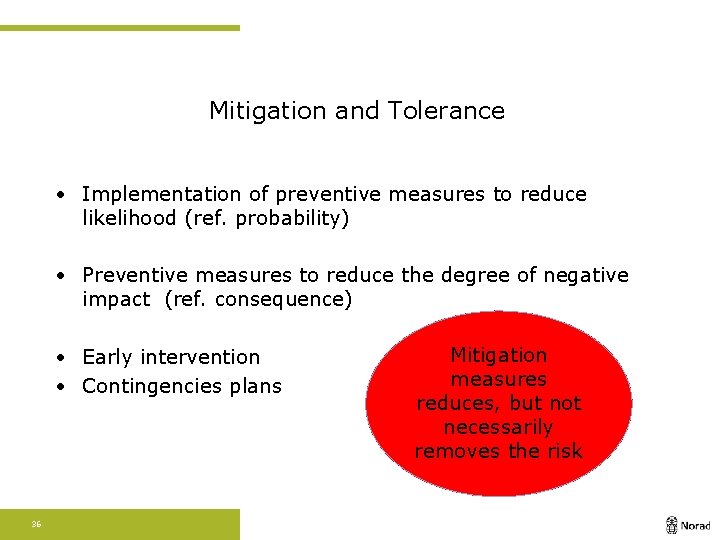
Mitigation and Tolerance • Implementation of preventive measures to reduce likelihood (ref. probability) • Preventive measures to reduce the degree of negative impact (ref. consequence) • Early intervention • Contingencies plans 36 Mitigation measures reduces, but not necessarily removes the risk
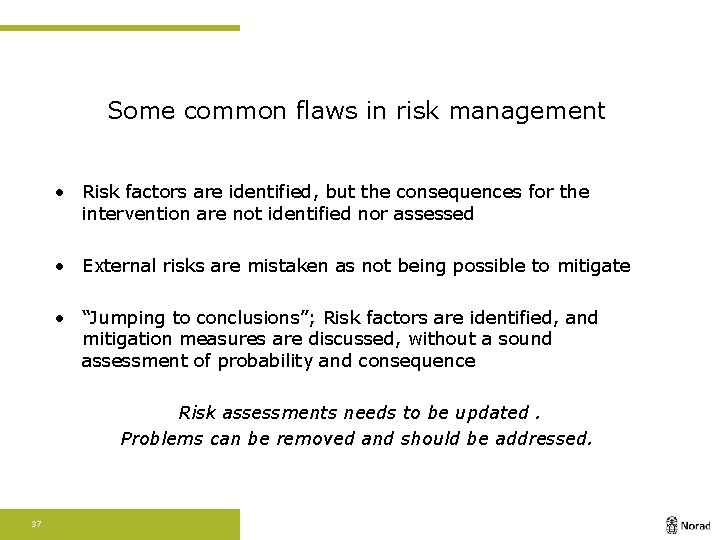
Some common flaws in risk management • Risk factors are identified, but the consequences for the intervention are not identified nor assessed • External risks are mistaken as not being possible to mitigate • “Jumping to conclusions”; Risk factors are identified, and mitigation measures are discussed, without a sound assessment of probability and consequence Risk assessments needs to be updated. Problems can be removed and should be addressed. 37