
Managing For Daily Improvement Creating Alignment Developing People

- Slides: 22
Managing For Daily Improvement Creating Alignment, Developing People, And Getting Things Done SOAR 2018 Macon, Georgia
Age-Old Questions § What is problem solving? § Who should be solving which problems? § How do you sustain the solutions to previously solved problems? § Not re-solve the same problems over and over again § How do you develop a metric driven organization? What is the problem that we are trying to solve… How to Engage/Align EVERYONE in our Vision
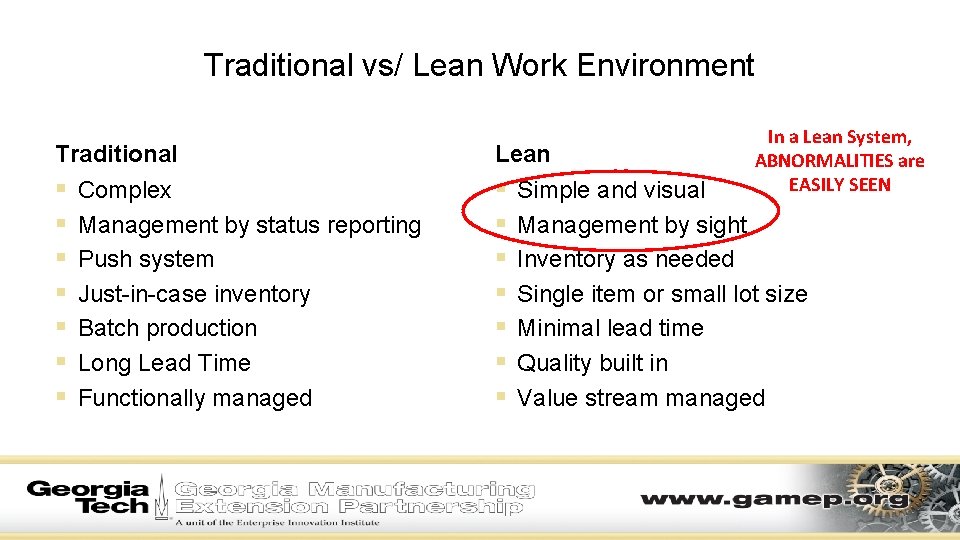
Traditional vs/ Lean Work Environment Traditional Lean § § § § Complex Management by status reporting Push system Just-in-case inventory Batch production Long Lead Time Functionally managed In a Lean System, ABNORMALITIES are EASILY SEEN Simple and visual Management by sight Inventory as needed Single item or small lot size Minimal lead time Quality built in Value stream managed
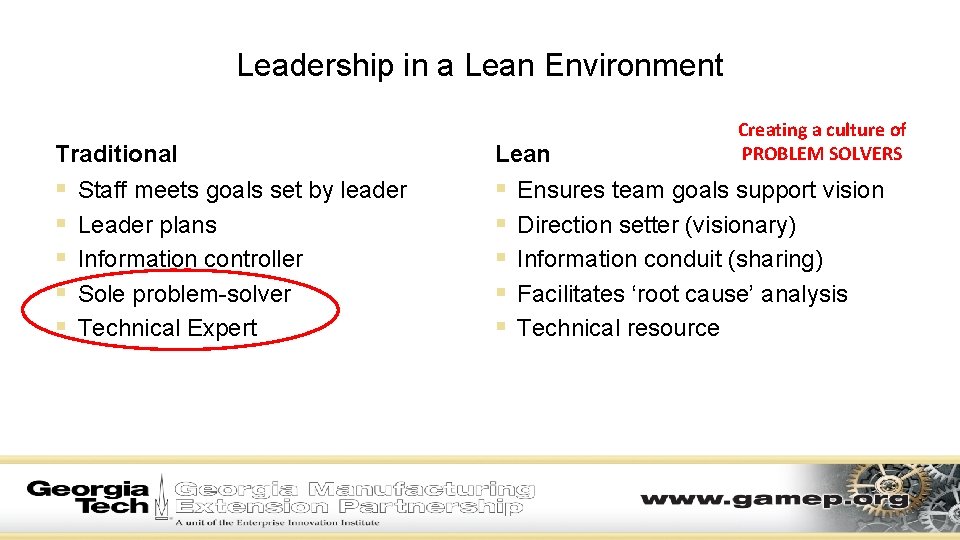
Leadership in a Lean Environment Traditional Lean § § § § § Staff meets goals set by leader Leader plans Information controller Sole problem-solver Technical Expert Creating a culture of PROBLEM SOLVERS Ensures team goals support vision Direction setter (visionary) Information conduit (sharing) Facilitates ‘root cause’ analysis Technical resource
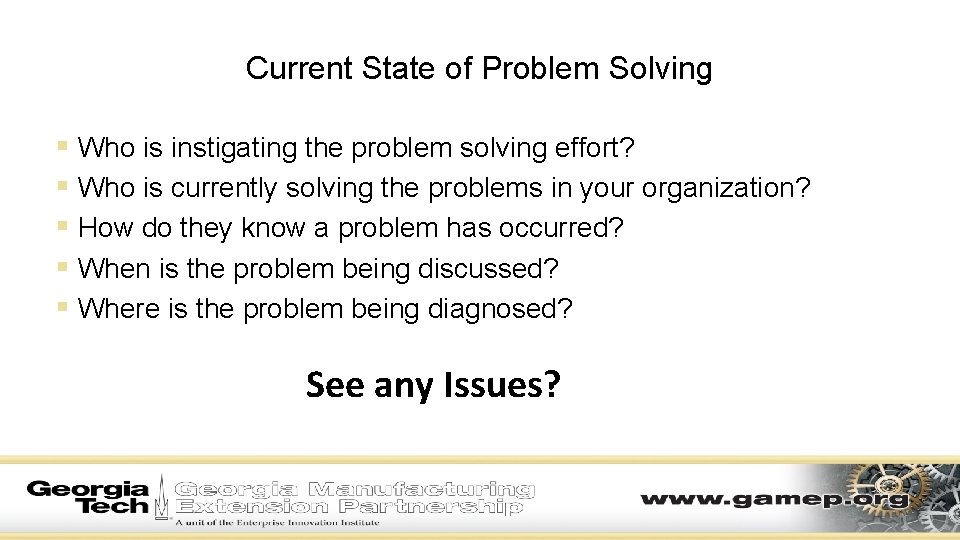
Current State of Problem Solving § Who is instigating the problem solving effort? § Who is currently solving the problems in your organization? § How do they know a problem has occurred? § When is the problem being discussed? § Where is the problem being diagnosed? See any Issues?
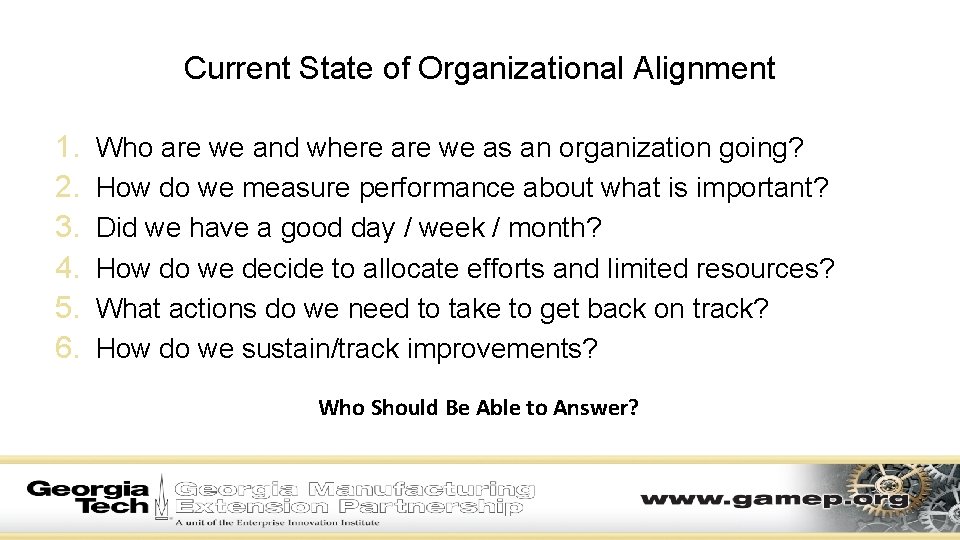
Current State of Organizational Alignment 1. 2. 3. 4. 5. 6. Who are we and where are we as an organization going? How do we measure performance about what is important? Did we have a good day / week / month? How do we decide to allocate efforts and limited resources? What actions do we need to take to get back on track? How do we sustain/track improvements? Who Should Be Able to Answer?
Managing for Daily Improvement § Performance Management: Discipline that aligns Performance with Strategy § “What gets measured gets done” § Cascades throughout ENTIRE Organization § Enabling front line associates § Improving processes and performance Vertical Cascading allows strategy to roll down and metrics to roll up
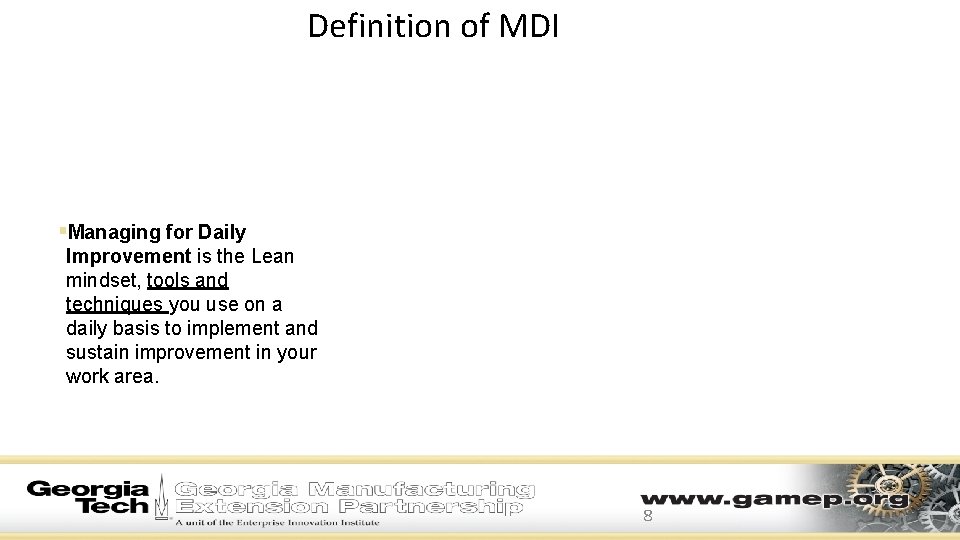
Definition of MDI §Managing for Daily Improvement is the Lean mindset, tools and techniques you use on a daily basis to implement and sustain improvement in your work area. 8
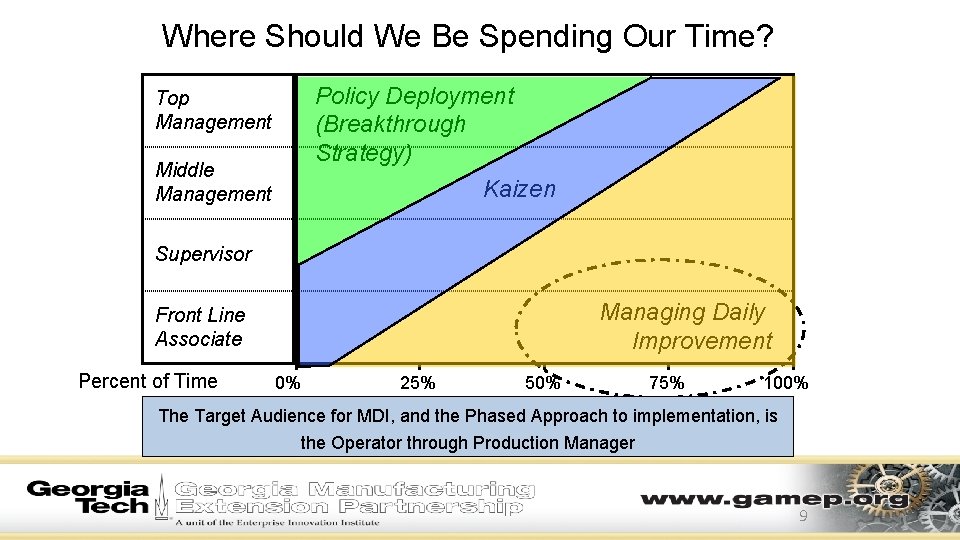
Where Should We Be Spending Our Time? Policy Deployment (Breakthrough Strategy) Kaizen Top Management Middle Management Supervisor Managing Daily Improvement Front Line Associate Percent of Time 0% 25% 50% 75% 100% The Target Audience for MDI, and the Phased Approach to implementation, is the Operator through Production Manager 9
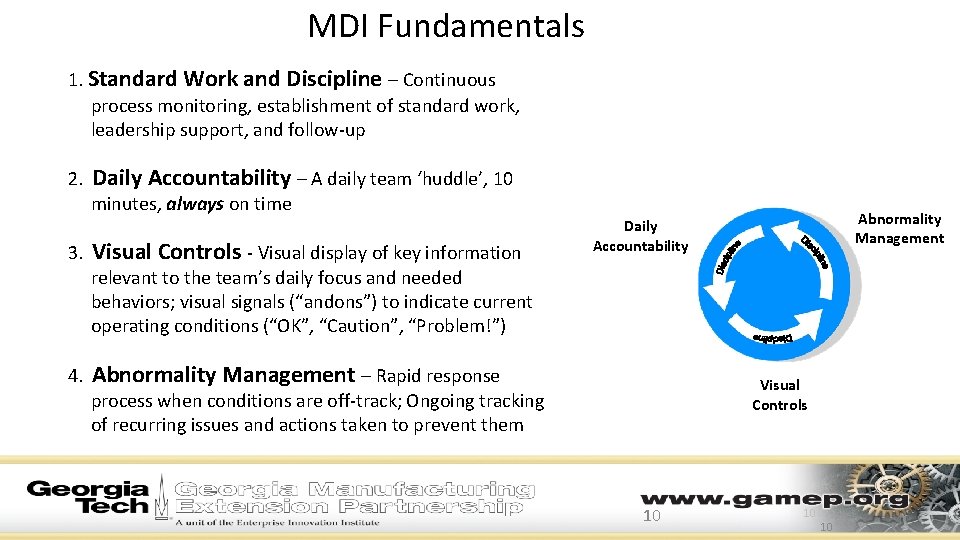
MDI Fundamentals 1. Standard Work and Discipline – Continuous process monitoring, establishment of standard work, leadership support, and follow-up 2. Daily Accountability – A daily team ‘huddle’, 10 minutes, always on time 3. Visual Controls - Visual display of key information Abnormality Management Daily Accountability relevant to the team’s daily focus and needed behaviors; visual signals (“andons”) to indicate current operating conditions (“OK”, “Caution”, “Problem!”) 4. Abnormality Management – Rapid response Visual Controls process when conditions are off-track; Ongoing tracking of recurring issues and actions taken to prevent them 10 10 10
MDI in Operations § Visual Management of Metrics § Ownership § Action Items Communicated and Tracked § Timely § KPI (Key Performance Indicator) embodies a strategic objective and measure performance against a goal § 2 Types: Outcomes versus Drivers
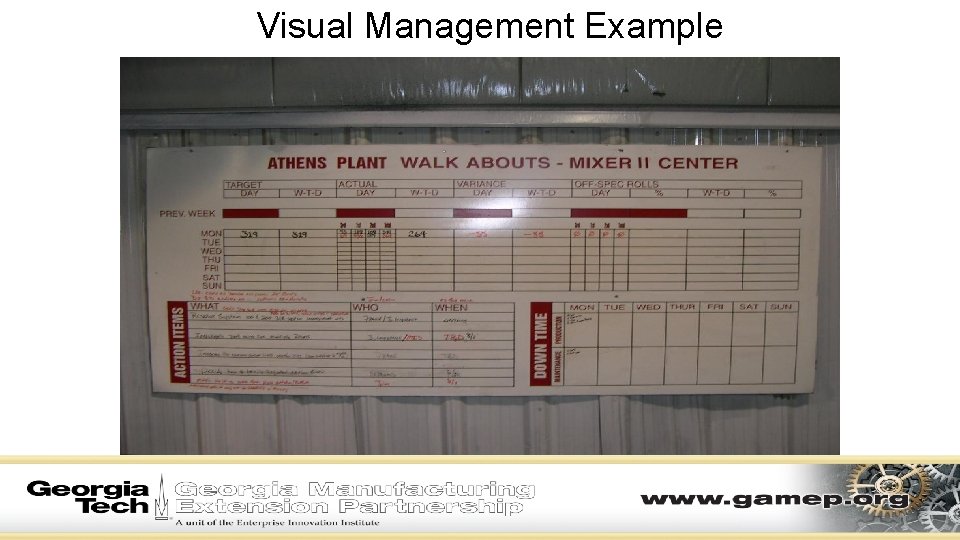
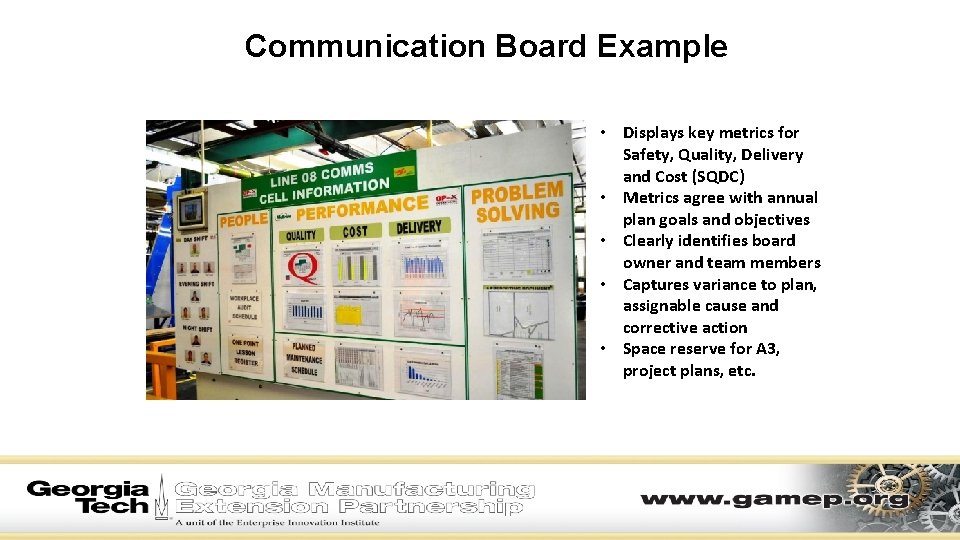
Visual Management Boards § Should show normal versus the abnormal § Should indicate the status of the process § Should direct the leadership to areas that need support § Should indicate the actions or countermeasures that are in process
Visual Management Example
Communication Board Example • Displays key metrics for Safety, Quality, Delivery and Cost (SQDC) • Metrics agree with annual plan goals and objectives • Clearly identifies board owner and team members • Captures variance to plan, assignable cause and corrective action • Space reserve for A 3, project plans, etc.
Creating Effective KPIs is as much ART as SCIENCE Constantly Monitor and Revise 1. 2. 3. 4. 5. Sparse Drillable Simple Actionable Owned 6. 7. 8. 9. Correlated Balanced Aligned Validated Remember everyone should see value and ACTION
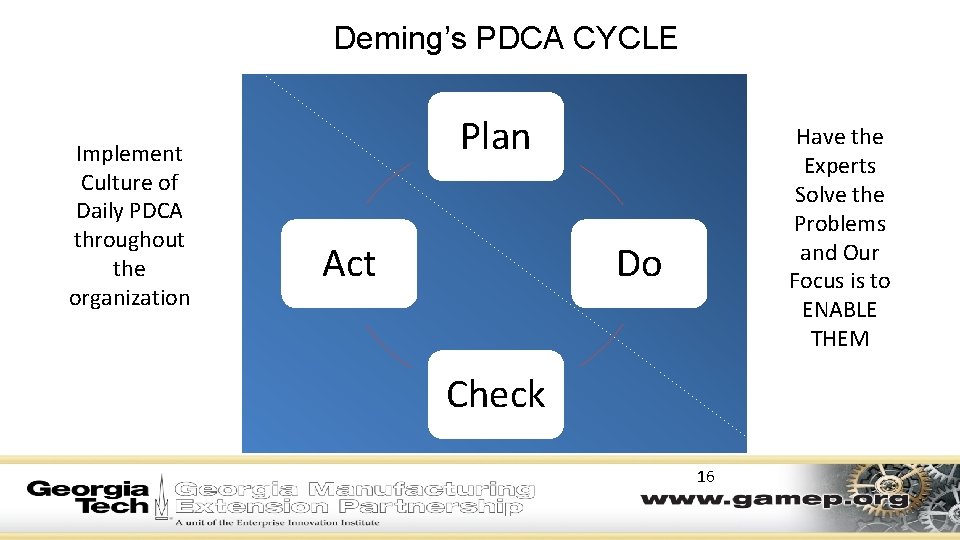
Deming’s PDCA CYCLE Implement Culture of Daily PDCA throughout the organization Plan Act Have the Experts Solve the Problems and Our Focus is to ENABLE THEM Do Check 16
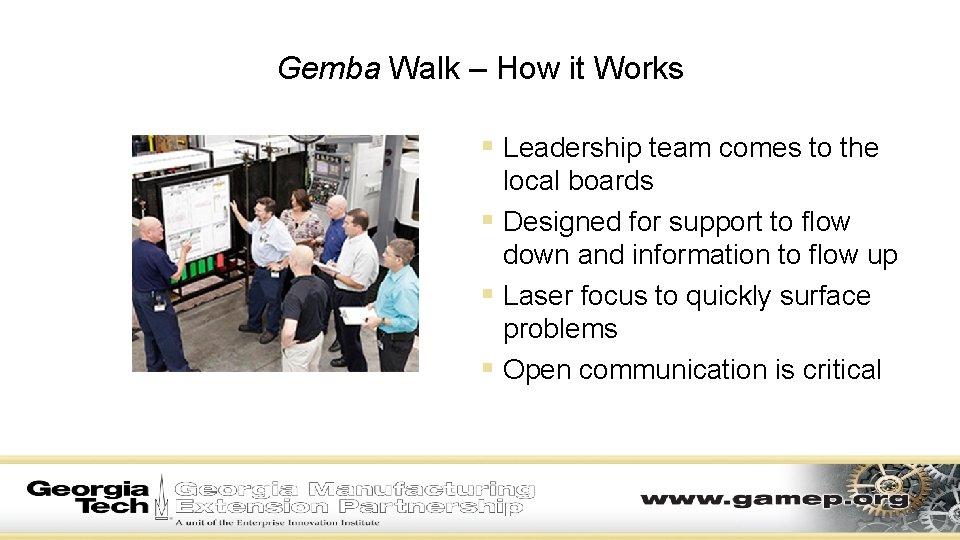
Keys to Tying it Together § Gemba Walk Implemented to Coach and Enable Teams § Servant Leadership Culture; “What do you need from me? ” § Action Oriented § Constantly Revisit § Does this process help us get better? § Continue to Grow and Develop § Involve Experts
Gemba Walk – How it Works § Leadership team comes to the local boards § Designed for support to flow down and information to flow up § Laser focus to quickly surface problems § Open communication is critical
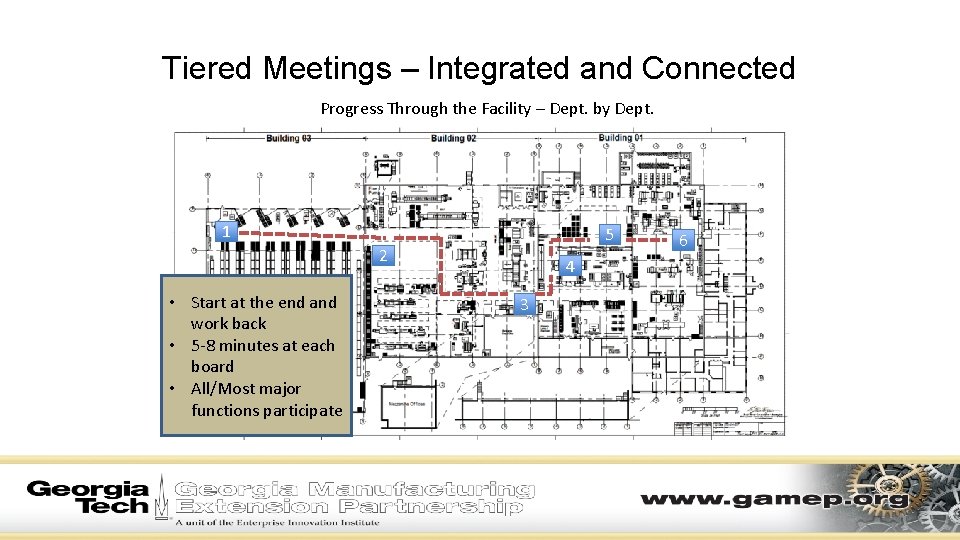
Tiered Meetings – Integrated and Connected Progress Through the Facility – Dept. by Dept. 1 5 2 • Start at the end and work back • 5 -8 minutes at each board • All/Most major functions participate 4 3 6
Coaching Questions 1. 2. 3. 4. 5. What are we trying to achieve? Where are we now? What obstacles are in our way? What is our next step, and what do we expect? When can we see what we’ve learned from taking that step? Go See…Ask Why…Show Respect
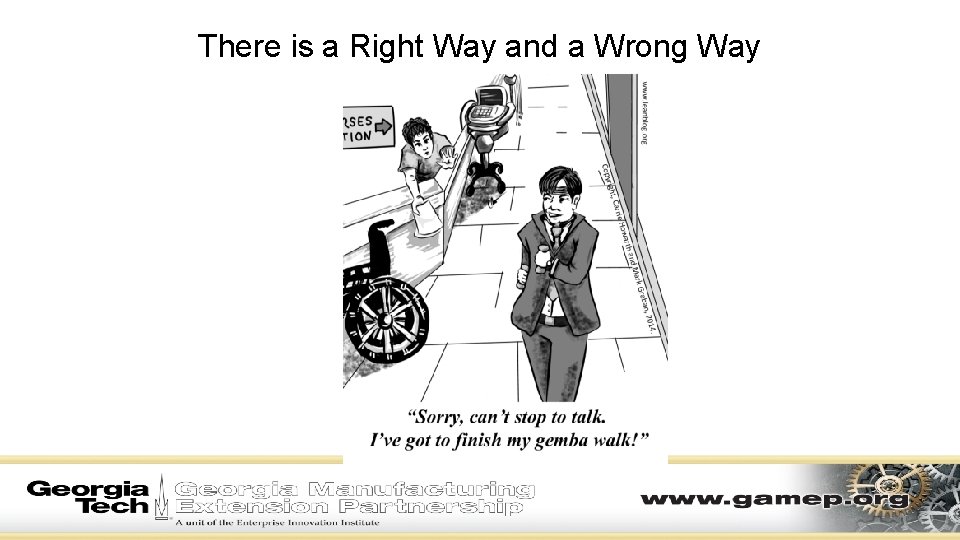
There is a Right Way and a Wrong Way
Questions/Comments? Paul Todd Project Manager Georgia Tech Manufacturing Extension Partnership 478 -471 -5382 Paul. Todd@gatech. edu