
Managing Ethics and Diversity Chapter Three Mc GrawHillIrwin

- Slides: 40
Managing Ethics and Diversity Chapter Three Mc. Graw-Hill/Irwin Copyright © 2011 by the Mc. Graw-Hill Companies, Inc. All rights reserved.
Learning Objectives LO 1 Illustrate how ethics help managers determine the right or proper way to behave when dealing with different stakeholder groups LO 2 Explain why managers should strive to create ethical organizational cultures LO 3 Appreciate the increasing diversity of the workforce and of the organization environment 3 -2
Learning Objectives (cont. ) LO 4 Grasp the central role that managers play in the effective management of diversity LO 5 Understand why the effective management of diversity is both an ethical and business imperative LO 6 Understand the two major forms of sexual harassment and how they can be eliminated 3 -3
The Nature of Ethics • Ethical Dilemma – Quandary people find themselves in when they have to decide if they should act in a way that might help another person even though doing so might go against their own self-interest 3 -4
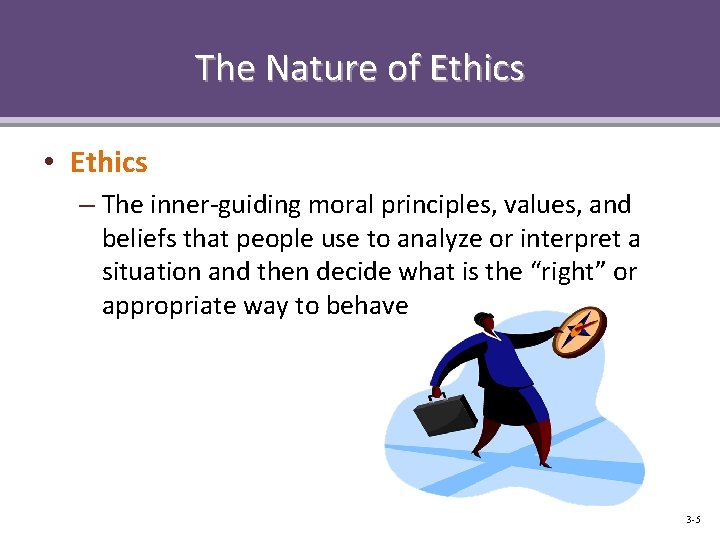
The Nature of Ethics • Ethics – The inner-guiding moral principles, values, and beliefs that people use to analyze or interpret a situation and then decide what is the “right” or appropriate way to behave 3 -5
Stakeholders and Ethics • Stakeholders – The people and groups that supply a company with its productive resources and so have a claim on and stake in the company 3 -6
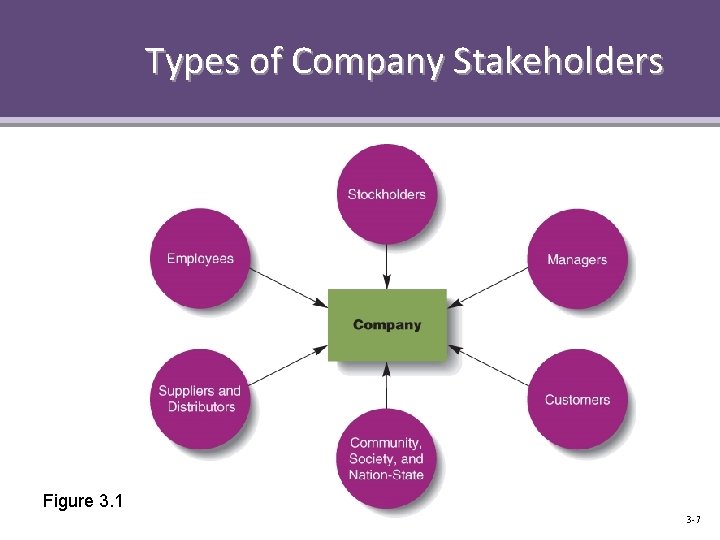
Types of Company Stakeholders Figure 3. 1 3 -7
Stockholders • Want to ensure that managers are behaving ethically and not risking investors’ capital by engaging in actions that could hurt the company’s reputation • Want to maximize their return on investment 3 -8
Managers • Responsible for using a company’s financial capital and human resources to increase its performance • Have the right to expect a good return or reward by investing their human capital to improve a company’s performance • Frequently juggle multiple interests 3 -9
Discussion Question: Managers Is it ethical for managers to receive vast amounts of money from their companies? A. Yes B. No C. Sometimes D. Never 3 -10
Employees • Companies can act ethically toward employees by creating an occupational structure that fairly and equitably rewards employees for their contributions 3 -11
Suppliers and Distributors • Suppliers expect to be paid fairly and promptly for their inputs • Distributors expect to receive quality products at agreedupon prices 3 -12
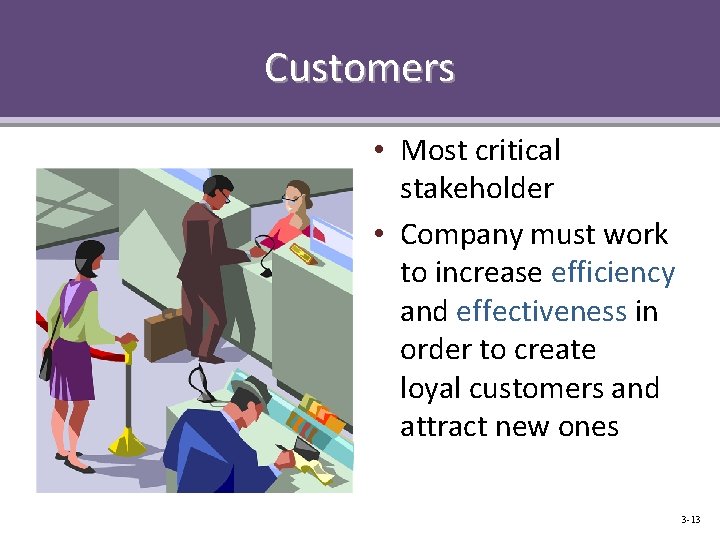
Customers • Most critical stakeholder • Company must work to increase efficiency and effectiveness in order to create loyal customers and attract new ones 3 -13
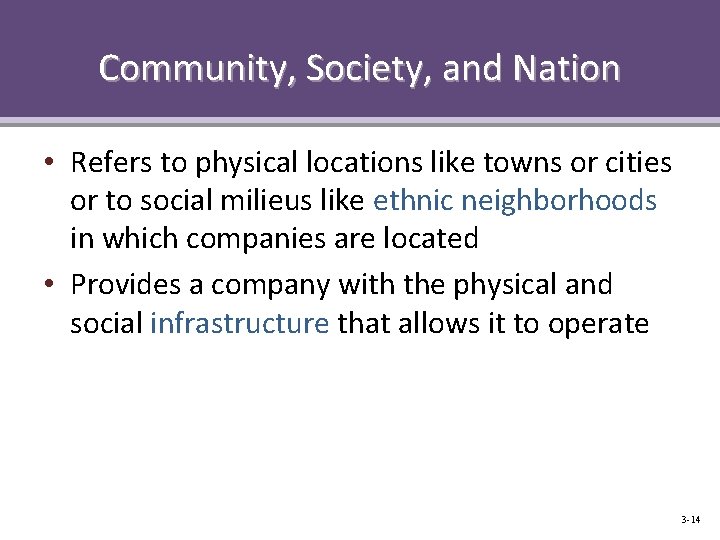
Community, Society, and Nation • Refers to physical locations like towns or cities or to social milieus like ethnic neighborhoods in which companies are located • Provides a company with the physical and social infrastructure that allows it to operate 3 -14
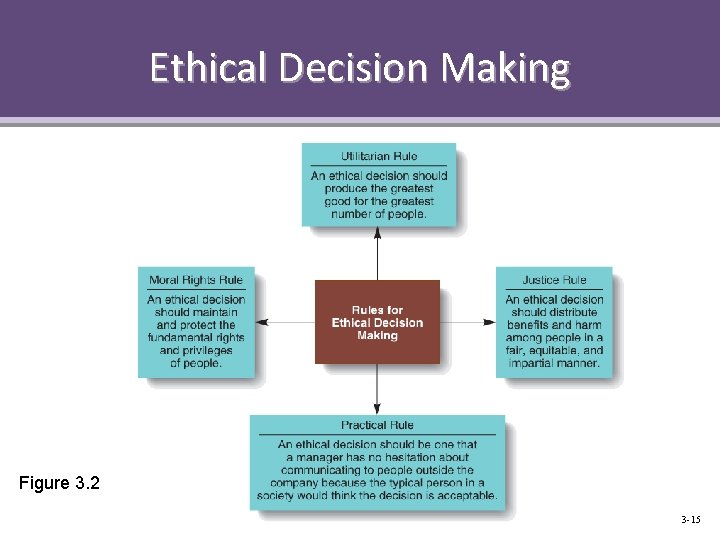
Ethical Decision Making Figure 3. 2 3 -15
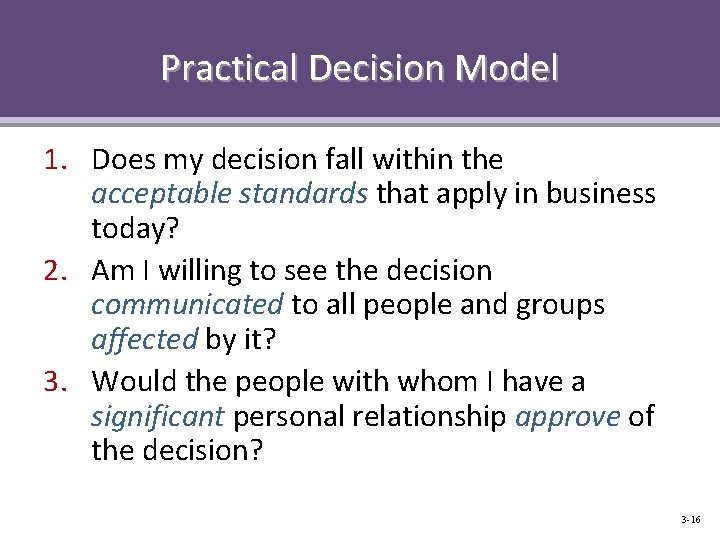
Practical Decision Model 1. Does my decision fall within the acceptable standards that apply in business today? 2. Am I willing to see the decision communicated to all people and groups affected by it? 3. Would the people with whom I have a significant personal relationship approve of the decision? 3 -16
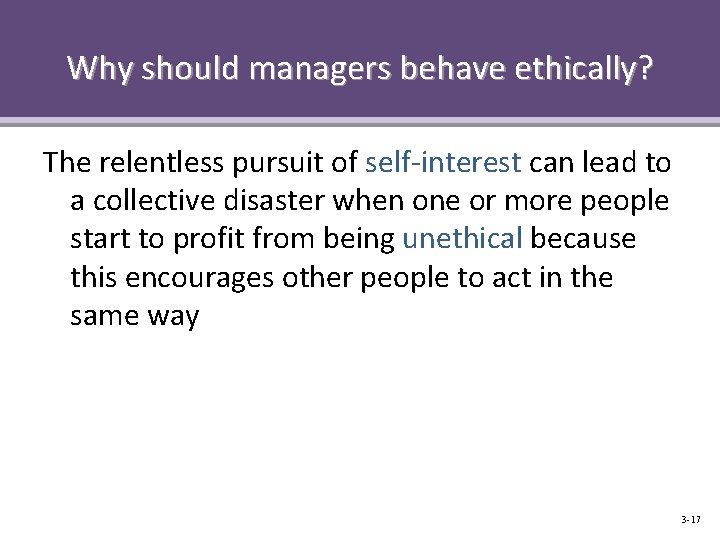
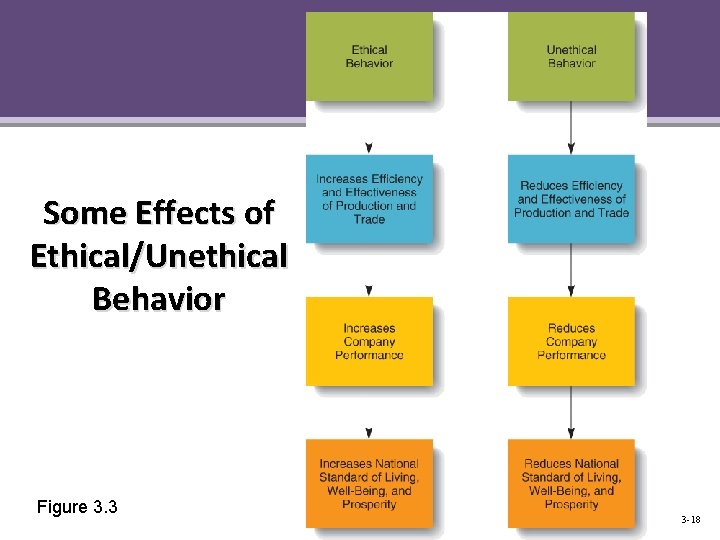
Why should managers behave ethically? The relentless pursuit of self-interest can lead to a collective disaster when one or more people start to profit from being unethical because this encourages other people to act in the same way 3 -17
Some Effects of Ethical/Unethical Behavior Figure 3. 3 3 -18
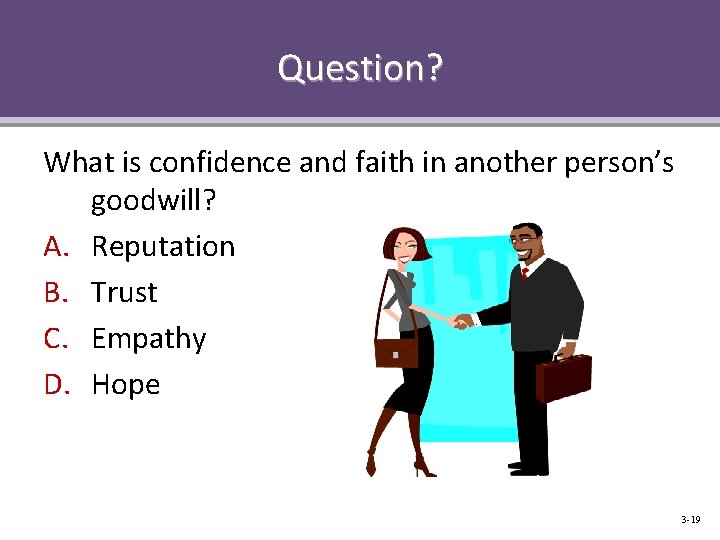
Question? What is confidence and faith in another person’s goodwill? A. Reputation B. Trust C. Empathy D. Hope 3 -19
Why should managers behave ethically? • Trust – Willingness of one person or group to have faith or confidence in another person’s goodwill, even though this puts them at risk • Reputation – esteem or high repute that individuals or organizations gain when they behave ethically 3 -20
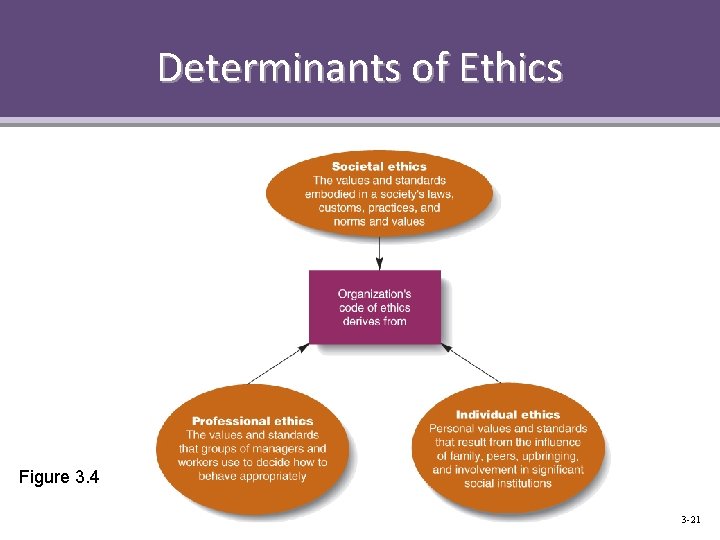
Determinants of Ethics Figure 3. 4 3 -21
Ethical Organizational Cultures • Managers can ensure that important ethical values and norms are key features of an organization’s culture • Managers become ethical role models whose behavior is scrutinized by their subordinates 3 -22
Ethical Organizational Cultures • Ethics Ombudsman – An ethics officer who monitors an organization’s practices and procedures to be sure they are ethical 3 -23
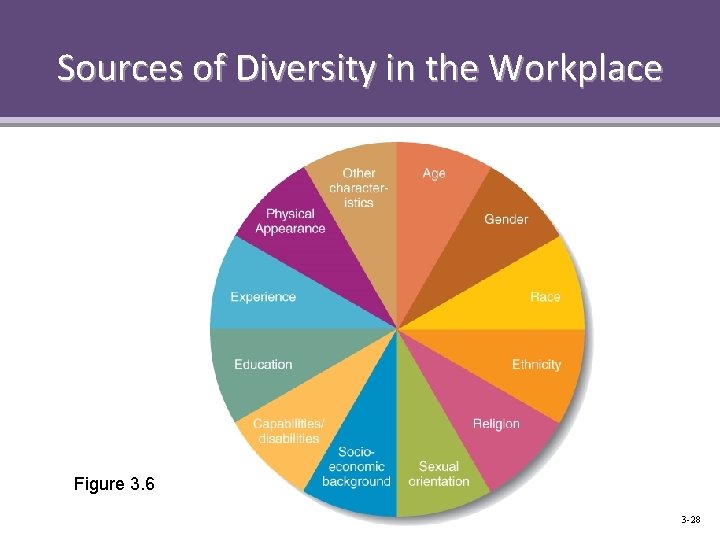
The Increasing Diversity of the Workforce and the Environment • Diversity – Differences among people in age, gender, race, ethnicity, religion, sexual orientation, socioeconomic background, and capabilities/disabilities 3 -24
Diversity Concerns • The ethical imperative for equal opportunity • Effectively managing diversity can improve organizational effectiveness • The continuing bias toward diverse individuals 3 -25
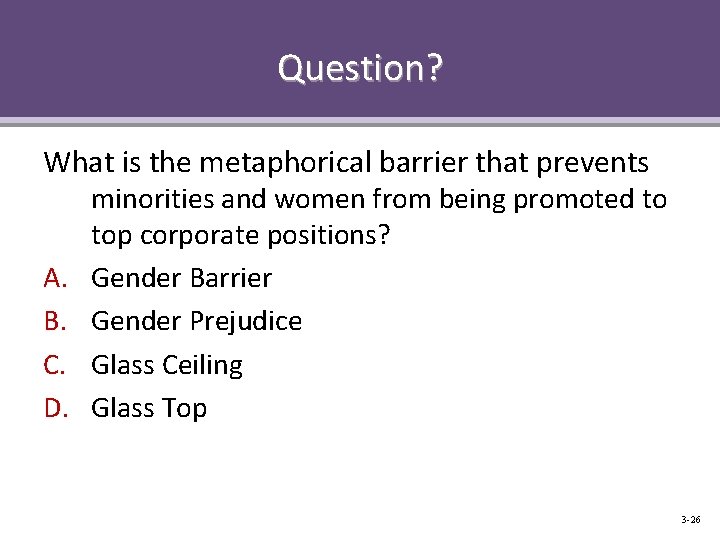
Question? What is the metaphorical barrier that prevents A. B. C. D. minorities and women from being promoted to top corporate positions? Gender Barrier Gender Prejudice Glass Ceiling Glass Top 3 -26
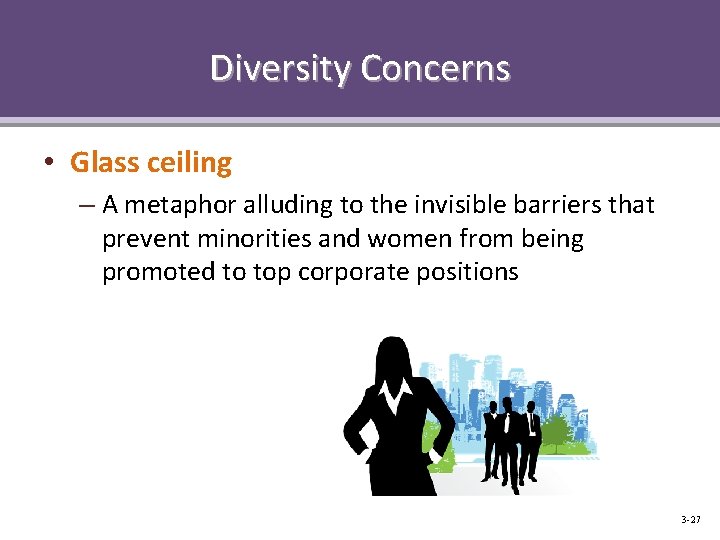
Diversity Concerns • Glass ceiling – A metaphor alluding to the invisible barriers that prevent minorities and women from being promoted to top corporate positions 3 -27
Sources of Diversity in the Workplace Figure 3. 6 3 -28
Workforce Diversity: Age • Aging U. S. Population – By 2030, 20 percent of the population will be over 65 • Federal Age Discrimination Laws – 1964 – 1967 Title VII of the Civil Rights Act of 1964 Age Discrimination in Employment Act 3 -29
Workforce Diversity: Gender • Women in the Work Place – U. S. workforce is 46. 5 % percent female – Women’s weekly median earnings are $572 compared to $714 for men. – Women hold only 16% of corporate officer positions 3 -30
Workforce Diversity: Religion • Accommodation for Religious Beliefs – Scheduling of critical meetings – Providing flexible time off for holy days – Posting holy days for different religions on the company calendar 3 -31
Workforce Diversity: Capabilities and Disabilities • Disability Issues – Providing reasonable accommodations for individuals with disabilities – Promoting a nondiscriminatory workplace environment – Educating the organization about disabilities and AIDS 3 -32
Workforce Diversity: Socioeconomic Background • Socioeconomic Background Issues – Widening diversity in income levels – Single mothers and the “working poor” – Child and elder care for working parents 3 -33
Workforce Diversity: Sexual Orientation • Sexual Orientation Issues – Employment and workplace discrimination – Provision of domestic-partner benefits 3 -34
Critical Managerial Roles • Managers have more influence than rank-andfile employees • When managers commit to diversity, it legitimizes diversity efforts of others 3 -35
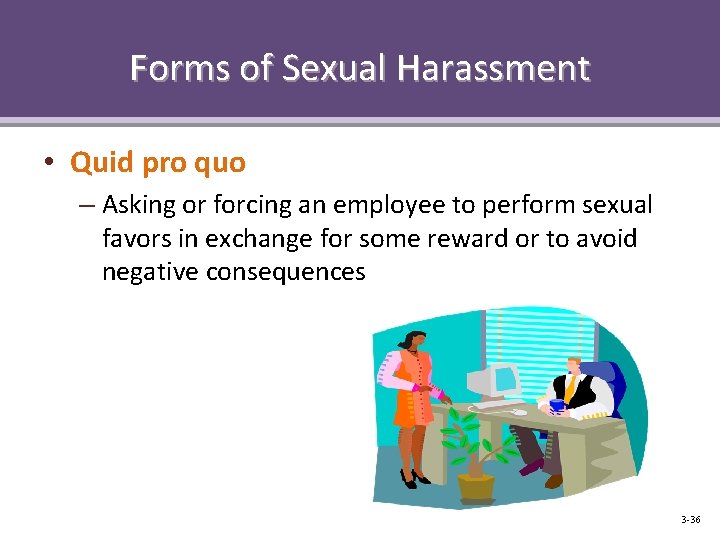
Forms of Sexual Harassment • Quid pro quo – Asking or forcing an employee to perform sexual favors in exchange for some reward or to avoid negative consequences 3 -36
Forms of Sexual Harassment • Hostile work environment – Telling lewd jokes, displaying pornography, making sexually oriented remarks about someone’s personal appearance, and other sex-related actions that make the work environment unpleasant. 3 -37
Steps to Eradicate Sexual Harassment • Develop and clearly communicate a sexual harassment policy endorsed by top management • Use a fair complaint to investigate charges of sexual harassment 3 -38
Steps to Eradicate Sexual Harassment • When it has been determined that sexual harassment has taken place, take corrective action as soon as possible • Provide sexual harassment education and training to all organizational members, including managers 3 -39
Video Case: Whose Life is It Anyway? • Do you think it is ethical for Scott’s or other companies to fire employees who smoke, even if they only smoke outside of work? • In implementing Scott’s health initiatives, does Hagedorn put the interests of one group of stakeholders above those of another? 3 -40