
Managing Conflict Seth Caron Emily Rodgers Conflict is

- Slides: 16
Managing Conflict Seth Caron Emily Rodgers
Conflict is Normal • Normal part of a teams process – Healthy • “Defensive avoidance” • Conflict during team stages
Sources of Conflict • Determine the source • Hidden conflicts – Organizational, social, personal
Sources of Conflict • Healthy – Focus on task issues – Legitimate difference of opinion – Differences in values and perspectives – Different expectations about the impact of decisions • Unhealthy – Competition over power, rewards, and resources – Conflict between individual and group goals – Poorly run team meetings – Personal grudges – Faulty communication
Impact of Conflict • Positive – New approaches, motivates, encourages new ideas – Stimulates team creativity • Negative – Negative emotions, stress – Diverts attention from tasks and goals – Destroys team cohesion • Integral part of the team process
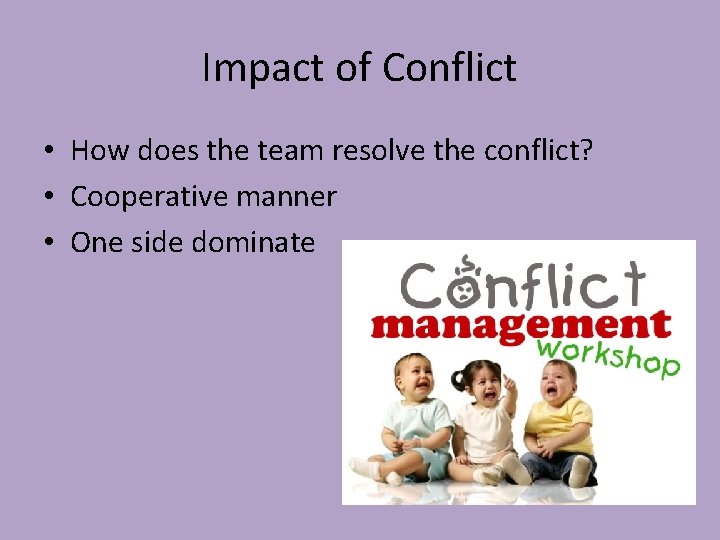
Impact of Conflict • How does the team resolve the conflict? • Cooperative manner • One side dominate
Conflict in Work Teams • • Routine task Non-routine task Task and relationship conflicts Trust
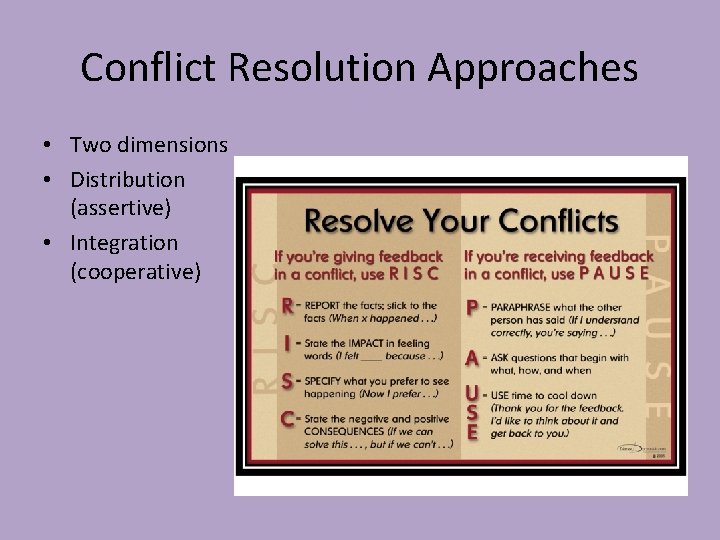
Conflict Resolution Approaches • Two dimensions • Distribution (assertive) • Integration (cooperative)
Five Approaches to Conflict Resolution 1. Avoidance- 2. Accommodation 3. Confrontation- 4. 5. ignore the issue - give up your position acting aggressive to win Compromisebalance goals of everyone Collaborationsolution that satisfies everyone
Negotiation • Exchange of offers and counteroffers to achieve a mutual agreement – Win-Win – Win-Lose • Stand Tough • GRIT (Graduated and Reciprocal Initiative in Tension Reduction)
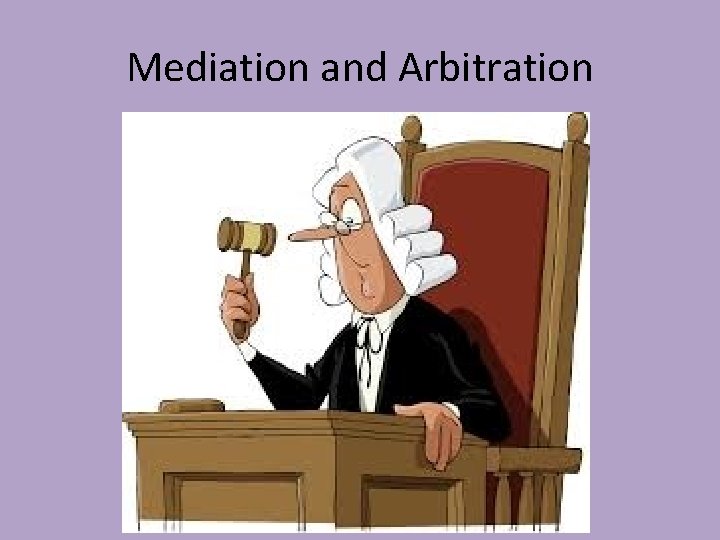
Mediation and Arbitration
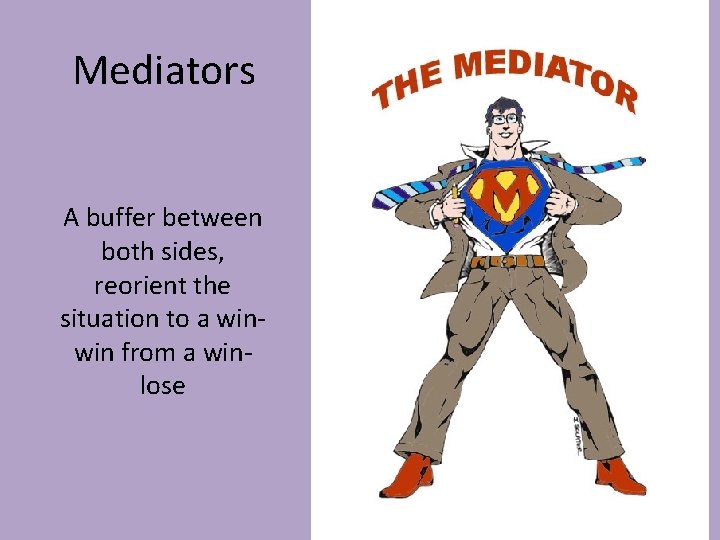
Mediators A buffer between both sides, reorient the situation to a winwin from a winlose
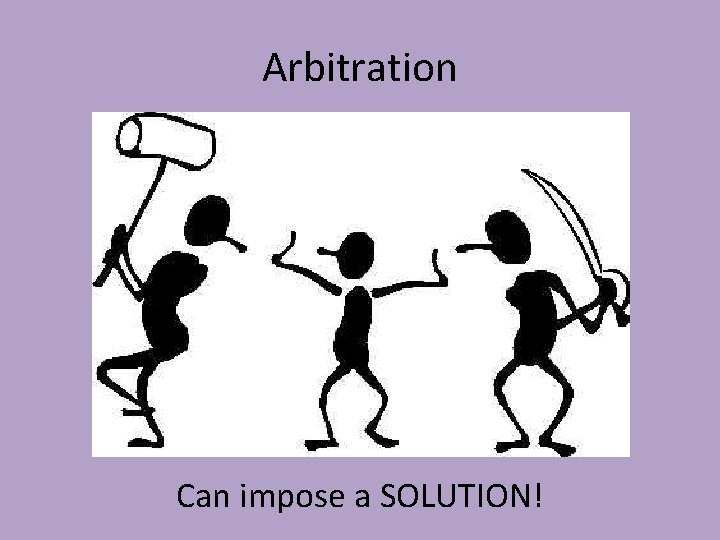
Arbitration Can impose a SOLUTION!
Managing Team Conflict “If members on one side trust members on the other side, and believe everyone wants a fair solution, they are better able to negotiate a solution”
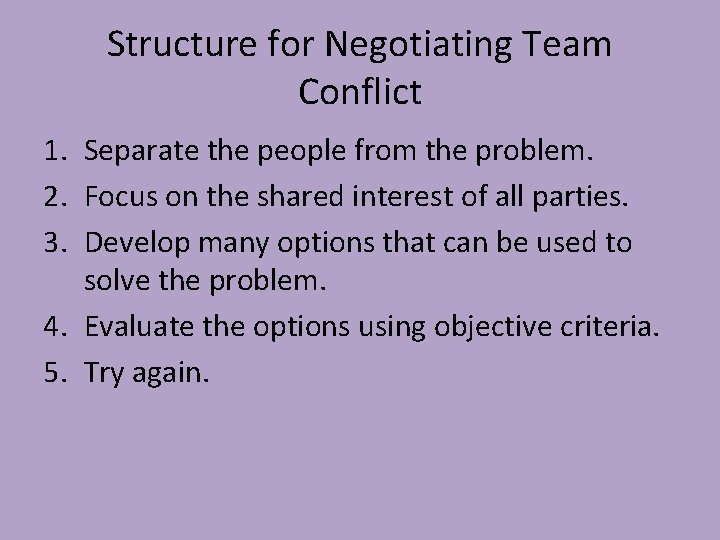
Structure for Negotiating Team Conflict 1. Separate the people from the problem. 2. Focus on the shared interest of all parties. 3. Develop many options that can be used to solve the problem. 4. Evaluate the options using objective criteria. 5. Try again.
“Conflicts that are healthy for a team come from disagreements on how to address task issues; conflicts that are unhealthy originate from organizational, social, or personal issues. ”