
MANAGING COMMUNICATION 14 COPYRIGHT 2016 PEARSON EDUCATION INC


- Slides: 42
MANAGING COMMUNICATION 14 COPYRIGHT © 2016 PEARSON EDUCATION, INC. 14 - 1
LEARNING OBJECTIVES 1. Define the nature and function of communication. 2. Compare and contrast methods of interpersonal 3. 4. 5. 6. communication. Identify barriers to effective interpersonal communication and how to overcome them. § Develop your skill at listening actively. § Know how to identify the differences in how genders communicate. Explain how communication can flow most effectively in organizations. Describe how technology affects managerial communication and organizations. Discuss contemporary issues in communication. COPYRIGHT © 2016 PEARSON EDUCATION, INC. 14 - 2
WHAT IS COMMUNICATION? Communication – the transfer and understanding of meaning. – Transfer means the message was received in a form that can be interpreted by the receiver. – Understanding the message is not the same as the receiver agreeing with the message. COPYRIGHT © 2016 PEARSON EDUCATION, INC. 14 - 3
WHAT IS COMMUNICATION? (CONT. ) • Interpersonal Communication – communication between two or more people. • Organizational Communication – all the patterns, networks, and systems of communications within an organization. COPYRIGHT © 2016 PEARSON EDUCATION, INC. 14 - 4
FUNCTIONS OF COMMUNICATION • Control – Formal and informal communications act to control individuals’ behaviors in organizations. • Motivation – Communications clarify for employees what is to be done, how well they have done it, and what can be done to improve performance. COPYRIGHT © 2016 PEARSON EDUCATION, INC. 14 - 5
FUNCTIONS OF COMMUNICATION (CONT. ) • Emotional Expression – Social interaction in the form of work group communications provides a way for employees to express themselves. • Information – Individuals and work groups need information to make decisions or to do their work. COPYRIGHT © 2016 PEARSON EDUCATION, INC. 14 - 6
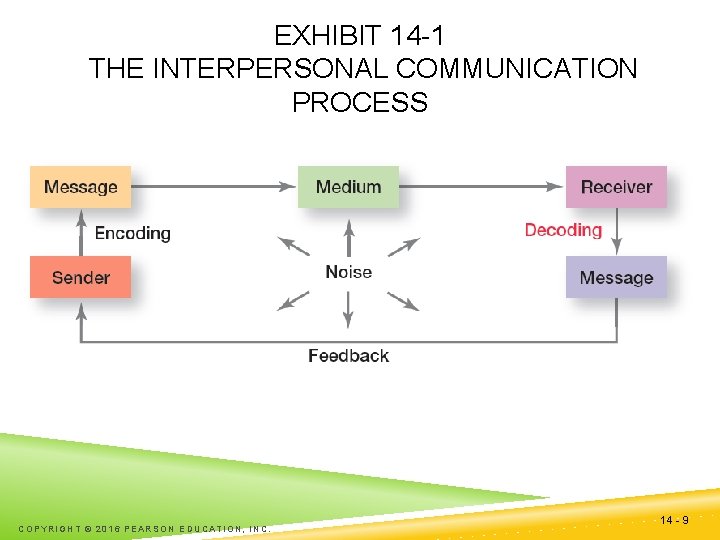
METHODS OF INTERPERSONAL COMMUNICATION Message – a purpose to be conveyed. • Encoding – converting a message into symbols. • Channel – the medium a message travels along. • Decoding – retranslating a sender’s message. 14 - 7 COPYRIGHT © 2016 PEARSON EDUCATION, INC.
METHODS OF INTERPERSONAL COMMUNICATION (CONT. ) Communication process – the seven elements involved in transferring meaning from one person to another. • Noise – any disturbances that interfere with the transmission, receipt, or feedback of a message. COPYRIGHT © 2016 PEARSON EDUCATION, INC. 14 - 8
EXHIBIT 14 -1 THE INTERPERSONAL COMMUNICATION PROCESS COPYRIGHT © 2016 PEARSON EDUCATION, INC. 14 - 9
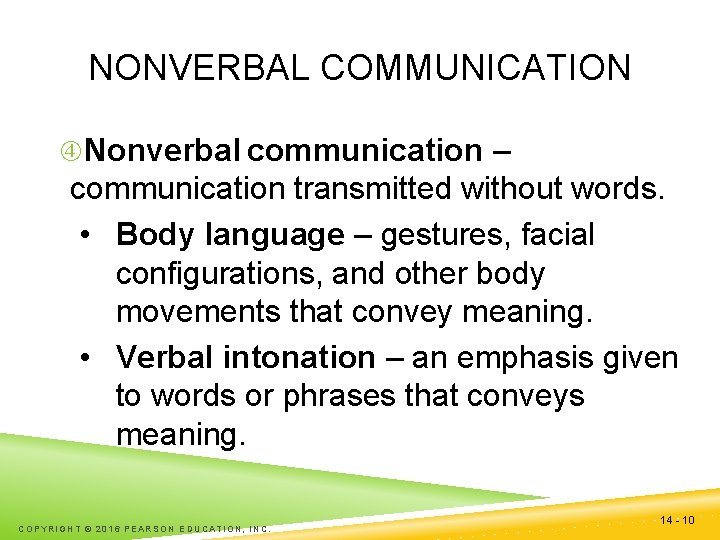
NONVERBAL COMMUNICATION Nonverbal communication – communication transmitted without words. • Body language – gestures, facial configurations, and other body movements that convey meaning. • Verbal intonation – an emphasis given to words or phrases that conveys meaning. COPYRIGHT © 2016 PEARSON EDUCATION, INC. 14 - 10
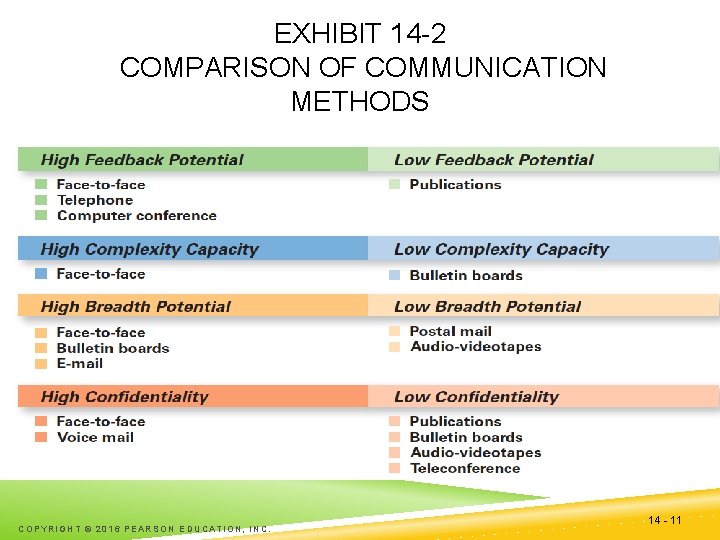
EXHIBIT 14 -2 COMPARISON OF COMMUNICATION METHODS COPYRIGHT © 2016 PEARSON EDUCATION, INC. 14 - 11
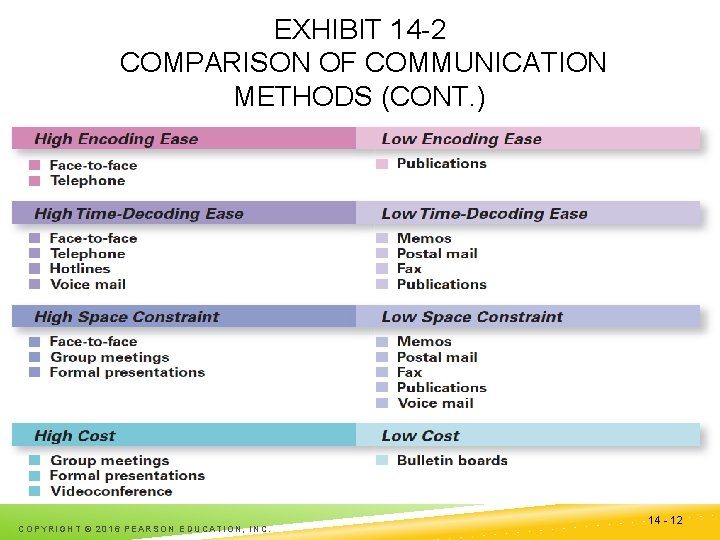
EXHIBIT 14 -2 COMPARISON OF COMMUNICATION METHODS (CONT. ) COPYRIGHT © 2016 PEARSON EDUCATION, INC. 14 - 12
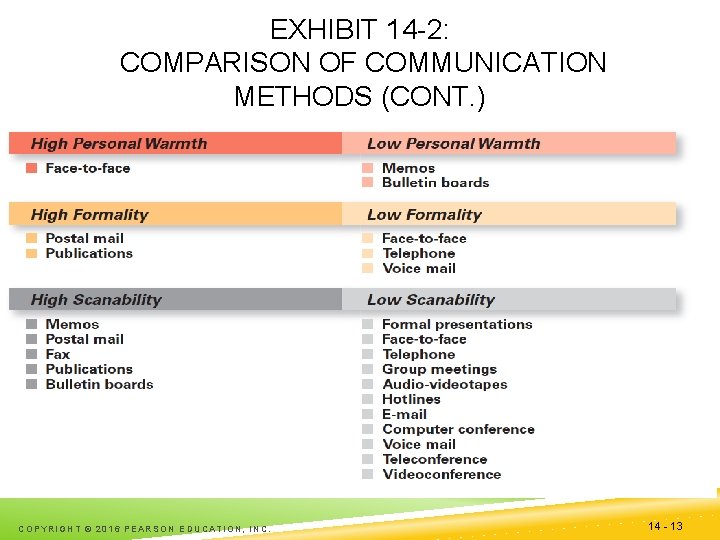
EXHIBIT 14 -2: COMPARISON OF COMMUNICATION METHODS (CONT. ) COPYRIGHT © 2016 PEARSON EDUCATION, INC. 14 - 13
BARRIERS TO COMMUNICATION Filtering – the deliberate manipulation of information to make it appear more favorable to the receiver. • Information overload – occurs when information exceeds our processing capacity. • Jargon – specialized terminology or technical language that members of a group use to communicate among themselves. • COPYRIGHT © 2016 PEARSON EDUCATION, INC. 14 - 14
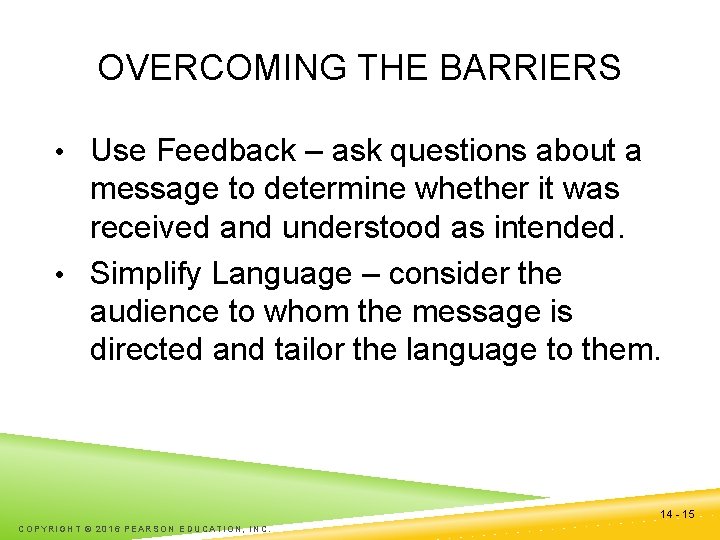
OVERCOMING THE BARRIERS • Use Feedback – ask questions about a message to determine whether it was received and understood as intended. • Simplify Language – consider the audience to whom the message is directed and tailor the language to them. 14 - 15 COPYRIGHT © 2016 PEARSON EDUCATION, INC.
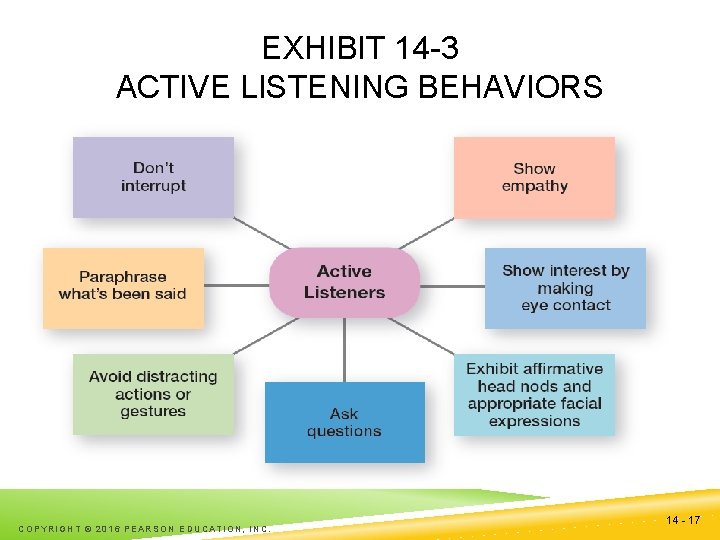
OVERCOMING THE BARRIERS (CONT. ) • Active listening – listening for full meaning without making premature judgments or interpretations. 14 - 16 COPYRIGHT © 2016 PEARSON EDUCATION, INC.
EXHIBIT 14 -3 ACTIVE LISTENING BEHAVIORS COPYRIGHT © 2016 PEARSON EDUCATION, INC. 14 - 17
FORMAL VERSUS INFORMAL COMMUNICATION • Formal communication – communication that takes place within prescribed organizational work arrangements. • Informal communication – communication that is not defined by the organization’s structural hierarchy. COPYRIGHT © 2016 PEARSON EDUCATION, INC. 14 - 18
DIRECTION OF COMMUNICATION • Town hall meeting – informal public meetings where information can be relayed, issues can be discussed, or just is a way to bring employees together to celebrate accomplishments. • Downward communication – communication that flows downward from a manager to employees. COPYRIGHT © 2016 PEARSON EDUCATION, INC. 14 - 19
DIRECTION OF COMMUNICATION (CONT. ) Upward communication – communication that flows upward from employees to managers. • Lateral communication – communication that takes place among any employees on the same organizational level. • Diagonal communication – communication that cuts across work areas and organizational levels. • COPYRIGHT © 2016 PEARSON EDUCATION, INC. 14 - 20
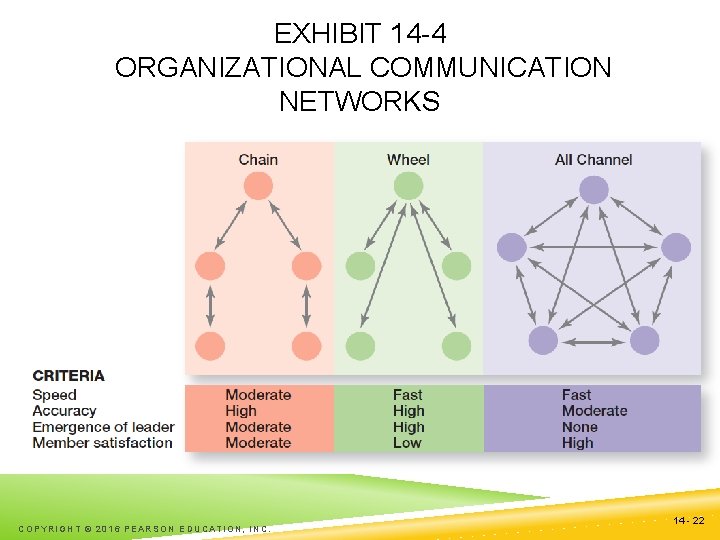
ORGANIZATIONAL COMMUNICATION NETWORKS • Communication Networks – the variety of patterns of vertical and horizontal flows of organizational communication. • Grapevine – the informal organizational communication network. COPYRIGHT © 2016 PEARSON EDUCATION, INC. 14 - 21
EXHIBIT 14 -4 ORGANIZATIONAL COMMUNICATION NETWORKS COPYRIGHT © 2016 PEARSON EDUCATION, INC. 14 - 22
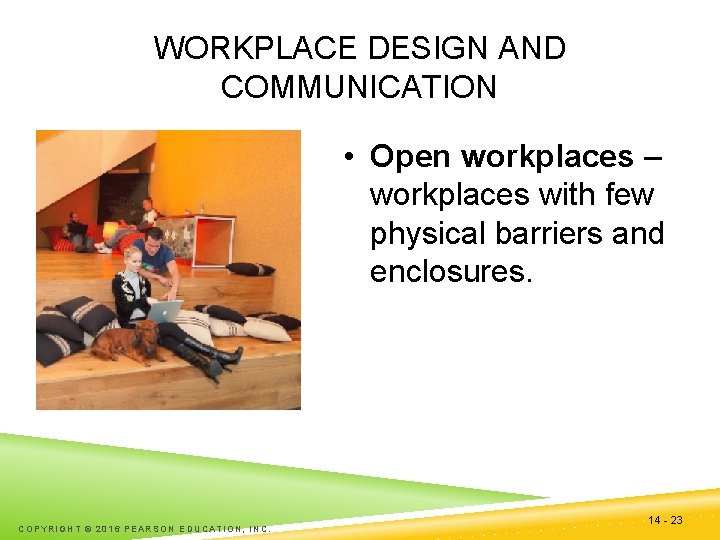
WORKPLACE DESIGN AND COMMUNICATION • Open workplaces – workplaces with few physical barriers and enclosures. COPYRIGHT © 2016 PEARSON EDUCATION, INC. 14 - 23
HOW TECHNOLOGY AFFECTS MANAGERIAL COMMUNICATION Networked Systems – in a networked system, an organization’s computers are linked. Organizational members can communicate with each other and tap into information whether they’re down the hall, across town, or halfway across the world. • Wireless Capabilities – wireless communication technology has the ability to improve work for managers and employees. • COPYRIGHT © 2016 PEARSON EDUCATION, INC. 14 - 24
CURRENT COMMUNICATION ISSUES Managing Communication in an Internet World – Legal and security issues • Inappropriate use of company e-mail and instant messaging. • Loss of confidential and proprietary information due to inadvertent or deliberate dissemination or to hackers. – Lack of personal interaction • Being connected is not the same as face-to-face contact. • Difficulties occur in achieving understanding and collaboration in virtual environments. COPYRIGHT © 2016 PEARSON EDUCATION, INC. 14 - 25
COMMUNICATION AND CUSTOMER SERVICE Communicating Effectively with Customers – Recognize three components of the customer service delivery process: • The customer • The service organization • The service provider – Develop a strong service culture focused on the personalization of service to each customer. • Listen and respond to the customer. • Provide access to needed service information. COPYRIGHT © 2016 PEARSON EDUCATION, INC. 14 -26
GETTING EMPLOYEE INPUT In today’s challenging environment, companies need to get input from their employees. • Suggestion Boxes – managers do business in a world today where you can’t afford to ignore such potentially valuable information. COPYRIGHT © 2016 PEARSON EDUCATION, INC. 14 - 27
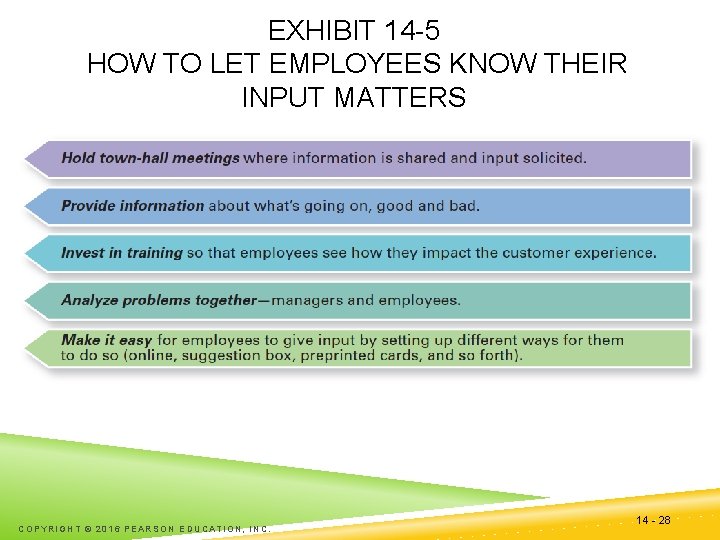
EXHIBIT 14 -5 HOW TO LET EMPLOYEES KNOW THEIR INPUT MATTERS COPYRIGHT © 2016 PEARSON EDUCATION, INC. 14 - 28
COMMUNICATING ETHICALLY Ethical communication – communication that includes all relevant information, is true in every sense, and is not deceptive in any way. COPYRIGHT © 2016 PEARSON EDUCATION, INC. 14 - 29
REVIEW LEARNING OBJECTIVE 14. 1 • Define the nature and function of communication. – Communication is the transfer and understanding of meaning. – Interpersonal communication is communication between two or more people. – Organizational communication includes all the patterns, networks, and systems of communication within an organization. COPYRIGHT © 2016 PEARSON EDUCATION, INC. 14 - 30
REVIEW LEARNING OBJECTIVE 14. 1 (CONT. ) - The functions of communication include controlling employee behavior, motivating employees, providing a release for emotional expression of feelings and fulfillment of social needs, and providing information. COPYRIGHT © 2016 PEARSON EDUCATION, INC. 14 - 31
REVIEW LEARNING OBJECTIVE 14. 2 • Compare and contrast methods of interpersonal communication. – The communication process contains even elements. First, a sender has a message. A message is a purpose to be conveyed. Encoding converts a message into symbols. A channel is the medium a message travels along. • Decoding happens when the receiver retranslates a sender’s message. • Finally, feedback occurs. • • COPYRIGHT © 2016 PEARSON EDUCATION, INC. 14 - 32
REVIEW LEARNING OBJECTIVE 14. 2 (CONT. ) - Managers can evaluate the various communication methods according to their feedback, complexity capacity, breadth potential, confidentiality, encoding ease, decoding ease, time-space constraint, cost, interpersonal warmth, formality, scanability, and time of consumption. COPYRIGHT © 2016 PEARSON EDUCATION, INC. 14 - 33
REVIEW LEARNING OBJECTIVE 14. 2 (CONT. ) - The communication methods include face-to-face, telephone, group meetings, formal presentations, memos, traditional mail, fax, employee publications, bulletin boards, other company publications, audio- and videotapes, hotlines, email, computer conferencing, voice mail, teleconferences, and videoconferences. COPYRIGHT © 2016 PEARSON EDUCATION, INC. 14 - 34
REVIEW LEARNING OBJECTIVE 14. 3 • Identify barriers to effective interpersonal communication and how to overcome them. – Barriers to effective communication include filtering, emotions, information overload, defensiveness, language, and national culture. – Managers can overcome these barriers by using feedback, simplifying language, listening actively, constraining emotions, and watching for nonverbal clues. COPYRIGHT © 2016 PEARSON EDUCATION, INC. 14 - 35
REVIEW LEARNING OBJECTIVE 14. 4 • Explain how communication can flow most effectively in organizations. – Formal communication is communication that takes place within prescribed organizational work arrangements. – Informal communication is not defined by the organization’s structural hierarchy. – Communication in an organization can flow downward, upward, laterally, and diagonally. COPYRIGHT © 2016 PEARSON EDUCATION, INC. 14 - 36
REVIEW LEARNING OBJECTIVE 14. 4 (CONT. ) - The three communication networks include: • the chain, in which communication flows according to the formal chain of command. • the wheel, in which communication flows between a clearly identifiable and strong leader and others in a work team. • the all-channel, in which communication flows freely among all members of a work team. COPYRIGHT © 2016 PEARSON EDUCATION, INC. 14 - 37
REVIEW LEARNING OBJECTIVE 14. 4 (CONT. ) - - Managers should manage the grapevine as an important information network. The negative consequences of rumors can be minimized by communicating openly, fully, and honestly with employees. Workplace design also influences organizational communication. That design should support four types of employee work: focused work, collaboration, learning, and socialization. COPYRIGHT © 2016 PEARSON EDUCATION, INC. 14 - 38
REVIEW LEARNING OBJECTIVE 14. 5 • Describe how technology affects managerial communication and organizations. – Technology: • improves a manager’s ability to monitor performance. • gives employees more complete information to make faster decisions. • has provided employees more opportunities to collaborate and share information; and it has made it possible for people to be fully accessible, anytime anywhere. COPYRIGHT © 2016 PEARSON EDUCATION, INC. 14 - 39
REVIEW LEARNING OBJECTIVE 14. 6 • Discuss contemporary issues in communication. – The two main challenges of managing communication in an Internet world are the legal and security issues and the lack of personal interaction. – Organizations can manage knowledge by making it easy for employees to communicate and share their knowledge. COPYRIGHT © 2016 PEARSON EDUCATION, INC. 14 - 40
REVIEW LEARNING OBJECTIVE 14. 6 (CONT. ) - - Communicating with customers is an important managerial issue because it can significantly affect a customer’s satisfaction with the service and the likelihood of being a repeat customer. It’s important for organizations to get input from their employees. Finally, a company’s communication efforts need to be ethical. COPYRIGHT © 2016 PEARSON EDUCATION, INC. 14 - 41
COPYRIGHT © 2016 BY PEARSON EDUCATION, INC. 14 - 42