
MANAGING CHANGE IPP REFRESHING MANAGEMENT SKILLS AARON DEBOLT

MANAGING CHANGE IPP REFRESHING MANAGEMENT SKILLS AARON DEBOLT AND DEBRA HOWELL
OBJECTIVES At the end of this session, you will be able to: • Recognize your own and staff’s responses to change –Managing Self –Managing Others –Managing Changes • Learn / be reminded of tools to lead through change • Develop strategies and commit to supporting each
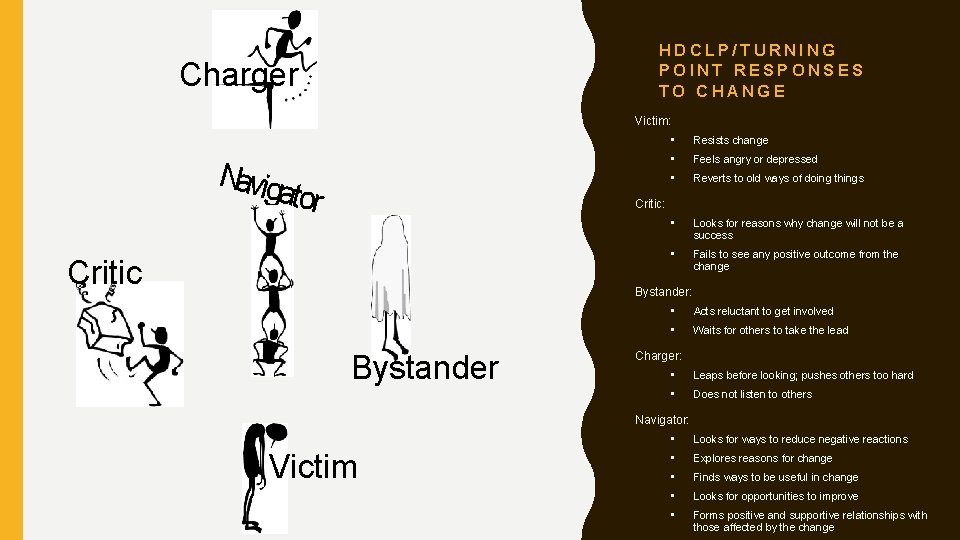
HDCLP/TURNING POINT RESPONSES TO CHANGE Charger Victim: Navig ator • Resists change • Feels angry or depressed • Reverts to old ways of doing things • Looks for reasons why change will not be a success • Fails to see any positive outcome from the change Critic: Critic Bystander: Bystander • Acts reluctant to get involved • Waits for others to take the lead Charger: • Leaps before looking; pushes others too hard • Does not listen to others Navigator: Victim • Looks for ways to reduce negative reactions • Explores reasons for change • Finds ways to be useful in change • Looks for opportunities to improve • Forms positive and supportive relationships with those affected by the change
MANAGING YOURSELF
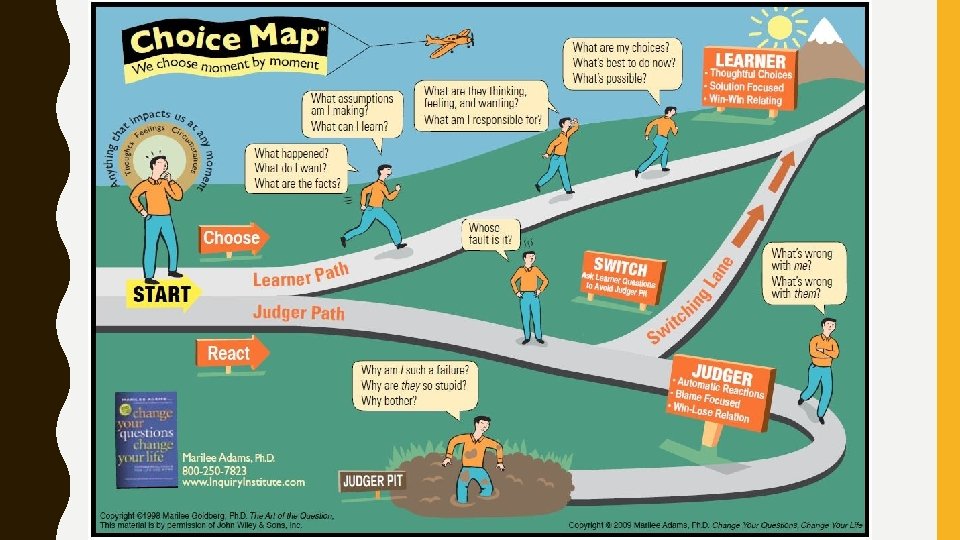
QUESTIONS HAVE MORE POWER THAN ANSWERS, BOTH IN THINKING AND COMMUNICATING.
MANAGING OTHERS
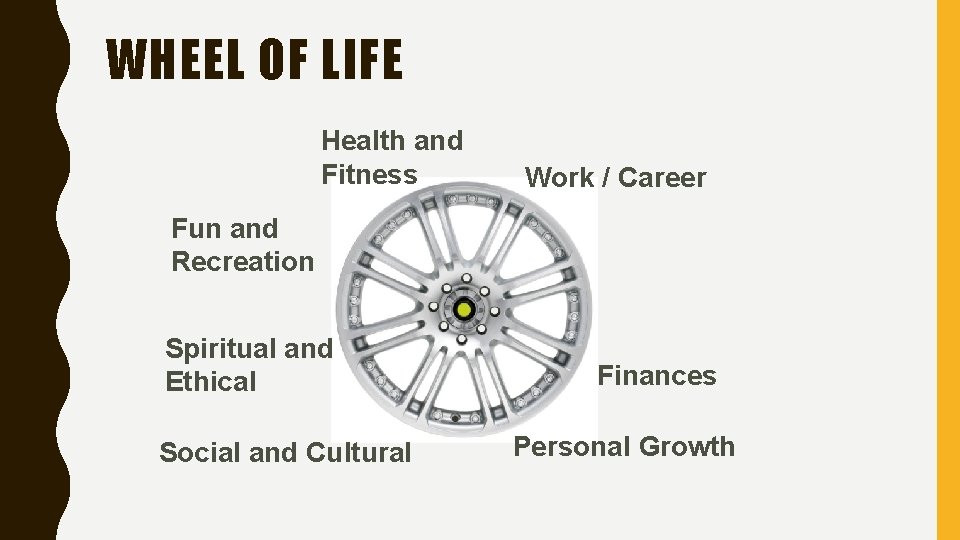
WHEEL OF LIFE Health and Fitness Work / Career Fun and Recreation Spiritual and Ethical Social and Cultural Finances Personal Growth
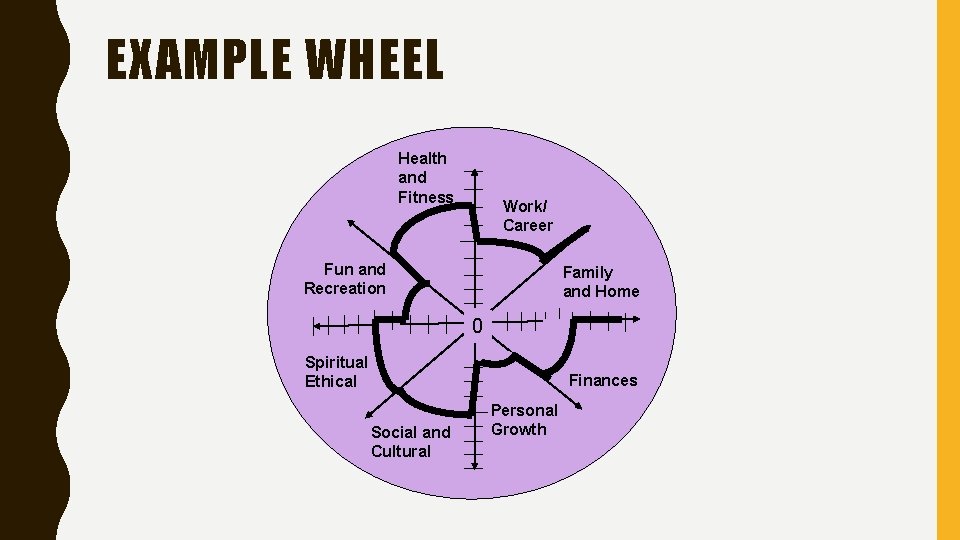
EXAMPLE WHEEL Health and Fitness Work/ Career Fun and Recreation Family and Home 0 Spiritual Ethical Finances Social and Cultural Personal Growth
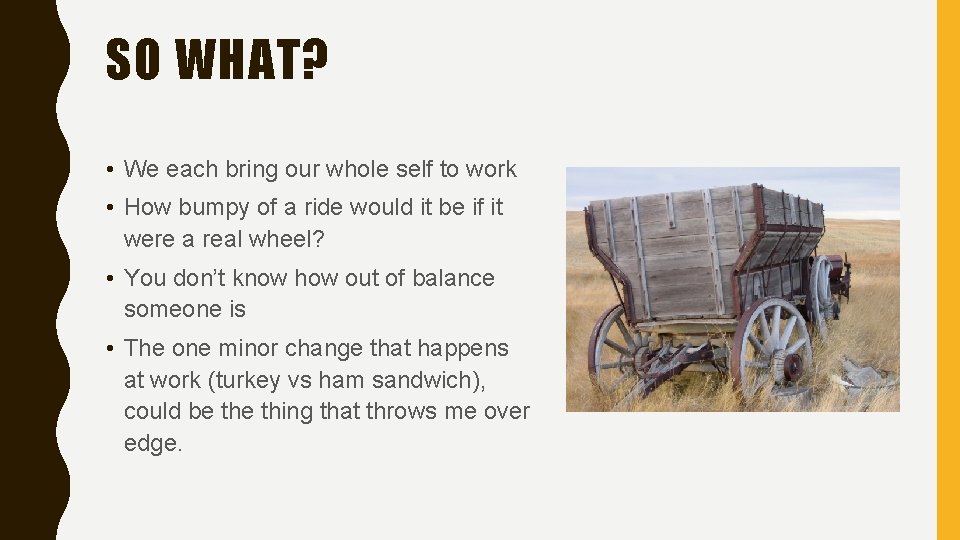
SO WHAT? • We each bring our whole self to work • How bumpy of a ride would it be if it were a real wheel? • You don’t know how out of balance someone is • The one minor change that happens at work (turkey vs ham sandwich), could be thing that throws me over edge.
HELPING OTHERS DENIAL • • Manage yourself Communicate vision Communicate rationale Focus on short-term wins RESISTANCE • • • Opportunities to talk Listen “Allow” negative feelings Model the behavior you want Consider organizational roadblocks COMMITMENT • Link institution success to individual commitment • Recognize individual and group progress • Celebrate success EXPLORATION • Provide direction and specific assignments • Coach new skills • Help others own their situation • Incorporate new behaviors into goals
MANAGING CHANGES STRUCTURAL, COST CUTTING, PROCESS, CULTURAL
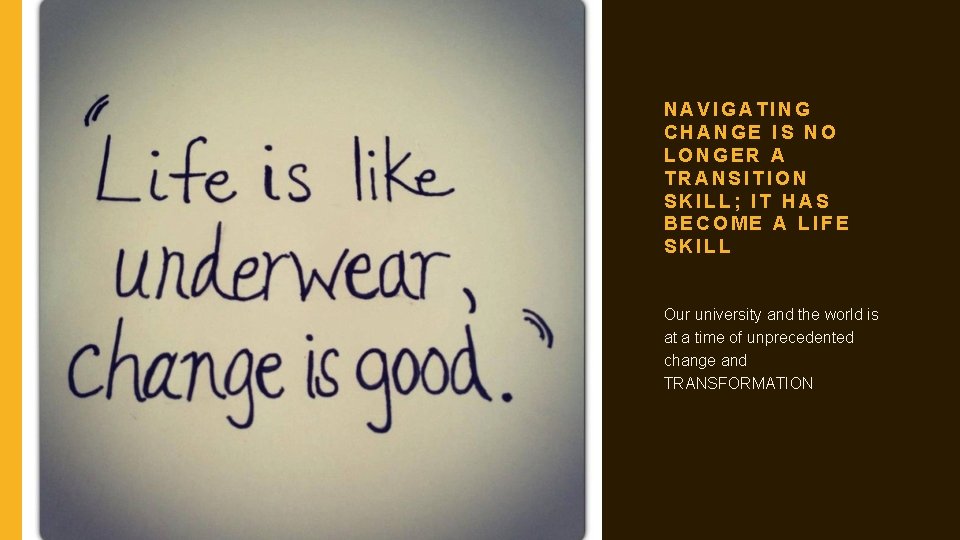
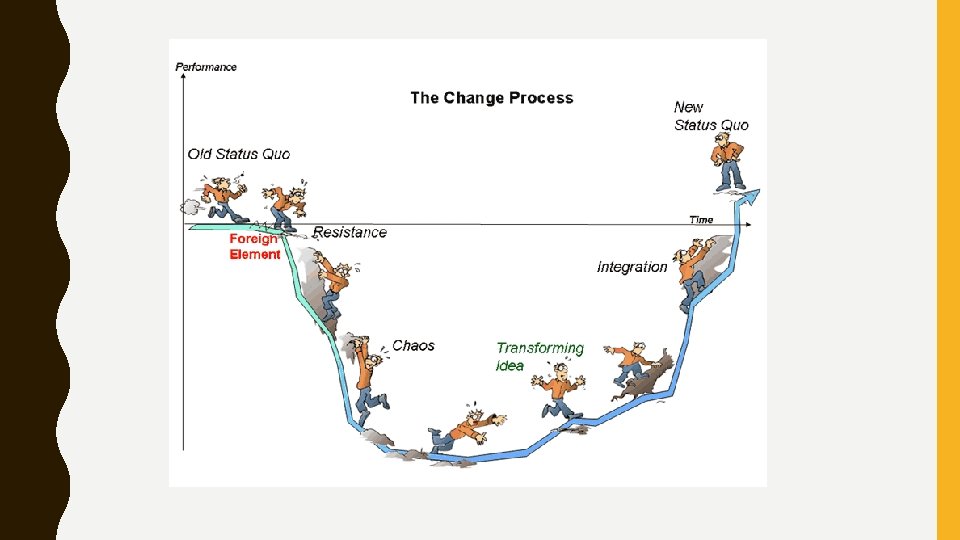
NAVIGATING CHANGE IS NO LONGER A TRANSITION SKILL; IT HAS BECOME A LIFE SKILL Our university and the world is at a time of unprecedented change and TRANSFORMATION
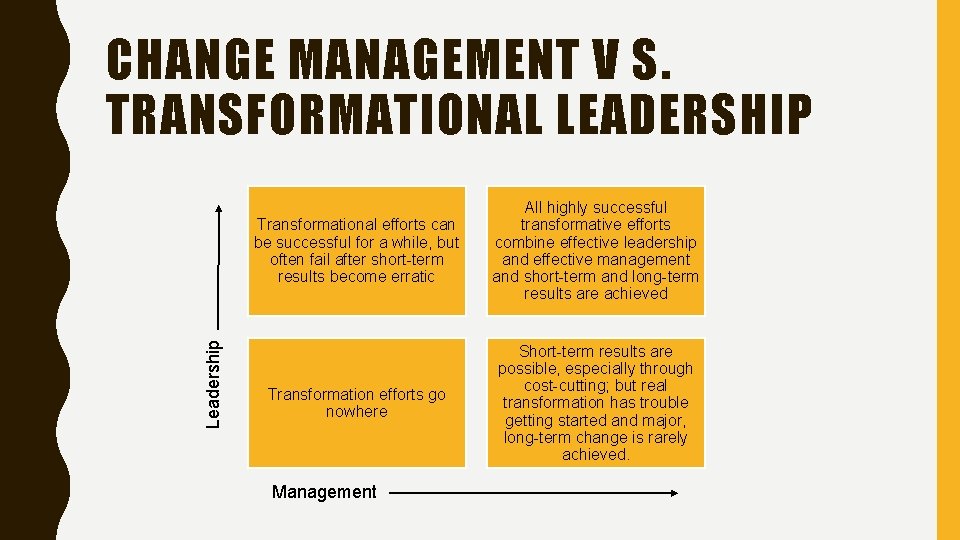
Leadership CHANGE MANAGEMENT V S. TRANSFORMATIONAL LEADERSHIP Transformational efforts can be successful for a while, but often fail after short-term results become erratic All highly successful transformative efforts combine effective leadership and effective management and short-term and long-term results are achieved Transformation efforts go nowhere Short-term results are possible, especially through cost-cutting; but real transformation has trouble getting started and major, long-term change is rarely achieved. Management
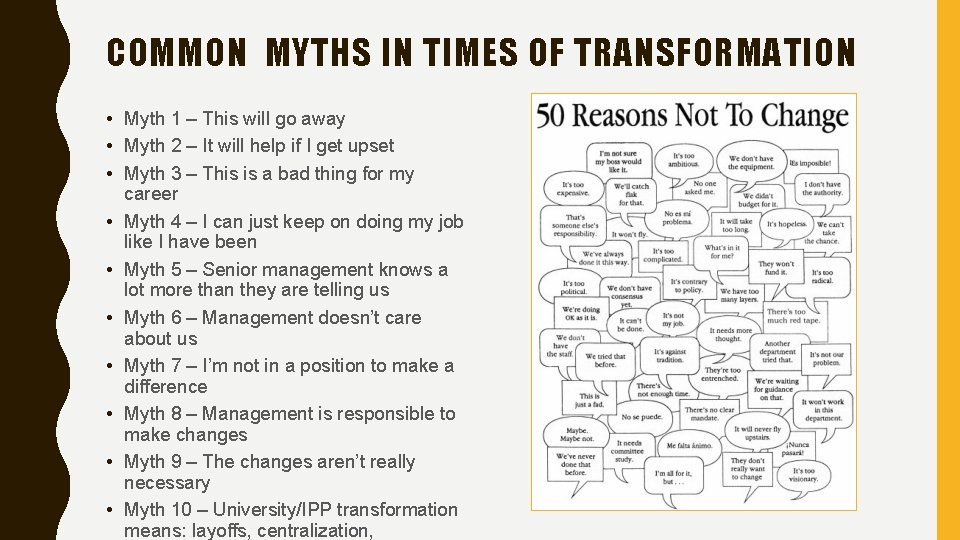
COMMON MYTHS IN TIMES OF TRANSFORMATION • Myth 1 – This will go away • Myth 2 – It will help if I get upset • Myth 3 – This is a bad thing for my career • Myth 4 – I can just keep on doing my job like I have been • Myth 5 – Senior management knows a lot more than they are telling us • Myth 6 – Management doesn’t care about us • Myth 7 – I’m not in a position to make a difference • Myth 8 – Management is responsible to make changes • Myth 9 – The changes aren’t really necessary • Myth 10 – University/IPP transformation means: layoffs, centralization,
SETTING EACH OTHER UP FOR SUCCESS Small group work: • One group works on “mythbusting techniques and communication” • One group works on “strategies to deal with victim, critic, bystander, and charger modes” • One group works on “how do we maximize the involvement of those who are navigators? ” • One group works on “how to deal with resistance” • One group works on “what we need to pay attention to with respect to leading staff through change/transformation”
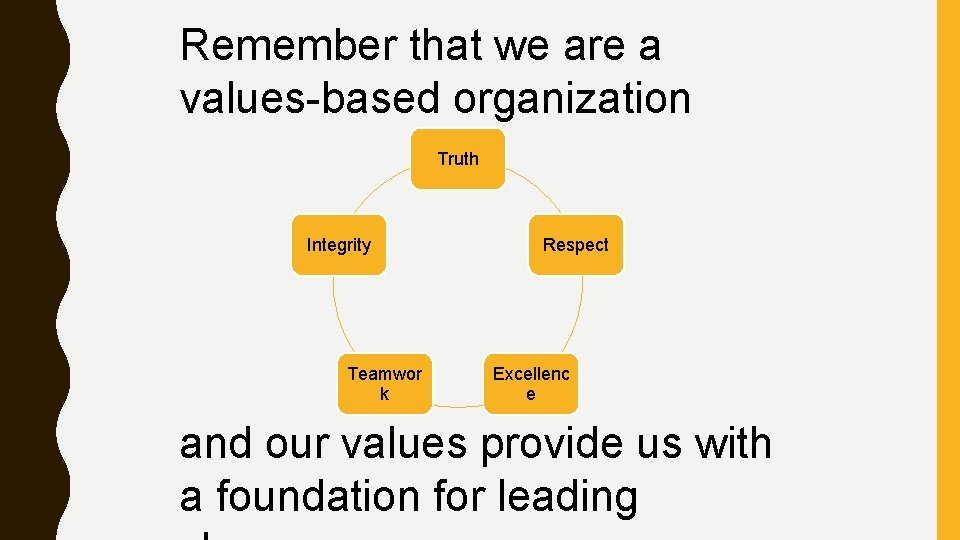
Remember that we are a values-based organization Truth Integrity Teamwor k Respect Excellenc e and our values provide us with a foundation for leading
LEADING CHANGE QUESTIONS?
- Slides: 19