
Managing Change in Quality Processes and Practices Elli
- Slides: 31
Managing Change in Quality Processes and Practices Elli Georgiadou Middlesex University School of Science and Technology
Outline Change management Triggers and models of change Global Knowledge Society Total Quality Management The right team for successful implementation Roles and responsibilities Methods and Reasons (How/Why? ) Culture change requires Knowledge Management (KM) and knowledge sharing • Quality Improvents • •
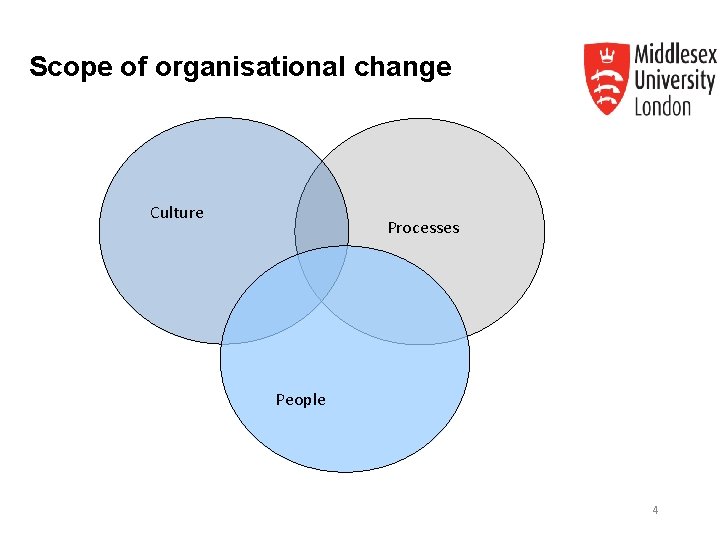
What is Change Management? ‘ Approaches to managing changes to organizational processes and structures and their impact on organizational staff and culture are known as change management’ - (Chaffey & Wood, 2005) Thus change management involves: ‘managing process, structural, technical, staff and culture within an organsation’ – (Chaffey & Wood, 2005) 3
Scope of organisational change Culture Processes People 4
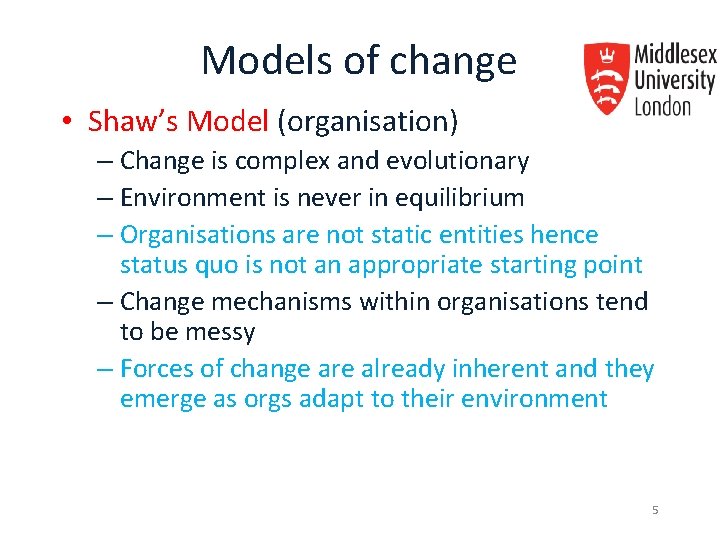
Models of change • Shaw’s Model (organisation) – Change is complex and evolutionary – Environment is never in equilibrium – Organisations are not static entities hence status quo is not an appropriate starting point – Change mechanisms within organisations tend to be messy – Forces of change are already inherent and they emerge as orgs adapt to their environment 5
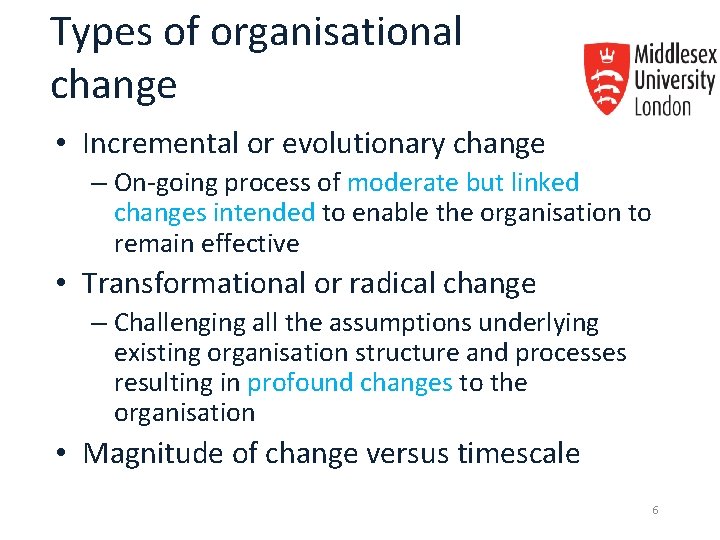
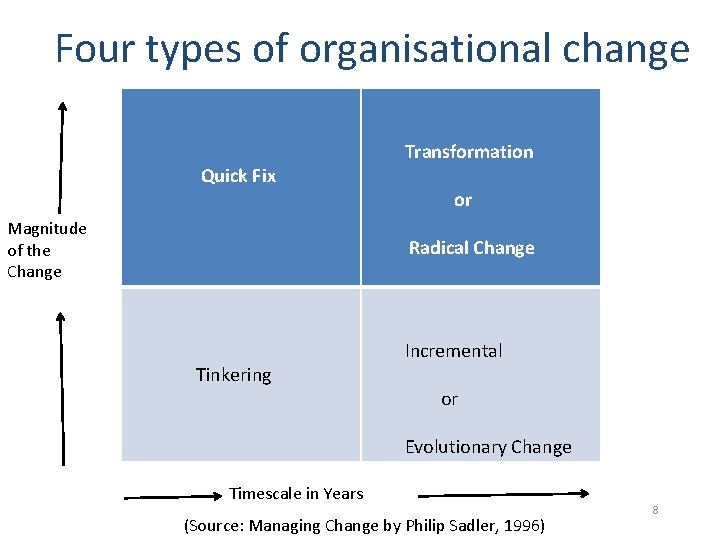
Types of organisational change • Incremental or evolutionary change – On-going process of moderate but linked changes intended to enable the organisation to remain effective • Transformational or radical change – Challenging all the assumptions underlying existing organisation structure and processes resulting in profound changes to the organisation • Magnitude of change versus timescale 6
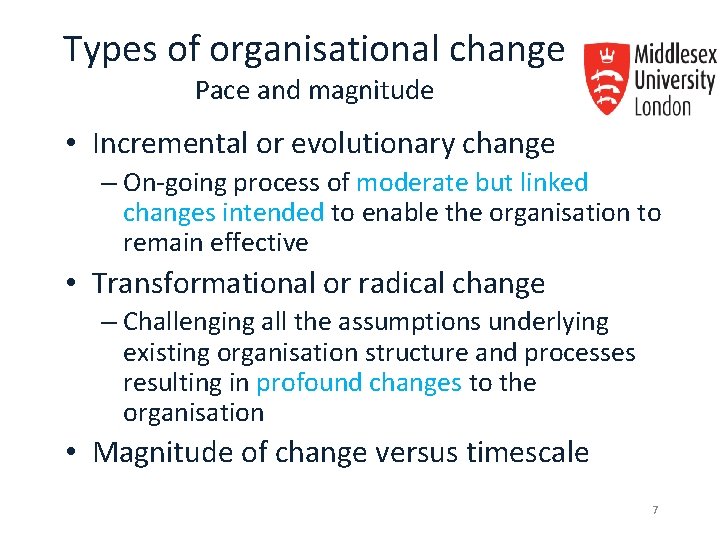
Types of organisational change Pace and magnitude • Incremental or evolutionary change – On-going process of moderate but linked changes intended to enable the organisation to remain effective • Transformational or radical change – Challenging all the assumptions underlying existing organisation structure and processes resulting in profound changes to the organisation • Magnitude of change versus timescale 7
Four types of organisational change Quick Fix Magnitude of the Change Transformation or Radical Change Tinkering Incremental or Evolutionary Change Timescale in Years (Source: Managing Change by Philip Sadler, 1996) 8
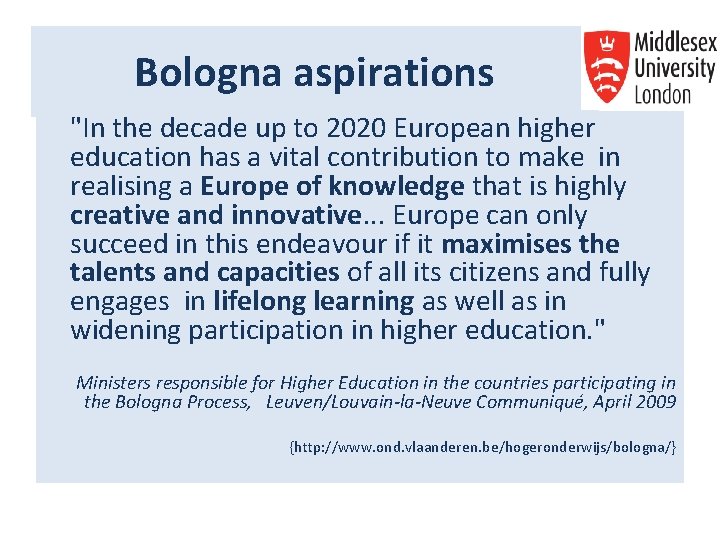
Bologna aspirations "In the decade up to 2020 European higher education has a vital contribution to make in realising a Europe of knowledge that is highly creative and innovative. . . Europe can only succeed in this endeavour if it maximises the talents and capacities of all its citizens and fully engages in lifelong learning as well as in widening participation in higher education. " Ministers responsible for Higher Education in the countries participating in the Bologna Process, Leuven/Louvain-la-Neuve Communiqué, April 2009 {http: //www. ond. vlaanderen. be/hogeronderwijs/bologna/}
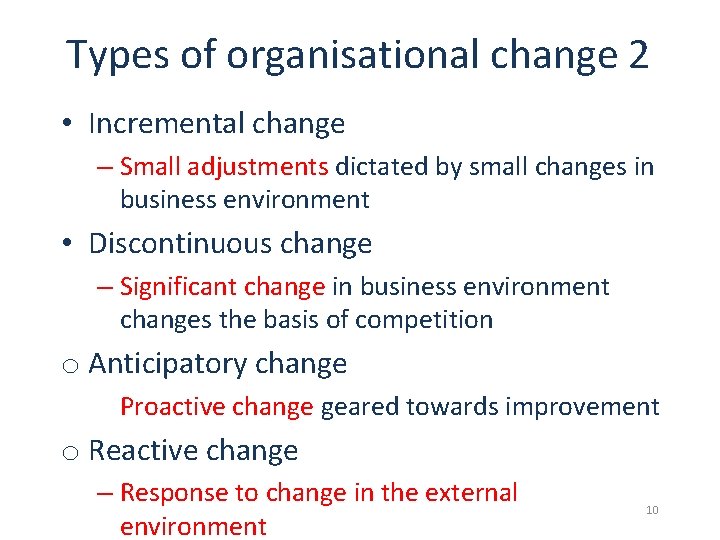
Types of organisational change 2 • Incremental change – Small adjustments dictated by small changes in business environment • Discontinuous change – Significant change in business environment changes the basis of competition o Anticipatory change Proactive change geared towards improvement o Reactive change – Response to change in the external environment 10
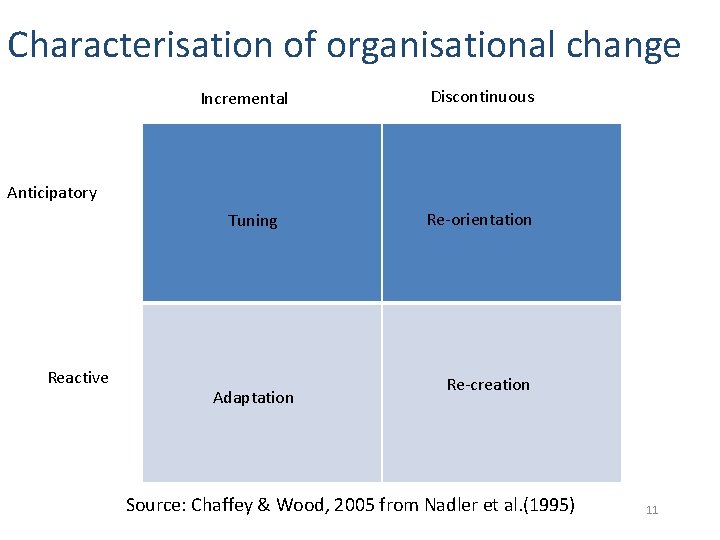
Characterisation of organisational change Incremental Discontinuous Anticipatory Tuning Reactive Adaptation Re-orientation Re-creation Source: Chaffey & Wood, 2005 from Nadler et al. (1995) 11
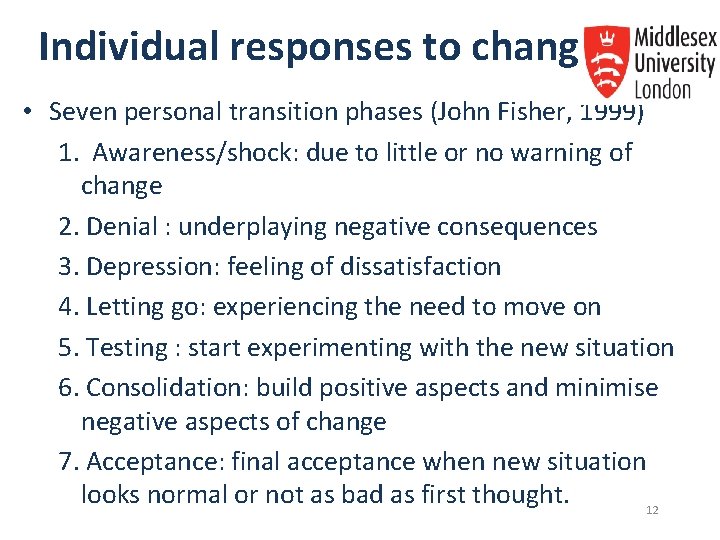
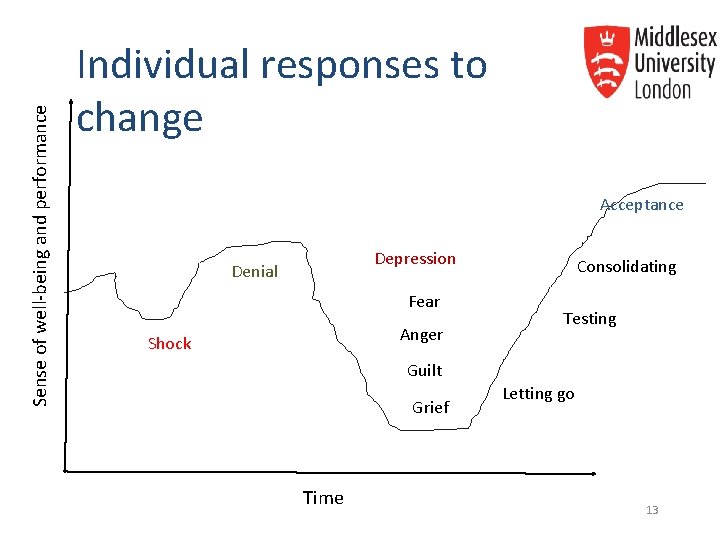
Individual responses to change • Seven personal transition phases (John Fisher, 1999) 1. Awareness/shock: due to little or no warning of change 2. Denial : underplaying negative consequences 3. Depression: feeling of dissatisfaction 4. Letting go: experiencing the need to move on 5. Testing : start experimenting with the new situation 6. Consolidation: build positive aspects and minimise negative aspects of change 7. Acceptance: final acceptance when new situation looks normal or not as bad as first thought. 12
Sense of well-being and performance Individual responses to change Acceptance Depression Denial Fear Anger Shock Consolidating Testing Guilt Grief Time Letting go 13
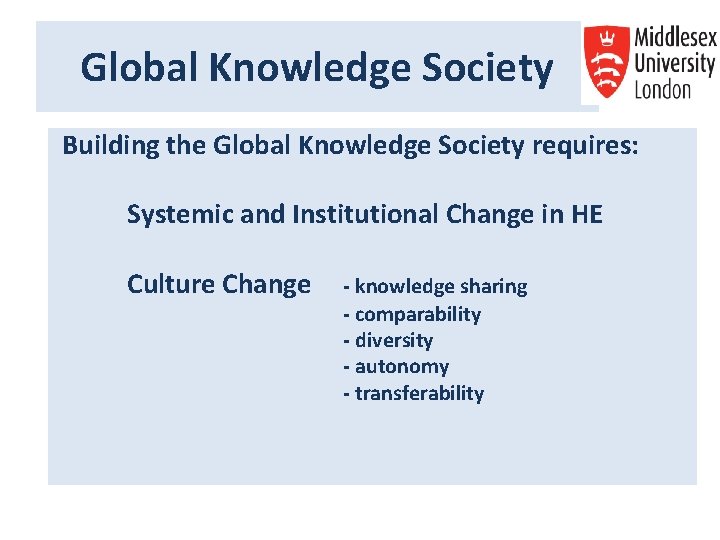
Global Knowledge Society Building the Global Knowledge Society requires: Systemic and Institutional Change in HE Culture Change - knowledge sharing - comparability - diversity - autonomy - transferability
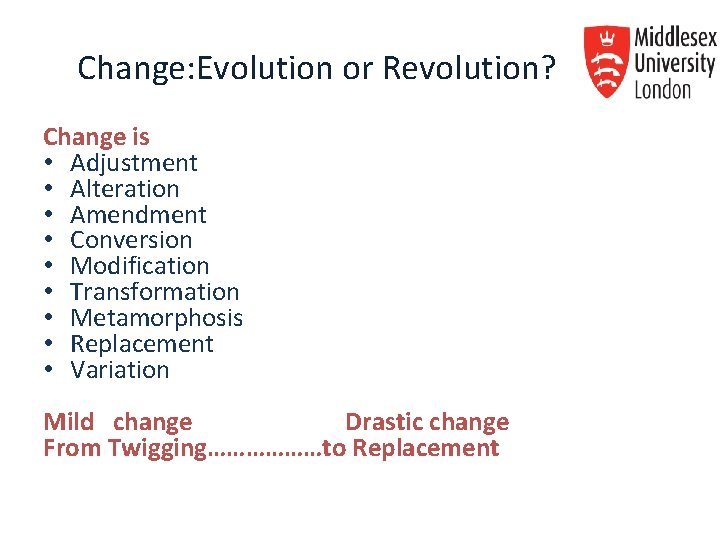
Change: Evolution or Revolution? Change is • Adjustment • Alteration • Amendment • Conversion • Modification • Transformation • Metamorphosis • Replacement • Variation Mild change Drastic change From Twigging………………to Replacement
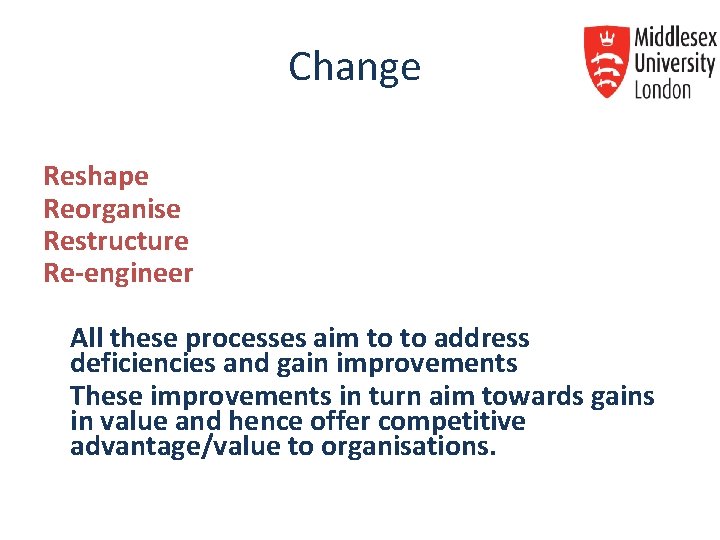
Change Reshape Reorganise Restructure Re-engineer All these processes aim to to address deficiencies and gain improvements These improvements in turn aim towards gains in value and hence offer competitive advantage/value to organisations.
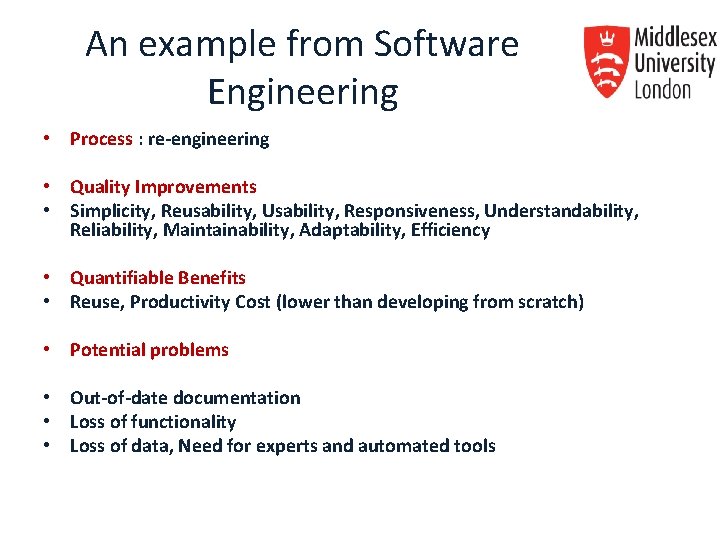
An example from Software Engineering • Process : re-engineering • Quality Improvements • Simplicity, Reusability, Usability, Responsiveness, Understandability, Reliability, Maintainability, Adaptability, Efficiency • Quantifiable Benefits • Reuse, Productivity Cost (lower than developing from scratch) • Potential problems • Out-of-date documentation • Loss of functionality • Loss of data, Need for experts and automated tools
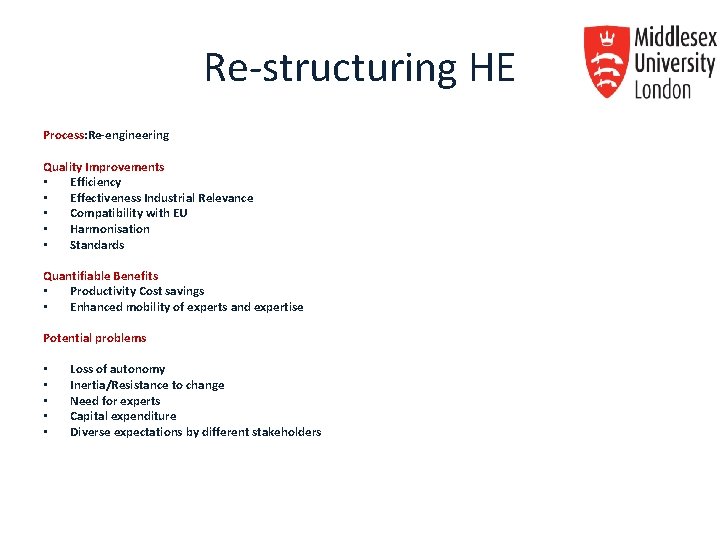
Re-structuring HE Process: Re-engineering Quality Improvements • Efficiency • Effectiveness Industrial Relevance • Compatibility with EU • Harmonisation • Standards Quantifiable Benefits • Productivity Cost savings • Enhanced mobility of experts and expertise Potential problems • • • Loss of autonomy Inertia/Resistance to change Need for experts Capital expenditure Diverse expectations by different stakeholders
Total Quality Management (how) • We assume that there is an acceptance at least at high level (eager or reluctant) to work towards European and (ultimately) global integration and harmonisation. • Commitment to Quality from Senior Management is imperative if procedures, tools, and databases are to be developed, supported and financed (who)
The right team for successful implementation • For successful implementation, the right team, work-group and task force must be appointed and supported. (who) • People in the Quality groups (process improvement team, process review team, knowledge improvement team, knowledge transfer team, quality assurance team (also undertaking audits)) are required to be highly mature and capable in terms of understanding Quality so that they can champion quality, plan and execute the plan successfully (how)
Roles and responsibilities (who, what) The roles and responsibilities of each team and of the individuals in each team must be unambiguous. It is these teams that will raise the motivation, basic knowledge, understanding, and maturity for each and every member of the organisation. For this purpose, organisation-wide training should be arranged.
Methods and Reasons (How/Why? ) The experienced trainer should impart training in order to minimise resistance and to motivate staff to embrace quality initiatives. This will ensure that, people in the organisation are on the same wavelength when they are dealing with Quality. Training, group discussions, sharing of knowledge are essential to bring the change. Also motivation, exchange of ideas, and quality awareness are the cornerstones of a quality culture and critical to ’institutionalise’ the change.
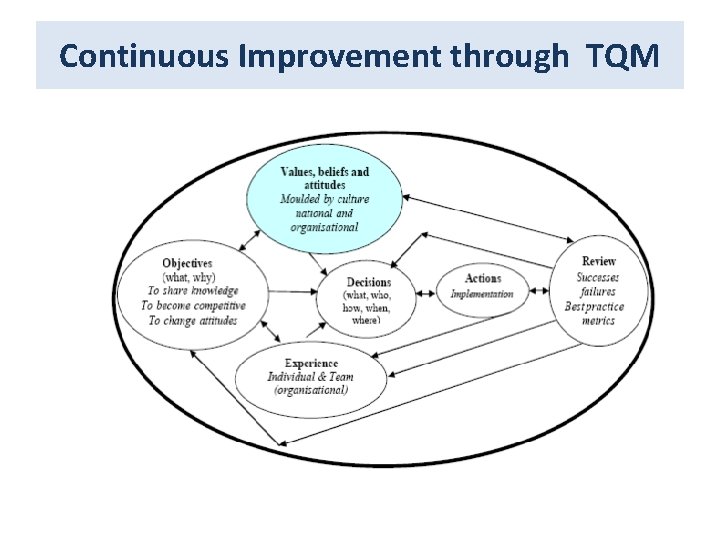
Culture change requires Knowledge Management (KM) and knowledge sharing • The development and adoption of a new QA system will inevitably bring changes to the organisational structure and changes to the processes. Knowledge Management has its origin in a number of related business improvement areas, such as Total Quality Management (TQM) and Human Resource Management (HRM) (Metaxiotis et al. , 2005). • TQM is a management philosophy and a methodology that enables an organisation to focus on employee participation through empowerment, teamwork, leadership and recognition of each employee’s contribution for achieving the goal of the organisation and maximising customer satisfaction (Deming, 1986).
Knowledge-based global economy (why) The new knowledge-based global economy places great importance on creation, use and distribution of information and knowledge. Organisations (and that includes HE institutions) are focusing on maintaining and enhancing their knowledge capital in order to be innovative and competitive.
Learn, Adapt and Change The ability of organisations to learn, adapt and change becomes a core competency for their survival and successful organisations are those that create new knowledge, disseminate it throughout the organisation and swiftly embody it into new products and services.
Harnessing and sharing knowledge The European Higher Education mission embodied by initiatives such as that of Bologna translates into the primary objectives of KM through – the identification and leveraging of the collective knowledge not only in individual HE institutions but also throughout the European Union and further afield.
Continuous Improvement through TQM
Tuning Methodology • Achievement of learning outcomes and competences • General tendencies in higher education: - Shift of paradigm: moving from a staff oriented approach to a student centred approach - Less specialised academic education in the first cycle - More flexibility in first and second cycle programmes What should a student know, understand be able to do in order to be employable?
Conclusion • Integrating Change Management theories, TQM principles and the Tuning Methodology will result in – Continuous improvement – Harmonisation – Knowledge sharing – Culture change – EHEA integration – Competitiveness – Mobility, employability
Rudyard Kipling "I Keep Six Honest Serving Men. . . " I KEEP six honest serving-men (They taught me all I knew); Their names are What and Why and When And How and Where and Who. I send them over land sea, I send them east and west; But after they have worked for me, I give them all a rest.
Advantage through Knowledge Sharing and Collaboration Elli Georgiadou e. georgiadou@mdx. ac. uk