
Managing Business Ethics Chapter 5 Trevio Nelson 5
+ Managing Business Ethics Chapter 5 Treviño & Nelson – 5 th Edition
+ Chapter 5 Overview n Organizational Ethics as Culture n Ethical Culture: A Multisystem Framework n Ethical Leadership n Other Formal Cultural Systems n Informal Cultural Systems n Organizational Climates: Fairness, Benevolence, Self-Interest, Principles n Developing and Changing Ethical Culture n A Cultural Approach to Changing Organizational Ethics n The Ethics of Managing Organizational Ethics
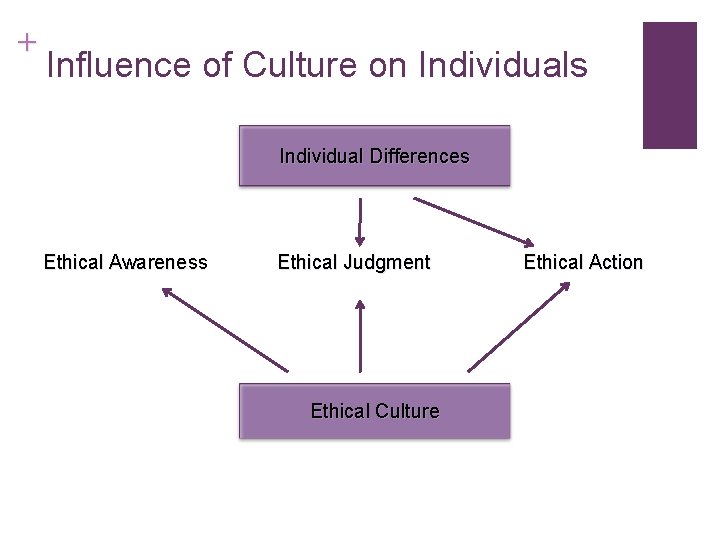
+ Influence of Culture on Individuals Individual Differences Ethical Awareness Ethical Judgment Ethical Culture Ethical Action
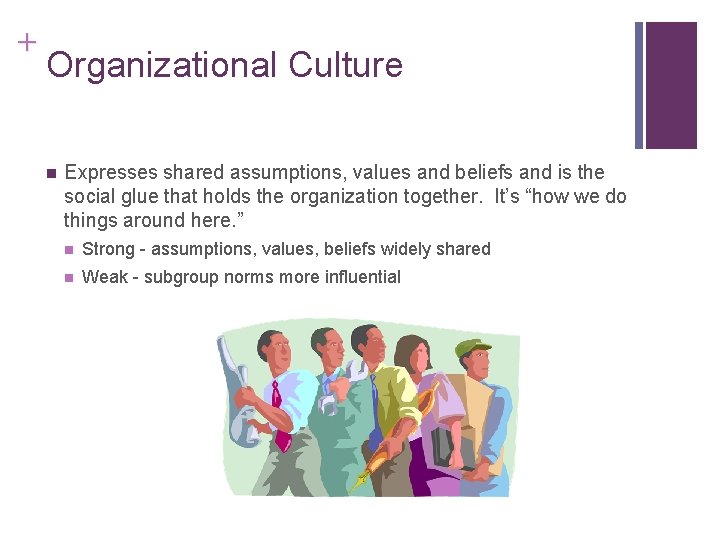
+ Organizational Culture n Expresses shared assumptions, values and beliefs and is the social glue that holds the organization together. It’s “how we do things around here. ” n Strong - assumptions, values, beliefs widely shared n Weak - subgroup norms more influential
+ Culture n A body of learned beliefs, traditions, and guides for behavior shared among members of a society or a group
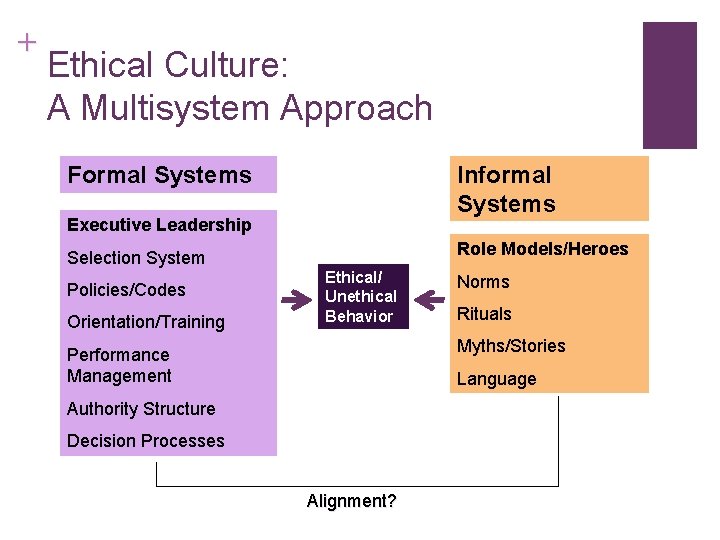
+ Ethical Culture: A Multisystem Approach Formal Systems Informal Systems Executive Leadership Role Models/Heroes Selection System Policies/Codes Orientation/Training Ethical/ Unethical Behavior Norms Rituals Myths/Stories Performance Management Language Authority Structure Decision Processes Alignment?
+ Alignment and Misalignment n. With alignment, all systems are “pushing” employees in the same direction – either ethical or unethical n. With misalignment, employees get mixed messages about expectations
+ Leadership n Executive Leaders Create Culture n Leaders Maintain or Change Organizational Culture n Ethical Leadership and Ethical Culture n Unethical Leadership n Hypocritical Leadership n Ethically Neutral or “Silent” Leadership
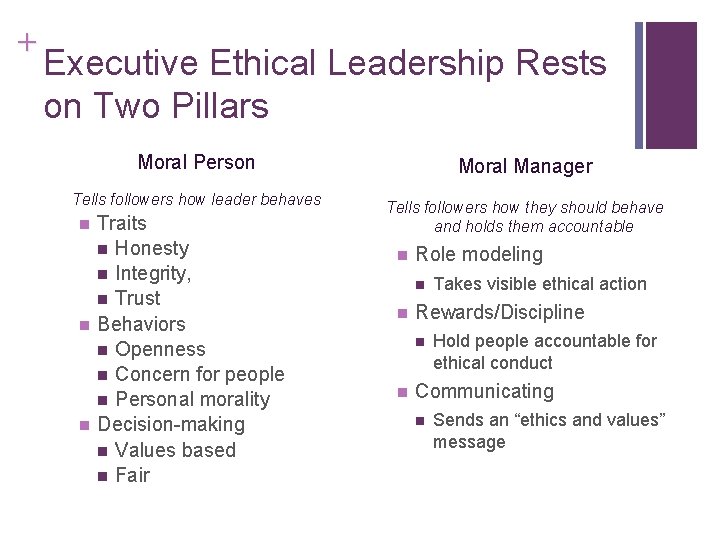
+ Executive Ethical Leadership Rests on Two Pillars Moral Person Moral Manager Tells followers how leader behaves Tells followers how they should behave and holds them accountable n n n Traits n Honesty n Integrity, n Trust Behaviors n Openness n Concern for people n Personal morality Decision-making n Values based n Fair n Role modeling n n Rewards/Discipline n n Takes visible ethical action Hold people accountable for ethical conduct Communicating n Sends an “ethics and values” message
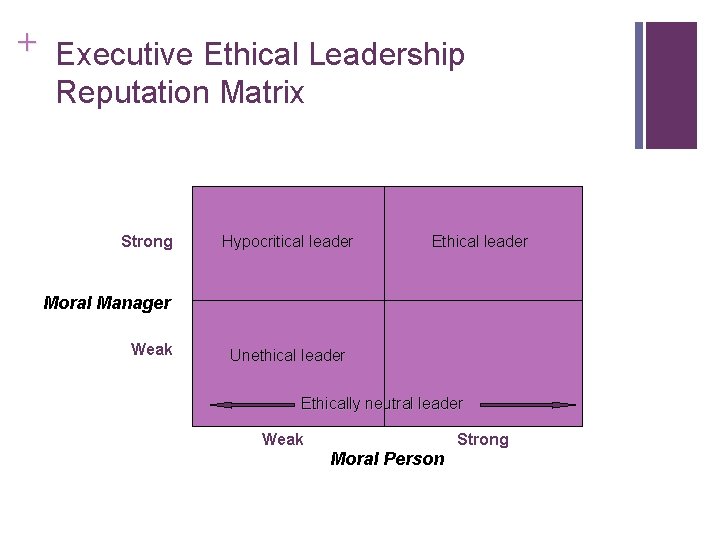
+ Executive Ethical Leadership Reputation Matrix Strong Hypocritical leader Ethical leader Moral Manager Weak Unethical leader Ethically neutral leader Weak Strong Moral Person
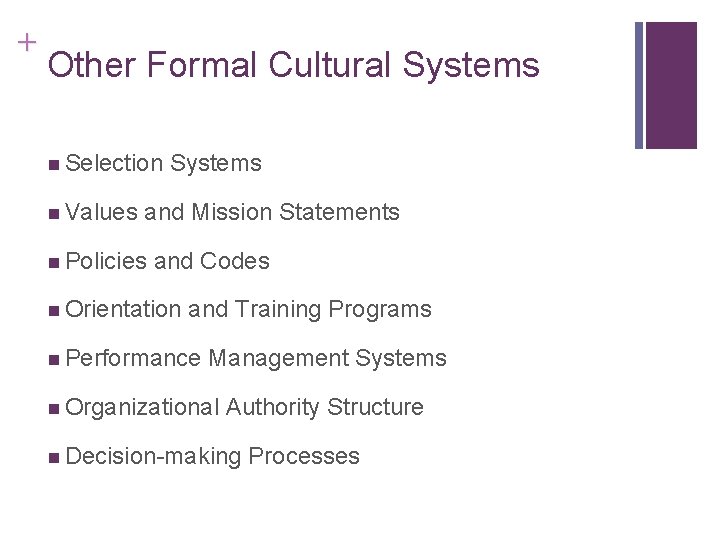
+ Other Formal Cultural Systems n Selection n Values Systems and Mission Statements n Policies and Codes n Orientation and Training Programs n Performance Management Systems n Organizational Authority Structure n Decision-making Processes
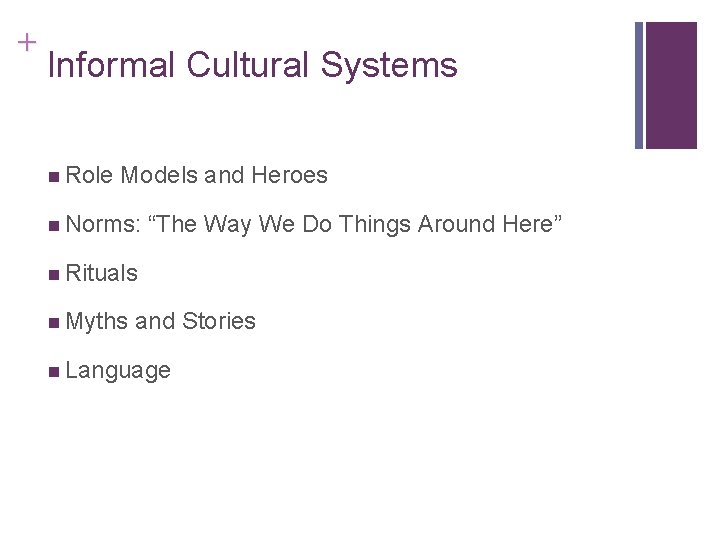
+ Informal Cultural Systems n Role Models and Heroes n Norms: “The Way We Do Things Around Here” n Rituals n Myths and Stories n Language
+ Ethical Climates n Fairness n Benevolence n Self-Interest n Principles
+ Ethical Culture Change n From ethical to unethical n From unethical to ethical
+ Ethical Culture Change n Long-term view n Systems view n Diagnose/Audit n Intervene n Evaluate
- Slides: 15