
Managing Brain Injury as Chronic Condition Flora Hammond
Managing Brain Injury as Chronic Condition Flora Hammond, MD Professor & Chair, PM&R Indiana University SOM Rehabilitation Hospital of Indianapolis, IN

Indiana TBI Model Systems • Grant support to Indiana University School of Medicine from: Traumatic Brain Injury Model Systems, National Institute on Disability Independent Living and Rehabilitation Research • • • Led by IUSM Dept Physical Medicine & Rehabilitation Housed at the Rehabilitation Hospital of Indiana Local Study: treatment for alexithymia Multisite modules: alexithymia, caregiver needs & well-being; cognitive fxn overtime National Database

NIDILRR TBI Model System National Database • 30 years with >16, 000 database participants • Admitted to acute care within 72 hours of TBI & received inpatient rehabilitation • > 16 years of age • Complicated mild, moderate or severe TBI • neuroimaging abnormality, PTA, LOC, or ED GCS score
A Radical New Perspective: TBI as a Chronic Condition & Implications

Objectives • Describe longterm outcome trajectories, as well as medical and psychosocial conditions following moderate-severe TBI • Understand brain injury is not an event; it is a life long condition that needs to be proactively managed • Apply chronic disease management approaches to transform BI care to prevent secondary complications and maximize outcomes • Identify what you and your organization can do to facilitate this transformation
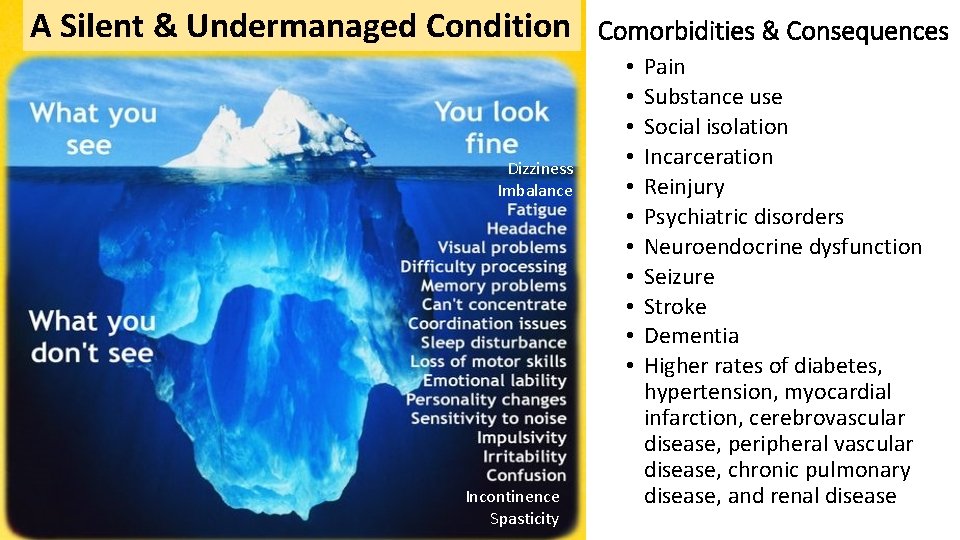
A Silent & Undermanaged Condition Dizziness Imbalance Incontinence Spasticity Comorbidities & Consequences • • • Pain Substance use Social isolation Incarceration Reinjury Psychiatric disorders Neuroendocrine dysfunction Seizure Stroke Dementia Higher rates of diabetes, hypertension, myocardial infarction, cerebrovascular disease, peripheral vascular disease, chronic pulmonary disease, and renal disease

Premature Mortality with Moderate-Severe TBI Harrison- Felix C, Whiteneck G, De. Vivo MJ, Hammond FM, Jha A: JHTR 2006 Most Frequent Causes > Expected for general population • • • • Cardiovascular Unintentional Septicemia Cancer Pneumonia; Other resp Digestive Homicide Suicide Seizure (37 x) Septicemia (12 x) Pneumonia & aspiration PNA (4 x) Other respiratory (3 x) Digestive (3 x) External (3 x) • Unintentional (3 x) • Accidental poisoning (4%)(11 x) • Opioids • Homicide (3 x) • Suicide (1 x) • 7 -year reduction in life expectancy • Causes of death vary over time post-injury • Association with older age and > disability at time of rehab discharge
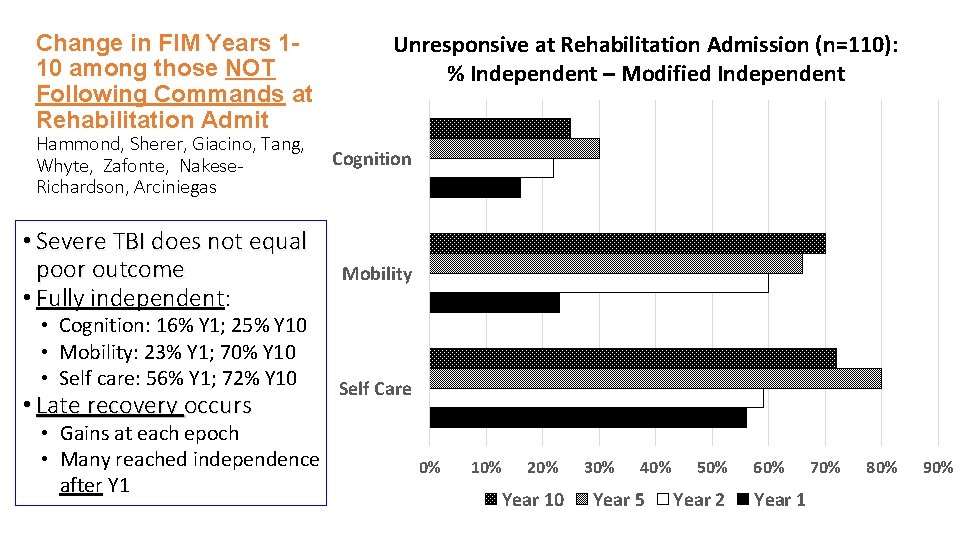
Change in FIM Years 110 among those NOT Following Commands at Rehabilitation Admit Unresponsive at Rehabilitation Admission (n=110): % Independent – Modified Independent Hammond, Sherer, Giacino, Tang, Whyte, Zafonte, Nakese. Richardson, Arciniegas Cognition • Severe TBI does not equal poor outcome • Fully independent: Mobility • Cognition: 16% Y 1; 25% Y 10 • Mobility: 23% Y 1; 70% Y 10 • Self care: 56% Y 1; 72% Y 10 • Late recovery occurs • Gains at each epoch • Many reached independence after Y 1 Self Care 0% 10% 20% Year 10 30% 40% Year 5 50% Year 2 60% Year 1 70% 80% 90%
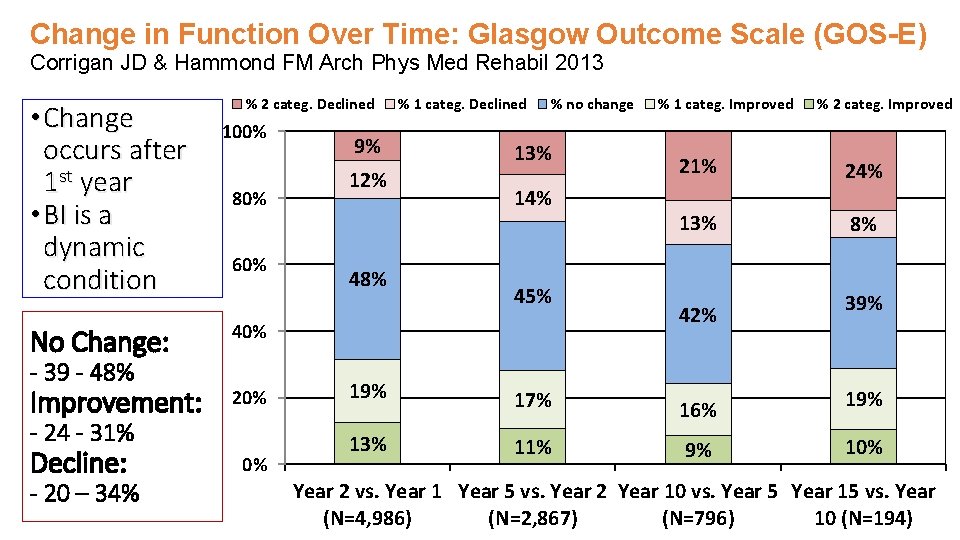
Change in Function Over Time: Glasgow Outcome Scale (GOS-E) Corrigan JD & Hammond FM Arch Phys Med Rehabil 2013 • Change occurs after 1 st year • BI is a dynamic condition % 2 categ. Declined 100% 80% 60% No Change: 40% Improvement: 20% - 39 - 48% - 24 - 31% Decline: - 20 – 34% 0% 9% 12% 48% % 1 categ. Declined % no change 13% 14% 45% % 1 categ. Improved % 2 categ. Improved 21% 24% 13% 8% 42% 39% 17% 16% 19% 13% 11% 9% 10% Year 2 vs. Year 1 Year 5 vs. Year 2 Year 10 vs. Year 5 Year 15 vs. Year (N=4, 986) (N=2, 867) (N=796) 10 (N=194)
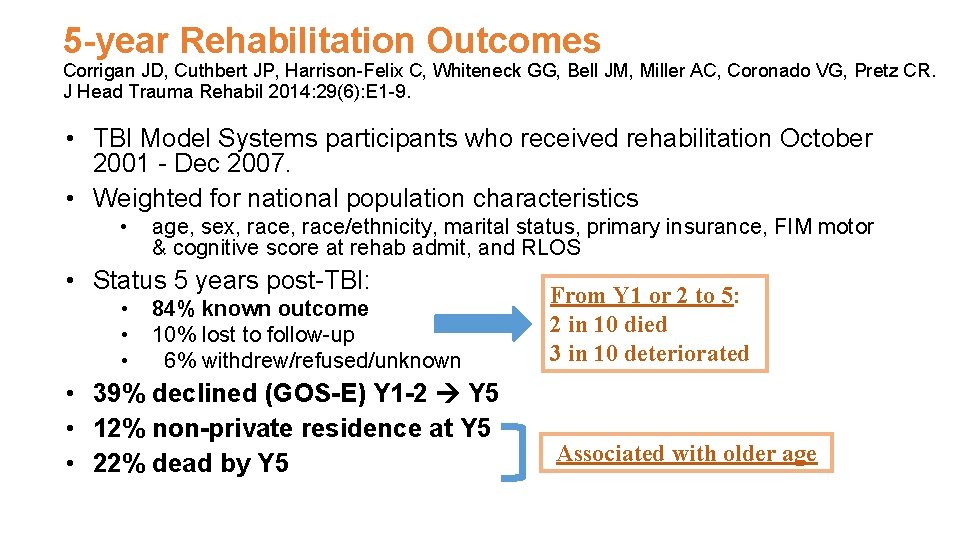
5 -year Rehabilitation Outcomes Corrigan JD, Cuthbert JP, Harrison-Felix C, Whiteneck GG, Bell JM, Miller AC, Coronado VG, Pretz CR. J Head Trauma Rehabil 2014: 29(6): E 1 -9. • TBI Model Systems participants who received rehabilitation October 2001 - Dec 2007. • Weighted for national population characteristics • age, sex, race/ethnicity, marital status, primary insurance, FIM motor & cognitive score at rehab admit, and RLOS • Status 5 years post-TBI: • • • 84% known outcome 10% lost to follow-up 6% withdrew/refused/unknown • 39% declined (GOS-E) Y 1 -2 Y 5 • 12% non-private residence at Y 5 • 22% dead by Y 5 From Y 1 or 2 to 5: 2 in 10 died 3 in 10 deteriorated Associated with older age
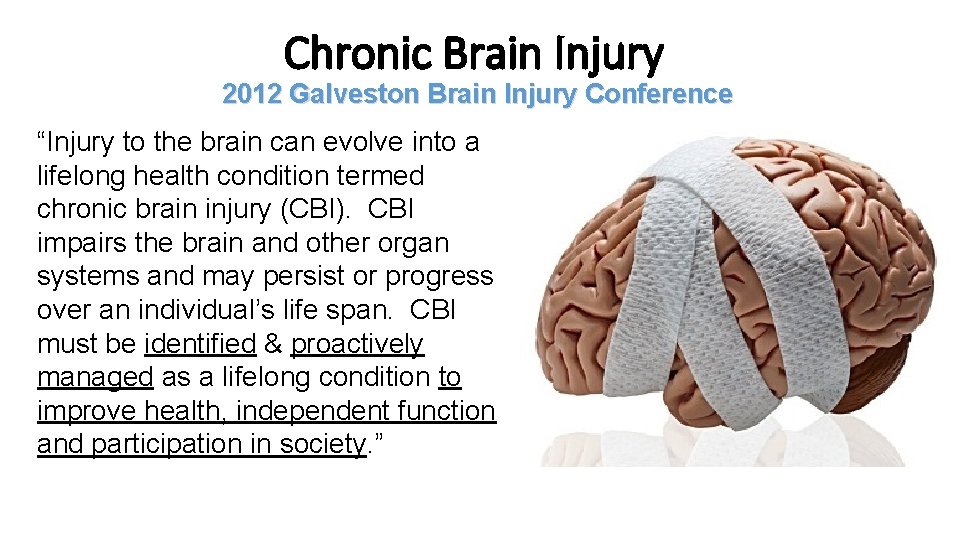
Chronic Brain Injury 2012 Galveston Brain Injury Conference “Injury to the brain can evolve into a lifelong health condition termed chronic brain injury (CBI). CBI impairs the brain and other organ systems and may persist or progress over an individual’s life span. CBI must be identified & proactively managed as a lifelong condition to improve health, independent function and participation in society. ”
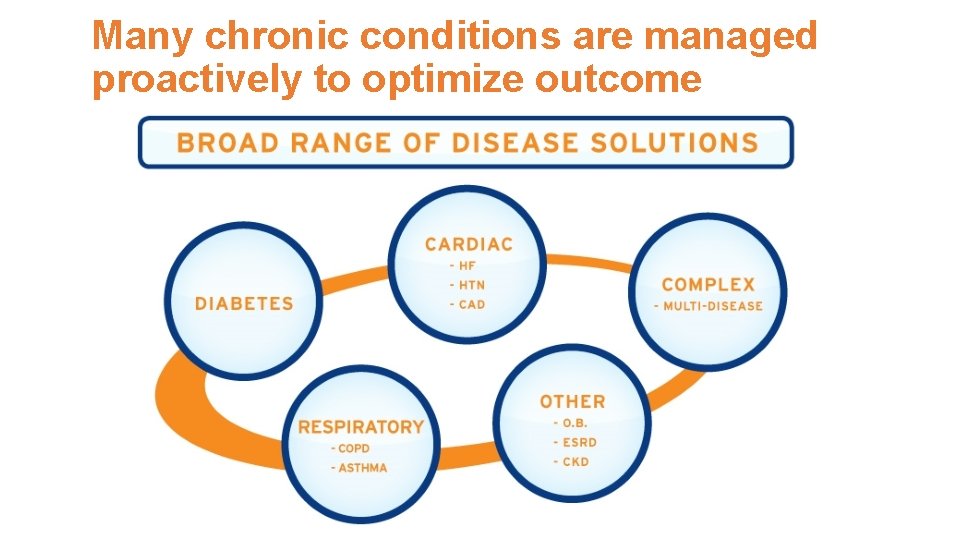
Many chronic conditions are managed proactively to optimize outcome
On average, persons with chronic disability spend 3 hours/year with health professionals … need to activate, empower, & build self-efficacy
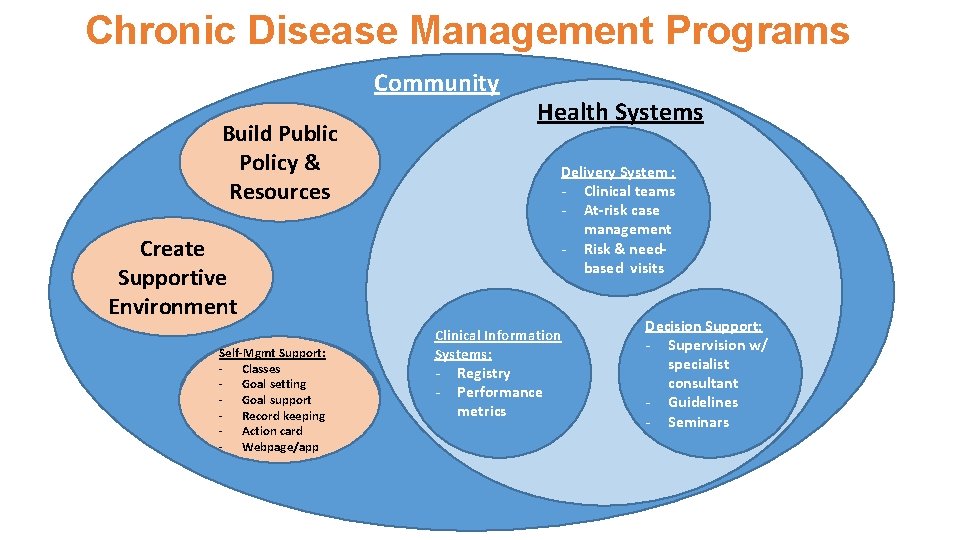
Chronic Disease Management Programs Community Build Public Policy & Resources Create Supportive Environment Self-Mgmt Support: - Classes - Goal setting - Goal support - Record keeping - Action card - Webpage/app Provide Self. Management Support Health Systems Delivery System : - Delivery Clinical teams - System At-risk case management Design - Risk & needbased visits Clinical Information Clinical Systems: -Information Registry - Performance Systems metrics Decision Support: - Supervision w/ Decision specialist consultant Support - Guidelines - Seminars
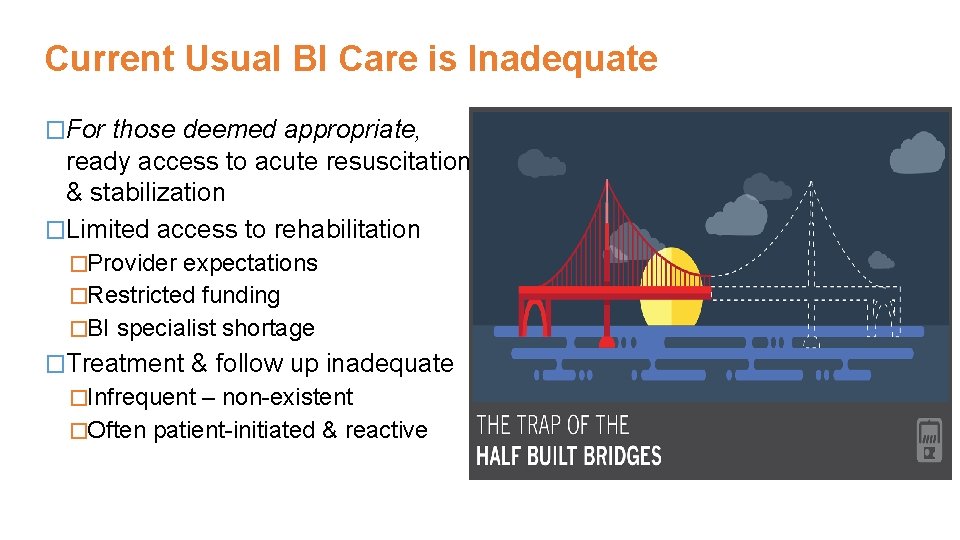
Current Usual BI Care is Inadequate �For those deemed appropriate, ready access to acute resuscitation & stabilization �Limited access to rehabilitation �Provider expectations �Restricted funding �BI specialist shortage �Treatment & follow up inadequate �Infrequent – non-existent X �Often patient-initiated & reactive Intensity of Service over time
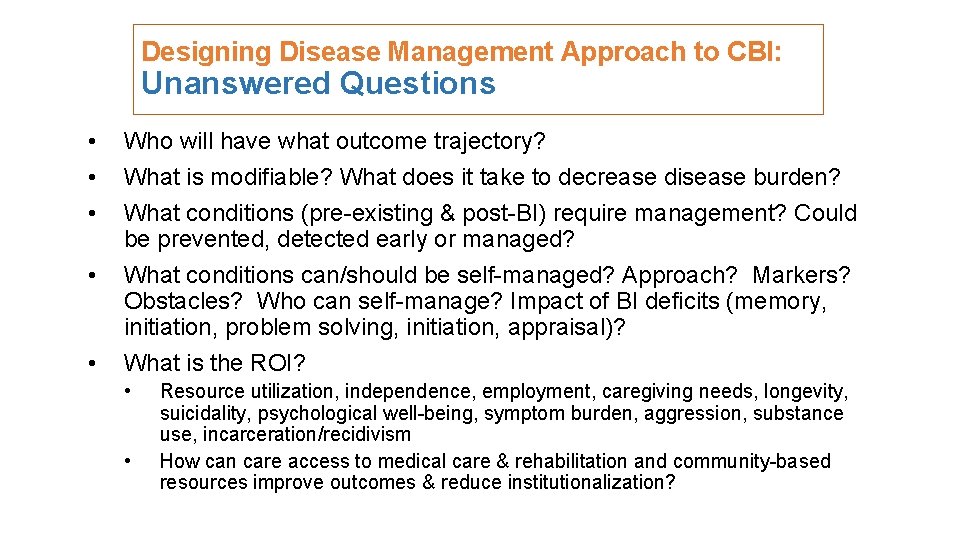
Designing Disease Management Approach to CBI: Unanswered Questions • • • Who will have what outcome trajectory? What is modifiable? What does it take to decrease disease burden? What conditions (pre-existing & post-BI) require management? Could be prevented, detected early or managed? What conditions can/should be self-managed? Approach? Markers? Obstacles? Who can self-manage? Impact of BI deficits (memory, initiation, problem solving, initiation, appraisal)? What is the ROI? • • Resource utilization, independence, employment, caregiving needs, longevity, suicidality, psychological well-being, symptom burden, aggression, substance use, incarceration/recidivism How can care access to medical care & rehabilitation and community-based resources improve outcomes & reduce institutionalization?
We need a paradigm shift to influence outcome trajectories
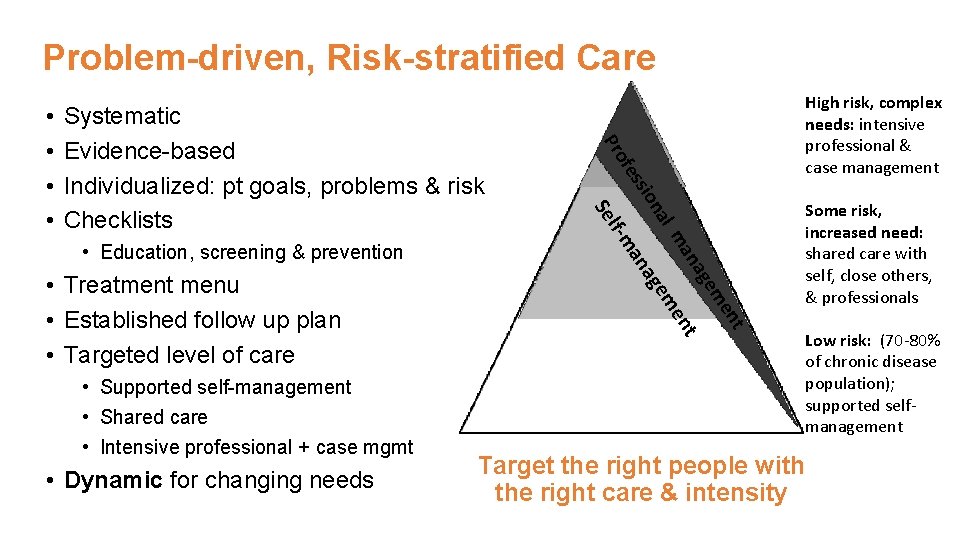
Problem-driven, Risk-stratified Care • Supported self-management • Shared care • Intensive professional + case mgmt • Dynamic for changing needs nt me ge na nt ma me al ge on na ssi ma lf- • Treatment menu • Established follow up plan • Targeted level of care ofe • Education, screening & prevention Se Systematic Evidence-based Individualized: pt goals, problems & risk Checklists Pr • • Target the right people with the right care & intensity High risk, complex needs: intensive professional & case management Some risk, increased need: shared care with self, close others, & professionals Low risk: (70 -80% of chronic disease population); supported selfmanagement
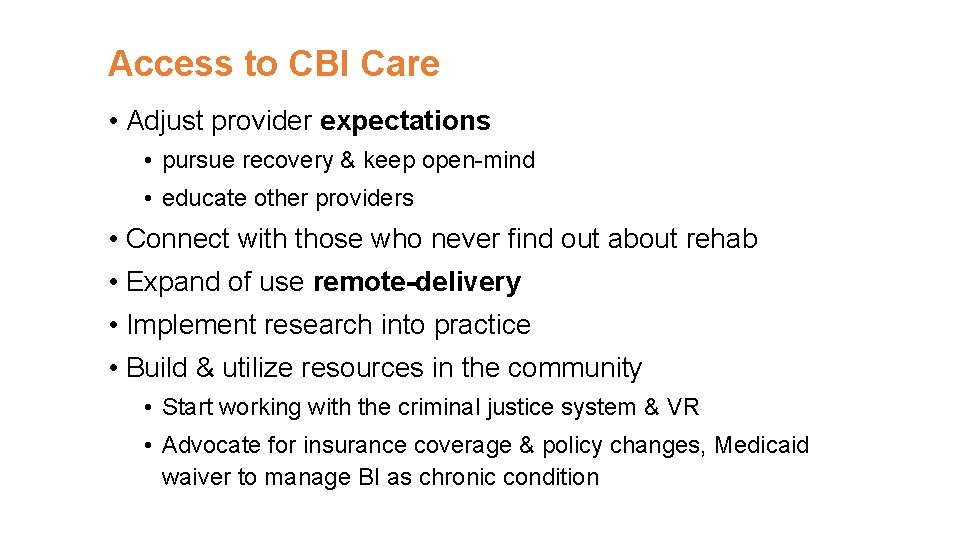
Access to CBI Care • Adjust provider expectations • pursue recovery & keep open-mind • educate other providers • Connect with those who never find out about rehab • Expand of use remote-delivery • Implement research into practice • Build & utilize resources in the community • Start working with the criminal justice system & VR • Advocate for insurance coverage & policy changes, Medicaid waiver to manage BI as chronic condition
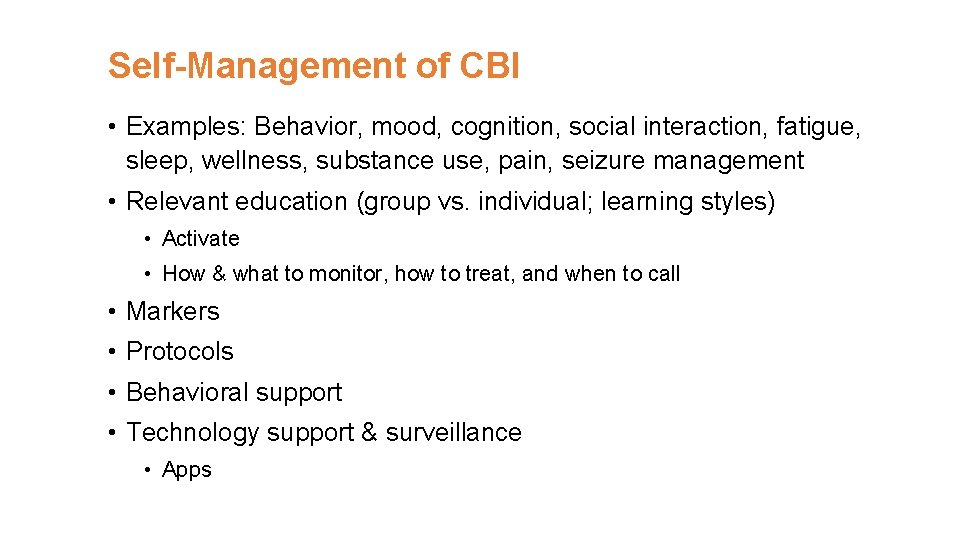
Self-Management of CBI • Examples: Behavior, mood, cognition, social interaction, fatigue, sleep, wellness, substance use, pain, seizure management • Relevant education (group vs. individual; learning styles) • Activate • How & what to monitor, how to treat, and when to call • Markers • Protocols • Behavioral support • Technology support & surveillance • Apps
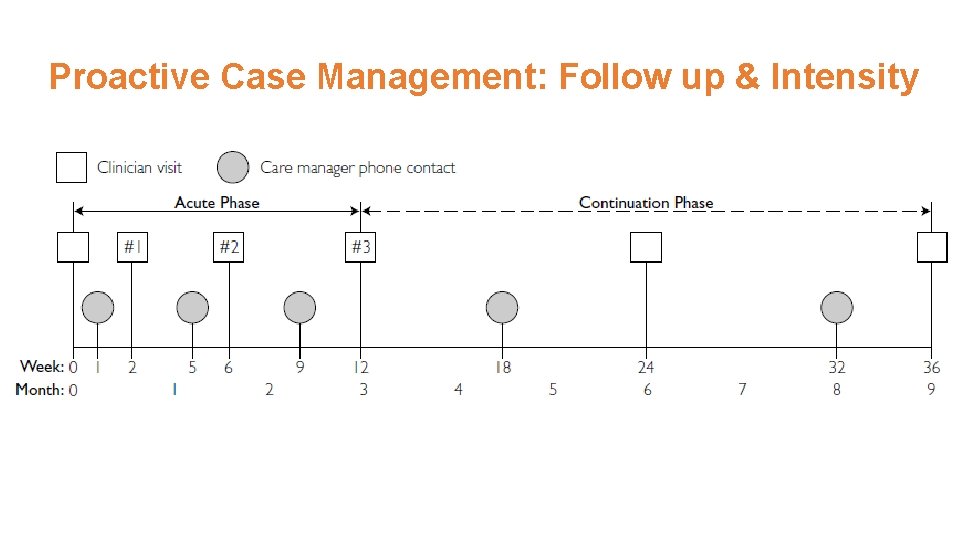
Proactive Case Management: Follow up & Intensity
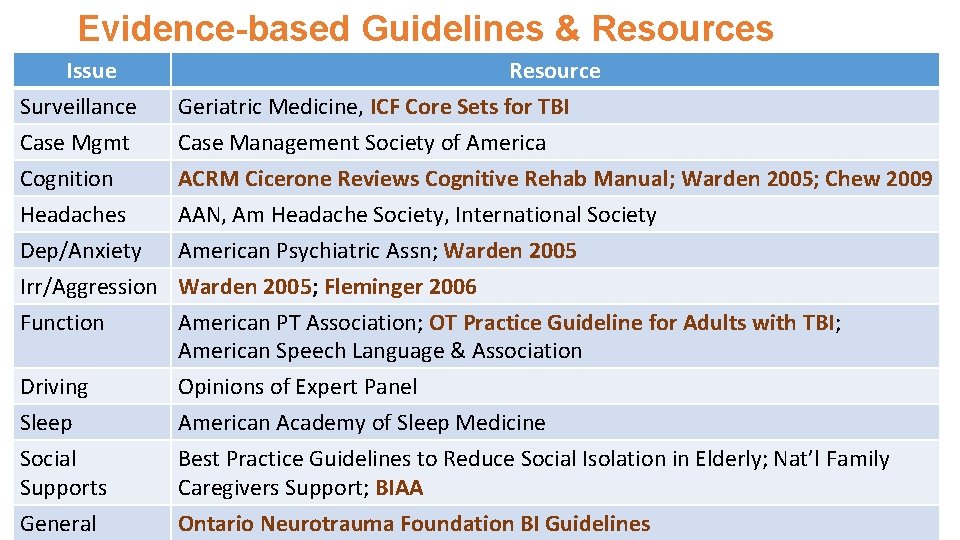
Evidence-based Guidelines & Resources Issue Surveillance Case Mgmt Cognition Resource Geriatric Medicine, ICF Core Sets for TBI Case Management Society of America ACRM Cicerone Reviews Cognitive Rehab Manual; Warden 2005; Chew 2009 Headaches AAN, Am Headache Society, International Society Dep/Anxiety American Psychiatric Assn; Warden 2005 Irr/Aggression Warden 2005; Fleminger 2006 Function Driving Sleep Social Supports General American PT Association; OT Practice Guideline for Adults with TBI; American Speech Language & Association Opinions of Expert Panel American Academy of Sleep Medicine Best Practice Guidelines to Reduce Social Isolation in Elderly; Nat’l Family Caregivers Support; BIAA Ontario Neurotrauma Foundation BI Guidelines
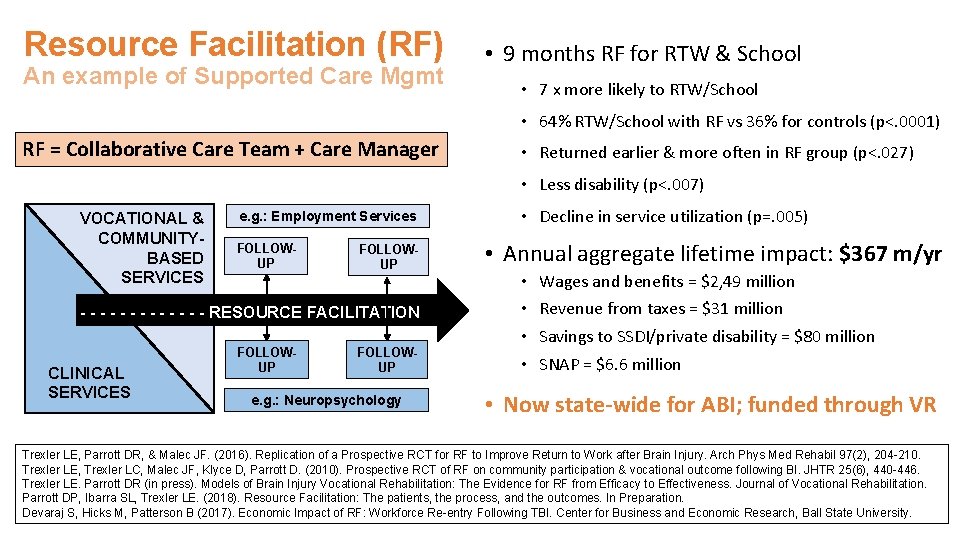
Resource Facilitation (RF) An example of Supported Care Mgmt • 9 months RF for RTW & School • 7 x more likely to RTW/School • 64% RTW/School with RF vs 36% for controls (p<. 0001) RF = Collaborative Care Team + Care Manager • Returned earlier & more often in RF group (p<. 027) • Less disability (p<. 007) VOCATIONAL & COMMUNITYBASED SERVICES e. g. : Employment Services FOLLOWUP - - - - RESOURCE FACILITATION CLINICAL SERVICES FOLLOWUP e. g. : Neuropsychology • Decline in service utilization (p=. 005) • Annual aggregate lifetime impact: $367 m/yr • • Wages and benefits = $2, 49 million Revenue from taxes = $31 million Savings to SSDI/private disability = $80 million SNAP = $6. 6 million • Now state-wide for ABI; funded through VR Trexler LE, Parrott DR, & Malec JF. (2016). Replication of a Prospective RCT for RF to Improve Return to Work after Brain Injury. Arch Phys Med Rehabil 97(2), 204 -210. Trexler LE, Trexler LC, Malec JF, Klyce D, Parrott D. (2010). Prospective RCT of RF on community participation & vocational outcome following BI. JHTR 25(6), 440 -446. Trexler LE. Parrott DR (in press). Models of Brain Injury Vocational Rehabilitation: The Evidence for RF from Efficacy to Effectiveness. Journal of Vocational Rehabilitation. Parrott DP, Ibarra SL, Trexler LE. (2018). Resource Facilitation: The patients, the process, and the outcomes. In Preparation. Devaraj S, Hicks M, Patterson B (2017). Economic Impact of RF: Workforce Re-entry Following TBI. Center for Business and Economic Research, Ball State University.
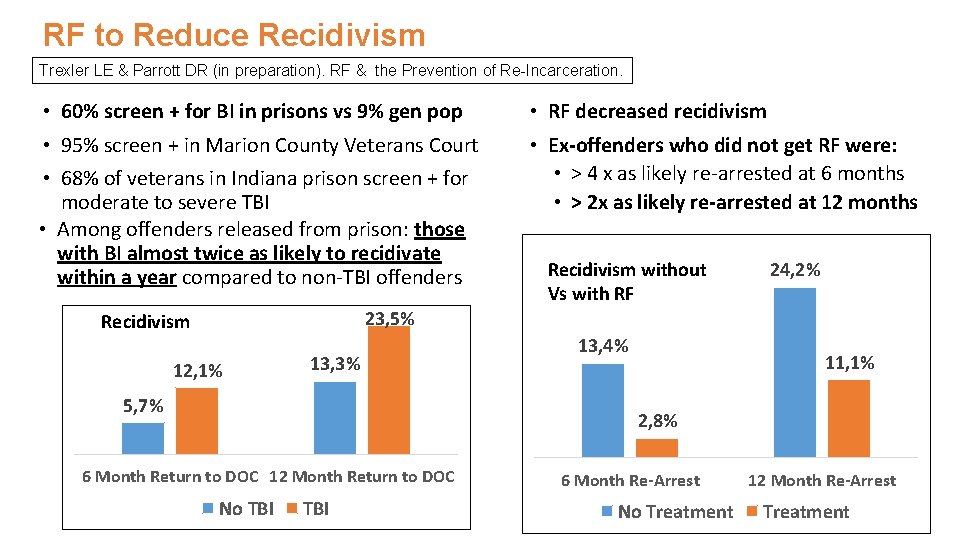
RF to Reduce Recidivism Trexler LE & Parrott DR (in preparation). RF & the Prevention of Re-Incarceration. • 60% screen + for BI in prisons vs 9% gen pop • RF decreased recidivism • 95% screen + in Marion County Veterans Court • Ex-offenders who did not get RF were: • > 4 x as likely re-arrested at 6 months • > 2 x as likely re-arrested at 12 months • 68% of veterans in Indiana prison screen + for moderate to severe TBI • Among offenders released from prison: those with BI almost twice as likely to recidivate within a year compared to non-TBI offenders Recidivism without Vs with RF 24, 2% 23, 5% Recidivism 12, 1% 13, 3% 5, 7% 13, 4% 11, 1% 2, 8% 6 Month Return to DOC 12 Month Return to DOC No TBI 6 Month Re-Arrest No Treatment 12 Month Re-Arrest Treatment
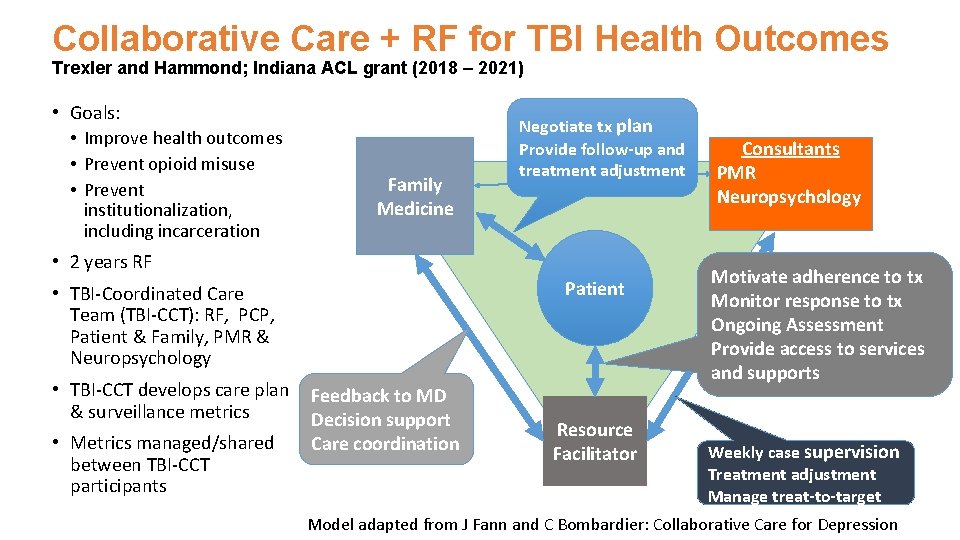
Collaborative Care + RF for TBI Health Outcomes Trexler and Hammond; Indiana ACL grant (2018 – 2021) • Goals: • Improve health outcomes • Prevent opioid misuse • Prevent institutionalization, including incarceration Family Medicine Negotiate tx plan Provide follow-up and treatment adjustment • 2 years RF Patient • TBI-Coordinated Care Team (TBI-CCT): RF, PCP, Patient & Family, PMR & Neuropsychology • TBI-CCT develops care plan & surveillance metrics • Metrics managed/shared between TBI-CCT participants Feedback to MD Decision support Care coordination Resource Facilitator Consultants PMR Neuropsychology Motivate adherence to tx Monitor response to tx Ongoing Assessment Provide access to services and supports Weekly case supervision Treatment adjustment Manage treat-to-target Model adapted from J Fann and C Bombardier: Collaborative Care for Depression
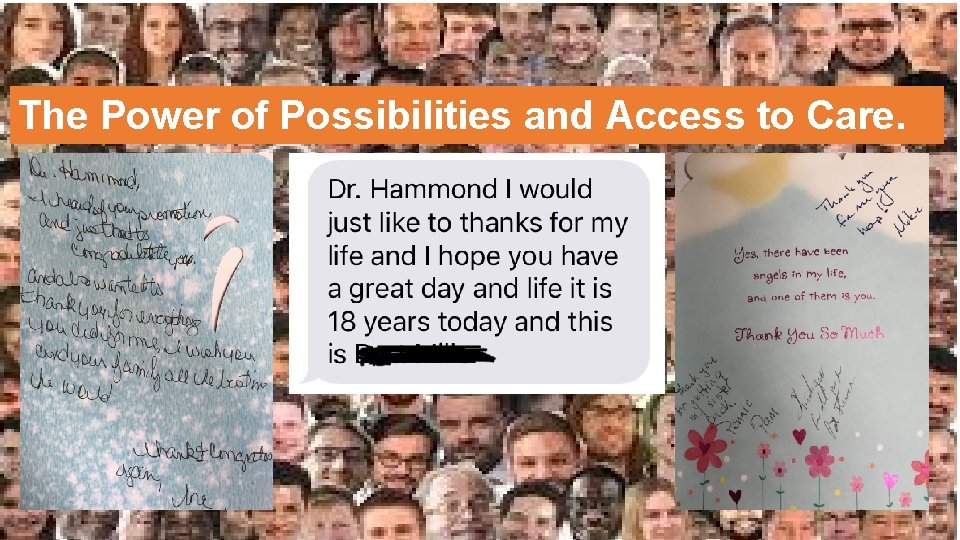
The Power of Possibilities and Access to Care.
Summary • Need to modify our expectations & treatment approaches • Paradigm shift to treat BI as a chronic condition to enhance care & access to optimize outcomes • Still many unanswered questions. . . • Transformative moment • We know enough to begin implementing & studying solutions now • What will you commit to implement?
Indiana Resource Facilitation Program of Research: The New Indiana TBI State Partnership Program Mentor State Funding Opportunity Improving Health Outcomes following Traumatic Brain Injury through Building a TBI-informed System of Services and Supports and Resource Facilitation
Flora Hammond, MD flora. hammond@rhin. com
- Slides: 29