
Managing Agriculture Knowledge Through Localized Community Expert System
- Slides: 26
Managing Agriculture Knowledge Through Localized Community Expert System A Research Project
Researching A Process…. Evaluating A Product • Availability of user-friendly technology • Building & maintaining expert systems is a process with two axes: Knowledge Acquisition and Knowledge Engineering • Many components come into play creating a web of factors that could affect the efficiency of expert systems. • The need not to just build an expert system but to document how to go about building a valid and efficient expert system.
Research Questions What are the components of a workable model for building efficient Knowledge Bases for solving problems in specific knowledge domains through the use of Expert Systems? To what extent do the model components affect each other? What is the expertise needed for managing and sustaining each of the model components? What are the criteria of the knowledge domains that could be best encoded through Expert Systems? What are the selection criteria of the knowledge experts who can effectively encode their expertise as Expert Systems? To what extent is the knowledge engineering methodology adopted in the project effective in capturing and encoding expertise as rules in knowledge bases? What are the advantages and disadvantages of the available Expert System technologies? On what basis the decision was taken for the expert system technology used in this project? What are the competencies and skills required for the efficient use of Expert Systems? How could the challenge of upgrading and sustaining Expert Systems be dealt with?
Pilot Project • Adopting and adapting expert system tool • Identifying a workable model for building efficient expert systems. • Researching conditions of system components and the relationships among them. • Consolidating lessons learned and best practices. • Producing field-tested prototypes to use in advocacy and capacity building
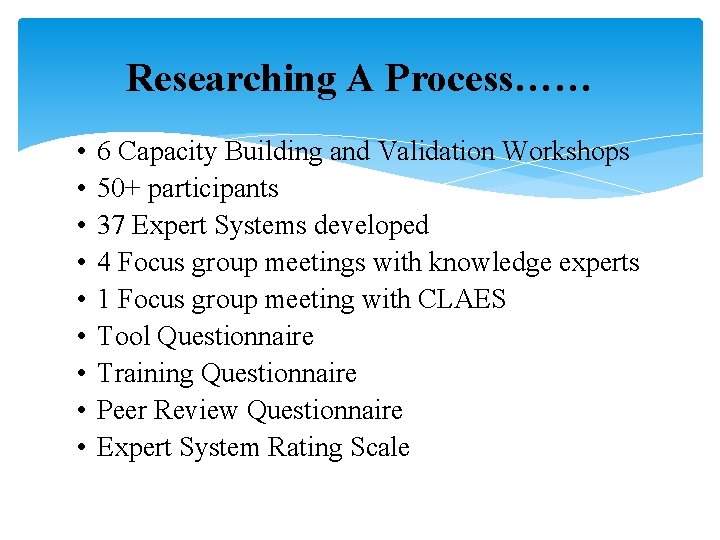
Researching A Process…… • • • 6 Capacity Building and Validation Workshops 50+ participants 37 Expert Systems developed 4 Focus group meetings with knowledge experts 1 Focus group meeting with CLAES Tool Questionnaire Training Questionnaire Peer Review Questionnaire Expert System Rating Scale
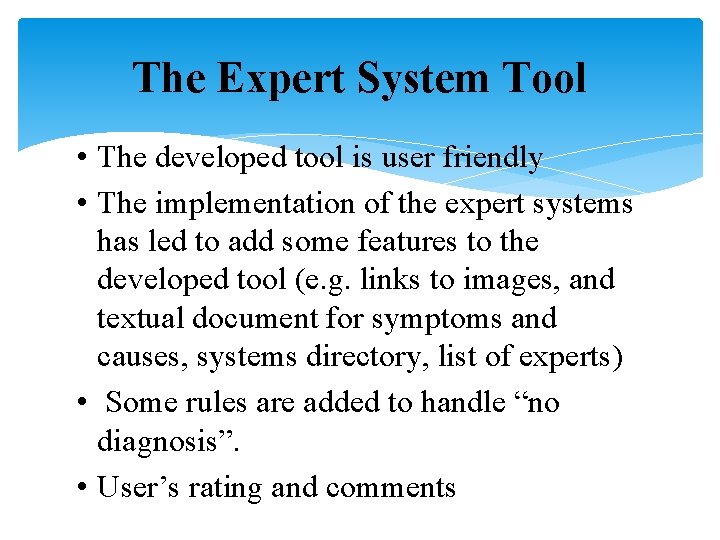
The Expert System Tool • The developed tool is user friendly • The implementation of the expert systems has led to add some features to the developed tool (e. g. links to images, and textual document for symptoms and causes, systems directory, list of experts) • Some rules are added to handle “no diagnosis”. • User’s rating and comments
Workable Framework for Building Efficient Expert Systems
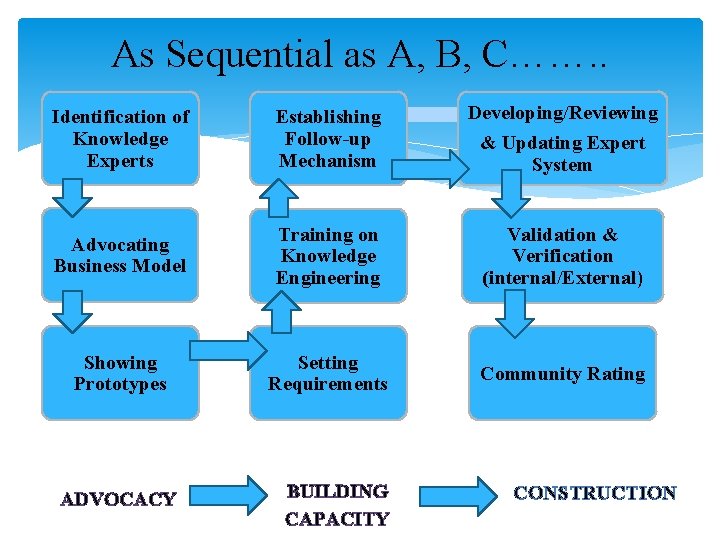
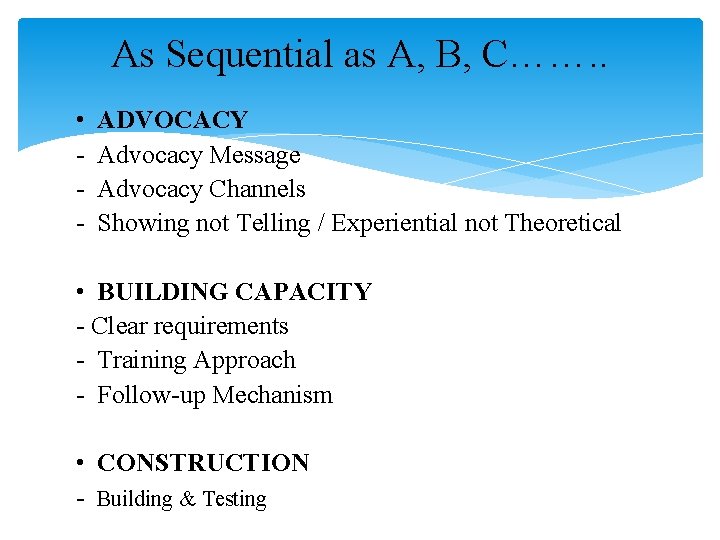
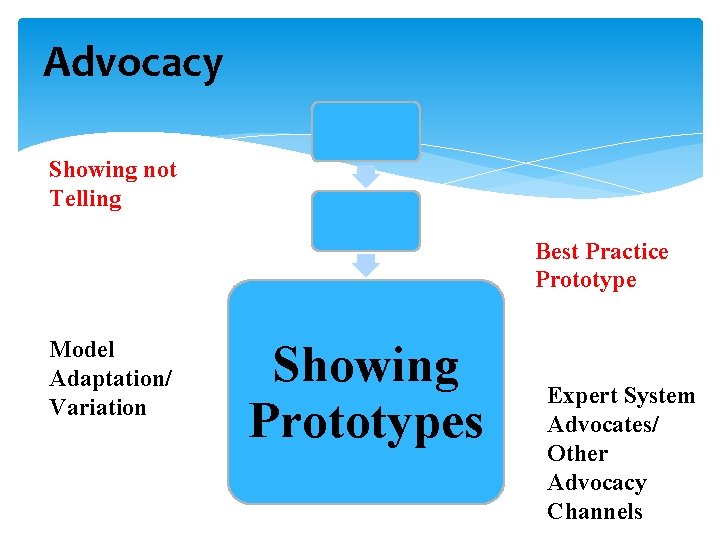
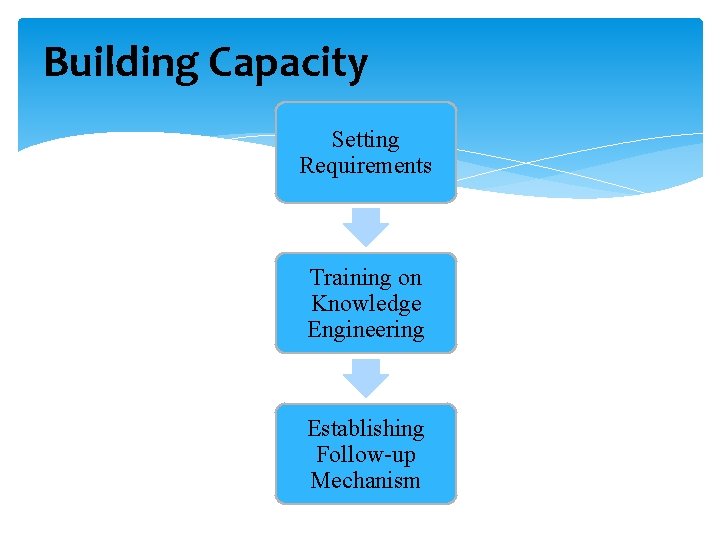
As Sequential as A, B, C……. . Identification of Knowledge Experts Establishing Follow-up Mechanism Developing/Reviewing & Updating Expert System Advocating Business Model Training on Knowledge Engineering Validation & Verification (internal/External) Showing Prototypes Setting Requirements Community Rating ADVOCACY BUILDING CAPACITY CONSTRUCTION
As Sequential as A, B, C……. . ADVOCACY • - Advocacy Message - Advocacy Channels - Showing not Telling / Experiential not Theoretical • BUILDING CAPACITY - Clear requirements - Training Approach - Follow-up Mechanism • CONSTRUCTION - Building & Testing
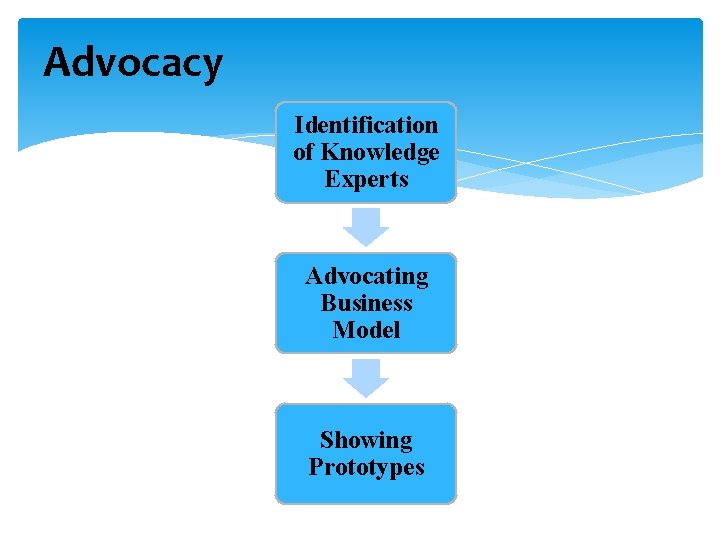
Advocacy Identification of Knowledge Experts Advocating Business Model Showing Prototypes
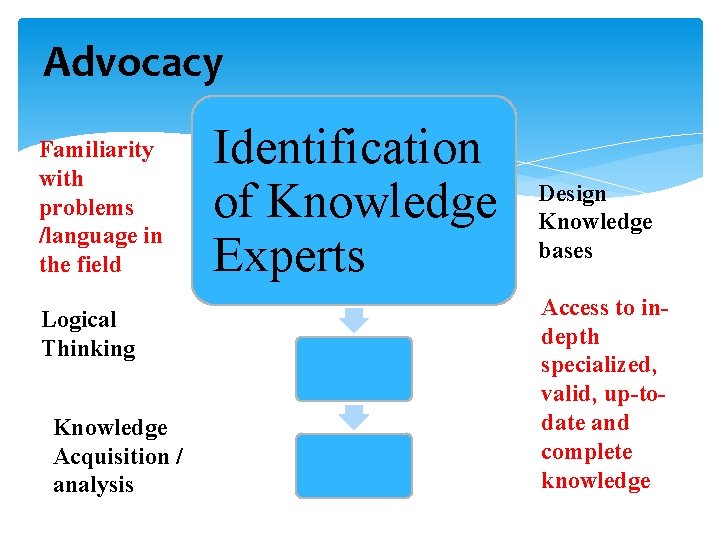
Advocacy Familiarity with problems /language in the field Logical Thinking Knowledge Acquisition / analysis Identification of Knowledge Experts Design Knowledge bases Access to indepth specialized, valid, up-todate and complete knowledge
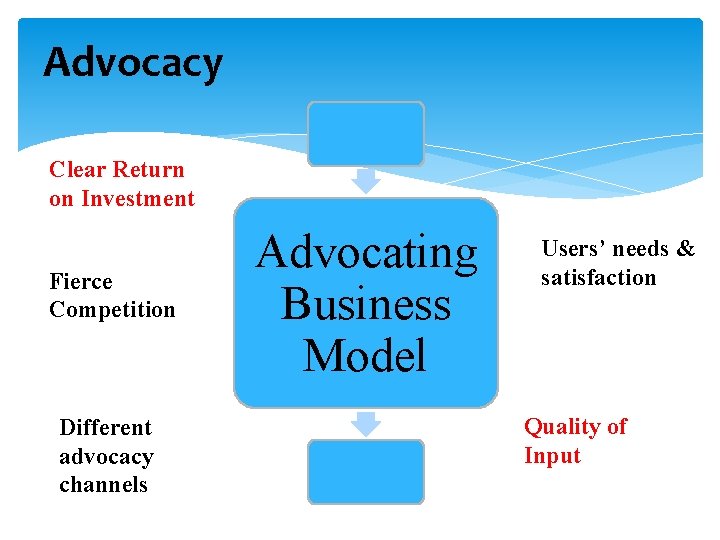
Advocacy Clear Return on Investment Fierce Competition Different advocacy channels Advocating Business Model Users’ needs & satisfaction Quality of Input
Advocacy Showing not Telling Best Practice Prototype Model Adaptation/ Variation Showing Prototypes Expert System Advocates/ Other Advocacy Channels
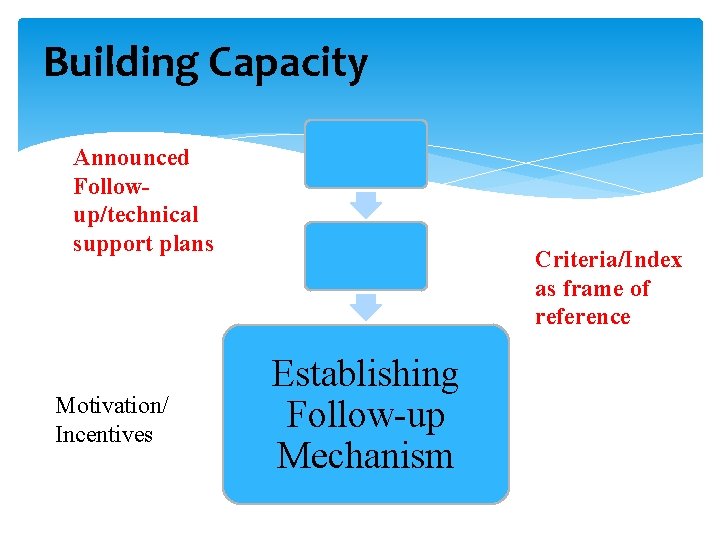
Building Capacity Setting Requirements Training on Knowledge Engineering Establishing Follow-up Mechanism
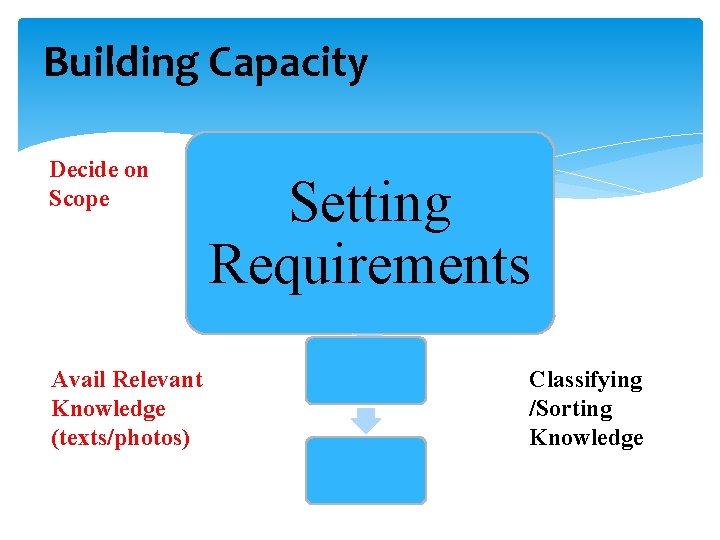
Building Capacity Decide on Scope Avail Relevant Knowledge (texts/photos) Setting Requirements Classifying /Sorting Knowledge
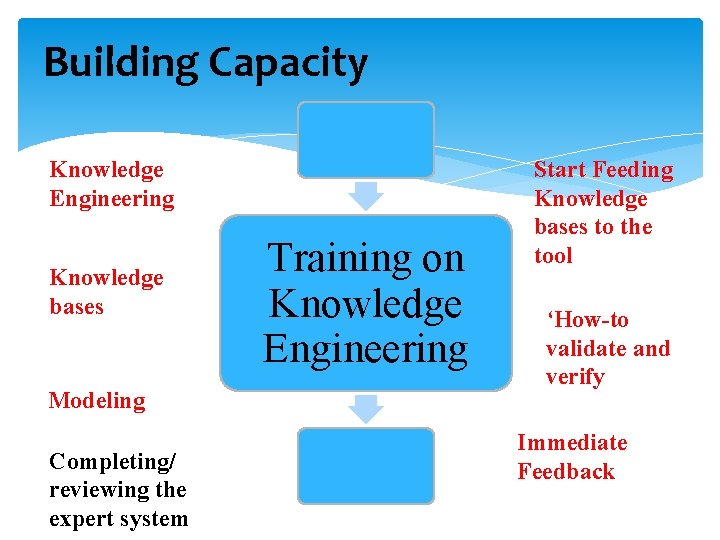
Building Capacity Knowledge Engineering Knowledge bases Modeling Completing/ reviewing the expert system Training on Knowledge Engineering Start Feeding Knowledge bases to the tool ‘How-to validate and verify Immediate Feedback
Building Capacity Announced Followup/technical support plans Motivation/ Incentives Criteria/Index as frame of reference Establishing Follow-up Mechanism
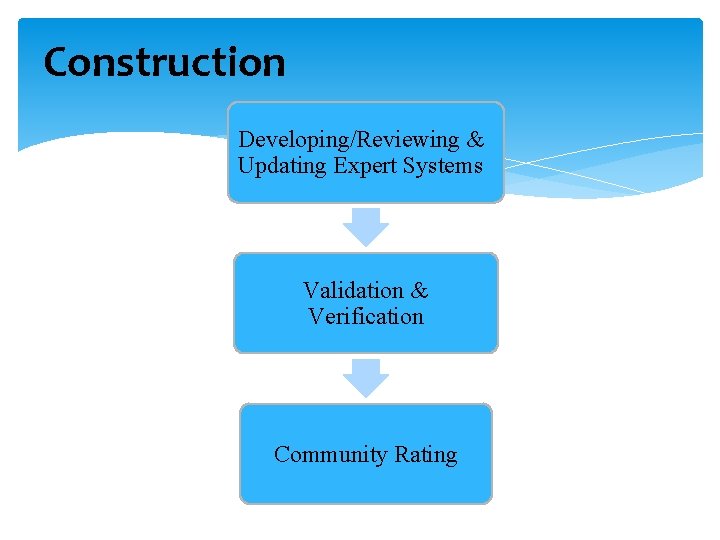
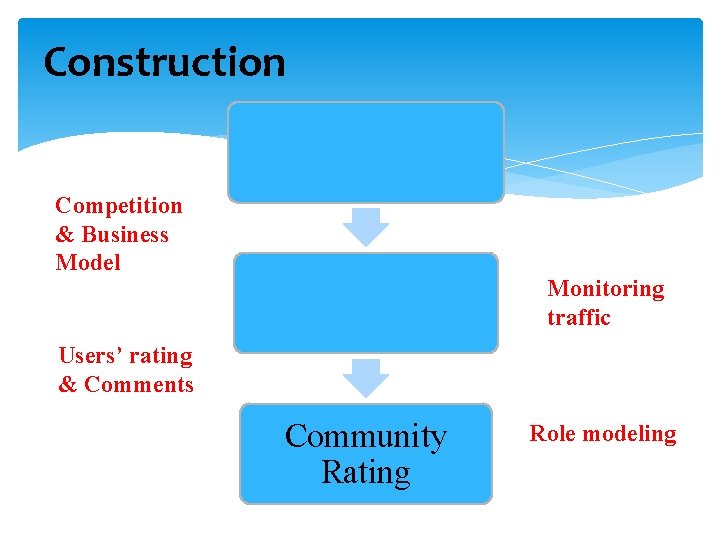
Construction Developing/Reviewing & Updating Expert Systems Validation & Verification Community Rating
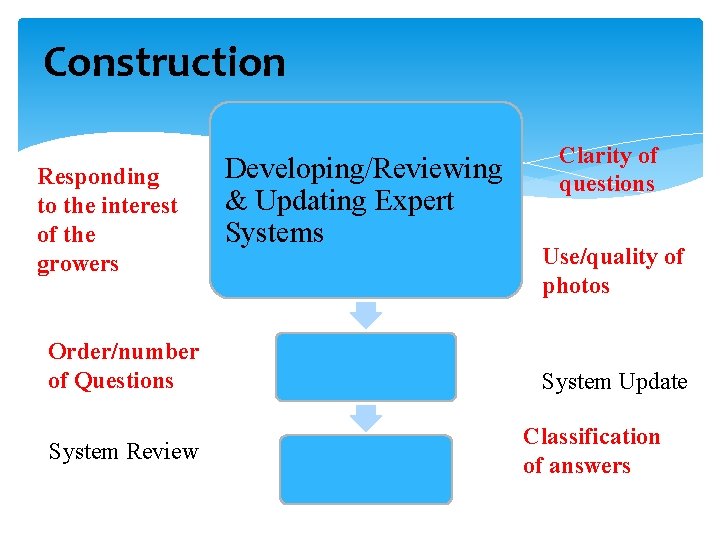
Construction Responding to the interest of the growers Order/number of Questions System Review Developing/Reviewing & Updating Expert Systems Clarity of questions Use/quality of photos System Update Classification of answers
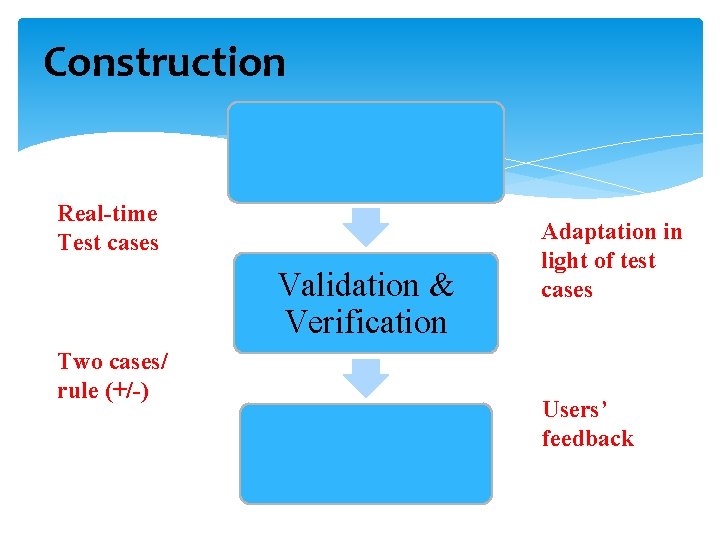
Construction Real-time Test cases Validation & Verification Two cases/ rule (+/-) Adaptation in light of test cases Users’ feedback
Construction Competition & Business Model Monitoring traffic Community Rating Role modeling Users’ rating & Comments
Evaluating products…… Hyperlink of list of Expert Systems
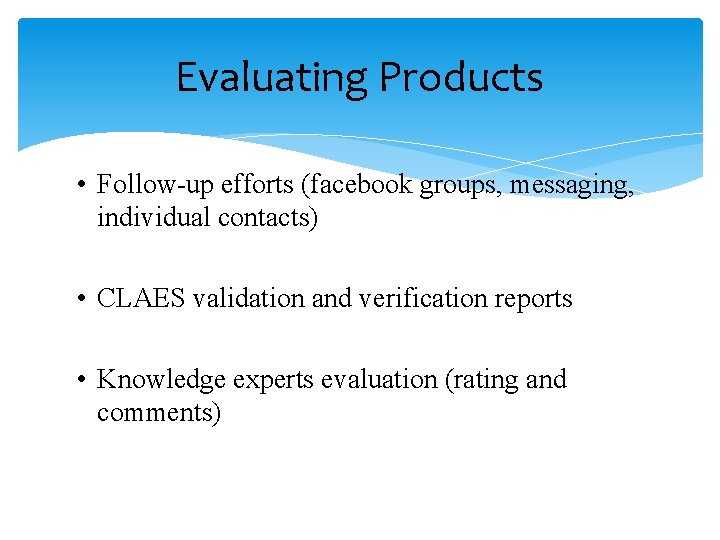
Evaluating Products • Follow-up efforts (facebook groups, messaging, individual contacts) • CLAES validation and verification reports • Knowledge experts evaluation (rating and comments)
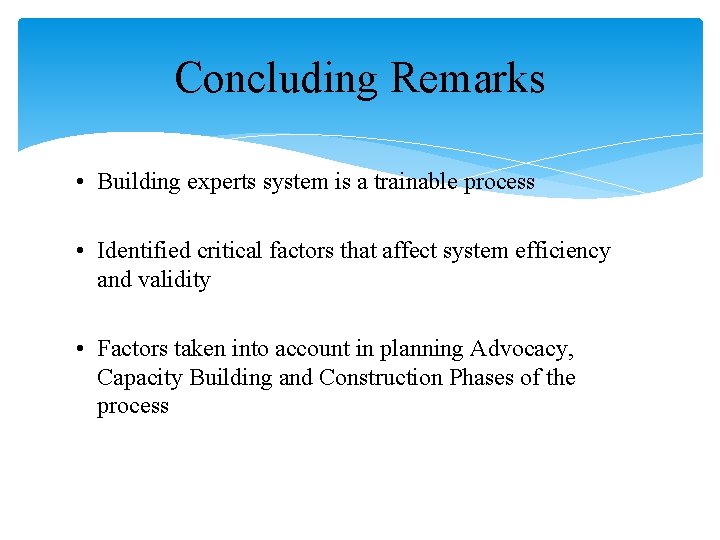
Concluding Remarks • Building experts system is a trainable process • Identified critical factors that affect system efficiency and validity • Factors taken into account in planning Advocacy, Capacity Building and Construction Phases of the process
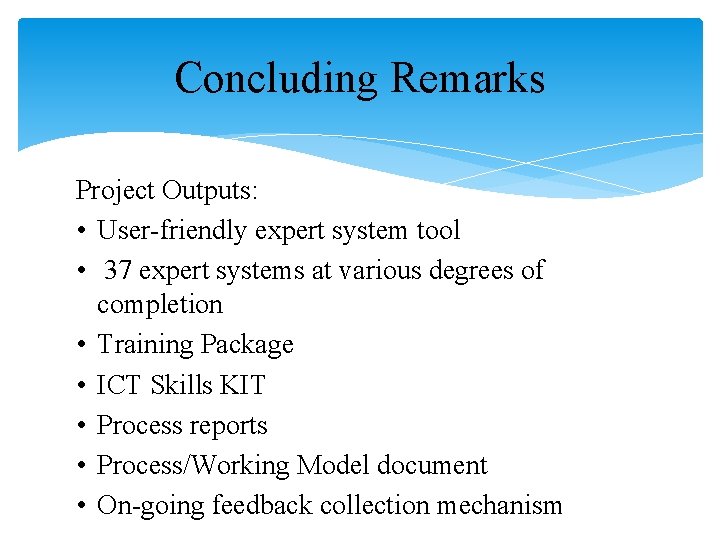
Concluding Remarks Project Outputs: • User-friendly expert system tool • 37 expert systems at various degrees of completion • Training Package • ICT Skills KIT • Process reports • Process/Working Model document • On-going feedback collection mechanism
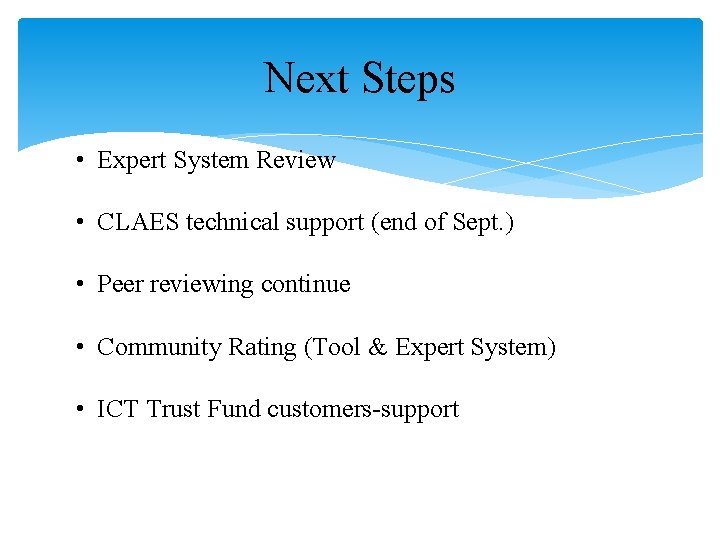
Next Steps • Expert System Review • CLAES technical support (end of Sept. ) • Peer reviewing continue • Community Rating (Tool & Expert System) • ICT Trust Fund customers-support