
Managing Aflatoxin Risks From Farm To Fork 4

- Slides: 24
“Managing Aflatoxin Risks From Farm To Fork” 4 TH Dubai International Food Safety Conference 1 Robert C. Baker Head of Food Safety, Mars Incorporated 26 February 2009
Objectives • Provide basic awareness of Aflatoxin and potential risks in the Food Chain • Provide a framework for managing Aflatoxin risks • Provide a means of monitoring and verifying the effectiveness of aflatoxin management processes • In 30 minutes…. . 2
Agenda • What are aflatoxins? • At risk materials • Factors influencing aflatoxin production • Methods for managing aflatoxin risks • Methods of aflatoxin detection • Summary 3
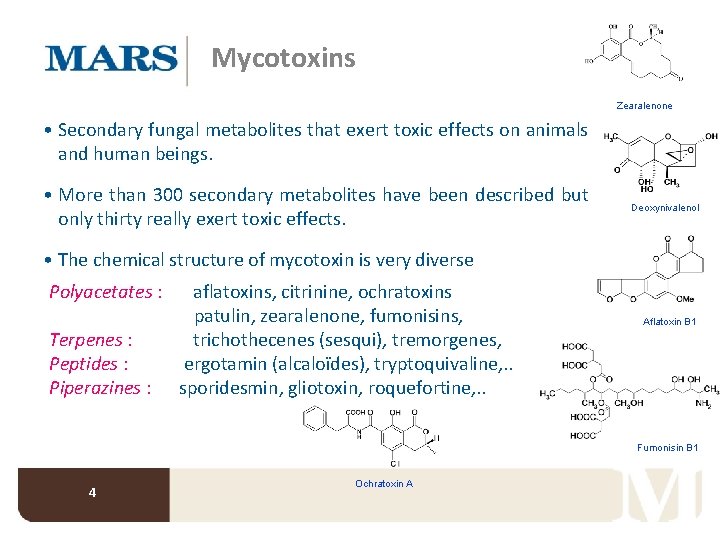
Mycotoxins Zearalenone • Secondary fungal metabolites that exert toxic effects on animals and human beings. • More than 300 secondary metabolites have been described but only thirty really exert toxic effects. Deoxynivalenol • The chemical structure of mycotoxin is very diverse Polyacetates : Terpenes : Peptides : Piperazines : aflatoxins, citrinine, ochratoxins patulin, zearalenone, fumonisins, trichothecenes (sesqui), tremorgenes, ergotamin (alcaloïdes), tryptoquivaline, . . sporidesmin, gliotoxin, roquefortine, . . Aflatoxin B 1 Fumonisin B 1 4 Ochratoxin A
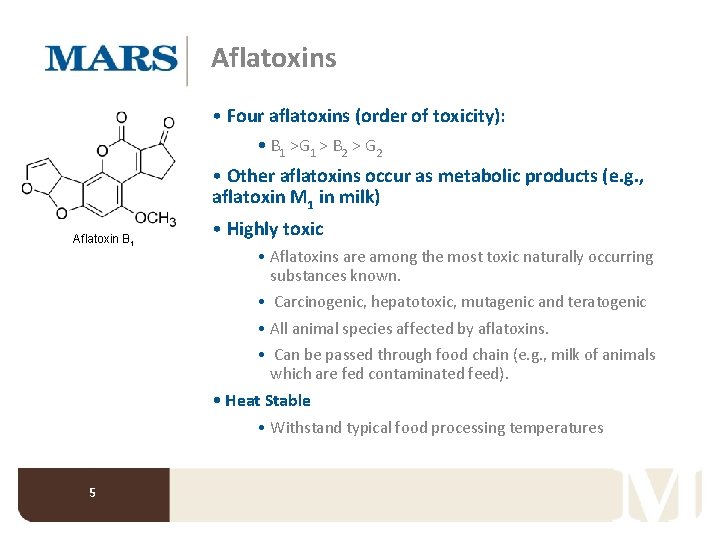
Aflatoxins • Four aflatoxins (order of toxicity): • B 1 >G 1 > B 2 > G 2 • Other aflatoxins occur as metabolic products (e. g. , aflatoxin M 1 in milk) Aflatoxin B 1 • Highly toxic • Aflatoxins are among the most toxic naturally occurring substances known. • Carcinogenic, hepatotoxic, mutagenic and teratogenic • All animal species affected by aflatoxins. • Can be passed through food chain (e. g. , milk of animals which are fed contaminated feed). • Heat Stable • Withstand typical food processing temperatures 5
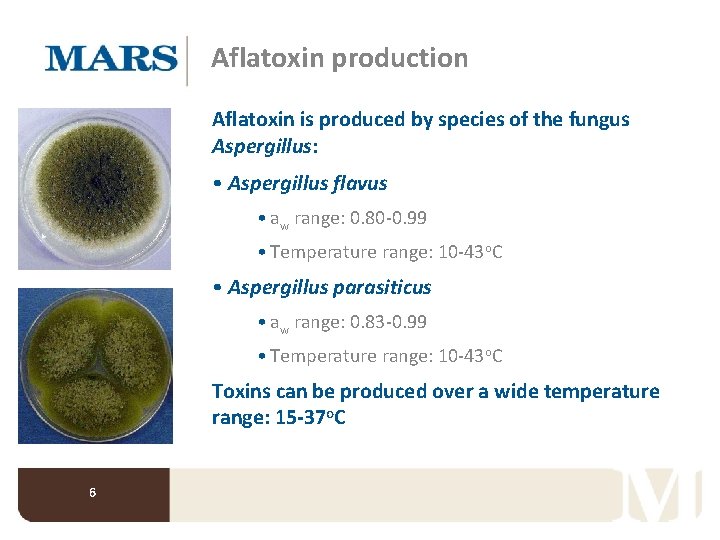
Aflatoxin production Aflatoxin is produced by species of the fungus Aspergillus: • Aspergillus flavus • aw range: 0. 80 -0. 99 • Temperature range: 10 -43 o. C • Aspergillus parasiticus • aw range: 0. 83 -0. 99 • Temperature range: 10 -43 o. C Toxins can be produced over a wide temperature range: 15 -37 o. C 6
Aflatoxin associated alerts • 2007 - Peanuts – Saudi Arabia • 2006 - Dog food – US (23 dog deaths) • 2004 - Maize – Kenya (125 deaths) • 2004 - Paprika – Hungary • 2001 – Rice – China **THESE ARE TAKEN FROM ALERTS via PROMED ARCHIVE** 7
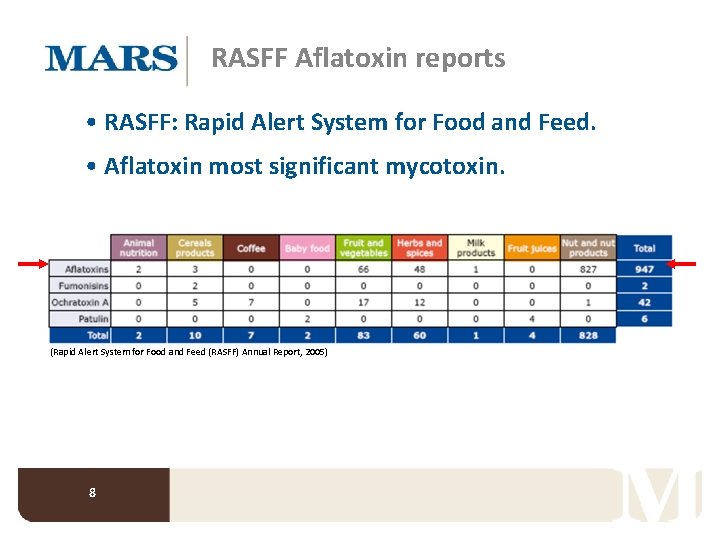
RASFF Aflatoxin reports • RASFF: Rapid Alert System for Food and Feed. • Aflatoxin most significant mycotoxin. (Rapid Alert System for Food and Feed (RASFF) Annual Report, 2005) 8
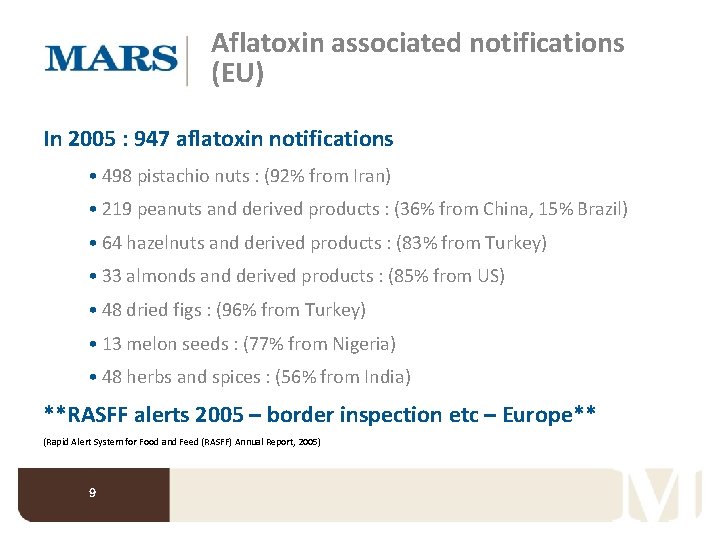
Aflatoxin associated notifications (EU) In 2005 : 947 aflatoxin notifications • 498 pistachio nuts : (92% from Iran) • 219 peanuts and derived products : (36% from China, 15% Brazil) • 64 hazelnuts and derived products : (83% from Turkey) • 33 almonds and derived products : (85% from US) • 48 dried figs : (96% from Turkey) • 13 melon seeds : (77% from Nigeria) • 48 herbs and spices : (56% from India) **RASFF alerts 2005 – border inspection etc – Europe** (Rapid Alert System for Food and Feed (RASFF) Annual Report, 2005) 9
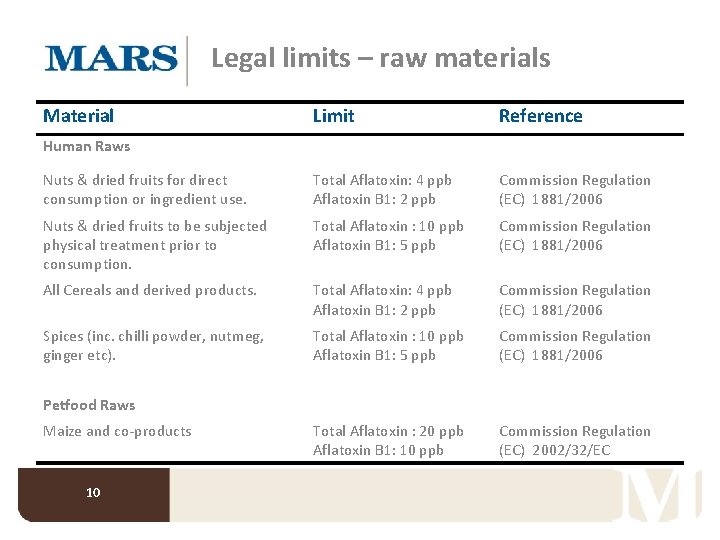
Legal limits – raw materials Material Limit Reference Nuts & dried fruits for direct consumption or ingredient use. Total Aflatoxin: 4 ppb Aflatoxin B 1: 2 ppb Commission Regulation (EC) 1881/2006 Nuts & dried fruits to be subjected physical treatment prior to consumption. Total Aflatoxin : 10 ppb Aflatoxin B 1: 5 ppb Commission Regulation (EC) 1881/2006 All Cereals and derived products. Total Aflatoxin: 4 ppb Aflatoxin B 1: 2 ppb Commission Regulation (EC) 1881/2006 Spices (inc. chilli powder, nutmeg, ginger etc). Total Aflatoxin : 10 ppb Aflatoxin B 1: 5 ppb Commission Regulation (EC) 1881/2006 Total Aflatoxin : 20 ppb Aflatoxin B 1: 10 ppb Commission Regulation (EC) 2002/32/EC Human Raws Petfood Raws Maize and co-products 10
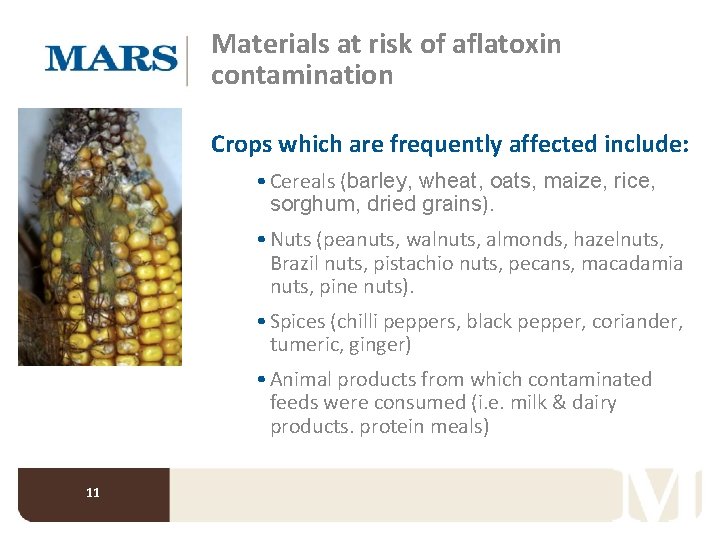
Materials at risk of aflatoxin contamination Crops which are frequently affected include: • Cereals (barley, wheat, oats, maize, rice, sorghum, dried grains). • Nuts (peanuts, walnuts, almonds, hazelnuts, Brazil nuts, pistachio nuts, pecans, macadamia nuts, pine nuts). • Spices (chilli peppers, black pepper, coriander, tumeric, ginger) • Animal products from which contaminated feeds were consumed (i. e. milk & dairy products. protein meals) 11
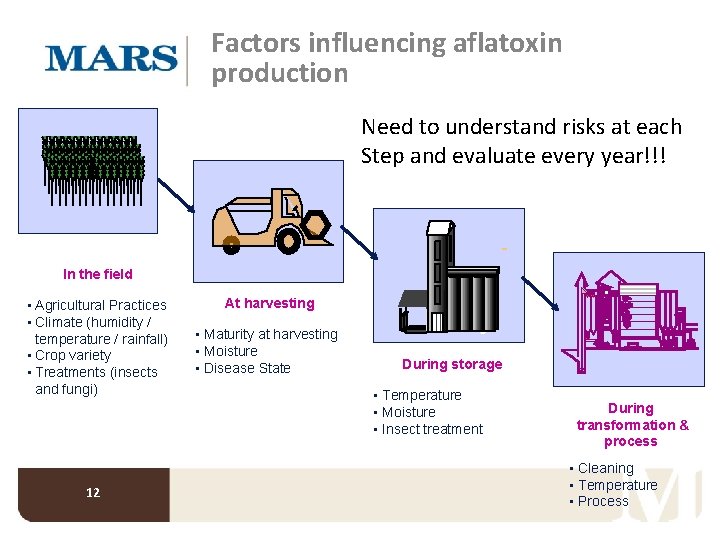
Factors influencing aflatoxin production Need to understand risks at each Step and evaluate every year!!! In the field • Agricultural Practices • Climate (humidity / temperature / rainfall) • Crop variety • Treatments (insects and fungi) 12 At harvesting • Maturity at harvesting • Moisture • Disease State During storage • Temperature • Moisture • Insect treatment During transformation & process • Cleaning • Temperature • Process
Aflatoxin management • Starts with a comprehensive “Material Quality Management Program” • Needs to be risk based and cover the entire pipeline • Risk assessments are not static and need to be performed for each material and harvested crop. • In the Field (GAP, climate & crop monitoring) • During Harvest / Storage (moisture control, interim storage conditions) • Inbound acceptance (specifications) • Storage (silo design / management, conditioning, cleaning, monitoring) • Finished Product (specifications and distribution) 13
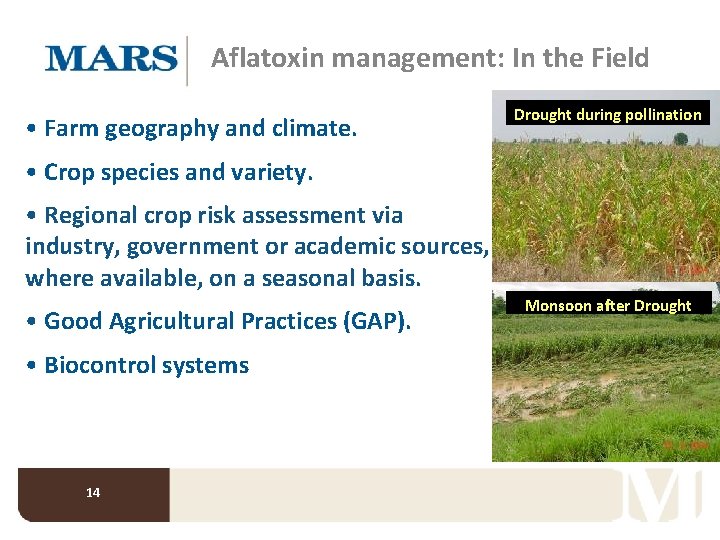
Aflatoxin management: In the Field • Farm geography and climate. Drought during pollination • Crop species and variety. • Regional crop risk assessment via industry, government or academic sources, where available, on a seasonal basis. • Good Agricultural Practices (GAP). • Biocontrol systems 14 Monsoon after Drought
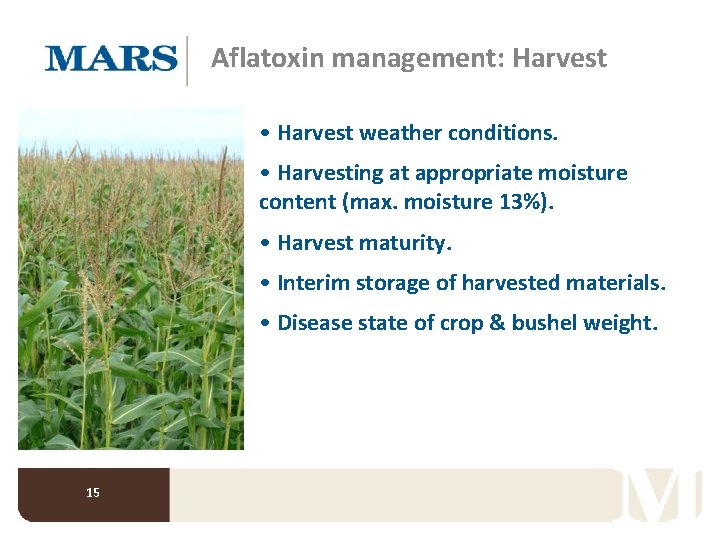
Aflatoxin management: Harvest • Harvest weather conditions. • Harvesting at appropriate moisture content (max. moisture 13%). • Harvest maturity. • Interim storage of harvested materials. • Disease state of crop & bushel weight. 15
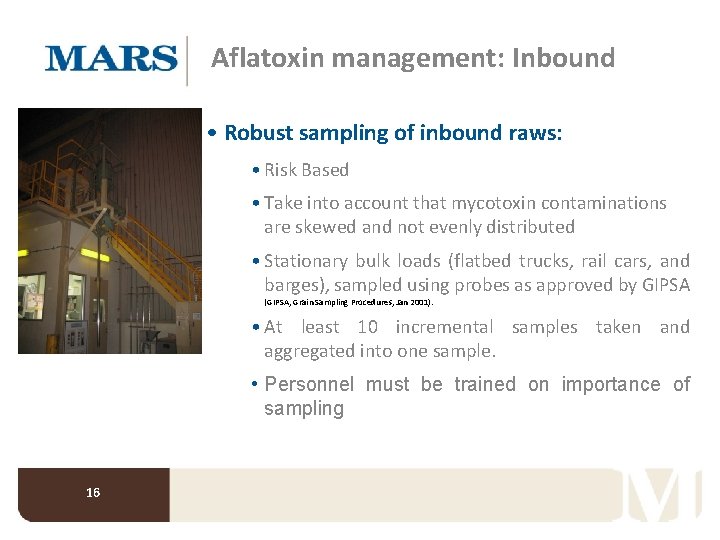
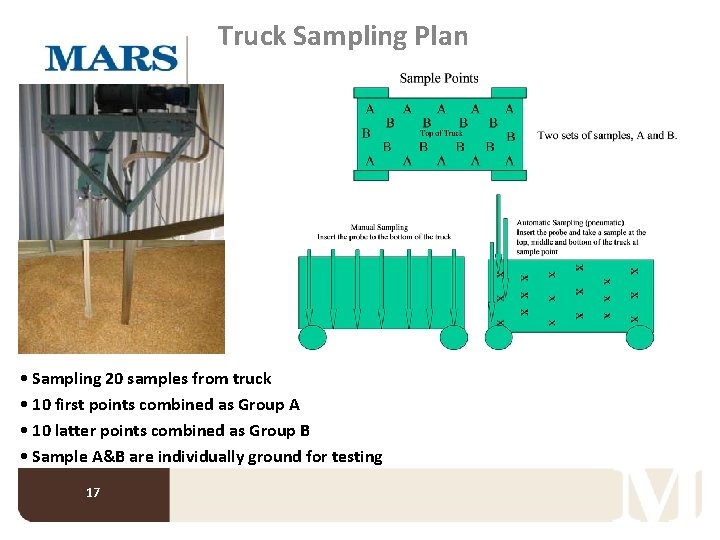
Aflatoxin management: Inbound • Robust sampling of inbound raws: • Risk Based • Take into account that mycotoxin contaminations are skewed and not evenly distributed • Stationary bulk loads (flatbed trucks, rail cars, and barges), sampled using probes as approved by GIPSA (GIPSA, Grain Sampling Procedures, Jan 2001). • At least 10 incremental samples taken and aggregated into one sample. • Personnel must be trained on importance of sampling 16
Truck Sampling Plan • Sampling 20 samples from truck • 10 first points combined as Group A • 10 latter points combined as Group B • Sample A&B are individually ground for testing 17
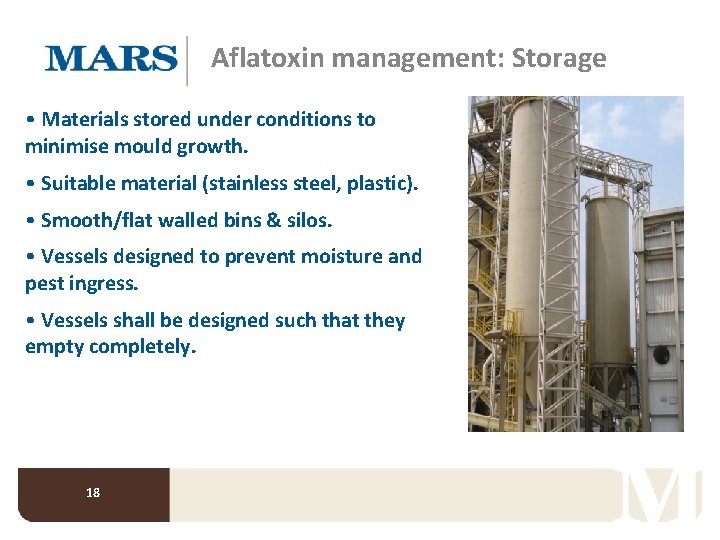
Aflatoxin management: Storage • Materials stored under conditions to minimise mould growth. • Suitable material (stainless steel, plastic). • Smooth/flat walled bins & silos. • Vessels designed to prevent moisture and pest ingress. • Vessels shall be designed such that they empty completely. 18
Aflatoxin management: Finished Product • Product designs and specifications must take into account legal and material risks • Solid understanding of distribution pipeline and potential for temperature shock • Finished product testing is a valid means of verifying “Front End” risk management processes. • Mycotoxin binders ? ? ? 19
Methods of aflatoxin detection: HPLC • Gold-standard for mycotoxin detection. • Reverse phase HPLC used most widely. • Can be automated. • Method must to be validated for specific material and toxin. • Operator needs to be well trained. • Participation in recognized proficiency testing program Highly Recommended. 20
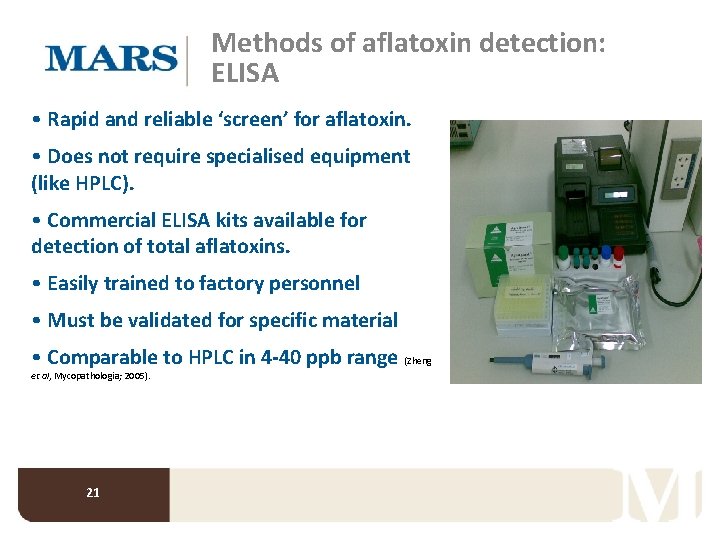
Methods of aflatoxin detection: ELISA • Rapid and reliable ‘screen’ for aflatoxin. • Does not require specialised equipment (like HPLC). • Commercial ELISA kits available for detection of total aflatoxins. • Easily trained to factory personnel • Must be validated for specific material • Comparable to HPLC in 4 -40 ppb range (Zheng et al, Mycopathologia; 2005). 21
Methods of aflatoxin detection: Black (UV) Light • Not recommended • Works through florescence of contaminated kernels • Florescence based on detection of Kojic Acid not aflatoxin • Kojic acid breaks down leading to false “negative” results • Issue greater in tropical regions 22
Summary • Key Points in Aflatoxin Management • A sound Material Quality Management program is critical. • Aflatoxin risk can change with every new crop, growing location, supplier and / or change along the pipeline. • Effective sampling, validated methods and trained personnel are required • Be prepared for the unexpected…. 23
Thank You!!! 24