
Managers as Problem Solvers How to Problem Solve
Managers as Problem Solvers How to Problem Solve
Case Studies So far you have been doing problem solving, maybe you just didn't’t know it. There are different types of problems: 1. Structured Problems – problems that do not require much thinking; they are familiar, the solutions are obvious and straight forward
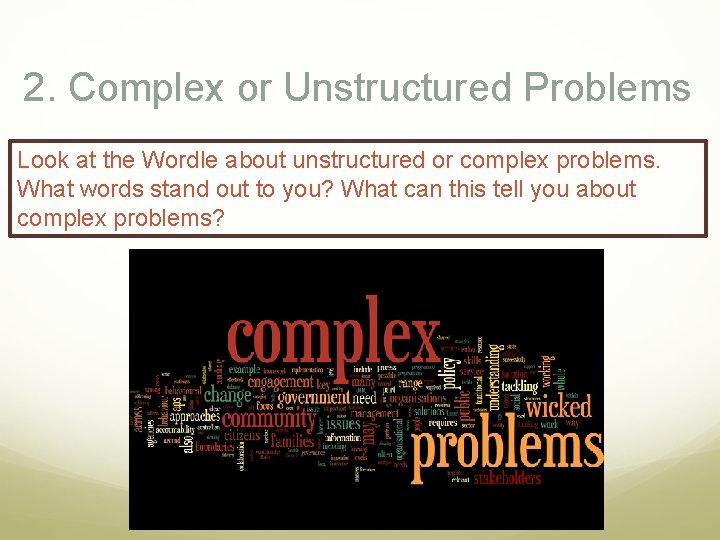
2. Complex or Unstructured Problems Look at the Wordle about unstructured or complex problems. What words stand out to you? What can this tell you about complex problems?
Unstructured Problems Unstructured problems often do not have one solution. One type of complex problem is a dilemma. A dilemma is a situation where a difficult choice has to be made between two or more alternatives, often when there is no clear ethical decision. It is truly a difficult situation or problem. Lets see some examples! Take out a pen and a piece of paper.

Managers as Problem-Solvers Managers are continual information gatherers and processors. Solving problems effectively necessitates the gathering of information (from all sides). Planning – better and more timely access to information Organizing – ore ongoing and informed communication that improves coordination and integration Leading – more frequent and better communication with all stakeholders (what’s a stakeholder? ) Controlling – more immediate measures of performance results that allow real-time solutions
Problem-Solving Involves identifying and taking action to resolve problems. Often these problems are complex and sometimes moral or ethical. They necessitate decisions, which involve making choices between alternative forms of action. Why Problems? 1. Performance Deficiency – When performance is less than desired. 2. Performance Opportunity – When a situation turns out better than expected and further action is needed. Can you think of a situation of deficiency you have experienced and a situation of opportunity you have experienced?
Avoiders, Solvers and Seekers Avoiders ignore information that would signal there is a problem Solvers are willing to make decisions to solve a problem Seekers actively seek out problems to solve. They are ‘forward thinking’ and anticipate problems before they happen. Can you think of a problem with being a problem seeker?
Thinking Intuitive thinkers are flexible and spontaneous as well as creative and multi – dimensional thinking is one’s ability to address many problems at once.
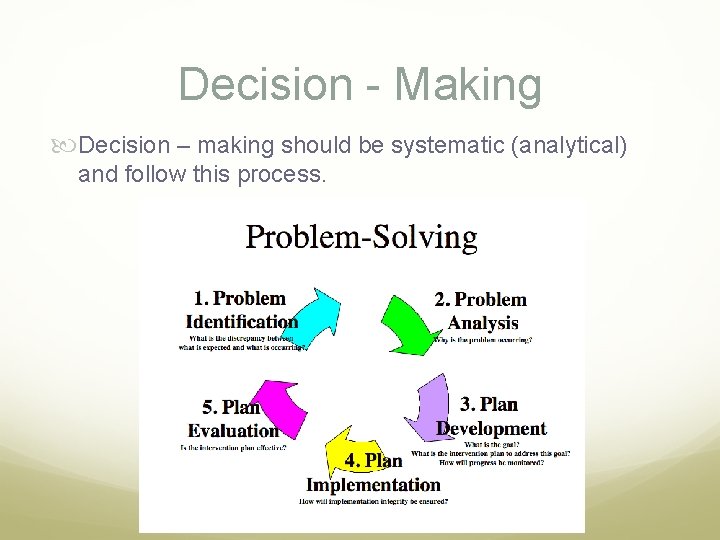
Decision - Making Decision – making should be systematic (analytical) and follow this process.
A Crisis Sometimes decisions need to split second as a crisis or ‘unexpected problem that can lead to a disaster’ occurs. What are examples of crisis? Discuss in your groups. Be prepared to share.
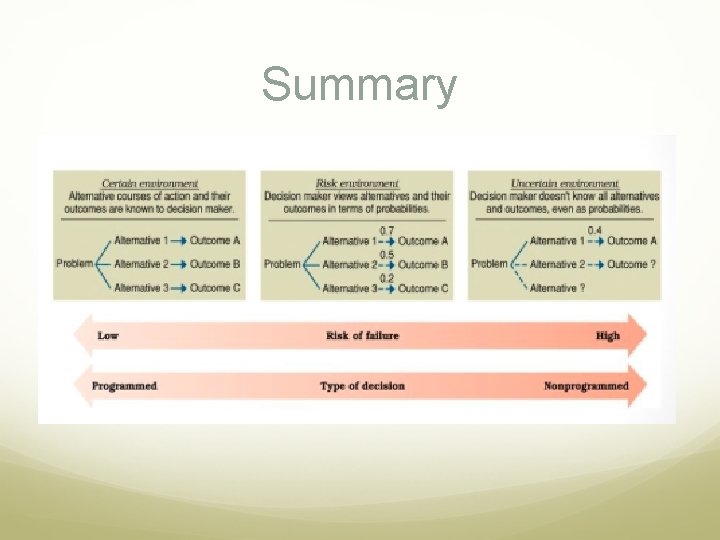
Decision Conditions: Environment A certain environment offers complete information on possible action alternatives and their consequences. This is an ideal decision – making situation. As a decision – maker you study the alternatives and make the best choice as you know the outcomes.
Risk Environment Lacks complete information and requires the use of probabilities to determine possible action alternatives and their likely outcomes. Firms try to assess risk when making decisions. Are you a risk averse person?
Uncertain Environment An uncertain environment lacks so much information that it is difficult to assign probabilities to the likely outcomes of alternatives. Few facts and information are known. This is the most difficult situation. Why?
Summary
Read the Case Study Look at the Case Study on our website. Answer the questions.
- Slides: 15