
Managerial Accounting CHAPTER 1 INTRODUCTION TO MANAGERIAL ACCOUNTING

- Slides: 27
Managerial Accounting CHAPTER 1 INTRODUCTION TO MANAGERIAL ACCOUNTING
Chapter Objectives • Differences between Managerial and Financial Accounting • How does managerial accounting support the key functions of management • Understand the role of ethics, internal controls and Sarbanes-Oxley • Define and understand the different types of cost
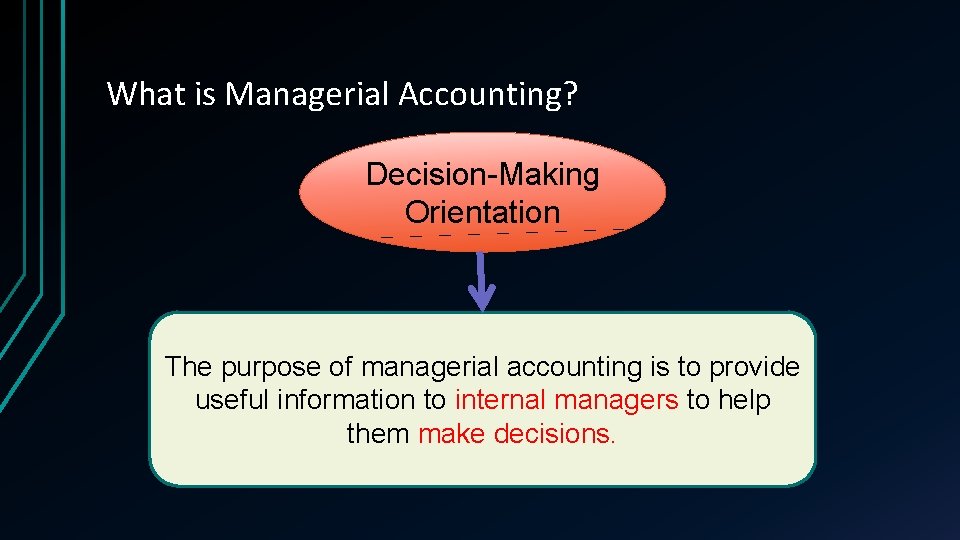
What is Managerial Accounting? Decision-Making Orientation The purpose of managerial accounting is to provide useful information to internal managers to help them make decisions.
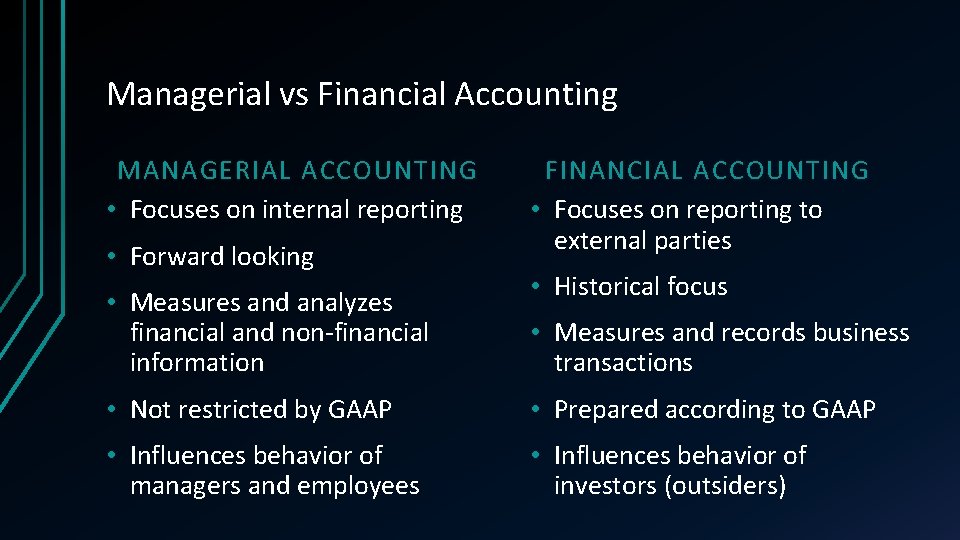
Managerial vs Financial Accounting MANAGERIAL ACCOUNTING • Focuses on internal reporting • Forward looking • Measures and analyzes financial and non-financial information FINANCIAL ACCOUNTING • Focuses on reporting to external parties • Historical focus • Measures and records business transactions • Not restricted by GAAP • Prepared according to GAAP • Influences behavior of managers and employees • Influences behavior of investors (outsiders)
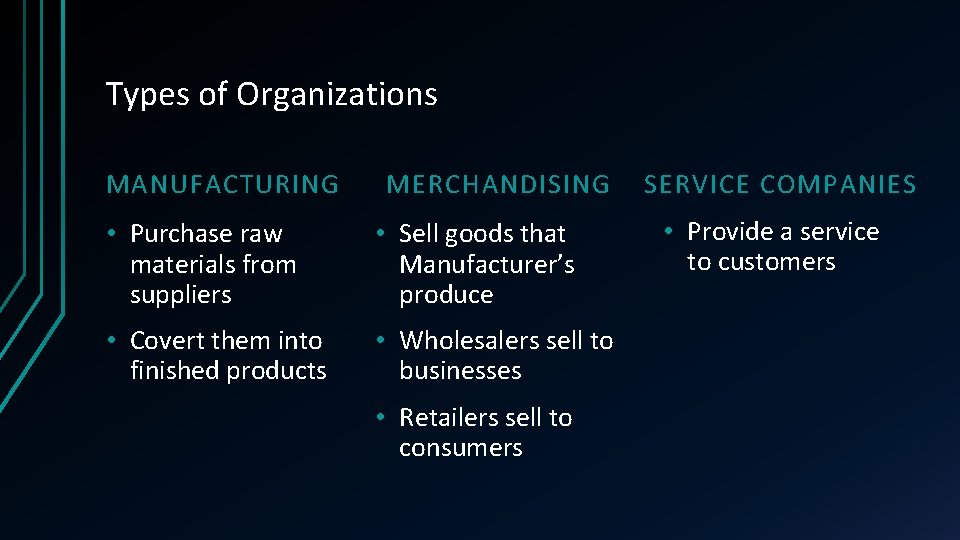
Types of Organizations MANUFACTURING MERCHANDISING • Purchase raw materials from suppliers • Sell goods that Manufacturer’s produce • Covert them into finished products • Wholesalers sell to businesses • Retailers sell to consumers SERVICE COMPANIES • Provide a service to customers
Functions of Management • PLANNING • IMPLEMENTING • CONTROLLING
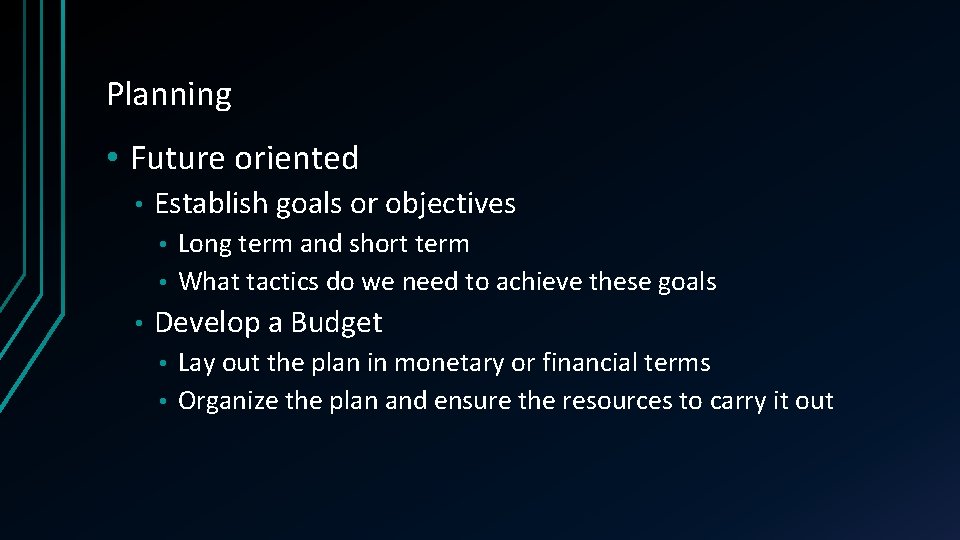
Planning • Future oriented • Establish goals or objectives Long term and short term • What tactics do we need to achieve these goals • • Develop a Budget Lay out the plan in monetary or financial terms • Organize the plan and ensure the resources to carry it out •
Implementing • Put the plan into action • Managers responsibilities Lead • Direct • Motivate •
Controlling • Managers keep track of progress and adjust the plan if necessary • Compare actual results to planned results (budget) • Take corrective action to get back on track
COSTS
Cost Terminology • What is a cost object? Anything you want to know the cost of • Cost of buying something • Cost of going somewhere • • Out of Pocket Cost • Actual cash payment • Opportunity Cost of not doing something • Choosing to do one thing over another •
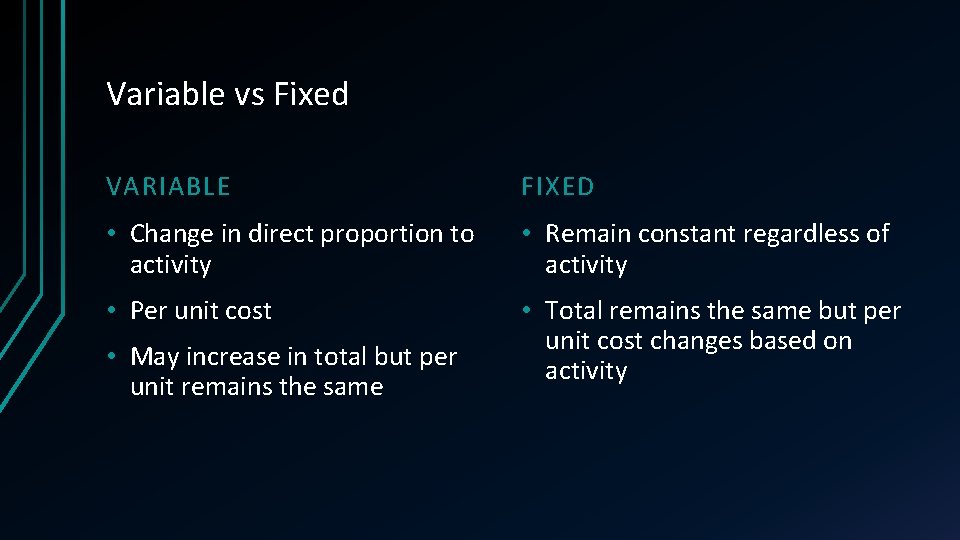
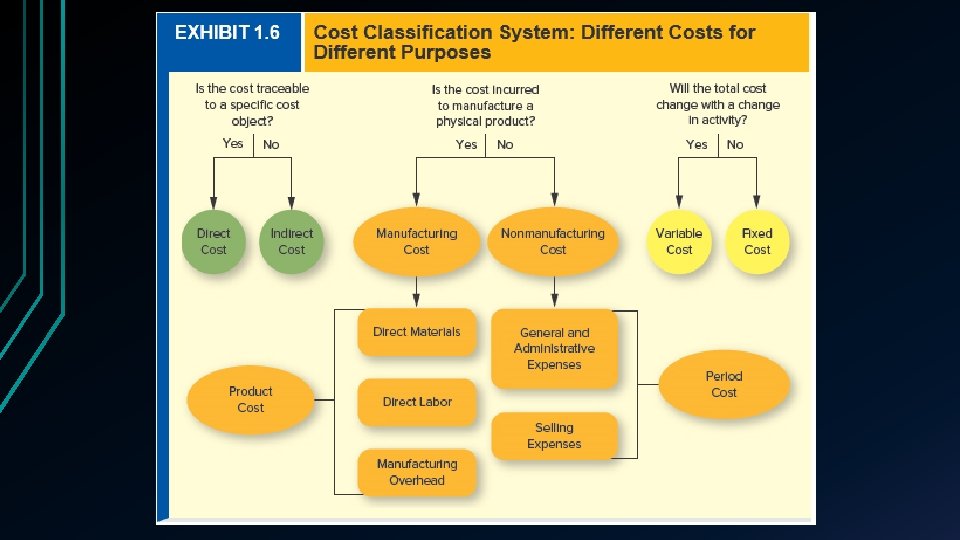
Variable vs Fixed VARIABLE FIXED • Change in direct proportion to activity • Remain constant regardless of activity • Per unit cost • Total remains the same but per unit cost changes based on activity • May increase in total but per unit remains the same
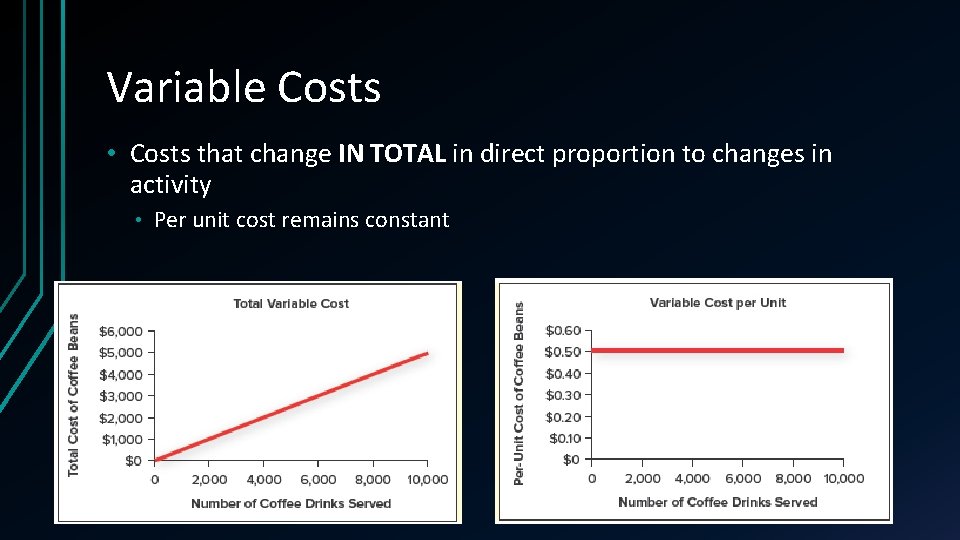
Variable Costs • Costs that change IN TOTAL in direct proportion to changes in activity • Per unit cost remains constant
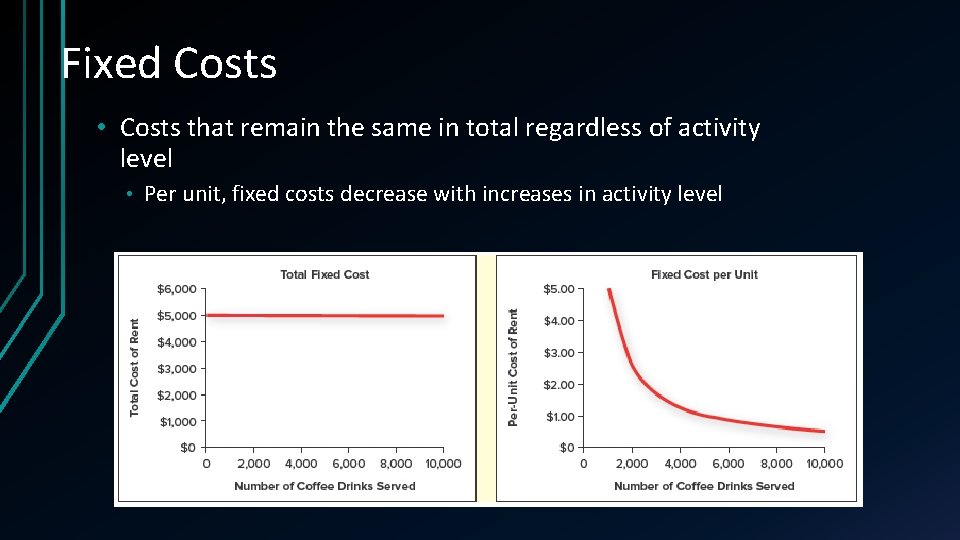
Fixed Costs • Costs that remain the same in total regardless of activity level • Per unit, fixed costs decrease with increases in activity level
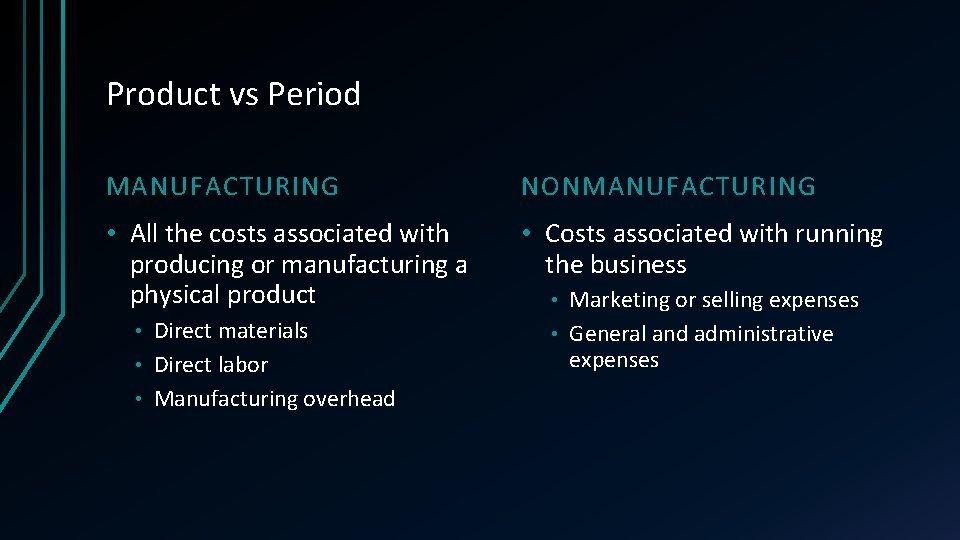
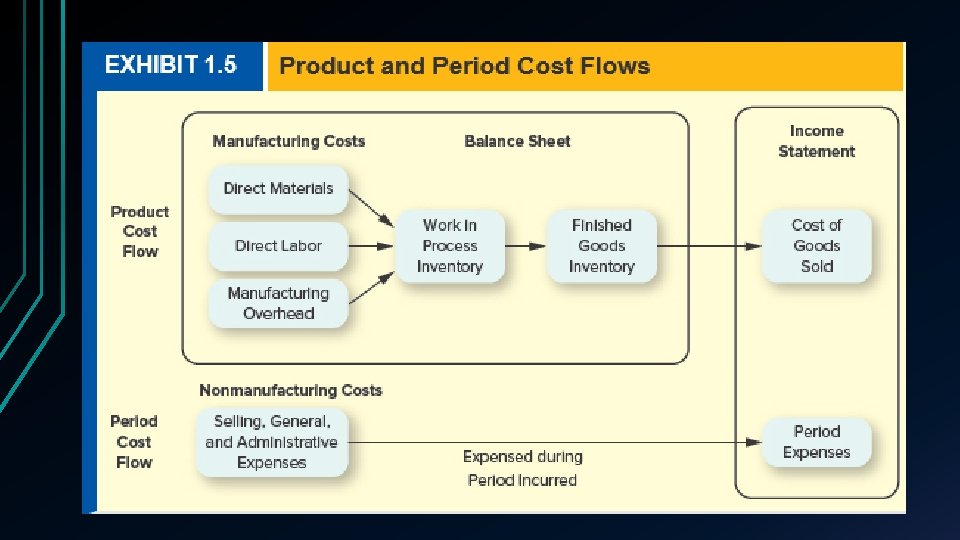
Product vs Period MANUFACTURING NONMANUFACTURING • All the costs associated with producing or manufacturing a physical product • Costs associated with running the business Direct materials • Direct labor • Manufacturing overhead • Marketing or selling expenses • General and administrative expenses •
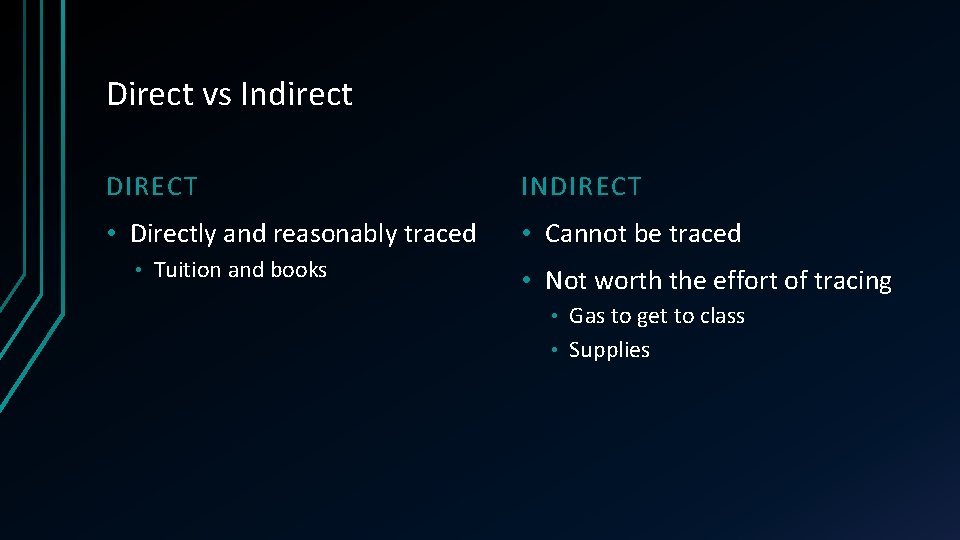
Direct vs Indirect DIRECT INDIRECT • Directly and reasonably traced • Cannot be traced • Tuition and books • Not worth the effort of tracing Gas to get to class • Supplies •
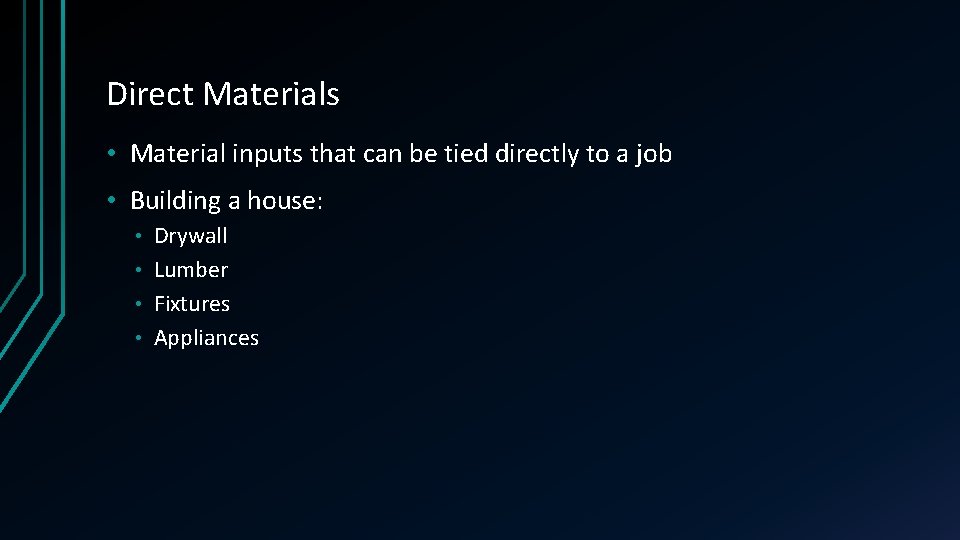
Direct Materials • Material inputs that can be tied directly to a job • Building a house: Drywall • Lumber • Fixtures • Appliances •
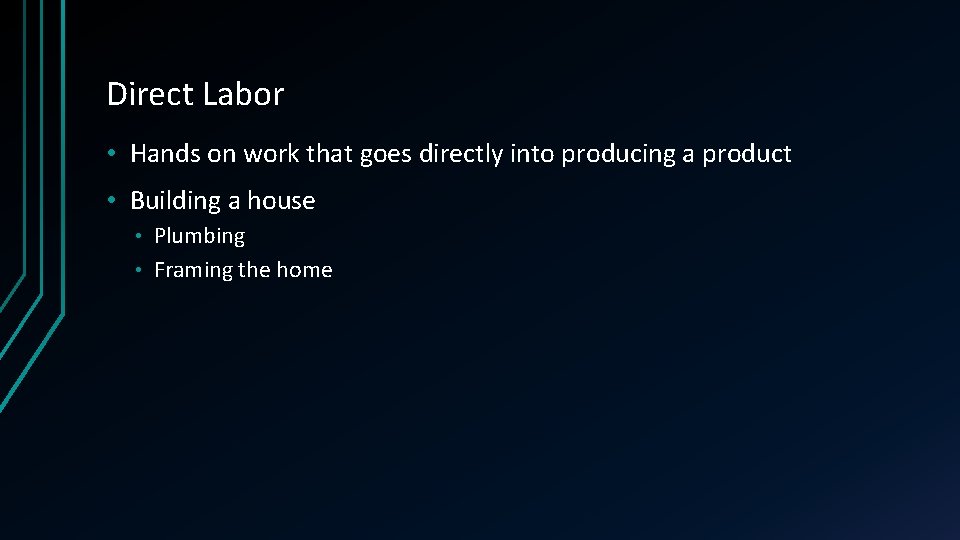
Direct Labor • Hands on work that goes directly into producing a product • Building a house Plumbing • Framing the home •
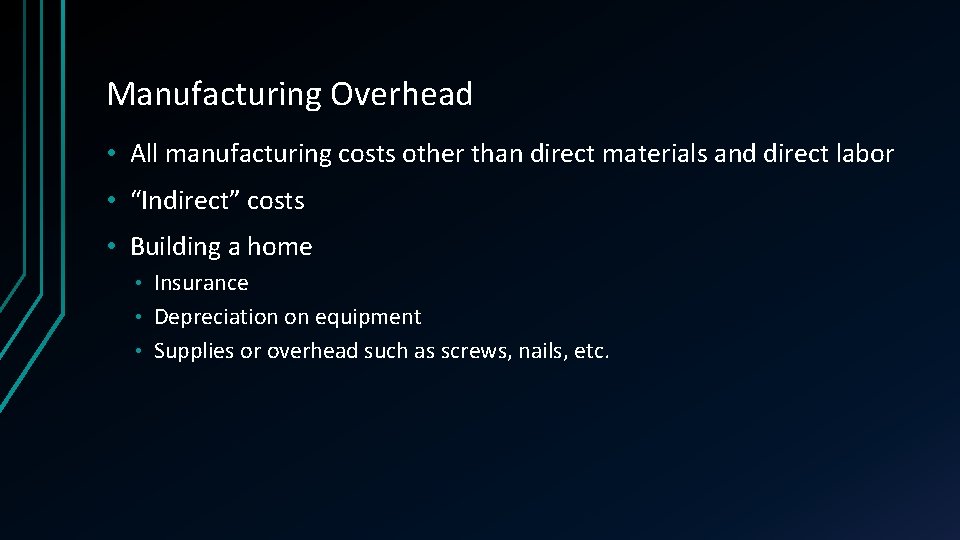
Manufacturing Overhead • All manufacturing costs other than direct materials and direct labor • “Indirect” costs • Building a home Insurance • Depreciation on equipment • Supplies or overhead such as screws, nails, etc. •
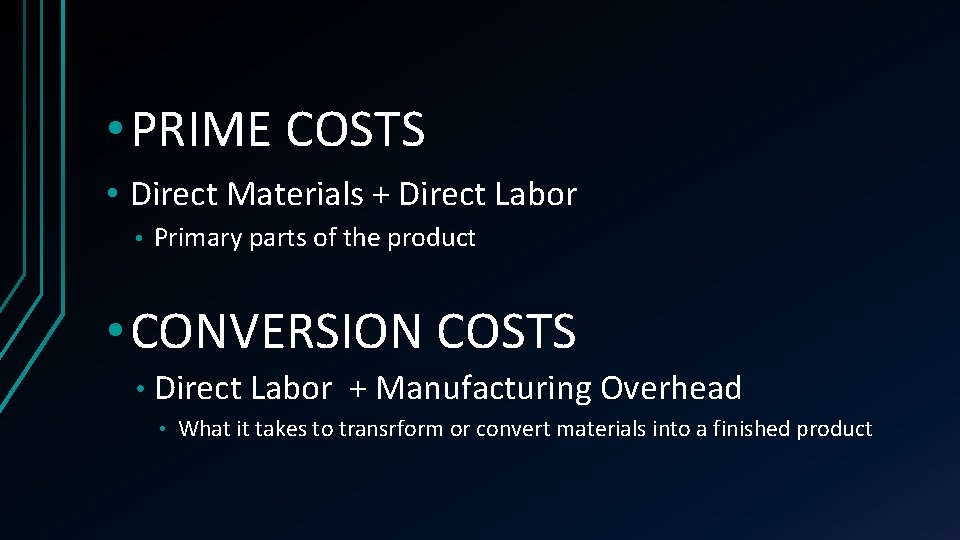
• PRIME COSTS • Direct Materials + Direct Labor • Primary parts of the product • CONVERSION COSTS • Direct Labor • + Manufacturing Overhead What it takes to transrform or convert materials into a finished product
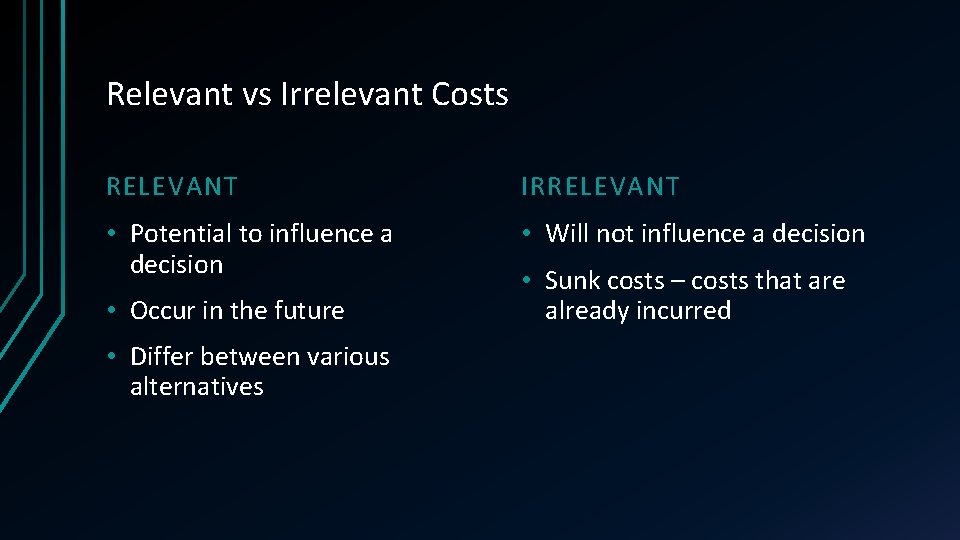
Relevant vs Irrelevant Costs RELEVANT IRRELEVANT • Potential to influence a decision • Will not influence a decision • Occur in the future • Differ between various alternatives • Sunk costs – costs that are already incurred
Ethics refers to the standards of conduct for judging right from wrong, honest from dishonest, and fair from unfair. Many situations in business require accountants and managers to weigh the pros and cons of alternatives before making final decisions. Why are ethics important to accounting? • Provide an ethical and respectful work environment • Provide accurate and fair information for investors • ENRON SCANDAL
Sarbanes Oxley (SOX) Act of 2002 • Renew investor confidence • Reduce the opportunity for error and fraud • Counteract the incentive to commit fraud Stiffer monetary penalties • Potential jail time • • Emphasize the character of managers and employees Code of ethics • Confidential tip lines • Whistle blower protection •
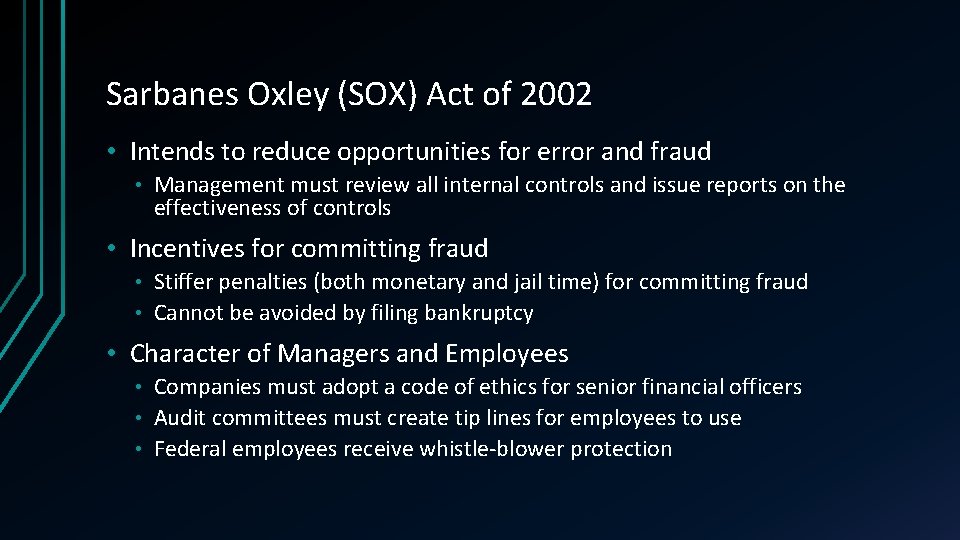
Sarbanes Oxley (SOX) Act of 2002 • Intends to reduce opportunities for error and fraud • Management must review all internal controls and issue reports on the effectiveness of controls • Incentives for committing fraud Stiffer penalties (both monetary and jail time) for committing fraud • Cannot be avoided by filing bankruptcy • • Character of Managers and Employees Companies must adopt a code of ethics for senior financial officers • Audit committees must create tip lines for employees to use • Federal employees receive whistle-blower protection •
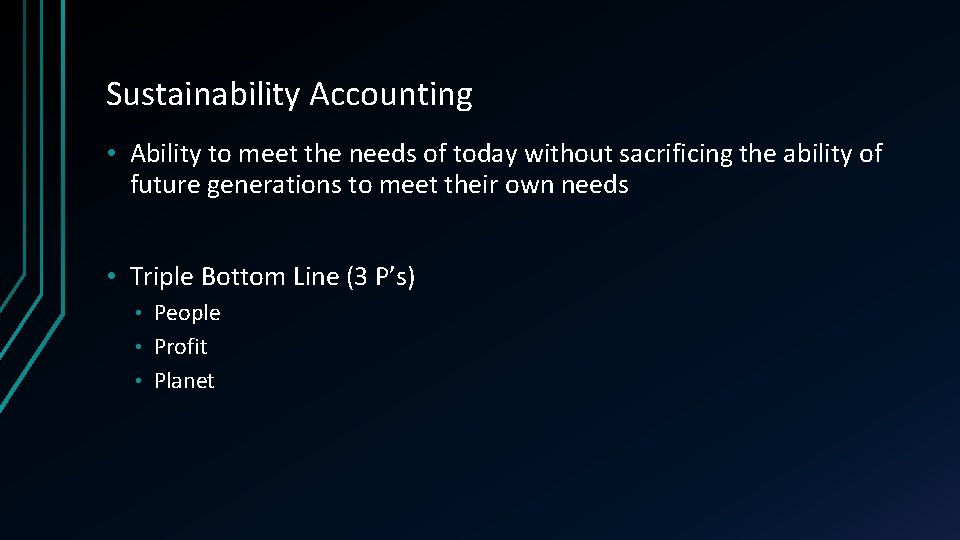
Sustainability Accounting • Ability to meet the needs of today without sacrificing the ability of future generations to meet their own needs • Triple Bottom Line (3 P’s) People • Profit • Planet •