
Managerial Accounting An Overview Chapter 01 Power Point

- Slides: 15
Managerial Accounting: An Overview Chapter 01 Power. Point Authors: Susan Coomer Galbreath, Ph. D. , CPA Charles W. Caldwell, D. B. A. , CMA Jon A. Booker, Ph. D. , CPA, CIA Cynthia J. Rooney, Ph. D. , CPA Mc. Graw-Hill/Irwin Copyright © 2012 by The Mc. Graw-Hill Companies, Inc. All rights reserved.
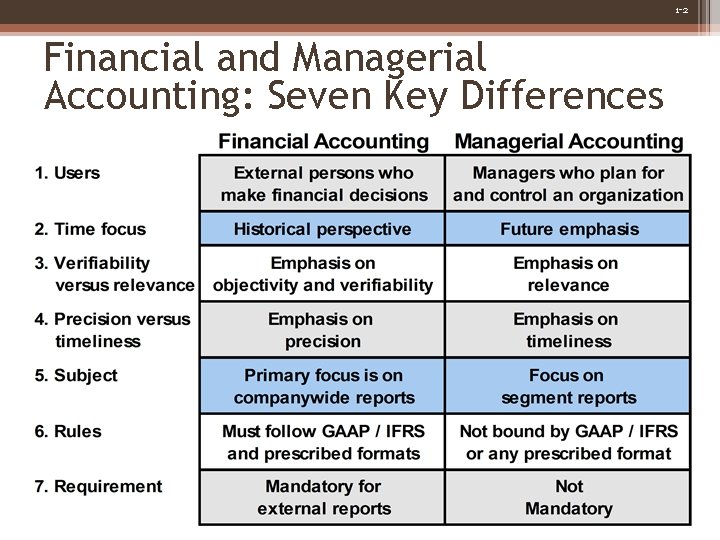
1 -2 Financial and Managerial Accounting: Seven Key Differences
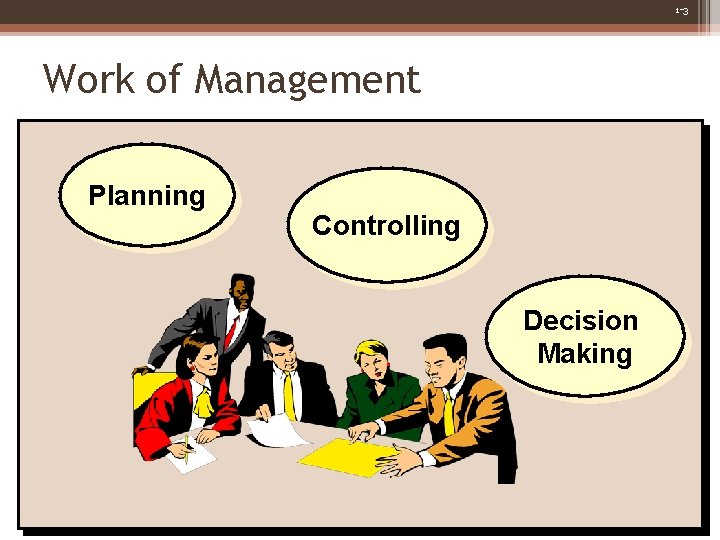
1 -3 Work of Management Planning Controlling Decision Making
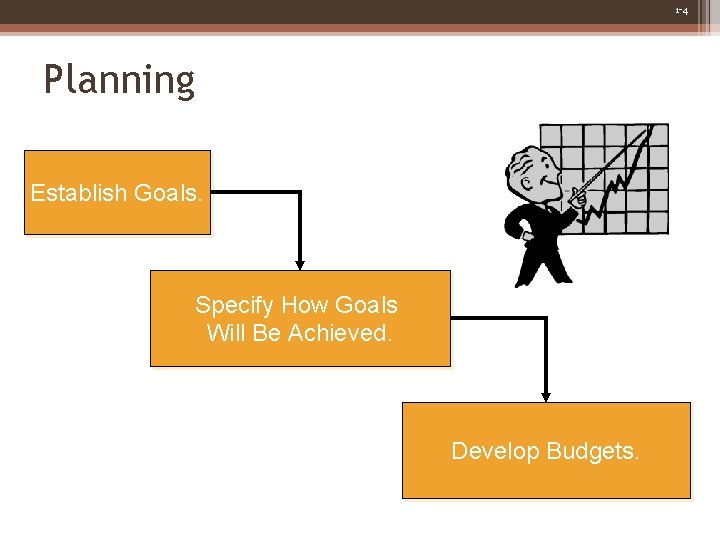
1 -4 Planning Establish Goals. Specify How Goals Will Be Achieved. Develop Budgets.
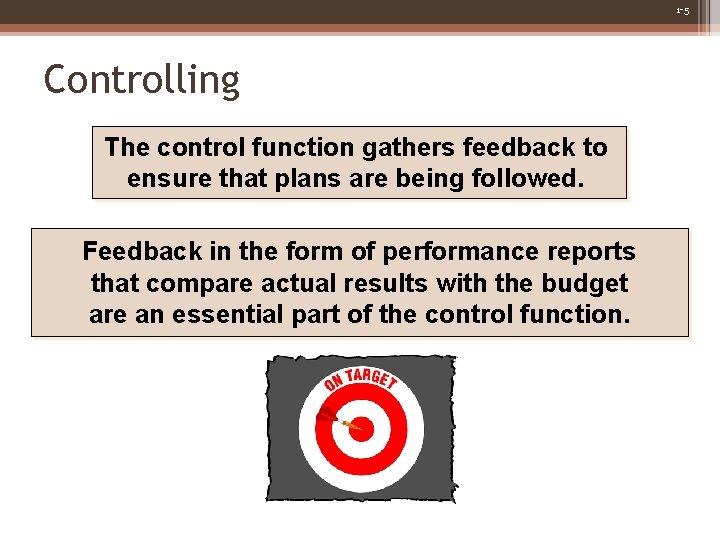
1 -5 Controlling The control function gathers feedback to ensure that plans are being followed. Feedback in the form of performance reports that compare actual results with the budget are an essential part of the control function.
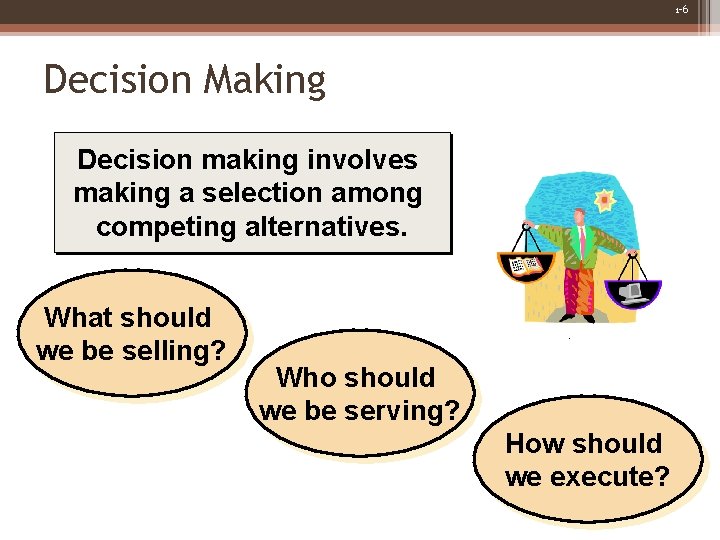
1 -6 Decision Making Decision making involves making a selection among competing alternatives. What should we be selling? Who should we be serving? How should we execute?
1 -7 Certified Management Accountant A management accountant who has the necessary qualifications and who passes a rigorous professional exam earns the right to be known as a Certified Management Accountant (CMA).
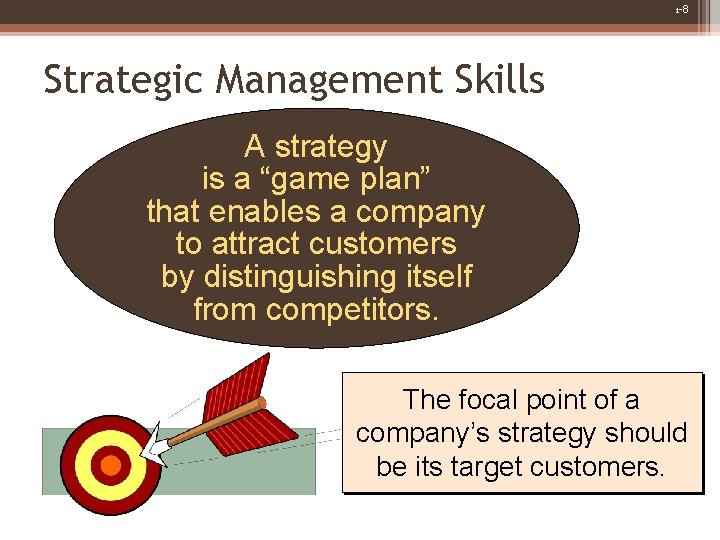
1 -8 Strategic Management Skills A strategy is a “game plan” that enables a company to attract customers by distinguishing itself from competitors. The focal point of a company’s strategy should be its target customers.
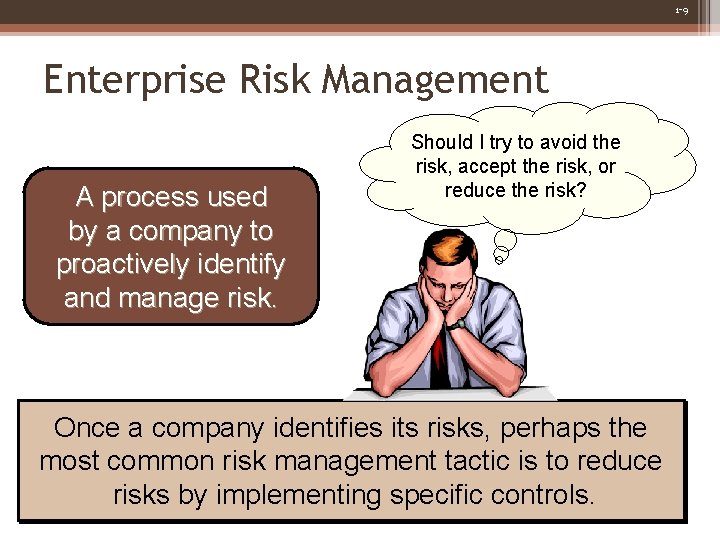
1 -9 Enterprise Risk Management A process used by a company to proactively identify and manage risk. Should I try to avoid the risk, accept the risk, or reduce the risk? Once a company identifies its risks, perhaps the most common risk management tactic is to reduce risks by implementing specific controls.
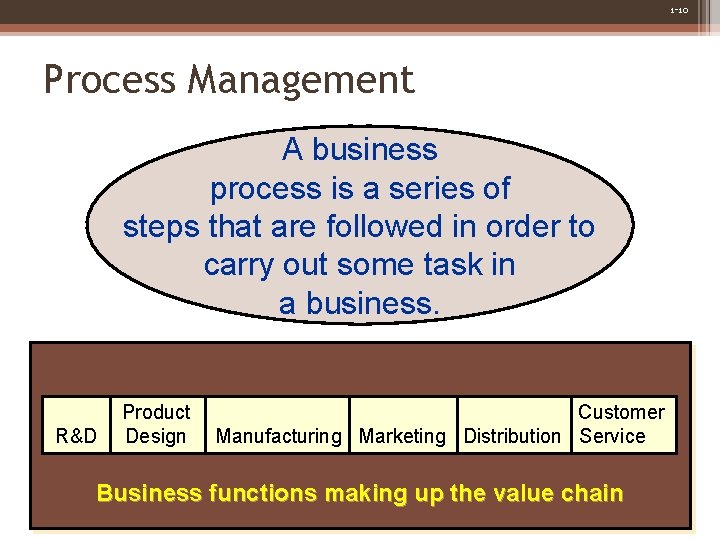
1 -10 Process Management A business process is a series of steps that are followed in order to carry out some task in a business. R&D Product Design Customer Manufacturing Marketing Distribution Service Business functions making up the value chain
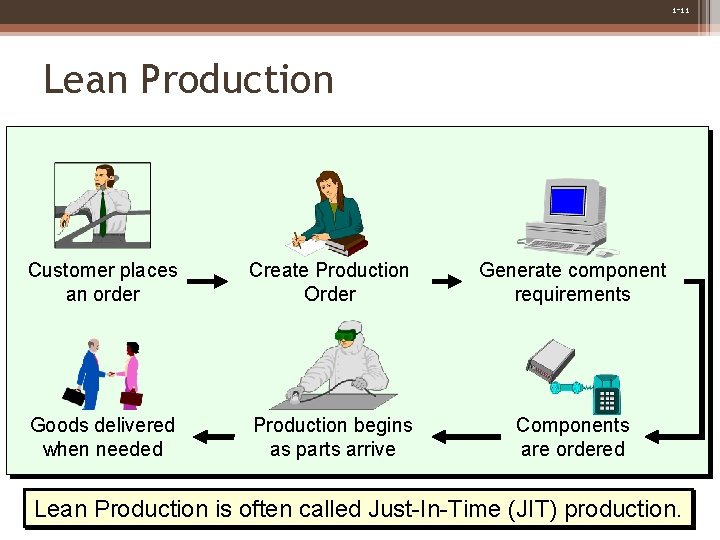
1 -11 Lean Production Customer places an order Create Production Order Generate component requirements Goods delivered when needed Production begins as parts arrive Components are ordered Lean Production is often called Just-In-Time (JIT) production.
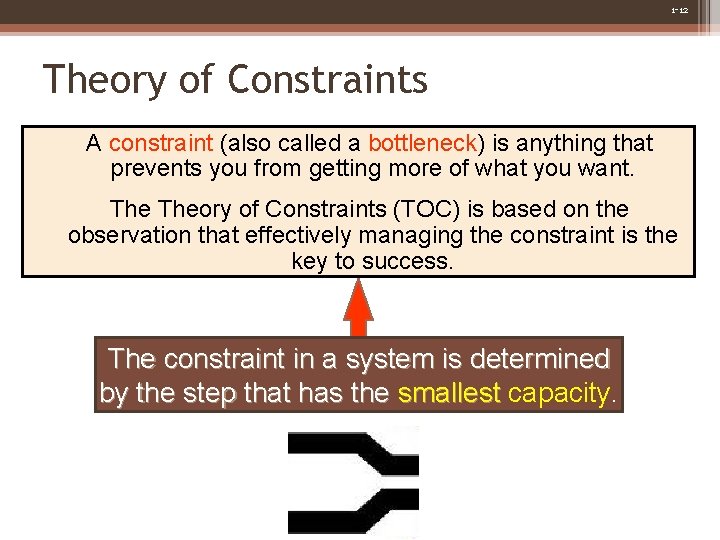
1 -12 Theory of Constraints A constraint (also called a bottleneck) is anything that prevents you from getting more of what you want. Theory of Constraints (TOC) is based on the observation that effectively managing the constraint is the key to success. The constraint in a system is determined by the step that has the smallest capacity.
1 -13 Measurement Skills A good manager compliments an understanding of strategy, risks, and business processes with data-driven analysis. The key to effective analysis is to understand that the question you are addressing defines what you measure and how you analyze the data.
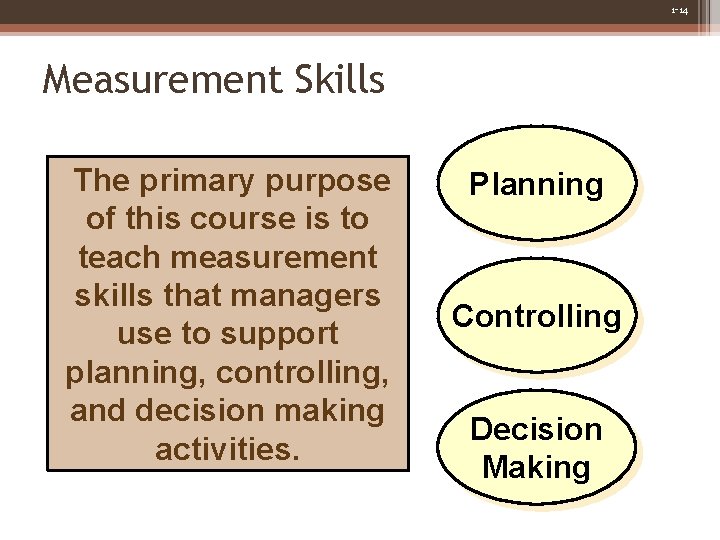
1 -14 Measurement Skills The primary purpose of this course is to teach measurement skills that managers use to support planning, controlling, and decision making activities. Planning Controlling Decision Making
1 -15 End of Chapter 01