
Management Thinking Tools For solving complex ambiguous problems
Management Thinking Tools For solving complex & ambiguous problems
Introduction n n Purpose n Explain & sell Management Thinking Tools MTT n Identify the business needs it meets n Provide a taste of what the workshops will be like Process n 2 Hrs
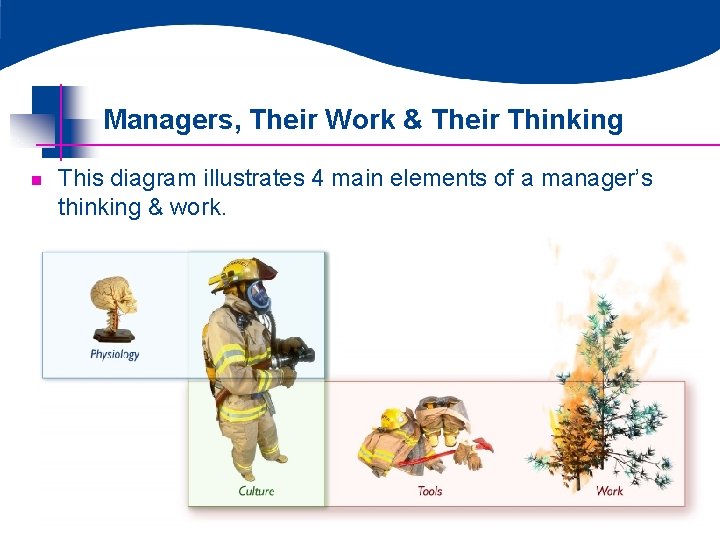
Managers, Their Work & Their Thinking n This diagram illustrates 4 main elements of a manager’s thinking & work.
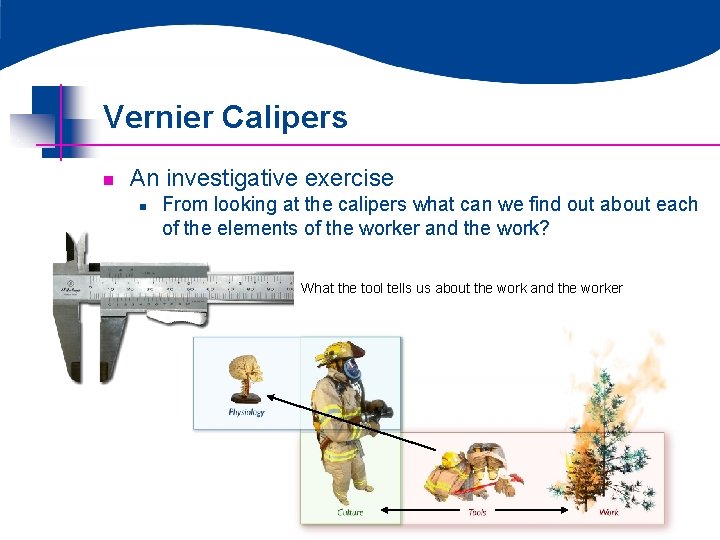
Vernier Calipers n An investigative exercise n From looking at the calipers what can we find out about each of the elements of the worker and the work? What the tool tells us about the work and the worker
Management Tools n Often to help thinking n Examples n n Spreadsheet Process flow diagram
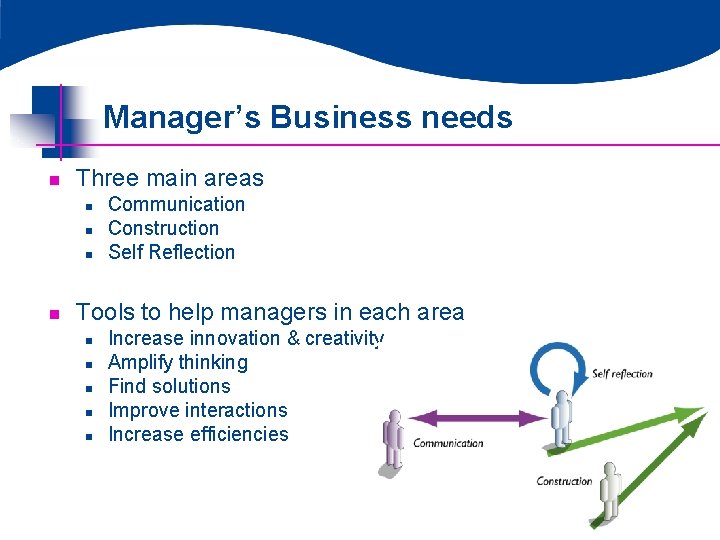
Manager’s Business needs n Three main areas n n Communication Construction Self Reflection Tools to help managers in each area n n n Increase innovation & creativity Amplify thinking Find solutions Improve interactions Increase efficiencies
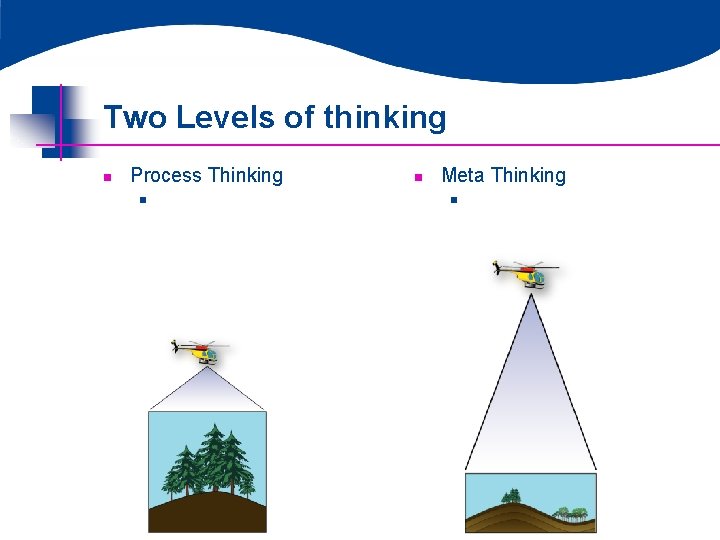
Two Levels of thinking n Process Thinking n n Meta Thinking n
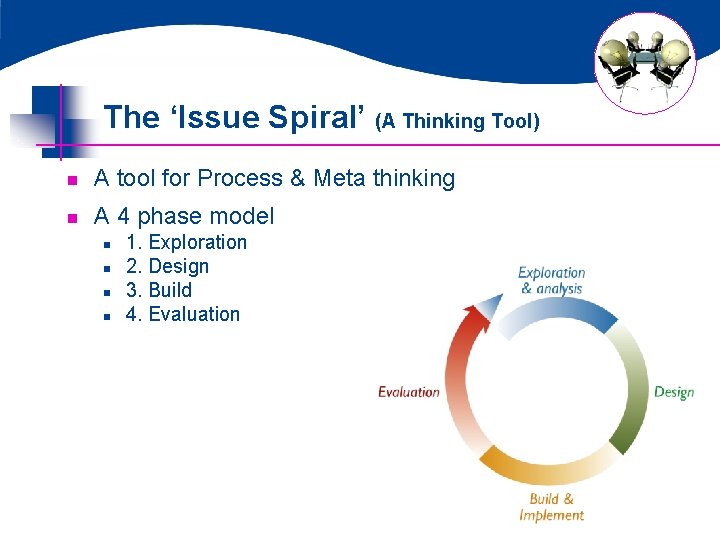
The ‘Issue Spiral’ (A Thinking Tool) n A tool for Process & Meta thinking n A 4 phase model n n 1. Exploration 2. Design 3. Build 4. Evaluation
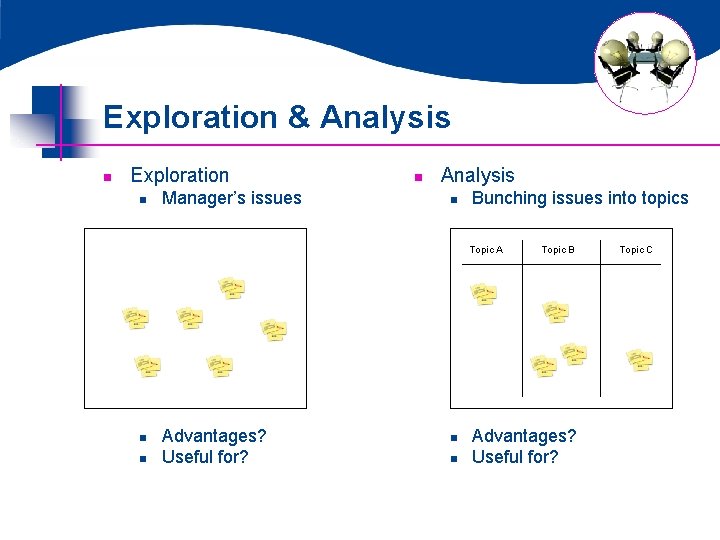
Exploration & Analysis n Exploration n Manager’s issues n Analysis n Bunching issues into topics Topic A n n Advantages? Useful for? n n Topic B Advantages? Useful for? Topic C
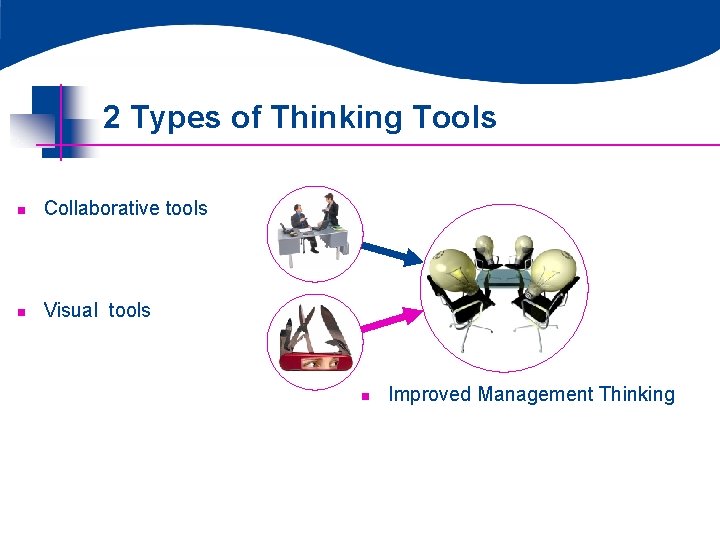
2 Types of Thinking Tools n Collaborative tools n Visual tools n Improved Management Thinking
MTT Structure: the workshop n A two day workshop
MTT Structure: Project Planning
MTT Structure: Coaching
MTT Structure: Community of Practice

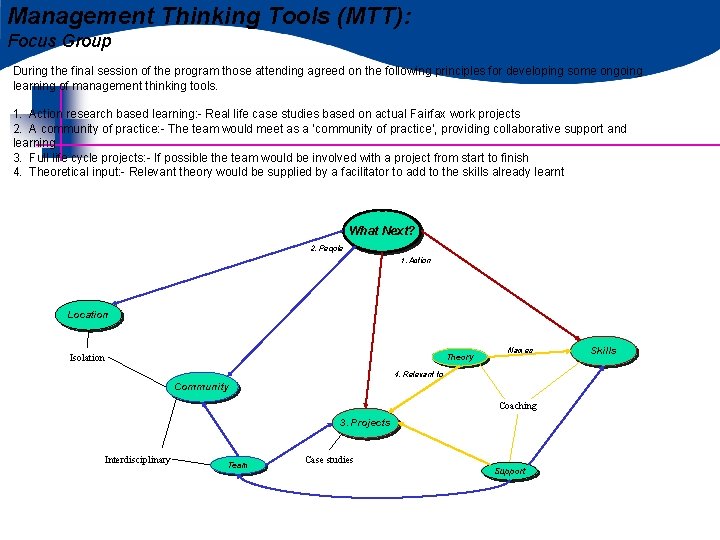
Management Thinking Tools (MTT): Focus Group During the final session of the program those attending agreed on the following principles for developing some ongoing learning of management thinking tools. 1. Action research based learning: - Real life case studies based on actual Fairfax work projects 2. A community of practice: - The team would meet as a ‘community of practice’, providing collaborative support and learning 3. Full life cycle projects: - If possible the team would be involved with a project from start to finish 4. Theoretical input: - Relevant theory would be supplied by a facilitator to add to the skills already learnt What Next? 2. People 1. Action Location Isolation Theory Names 4. Relevant to Community Coaching 3. Projects Interdisciplinary Team Case studies Support Skills
- Slides: 16