
Management Structures Chapter 11 Management Skills Section 11



- Slides: 17
Management Structures Chapter 11 Management Skills • Section 11. 1 Management Functions • Section 11. 2 Management Hiring
Objectives Describe the management techniques used by effective managers What is HR and what is its function Employment laws that protect employees Marketing Essentials Chapter 11, Section 11. 2
Effective Management Techniques The most effective management techniques are usually a matter of common sense. 1. Give clear directions: Even the best employees will be unproductive if they do not know what to do. 2. Be consistent: If you have decided that a job must be done in a certain way, make sure that all employees follow this standard. 3. Be ethical: Ethical behavior involves understanding how your actions affect others and striving to make honest and just decisions.
Effective Management Techniques 4. Treat employees fairly : Set reasonable standards of performance and apply those standards to everyone. Always listen to others’ points of view and consider acting on them. 5. Be firm when necessary : Be ready to be firm and direct if a friendly suggestion does not get an employee on the right track. 6. Set a good example : Doing this one simple thing will make your supervisory job much easier.
Effective Management Techniques 7. Delegate responsibility: Some supervisors do too much work themselves. Organize your work responsibilities and try to match each task with the employee who can handle it best. Be sure to take time to teach employee how to do new tasks. 8. Foster teamworkin a number of ways: • Encourage team members to learn how to perform tasks outside of their normal areas • Promote honest discussion before decisions are made • Listen respectfully to comments and opinions Marketing Essentials Chapter 11, Section 11. 2
Employee Motivation 9. Motivating employees is a key skill for any manager. To Motivate employees: • Managers should give frequent feedback and handle evaluations each year. • Reward smart work, not busy work. • Treat employees fairly and consistently
• Gender Gap Pay Video
Human Resources Most companies have a human resources (HR) department that handles: • Recruitment • Hiring and firing • Compliance with labor laws and employment standards • Administer Employee Benefits • Other personnel matters Employee personnel records are generally maintained in a file within the HR office.
Recruitingor Sourcing: is the process of locating a pool of applicants and selecting employees from this group. Two Types of Hiring: • Internal • External
Types of HIring
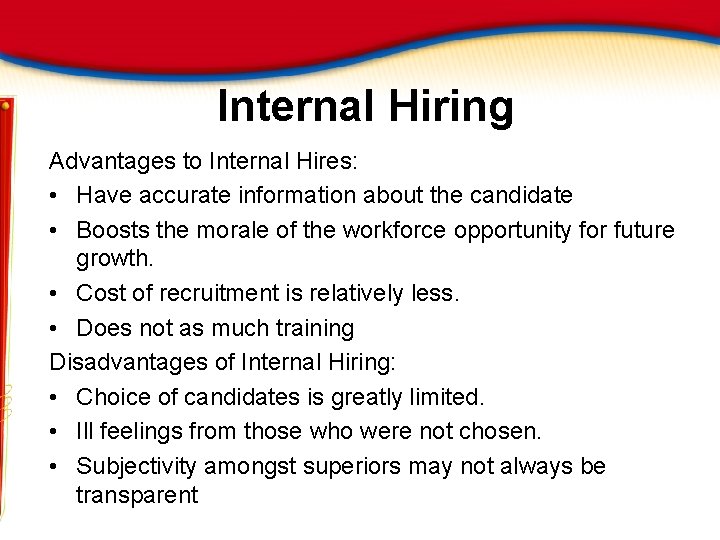
Internal Hiring Advantages to Internal Hires: • Have accurate information about the candidate • Boosts the morale of the workforce opportunity for future growth. • Cost of recruitment is relatively less. • Does not as much training Disadvantages of Internal Hiring: • Choice of candidates is greatly limited. • Ill feelings from those who were not chosen. • Subjectivity amongst superiors may not always be transparent
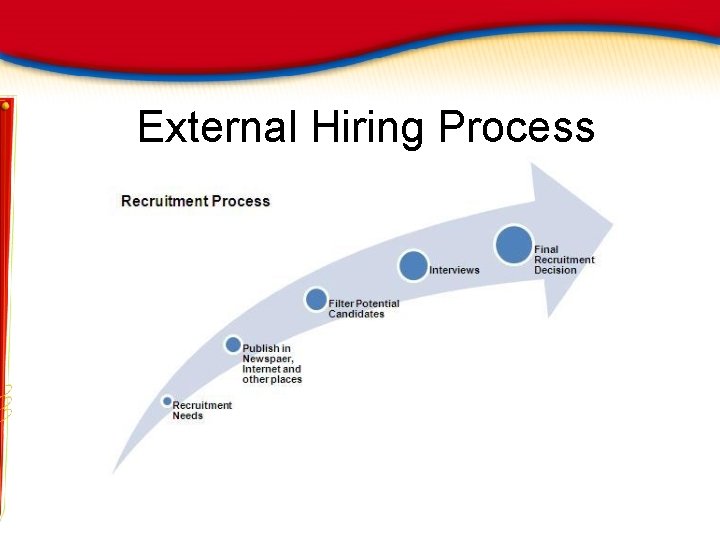
External Hiring Process
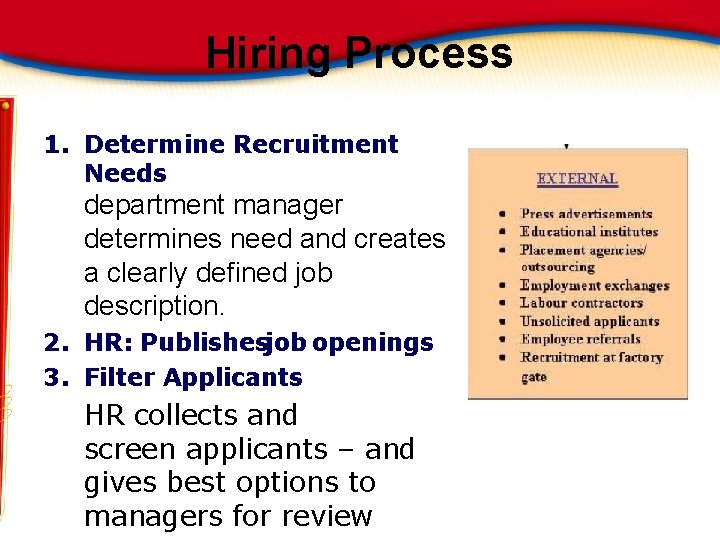
Hiring Process 1. Determine Recruitment Needs department manager determines need and creates a clearly defined job description. 2. HR: Publishesjob openings 3. Filter Applicants HR collects and screen applicants – and gives best options to managers for review
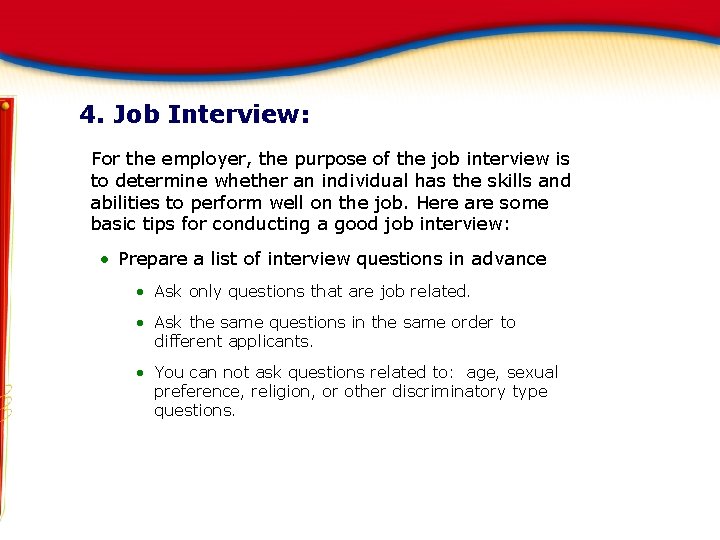
4. Job Interview: For the employer, the purpose of the job interview is to determine whether an individual has the skills and abilities to perform well on the job. Here are some basic tips for conducting a good job interview: • Prepare a list of interview questions in advance • Ask only questions that are job related. • Ask the same questions in the same order to different applicants. • You can not ask questions related to: age, sexual preference, religion, or other discriminatory type questions.
Job Interview Continued • Take notes after/during the interview of some of the answers/thoughts you have of interview • Have at least two interviews with qualified applicants • Have at least two people interview final applicants Make sure you are following government hiring procedures.
5. Final Recruitment. Decision: • Choose the best candidate based on the requirements and job description • HR will work up a pay offer – Based on years of experience and within range policy • Call the selected applicant • Job Acceptance
Recruiting: Employee Protection Laws • • • Civil Rights Act of 1964 Age Discrimination in Employment Act of 1967 Family Medical Leave Act Occupational Safety and Health Act of 1970 Child Labor Law for ND Americans with Disability Act of 1990 (Title 1 & Title V) • Equal Pay Act of 1963