
Management Stephen P Robbins Chapter 1 Mary Coulter
Management Stephen P. Robbins Chapter 1 Mary Coulter Introduction to Management and Organizations 1– 1
Learning Outcomes Follow this Learning Outline as you read and study this chapter. 1. 1 Who Are Managers? • Explain how managers differ from non-managerial employees. • Describe how to classify managers in organizations. 1. 2 What Is Management? • Define management. • Explain why efficiency and effectiveness are important to management. 1– 2
Learning Outcomes 1. 3 What Do Managers Do? • Describe the four functions of management. • Explain Mintzberg’s managerial roles. • Describe Katz’s three essential managerial skills and how the importance of these skills changes depending on managerial level. • Discuss the changes that are impacting manager’s jobs. • Explain why customer service and innovation are important to the manager’s job. Copyright © 2010 Pearson Education, Inc. Publishing as Prentice Hall 1– 3
Learning Outcomes 1. 4 What Is An Organization? • Explain the characteristics of an organization. • Describe how today’s organizations are structured. 1. 5 Why Study Management? • Discuss why it’s important to understand management. • Explain the universality of management concept. • Describe the rewards and challenges of being a manager. Copyright © 2010 Pearson Education, Inc. Publishing as Prentice Hall 1– 4
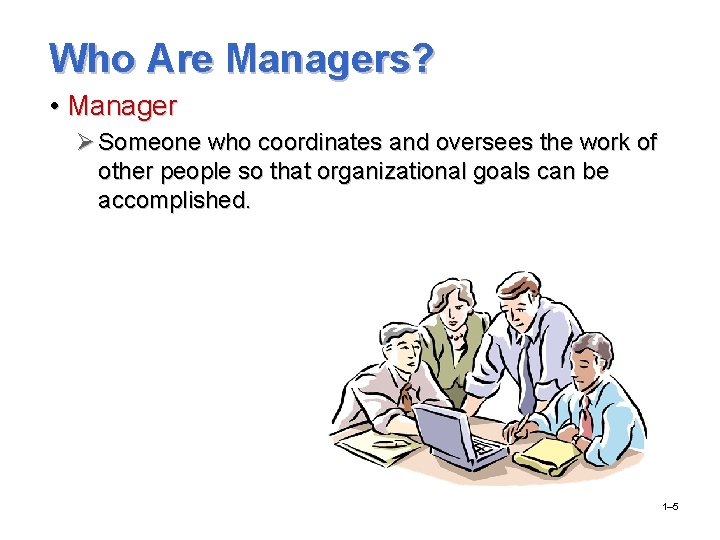
Who Are Managers? • Manager Ø Someone who coordinates and oversees the work of other people so that organizational goals can be accomplished. 1– 5
Classifying Managers • First-line Managers Ø Individuals who manage the work of non-managerial employees. • Middle Managers Ø Individuals who manage the work of first-line managers. • Top Managers Ø Individuals who are responsible for making organization-wide decisions and establishing plans and goals that affect the entire organization. 1– 6
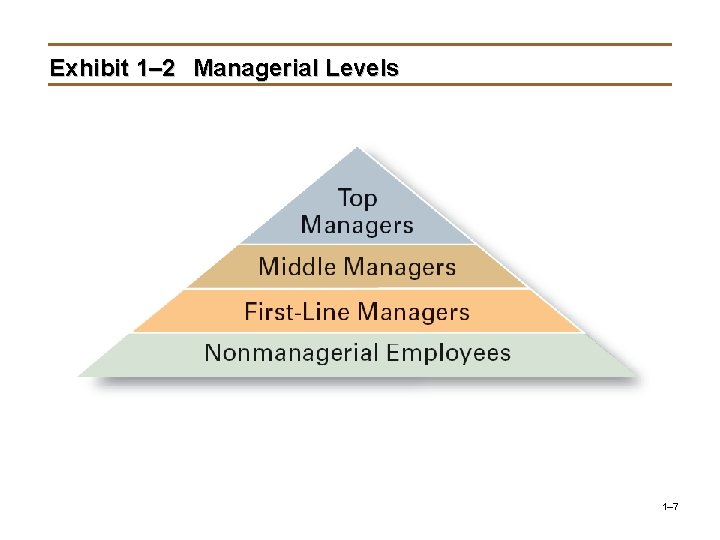
Exhibit 1– 2 Managerial Levels 1– 7
What Is Management? • Management involves coordinating and overseeing the work activities of others so that their activities are completed efficiently and effectively. 1– 8
Management is the process of planning, organizing, leading and controlling the efforts of organization members and resources to achieve the stated goals”.
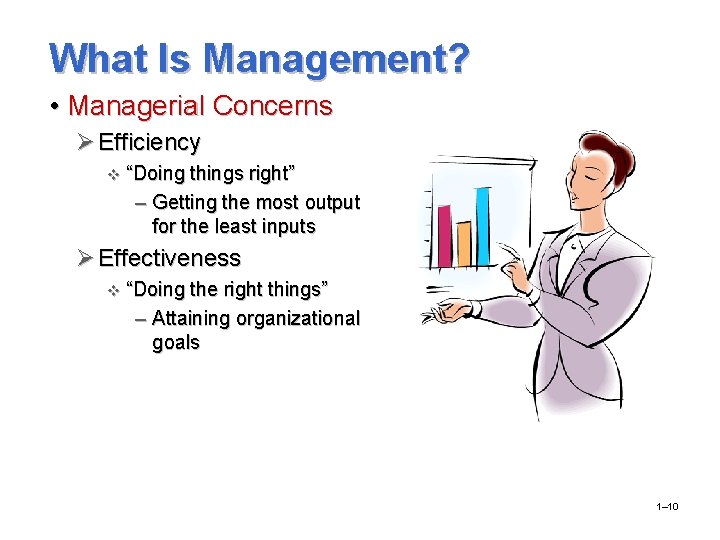
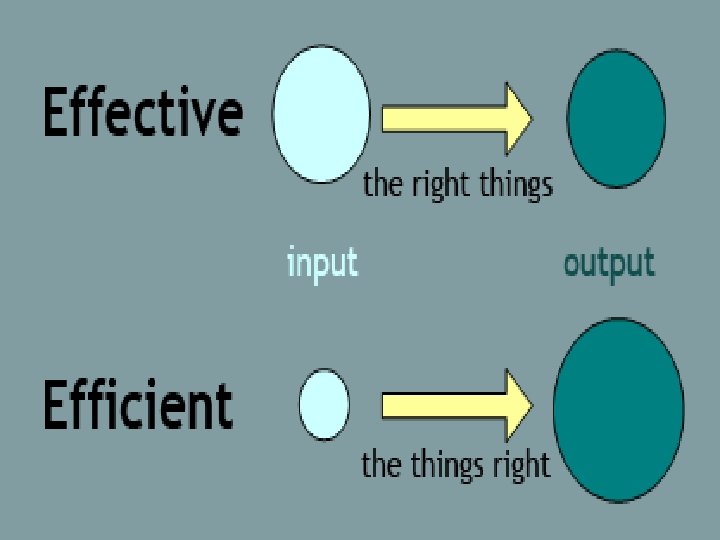
What Is Management? • Managerial Concerns Ø Efficiency v “Doing things right” – Getting the most output for the least inputs Ø Effectiveness v “Doing the right things” – Attaining organizational goals 1– 10
1– 11
What Managers Do? • Three Approaches to Defining What Managers Do. Ø Functions they perform. Ø Roles they play. Ø Skills they need. 1– 12
What Managers Do? • Functions Manager’s Perform Ø Planning v Defining goals, establishing strategies to achieve goals, developing plans to integrate and coordinate activities. Ø Organizing v Arranging and structuring work to accomplish organizational goals. Ø Leading v Working with and through people to accomplish goals. Ø Controlling v Monitoring, comparing, and correcting work. 1– 13
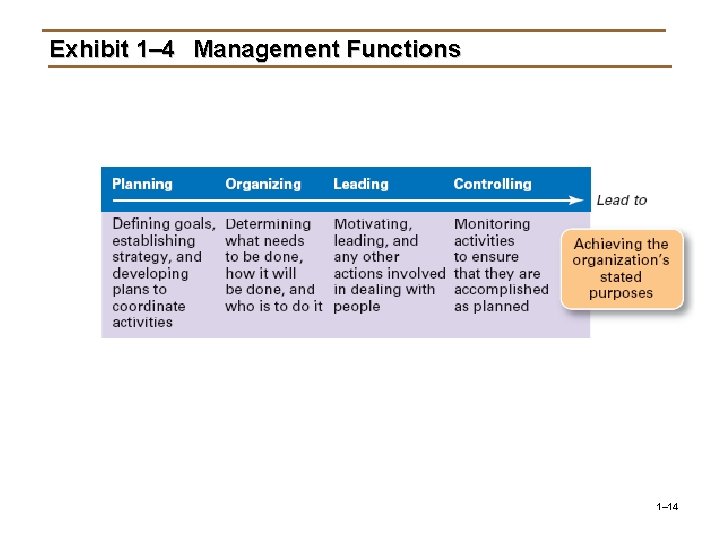
Exhibit 1– 4 Management Functions 1– 14
What Managers Do? • Roles Manager’s Play Ø Roles are specific actions or behaviors expected of a manager. Ø Mintzberg identified 10 roles grouped around interpersonal relationships, the transfer of information, and decision making. 1– 15
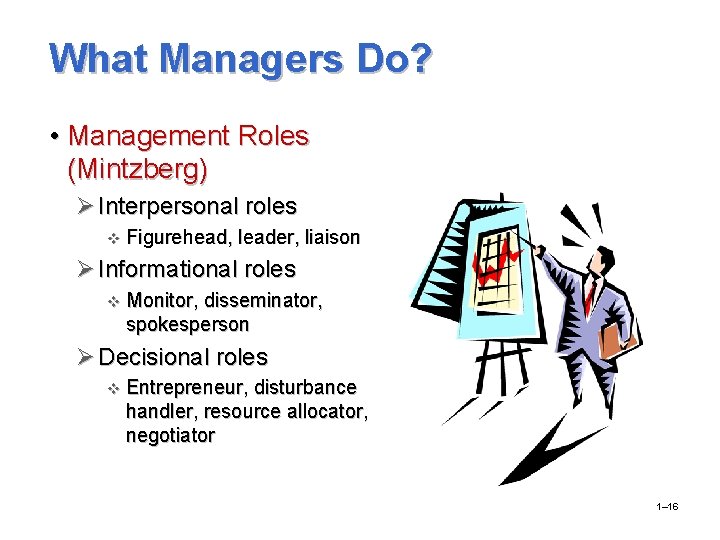
What Managers Do? • Management Roles (Mintzberg) Ø Interpersonal roles v Figurehead, leader, liaison Ø Informational roles v Monitor, disseminator, spokesperson Ø Decisional roles v Entrepreneur, disturbance handler, resource allocator, negotiator 1– 16
What Managers Do (Mintzberg) • Actions Ø thoughtful thinking Ø practical doing 1– 17
Exhibit 1. 5 Mintzberg’s Managerial Roles • Interpersonal Roles • Figurehead • Leader • Liaison • Informational Roles • Monitor • Disseminator • Spokesperson • Decisional Roles • Entrepreneur • Disturbance handler • Resource allocator • Negotiator 1– 18
• Skills Managers Need Ø Technical skills v Knowledge and proficiency in a specific field Ø Human skills v The ability to work well with other people Ø Conceptual skills v The ability to think and conceptualize about abstract and complex situations concerning the organization 1– 19
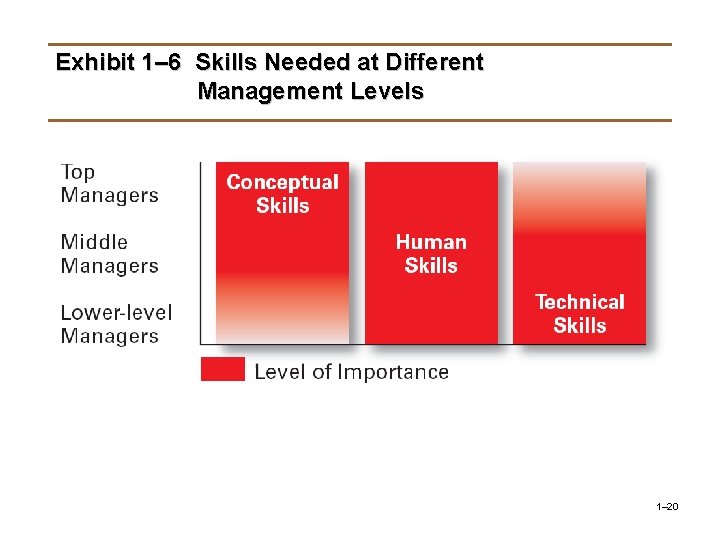
Exhibit 1– 6 Skills Needed at Different Management Levels 1– 20
How The Manager’s Job Is Changing • The Increasing Importance of Customers Ø Customers: the reason that organizations exist v Managing customer relationships is the responsibility of all managers and employees. v Consistent high quality customer service is essential for survival. • Innovation Ø Doing things differently, exploring new territory, and taking risks v Managers should encourage employees to be aware of and act on opportunities for innovation. 1– 21
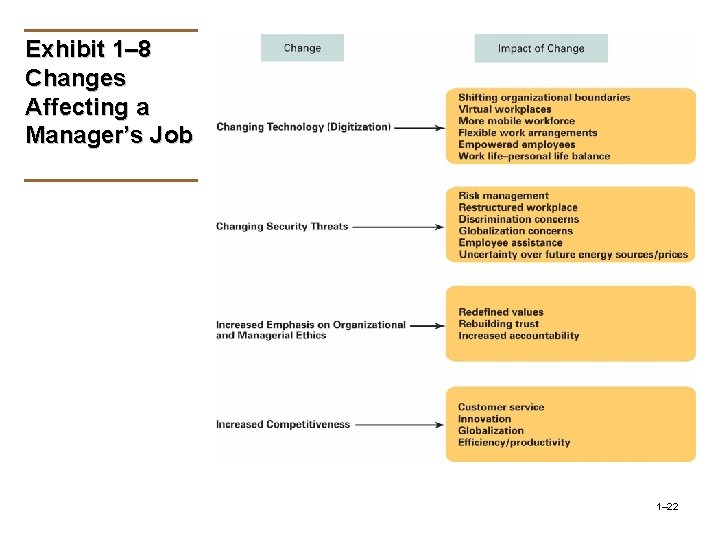
Exhibit 1– 8 Changes Affecting a Manager’s Job 1– 22
What Is An Organization? • An Organization Defined Ø A deliberate arrangement of people to accomplish some specific purpose (that individuals independently could not accomplish alone). • Common Characteristics of Organizations Ø Have a distinct purpose (goal) Ø Composed of people Ø Have a deliberate structure 1– 23
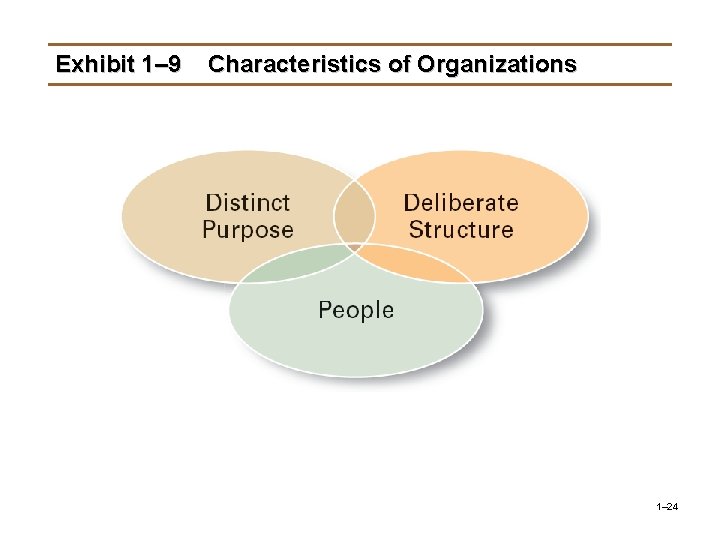
Exhibit 1– 9 Characteristics of Organizations 1– 24
Why Study Management? • The Value of Studying Management Ø The universality of management v Good management is needed in all organizations. Ø The reality of work v Employees either manage or are managed. 1– 25
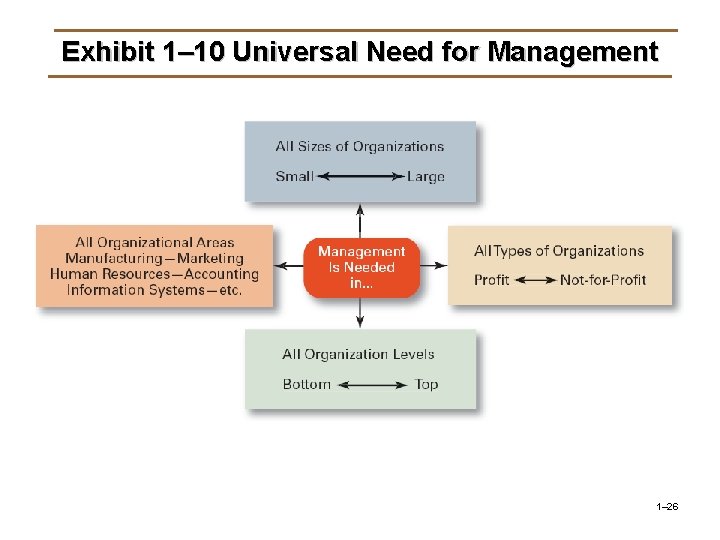
Exhibit 1– 10 Universal Need for Management 1– 26
Terms to Know • • • manager first-line managers middle managers top managers management efficiency effectiveness planning organizing leading controlling Copyright © 2010 Pearson Education, Inc. Publishing as Prentice Hall • • • management roles interpersonal roles informational roles decisional roles technical skills human skills conceptual skills organization universality of management 1– 27
- Slides: 27