
Management Principles The Dimensions of the Planning OrganisingLeadingControlling

- Slides: 15
Management Principles – The Dimensions of the Planning. Organising-Leading-Controlling (P-O-L-C) Framework
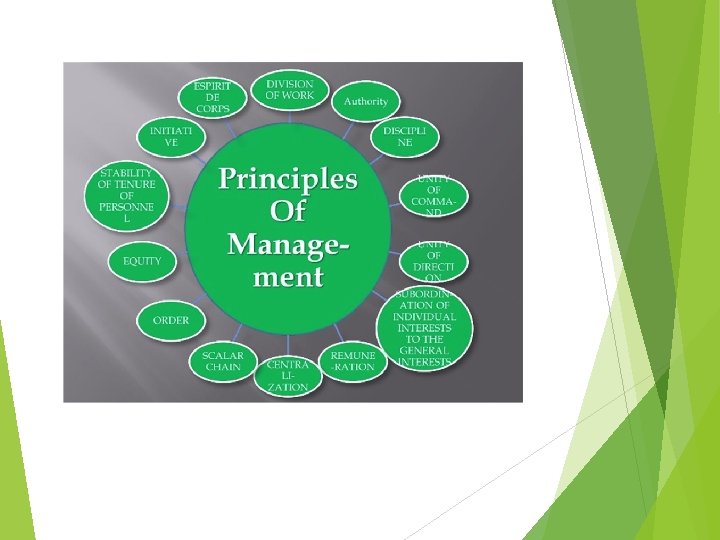
Early Management Principles Early management principles were born of necessity. The most influential of these early principles were set forth by Henri Fayol a French mining engineer. In 1888, Fayol became director of a mining company. The company was in difficulty, but Fayol was able to turn it around and make the company profitable again. When he retired, Fayol wrote down what he’d done to save the company. He helped develop an “administrative science” and developed principles that he thought all organizations should follow if they were to run properly.
Management Ideas of the 1990 s Peter Drucker was the first scholar to write about how to manage knowledge workers, with his earliest work appearing in 1969. Drucker addressed topics like management of professionals, the discipline of entrepreneurship and innovation, and how people make decisions. Tom Peters and Robert Waterman - ushered a business revolution by changing the way managers viewed their relationships with employees and customers. Peters urged organizational leaders (i. e. , managers) to celebrate and recognize employees for their contributions. His advice to leaders was to “master paradox” (i. e. , develop a level of comfort with complexity and ambiguity) and establish direction
for the company by developing an inspiring vision and leading by example. Beginning in the 1970 s, Warren Bennis pioneered a new theory of leadership that addressed the need for leaders to have vision and to communicate that vision. More than just a manager, an effective leader was defined as someone with the ability to influence and motivate others not only to perform work tasks but also to support the organization’s values and meet the organization’s goals. As the economy moved from manufacturing to services, the need for engaging workers’ minds and hearts became more important. Drucker, Peters, and Waterman presented ideas on how managers could achieve excellence in a continually changing business environment, while Bennis encouraged managers to become inspiring leaders who empowered people.
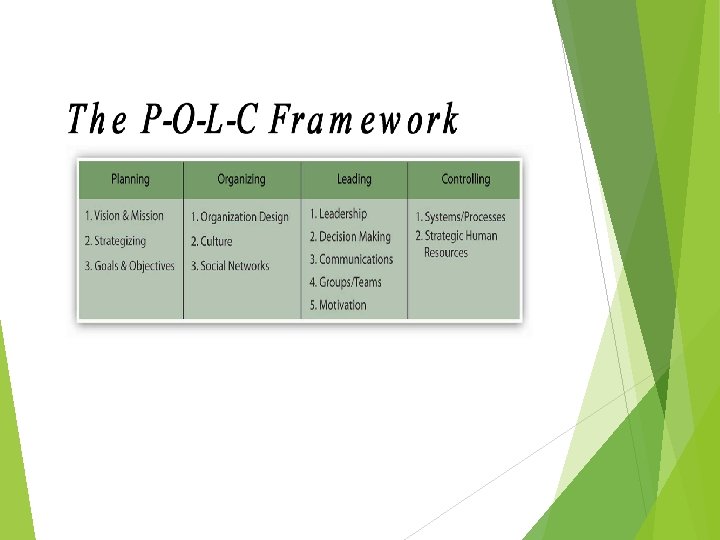
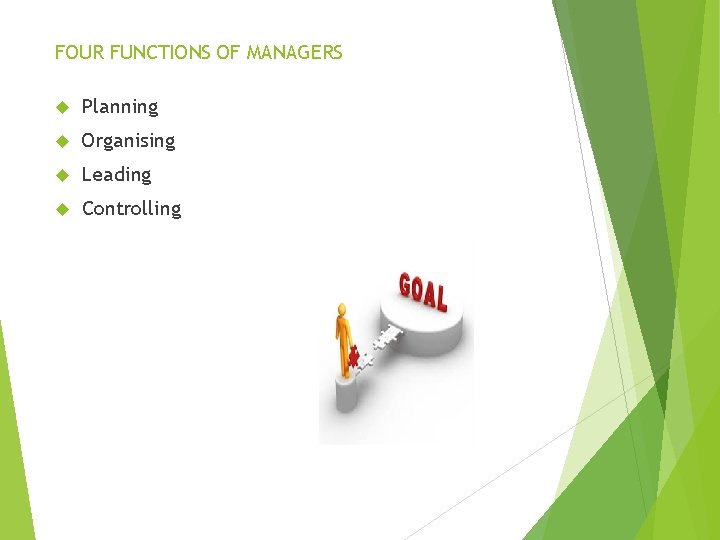
FOUR FUNCTIONS OF MANAGERS Planning Organising Leading Controlling
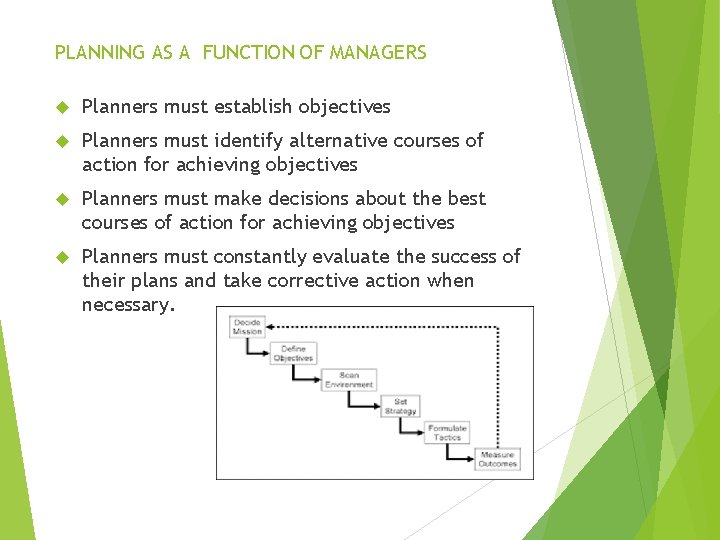
PLANNING AS A FUNCTION OF MANAGERS Planners must establish objectives Planners must identify alternative courses of action for achieving objectives Planners must make decisions about the best courses of action for achieving objectives Planners must constantly evaluate the success of their plans and take corrective action when necessary.
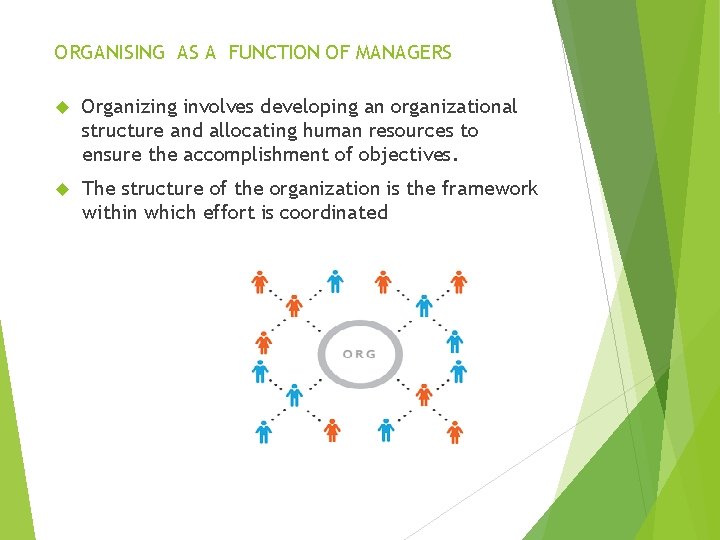
ORGANISING AS A FUNCTION OF MANAGERS Organizing involves developing an organizational structure and allocating human resources to ensure the accomplishment of objectives. The structure of the organization is the framework within which effort is coordinated
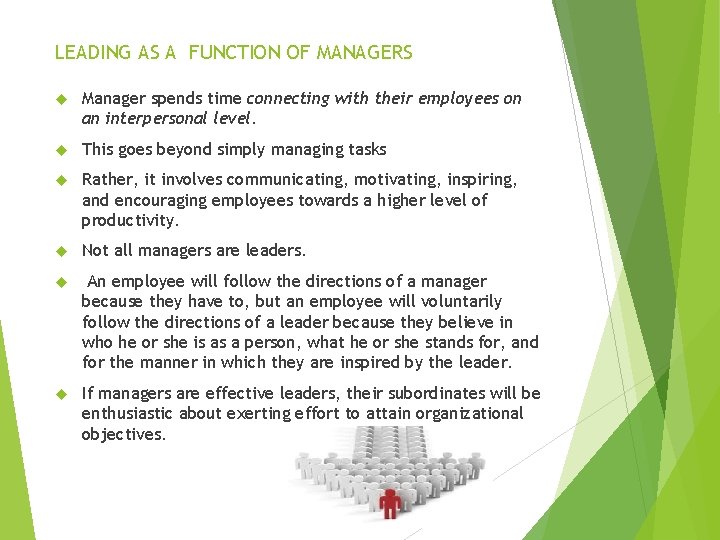
LEADING AS A FUNCTION OF MANAGERS Manager spends time connecting with their employees on an interpersonal level. This goes beyond simply managing tasks Rather, it involves communicating, motivating, inspiring, and encouraging employees towards a higher level of productivity. Not all managers are leaders. An employee will follow the directions of a manager because they have to, but an employee will voluntarily follow the directions of a leader because they believe in who he or she is as a person, what he or she stands for, and for the manner in which they are inspired by the leader. If managers are effective leaders, their subordinates will be enthusiastic about exerting effort to attain organizational objectives.
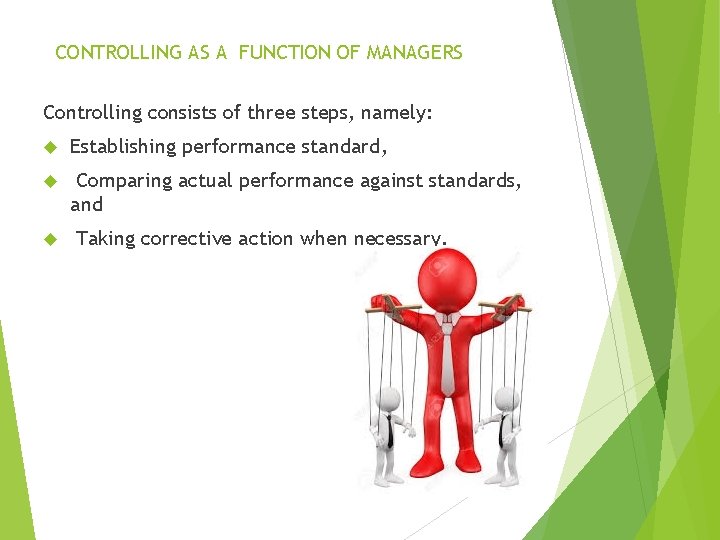
CONTROLLING AS A FUNCTION OF MANAGERS Controlling consists of three steps, namely: Establishing performance standard, Comparing actual performance against standards, and Taking corrective action when necessary.
LEVELS OF MANAGEMENT Top Level Manager Middle Level Manager First Level Manager
SIGNIFICANCE Management Principles serve as guidelines for doing work with greater efficiency. The proactive manager can become more effective by using management principle to solve problems. It provides means of organizing knowledge and experience in management. Social networking , helps to get new ideas and vision. Management principle provides a conceptual framework for systematic training and development of future managers. It makes the thinking clearer and systematic. It involves achieving co-operation from others to achieve organizational goals.
CONCLUSION The study materials for this project came mostly from the principles of management course manual, ebooks. Other sources include the internet; Business Management (+2) NCERT. My hypothesis was that company would work better with all the management principles applied. The literature review and the result do support my hypothesis. An exciting future study might involve testing the working of the company without any management principle.