
Management Organisations Groups and Teams Useful vocabulary group
Management Organisations – Groups and Teams
Useful vocabulary • • • • group forming stage storming stage norming stage performing stage adjourning stage role norms groupthink status social loafing group cohesiveness conflict • traditional view of conflict • human relations view of conflict • interactionist view of conflict • functional conflicts • dysfunctional conflicts • work teams • problem-solving team • self-managed work team • cross-functional team • virtual team • social network structure
Today’s lecture We will: • Define groups and the stages of group development • Describe the major components that determine group performance and satisfaction • Explore conflict management • Define teams and best practices influencing team performance • Discuss contemporary issues in managing teams
Groups
What is a group? Group - two or more interacting and interdependent individuals who come together to achieve specific goals. Groups tend to come together for a specific purpose but members work independently. A group may have a leader, but the roles and functions of the other group members are not well defined.
Types of groups Formal groups • Work groups defined by the organisation’s structure that have designated work assignments and tasks Informal groups • Groups that are independently formed to meet the social needs of their members
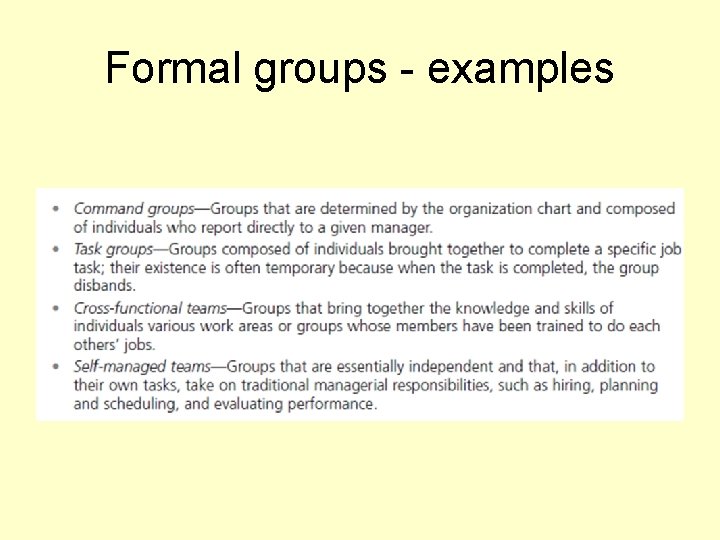
Formal groups - examples
Activity Please give examples of each of these groups from your experiences: • Formal: – Command – Task – Self managed – Cross function • Informal: – Interest
5 stages of group development 1. Forming – Members feel much uncertainty, are just getting together 2. Storming – Lots of conflict between members of the group 3. Norming Stage – Members have developed close relationships and work together 4. Performing Stage – The group is finally functional and achieves 5. Adjourning Stage – The ending of a group and finishing activities
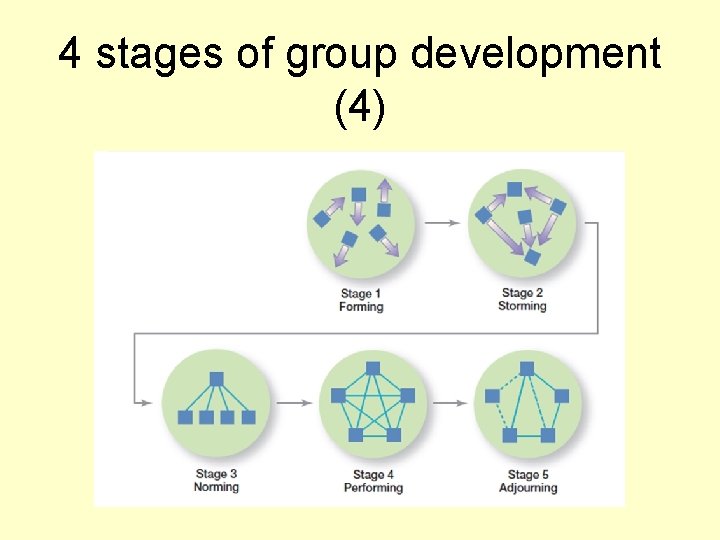
4 stages of group development (4)
Critique of the Five-Stage Model • Assumption: the group becomes more effective as it progresses through the first four stages – Not always true – group behavior is more complex – High levels of conflict may be useful to high performance – The process is not always linear – Several stages may occur simultaneously – Groups may regress • Ignores the organisational context (ie, the organisation setting may mean the group do not need to go through the 5 stages)
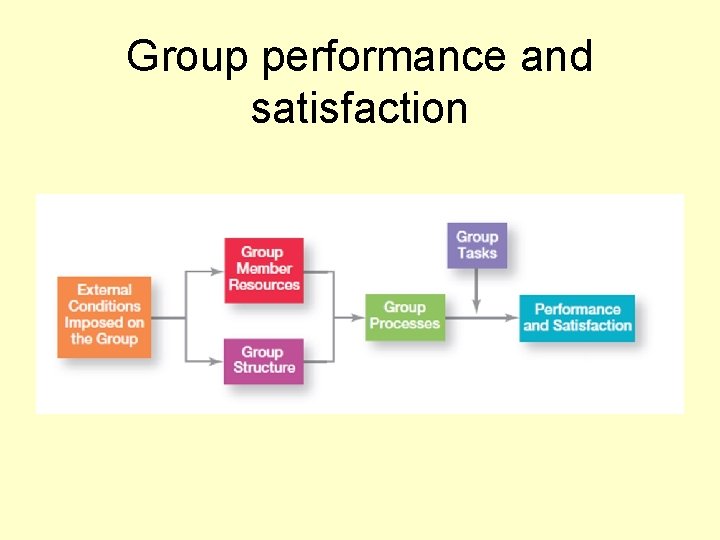
Group performance and satisfaction
Group performance (1) A. External conditions: Factors inside the organisation but outside the group, eg, organisation strategy, rules, authority, technology B. Group member resources: Skills, knowledge and personalities of the group members
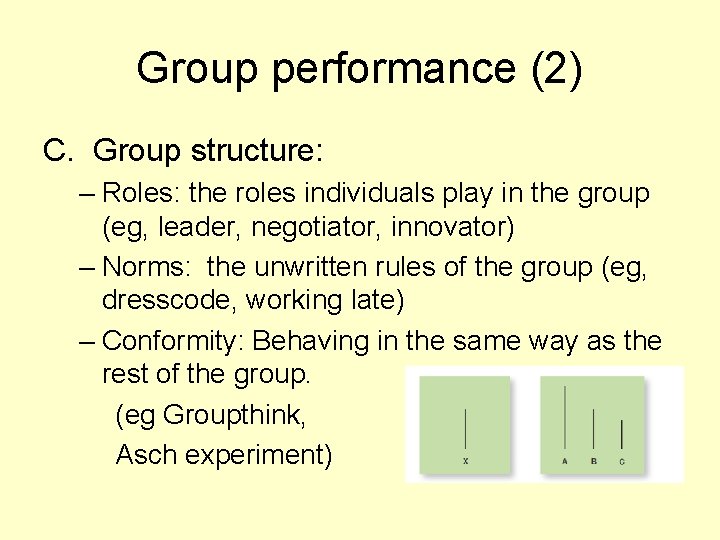
Group performance (2) C. Group structure: – Roles: the roles individuals play in the group (eg, leader, negotiator, innovator) – Norms: the unwritten rules of the group (eg, dresscode, working late) – Conformity: Behaving in the same way as the rest of the group. (eg Groupthink, Asch experiment)
Group performance (3) C. Group structure (cont. ) – Size: Ideally 5 -7 people, small groups get things done, large groups create more ideas. Risk of social loafing where some people do no work! – Cohesiveness: When a group get on and all share the group’s goals. Best productivity is when cohesiveness = high and goals = desirable.
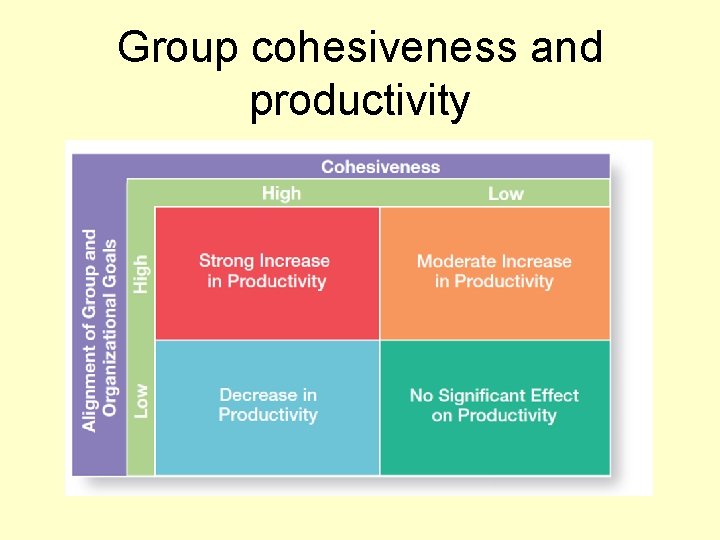
Group cohesiveness and productivity
Activity • When have you experienced these structures in groups you have worked in? • What happens when you have a group task and the group is too big? • How do you deal with people who will not work hard?
Group performance (4) • D. Group processes: Processes that happen in a group (eg, communication) • Two of the most important are: – Decision making – Conflict management
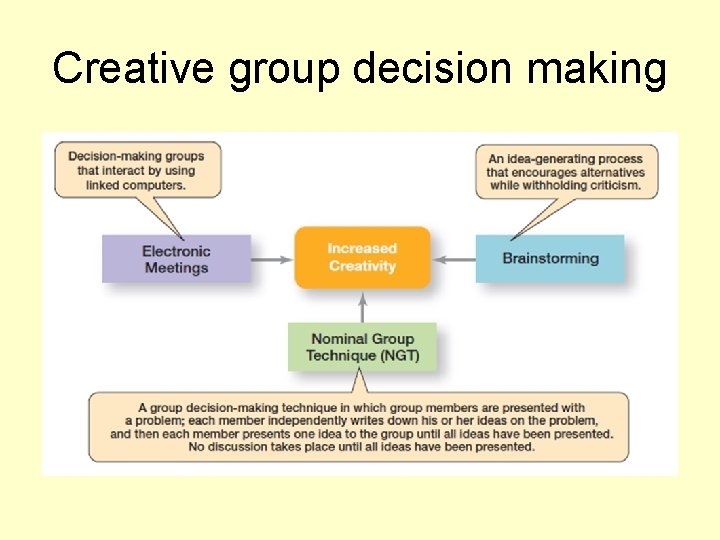
Creative group decision making
Activity • Try out brainstorming as a group. • How many different uses can you think of for a pen? (the last group I did this with got 20!)
What is conflict? • Conflict - perceived incompatible differences that result in interference or opposition. • Can you give me an example?
Conflict management (1) • Traditional view of conflict - the view that all conflict is bad and must be avoided • Human relations view of conflict - the view that conflict is a natural and inevitable outcome in any group • Interactionist view of conflict - the view that some conflict is necessary for a group to perform effectively
Conflict management (2) • Functional conflicts - conflicts that support a group’s goals and improve its performance • Dysfunctional conflicts - conflicts that prevent a group from achieving its goals
Conflict management (3) • Task conflict - conflicts over content and goals of the work (functional or dysfunctional) • Relationship conflict - conflict based on interpersonal relationships (usually dysfunctional) • Process conflict - conflict over how work gets done (functional or dysfunctional)
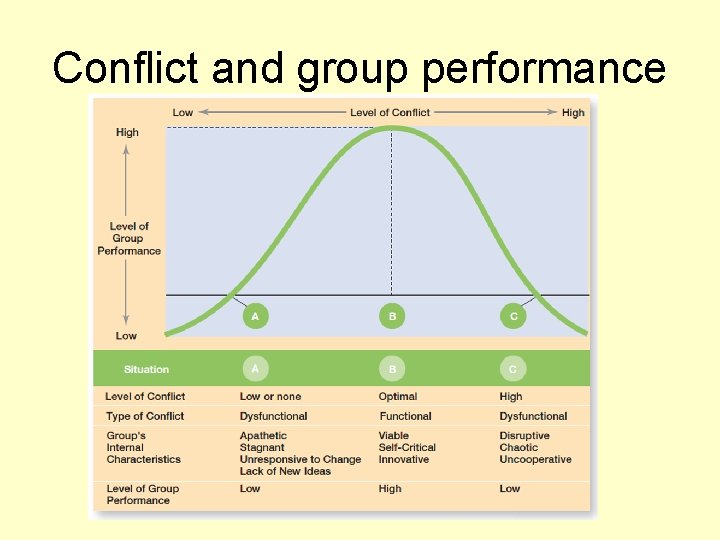
Conflict and group performance
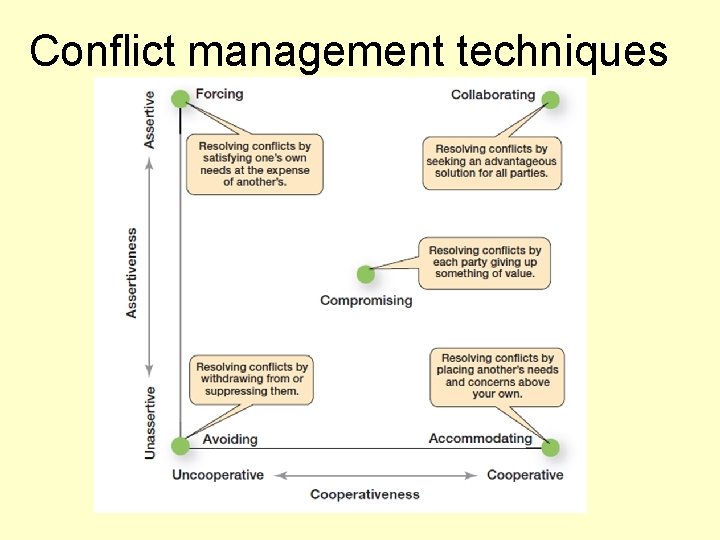
Conflict management techniques
Group performance and satisfaction (5) • E. Group tasks: The task the group has to complete. • It can be: – Simple: routine and standardised, requires little group discussion – Complex: new and not routine, requires a lot of group discussion
Teams
What is a work team? Work teams are: • groups whose members work intensely on a specific, common goal using their positive synergy, individual and mutual accountability, and complementary skills • They outperform individuals and can be more flexible than a traditional department
Advantage of using teams • Teams outperform individuals. • Teams provide a way to better use employee talents. • Teams are more flexible and responsive. • Teams can be quickly assembled, deployed, refocused, and disbanded.
Types of work teams (1) • Problem-solving team - a team from the same department or functional area that’s involved in efforts to improve work activities or to solve specific problems. • Self-managed work team - a type of work team that operates without a manager and is responsible for a complete work process or segment.
Types of work teams (2) • Cross-functional team - a work team composed of individuals from various functional specialties. • Virtual team - a type of work team that uses technology to link physically dispersed members in order to achieve a common goal.
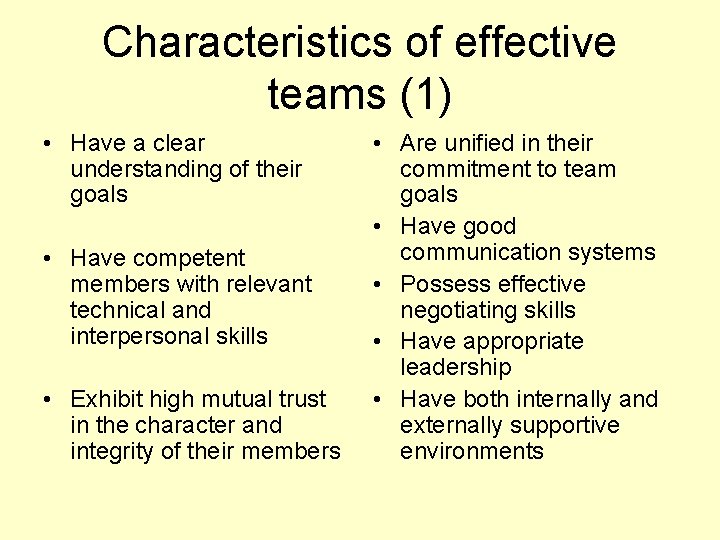
Characteristics of effective teams (1) • Have a clear understanding of their goals • Have competent members with relevant technical and interpersonal skills • Exhibit high mutual trust in the character and integrity of their members • Are unified in their commitment to team goals • Have good communication systems • Possess effective negotiating skills • Have appropriate leadership • Have both internally and externally supportive environments
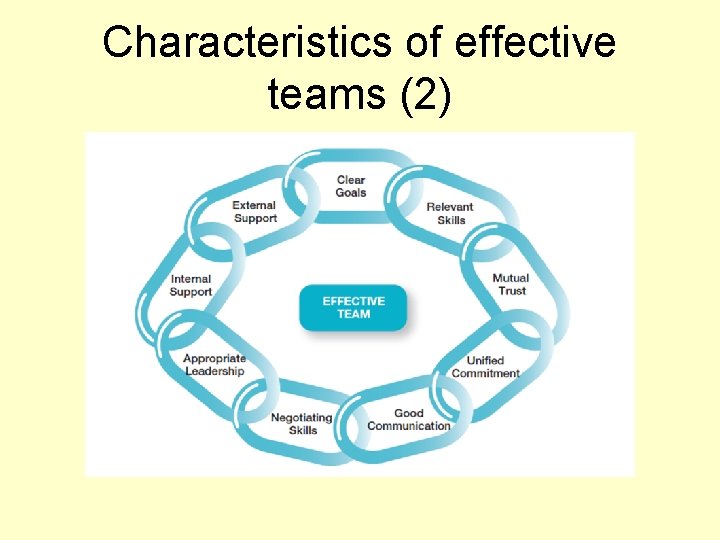
Characteristics of effective teams (2)
Team or group? What are the differences between a team and a group? • Give examples of a team • Give examples of a group
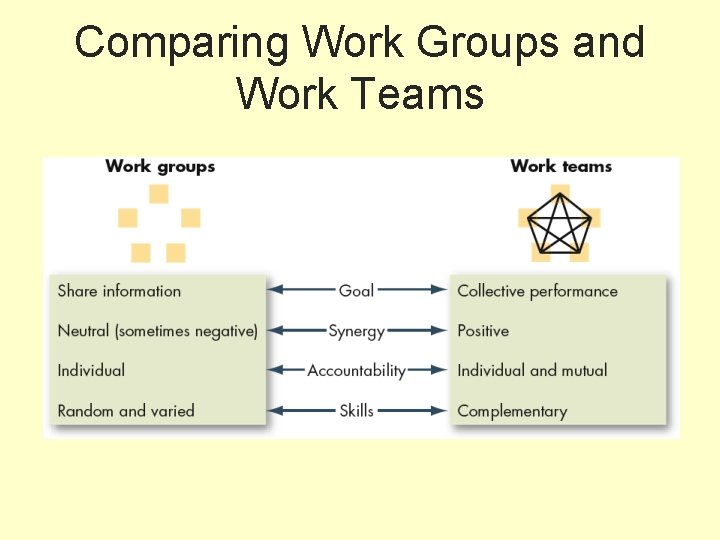
Comparing Work Groups and Work Teams
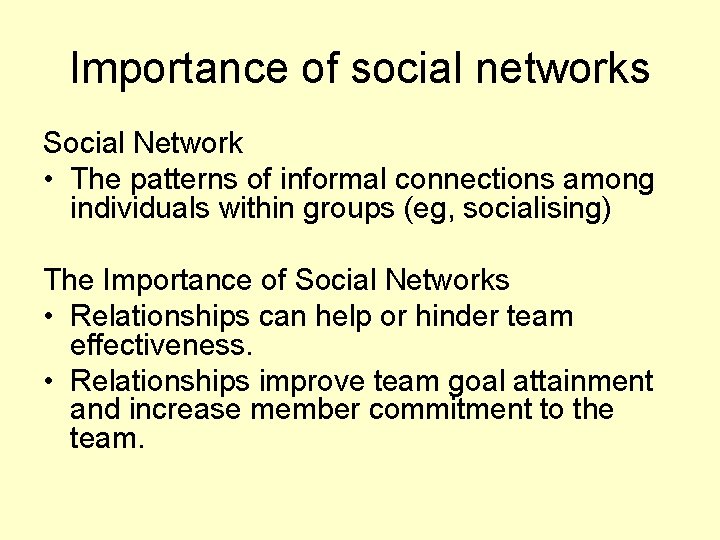
Importance of social networks Social Network • The patterns of informal connections among individuals within groups (eg, socialising) The Importance of Social Networks • Relationships can help or hinder team effectiveness. • Relationships improve team goal attainment and increase member commitment to the team.
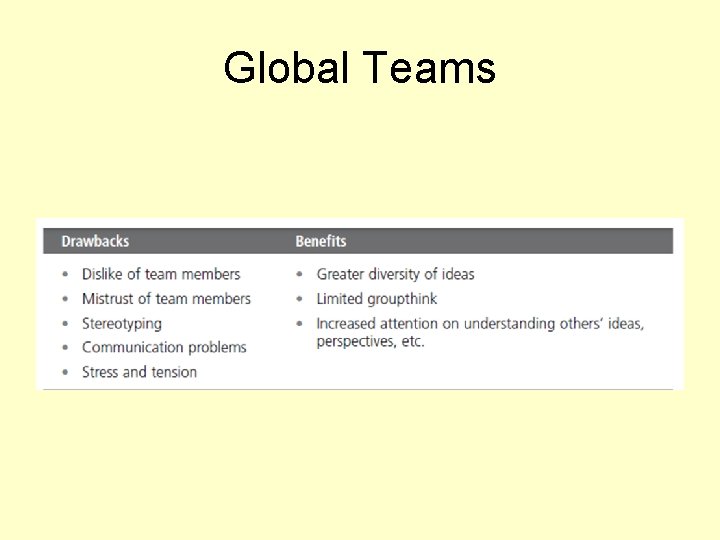
Global Teams
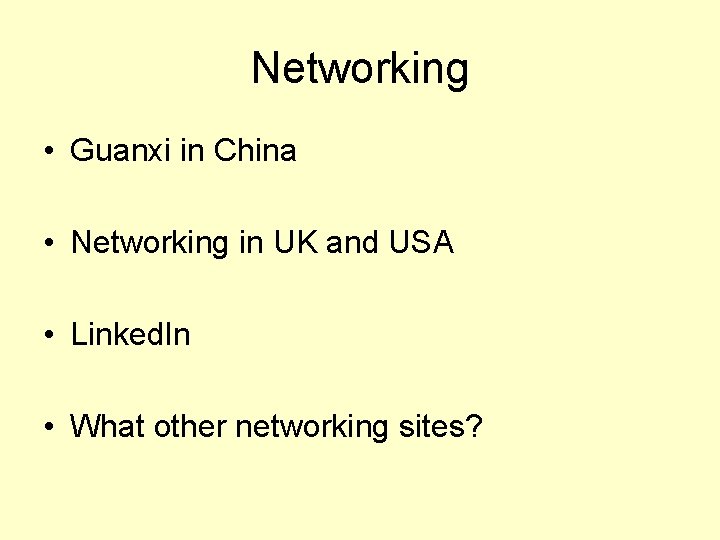
Networking • Guanxi in China • Networking in UK and USA • Linked. In • What other networking sites?
Summary Today: • Groups • Conflict Managent • Teams Tomorrow: • Organisational culture
Reading • Please read Chapter 2 before tomorrow’s lecture. The Dabbawalahs are a highly effective team • You can read more about them here: http: //www. rediff. com/money/2005/nov/11 spe c. htm • http: //www. citesales. com/90 -dabbawallahcase-study. html
- Slides: 41