
Management One Health Systems Thinkingpower point 3 Systems
- Slides: 31
Management One Health Systems Thinking-power point 3
Systems Thinking and Wicked Problems
What is “health”? Health is a state of complete physical, mental and social well-being and not merely the absence of disease or infirmity • WHO 1946
“Complete physical, mental and social well-being”…. Includes the following interdependent systems: • • • Individual health Population (community) health Ecosystem health Societal health Economic health
The “One Health” approach is based on systems thinking
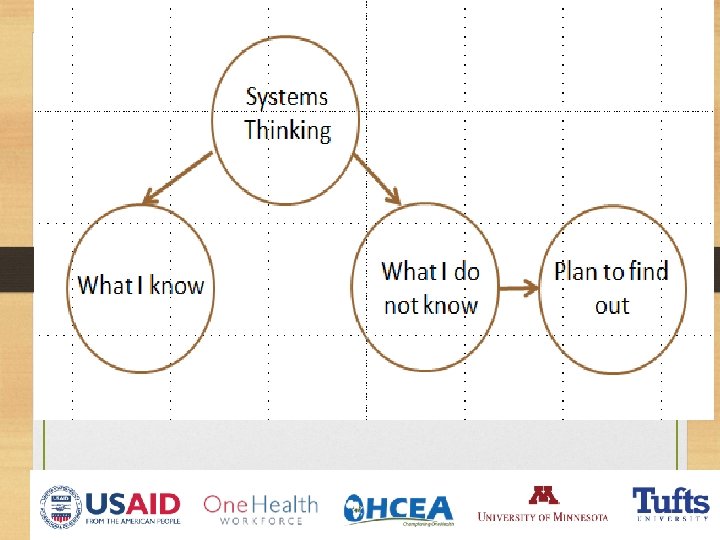
What is Systems Thinking? • Holistic approach bringing together multiple perspectives • An issue is best understood in the context of its relationships within the larger reality (as part of a process)
Why can’t we ‘solve’ the health problems at the human, animal, ecosystems interfaces? • They are compelling issues • Public and political support exists • Lots of good science available
Why can’t we ‘solve’ the health problems at the human, animal, ecosystems because they are…. Wicked
Why can’t we ‘solve’ the health problems at the human, animal, ecosystems? Because they are…. NOTE: Wicked is the opposite of “tame”; it doesn’t mean “evil”! Wicked
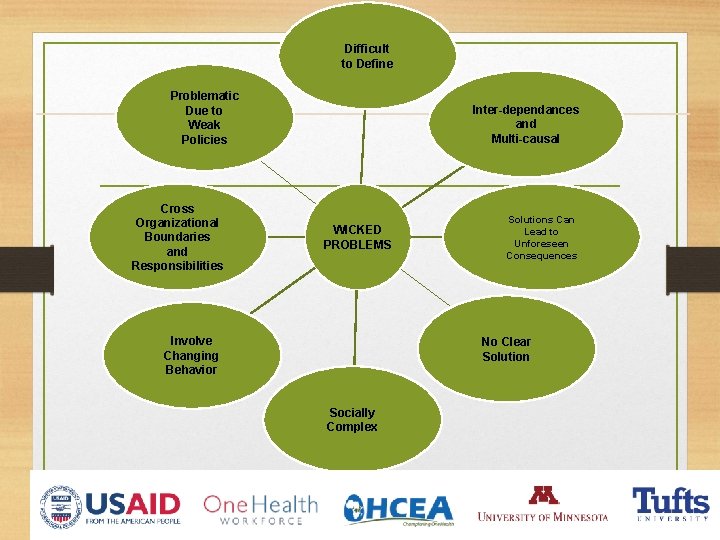
Characteristics of Wicked Problems • Too complex to fully understand • No simple technical “solution” • Actions precipitate unanticipated and unintended consequences • Compelling and demand action • Require innovative approaches
Wicked problems require dynamic approaches • • Systems thinking One Health approaches Trans-disciplinary teams Collective action
“One Health” approach… • Health involves many aspects • Nutrition, livelihoods, infectious disease… • And many other factors affect health • Political stability, natural and built environment, economic climate… • One Health considers all of these together
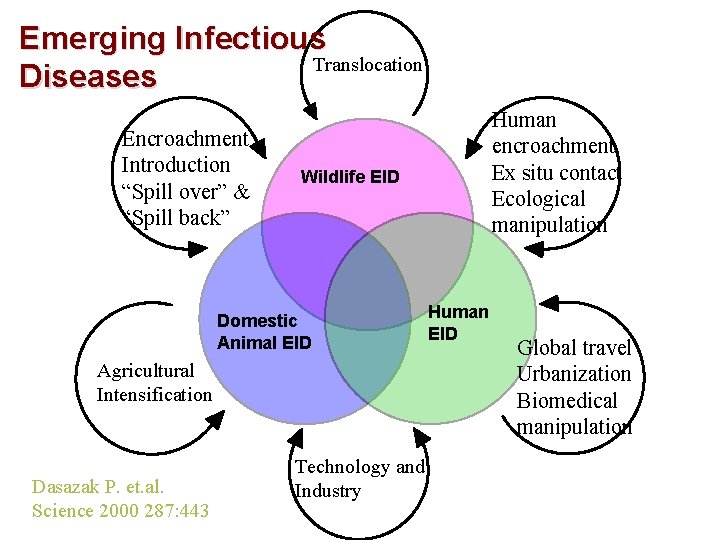
Emerging Infectious Translocation Diseases Encroachment Introduction “Spill over” & “Spill back” Wildlife EID Domestic Animal EID Agricultural Intensification Dasazak P. et. al. Science 2000 287: 443 Human encroachment Ex situ contact Ecological manipulation Technology and Industry Human EID Global travel Urbanization Biomedical manipulation
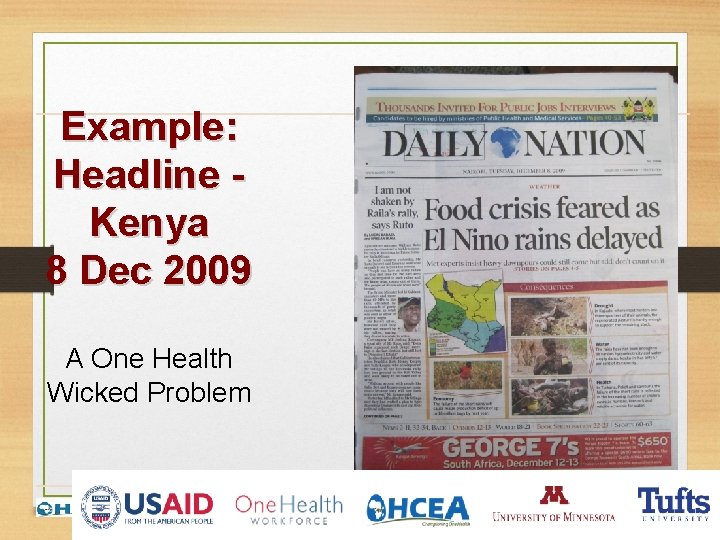
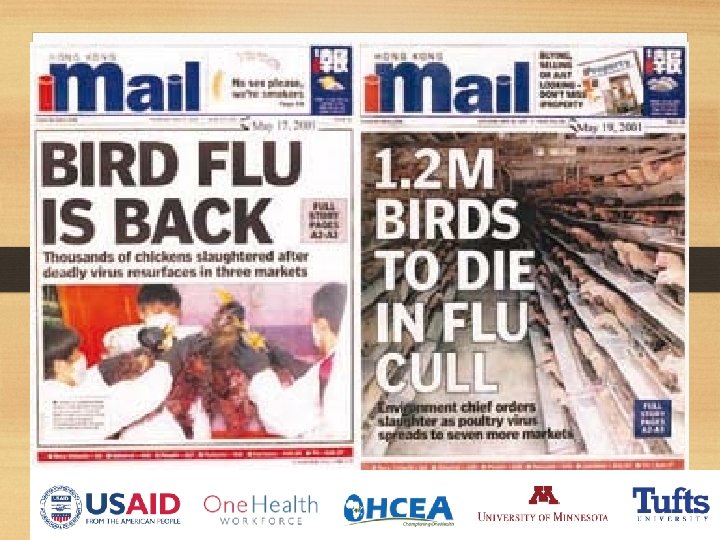
Example: Headline Kenya 8 Dec 2009 A One Health Wicked Problem
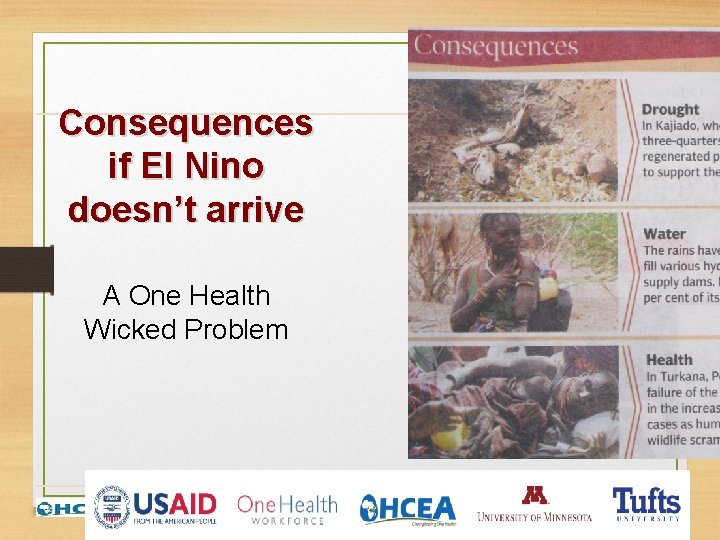
Consequences if El Nino doesn’t arrive A One Health Wicked Problem
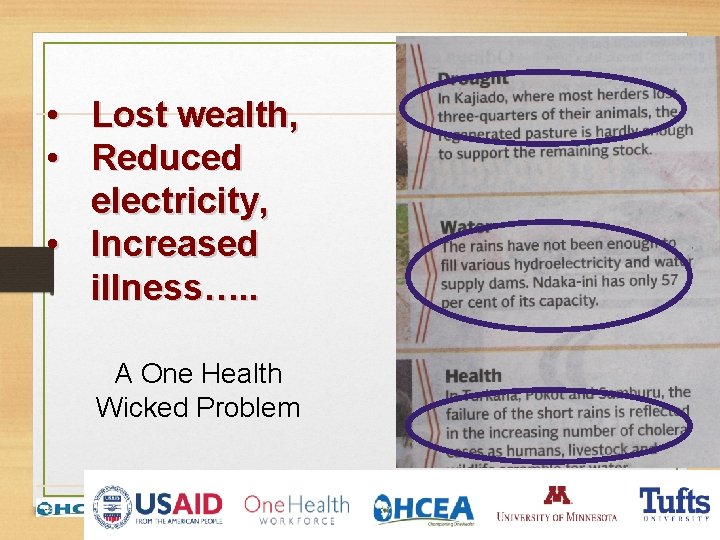
• Lost wealth, • Reduced electricity, • Increased illness…. . A One Health Wicked Problem
17
18
Wicked Problems: Finding Solutions to One Health Problems through Systems Thinking West Nile Virus in the Movie Clip Fatal Infestation
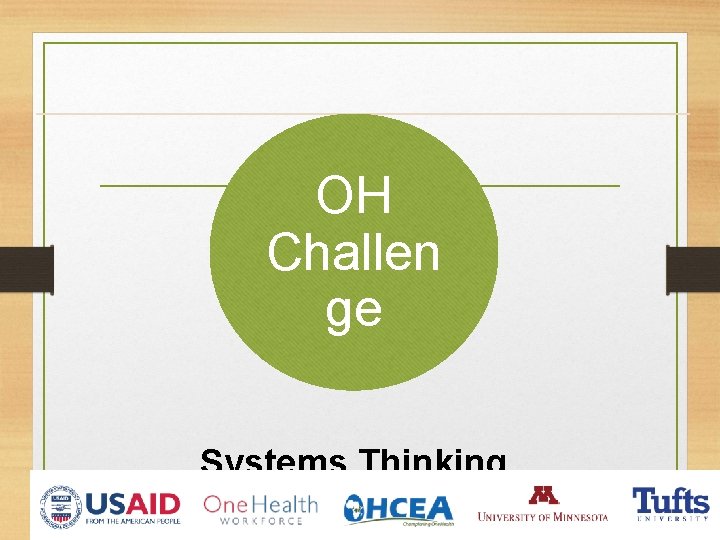
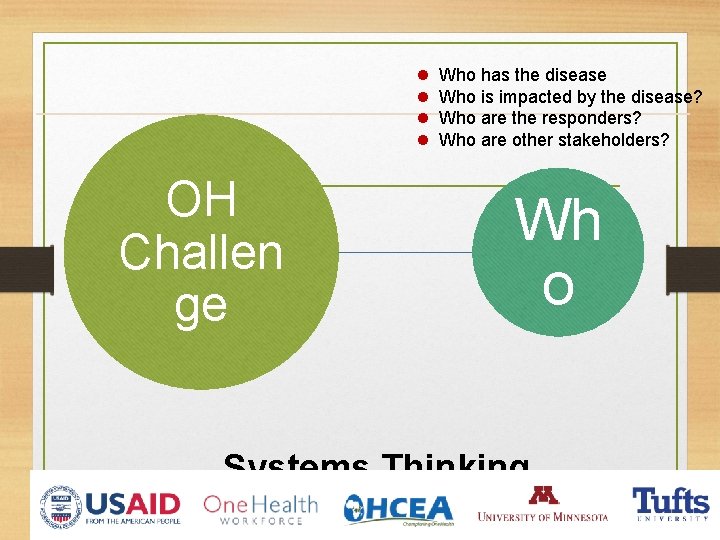
OH Challen ge Systems Thinking
l l OH Challen ge Who has the disease Who is impacted by the disease? Who are the responders? Who are other stakeholders? Wh o Systems Thinking 12/13/2021 21
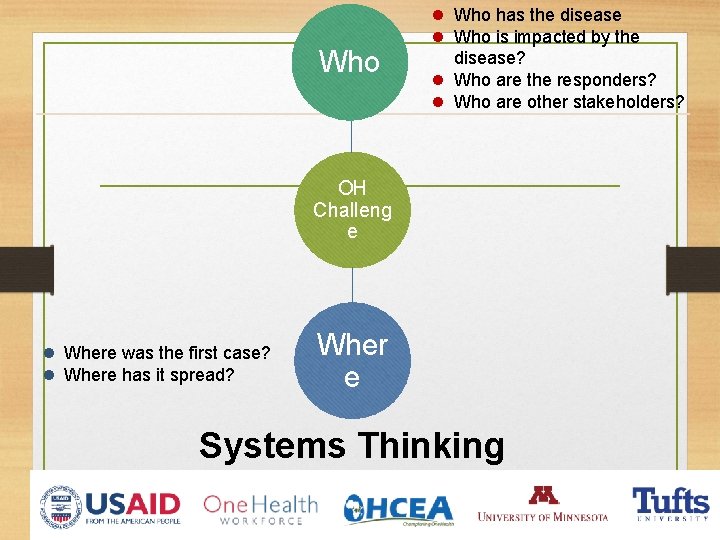
Who l Who has the disease l Who is impacted by the disease? l Who are the responders? l Who are other stakeholders? OH Challeng e l Where was the first case? l Where has it spread? Wher e Systems Thinking
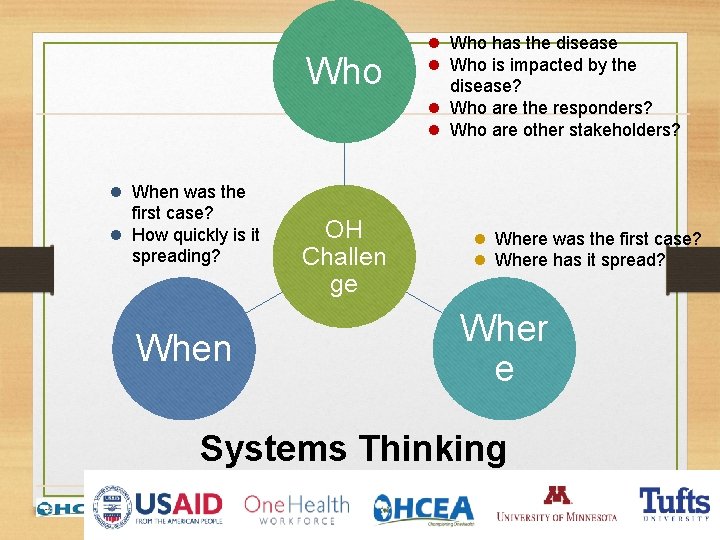
Who l When was the first case? l How quickly is it spreading? When OH Challen ge l Who has the disease l Who is impacted by the disease? l Who are the responders? l Who are other stakeholders? l Where was the first case? l Where has it spread? Wher e Systems Thinking
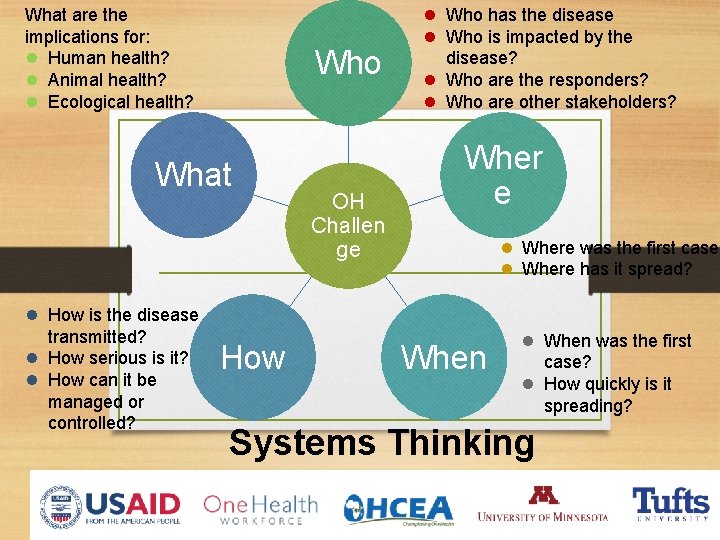
What are the implications for: l Human health? l Animal health? l Ecological health? Who What l How is the disease transmitted? l How serious is it? l How can it be managed or controlled? How OH Challen ge l Who has the disease l Who is impacted by the disease? l Who are the responders? l Who are other stakeholders? Wher e l Where was the first case? l Where has it spread? When l When was the first case? l How quickly is it spreading? Systems Thinking
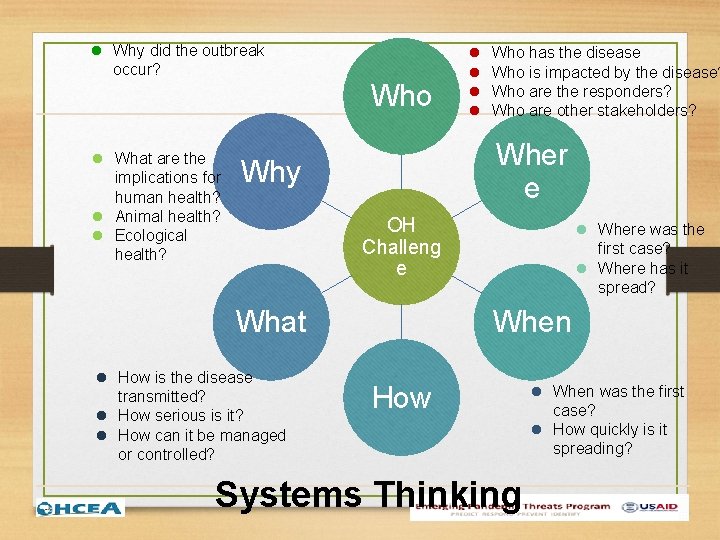
l Why did the outbreak occur? Who l What are the implications for human health? l Animal health? l Ecological health? l l Who has the disease Who is impacted by the disease? Who are the responders? Who are other stakeholders? Wher e Why OH Challeng e What l How is the disease transmitted? l How serious is it? l How can it be managed or controlled? l Where was the first case? l Where has it spread? When How Systems Thinking l When was the first case? l How quickly is it spreading?
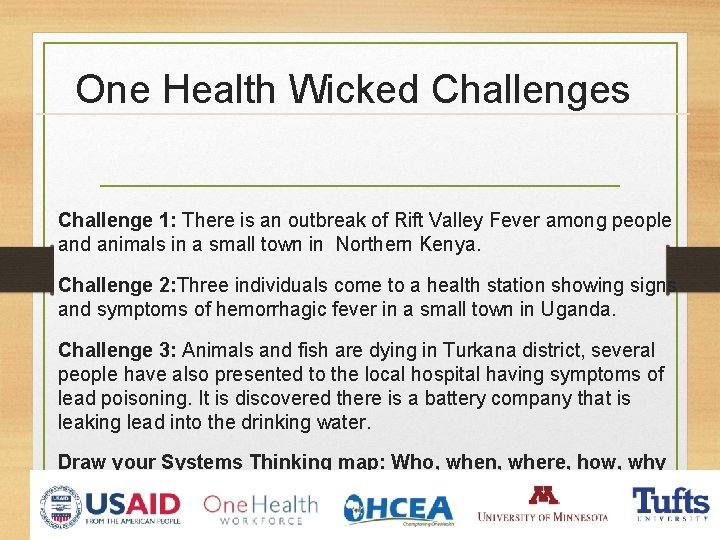
One Health Wicked Challenges Challenge 1: There is an outbreak of Rift Valley Fever among people and animals in a small town in Northern Kenya. Challenge 2: Three individuals come to a health station showing signs and symptoms of hemorrhagic fever in a small town in Uganda. Challenge 3: Animals and fish are dying in Turkana district, several people have also presented to the local hospital having symptoms of lead poisoning. It is discovered there is a battery company that is leaking lead into the drinking water. Draw your Systems Thinking map: Who, when, where, how, why 27 and what?
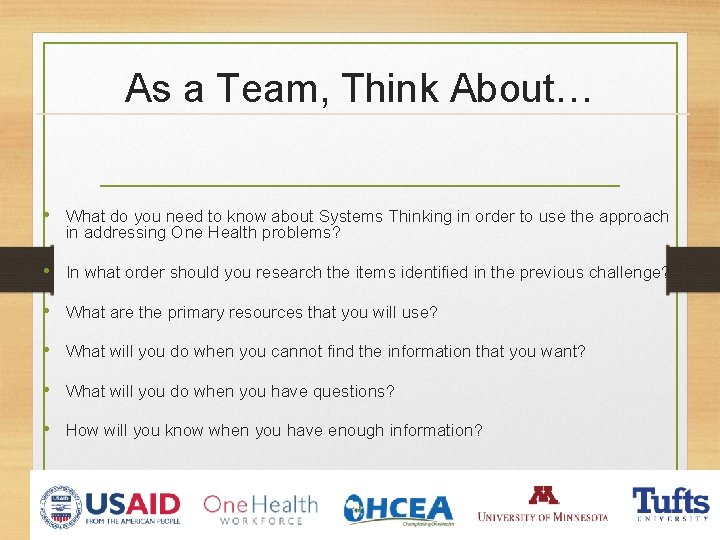
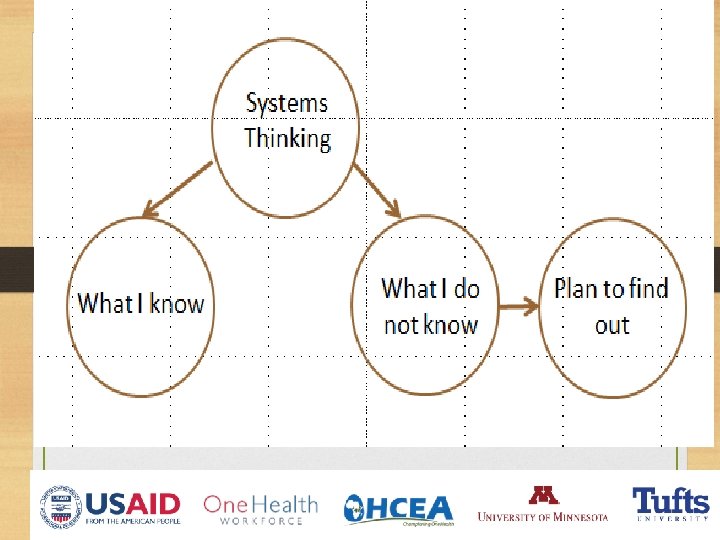
As a Team, Think About… • What do you need to know about Systems Thinking in order to use the approach in addressing One Health problems? • In what order should you research the items identified in the previous challenge? • What are the primary resources that you will use? • What will you do when you cannot find the information that you want? • What will you do when you have questions? • How will you know when you have enough information?
29
Difficult to Define Problematic Due to Weak Policies Cross Organizational Boundaries and Responsibilities Inter-dependances and Multi-causal WICKED PROBLEMS Involve Changing Behavior Solutions Can Lead to Unforeseen Consequences No Clear Solution Socially Complex 30
Complex problems demand ‘shared leadership’ • Because no “one” is in charge! Who is in charge of food security or emerging infectious disease? • Leadership is a shared responsibility that requires resources and initiative from many perspectives, disciplines, sectors
Thank you