
Management of Waiting Lines Learning Objectives Explain why
Management of Waiting Lines
Learning Objectives § § § Explain why waiting lines form in systems that are underloaded. Identify the goal of queuing (waiting-line) management. List the measures of system performance that are used in queuing. Discuss the assumptions of the basic queuing models presented. Solve typical problems. 2
Disney World § Waiting in lines does not add enjoyment § Waiting in lines does not generate revenue Waiting lines are non-value added occurrences 3
Waiting Lines § Queuing theory: Mathematical approach to the analysis of waiting lines. § Goal of queuing analysis is to minimize the sum of two costs § § Customer waiting costs § Service capacity costs Waiting lines are non-value added occurrences 4
Implications of Waiting Lines § Cost to provide waiting space § Loss of business § Customers leaving § Customers refusing to wait § Loss of goodwill § Reduction in customer satisfaction § Congestion may disrupt other business operations 5
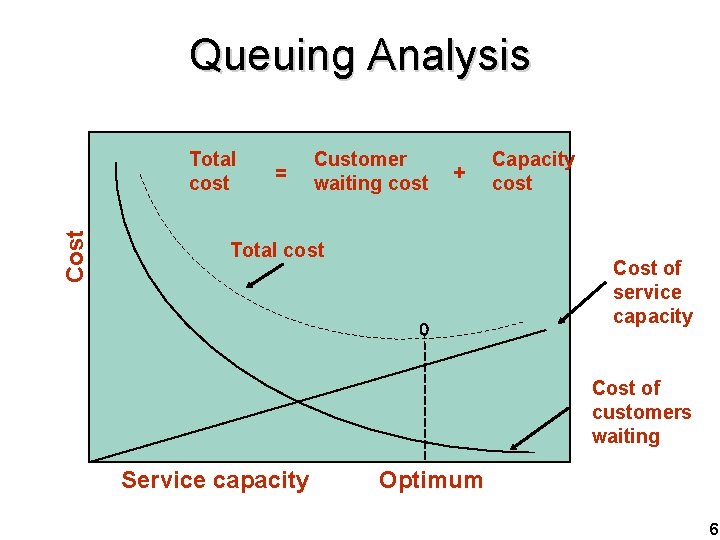
Queuing Analysis Cost Total cost = Customer waiting cost + Total cost Capacity cost Cost of service capacity Cost of customers waiting Service capacity Optimum 6
System Characteristics § Population Source § Infinite source: customer arrivals are unrestricted § Finite source: number of potential customers is limited § Number of observers (channels) § Arrival and service patterns § Queue discipline (order of service) 7
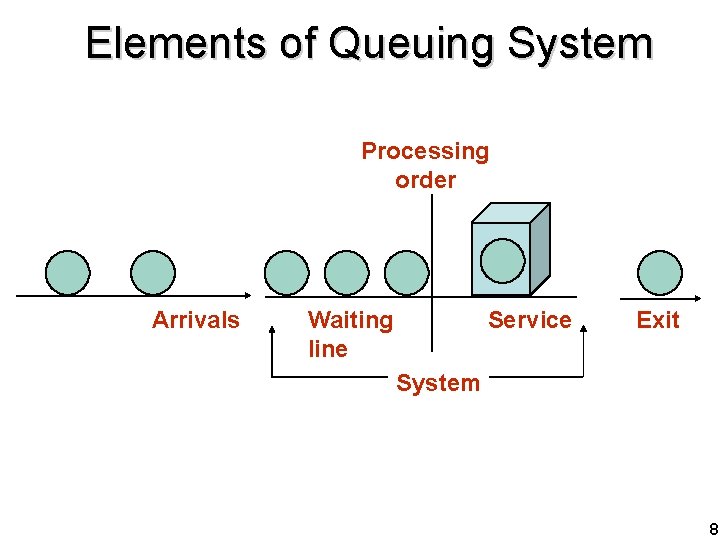
Elements of Queuing System Processing order Arrivals Waiting line Service Exit System 8
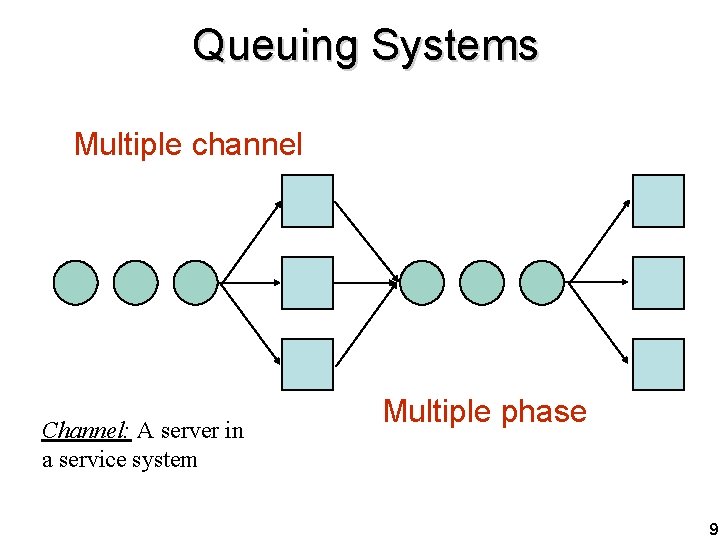
Queuing Systems Multiple channel Channel: A server in a service system Multiple phase 9
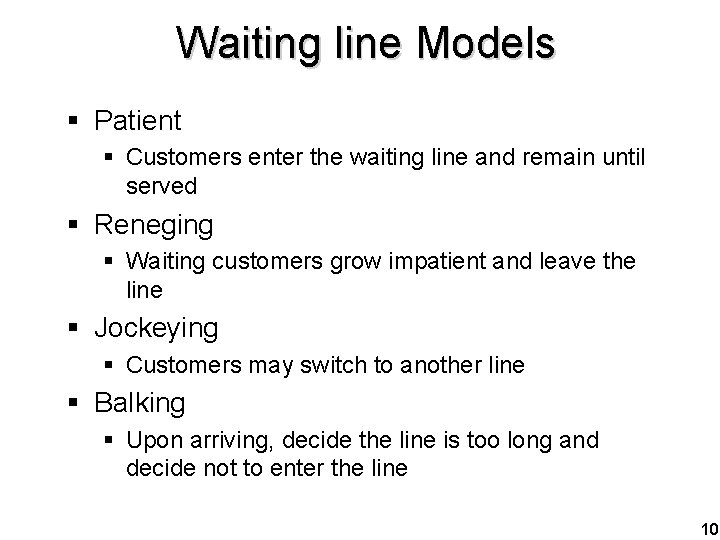
Waiting line Models § Patient § Customers enter the waiting line and remain until served § Reneging § Waiting customers grow impatient and leave the line § Jockeying § Customers may switch to another line § Balking § Upon arriving, decide the line is too long and decide not to enter the line 10
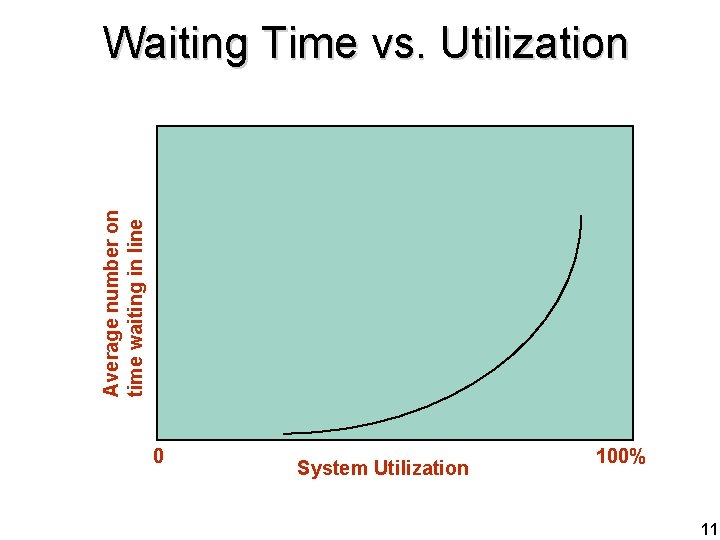
Average number on time waiting in line Waiting Time vs. Utilization 0 System Utilization 100% 11
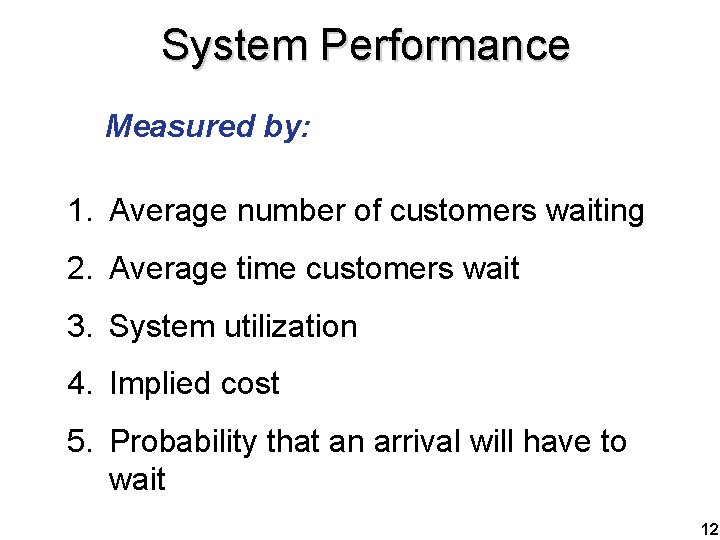
System Performance Measured by: 1. Average number of customers waiting 2. Average time customers wait 3. System utilization 4. Implied cost 5. Probability that an arrival will have to wait 12
Queuing Models: Infinite-Source 1. Single channel, exponential service time 2. Single channel, constant service time 3. Multiple channel, exponential service time 4. Multiple priority service, exponential service time 13
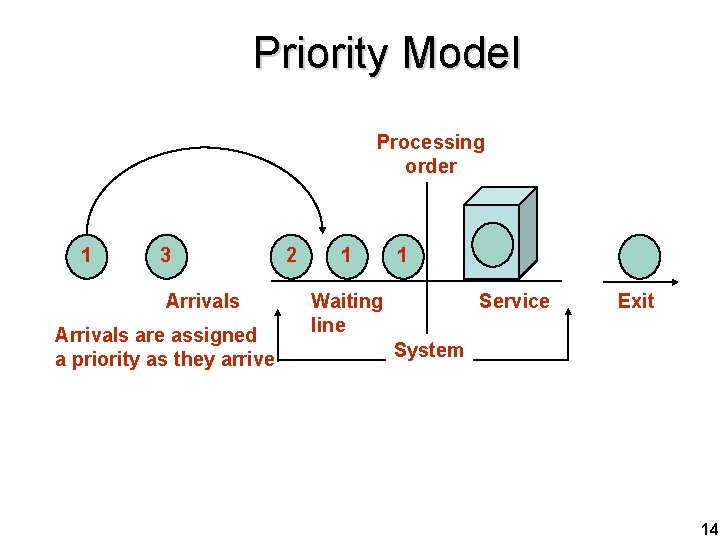
Priority Model Processing order 1 3 Arrivals are assigned a priority as they arrive 2 1 1 Waiting line Service Exit System 14
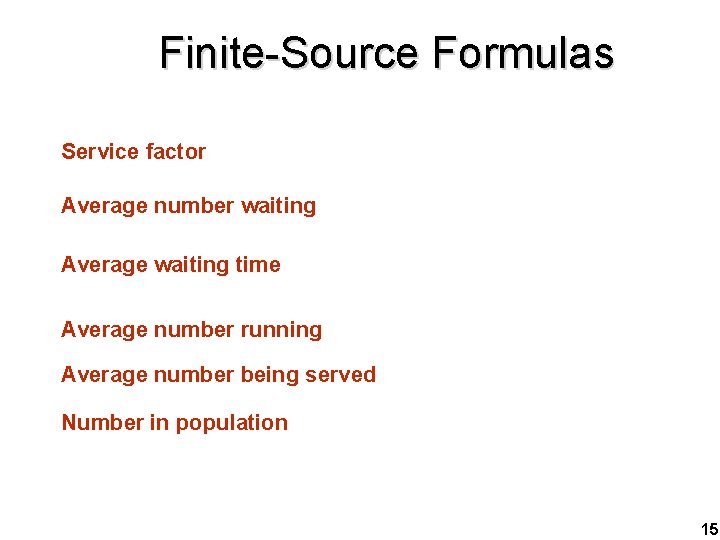
Finite-Source Formulas Service factor Average number waiting Average waiting time Average number running Average number being served Number in population 15
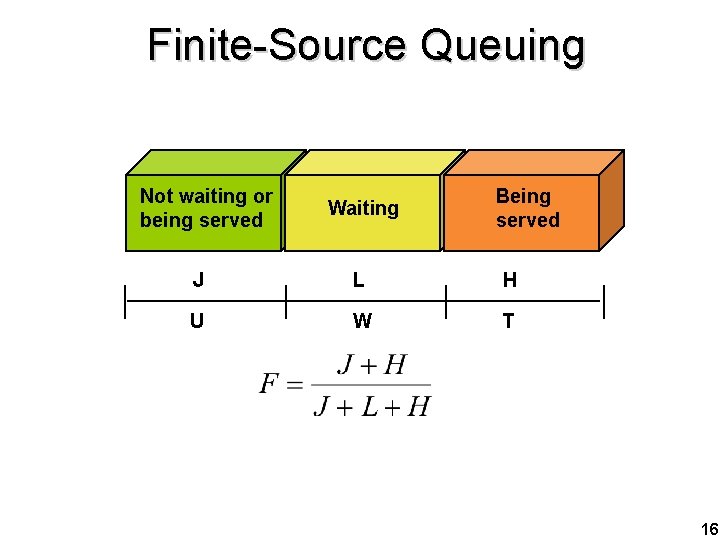
Finite-Source Queuing Not waiting or being served Waiting Being served J L H U W T 16
Other Approaches § Reduce perceived waiting time § Magazines in waiting rooms § Radio/television § In-flight movies § Filling out forms § Derive benefits from waiting § Place impulse items near checkout § Advertise other goods/services 17
- Slides: 17