
Management of traumatic rotator cuff injuries in the
- Slides: 1
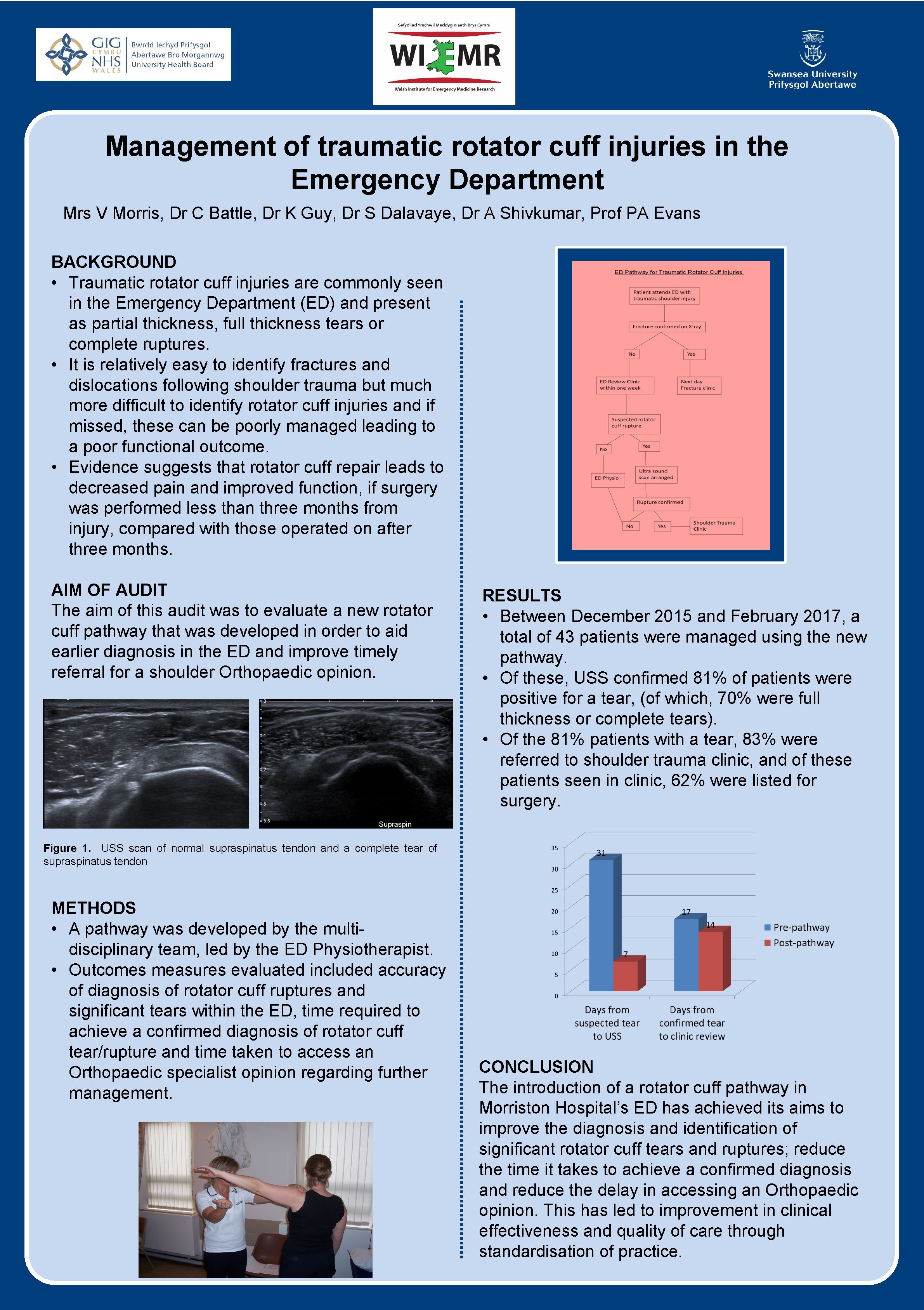
Management of traumatic rotator cuff injuries in the Emergency Introduction: Every poster is different. You may wish to. Department modify elements of the design to suit your needs. Keep the colour scheme and logos to be consistent with the current WCBPS branding /identity. Keep the word count light. Mrs V Morris, Dr C Battle, Dr K Guy, Dr S Dalavaye, Dr A Shivkumar, Prof PA Evans BACKGROUND • Traumatic rotator cuff injuries are commonly seen in the Emergency Department (ED) and present Methods: Here as partial thickness, full thickness tears or complete ruptures. • It is relatively easy to identify fractures and dislocations following shoulder trauma but much more difficult to identify rotator cuff injuries and if missed, these can be poorly managed leading to a poor functional outcome. • Evidence suggests that rotator cuff repair leads to decreased pain and improved function, if surgery was performed less than three months from injury, compared with those operated on after Results: Here three months. AIM OF AUDIT The aim of this audit was to evaluate a new rotator cuff pathway that was developed in order to aid earlier diagnosis in the ED and improve timely referral for a shoulder Orthopaedic opinion. Replace with figure Figure 1. Make sure figures are high resolution. Images taken from the internet could print poorly. Check file size. Zoom into the image and look for pixelation. RESULTS • Between December 2015 and February 2017, a total of 43 patients were managed using the new pathway. • Of these, USS confirmed 81% of patients were positive for a tear, (of which, 70% were full thickness or complete tears). • Of the 81% patients with a tear, 83% were referred to shoulder trauma clinic, and of these patients seen in clinic, 62% were listed for with Replace with surgery. Replace figure Figure 1. USS scan of normal supraspinatus tendon and a complete tear of supraspinatus tendon Figure 2. Make sure figures are high resolution. Images taken from the METHODS internet could print poorly. Check Figure 3. Make sure figures are high size. Zoom intodeveloped the image and • file A pathway was by the multiresolution. Images taken from the look for pixelation. disciplinary team, led by the ED Physiotherapist. internet could print poorly. Check • Outcomes measures evaluated included accuracy file size. Zoom into the image and look for pixelation. of diagnosis of rotator cuff ruptures and significant tears within the ED, time required to achieve a confirmed diagnosis of rotator cuff Conclusion: Here tear/rupture and time taken to access an Orthopaedic specialist opinion regarding further management. Figure 4. Make sure figures are high resolution. Images taken from the internet could print poorly. Check file size. Zoom into the image and look for pixelation. CONCLUSION The introduction of a rotator cuff pathway in Morriston Hospital’s ED has achieved its aims to improve the diagnosis and identification of significant rotator cuff tears and ruptures; reduce the time it takes to achieve a confirmed diagnosis and reduce the delay in accessing an Orthopaedic opinion. This has led to improvement in clinical effectiveness and quality of care through standardisation of practice. Acknowledgements: