
Management of the Reniform Nematode in Cotton Kathy


- Slides: 73
Management of the Reniform Nematode in Cotton Kathy Lawrence, Associate Professor Plant Pathology Stan Usery, Jarrod Jones, Amy Dismukes and Taylor Boozer, Graduate research assistants Bill Gazaway, Dale Monks, Charlie Burmester, James Akridge, Don Moore, Yucheng Feng, Bob Goodman, Andy Price
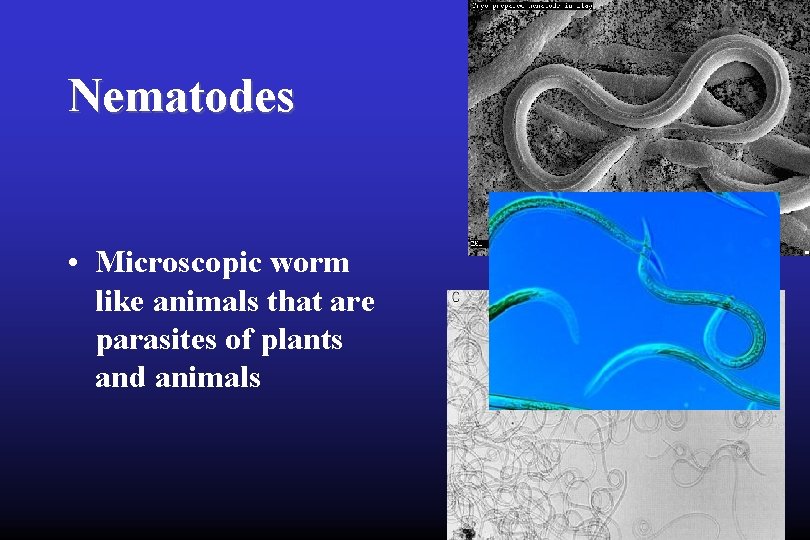
Nematodes • Microscopic worm like animals that are parasites of plants and animals
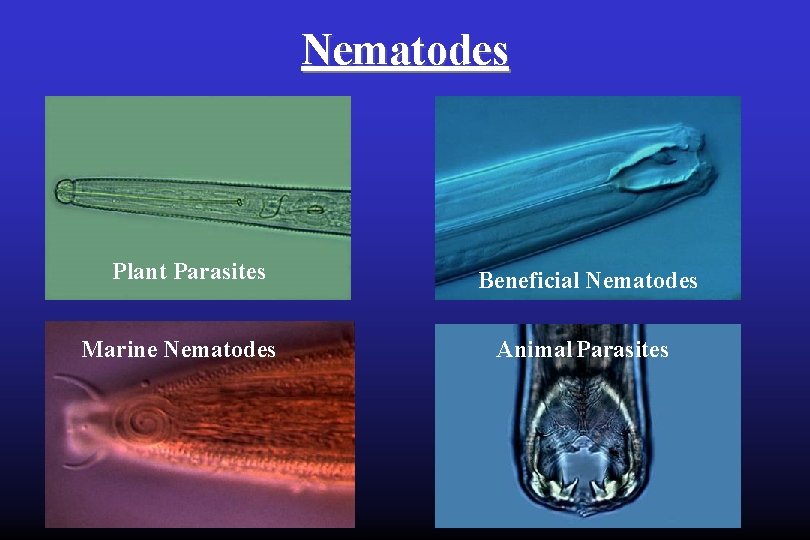
Nematodes Plant Parasites Marine Nematodes Beneficial Nematodes Animal Parasites
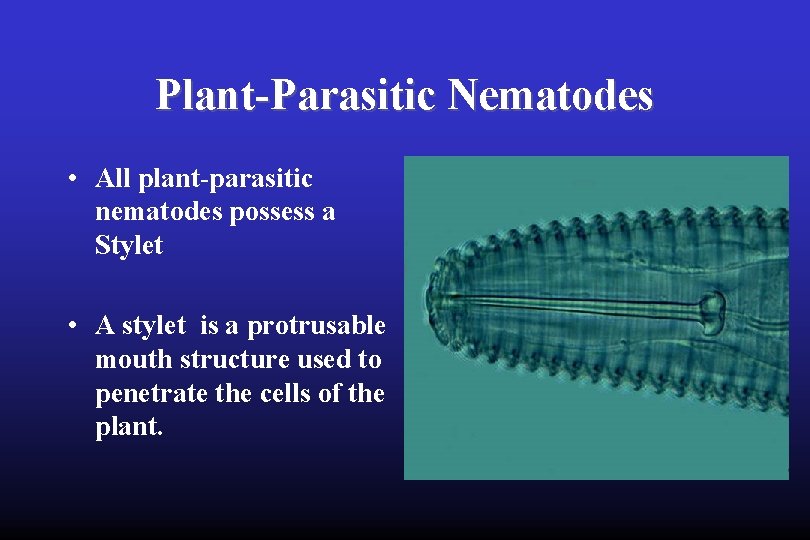
Plant-Parasitic Nematodes • All plant-parasitic nematodes possess a Stylet • A stylet is a protrusable mouth structure used to penetrate the cells of the plant.
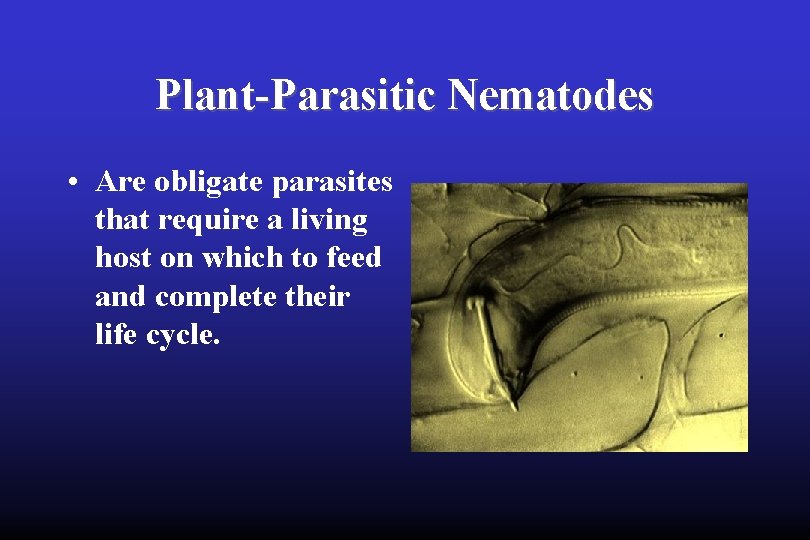
Plant-Parasitic Nematodes • Are obligate parasites that require a living host on which to feed and complete their life cycle.
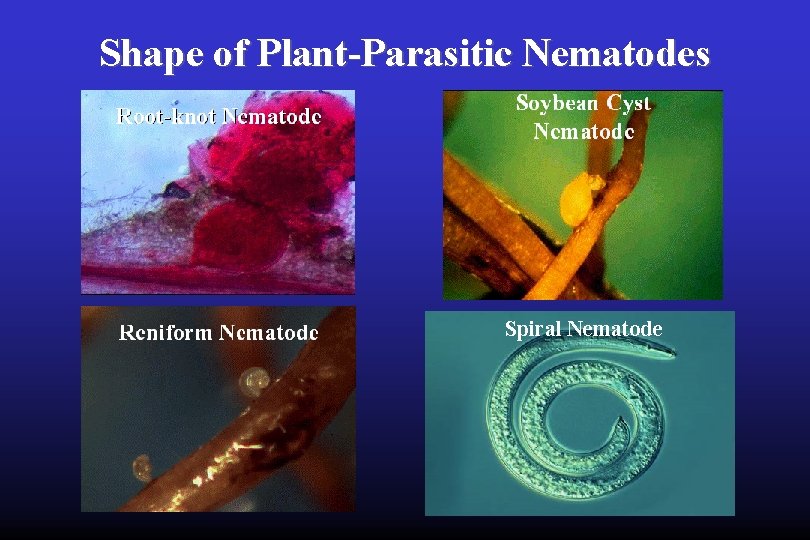
Shape of Plant-Parasitic Nematodes Spiral Nematode
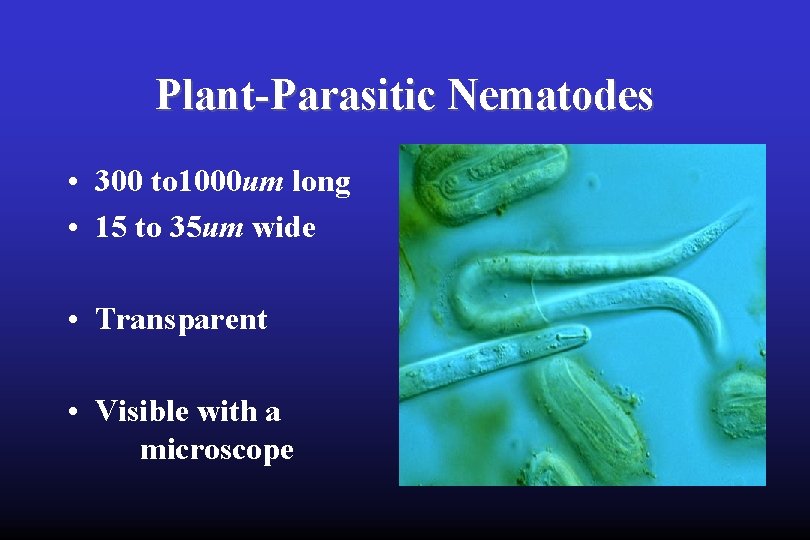
Plant-Parasitic Nematodes • 300 to 1000 um long • 15 to 35 um wide • Transparent • Visible with a microscope
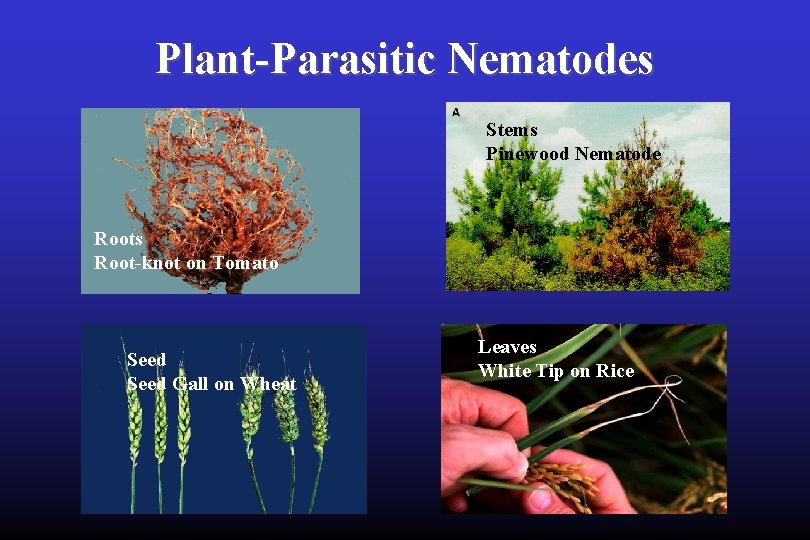
Plant-Parasitic Nematodes Stems Pinewood Nematode Roots Root-knot on Tomato Seed Gall on Wheat Leaves White Tip on Rice
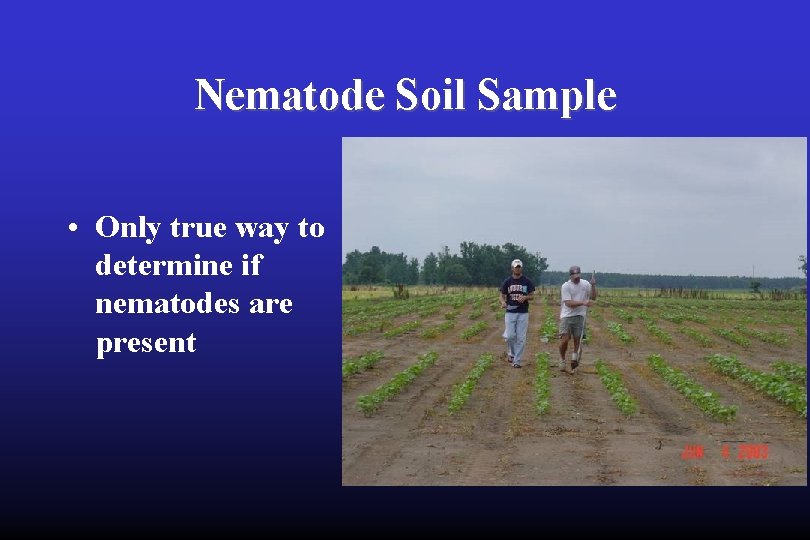
Nematode Soil Sample • Only true way to determine if nematodes are present
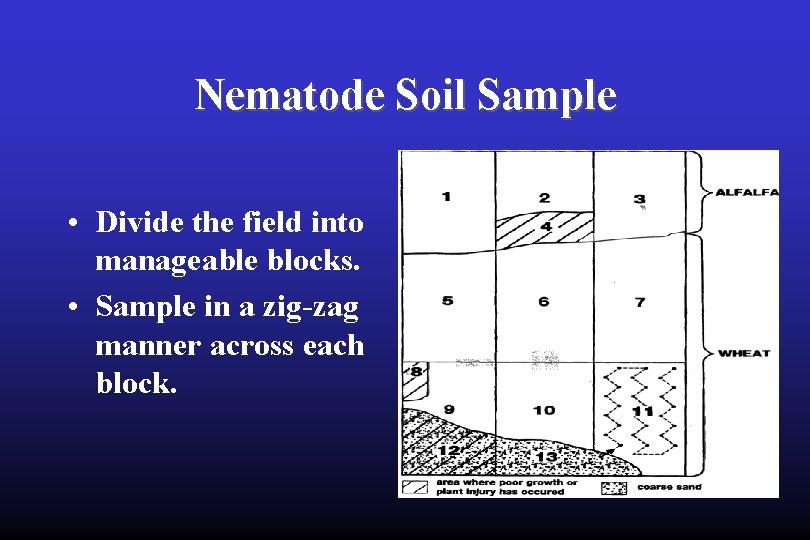
Nematode Soil Sample • Divide the field into manageable blocks. • Sample in a zig-zag manner across each block.
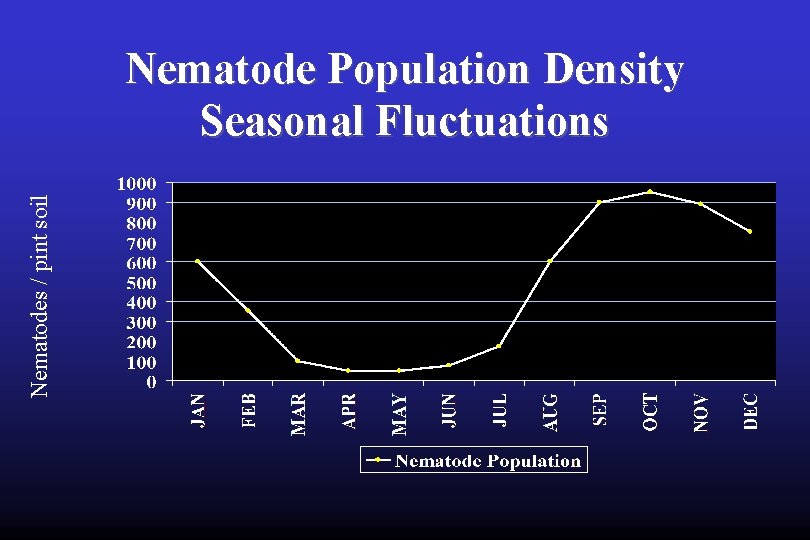
Nematodes / pint soil Nematode Population Density Seasonal Fluctuations
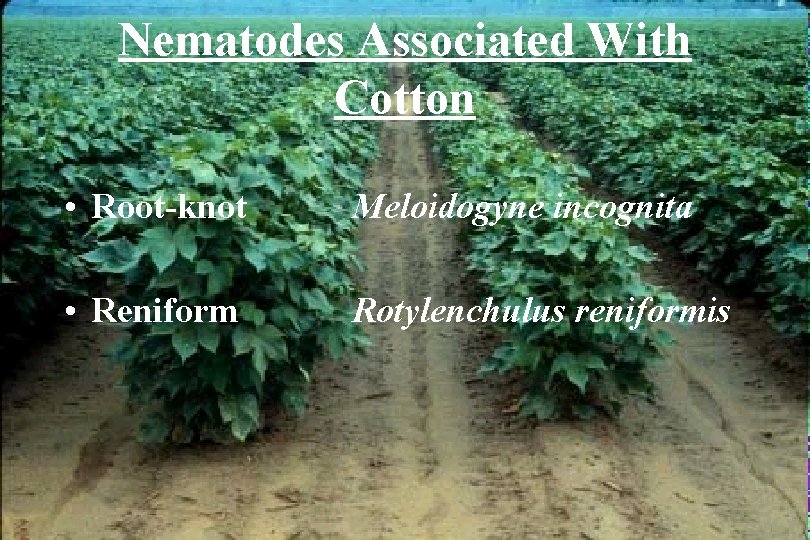
Nematodes Associated With Cotton • Root-knot Meloidogyne incognita • Reniform Rotylenchulus reniformis
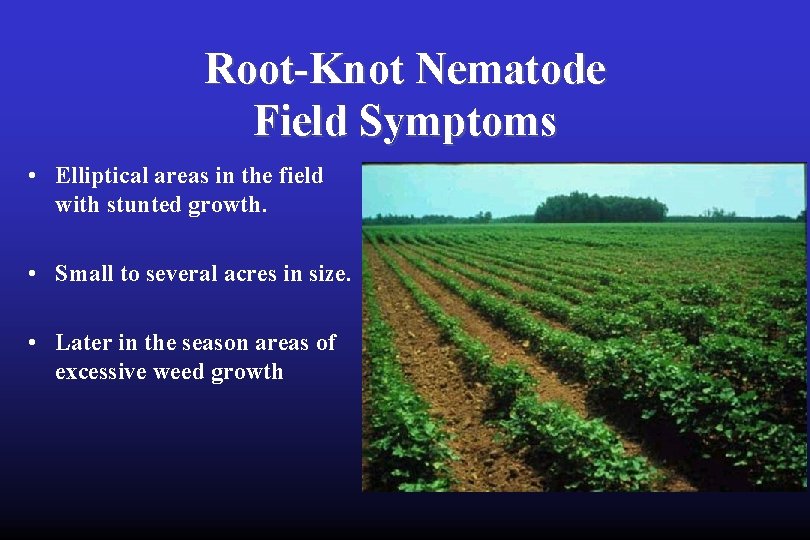
Root-Knot Nematode Field Symptoms • Elliptical areas in the field with stunted growth. • Small to several acres in size. • Later in the season areas of excessive weed growth
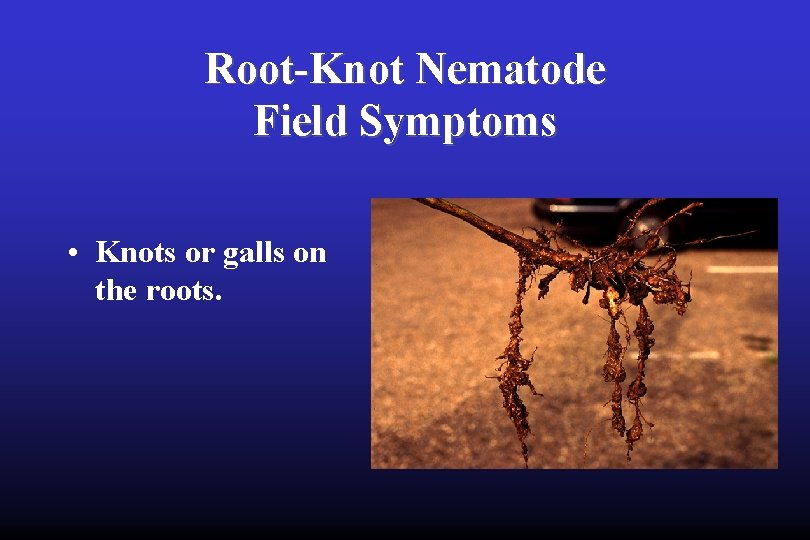
Root-Knot Nematode Field Symptoms • Knots or galls on the roots.
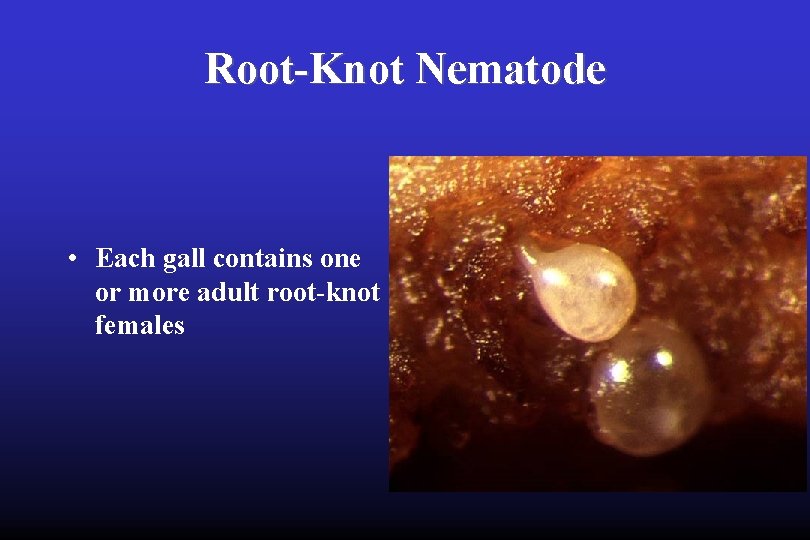
Root-Knot Nematode • Each gall contains one or more adult root-knot females
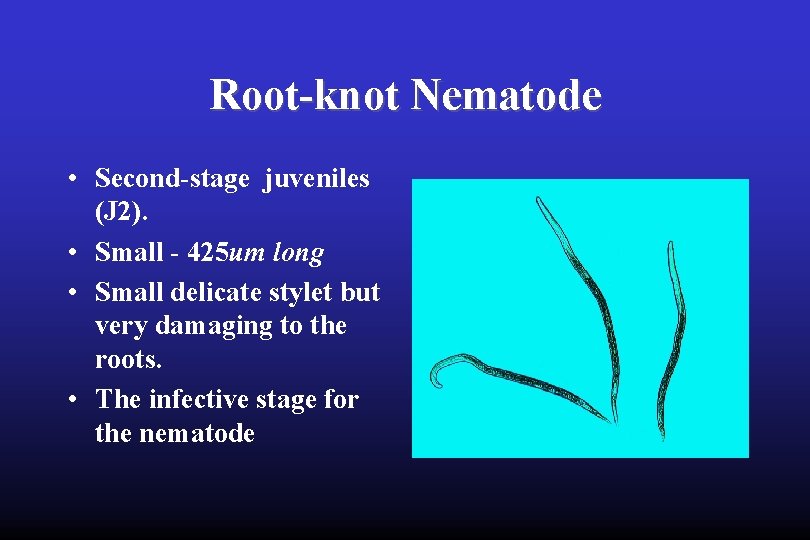
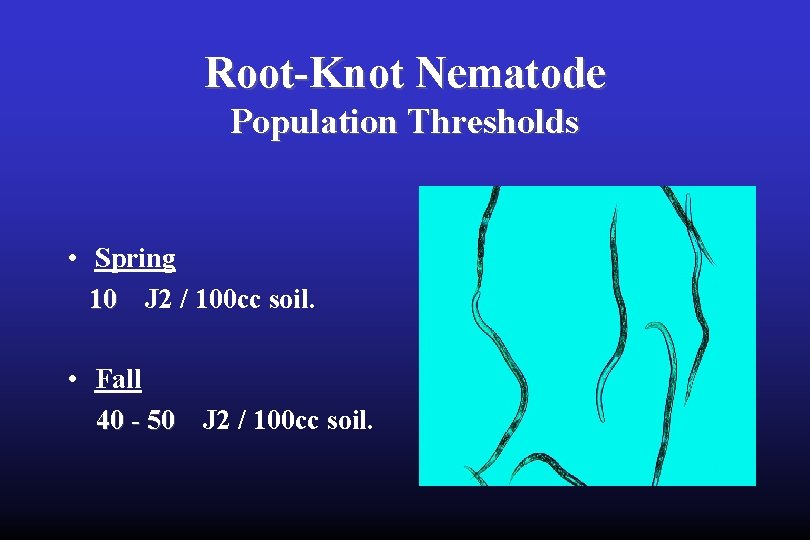
Root-knot Nematode • Second-stage juveniles (J 2). • Small - 425 um long • Small delicate stylet but very damaging to the roots. • The infective stage for the nematode
Root-Knot Nematode Population Thresholds • Spring 10 J 2 / 100 cc soil. • Fall 40 - 50 J 2 / 100 cc soil.
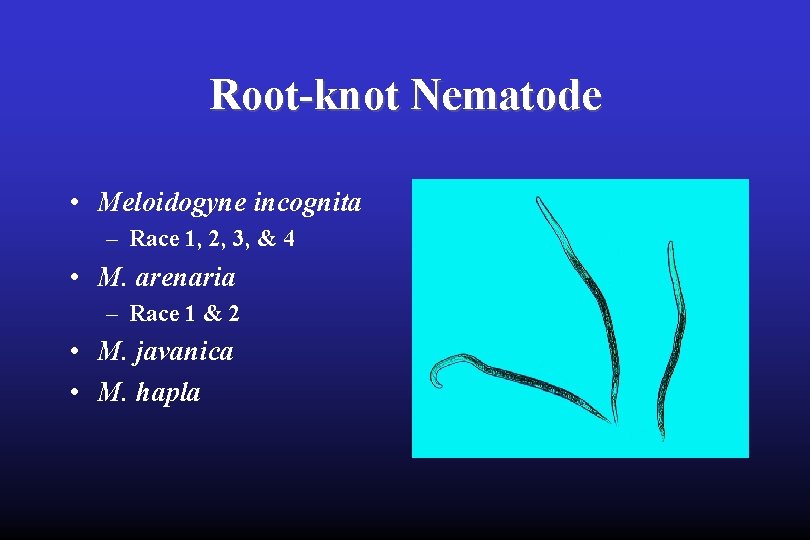
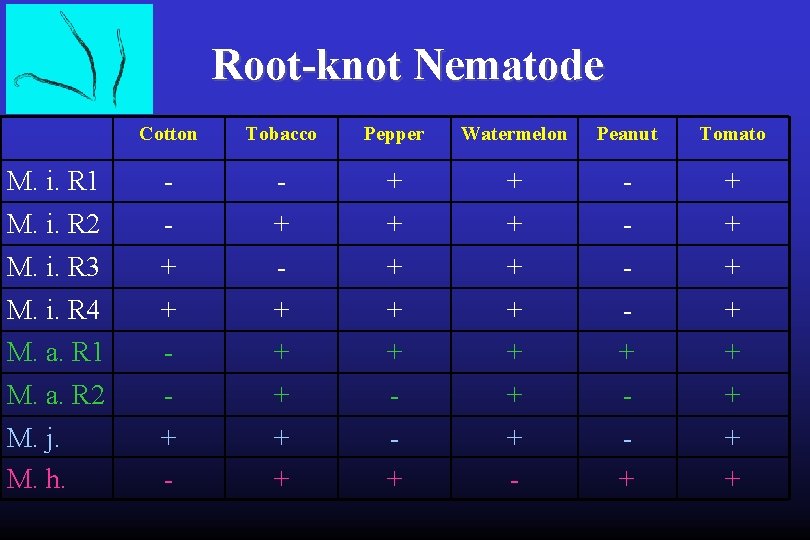
Root-knot Nematode • Meloidogyne incognita – Race 1, 2, 3, & 4 • M. arenaria – Race 1 & 2 • M. javanica • M. hapla
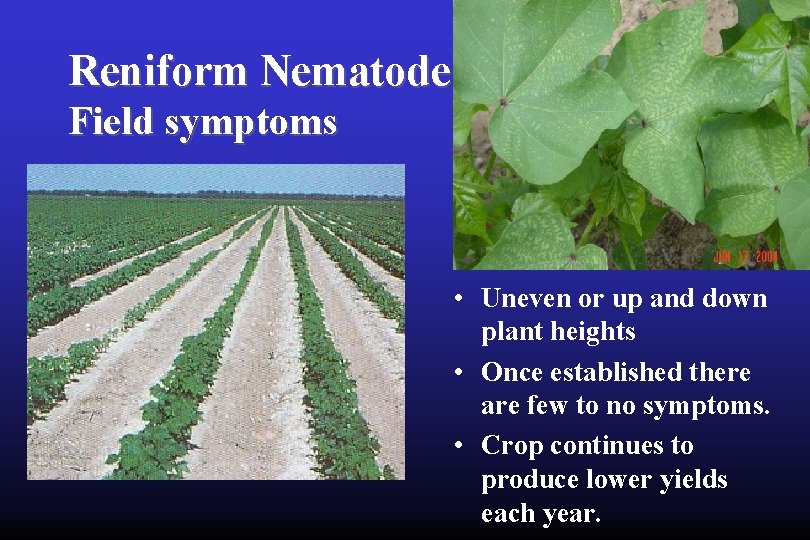
Reniform Nematode Field symptoms • Uneven or up and down plant heights • Once established there are few to no symptoms. • Crop continues to produce lower yields each year.
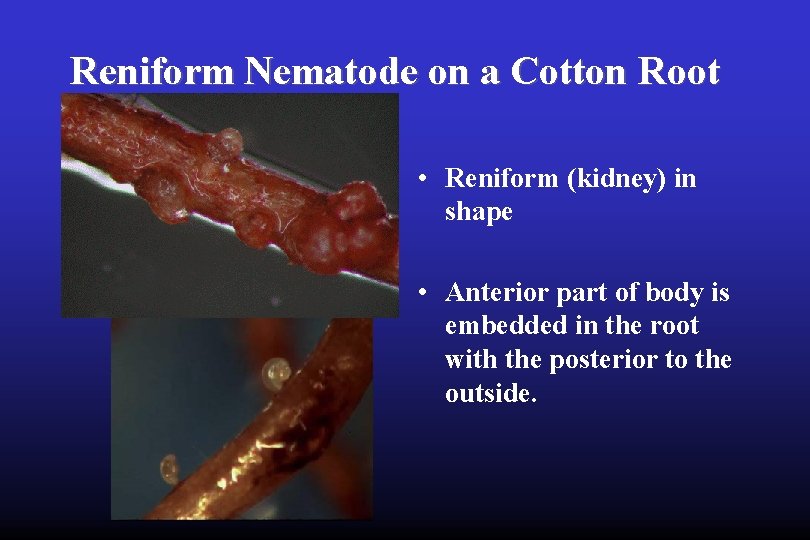
Reniform Nematode on a Cotton Root • Reniform (kidney) in shape • Anterior part of body is embedded in the root with the posterior to the outside.
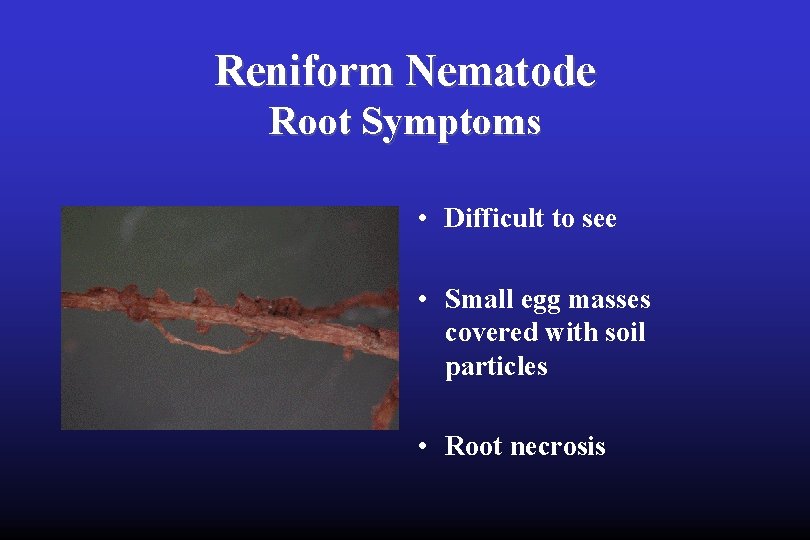
Reniform Nematode Root Symptoms • Difficult to see • Small egg masses covered with soil particles • Root necrosis
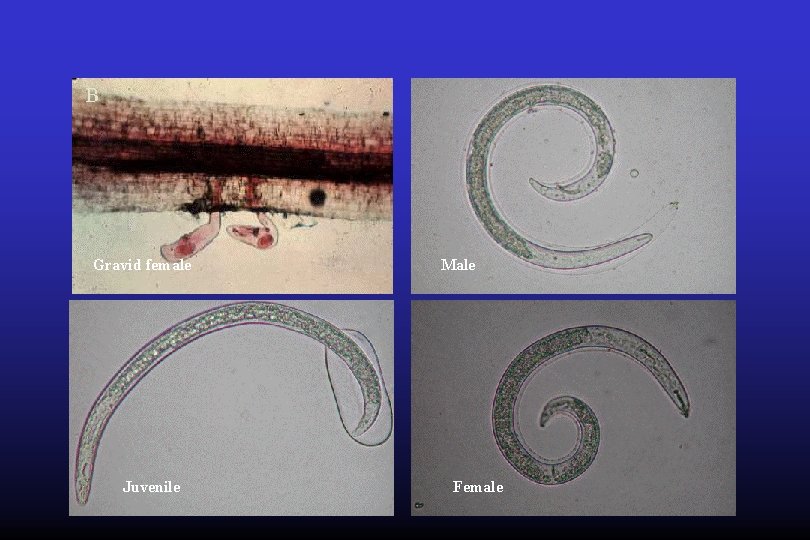
Gravid female Juvenile Male Female
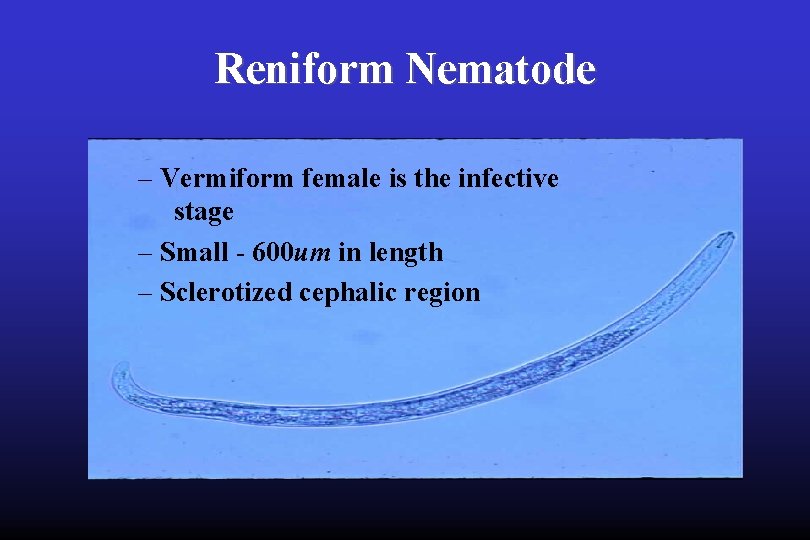
Reniform Nematode – Vermiform female is the infective stage – Small - 600 um in length – Sclerotized cephalic region
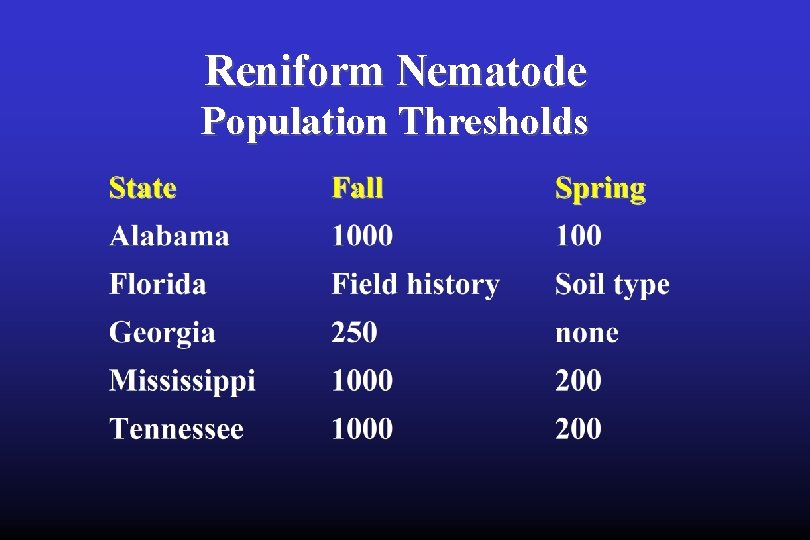
Reniform Nematode Population Thresholds
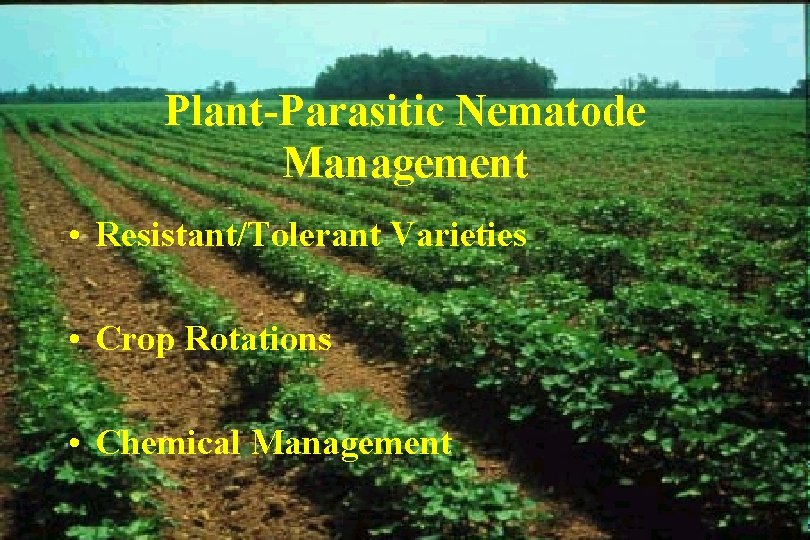
Plant-Parasitic Nematode Management • Resistant/Tolerant Varieties • Crop Rotations • Chemical Management
Resistant Varieties Root-knot - Cotton – ST 5599 (resistant/tolerant) Soybean – resistance available Reniform - Cotton - no resistance Soybean - resistance available
Resistance and Tolerance • Resistance: – Resistance is the effect of the cotton host on nematode reproduction: a completely resistant plant allows no nematode reproduction. • Tolerance: – Tolerance is the amount of cotton host injury: a tolerant plant suffers little yield loss when heavily infected with nematodes.
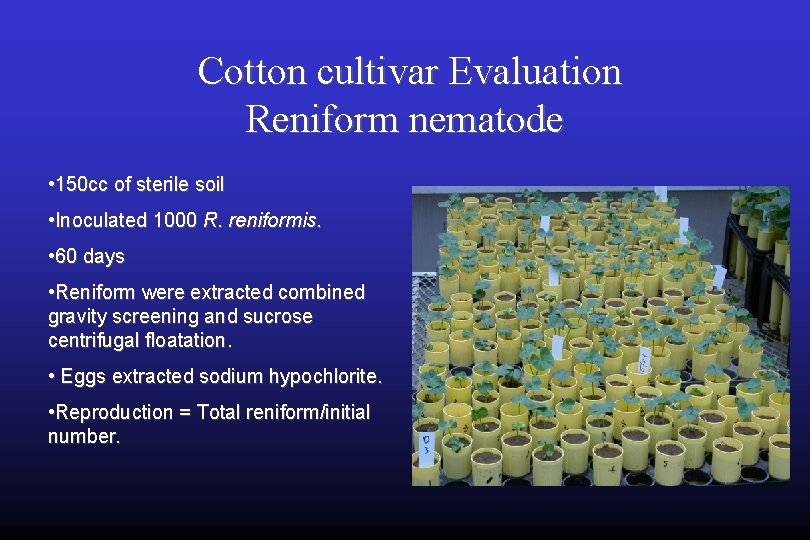
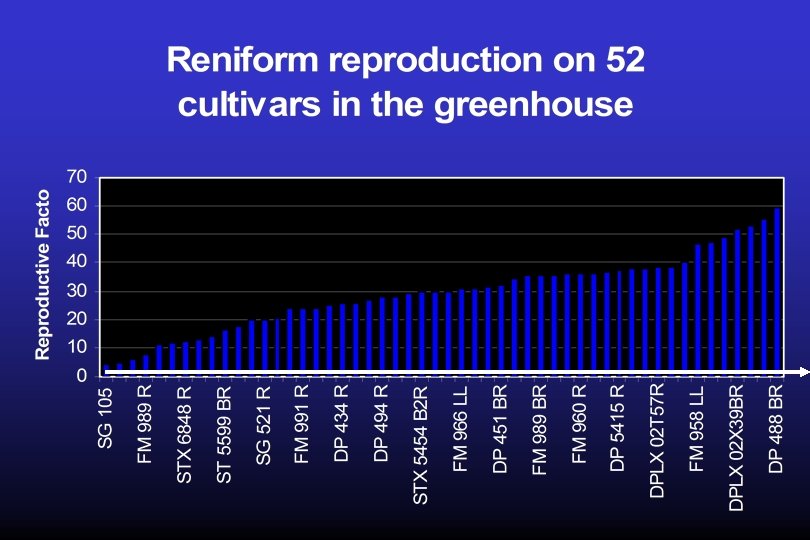
Cotton cultivar Evaluation Reniform nematode • 150 cc of sterile soil • Inoculated 1000 R. reniformis. • 60 days • Reniform were extracted combined gravity screening and sucrose centrifugal floatation. • Eggs extracted sodium hypochlorite. • Reproduction = Total reniform/initial number.
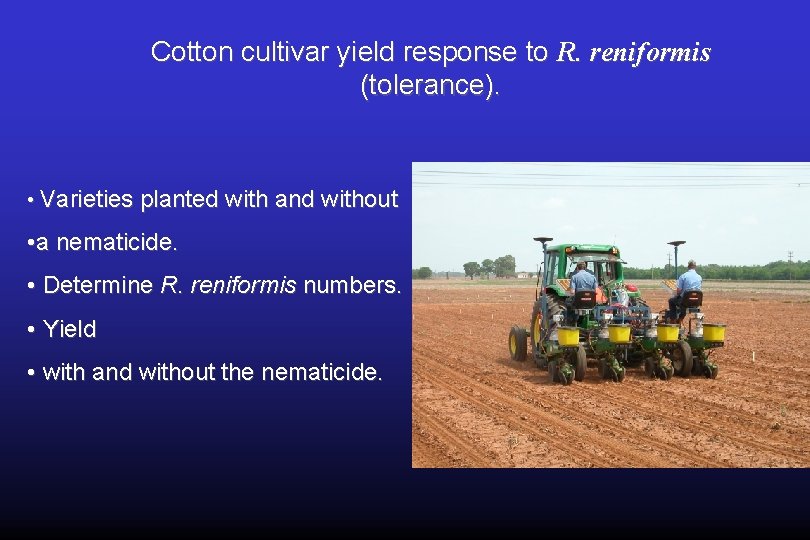
Cotton cultivar yield response to R. reniformis (tolerance). • Varieties planted with and without • a nematicide. • Determine R. reniformis numbers. • Yield • with and without the nematicide.
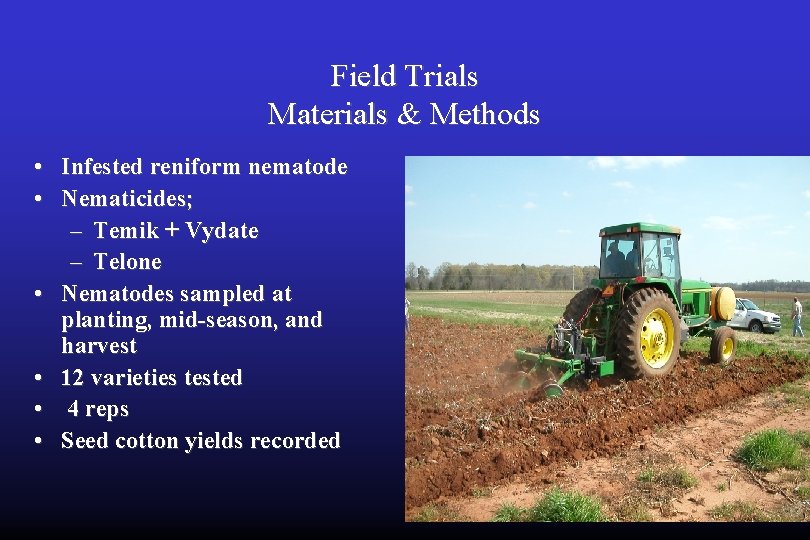
Field Trials Materials & Methods • Infested reniform nematode • Nematicides; – Temik + Vydate – Telone • Nematodes sampled at planting, mid-season, and harvest • 12 varieties tested • 4 reps • Seed cotton yields recorded
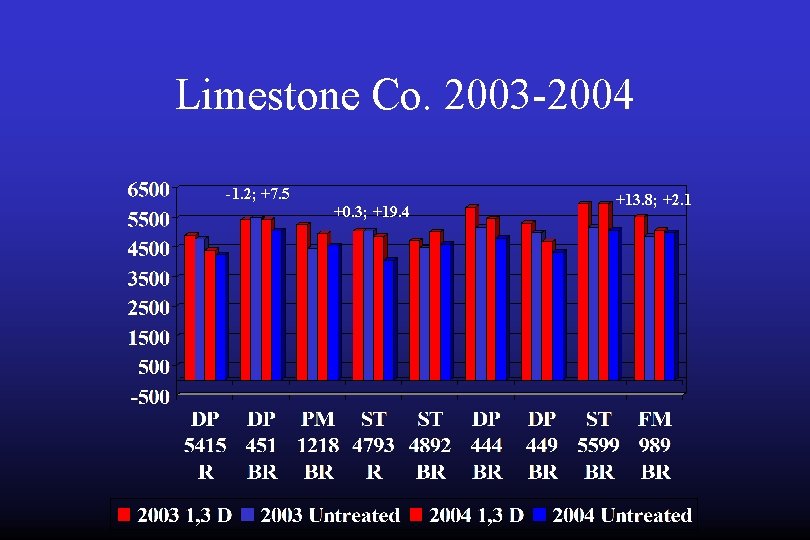
Limestone Co. 2003 -2004 -1. 2; +7. 5 +0. 3; +19. 4 +13. 8; +2. 1
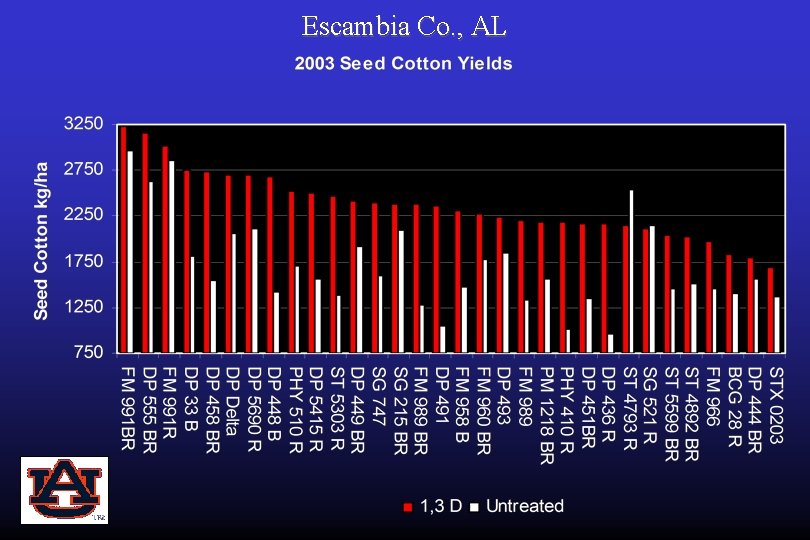
Escambia Co. , AL
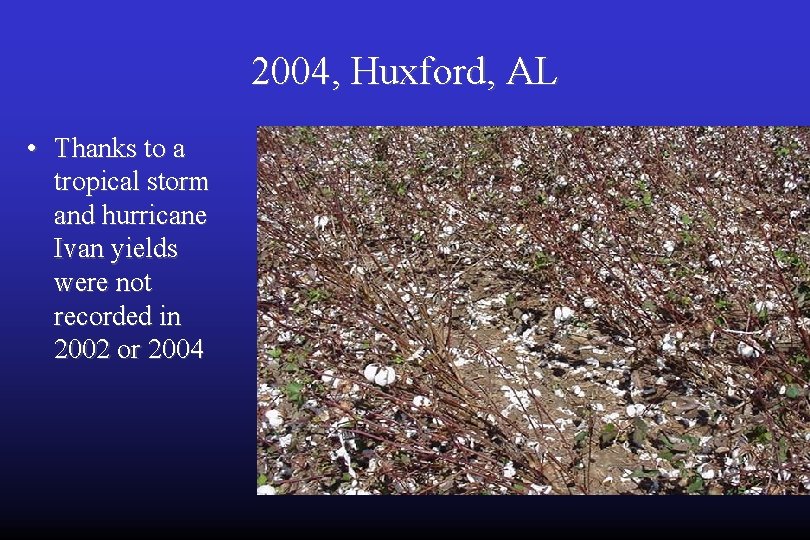
2004, Huxford, AL • Thanks to a tropical storm and hurricane Ivan yields were not recorded in 2002 or 2004
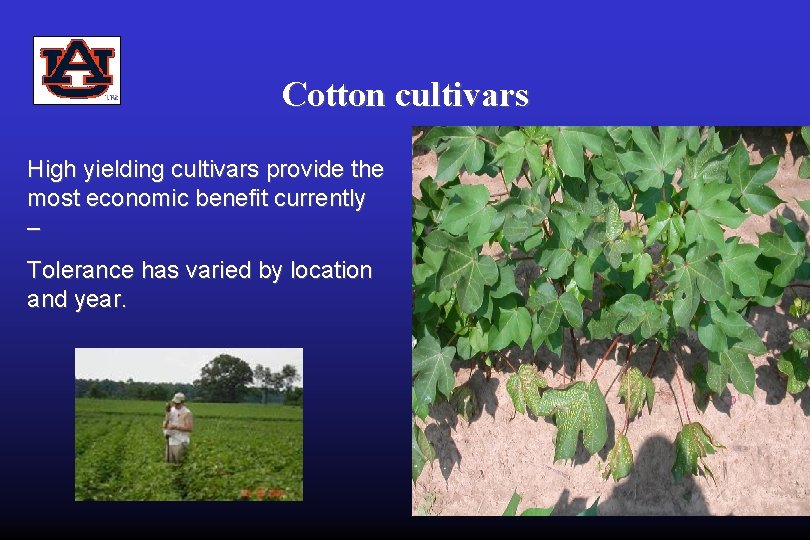
Cotton cultivars High yielding cultivars provide the most economic benefit currently – Tolerance has varied by location and year.
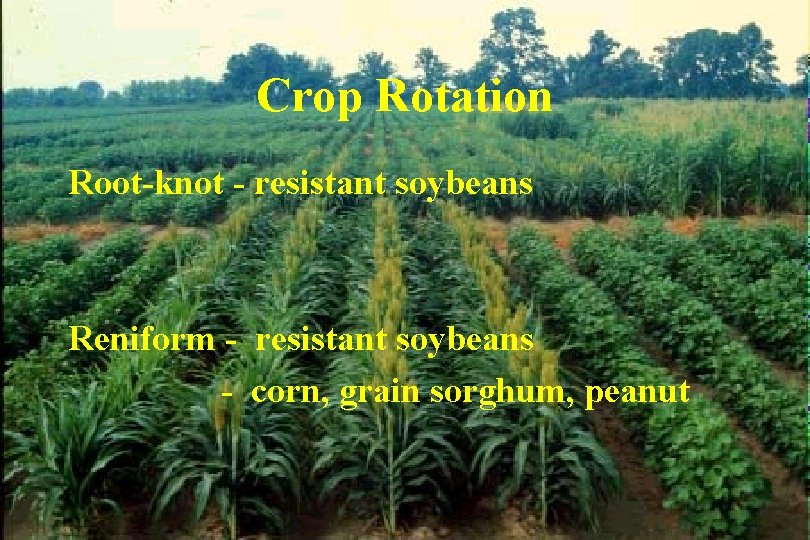
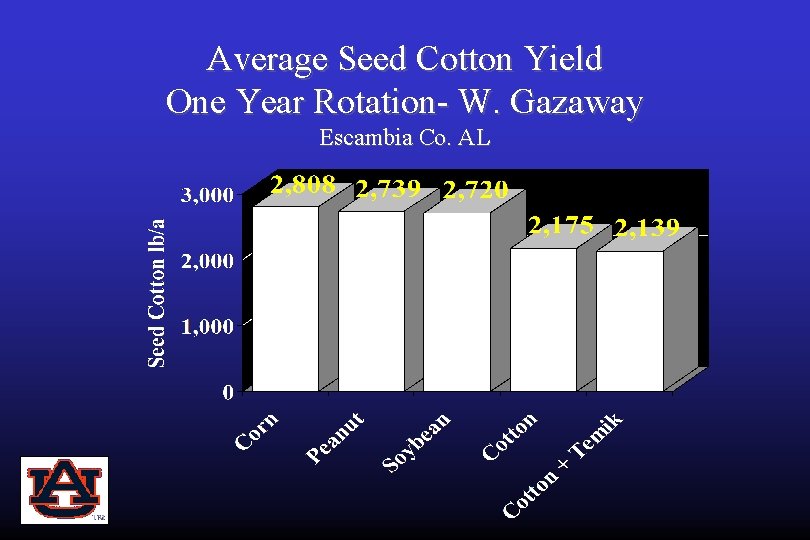
Crop Rotation Root-knot - resistant soybeans Reniform - resistant soybeans - corn, grain sorghum, peanut
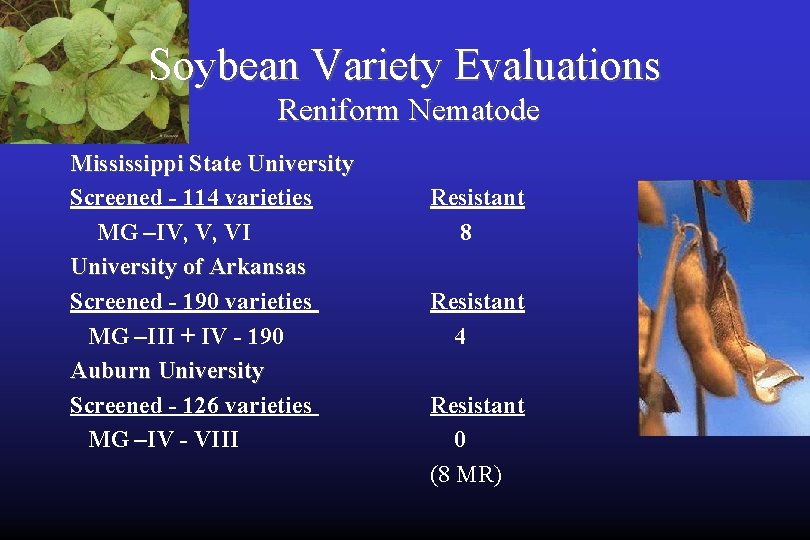
Soybean Variety Evaluations Reniform Nematode Mississippi State University Screened - 114 varieties MG –IV, V, VI University of Arkansas Screened - 190 varieties MG –III + IV - 190 Auburn University Screened - 126 varieties MG –IV - VIII Resistant 8 Resistant 4 Resistant 0 (8 MR)
Average Seed Cotton Yield One Year Rotation- W. Gazaway Escambia Co. AL
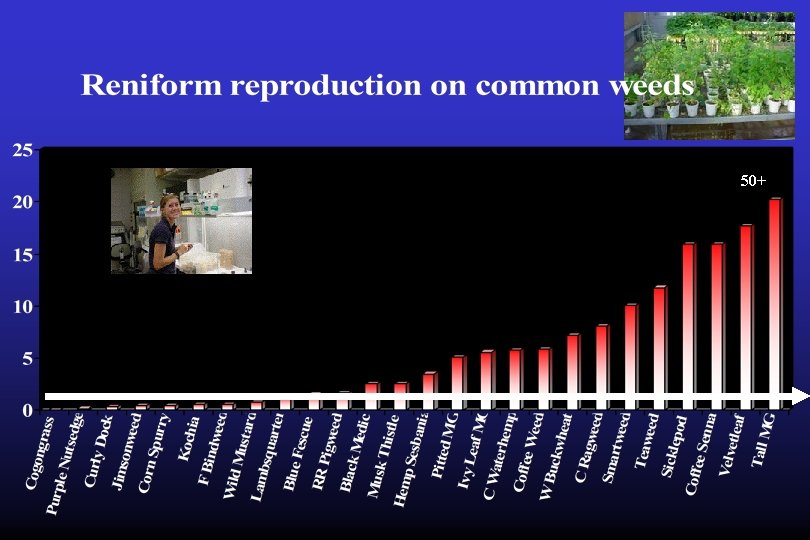
50+
Chemical Management
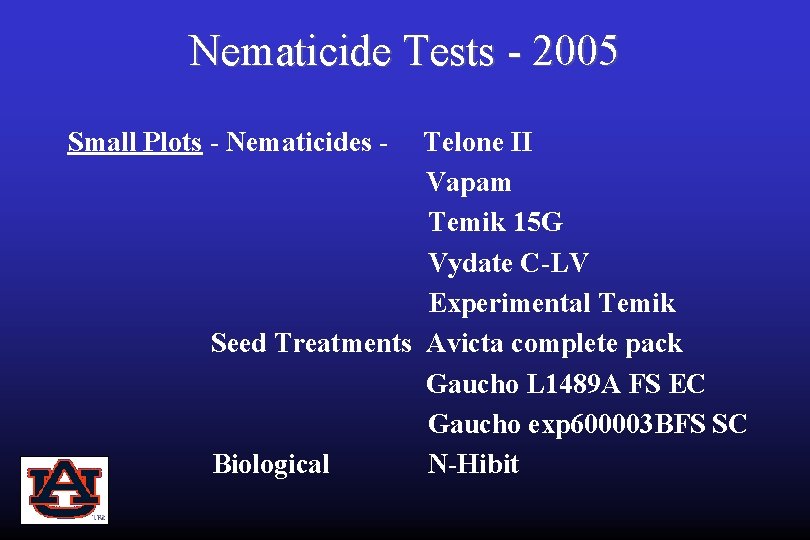
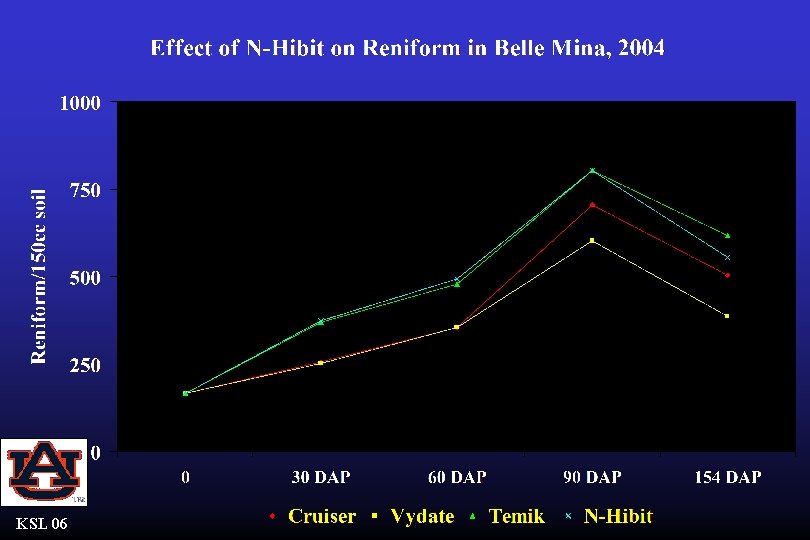
Nematicide Tests - 2005 Small Plots - Nematicides - Telone II Vapam Temik 15 G Vydate C-LV Experimental Temik Seed Treatments Avicta complete pack Gaucho L 1489 A FS EC Gaucho exp 600003 BFS SC Biological N-Hibit
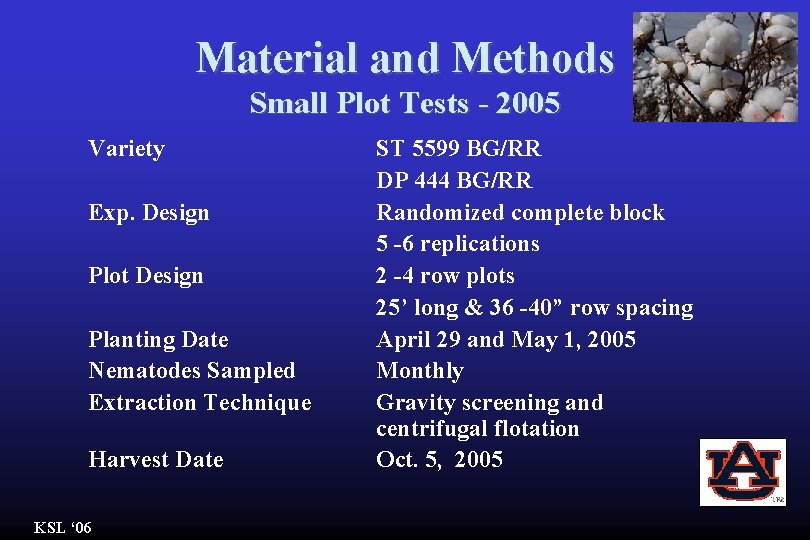
Material and Methods Small Plot Tests - 2005 Variety Exp. Design Plot Design Planting Date Nematodes Sampled Extraction Technique Harvest Date KSL ‘ 06 ST 5599 BG/RR DP 444 BG/RR Randomized complete block 5 -6 replications 2 -4 row plots 25’ long & 36 -40” row spacing April 29 and May 1, 2005 Monthly Gravity screening and centrifugal flotation Oct. 5, 2005
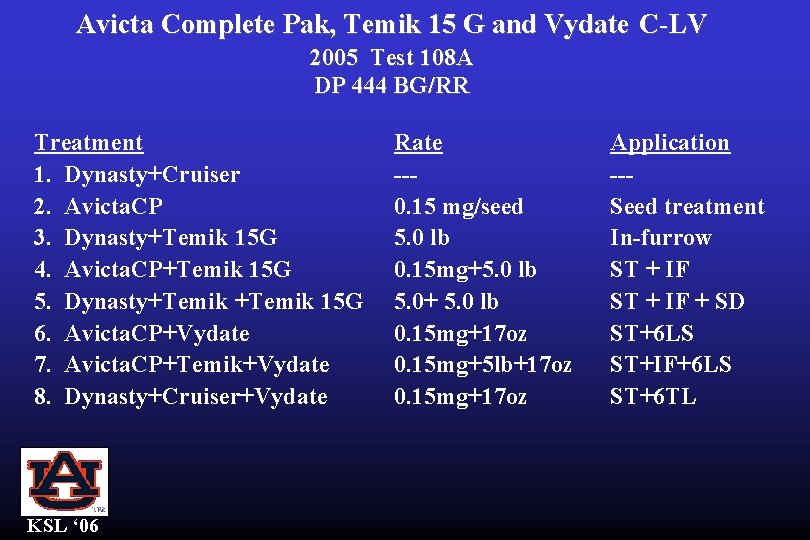
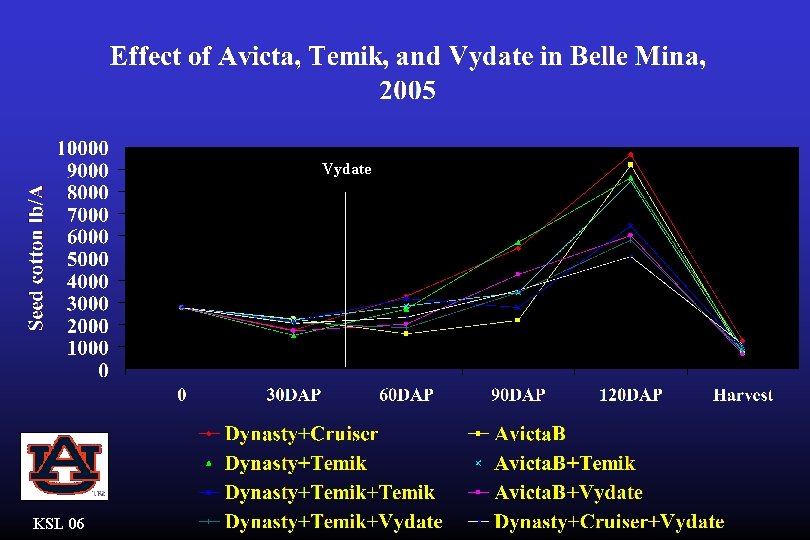
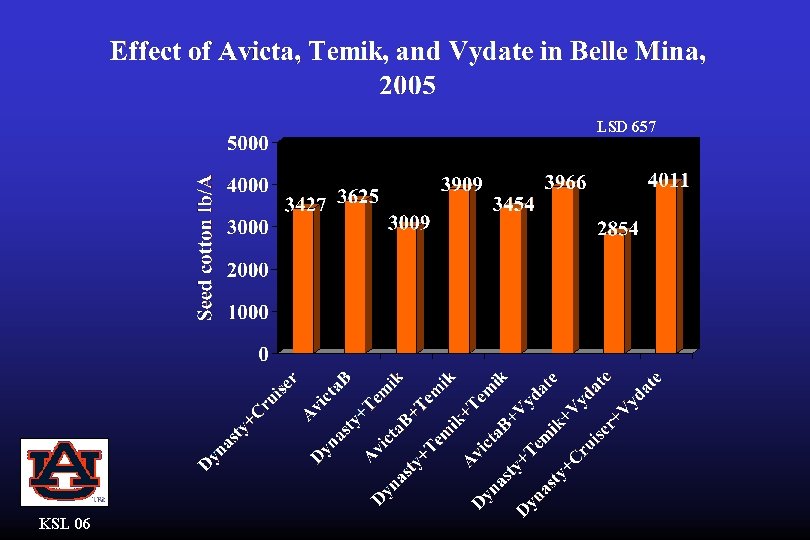
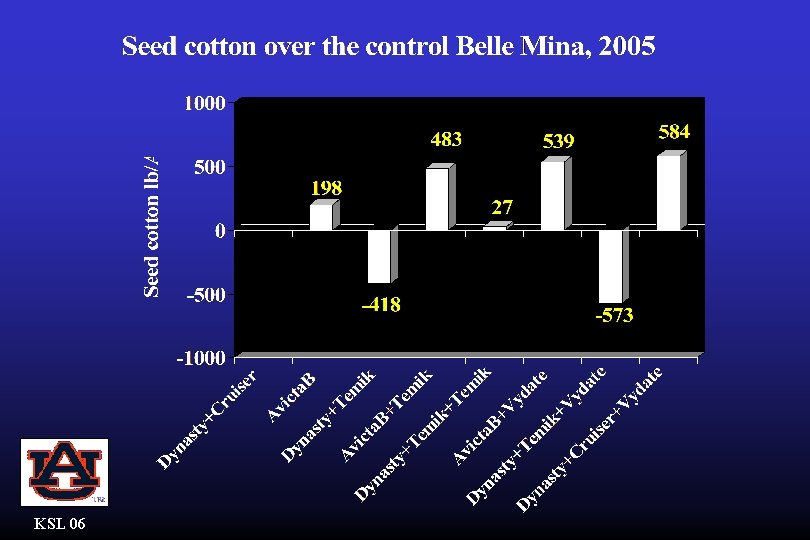
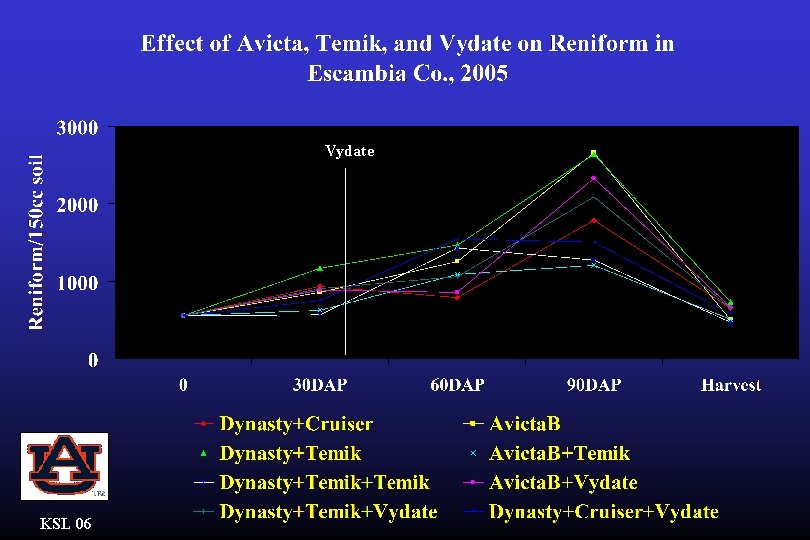
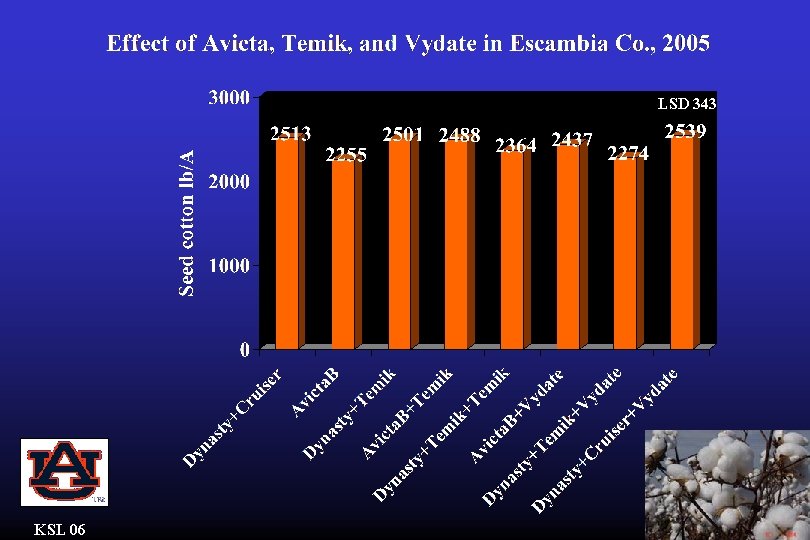
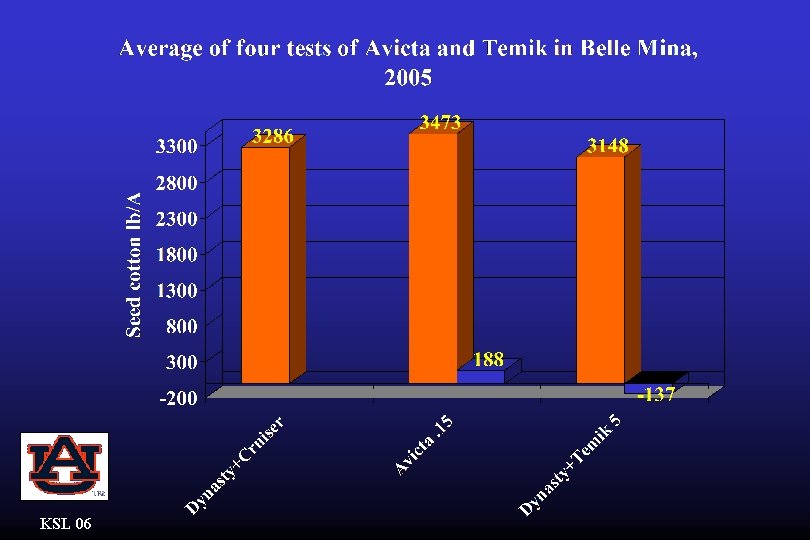
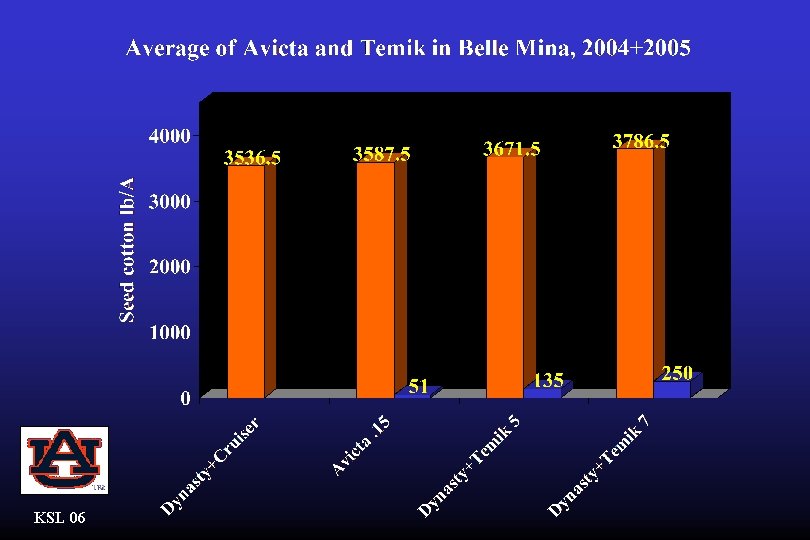
Avicta Complete Pak, Temik 15 G and Vydate C-LV 2005 Test 108 A DP 444 BG/RR Treatment 1. Dynasty+Cruiser 2. Avicta. CP 3. Dynasty+Temik 15 G 4. Avicta. CP+Temik 15 G 5. Dynasty+Temik 15 G 6. Avicta. CP+Vydate 7. Avicta. CP+Temik+Vydate 8. Dynasty+Cruiser+Vydate KSL ‘ 06 Rate --0. 15 mg/seed 5. 0 lb 0. 15 mg+5. 0 lb 5. 0+ 5. 0 lb 0. 15 mg+17 oz 0. 15 mg+5 lb+17 oz 0. 15 mg+17 oz Application --Seed treatment In-furrow ST + IF + SD ST+6 LS ST+IF+6 LS ST+6 TL
Vydate KSL 06
LSD 657 KSL 06
KSL 06
Vydate KSL 06
LSD 343 KSL 06
KSL 06
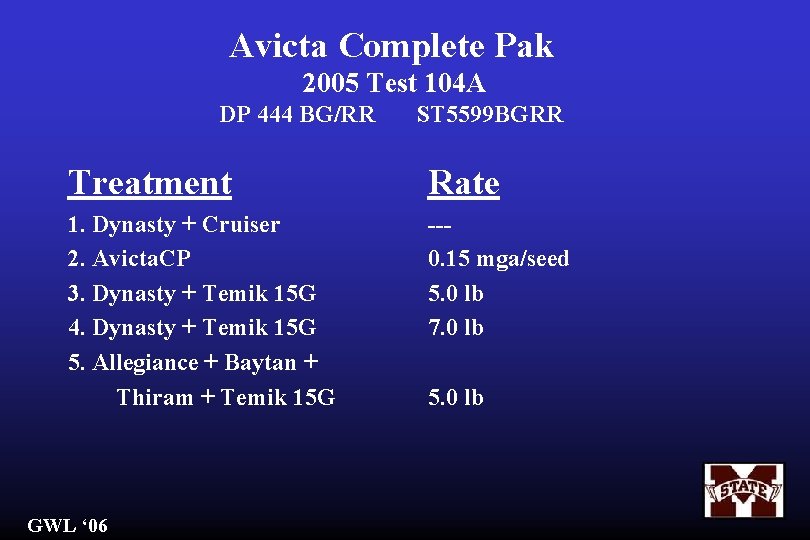
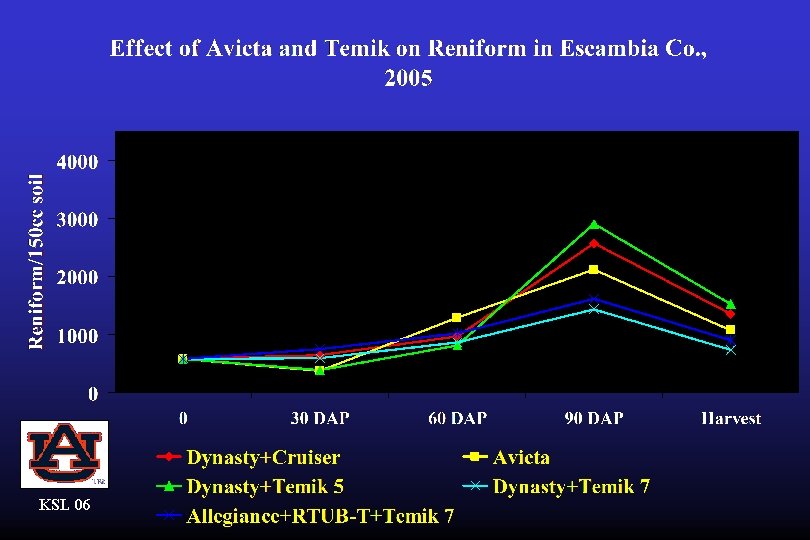
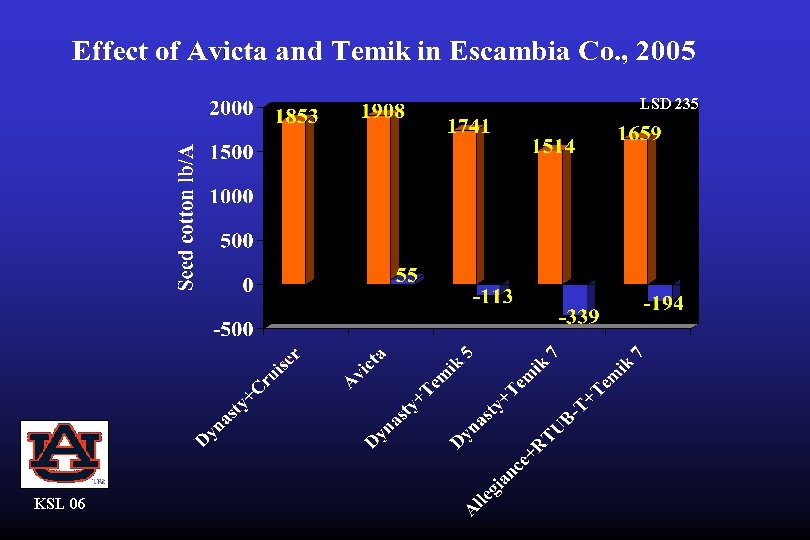
Avicta Complete Pak 2005 Test 104 A DP 444 BG/RR ST 5599 BGRR Treatment Rate 1. Dynasty + Cruiser 2. Avicta. CP 3. Dynasty + Temik 15 G 4. Dynasty + Temik 15 G 5. Allegiance + Baytan + Thiram + Temik 15 G --0. 15 mga/seed 5. 0 lb 7. 0 lb GWL ‘ 06 5. 0 lb
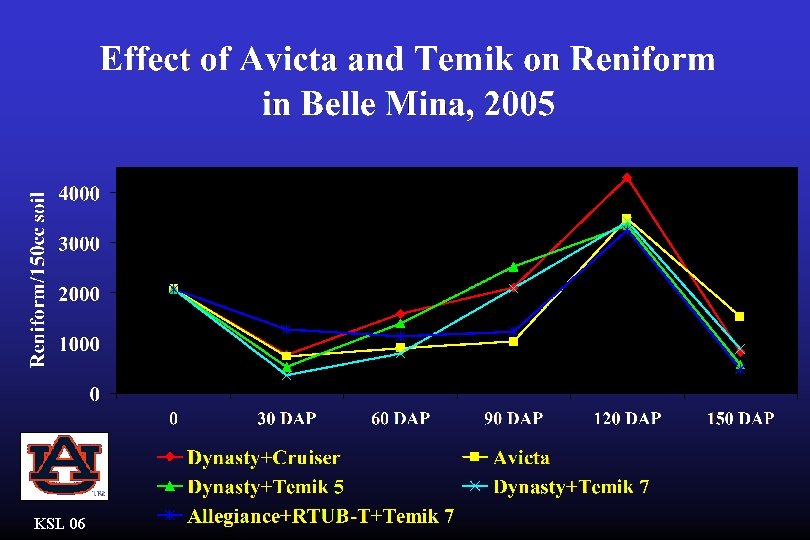
KSL 06
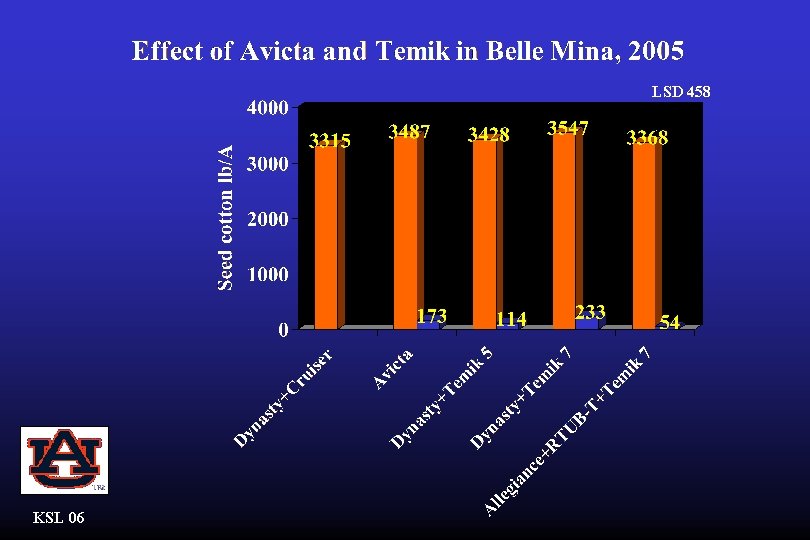
LSD 458 KSL 06
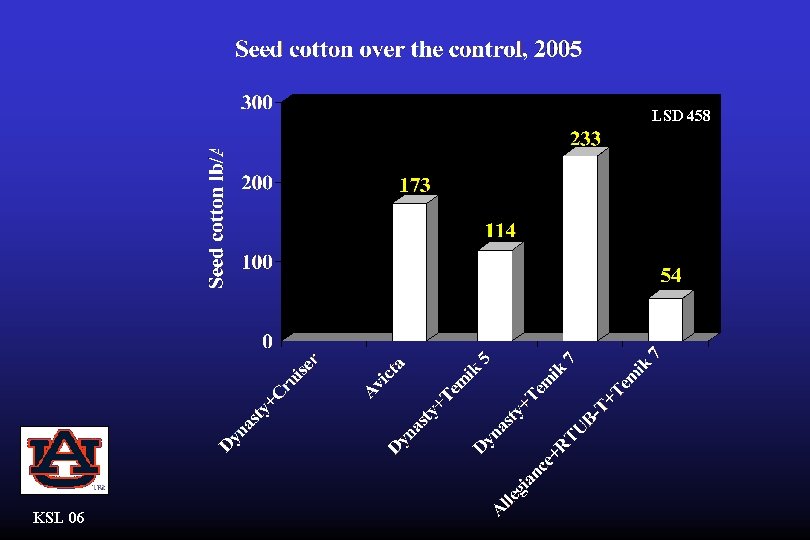
LSD 458 KSL 06
KSL 06
KSL 06
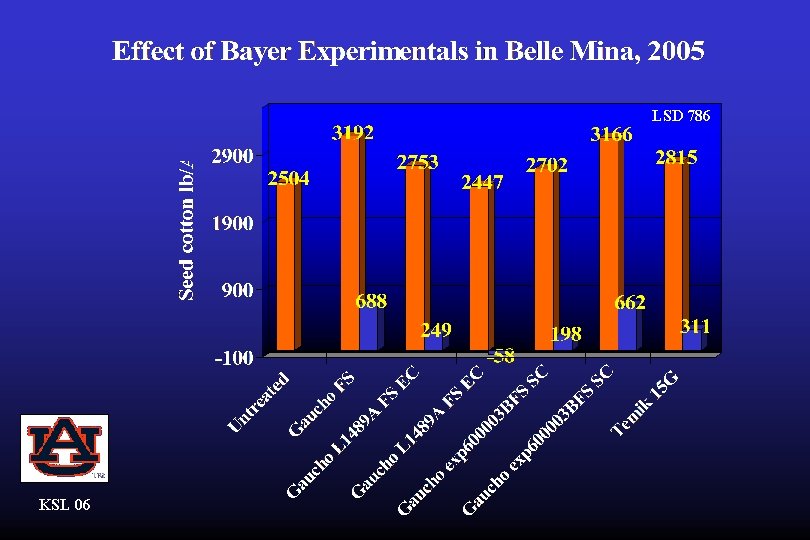
LSD 786 KSL 06
KSL 06
LSD 302 KSL 06
KSL 06
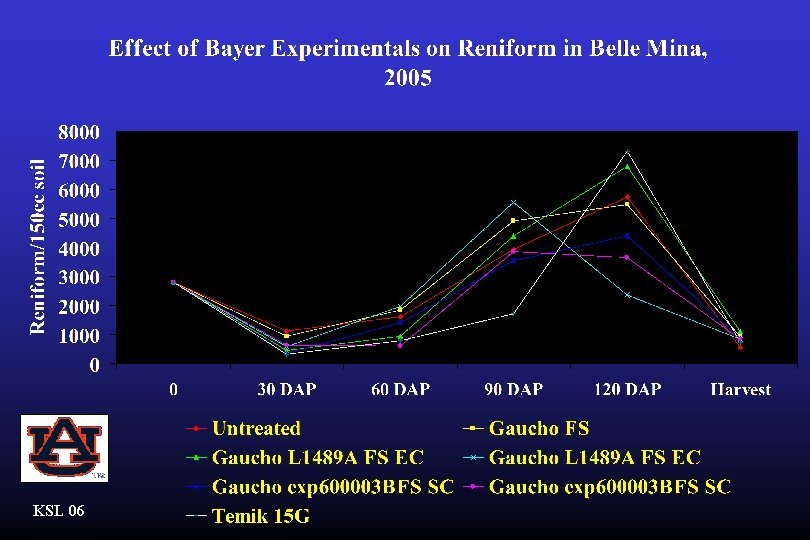
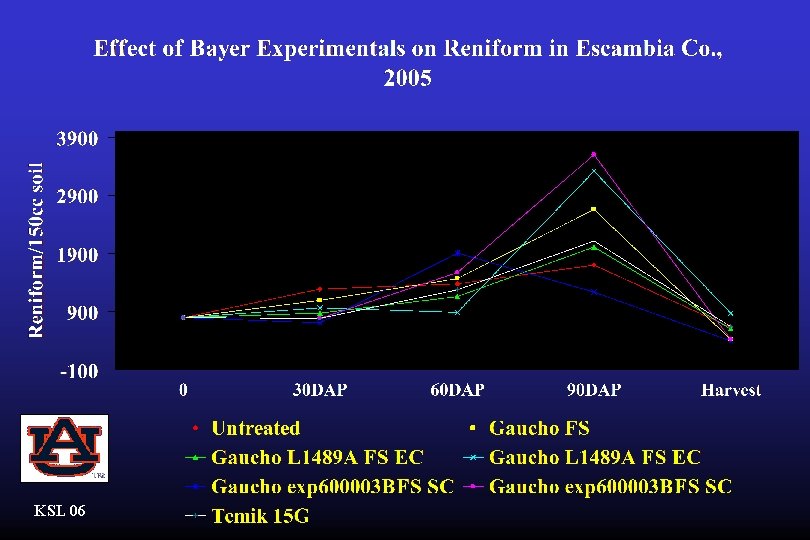
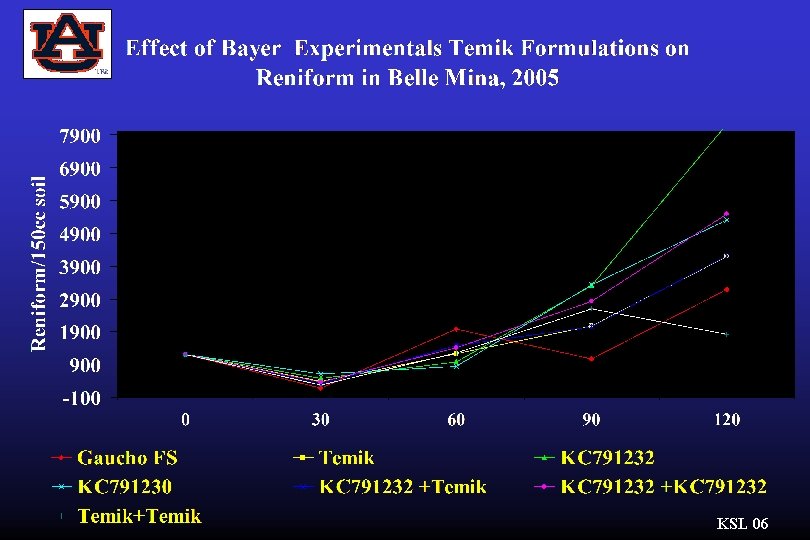
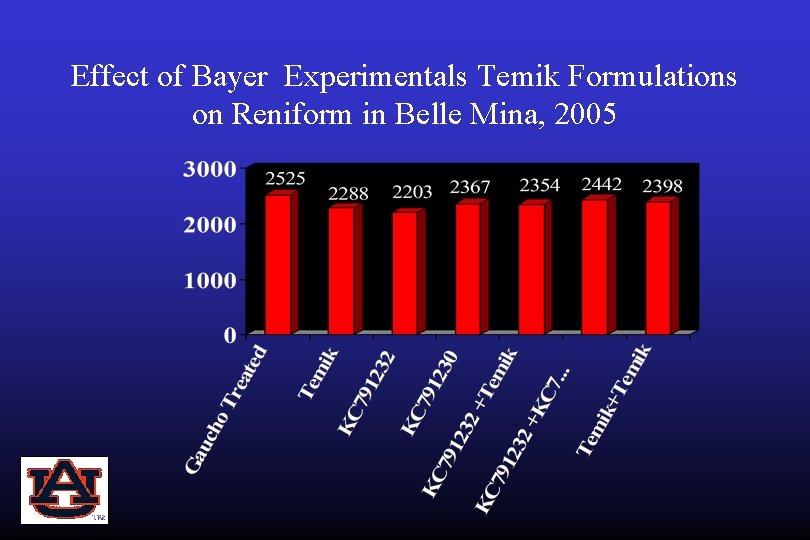
Effect of Bayer Experimentals Temik Formulations on Reniform in Belle Mina, 2005
KSL 06
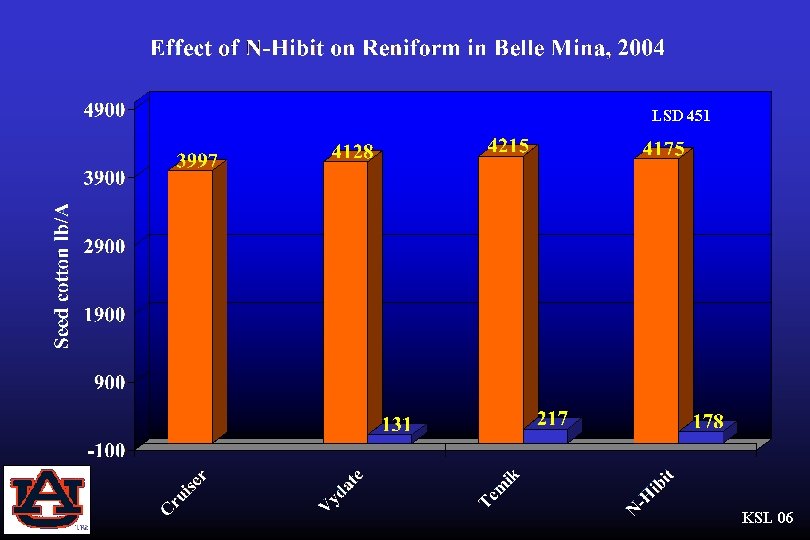
LSD 451 KSL 06
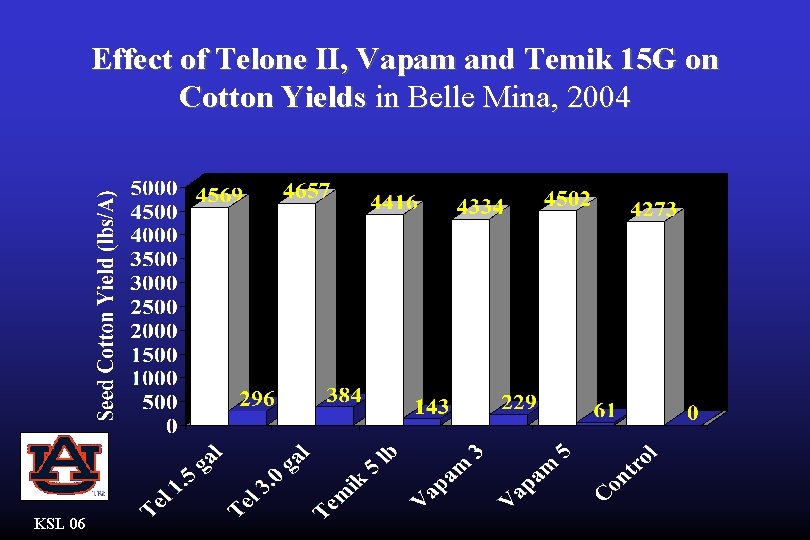
Effect of Telone II, Vapam and Temik 15 G on Cotton Yields in Belle Mina, 2004 KSL 06
Plant-Parasitic Nematode Management • Resistant/Tolerant Varieties • Crop Rotations • Chemical Management
Root-knot Nematode Cotton Tobacco Pepper Watermelon Peanut Tomato M. i. R 1 - - + + - + M. i. R 2 - + + + - + M. i. R 3 + - + M. i. R 4 + + - + M. a. R 1 - + + + M. a. R 2 - + - + M. j. M. h. + - + + +
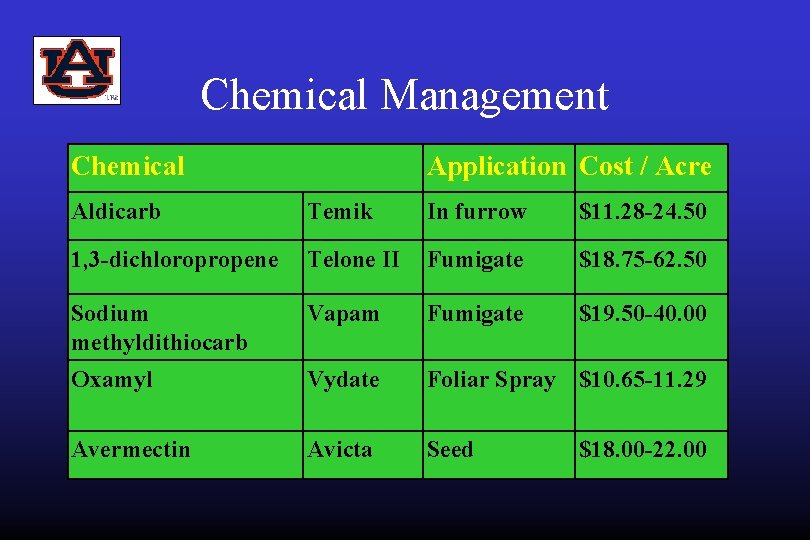
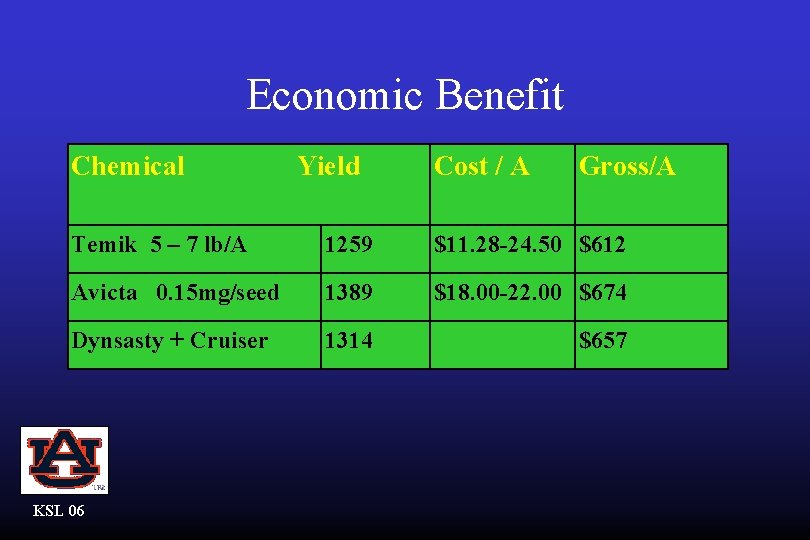
Chemical Management Chemical Application Cost / Acre Aldicarb Temik In furrow $11. 28 -24. 50 1, 3 -dichloropropene Telone II Fumigate $18. 75 -62. 50 Sodium methyldithiocarb Vapam Fumigate $19. 50 -40. 00 Oxamyl Vydate Foliar Spray $10. 65 -11. 29 Avermectin Avicta Seed $18. 00 -22. 00
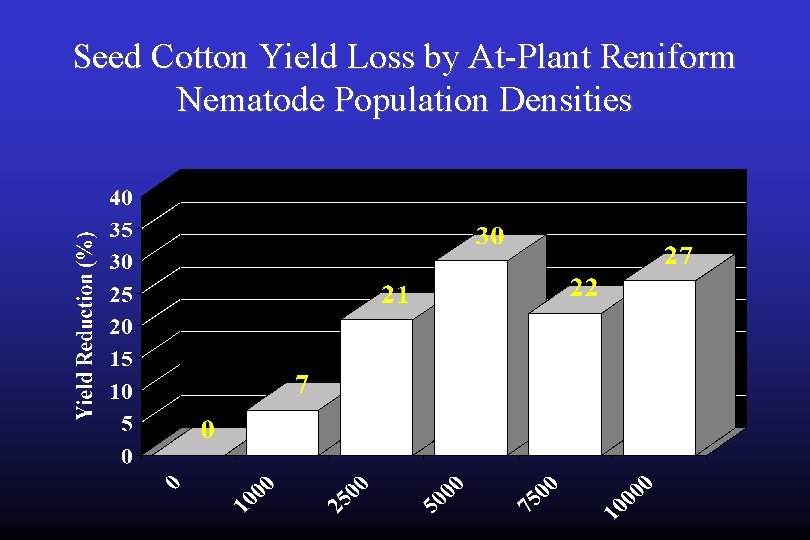
Seed Cotton Yield Loss by At-Plant Reniform Nematode Population Densities
KSL 06
Economic Benefit Chemical Yield Cost / A Gross/A Temik 5 – 7 lb/A 1259 $11. 28 -24. 50 $612 Avicta 0. 15 mg/seed 1389 $18. 00 -22. 00 $674 Dynsasty + Cruiser 1314 $657 KSL 06
KSL 06
LSD 235 KSL 06