
MANAGEMENT OF THE INTOXICATED PATIENT IN THE ER
- Slides: 26
MANAGEMENT OF THE INTOXICATED PATIENT IN THE ER February 21, 2013 Dr. Paul Sobey Dr. Karen Nordahl Dr. Roy Morton
Overview Determination of competency Kindling effect Intervention and treatment options When to consult other experts Who requires admission?
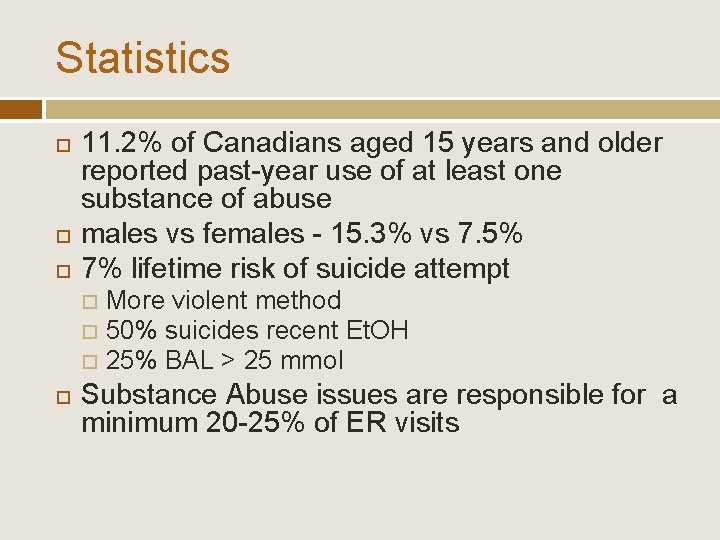
Statistics 11. 2% of Canadians aged 15 years and older reported past-year use of at least one substance of abuse males vs females - 15. 3% vs 7. 5% 7% lifetime risk of suicide attempt More violent method 50% suicides recent Et. OH 25% BAL > 25 mmol Substance Abuse issues are responsible for a minimum 20 -25% of ER visits
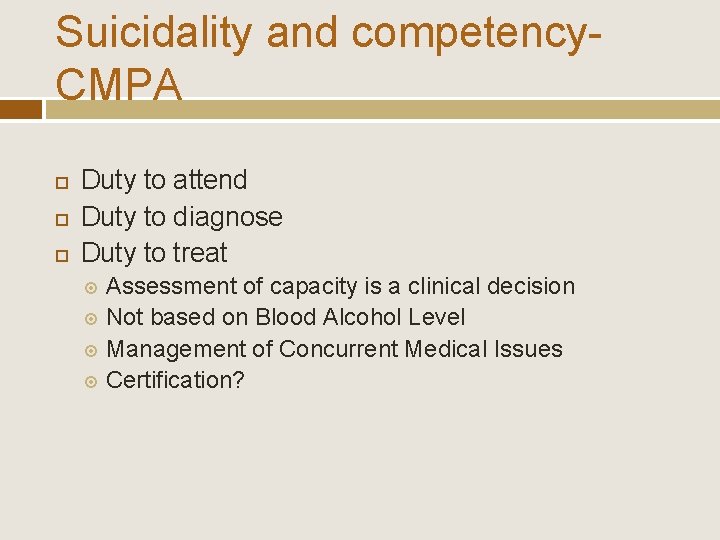
Suicidality and competency. CMPA Duty to attend Duty to diagnose Duty to treat Assessment of capacity is a clinical decision Not based on Blood Alcohol Level Management of Concurrent Medical Issues Certification?
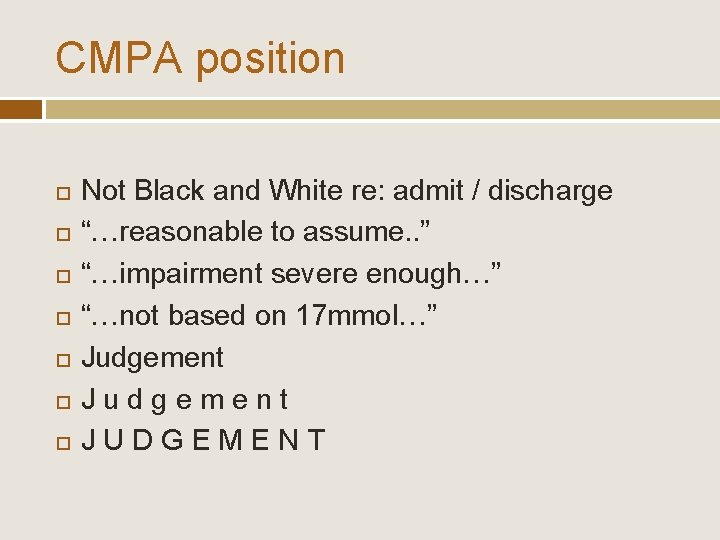
CMPA position Not Black and White re: admit / discharge “…reasonable to assume. . ” “…impairment severe enough…” “…not based on 17 mmol…” Judgement JUDGEMENT
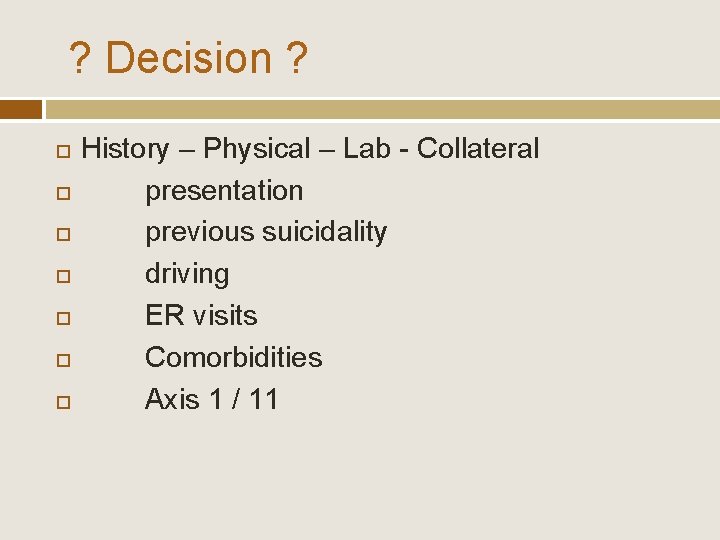
? Decision ? History – Physical – Lab - Collateral presentation previous suicidality driving ER visits Comorbidities Axis 1 / 11
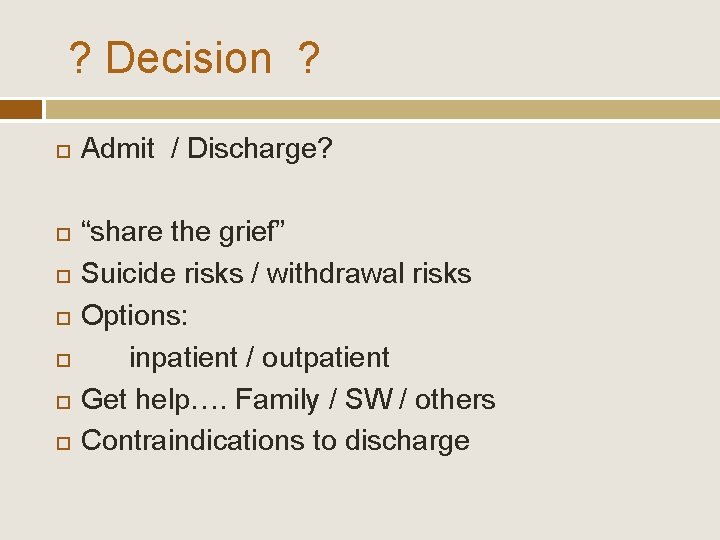
? Decision ? Admit / Discharge? “share the grief” Suicide risks / withdrawal risks Options: inpatient / outpatient Get help…. Family / SW / others Contraindications to discharge
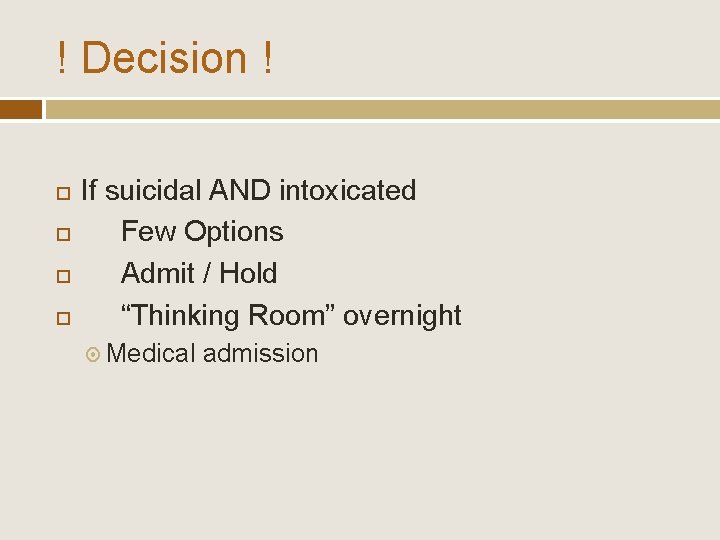
! Decision ! If suicidal AND intoxicated Few Options Admit / Hold “Thinking Room” overnight Medical admission
Kindling effect Alcohol Withdrawal severity, complications and cravings are correlated to number of withdrawal cycles Recurrent detoxification may elevate alcohol craving as measured by the Obsessive Compulsive Drinking scale - Alcohol 20 (2000) 181– 185 Kindling in Alcohol Withdrawal - Howard C. Becker, Ph. D. Relative kindling effect of readmissions in alcoholics Alcohol & Alcoholism Vol. 31, No. 4, pp. 375 -380, 1996 Possibly as little as 2 detoxes per year can increase the risk for significant complications of withdrawal
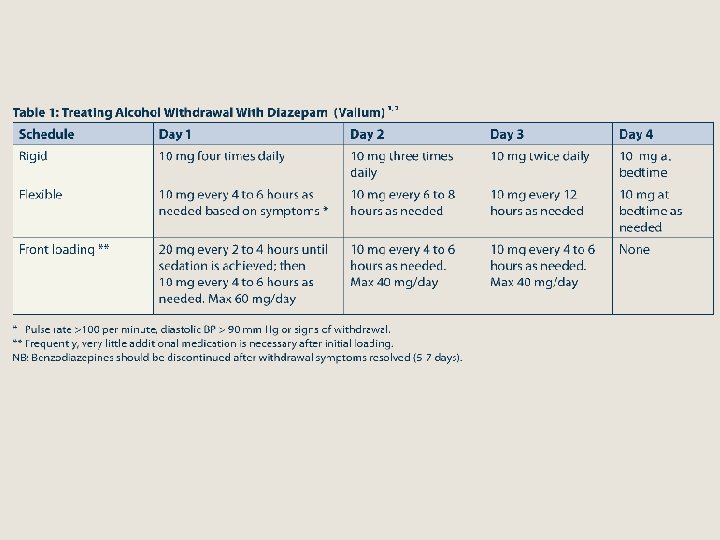
Outpatient Alcohol Withdrawal Outpatient withdrawal has fewer negative consequences Home detoxification from alcohol Its safety and efficacy in comparison with inpatient care – Alcohol and Alcoholism, Vol. 26. No 5/6. pp. 645 -650, 1991 Outpatient Detoxification of the Addicted or Alcoholic Patient - Christopher D. Prater Lower risk of over sedation Reduced total benzo use Reduced incidence seizure and delirium Improved access for marginalized populations Women with children/FN/HIV/psych comorbidities
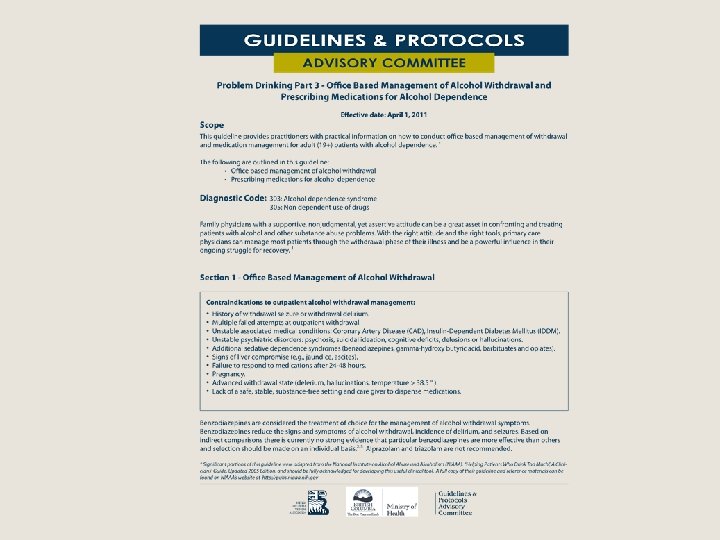
Problem Drinking Guideline Everyone is an outpatient withdrawal candidate unless contraindicated
Contraindications to Outpatient Withdrawal History of withdrawal seizure or withdrawal delirium. Multiple failed attempts at outpatient withdrawal. Unstable associated medical conditions: Coronary Artery Disease (CAD), Insulin-Dependent Diabetes Mellitus (IDDM). Unstable psychiatric disorders: psychosis, suicidal ideation, cognitive deficits, delusions or hallucinations. Additional sedative dependence syndromes (benzodiazepines, gamma-hydroxy butyric acid, barbiturates and opiates). Signs of liver compromise (e. g. , jaundice, ascites). Failure to respond to medications after 24 -48 hours. Pregnancy. Advanced withdrawal state (delirium, hallucinations, temperature > 38. 5 Lack of a safe, stable, substance-free setting and care giver to dispense medications.
Screening and Brief Intervention and Referral to Treatment (SBIRT) Effectiveness What constitutes a Brief Intervention?
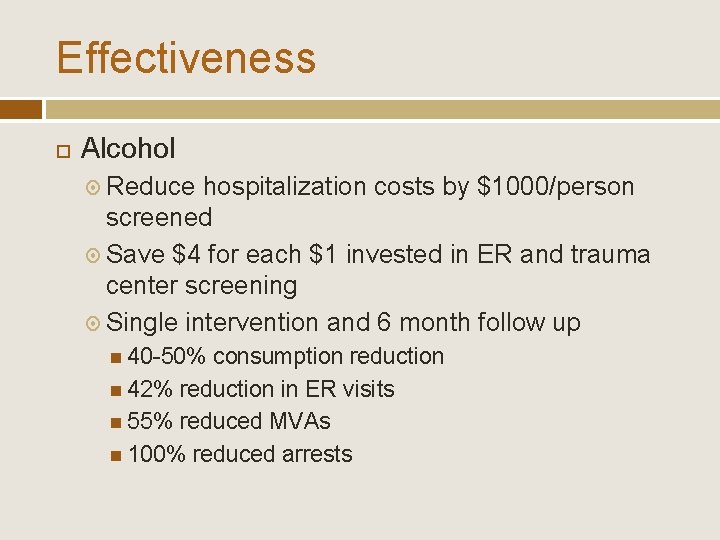
Effectiveness Alcohol Reduce hospitalization costs by $1000/person screened Save $4 for each $1 invested in ER and trauma center screening Single intervention and 6 month follow up 40 -50% consumption reduction 42% reduction in ER visits 55% reduced MVAs 100% reduced arrests
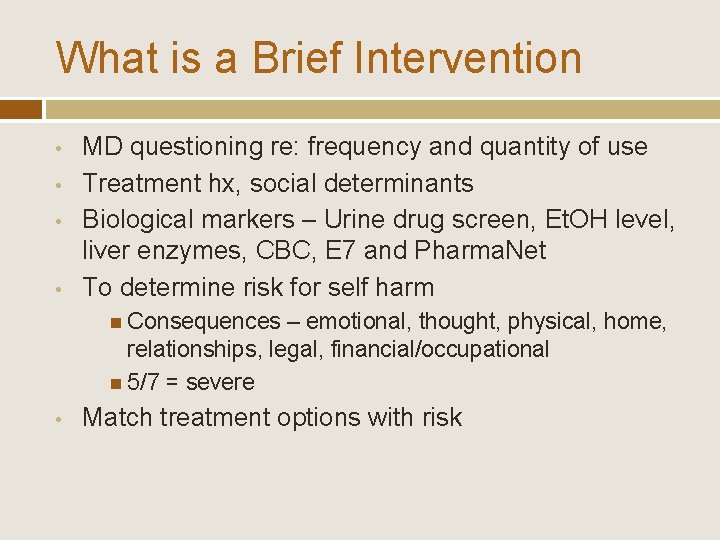
What is a Brief Intervention • • MD questioning re: frequency and quantity of use Treatment hx, social determinants Biological markers – Urine drug screen, Et. OH level, liver enzymes, CBC, E 7 and Pharma. Net To determine risk for self harm Consequences – emotional, thought, physical, home, relationships, legal, financial/occupational 5/7 = severe • Match treatment options with risk
SBIRT Brief Intervention Process of taking history and feed back Judging To stage of change reduce substance use and harms What can we do to make this work for you?
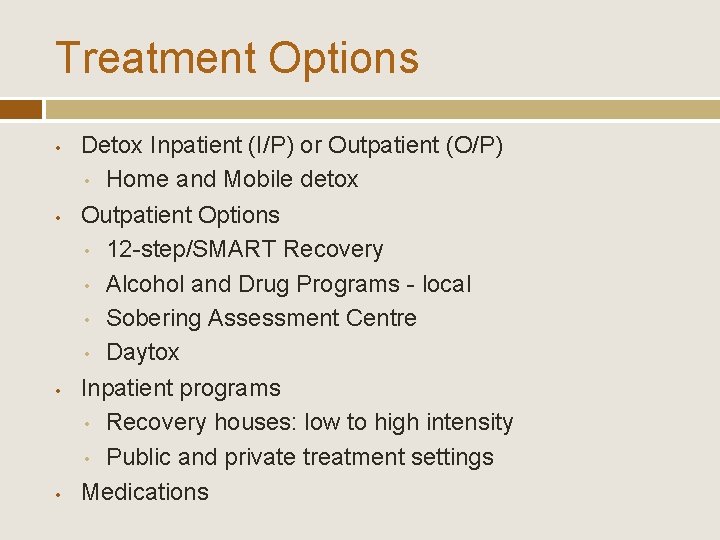
Treatment Options • • Detox Inpatient (I/P) or Outpatient (O/P) • Home and Mobile detox Outpatient Options • 12 -step/SMART Recovery • Alcohol and Drug Programs - local • Sobering Assessment Centre • Daytox Inpatient programs • Recovery houses: low to high intensity • Public and private treatment settings Medications
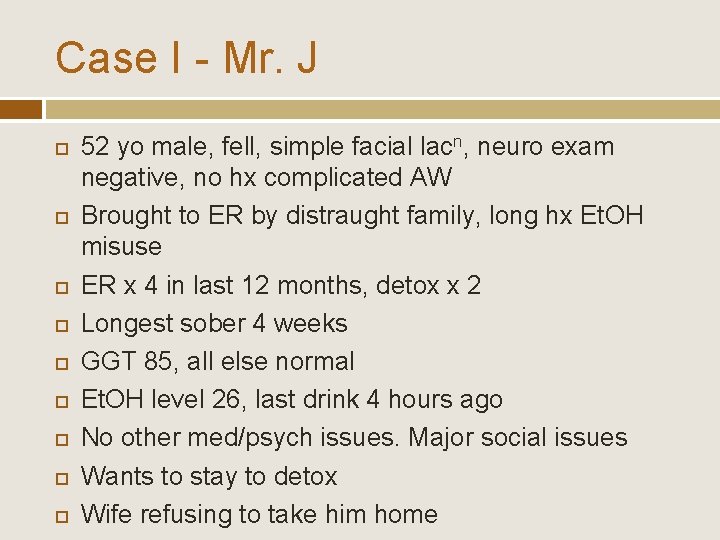
Case I - Mr. J 52 yo male, fell, simple facial lacn, neuro exam negative, no hx complicated AW Brought to ER by distraught family, long hx Et. OH misuse ER x 4 in last 12 months, detox x 2 Longest sober 4 weeks GGT 85, all else normal Et. OH level 26, last drink 4 hours ago No other med/psych issues. Major social issues Wants to stay to detox Wife refusing to take him home
Case I - Mr. J - Options Risk of kindling and cognitive decline Assessing motivation to change Some wait and self referral Facility MD can facilitate “next available bed” Abuse potential…
Case I - Mr. J - Management Creekside Detox - medically monitored with daily intervention, engage in and disposition to treatment resources Meets criteria for Outpatient Protocol How not to enable
Case II Mr. L Present 23: 00 h “dope sick”, “thinking about getting clean” No other underlying medical issues PMHx: similar presentation to LMH 10 days ago CBC normal No other labs done Drowsy but rouses, says “dope sick” again VVS, pupils 4 mm, not sweating, ambulatory
Case II Mr. L SW saw at 15: 00 h next day – “got bed at Creekside for tomorrow afternoon”
Case II – Management Options Does this patient need admission? What is the diagnosis? What are the treatment options? Bridging medications for detox Referral to community resources
Articles and Resources CMPA: Managing intoxicated patient in the emergency department Problem Drinking Guideline: http: //www. bcguidelines. ca/guideline_problem _drinking. html