
Management of Stocker Cattle Grazing Small Grains Forage









- Slides: 45
Management of Stocker Cattle Grazing Small Grains Forage
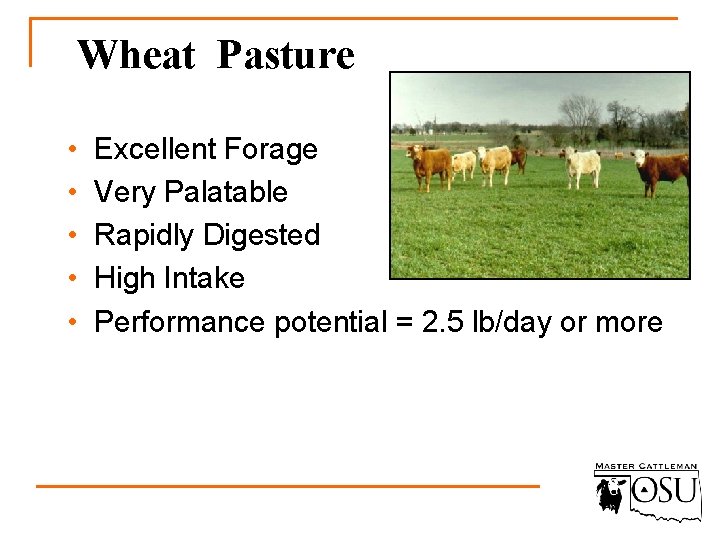
Wheat Pasture • • • Excellent Forage Very Palatable Rapidly Digested High Intake Performance potential = 2. 5 lb/day or more
Factors Affecting ADG n Weather q Forage q Cold rain q Mud n Genetic potential n Compensatory gain n Forage availability q Growing conditions q Stocking rate
Discussion Topics n. Mineral supplementation n. Wheat pasture bloat n. Supplementation q. Adjusting for stocking rate q. Types of Supplement q. Oklahoma Green Gold
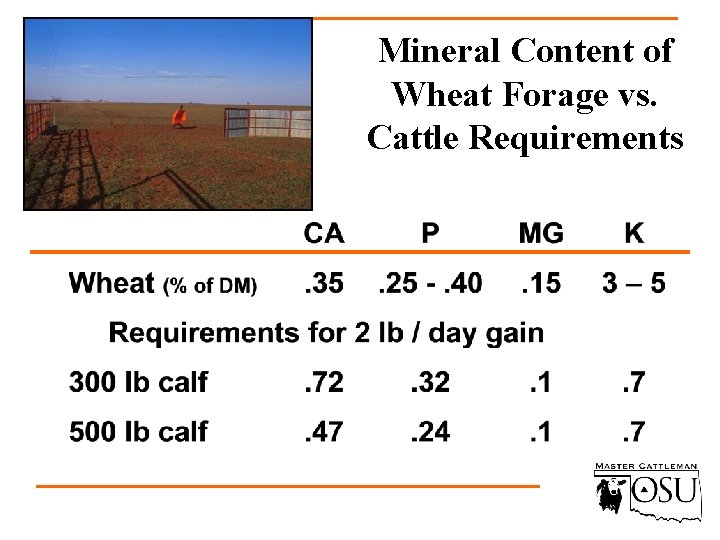
Mineral Content of Wheat Forage vs. Cattle Requirements
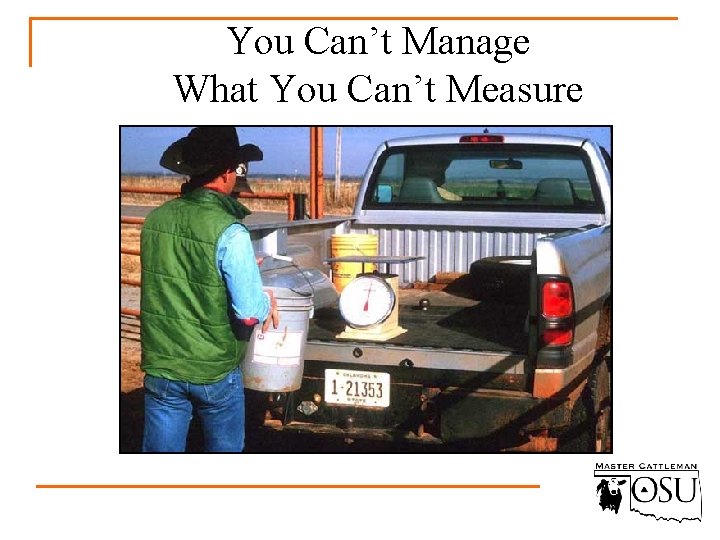
You Can’t Manage What You Can’t Measure
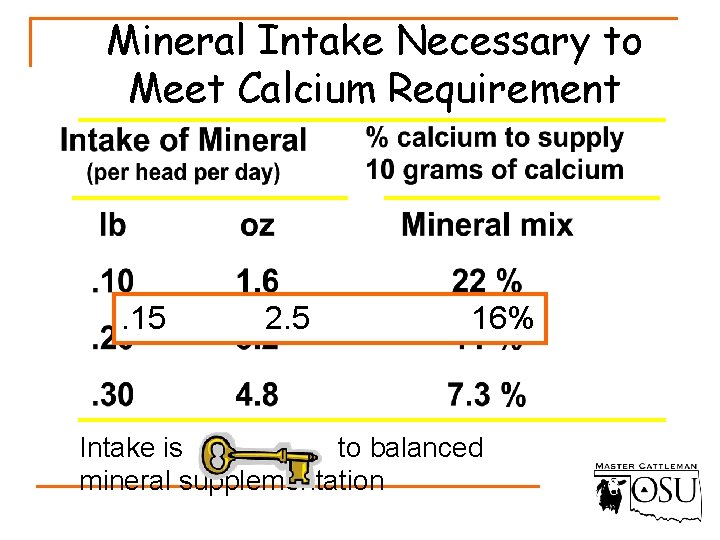
Mineral Intake Necessary to Meet Calcium Requirement . 15 2. 5 16% Intake is to balanced mineral supplementation
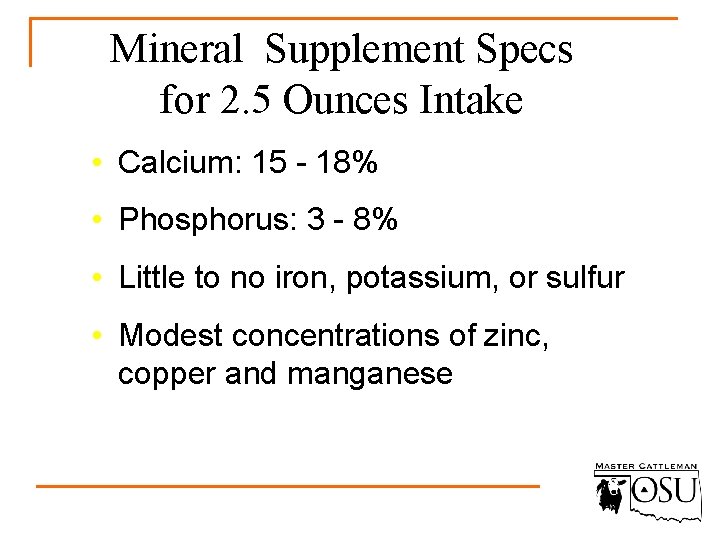
Mineral Supplement Specs for 2. 5 Ounces Intake • Calcium: 15 - 18% • Phosphorus: 3 - 8% • Little to no iron, potassium, or sulfur • Modest concentrations of zinc, copper and manganese
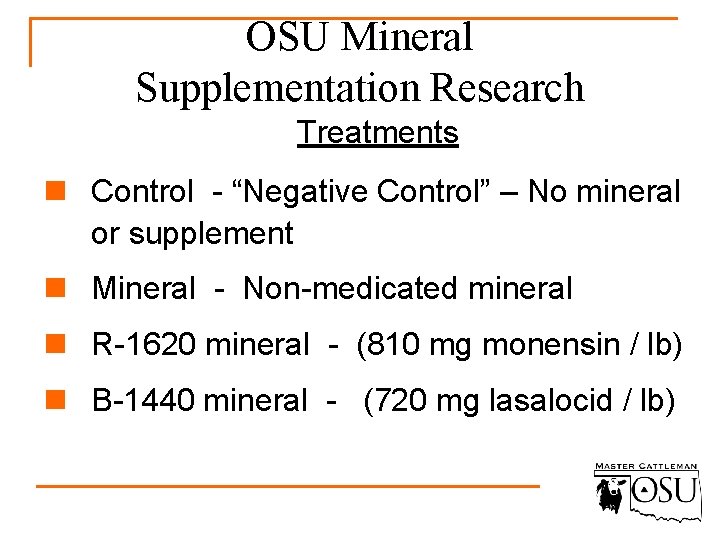
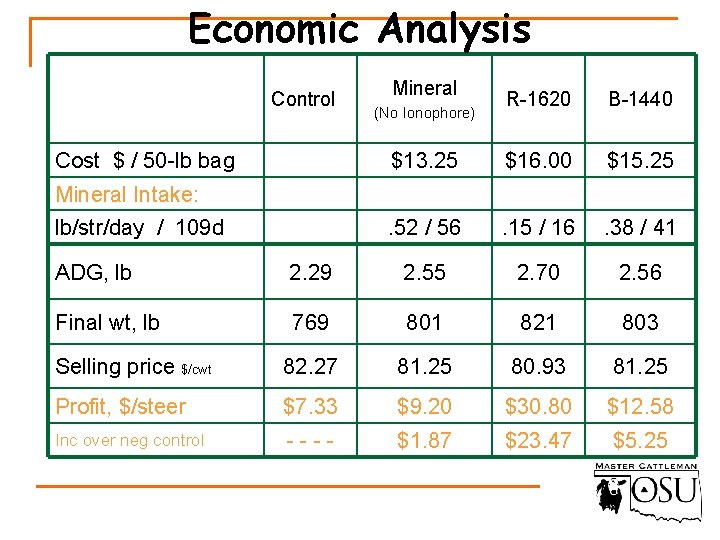
OSU Mineral Supplementation Research Treatments n Control - “Negative Control” – No mineral or supplement n Mineral - Non-medicated mineral n R-1620 mineral - (810 mg monensin / lb) n B-1440 mineral - (720 mg lasalocid / lb)
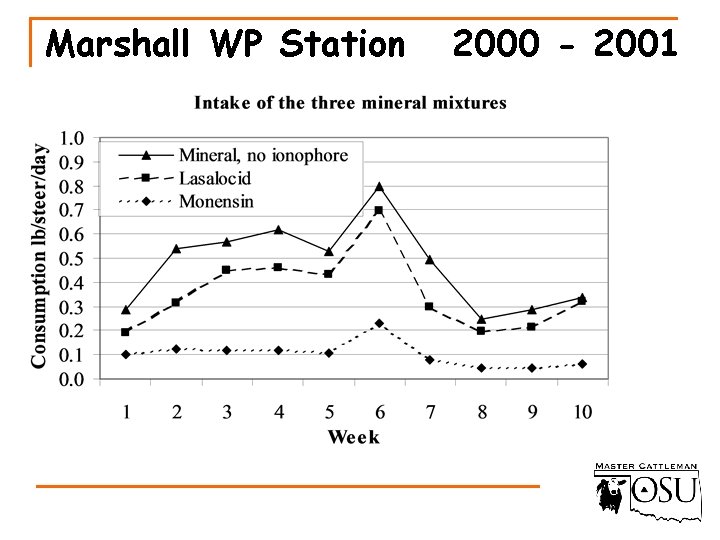
Marshall WP Station 2000 - 2001
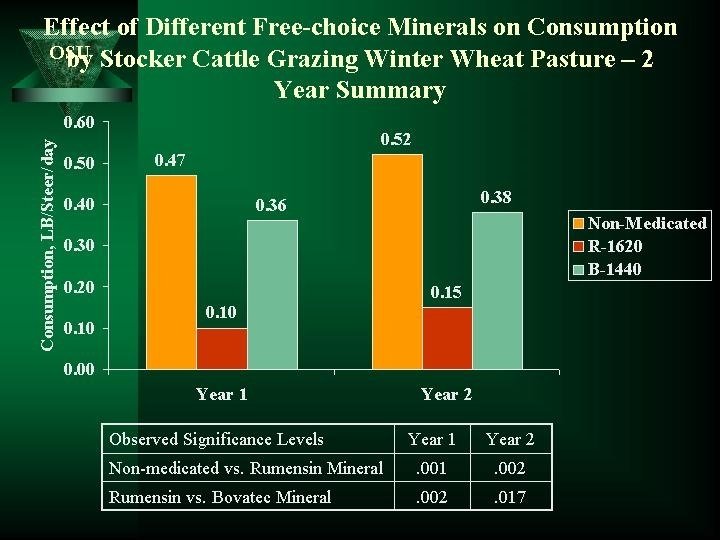
Economic Analysis Control Cost $ / 50 -lb bag Mineral R-1620 B-1440 $13. 25 $16. 00 $15. 25 . 52 / 56 . 15 / 16 . 38 / 41 (No Ionophore) Mineral Intake: lb/str/day / 109 d ADG, lb 2. 29 2. 55 2. 70 2. 56 Final wt, lb 769 801 821 803 Selling price $/cwt 82. 27 81. 25 80. 93 81. 25 Profit, $/steer $7. 33 $9. 20 $30. 80 $12. 58 Inc over neg control ---- $1. 87 $23. 47 $5. 25
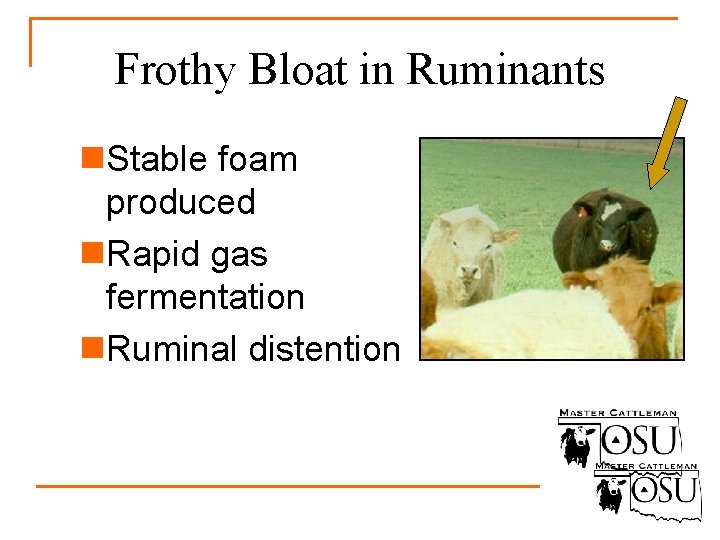
Frothy Bloat in Ruminants n. Stable foam produced n. Rapid gas fermentation n. Ruminal distention
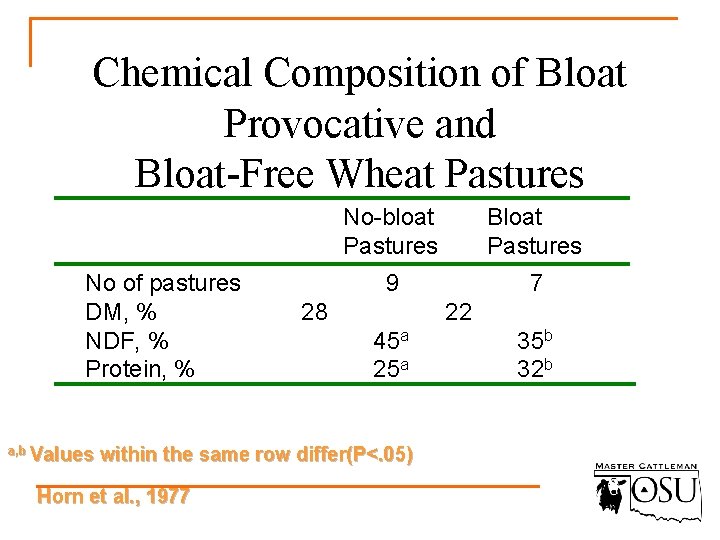
Chemical Composition of Bloat Provocative and Bloat-Free Wheat Pastures No of pastures DM, % NDF, % Protein, % a, b Values No-bloat Pastures Bloat Pastures 9 7 28 22 45 a 25 a within the same row differ(P<. 05) Horn et al. , 1977 35 b 32 b
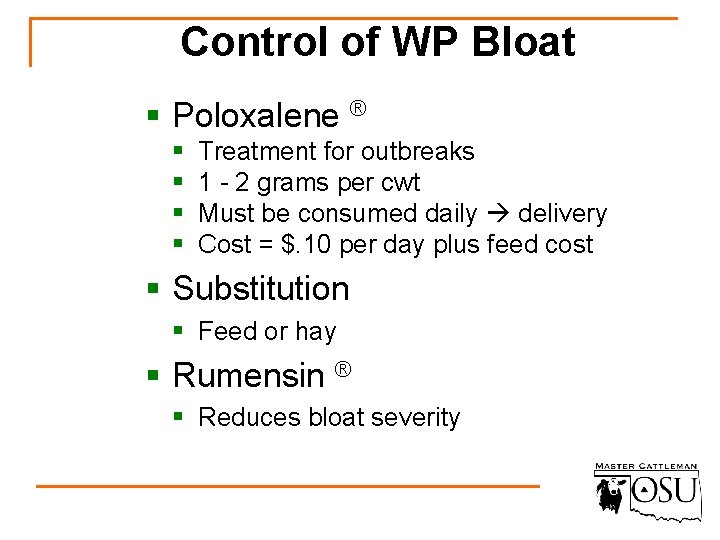
Control of WP Bloat § Poloxalene ® § § Treatment for outbreaks 1 - 2 grams per cwt Must be consumed daily delivery Cost = $. 10 per day plus feed cost § Substitution § Feed or hay § Rumensin ® § Reduces bloat severity
EFFECT OF IONOPHORE ON AVERAGE BLOAT SCORE AND INCIDENCE OF BLOAT Control vs. ionophore P=. 08 Rumensin vs Bovatec P=. 05 Control vs. ionophore P=. 10 Rumensin vs. Bovatec P=. 04
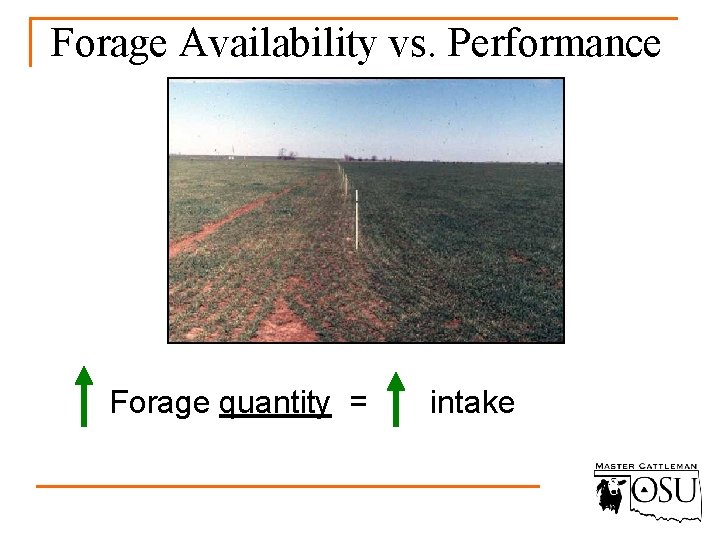
Forage Availability vs. Performance Forage quantity = intake
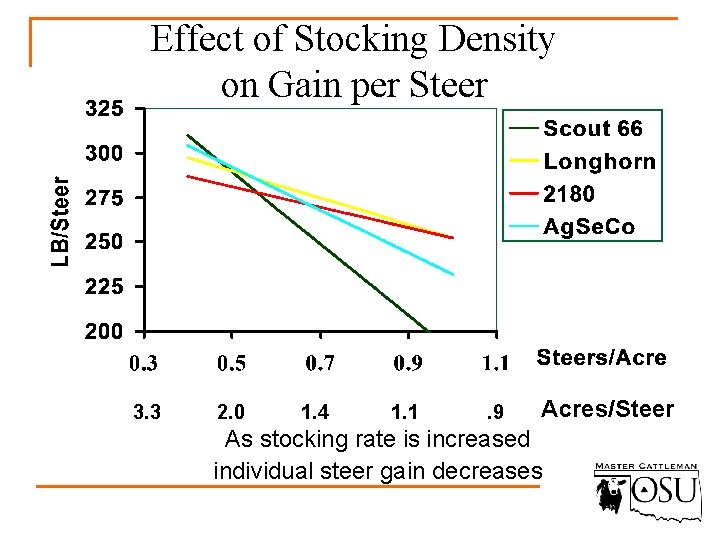
Effect of Stocking Density on Gain per Steer 3. 3 2. 0 1. 4 1. 1 . 9 Acres/Steer As stocking rate is increased individual steer gain decreases
Effect of Stocking Density on Wheat Yield Fieser and Horn, 2003
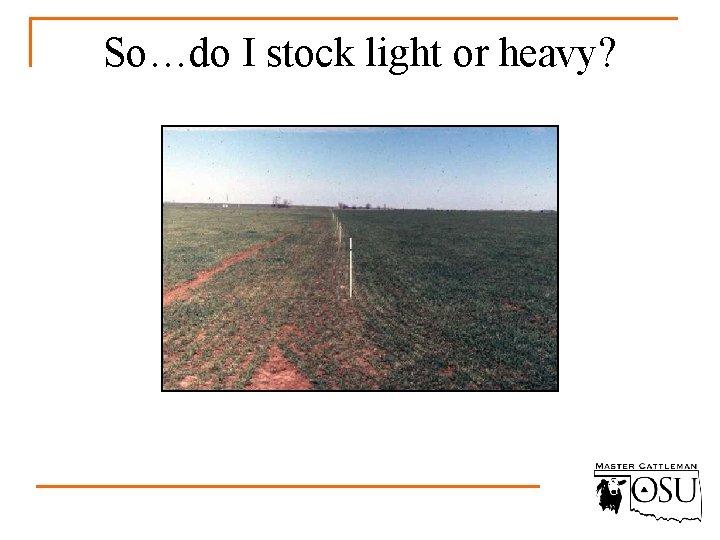
So…do I stock light or heavy?
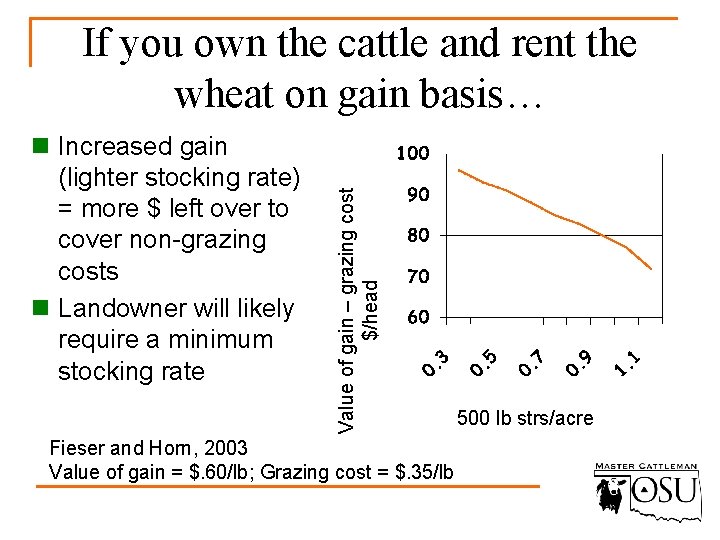
n Increased gain (lighter stocking rate) = more $ left over to cover non-grazing costs n Landowner will likely require a minimum stocking rate Value of gain – grazing cost $/head If you own the cattle and rent the wheat on gain basis… Fieser and Horn, 2003 Value of gain = $. 60/lb; Grazing cost = $. 35/lb 500 lb strs/acre
n Changes in grain yield and cattle performance tend to offset one another n Assumes adequate forage availability at higher stocking rate! Value of gain and wheat – cost of wheat, $/acre If you own the wheat and the cattle…dual purpose 500 lb strs/acre Fieser and Horn, 2003 Value of gain = $. 60/lb; Wheat cost/acre = $100
Protein Supplementation
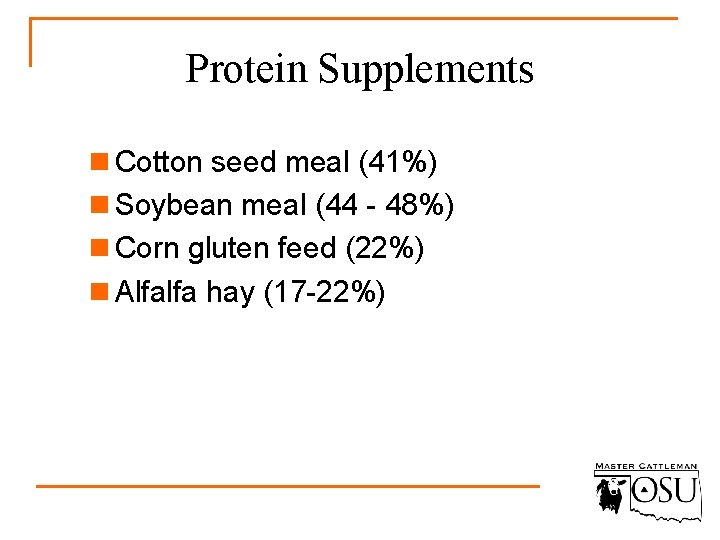
Protein Supplements n Cotton seed meal (41%) n Soybean meal (44 - 48%) n Corn gluten feed (22%) n Alfalfa hay (17 -22%)
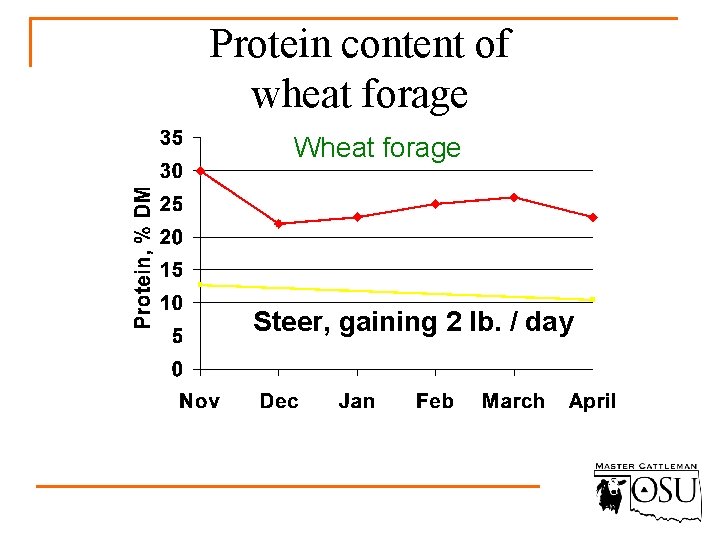
Do cattle grazing wheat need a protein supplement?
Protein content of wheat forage Wheat forage Steer, gaining 2 lb. / day
NO
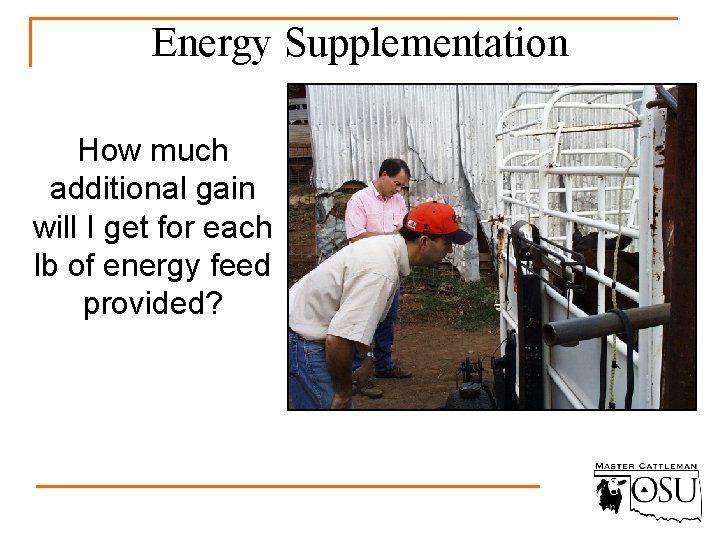
Energy Supplementation How much additional gain will I get for each lb of energy feed provided?
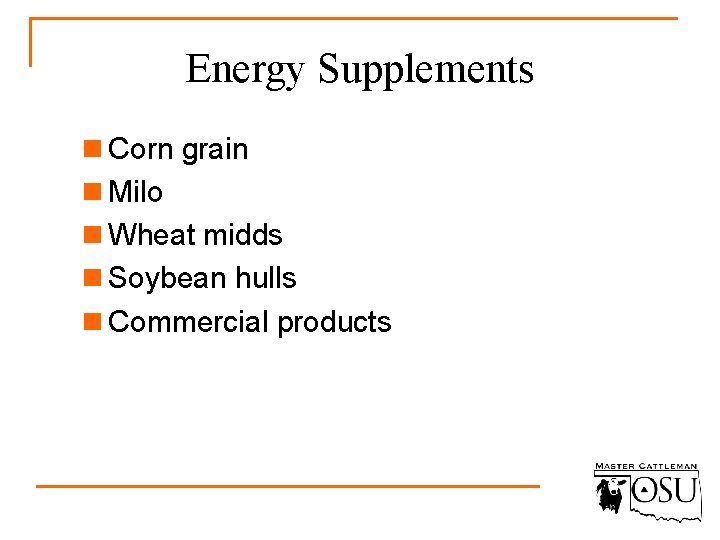
Energy Supplements n Corn grain n Milo n Wheat midds n Soybean hulls n Commercial products
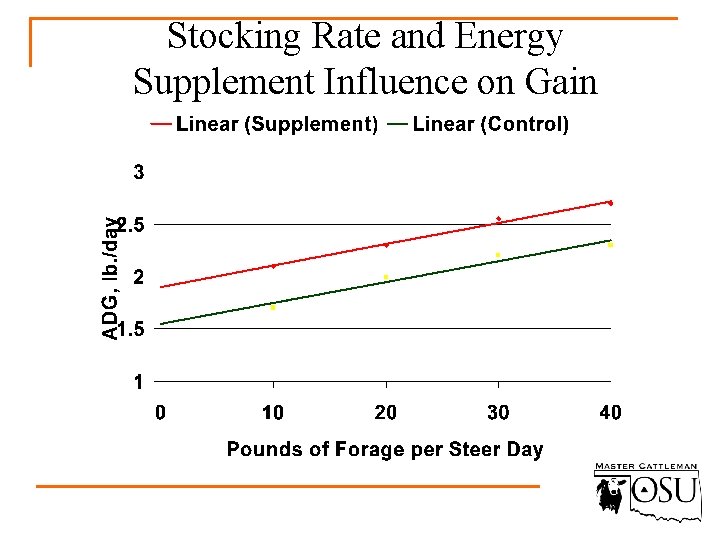
Wheat Pasture Research Station, Marshall 1989 - 1992 Studies n Starch Supplement - Corn Based n Digestible Fiber Supplement - Soybean Hulls, Wheat Middlings n 500 lb steers, hand fed 6 days/wk n Feeding Rate: . 75% of BW (4 lb/day) n Stocking Rate: 2 acre/hd no supplement 1. 5 acre/hd supplement
Stocking Rate and Energy Supplement Influence on Gain
Energy Supplementation Trial Results n Supplement increased ADG. 33 lb/day n Added gain was similar for all stocking rates n Lb. supplement / lb. added gain Range = 10: 1 to 15: 1
Cost of gain and corn price Corn, $ / bu 2. 50 3. 00 3. 50 Cost of Gain, $ / cwt 56 67 78 Assumes supplement conversion is 12. 5: 1
Effect of Supplementation and Stocking Rate on Steer Gain (1990)
Energy Supplementation Trial Results When Stocking Rate is Increased by 33 % n Increase Head/Acre and Performance Improves Efficiency n Supplement Conversion/Acre 5: 1
Supplement Type n Starch vs Digestible Fiber n Equal Gain Response n Utilize Least Expensive Ingredients n Digestible Fiber based were consumed more readily n Delivery System for Ionophore and Minerals
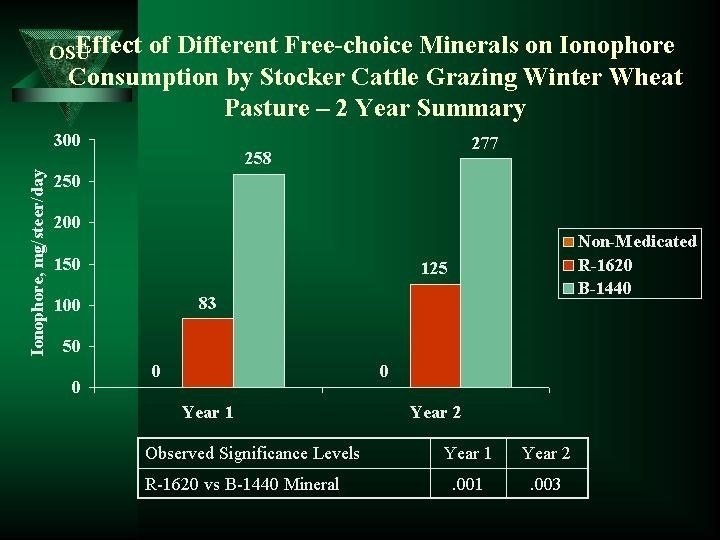
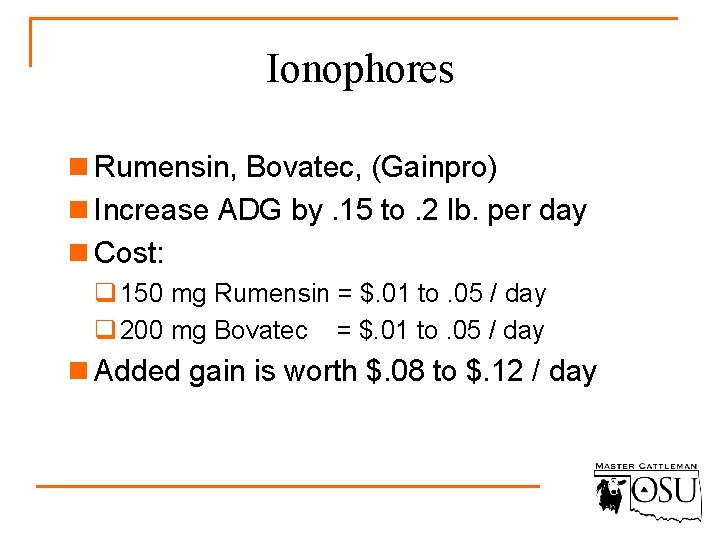
Ionophores n Rumensin, Bovatec, (Gainpro) n Increase ADG by. 15 to. 2 lb. per day n Cost: q 150 mg Rumensin = $. 01 to. 05 / day q 200 mg Bovatec = $. 01 to. 05 / day n Added gain is worth $. 08 to $. 12 / day
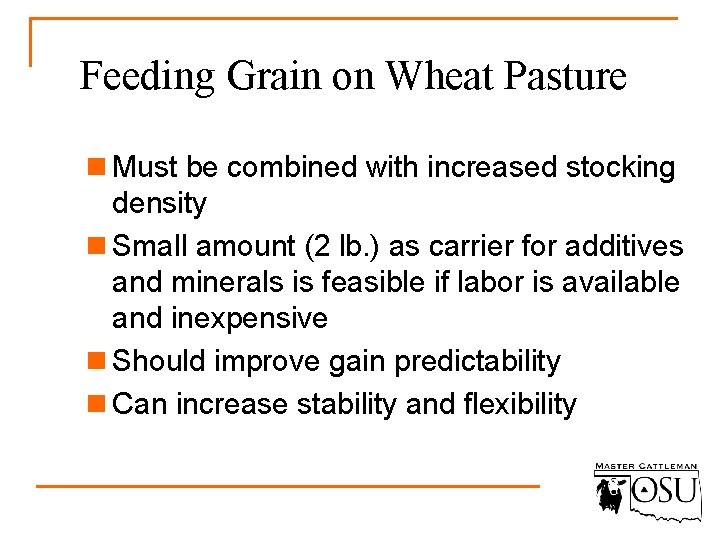
Feeding Grain on Wheat Pasture n Must be combined with increased stocking density n Small amount (2 lb. ) as carrier for additives and minerals is feasible if labor is available and inexpensive n Should improve gain predictability n Can increase stability and flexibility
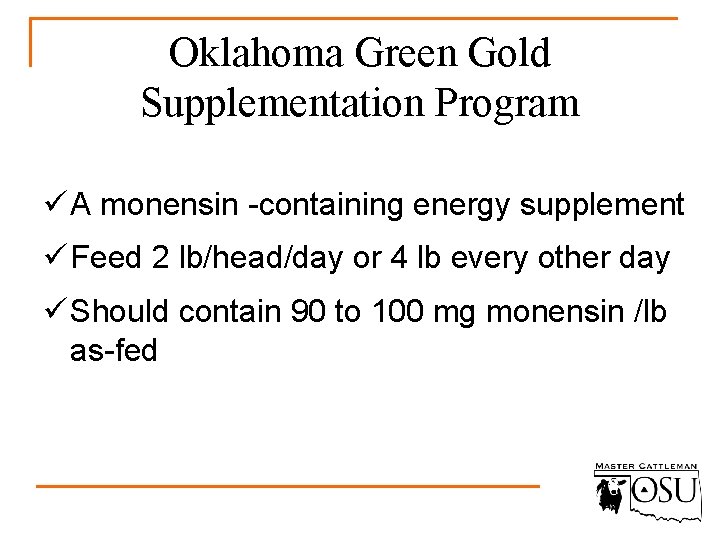
Oklahoma Green Gold Supplementation Program ü A monensin -containing energy supplement ü Feed 2 lb/head/day or 4 lb every other day ü Should contain 90 to 100 mg monensin /lb as-fed
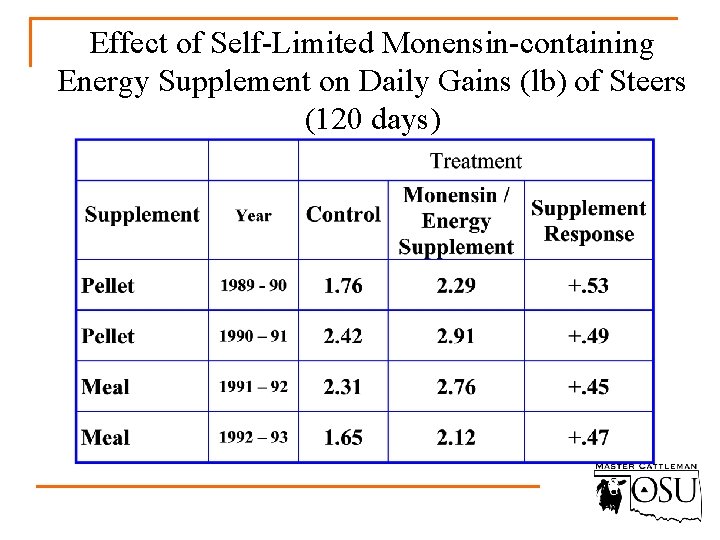
Effect of Self-Limited Monensin-containing Energy Supplement on Daily Gains (lb) of Steers (120 days)
Wheat Pasture Stocker Management n Mineral supplementation q Calcium q Carrier for ionophores n Minimizing the risk of bloat n Energy supplementation q Can be used to increase stocking rate q Types of Supplement n Oklahoma Green Gold q Used to enhance performance of cattle q Monensin Carrier q Not intended to be used to adjust stocking rate