
MANAGEMENT OF QUALITY Operations Management Dr Ron Lembke
MANAGEMENT OF QUALITY Operations Management Dr. Ron Lembke
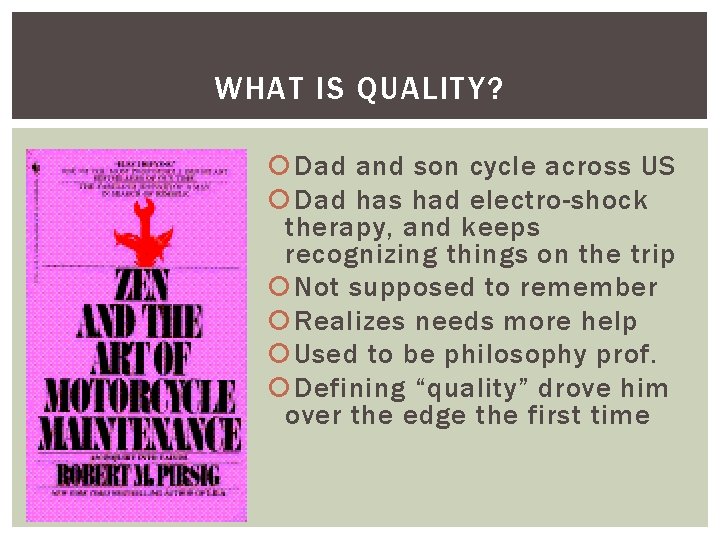
WHAT IS QUALITY? Dad and son cycle across US Dad has had electro-shock therapy, and keeps recognizing things on the trip Not supposed to remember Realizes needs more help Used to be philosophy prof. Defining “quality” drove him over the edge the first time
WHAT IS QUALITY? Quality … you know what it is, yet you don’t know what it is. But that’s self-contradictory. But some things are better than others, that is, they have more quality. But when you try to say what the quality is, apart from the things that have it, it all goes poof! There’s nothing to talk about. . Robert M. Pirsig, Zen and the Art of Motorcycle Maintenance, p. 163
WHAT IS QUALITY? Obviously, some things are better than others … but what’s the “betterness”? So round and round you go, spinning mental wheels and nowhere finding anyplace to get traction. What the hell is Quality? What is it? Robert M. Pirsig, Zen and the Art of Motorcycle Maintenance, p. 164
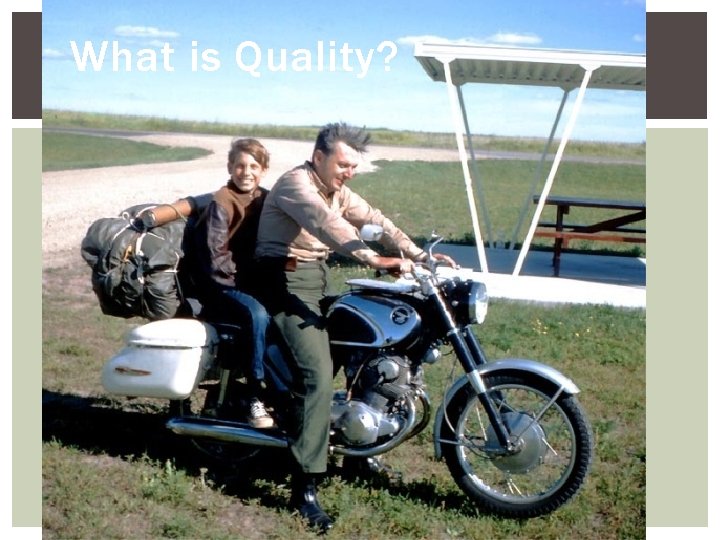
What is Quality?
OUR DEFINITION OF QUALITY “Quality is conformance to requirements” -- Philip Crosby, “Quality is Free” 1979 The totality of features and characteristics of a product or service that bear on its ability to satisfy stated or implied needs. --ASQC
BENEFITS OF QUALITY? Lower costs (less labor, rework, scrap) Market Share Reputation Product liability International competitiveness
SIX SIGMA/ TOTAL QUALITY MANAGEMENT An emphasis on Quality that encompasses the entire company Continuous Improvement Employee empowerment, quality circles Benchmarking - best at similar activities, even if in different industries Just In Time - requires quality of suppliers TQM Tools - allow you to measure progress
ROOTS OF QUALITY 1920’s Bell Labs: Acceptance Sampling Want to guarantee certain % defective, How many do we need to sample? Supposedly 2% defective, we test 40 and 2 are bad, are more than 2% bad?
INSPECTION Does not add value Inspectors distrusted by workers Increase quality and reduce need for inspectors Poka-yoke - “mistake proof” Have workers do own inspecting § Before – are inputs good? § During – process happening properly? § After – conforms to standards?
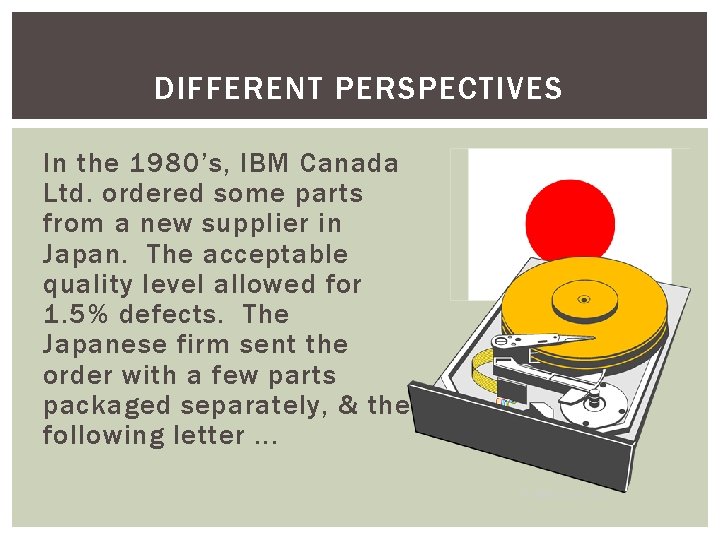
DIFFERENT PERSPECTIVES In the 1980’s, IBM Canada Ltd. ordered some parts from a new supplier in Japan. The acceptable quality level allowed for 1. 5% defects. The Japanese firm sent the order with a few parts packaged separately, & the following letter. . . © 1995 Corel Corp.
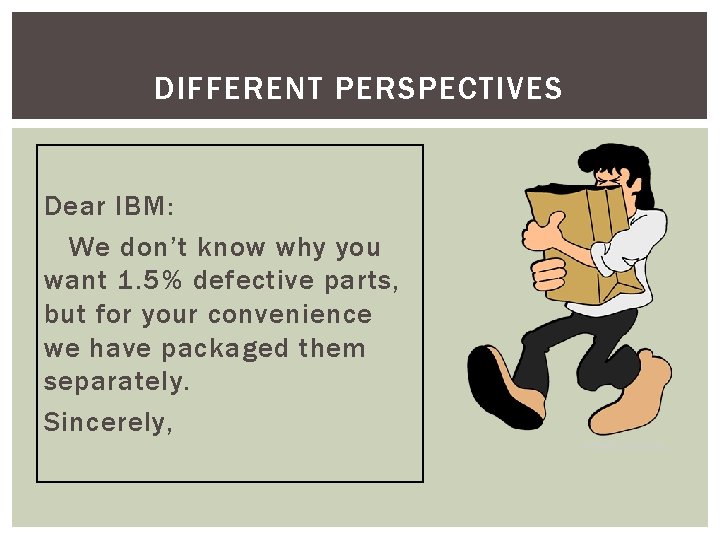
DIFFERENT PERSPECTIVES Dear IBM: We don’t know why you want 1. 5% defective parts, but for your convenience we have packaged them separately. Sincerely, © 1995 Corel Corp.
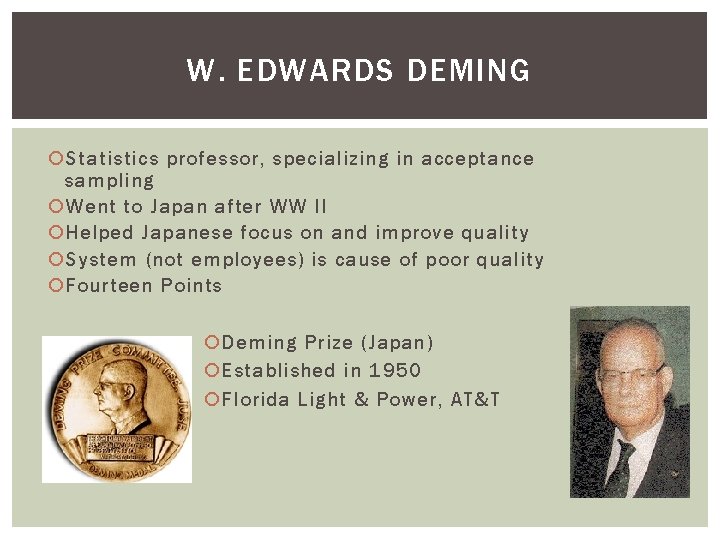
W. EDWARDS DEMING Statistics professor, specializing in acceptance sampling Went to Japan after WW II Helped Japanese focus on and improve quality System (not employees) is cause of poor quality Fourteen Points Deming Prize (Japan) Established in 1950 Florida Light & Power, AT&T
DEMING’S PARADIGMS (14 POINTS, ABBREVIATED) 1. 2. 3. 4. Intrinsic & extrinsic motivation Management needs to improve and innovate processes to create results Optimize the system toward its aim Cooperation is better than competition
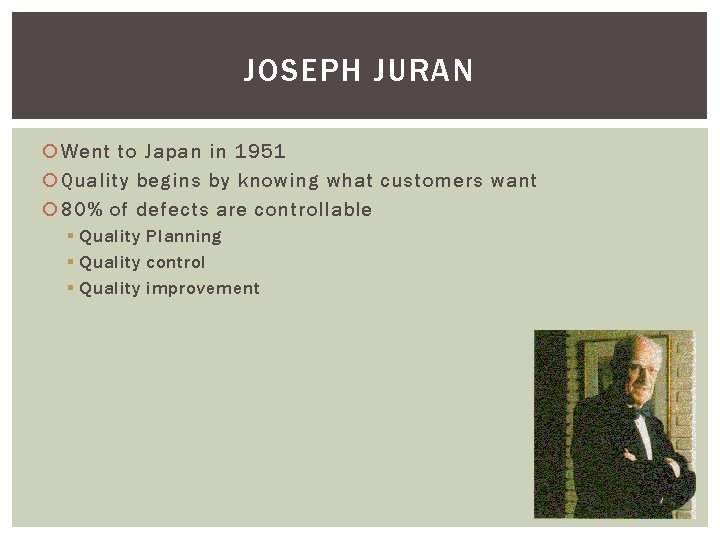
JOSEPH JURAN Went to Japan in 1951 Quality begins by knowing what customers want 80% of defects are controllable § Quality Planning § Quality control § Quality improvement
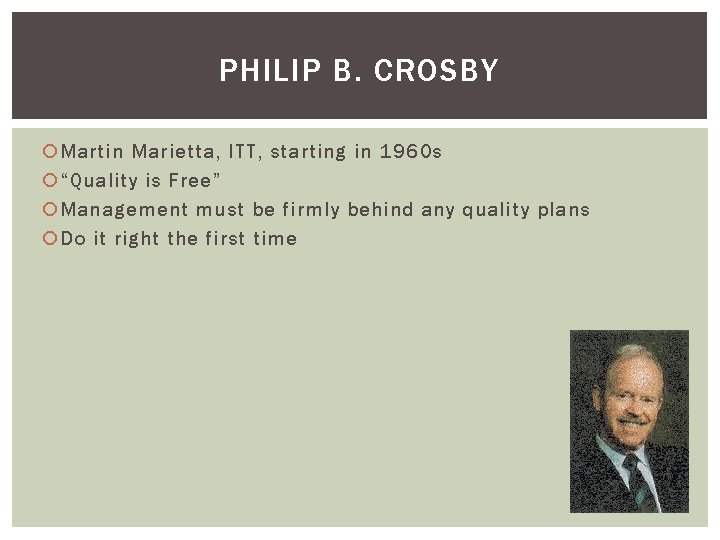
PHILIP B. CROSBY Martin Marietta, ITT, starting in 1960 s “Quality is Free” Management must be firmly behind any quality plans Do it right the first time
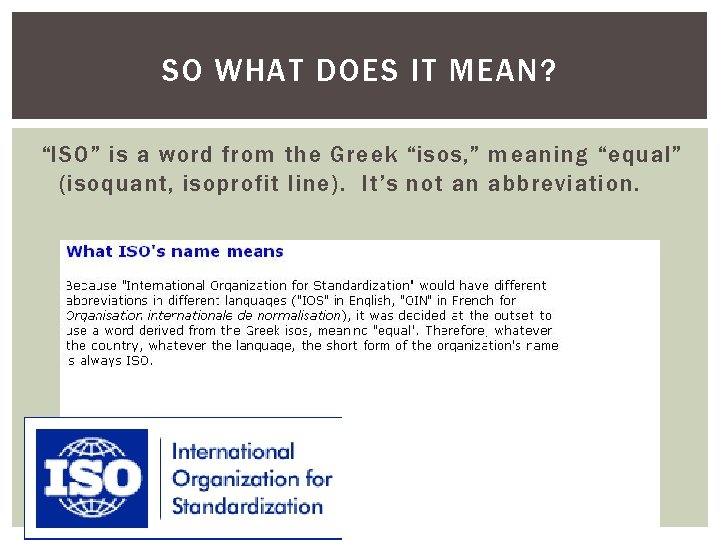
SO WHAT DOES IT MEAN? “ISO” is a word from the Greek “isos, ” meaning “equal” (isoquant, isoprofit line). It’s not an abbreviation.
WHAT IS ISO CERTIFICATION? To get certified: § Have a written set of procedures for every activity § Have your employees always follow procedures § Pay someone to come and verify that you always follow your written procedures If procedures are followed, your products should be consistently, uniformly good
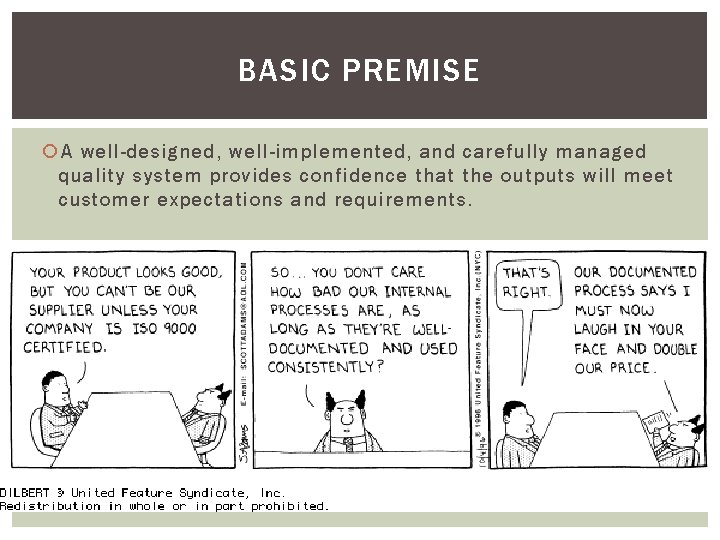
BASIC PREMISE A well-designed, well-implemented, and carefully managed quality system provides confidence that the outputs will meet customer expectations and requirements.
OLDER ISO STANDARDS ISO 9000: 1994 Standard § § Certifies processes are standardized 9001 for distributors 9002 for assembly 9003 for full-line manufacturing and retailing ISO 9000: 2000 Standard § All replaced by ISO 9001: 2000 § Conversion mandatory by Dec. 15, 2003
SO WHY DO IT? In Europe (and elsewhere) only buy from certified companies to ensure safety § Telecommunications equipment § Medical devices § Gas appliances § Toys § Construction products Required for international competitiveness Not to mention all of the other benefits of trying to improve quality
ISO FAMILY OF STANDARDS ISO 9001: 2000 Basis for certification ISO 9004: 2000 to prepare for national quality award ISO 10006 for project management ISO 10007 for configuration management ISO 10012 for measurement systems ISO 10013 for quality documentation ISO/TR 10014 managing economics of Q ISO 10015 for training ISO/TS 16949 for automotive suppliers ISO 19011 for auditing
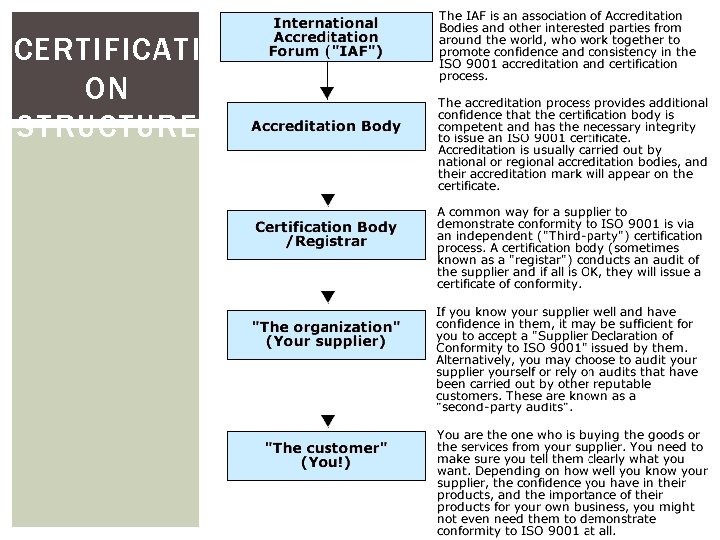
CERTIFICATI ON STRUCTURE
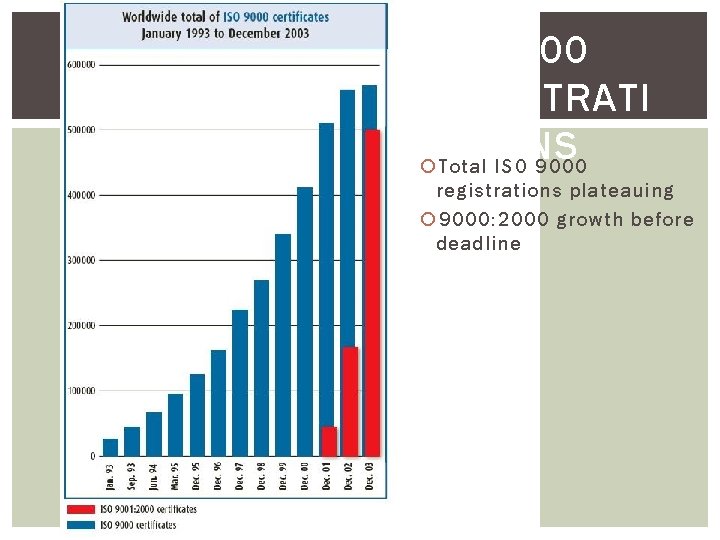
9000 REGISTRATI ONS Total ISO 9000 registrations plateauing 9000: 2000 growth before deadline
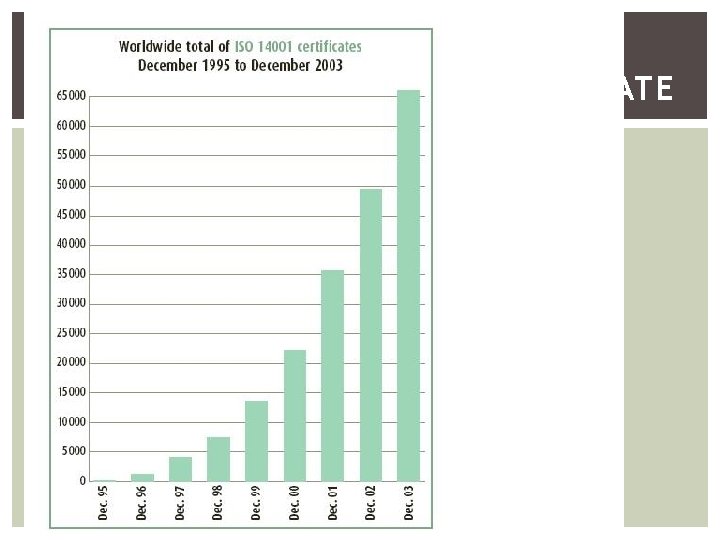
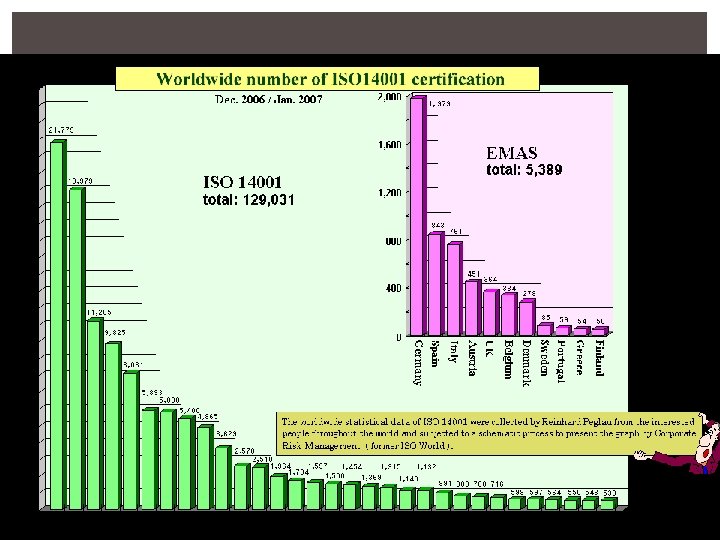
14001 CERTIFICATE S
MALCOLM BALDRIDGE NATIONAL QUALITY AWARD National conference on Productivity, 1982 7 conferences leading up to White House Conference on Productivity August 20, 1987 – Award created § Stimulate companies to improve quality and productivity § Recognize success to be example to others § Guidelines for companies to assess progress
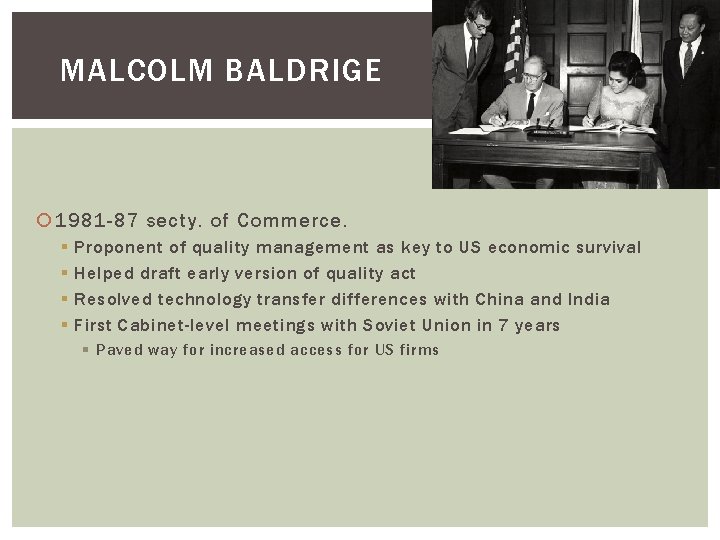
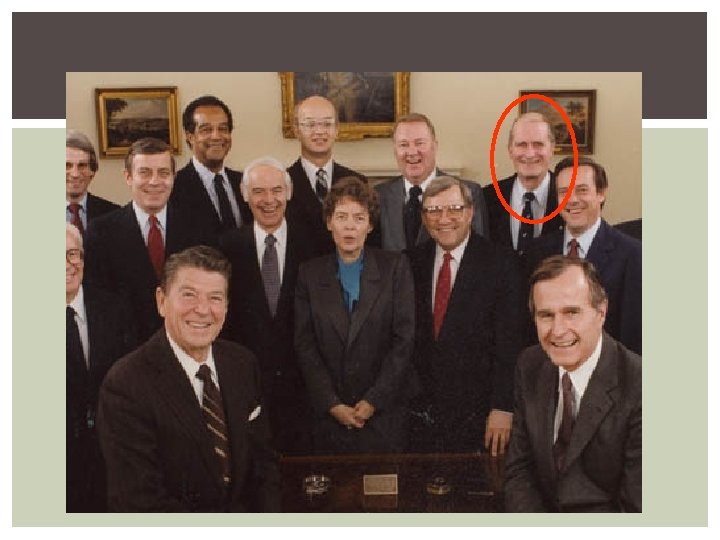
MALCOLM BALDRIGE 1981 -87 secty. of Commerce. § § Proponent of quality management as key to US economic survival Helped draft early version of quality act Resolved technology transfer differences with China and India First Cabinet-level meetings with Soviet Union in 7 years § Paved way for increased access for US firms
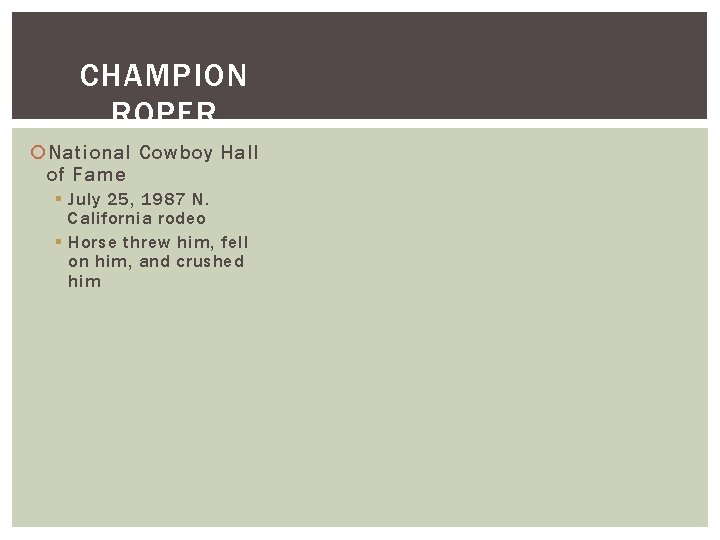
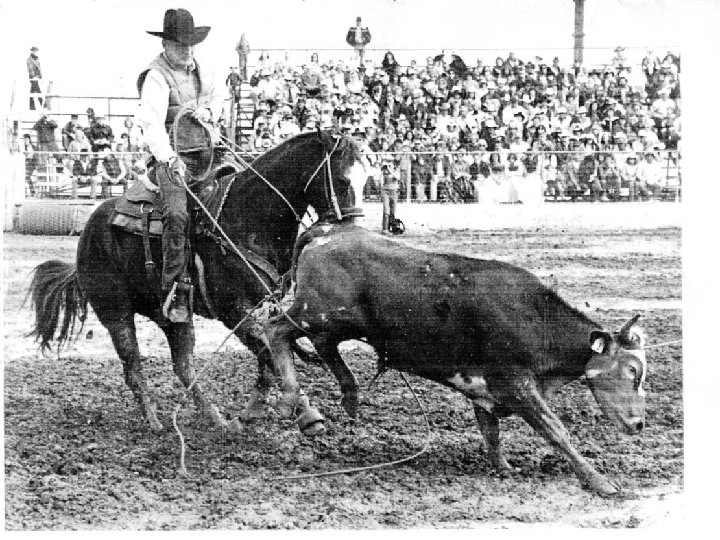
CHAMPION ROPER National Cowboy Hall of Fame § July 25, 1987 N. California rodeo § Horse threw him, fell on him, and crushed him
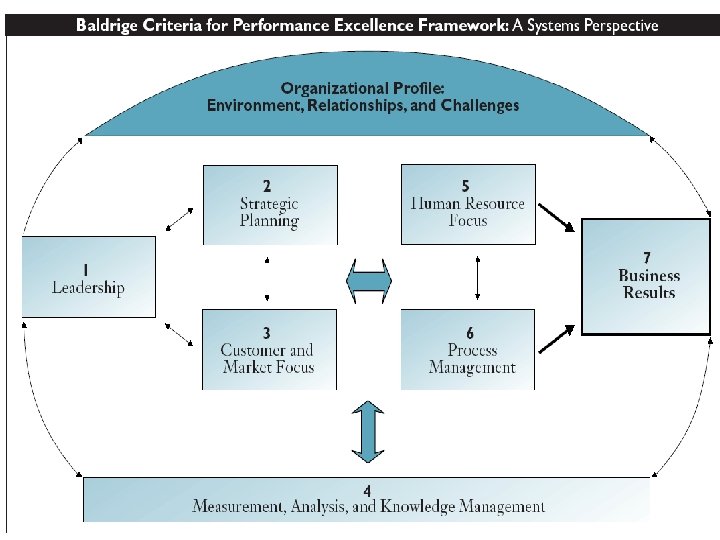
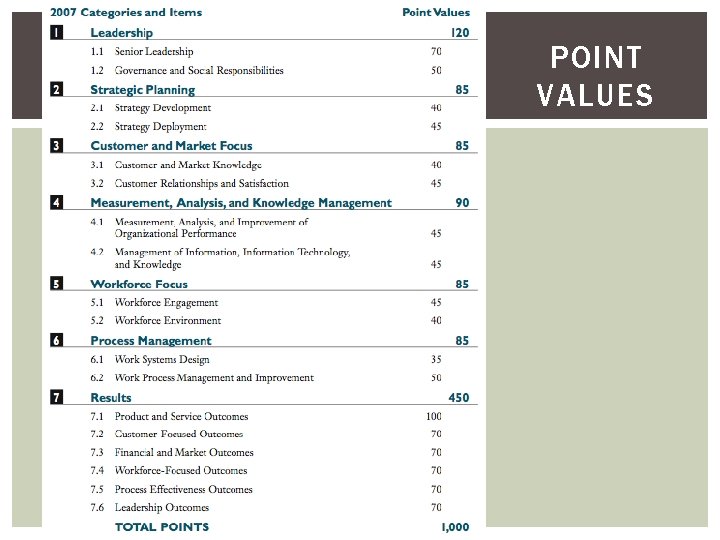
POINT VALUES
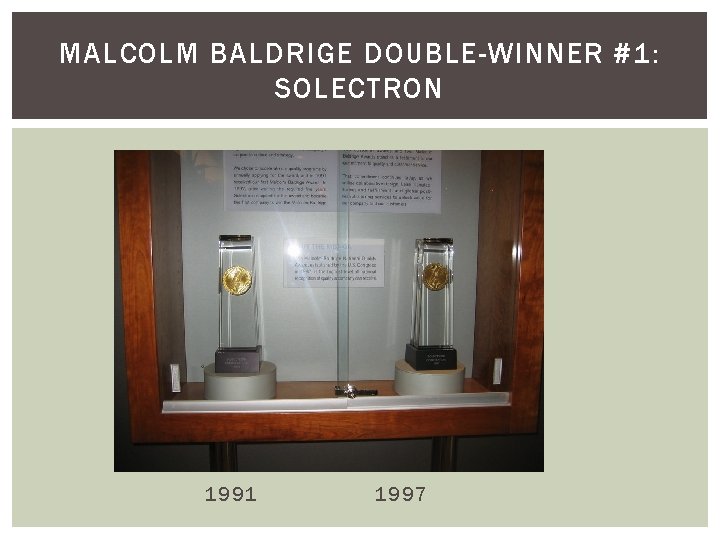
MALCOLM BALDRIGE DOUBLE-WINNER #1: SOLECTRON 1991 1997
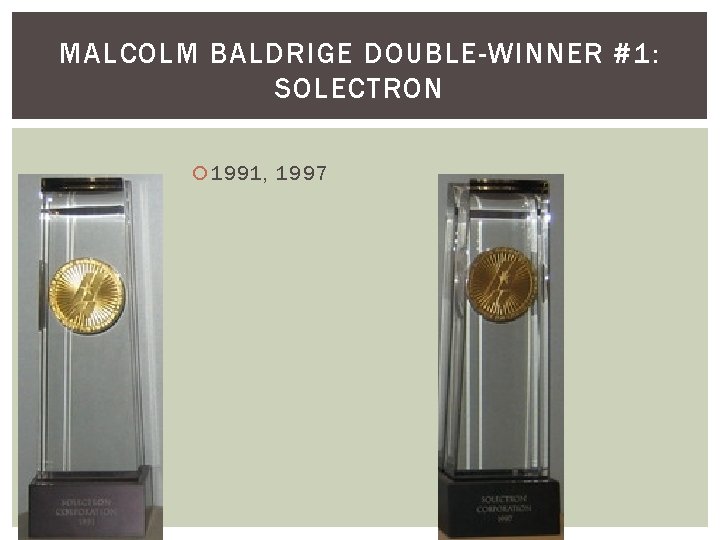
MALCOLM BALDRIGE DOUBLE-WINNER #1: SOLECTRON 1991, 1997
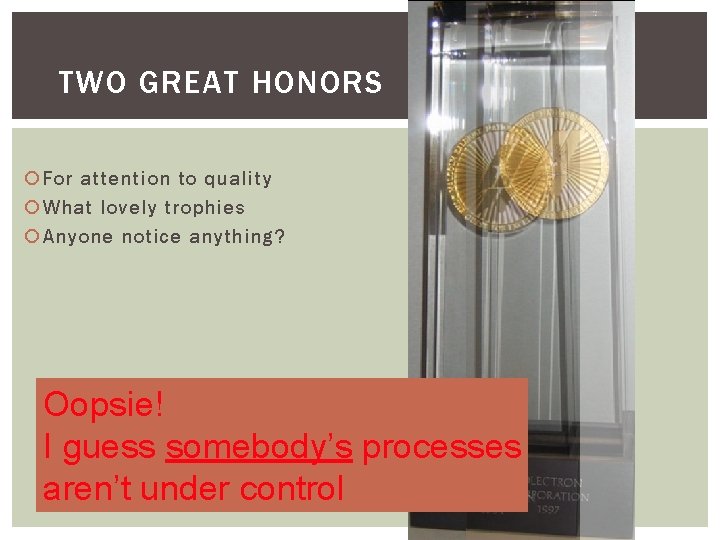
TWO GREAT HONORS For attention to quality What lovely trophies Anyone notice anything? Oopsie! I guess somebody’s processes aren’t under control
6 (6 SIGMA) The goal is to ensure that no unacceptable parts are ever passed on to a customer. A defect is anything that does not fall within the customer’s tolerance limits Through continuous process improvement, § Lower the process variability so low that the upper and lower specifications are 6 standard deviations above and below the mean
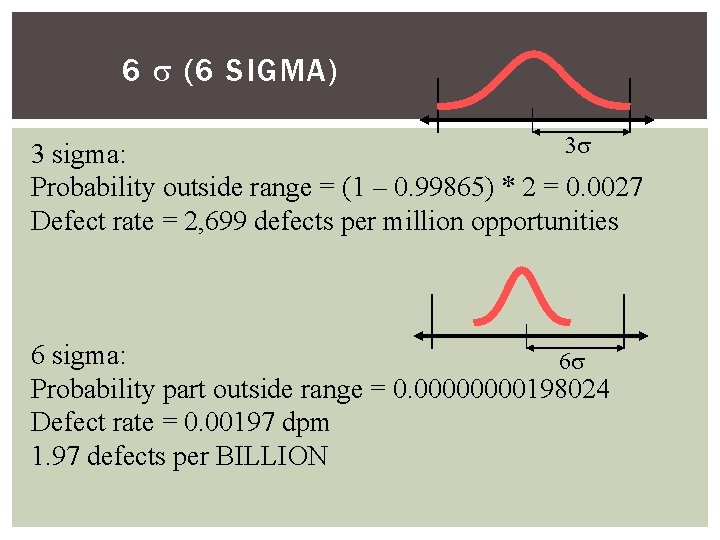
6 (6 SIGMA) 3 3 sigma: Probability outside range = (1 – 0. 99865) * 2 = 0. 0027 Defect rate = 2, 699 defects per million opportunities 6 sigma: 6 Probability part outside range = 0. 0000198024 Defect rate = 0. 00197 dpm 1. 97 defects per BILLION
DEFECT RATES - 1 3 sigma: 1/. 0027 = 1 every 370 parts 6 sigma: 1/ 0. 0000198024 = 1 every 504. 9 million parts If we make a million parts per year, we have: 3σ: 2, 699 defectives 6σ: 0. 0019732 defectives
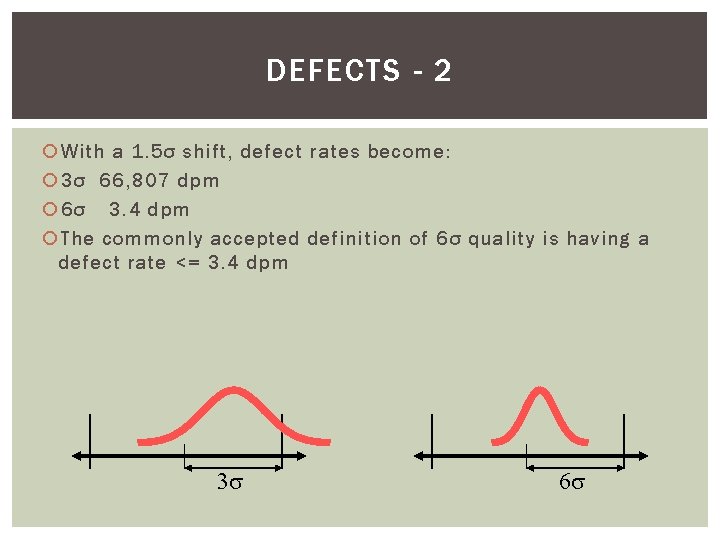
DEFECTS - 2 With a 1. 5σ shift, defect rates become: 3σ 66, 807 dpm 6σ 3. 4 dpm The commonly accepted definition of 6σ quality is having a defect rate <= 3. 4 dpm 3 6
6 SIGMA DPMO: Defects Per Million Opportunities DMAIC: Define, Measure, Analyze, Improve, and Control § § § (Alternate meaning: Dumb Managers Always Ignore Customers) Define – What, exactly, are we trying to improve? Measure – Quantify the problem Analyze – Look for solutions Improve – Verify that it really is an improvement Control – Make it the new practice, make sure working DCDA: Plan, Do, Check, Act
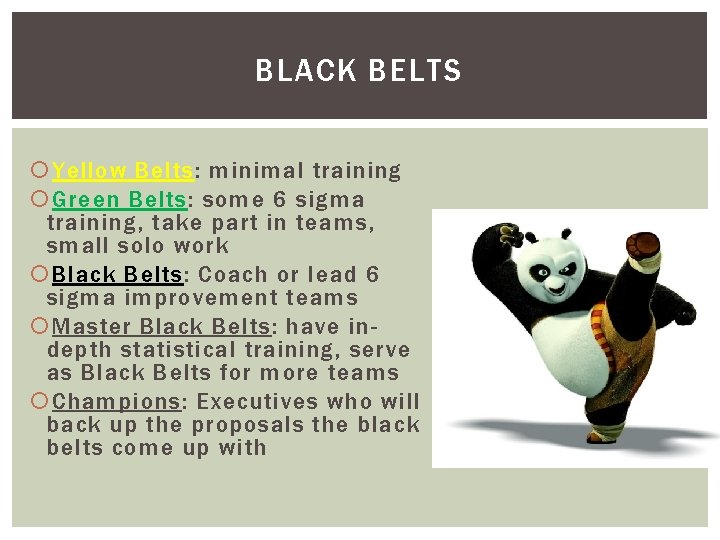
BLACK BELTS Yellow Belts: minimal training Green Belts: some 6 sigma training, take part in teams, small solo work Black Belts: Coach or lead 6 sigma improvement teams Master Black Belts: have indepth statistical training, serve as Black Belts for more teams Champions: Executives who will back up the proposals the black belts come up with
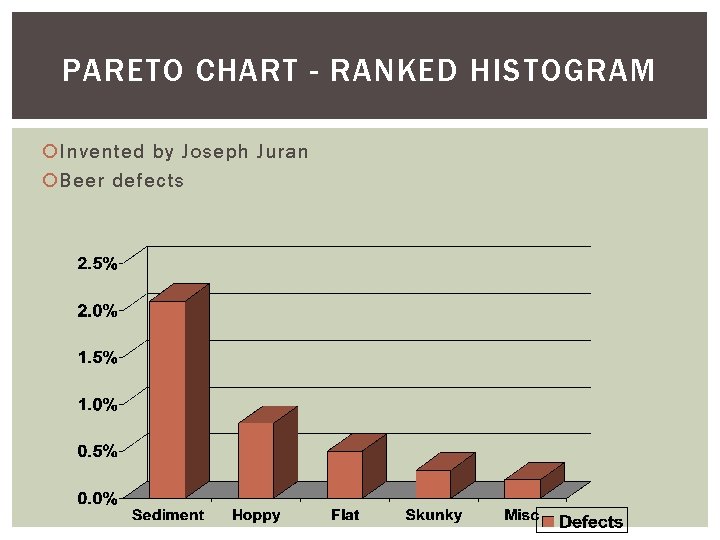
PARETO CHART - RANKED HISTOGRAM Invented by Joseph Juran Beer defects
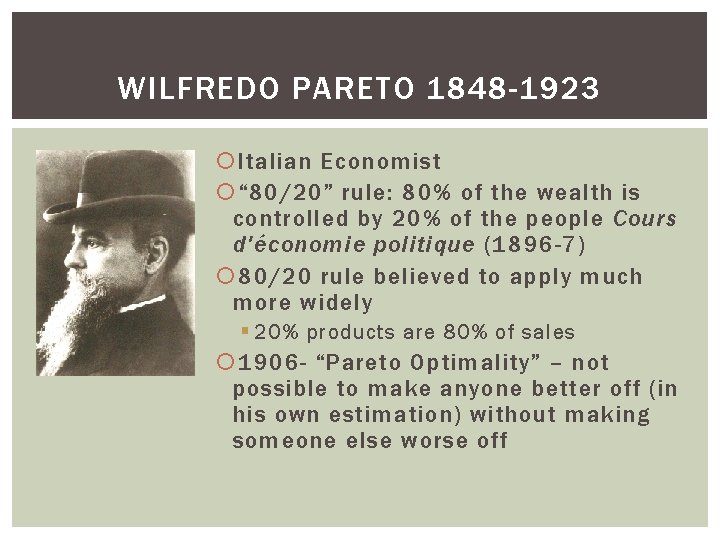
WILFREDO PARETO 1848 -1923 Italian Economist “ 80/20” rule: 80% of the wealth is controlled by 20% of the people Cours d'économie politique (1896 -7) 80/20 rule believed to apply much more widely § 20% products are 80% of sales 1906 - “Pareto Optimality” – not possible to make anyone better off (in his own estimation) without making someone else worse off
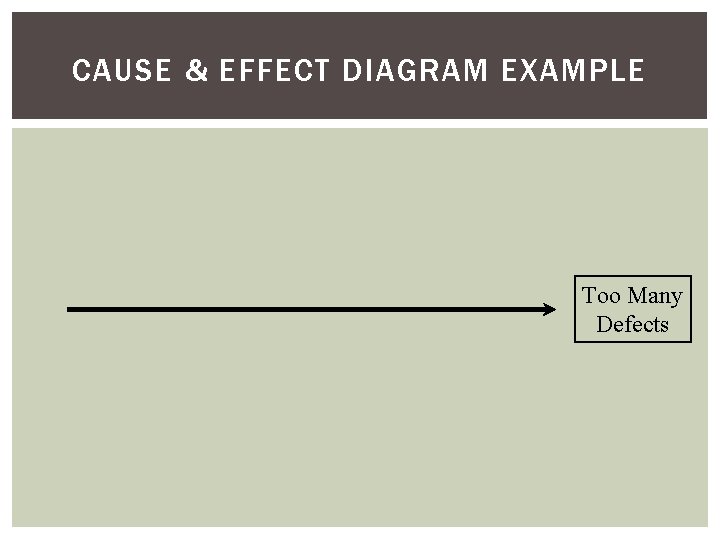
CAUSE & EFFECT DIAGRAM EXAMPLE Too Many Defects
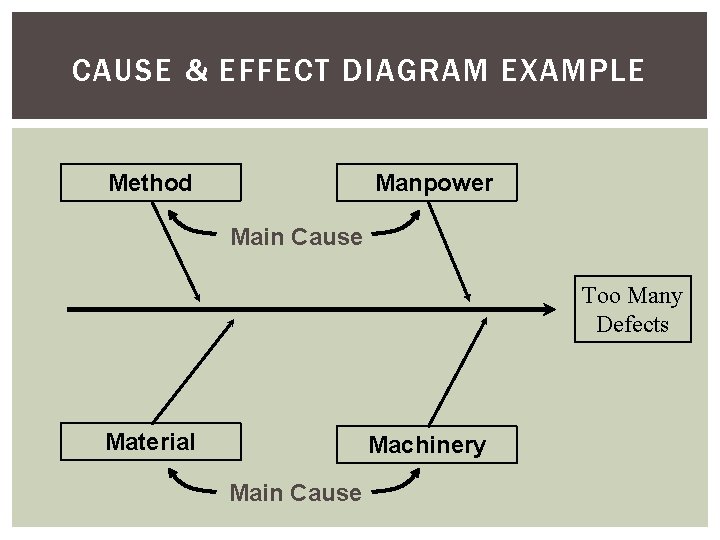
CAUSE & EFFECT DIAGRAM EXAMPLE Method Manpower Main Cause Too Many Defects Material Machinery Main Cause
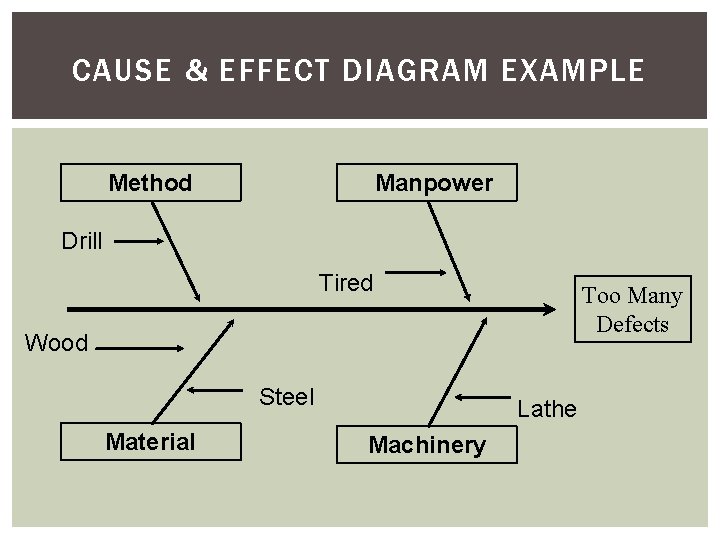
CAUSE & EFFECT DIAGRAM EXAMPLE Method Manpower Drill Tired Too Many Defects Wood Steel Material Lathe Machinery
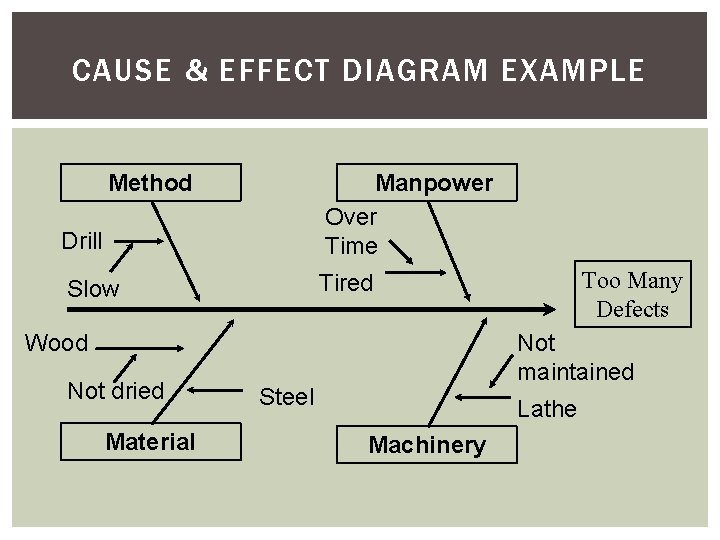
CAUSE & EFFECT DIAGRAM EXAMPLE Method Drill Manpower Over Time Slow Tired Wood Not dried Material Too Many Defects Not maintained Steel Lathe Machinery
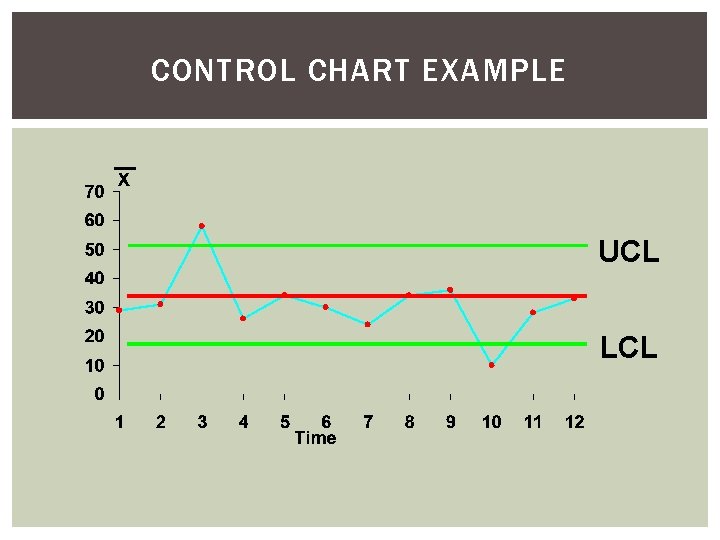
CONTROL CHART EXAMPLE UCL LCL
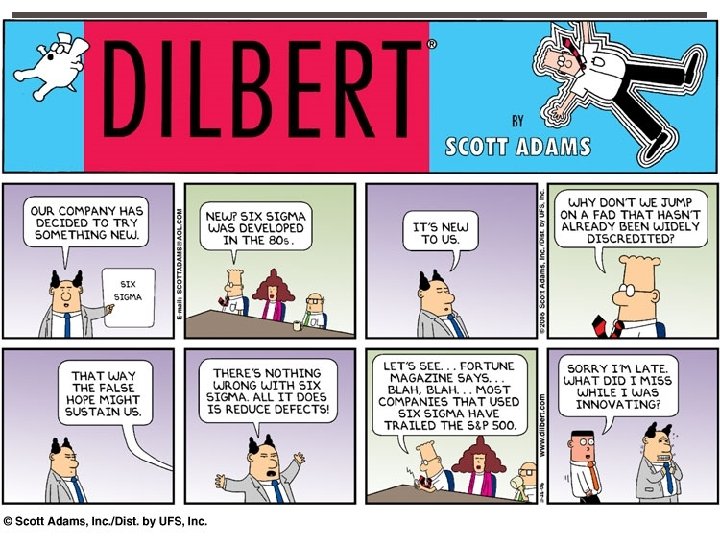
DILBERT’S VIEW
FORTUNE STORY 58 large companies have announced Six Sigma efforts 91% trailed S&P 500 since then, according to Qualpro, (which has its own competing system) July 11, 2006
Qualpro’s “Six Problems with Six Sigma” § Six sigma novices get “low hanging fruit” “Without years of experience under the guidance of an expert, they will not develop the needed competence” § Green belts get advice from people who don’t have experience implementing it § Loosely organized methodology doesn’t guarantee results (and they do? ) § Six Sigma uses simple math – not “Multivariable Testing” (MVT) § Six Sigma training for all is expensive, timeconsuming § Pressure to “do something” – low value projects
SIX SIGMA Narrow focus on improving existing processes Best and Brightest not focused on developing new products Fortune July 11, 2006 Can be overly bureaucratic
- Slides: 53