
Management of Orolingual Angioedema Post Alteplase Treatment in

- Slides: 25
Management of Orolingual Angioedema Post -Alteplase Treatment in Stroke Patients Oumaima Sahbani, Pharm. D PGY 1 Pharmacy Resident John Dempsey Hospital at UCONN Health May 8 th, 2018
Conflicts of Interest • I have no conflicts of interest to report • I intend to reference unlabeled/unapproved uses of drugs or products in my presentation
Objectives • Describe the mechanism of action behind post-alteplase angioedema • Understand the difference between allergic and non-allergic angioedema • Describe the treatment and medical management of angioedema post -alteplase
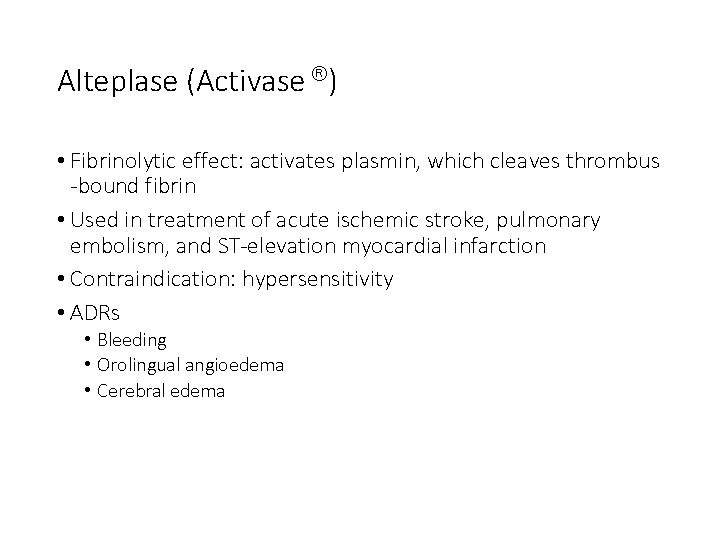
Alteplase (Activase ) • Fibrinolytic effect: activates plasmin, which cleaves thrombus -bound fibrin • Used in treatment of acute ischemic stroke, pulmonary embolism, and ST-elevation myocardial infarction • Contraindication: hypersensitivity • ADRs • Bleeding • Orolingual angioedema • Cerebral edema Lexi-Comp, Inc. (Lexi-Drugs® ). Lexi-Comp, Inc. ; September, 2017
Orolingual Angioedema Post-Alteplase • Rarely occurs ~1. 3 -5% in patients treated for ischemic stroke • 0. 02% in patients treated for myocardial infarction • Most patients respond well to medical management • Potentially life threatening if not recognized immediately and treated accordingly • Only well-known risk factor is prior use of an ACE inhibitor O’Carroll, C. B. , & Aguilar, M. I. (2015). Management of Postthrombolysis Hemorrhagic and Orolingual Angioedema Complications. The Neurohospitalist, 5(3), 133 -141.
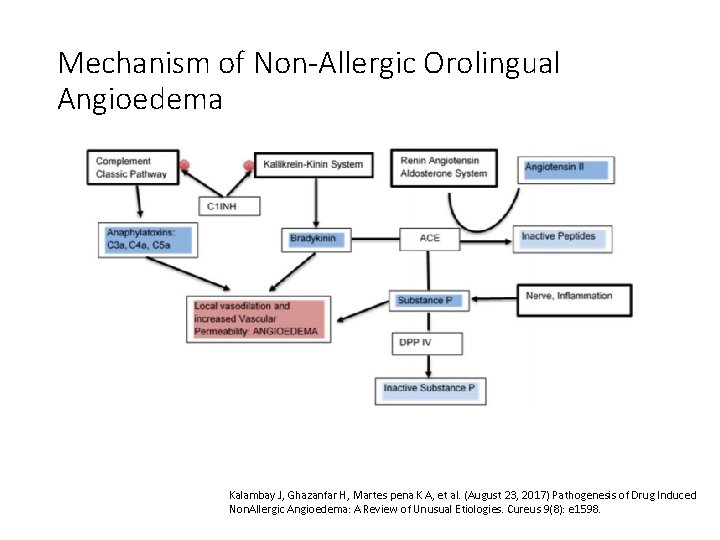
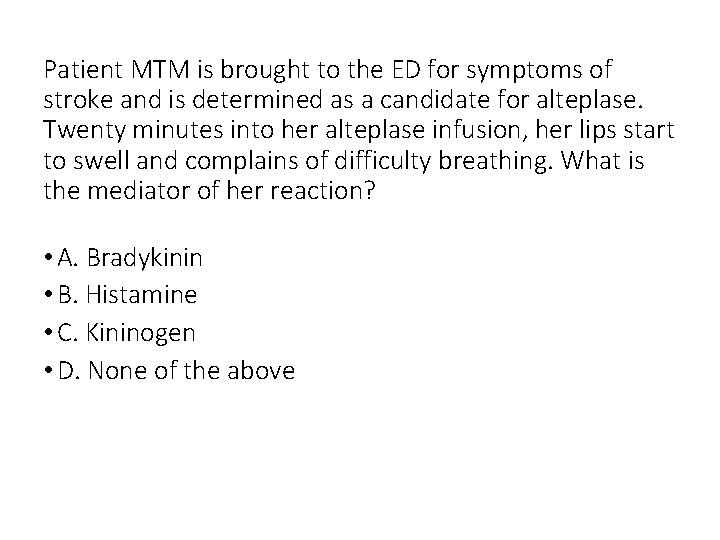
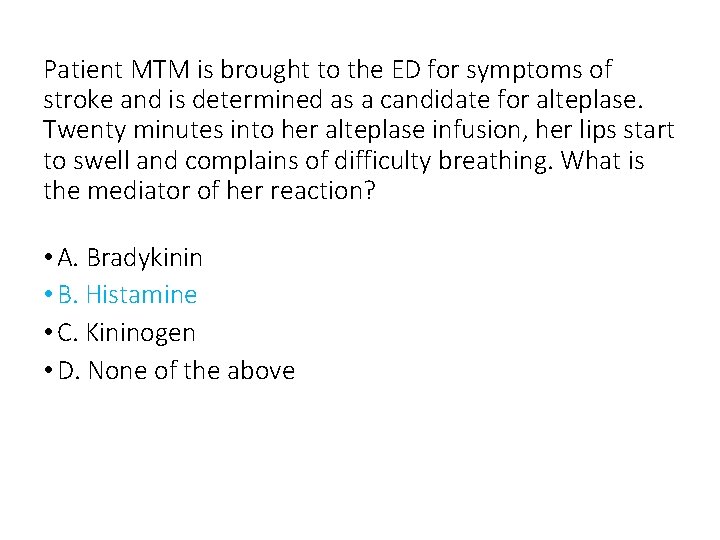
Mechanisms of Orolingual Angioedema Allergic • Type I hypersensitivity • Antigen cross links with immunoglobulin E antibody bound on the surface of mast cells • Results in release of histamine Non-allergic • Mediated by bradykinin • Three types: • Hereditary • Acquired • Drug-induced Kalambay J, Ghazanfar H, Martes pena K A, et al. (August 23, 2017) Pathogenesis of Drug Induced Non. Allergic Angioedema: A Review of Unusual Etiologies. Cureus 9(8): e 1598.
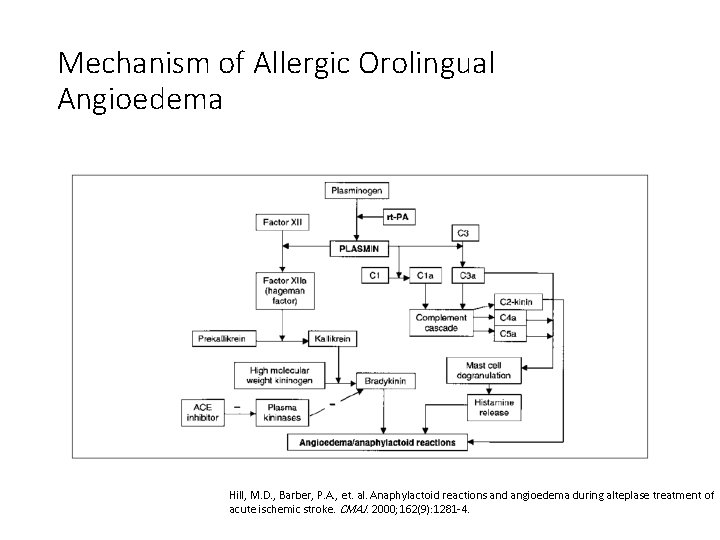
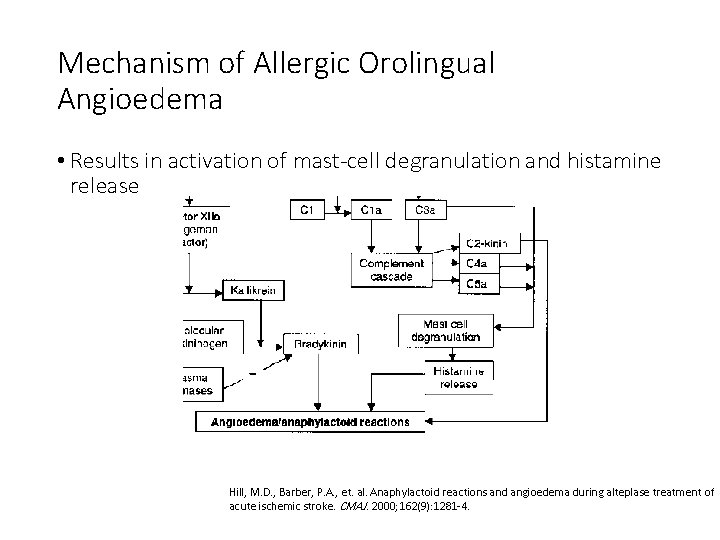
Mechanism of Allergic Orolingual Angioedema Hill, M. D. , Barber, P. A. , et. al. Anaphylactoid reactions and angioedema during alteplase treatment of acute ischemic stroke. CMAJ. 2000; 162(9): 1281 -4.
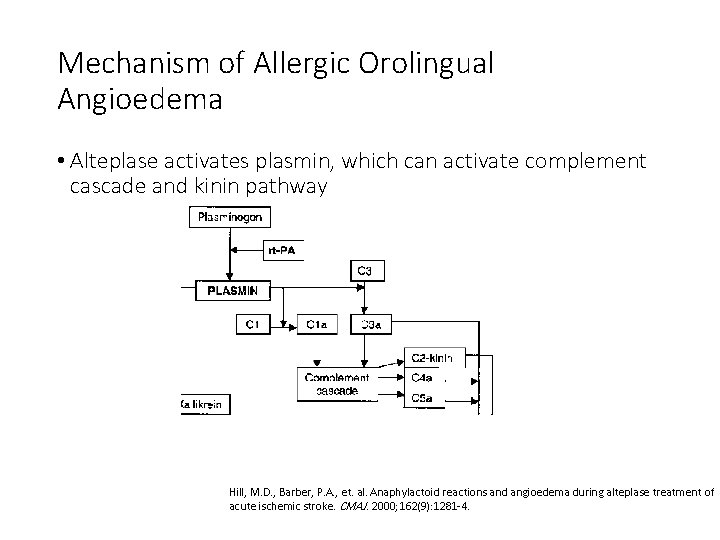
Mechanism of Allergic Orolingual Angioedema • Alteplase activates plasmin, which can activate complement cascade and kinin pathway Hill, M. D. , Barber, P. A. , et. al. Anaphylactoid reactions and angioedema during alteplase treatment of acute ischemic stroke. CMAJ. 2000; 162(9): 1281 -4.
Mechanism of Allergic Orolingual Angioedema • Results in activation of mast-cell degranulation and histamine release Hill, M. D. , Barber, P. A. , et. al. Anaphylactoid reactions and angioedema during alteplase treatment of acute ischemic stroke. CMAJ. 2000; 162(9): 1281 -4.
Mechanism of Non-Allergic Orolingual Angioedema Kalambay J, Ghazanfar H, Martes pena K A, et al. (August 23, 2017) Pathogenesis of Drug Induced Non. Allergic Angioedema: A Review of Unusual Etiologies. Cureus 9(8): e 1598.
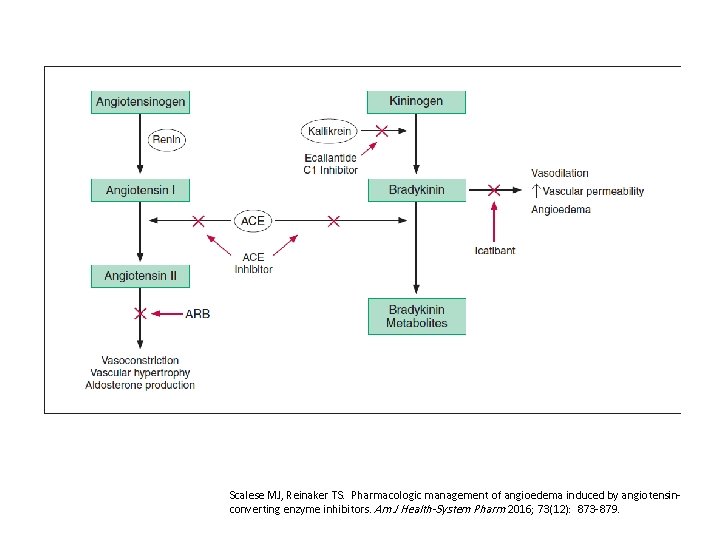
Scalese MJ, Reinaker TS. Pharmacologic management of angioedema induced by angiotensinconverting enzyme inhibitors. Am J Health-System Pharm 2016; 73(12): 873 -879.
C 1 Inhibitors • Blood product derivatives • Berinert® • Cinryze® • Play a role in regulating the complement and intrinsic coagulation pathway • As well as the fibrinolytic and kinin pathways • Inactivate plasma kallikrein and factor XIIa, thus preventing bradykinin production
Clinical Presentation: Allergic • Important to quickly recognize symptoms and have treatment algorithm in place • Transient, self-limiting swelling of the tongue and lips • Caused by increased vasodilation and vascular permeability • Can potentially cause airway obstruction and respiratory compromise requiring emergent intubation O’Carroll, C. B. , & Aguilar, M. I. (2015). Management of Postthrombolysis Hemorrhagic and Orolingual Angioedema Complications. The Neurohospitalist, 5(3), 133 -141.
Onset of Orolingual Angioedema • Occurs quickly and unexpectedly after thrombolytic therapy • Can occur at any time after starting the infusion of the medication • Close monitoring required for the duration of administration of alteplase • Typically occurs towards the end of the alteplase infusion O’Carroll, C. B. , & Aguilar, M. I. (2015). Management of Postthrombolysis Hemorrhagic and Orolingual Angioedema Complications. The Neurohospitalist, 5(3), 133 -141.
Medical Management: Allergic • Guidelines for a specific treatment protocol do not exist • Discontinue remaining alteplase infusion if any signs of tongue or lip swelling • Promptly administer IV antihistaminergic medications • If swelling persists, administer corticosteroids O’Carroll, C. B. , & Aguilar, M. I. (2015). Management of Postthrombolysis Hemorrhagic and Orolingual Angioedema Complications. The Neurohospitalist, 5(3), 133 -141.
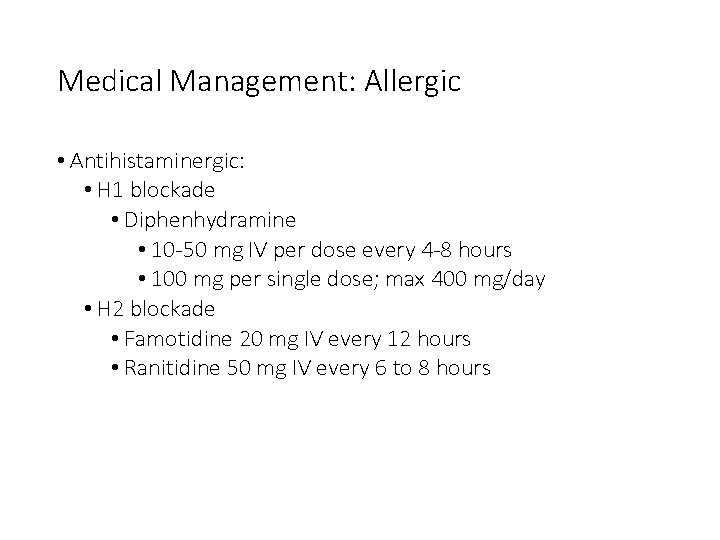
Medical Management: Allergic • Antihistaminergic: • H 1 blockade • Diphenhydramine • 10 -50 mg IV per dose every 4 -8 hours • 100 mg per single dose; max 400 mg/day • H 2 blockade • Famotidine 20 mg IV every 12 hours • Ranitidine 50 mg IV every 6 to 8 hours Lexi-Comp, Inc. (Lexi-Drugs® ). Lexi-Comp, Inc. ; September, 2017
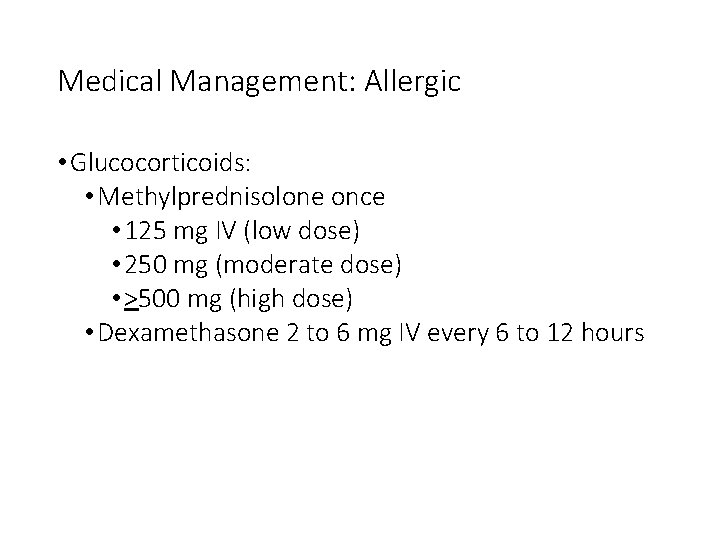
Medical Management: Allergic • Glucocorticoids: • Methylprednisolone once • 125 mg IV (low dose) • 250 mg (moderate dose) • >500 mg (high dose) • Dexamethasone 2 to 6 mg IV every 6 to 12 hours Lexi-Comp, Inc. (Lexi-Drugs® ). Lexi-Comp, Inc. ; September, 2017
UCONN Health Clinical Care Guidelines for Stroke UConn John Dempsey Hospital. (2014). Clinical Care Guidelines. Ischemic and Hemorrhagic Stroke. Farmington, CT.
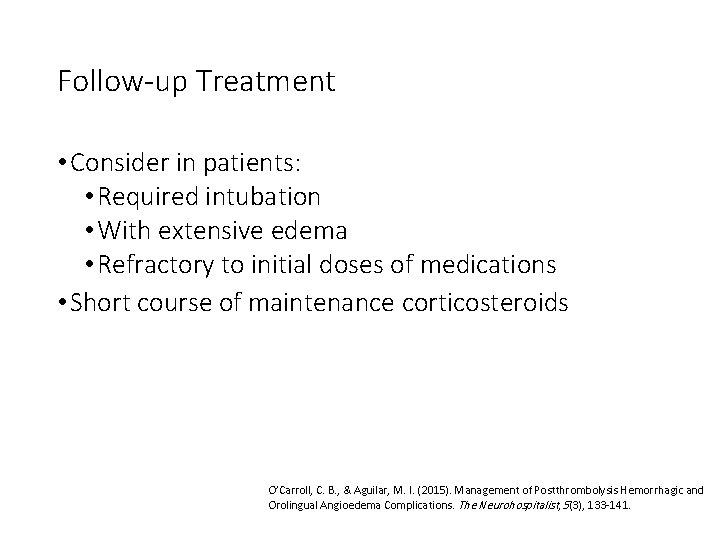
Follow-up Treatment • Consider in patients: • Required intubation • With extensive edema • Refractory to initial doses of medications • Short course of maintenance corticosteroids O’Carroll, C. B. , & Aguilar, M. I. (2015). Management of Postthrombolysis Hemorrhagic and Orolingual Angioedema Complications. The Neurohospitalist, 5(3), 133 -141.
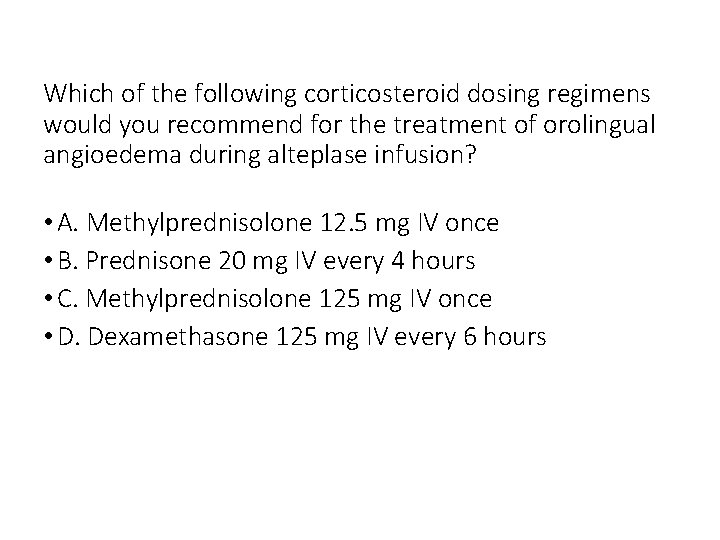
Which of the following corticosteroid dosing regimens would you recommend for the treatment of orolingual angioedema during alteplase infusion? • A. Methylprednisolone 12. 5 mg IV once • B. Prednisone 20 mg IV every 4 hours • C. Methylprednisolone 125 mg IV once • D. Dexamethasone 125 mg IV every 6 hours
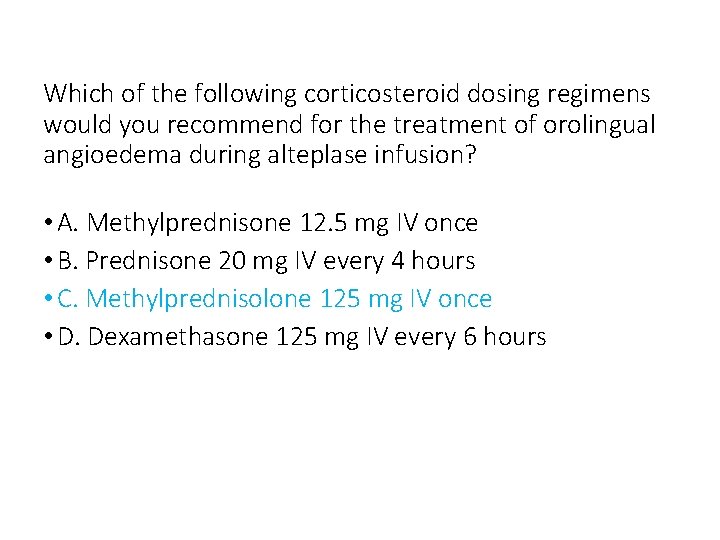
Which of the following corticosteroid dosing regimens would you recommend for the treatment of orolingual angioedema during alteplase infusion? • A. Methylprednisone 12. 5 mg IV once • B. Prednisone 20 mg IV every 4 hours • C. Methylprednisolone 125 mg IV once • D. Dexamethasone 125 mg IV every 6 hours
Patient MTM is brought to the ED for symptoms of stroke and is determined as a candidate for alteplase. Twenty minutes into her alteplase infusion, her lips start to swell and complains of difficulty breathing. What is the mediator of her reaction? • A. Bradykinin • B. Histamine • C. Kininogen • D. None of the above
Patient MTM is brought to the ED for symptoms of stroke and is determined as a candidate for alteplase. Twenty minutes into her alteplase infusion, her lips start to swell and complains of difficulty breathing. What is the mediator of her reaction? • A. Bradykinin • B. Histamine • C. Kininogen • D. None of the above
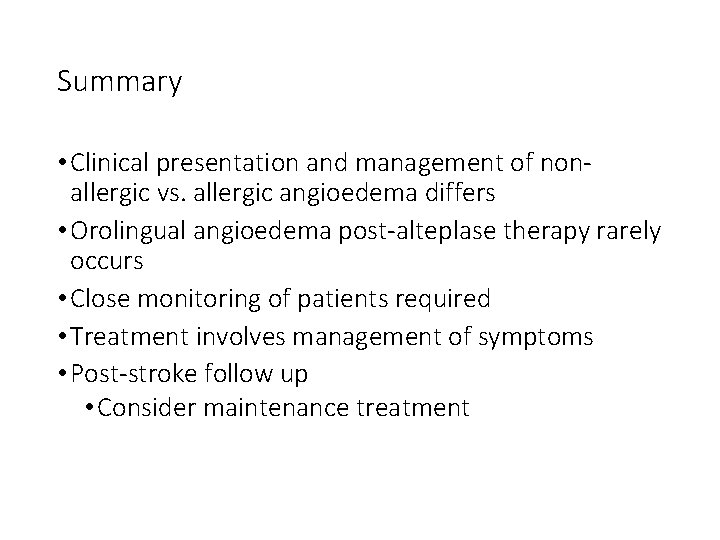
Summary • Clinical presentation and management of nonallergic vs. allergic angioedema differs • Orolingual angioedema post-alteplase therapy rarely occurs • Close monitoring of patients required • Treatment involves management of symptoms • Post-stroke follow up • Consider maintenance treatment
Management of Orolingual Angioedema Post -Alteplase Treatment in Stroke Patients Oumaima Sahbani, Pharm. D PGY 1 Pharmacy Resident John Dempsey Hospital at UCONN Health sahbani@uchc. edu