
MANAGEMENT OF NAUSEA AND VOMITING IN PALLIATIVE CARE
- Slides: 10
MANAGEMENT OF NAUSEA AND VOMITING IN PALLIATIVE CARE
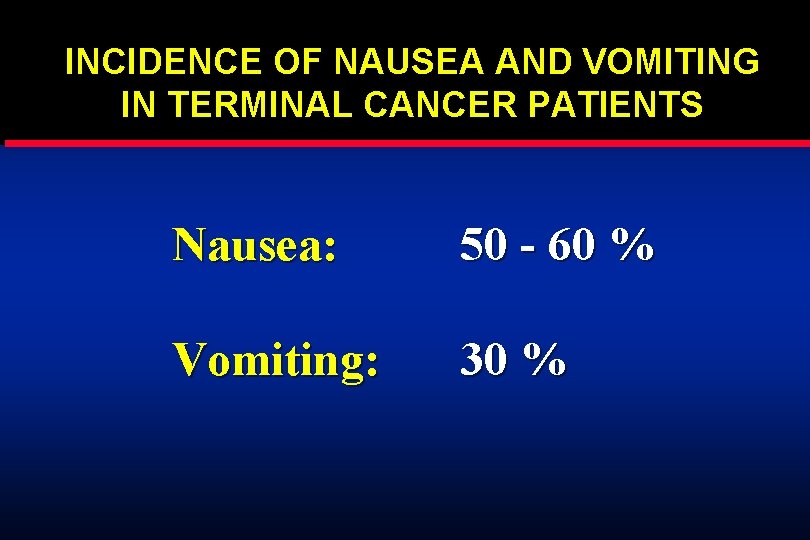
INCIDENCE OF NAUSEA AND VOMITING IN TERMINAL CANCER PATIENTS Nausea: 50 - 60 % Vomiting: 30 %
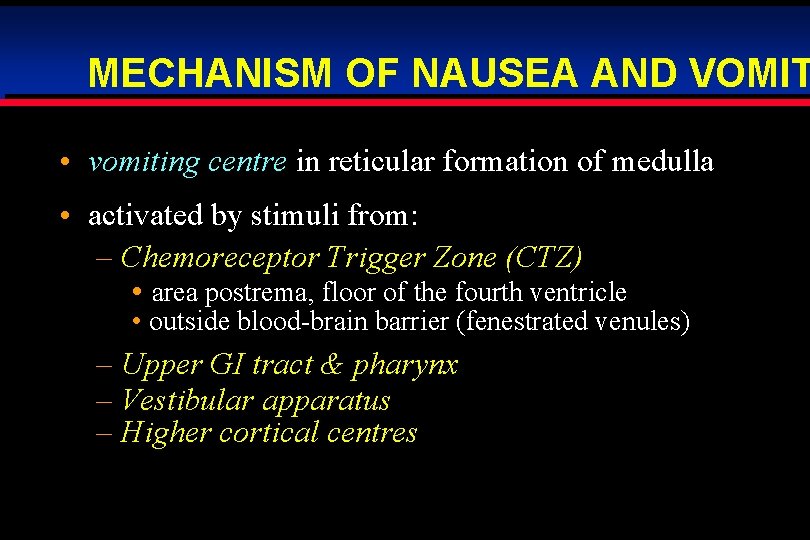
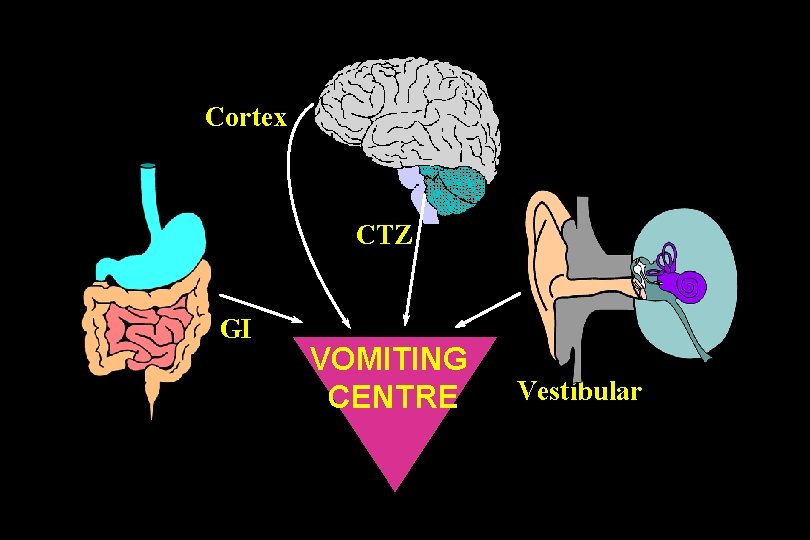
MECHANISM OF NAUSEA AND VOMIT • vomiting centre in reticular formation of medulla • activated by stimuli from: – Chemoreceptor Trigger Zone (CTZ) • area postrema, floor of the fourth ventricle • outside blood-brain barrier (fenestrated venules) – Upper GI tract & pharynx – Vestibular apparatus – Higher cortical centres
Cortex CTZ GI VOMITING CENTRE Vestibular
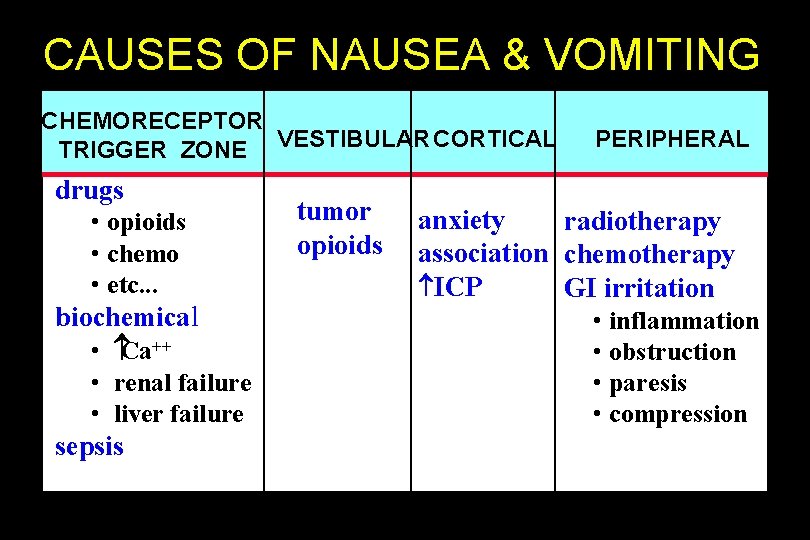
CAUSES OF NAUSEA & VOMITING CHEMORECEPTOR TRIGGER ZONE VESTIBULAR CORTICAL drugs • opioids • chemo • etc. . . biochemical • Ca++ • renal failure • liver failure sepsis tumor opioids PERIPHERAL anxiety radiotherapy association chemotherapy ICP GI irritation • inflammation • obstruction • paresis • compression
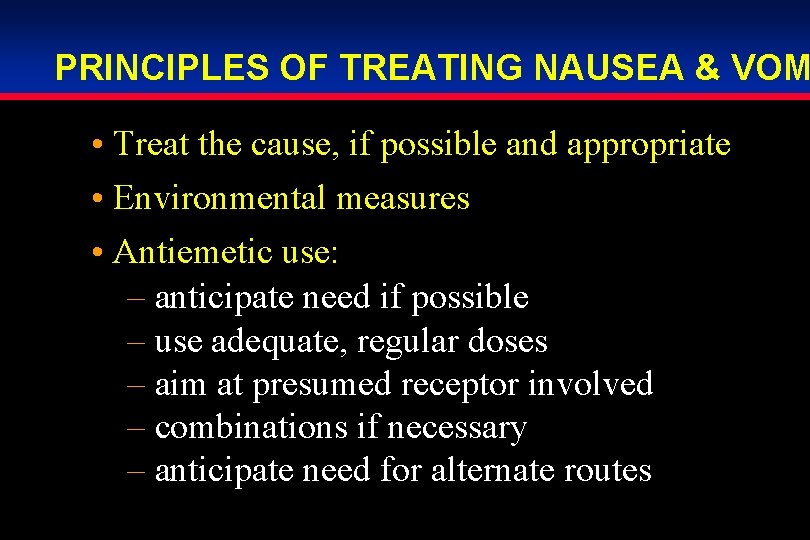
PRINCIPLES OF TREATING NAUSEA & VOM • Treat the cause, if possible and appropriate • Environmental measures • Antiemetic use: – anticipate need if possible – use adequate, regular doses – aim at presumed receptor involved – combinations if necessary – anticipate need for alternate routes
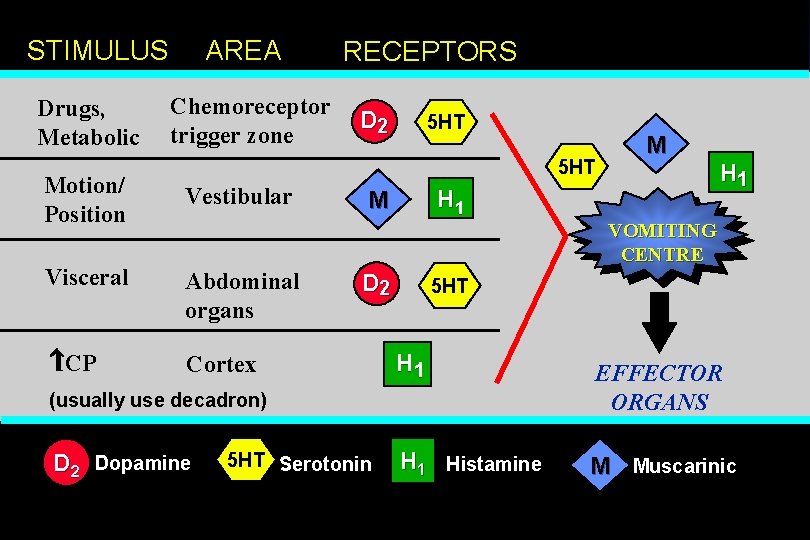
AREA STIMULUS Drugs, Metabolic Chemoreceptor trigger zone RECEPTORS D 2 5 HT Motion/ Position Vestibular Visceral Abdominal organs ICP Cortex M H 1 M VOMITING CENTRE D 2 5 HT H 1 EFFECTOR ORGANS H 1 Histamine M Muscarinic (usually use decadron) D 2 Dopamine 5 HT Serotonin
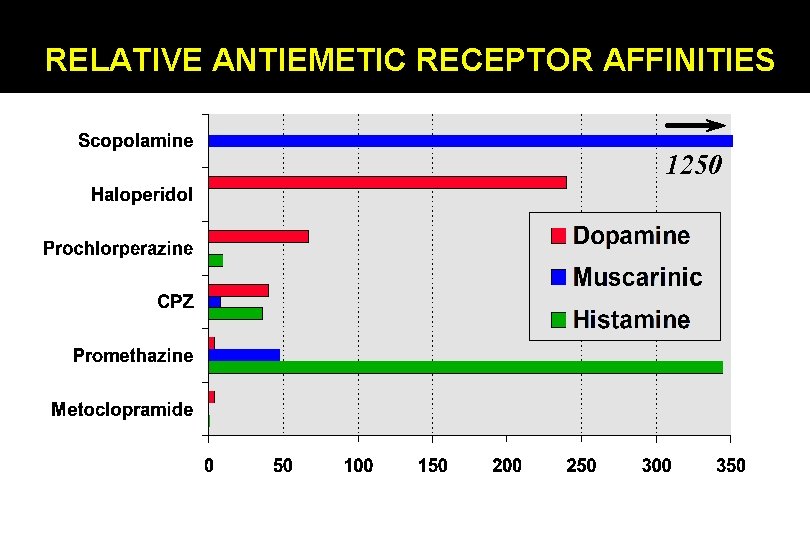
RELATIVE ANTIEMETIC RECEPTOR AFFINITIES 1250
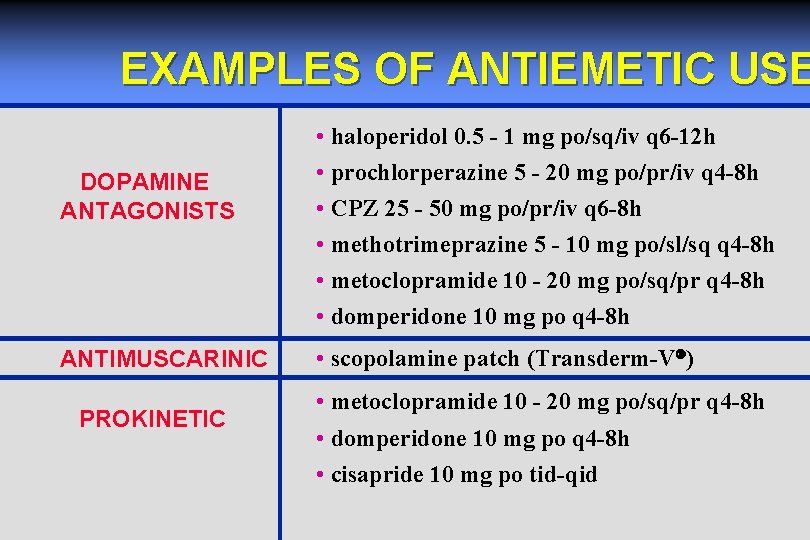
EXAMPLES OF ANTIEMETIC USE DOPAMINE ANTAGONISTS ANTIMUSCARINIC PROKINETIC • haloperidol 0. 5 - 1 mg po/sq/iv q 6 -12 h • prochlorperazine 5 - 20 mg po/pr/iv q 4 -8 h • CPZ 25 - 50 mg po/pr/iv q 6 -8 h • methotrimeprazine 5 - 10 mg po/sl/sq q 4 -8 h • metoclopramide 10 - 20 mg po/sq/pr q 4 -8 h • domperidone 10 mg po q 4 -8 h • scopolamine patch (Transderm-Vâ) • metoclopramide 10 - 20 mg po/sq/pr q 4 -8 h • domperidone 10 mg po q 4 -8 h • cisapride 10 mg po tid-qid
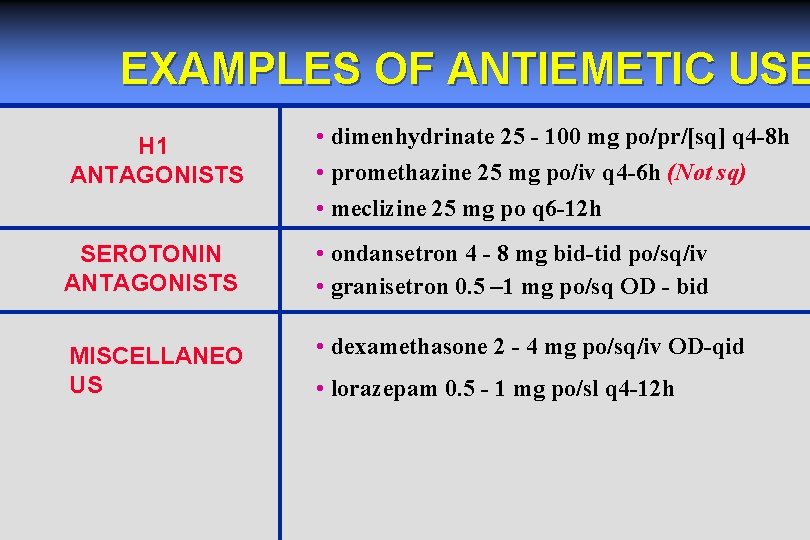
EXAMPLES OF ANTIEMETIC USE H 1 ANTAGONISTS • dimenhydrinate 25 - 100 mg po/pr/[sq] q 4 -8 h • promethazine 25 mg po/iv q 4 -6 h (Not sq) • meclizine 25 mg po q 6 -12 h SEROTONIN ANTAGONISTS • ondansetron 4 - 8 mg bid-tid po/sq/iv • granisetron 0. 5 – 1 mg po/sq OD - bid MISCELLANEO US • dexamethasone 2 - 4 mg po/sq/iv OD-qid • lorazepam 0. 5 - 1 mg po/sl q 4 -12 h