
Management of MultiVessel Disease in the STEMI Patient




- Slides: 24
Management of Multi-Vessel Disease in the STEMI Patient Howard A. Cohen, MD, FACC, FSCAI Professor of Medicine Lewis Katz School of Medicine Temple University Director Interventional Cardiology and Catheterization Laboratories
Howard A. Cohen, MD Medical Director Cardiac. Assist, Inc Stock Options Cardiac. Assist, Inc Consultant Abbott Vascular
DISCLOSURES • Cardiac. Assist, Inc – Medical Director – Stock options • Abbott Vascular, Inc – Consultant – Research support
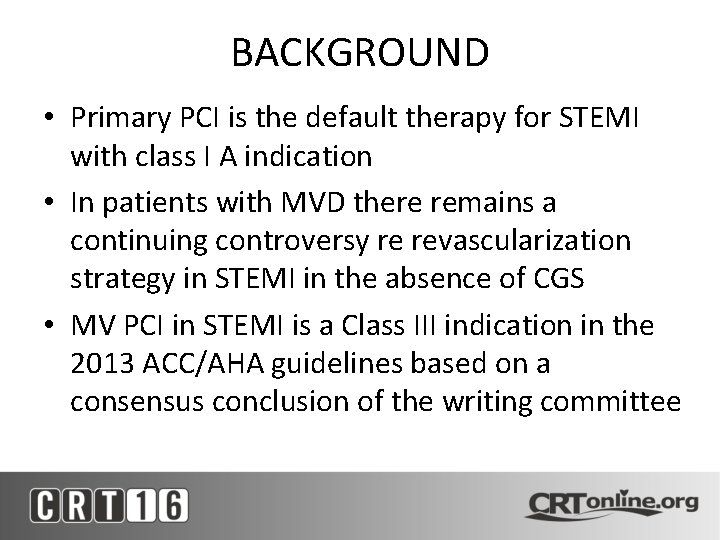
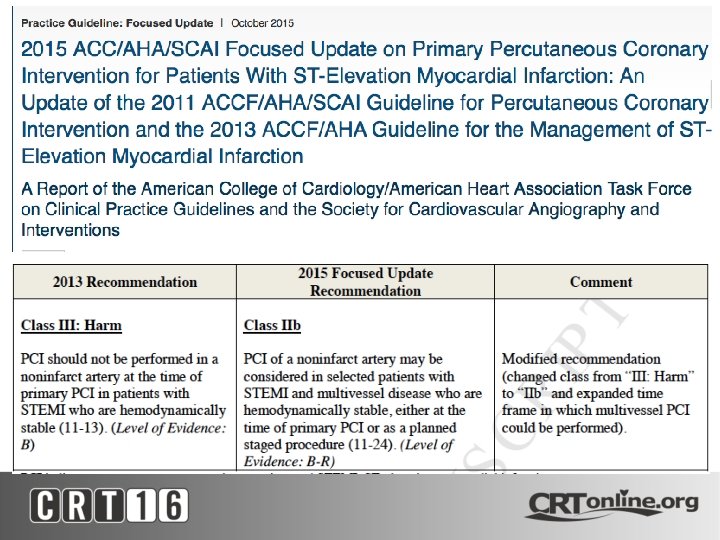
BACKGROUND • Primary PCI is the default therapy for STEMI with class I A indication • In patients with MVD there remains a continuing controversy re revascularization strategy in STEMI in the absence of CGS • MV PCI in STEMI is a Class III indication in the 2013 ACC/AHA guidelines based on a consensus conclusion of the writing committee
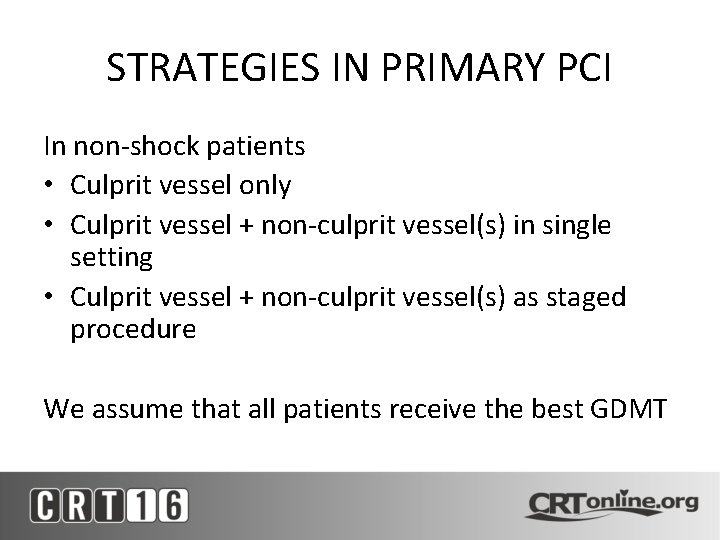
STRATEGIES IN PRIMARY PCI In non-shock patients • Culprit vessel only • Culprit vessel + non-culprit vessel(s) in single setting • Culprit vessel + non-culprit vessel(s) as staged procedure We assume that all patients receive the best GDMT
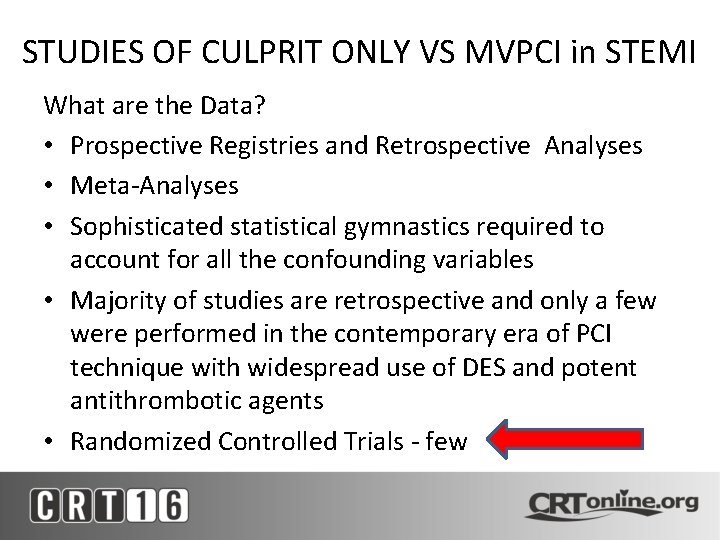
STUDIES OF CULPRIT ONLY VS MVPCI in STEMI What are the Data? • Prospective Registries and Retrospective Analyses • Meta-Analyses • Sophisticated statistical gymnastics required to account for all the confounding variables • Majority of studies are retrospective and only a few were performed in the contemporary era of PCI technique with widespread use of DES and potent antithrombotic agents • Randomized Controlled Trials - few
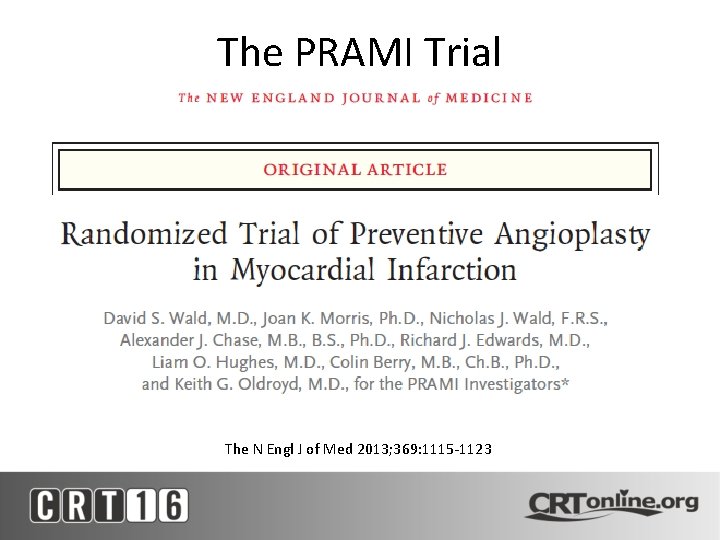
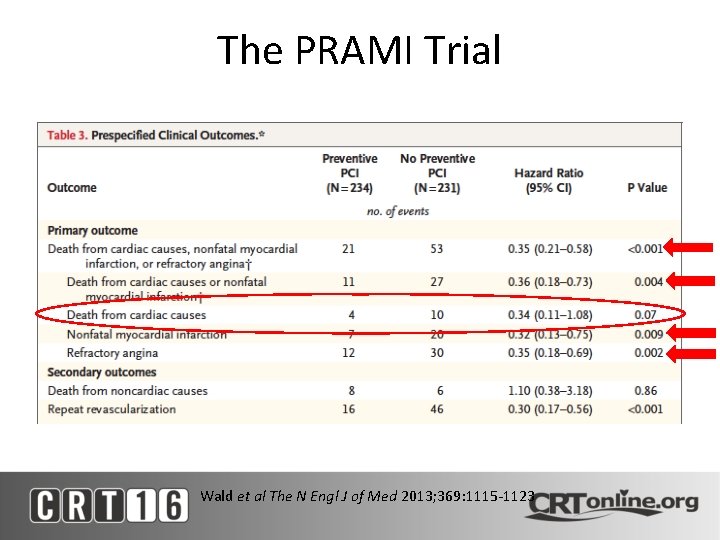
The PRAMI Trial The N Engl J of Med 2013; 369: 1115 -1123
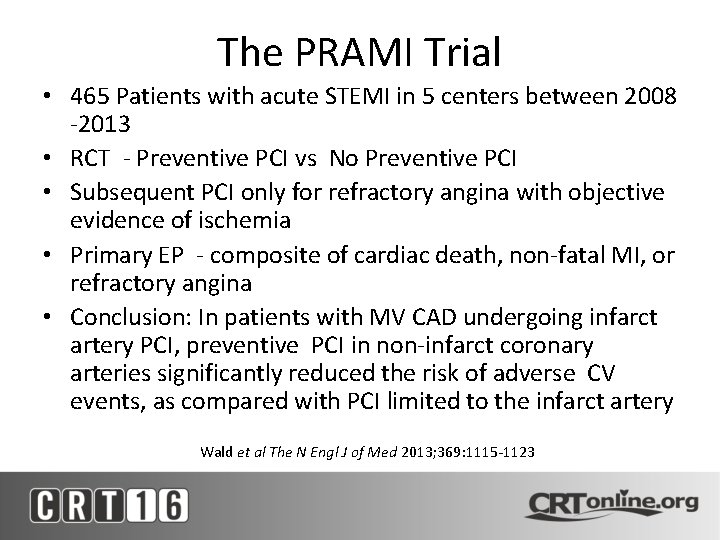
The PRAMI Trial • 465 Patients with acute STEMI in 5 centers between 2008 -2013 • RCT - Preventive PCI vs No Preventive PCI • Subsequent PCI only for refractory angina with objective evidence of ischemia • Primary EP - composite of cardiac death, non-fatal MI, or refractory angina • Conclusion: In patients with MV CAD undergoing infarct artery PCI, preventive PCI in non-infarct coronary arteries significantly reduced the risk of adverse CV events, as compared with PCI limited to the infarct artery Wald et al The N Engl J of Med 2013; 369: 1115 -1123
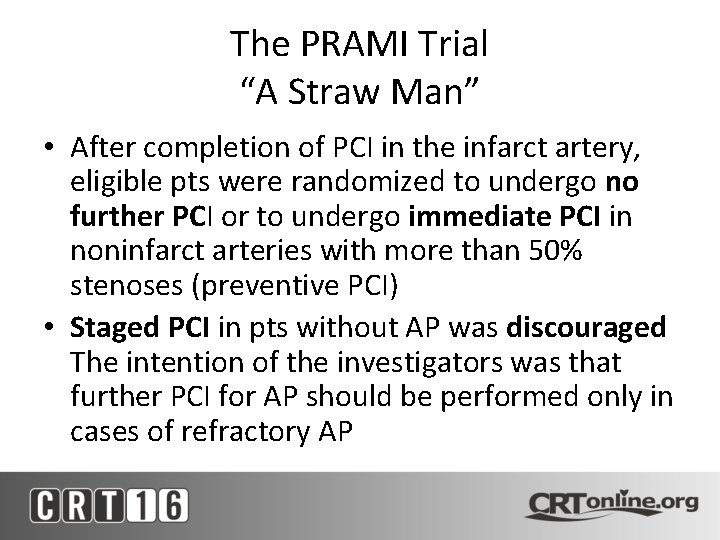
The PRAMI Trial “A Straw Man” • After completion of PCI in the infarct artery, eligible pts were randomized to undergo no further PCI or to undergo immediate PCI in noninfarct arteries with more than 50% stenoses (preventive PCI) • Staged PCI in pts without AP was discouraged The intention of the investigators was that further PCI for AP should be performed only in cases of refractory AP
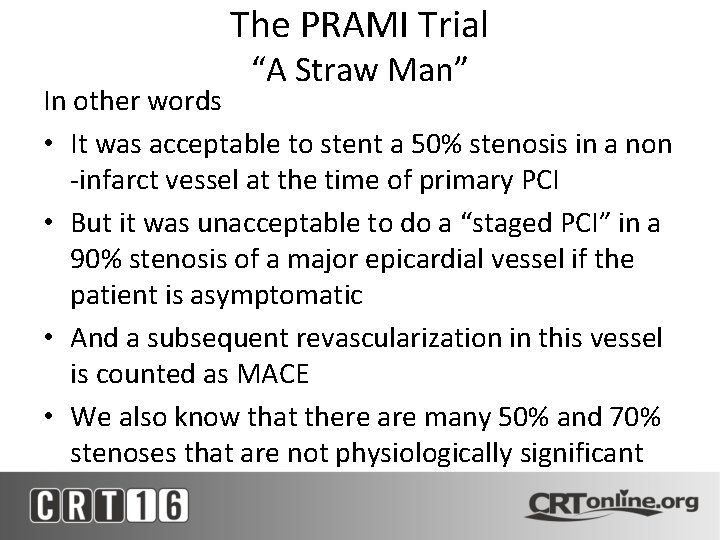
The PRAMI Trial “A Straw Man” In other words • It was acceptable to stent a 50% stenosis in a non -infarct vessel at the time of primary PCI • But it was unacceptable to do a “staged PCI” in a 90% stenosis of a major epicardial vessel if the patient is asymptomatic • And a subsequent revascularization in this vessel is counted as MACE • We also know that there are many 50% and 70% stenoses that are not physiologically significant
The PRAMI Trial Wald et al The N Engl J of Med 2013; 369: 1115 -1123
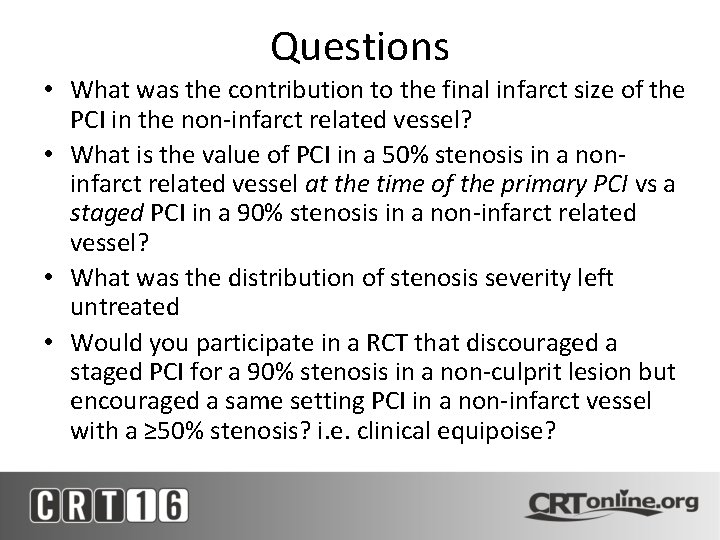
Questions • What was the contribution to the final infarct size of the PCI in the non-infarct related vessel? • What is the value of PCI in a 50% stenosis in a noninfarct related vessel at the time of the primary PCI vs a staged PCI in a 90% stenosis in a non-infarct related vessel? • What was the distribution of stenosis severity left untreated • Would you participate in a RCT that discouraged a staged PCI for a 90% stenosis in a non-culprit lesion but encouraged a same setting PCI in a non-infarct vessel with a ≥ 50% stenosis? i. e. clinical equipoise?
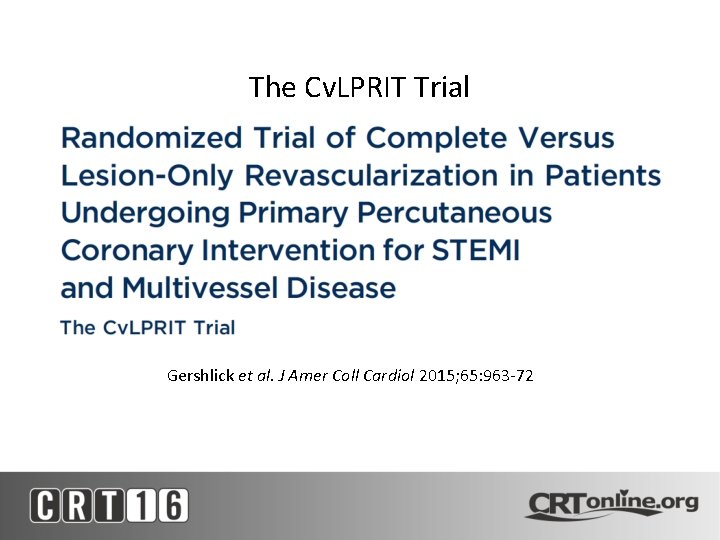
The Cv. LPRIT Trial Gershlick et al. J Amer Coll Cardiol 2015; 65: 963 -72
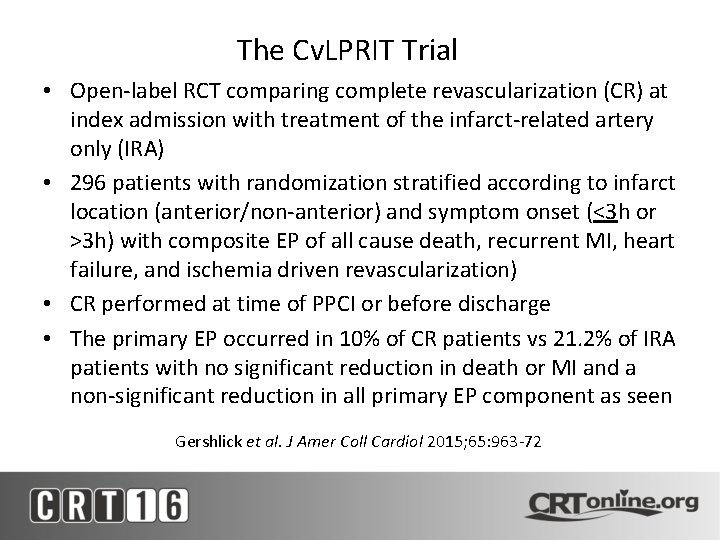
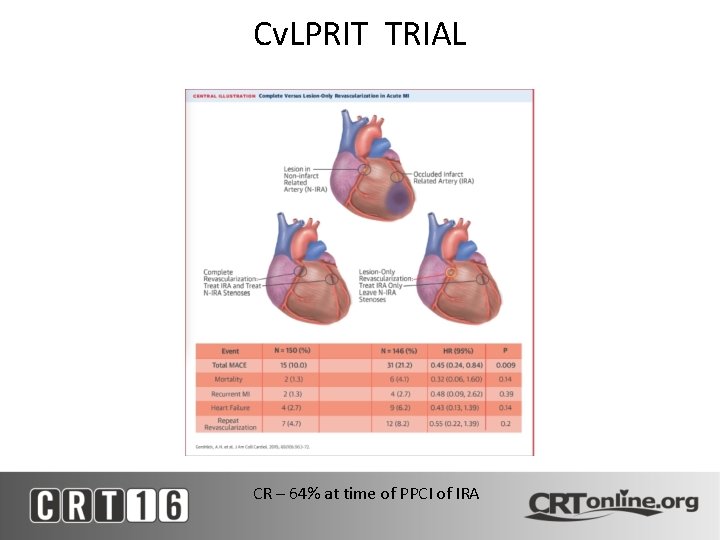
The Cv. LPRIT Trial • Open-label RCT comparing complete revascularization (CR) at index admission with treatment of the infarct-related artery only (IRA) • 296 patients with randomization stratified according to infarct location (anterior/non-anterior) and symptom onset (<3 h or >3 h) with composite EP of all cause death, recurrent MI, heart failure, and ischemia driven revascularization) • CR performed at time of PPCI or before discharge • The primary EP occurred in 10% of CR patients vs 21. 2% of IRA patients with no significant reduction in death or MI and a non-significant reduction in all primary EP component as seen Gershlick et al. J Amer Coll Cardiol 2015; 65: 963 -72
Cv. LPRIT TRIAL CR – 64% at time of PPCI of IRA
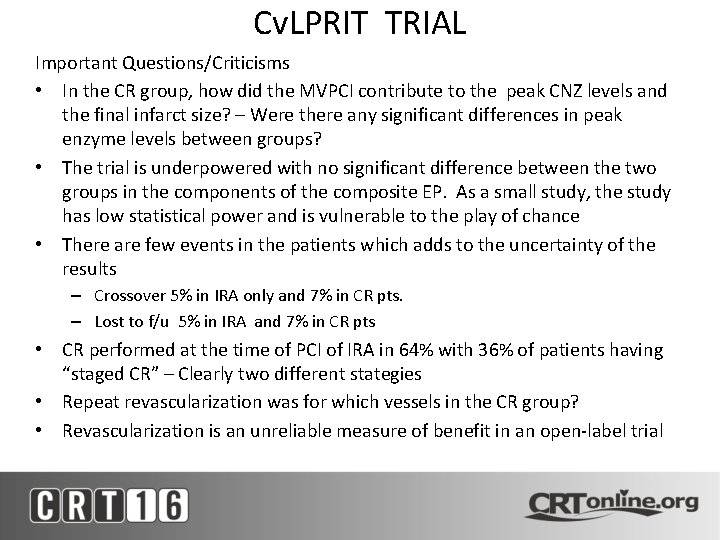
Cv. LPRIT TRIAL Important Questions/Criticisms • In the CR group, how did the MVPCI contribute to the peak CNZ levels and the final infarct size? – Were there any significant differences in peak enzyme levels between groups? • The trial is underpowered with no significant difference between the two groups in the components of the composite EP. As a small study, the study has low statistical power and is vulnerable to the play of chance • There are few events in the patients which adds to the uncertainty of the results – Crossover 5% in IRA only and 7% in CR pts. – Lost to f/u 5% in IRA and 7% in CR pts • CR performed at the time of PCI of IRA in 64% with 36% of patients having “staged CR” – Clearly two different stategies • Repeat revascularization was for which vessels in the CR group? • Revascularization is an unreliable measure of benefit in an open-label trial
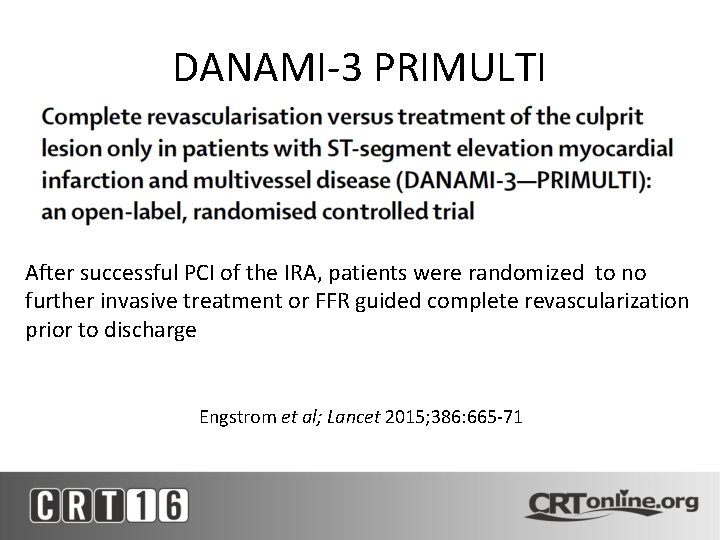
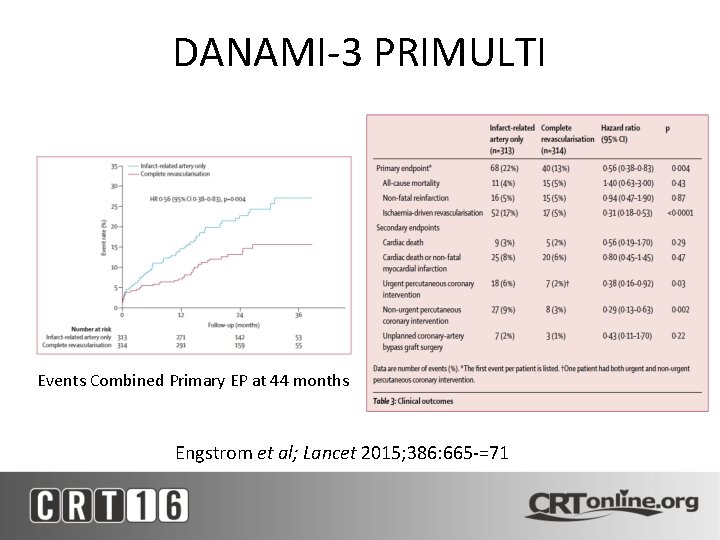
DANAMI-3 PRIMULTI After successful PCI of the IRA, patients were randomized to no further invasive treatment or FFR guided complete revascularization prior to discharge Engstrom et al; Lancet 2015; 386: 665 -71
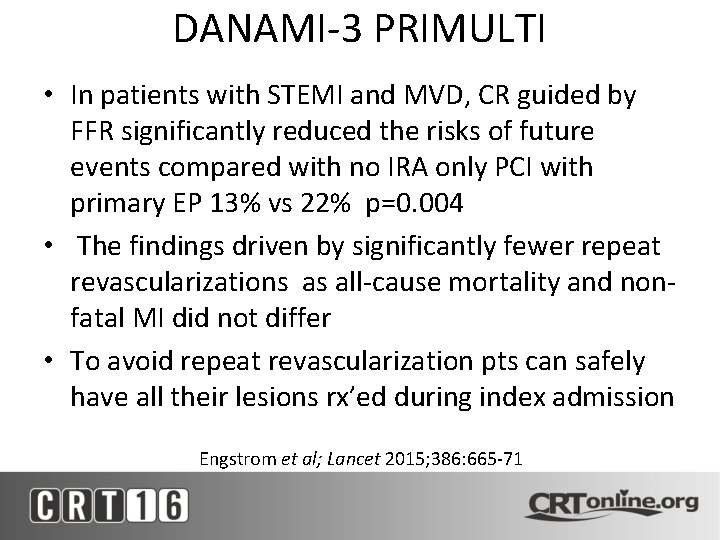
DANAMI-3 PRIMULTI • In patients with STEMI and MVD, CR guided by FFR significantly reduced the risks of future events compared with no IRA only PCI with primary EP 13% vs 22% p=0. 004 • The findings driven by significantly fewer repeat revascularizations as all-cause mortality and nonfatal MI did not differ • To avoid repeat revascularization pts can safely have all their lesions rx’ed during index admission Engstrom et al; Lancet 2015; 386: 665 -71
DANAMI-3 PRIMULTI Events Combined Primary EP at 44 months Engstrom et al; Lancet 2015; 386: 665 -=71
DANAMI-3 PRIMULTI Limitations • FFR in early stages of STEMI evolution might be affected by changing mircrovascular function • Open label study design (patients and MD) could create bias re subsequent revasc in IRA only patients Engstrom et al; Lancet 2015; 386: 665 -=71
CONCLUSION • PRAMI, PRUMULTI, CVLPRIT trials (different treatment strategies) consistent with clinical �future events with complete revascularization • Continued uncertainty re timing of PCI in noninfarct related vessels Engstrom et al; Lancet 2015; 386: 665 -=71
Multivesse. I vs Culprit Only PCI in STEMI Comments/Perspective • Further large scale RCT’s to address the impact of complete revascularization on hard end points (death and recurrent MI) are required – await the results of ongoing COMPLETE Trial • FFR estimation of nonculprit lesion severity should be considered particularly if MV PCI done in STEMI (staged) setting • Until there is a definitive large randomized trial, a deferred angioplasty strategy of non-culprit lesions in STEMI should be the standard of care in non-shock patients • Nonetheless, there will be exceptions where with the exercise of a physician‘s best judgment MV PCI in the setting of STEMI may be required in an individual patient
THANK YOU