
MANAGEMENT OF LIFETHREATENING ELECTROLYTE METABOALIC DISTURBANCES Jeremy Amayo
MANAGEMENT OF LIFE-THREATENING & ELECTROLYTE METABOALIC DISTURBANCES Jeremy Amayo, MMSc, PA-C Pulmonary and Critical Care Medicine Piedmont Physicians Group – Georgia Lung
Objectives Review the emergent management of severe electrolyte disturbances Recognize manifestations of adrenal insufficiency in the critically ill patient and initiate appropriate treatment Describe the management of severe hyperglycemic syndromes
Case Study 78 y/o F; PMH DM II, CHF, CKD Confusion, lethargy, poor PO intake x 1 wk BP 98/52; HR 110; RR 18 NSR w/ freq PVCs on tele What electrolyte disorders might contribute to her presentation?
What electrolyte disorders might contribute to her presentation? A. B. C. D. E. F. G. H. Hyponatremia Hyperkalemia Hypocalcemia Hyperphosphatemia Hypophosphatemia
General Principles Presentation *usually* not specific to particular electrolyte change Treat disturbance / search for underlying cause Degree of urgency determined by presentation rather than concentration itself Reassess frequently
Case Study 78 y/o F; PMH DM II, CHF, CKD Confusion, lethargy, poor PO intake x 1 wk BP 98/52; HR 110; RR 18 NSR w/ freq PVCs on tele K 2. 5 mmol/L
Hypokalemia Normal serum K 3. 5 -5. 0 mmol/L More than 20% hospitalized patients have hypo. K PO vs IV? � Efficiency hotly debated � Only 10 m. Eq/hr through PIV � 20 -30 m. Eq/hr through CVL
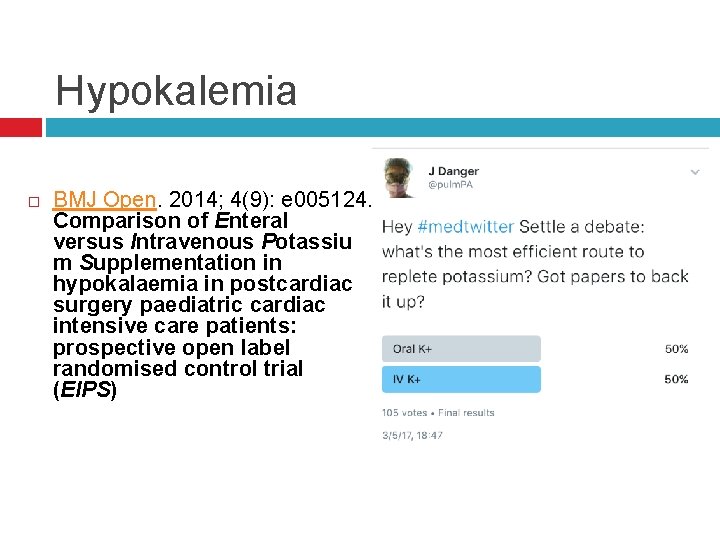
Hypokalemia BMJ Open. 2014; 4(9): e 005124. Comparison of Enteral versus Intravenous Potassiu m Supplementation in hypokalaemia in postcardiac surgery paediatric cardiac intensive care patients: prospective open label randomised control trial (EIPS)
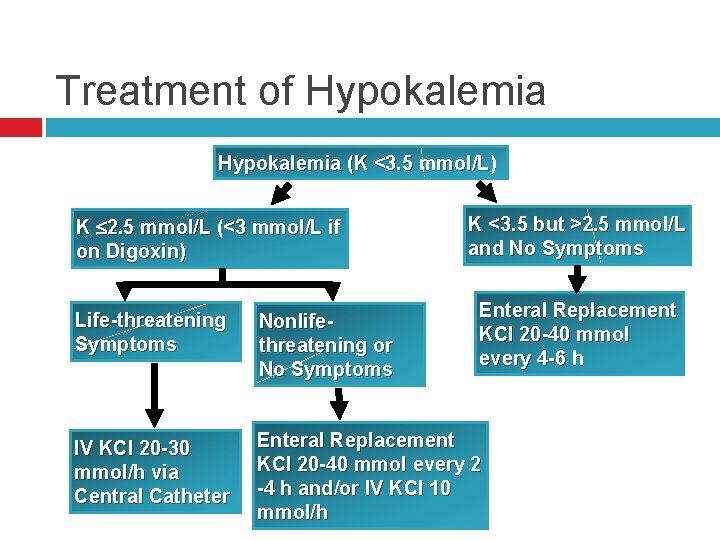
Treatment of Hypokalemia (K <3. 5 mmol/L) K 2. 5 mmol/L (<3 mmol/L if on Digoxin) K <3. 5 but >2. 5 mmol/L and No Symptoms Enteral Replacement KCl 20 -40 mmol every 4 -6 h Life-threatening Symptoms Nonlifethreatening or No Symptoms IV KCl 20 -30 mmol/h via Central Catheter Enteral Replacement KCl 20 -40 mmol every 2 -4 h and/or IV KCl 10 mmol/h
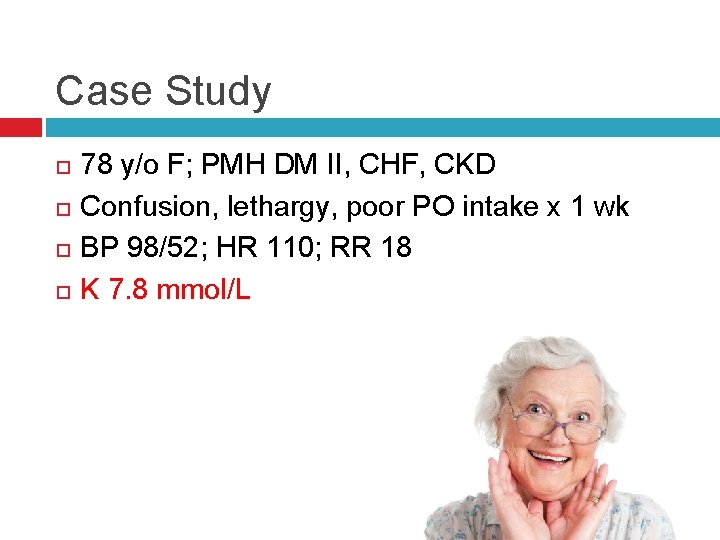
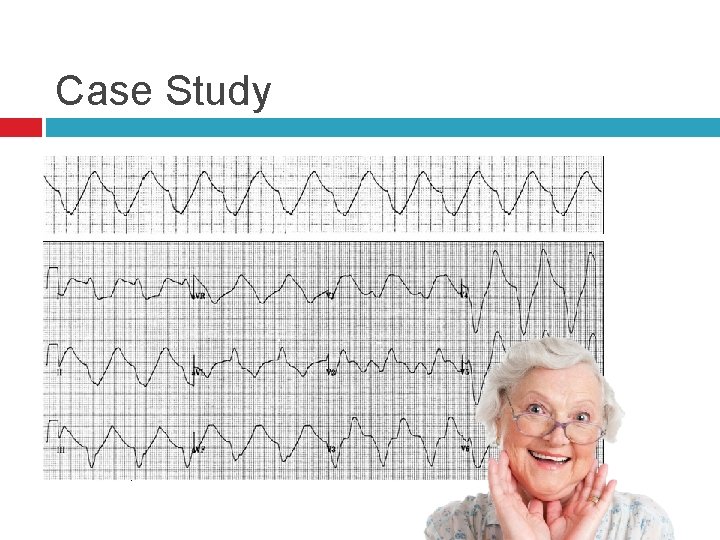
Case Study 78 y/o F; PMH DM II, CHF, CKD Confusion, lethargy, poor PO intake x 1 wk BP 98/52; HR 110; RR 18 K 7. 8 mmol/L
Case Study

Hyperkalemia Normal serum K 3. 5 -5. 0 mmol/L Hyper. K = disturbance in action potential High risk for arrhythmia
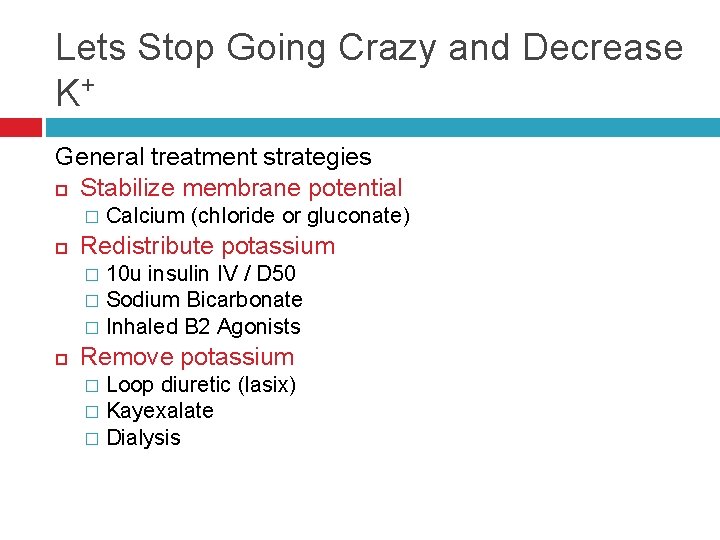
Lets Stop Going Crazy and Decrease K+ General treatment strategies Stabilize membrane potential � Calcium (chloride or gluconate) Redistribute potassium 10 u insulin IV / D 50 � Sodium Bicarbonate � Inhaled B 2 Agonists � Remove potassium Loop diuretic (lasix) � Kayexalate � Dialysis �
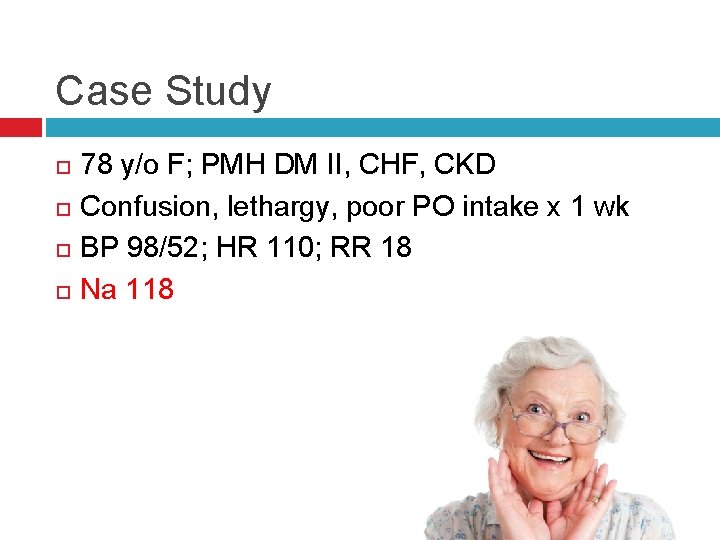
Case Study 78 y/o F; PMH DM II, CHF, CKD Confusion, lethargy, poor PO intake x 1 wk BP 98/52; HR 110; RR 18 Na 118
S/HE WHO KNOWS SODIUM KNOWS MEDICINE
Hyponatremia: General Approach Assess symptoms � Asymptomatic? � Fatigue, lethargy, slowed cognition? � Or. . Confusion, AMS, intractable seizures? 1. 2. 3. Assess urgency of treatment (per above) Determine etiology Serum osmolality Volume status Urine sodium, urine Osm, Fe. Na
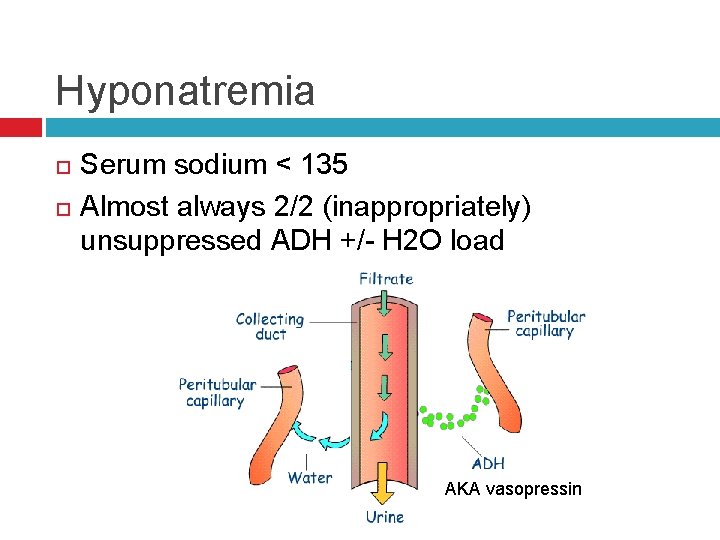
Hyponatremia Serum sodium < 135 Almost always 2/2 (inappropriately) unsuppressed ADH +/- H 2 O load AKA vasopressin
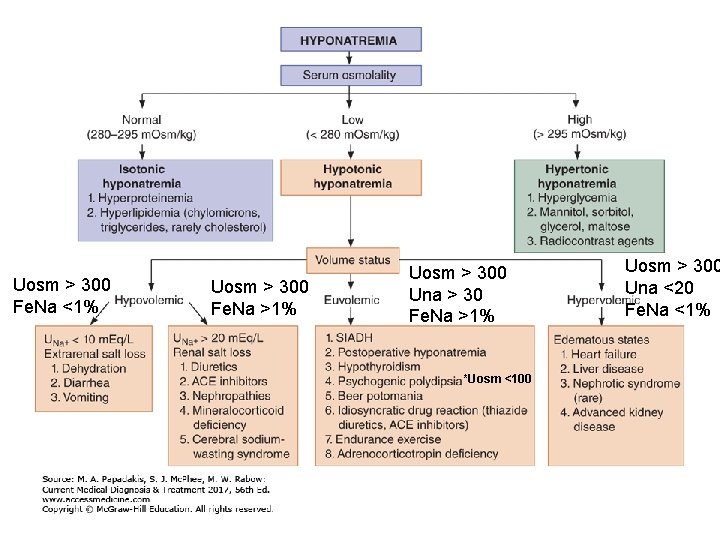
Uosm > 300 Fe. Na <1% Uosm > 300 Fe. Na >1% Uosm > 300 Una > 30 Fe. Na >1% *Uosm <100 Uosm > 300 Una <20 Fe. Na <1%
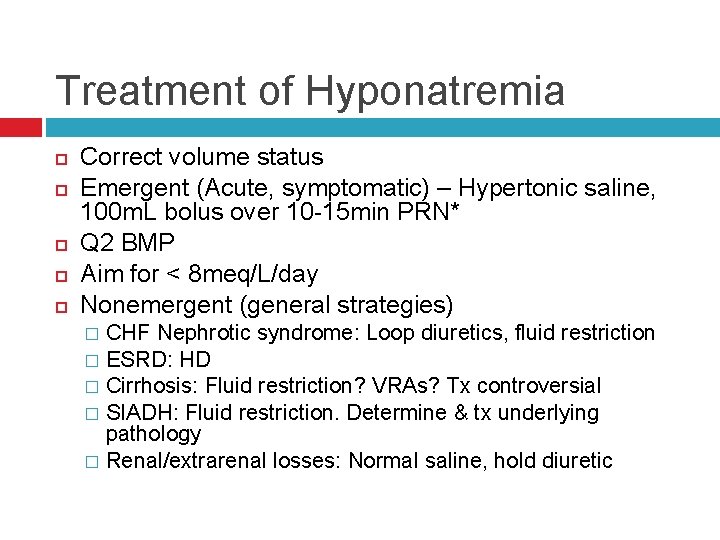
Treatment of Hyponatremia Correct volume status Emergent (Acute, symptomatic) – Hypertonic saline, 100 m. L bolus over 10 -15 min PRN* Q 2 BMP Aim for < 8 meq/L/day Nonemergent (general strategies) CHF Nephrotic syndrome: Loop diuretics, fluid restriction � ESRD: HD � Cirrhosis: Fluid restriction? VRAs? Tx controversial � SIADH: Fluid restriction. Determine & tx underlying pathology � Renal/extrarenal losses: Normal saline, hold diuretic �
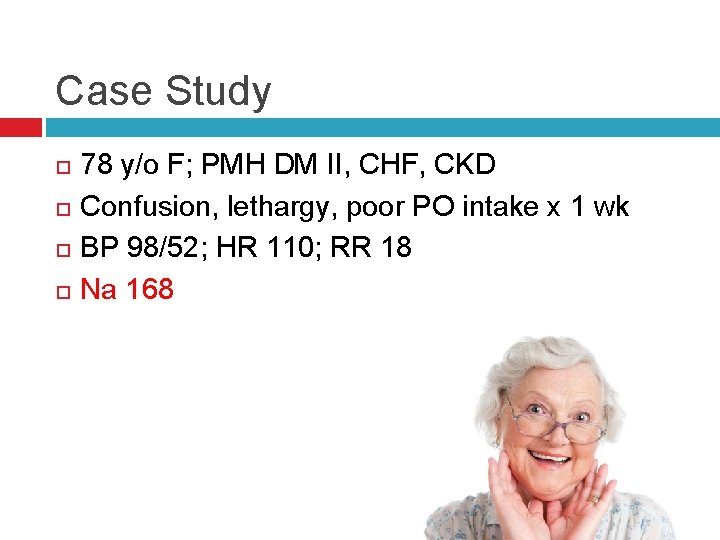
Case Study 78 y/o F; PMH DM II, CHF, CKD Confusion, lethargy, poor PO intake x 1 wk BP 98/52; HR 110; RR 18 Na 168
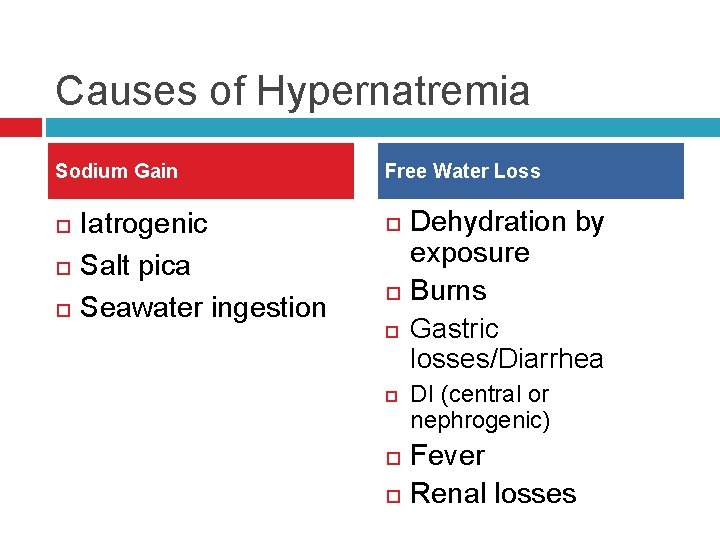
Causes of Hypernatremia Sodium Gain Iatrogenic Salt pica Seawater ingestion Free Water Loss Dehydration by exposure Burns Gastric losses/Diarrhea DI (central or nephrogenic) Fever Renal losses
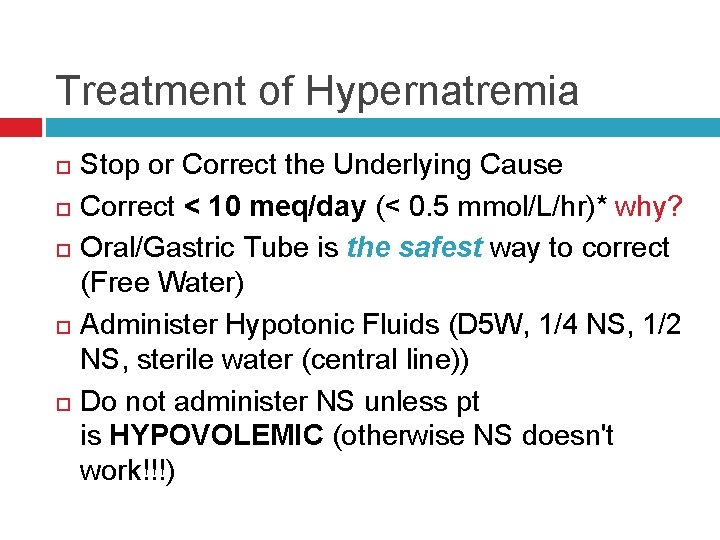
Treatment of Hypernatremia Stop or Correct the Underlying Cause Correct < 10 meq/day (< 0. 5 mmol/L/hr)* why? Oral/Gastric Tube is the safest way to correct (Free Water) Administer Hypotonic Fluids (D 5 W, 1/4 NS, 1/2 NS, sterile water (central line)) Do not administer NS unless pt is HYPOVOLEMIC (otherwise NS doesn't work!!!)

Treatment of Hypernatremia FW deficit equation (mdcalc) H 2 O deficit (L) = [0. 6 wt (kg) ] [Measured Na - 1] 140
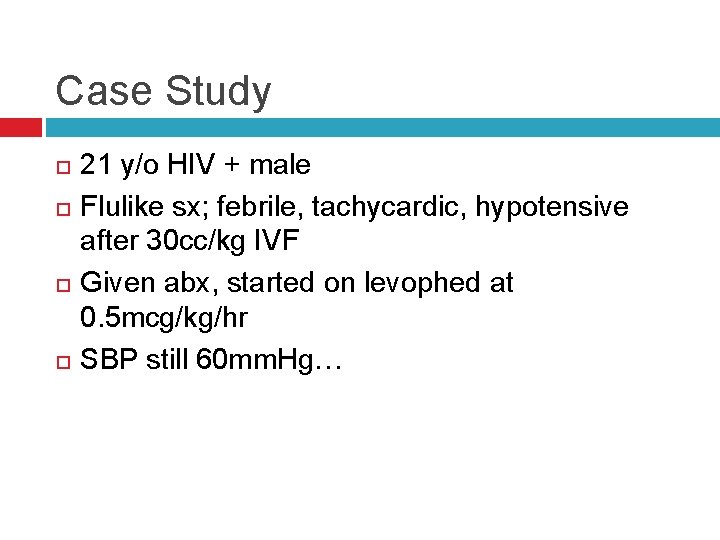
Case Study 21 y/o HIV + male Flulike sx; febrile, tachycardic, hypotensive after 30 cc/kg IVF Given abx, started on levophed at 0. 5 mcg/kg/hr SBP still 60 mm. Hg…
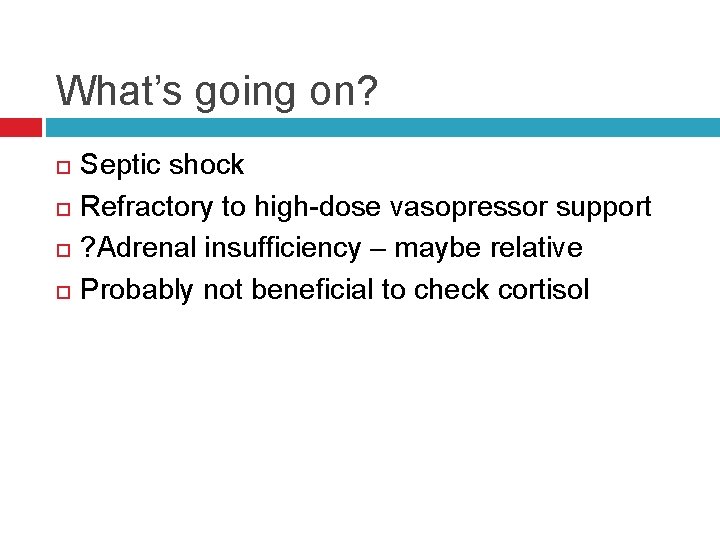
What’s going on? Septic shock Refractory to high-dose vasopressor support ? Adrenal insufficiency – maybe relative Probably not beneficial to check cortisol
SHOULD WE GIVE IV STEROIDS?
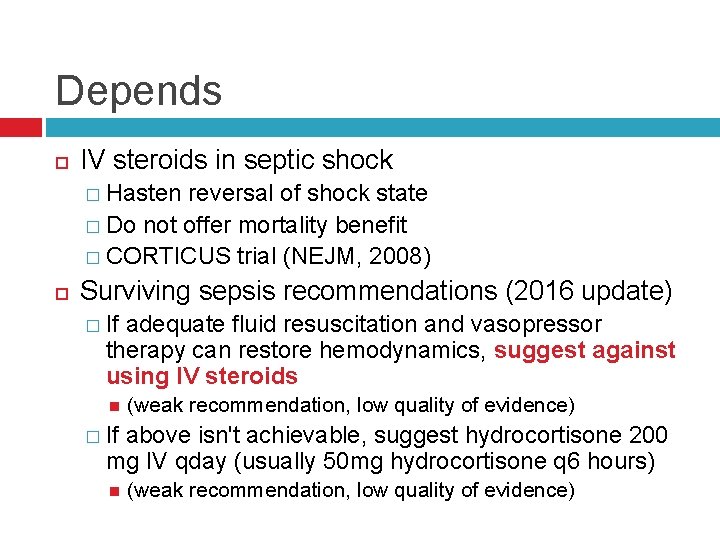
Depends IV steroids in septic shock � Hasten reversal of shock state � Do not offer mortality benefit � CORTICUS trial (NEJM, 2008) Surviving sepsis recommendations (2016 update) � If adequate fluid resuscitation and vasopressor therapy can restore hemodynamics, suggest against using IV steroids (weak recommendation, low quality of evidence) � If above isn't achievable, suggest hydrocortisone 200 mg IV qday (usually 50 mg hydrocortisone q 6 hours) (weak recommendation, low quality of evidence)

Diabetic ketoacidosis Hyper-catabolic state Body w/ relative or absolute insulin deficiency Tricks body into thinking it is starving Body changes metabolism to make glucose (hyperglycemia) Excessive fat breakdown ketone generation (ketosis) Hyperglycemia Excessive ketone generation (acidosis) Incr osmolality – diuresis - dehydration Acidosis DKA Ketosis
Hyperosmolar Hyperglycemic State Severe hyperglycemia Resulting in severe hyperosmolality Resulting in severe dehydration WITHOUT KETOSIS
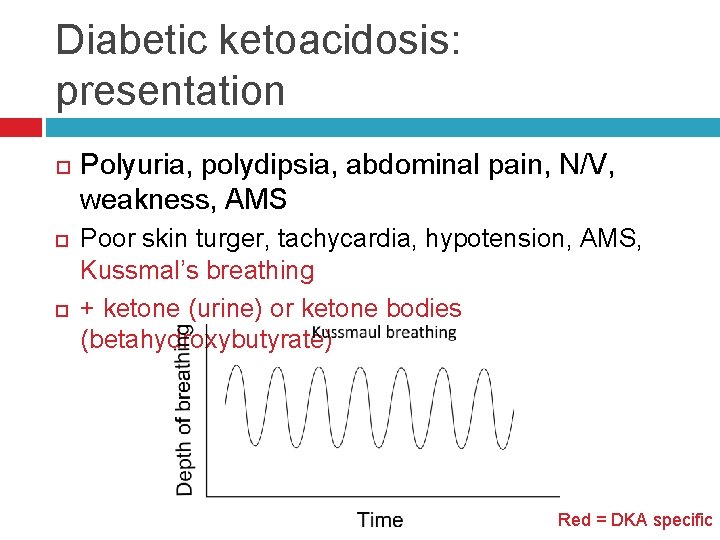
Diabetic ketoacidosis: presentation Polyuria, polydipsia, abdominal pain, N/V, weakness, AMS Poor skin turger, tachycardia, hypotension, AMS, Kussmal’s breathing + ketone (urine) or ketone bodies (betahydroxybutyrate) Red = DKA specific
Diabetic ketoacidosis: precipitating events 5 I’s Iatrogenic (steroids, immunosuppressants, thiazides, cocaine) Infection (MOST COMMON) Ischemia (MI, CVA) Insulin deficiency (new dx or noncompliance) Intra-abdominal process (pancreatitis, pregnancy)

Diabetic ketoacidosis: precipitating events Characteristic DKA HHS Hyperglycemia 400 -800 >1000 frequent Ketosis AGMA Not present or mild Hyponatremia Evaluate CORRECTED sodium – factitious hyponatremia Hyperkalemia Acidosis shifts K into vascular space; total K actually low Leukocytosis Often present @ 10 -15 K with or without infection Osmolality ~320 Severely elevated Dehydration Moderate Severe Variable
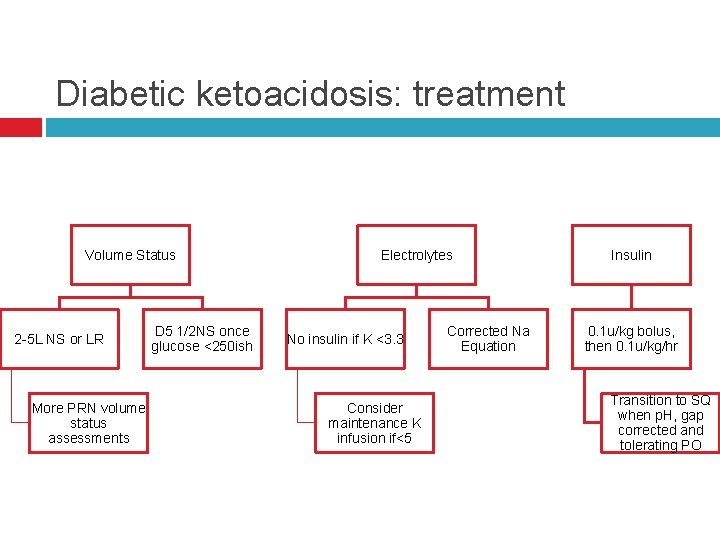
Diabetic ketoacidosis: treatment Volume Status 2 -5 L NS or LR More PRN volume status assessments D 5 1/2 NS once glucose <250 ish Electrolytes No insulin if K <3. 3 Consider maintenance K infusion if<5 Corrected Na Equation Insulin 0. 1 u/kg bolus, then 0. 1 u/kg/hr Transition to SQ when p. H, gap corrected and tolerating PO
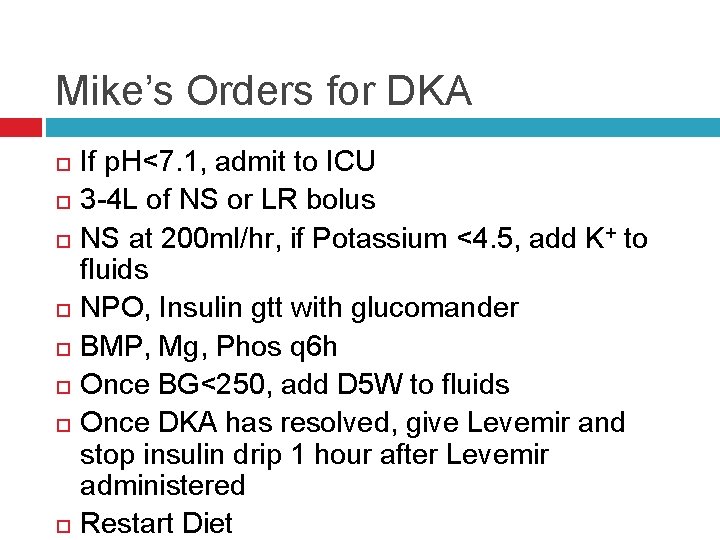
Mike’s Orders for DKA If p. H<7. 1, admit to ICU 3 -4 L of NS or LR bolus NS at 200 ml/hr, if Potassium <4. 5, add K+ to fluids NPO, Insulin gtt with glucomander BMP, Mg, Phos q 6 h Once BG<250, add D 5 W to fluids Once DKA has resolved, give Levemir and stop insulin drip 1 hour after Levemir administered Restart Diet

The End! Get in touch! https: //pulmcast. com jamayo@emory. edu @pulm. PA
The End! Get in touch! https: //pulmcast. com jamayo@emory. edu @pulm. PA
- Slides: 36