
Management of Ischemic Stroke Somchai Towanabut MD Prasat
Management of Ischemic Stroke Somchai Towanabut MD. Prasat Neurological Institute Department of Medical Services Ministry of Public Health. 1
STROKE: Epidemiology, Burden of disease Burden of stroke . 2
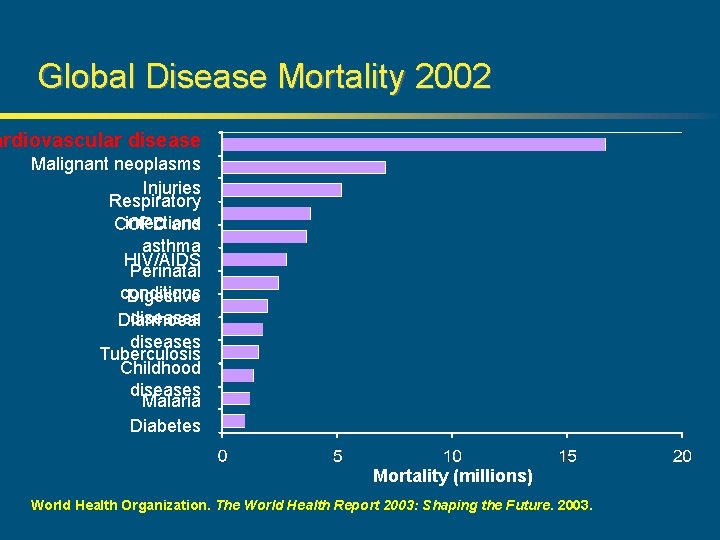
Global Disease Mortality 2002 ardiovascular disease Malignant neoplasms Injuries Respiratory infections COPD and asthma HIV/AIDS Perinatal conditions Digestive diseases Diarrhoeal diseases Tuberculosis Childhood diseases Malaria Diabetes Mortality (millions) World Health Organization. The World Health Report 2003: Shaping the Future. 2003.
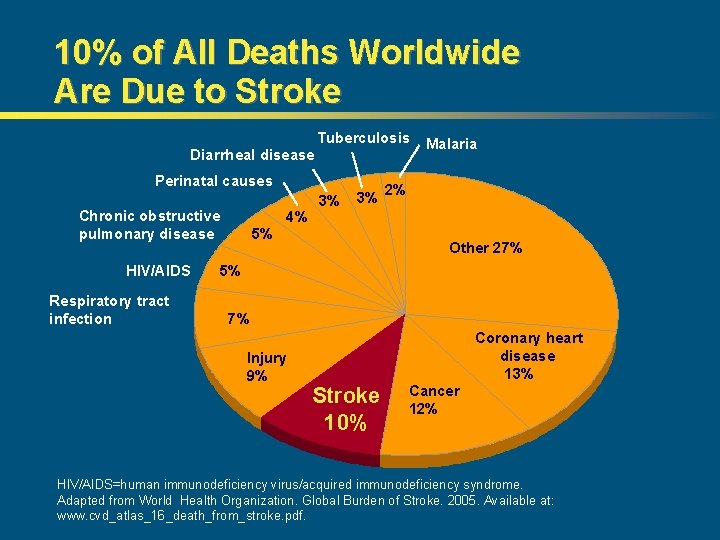
10% of All Deaths Worldwide Are Due to Stroke Tuberculosis Diarrheal disease Perinatal causes Chronic obstructive pulmonary disease HIV/AIDS Respiratory tract infection 4% 3% 3% 5% Malaria 2% Other 27% 5% 7% Injury 9% Coronary heart disease 13% Stroke 10% Cancer 12% HIV/AIDS=human immunodeficiency virus/acquired immunodeficiency syndrome. Adapted from World Health Organization. Global Burden of Stroke. 2005. Available at: www. cvd_atlas_16_death_from_stroke. pdf.
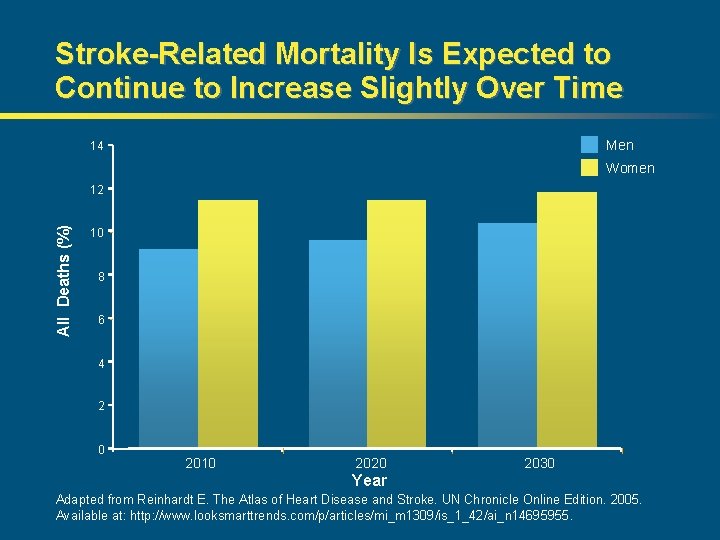
Stroke-Related Mortality Is Expected to Continue to Increase Slightly Over Time Men 14 Women All Deaths (%) 12 10 8 6 4 2 0 2010 2020 2030 Year Adapted from Reinhardt E. The Atlas of Heart Disease and Stroke. UN Chronicle Online Edition. 2005. Available at: http: //www. looksmarttrends. com/p/articles/mi_m 1309/is_1_42/ai_n 14695955.
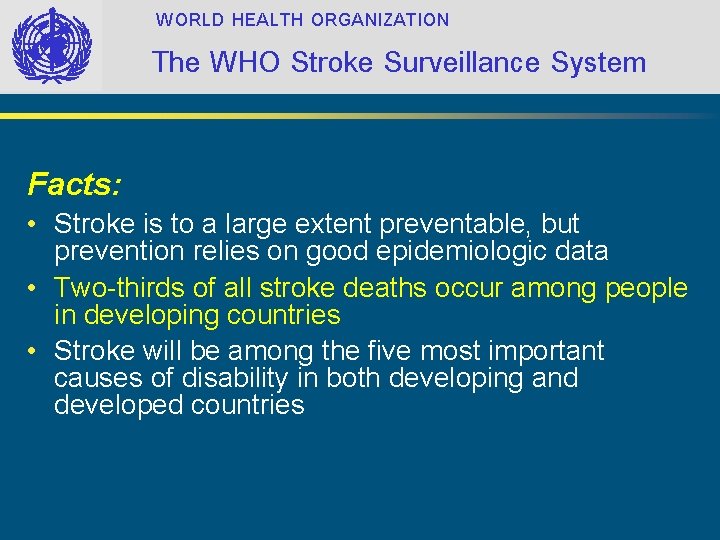
WORLD HEALTH ORGANIZATION The WHO Stroke Surveillance System Facts: • Stroke is to a large extent preventable, but prevention relies on good epidemiologic data • Two-thirds of all stroke deaths occur among people in developing countries • Stroke will be among the five most important causes of disability in both developing and developed countries
STROKE: Epidemiology, Burden of disease Burden of stroke in Thailand . 7
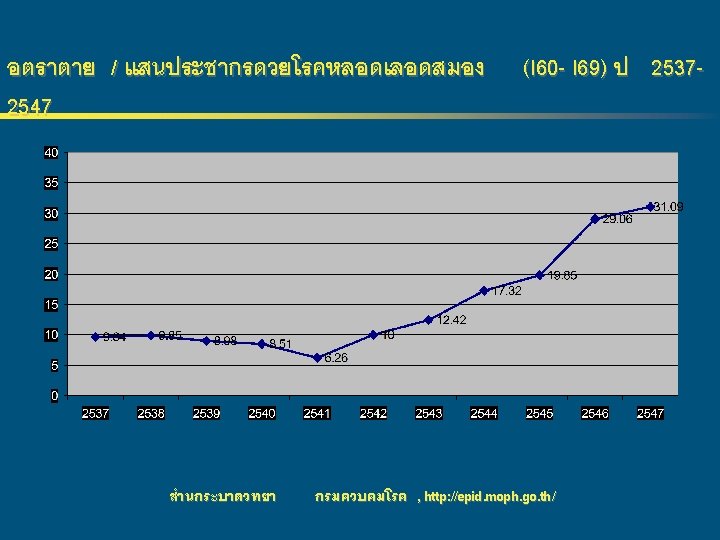
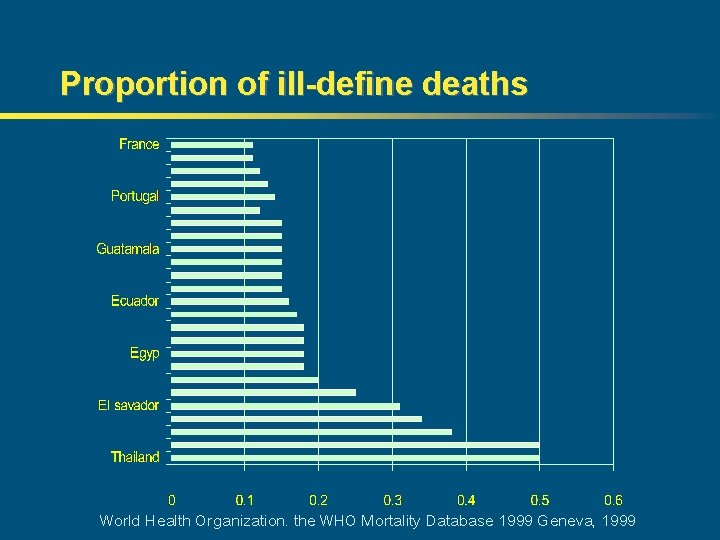
Proportion of ill-define deaths World Health Organization. the WHO Mortality Database 1999 Geneva, 1999
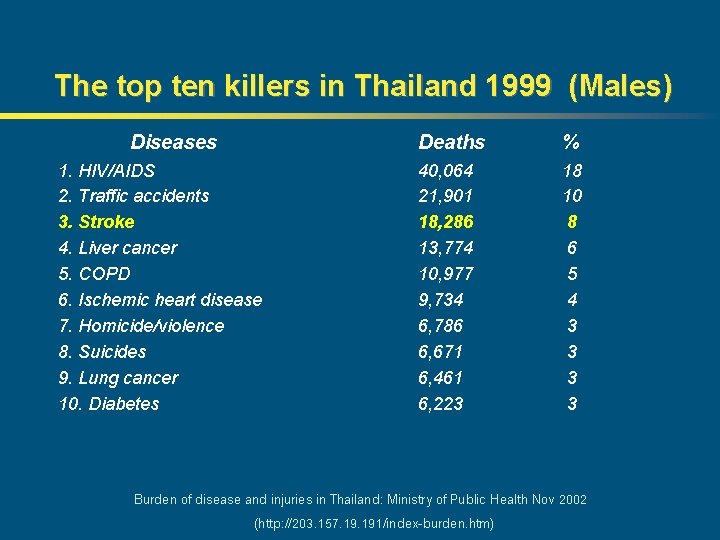
The top ten killers in Thailand 1999 (Males) Diseases 1. HIV/AIDS 2. Traffic accidents 3. Stroke 4. Liver cancer 5. COPD 6. Ischemic heart disease 7. Homicide/violence 8. Suicides 9. Lung cancer 10. Diabetes Deaths % 40, 064 21, 901 18, 286 13, 774 10, 977 9, 734 6, 786 6, 671 6, 461 6, 223 18 10 8 6 5 4 3 3 Burden of disease and injuries in Thailand: Ministry of Public Health Nov 2002 (http: //203. 157. 191/index-burden. htm)
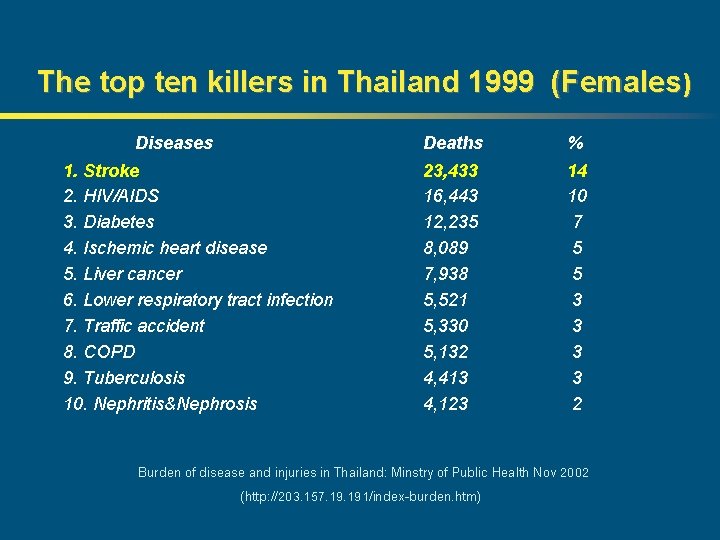
The top ten killers in Thailand 1999 (Females) Diseases 1. Stroke 2. HIV/AIDS 3. Diabetes 4. Ischemic heart disease 5. Liver cancer 6. Lower respiratory tract infection 7. Traffic accident 8. COPD 9. Tuberculosis 10. Nephritis&Nephrosis Deaths % 23, 433 16, 443 12, 235 8, 089 7, 938 5, 521 5, 330 5, 132 4, 413 4, 123 14 10 7 5 5 3 3 2 Burden of disease and injuries in Thailand: Minstry of Public Health Nov 2002 (http: //203. 157. 191/index-burden. htm)
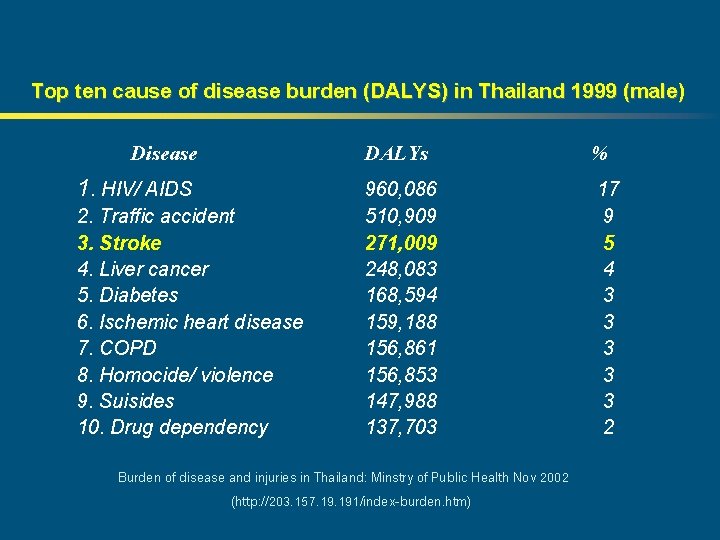
Top ten cause of disease burden (DALYS) in Thailand 1999 (male) Disease 1. HIV/ AIDS 2. Traffic accident 3. Stroke 4. Liver cancer 5. Diabetes 6. Ischemic heart disease 7. COPD 8. Homocide/ violence 9. Suisides 10. Drug dependency DALYs 960, 086 510, 909 271, 009 248, 083 168, 594 159, 188 156, 861 156, 853 147, 988 137, 703 Burden of disease and injuries in Thailand: Minstry of Public Health Nov 2002 (http: //203. 157. 191/index-burden. htm) % 17 9 5 4 3 3 3 2
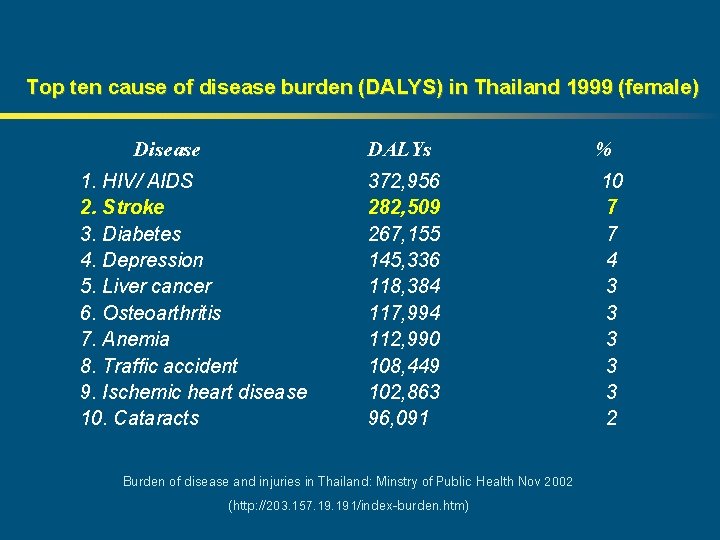
Top ten cause of disease burden (DALYS) in Thailand 1999 (female) Disease 1. HIV/ AIDS 2. Stroke 3. Diabetes 4. Depression 5. Liver cancer 6. Osteoarthritis 7. Anemia 8. Traffic accident 9. Ischemic heart disease 10. Cataracts DALYs 372, 956 282, 509 267, 155 145, 336 118, 384 117, 994 112, 990 108, 449 102, 863 96, 091 Burden of disease and injuries in Thailand: Minstry of Public Health Nov 2002 (http: //203. 157. 191/index-burden. htm) % 10 7 7 4 3 3 3 2
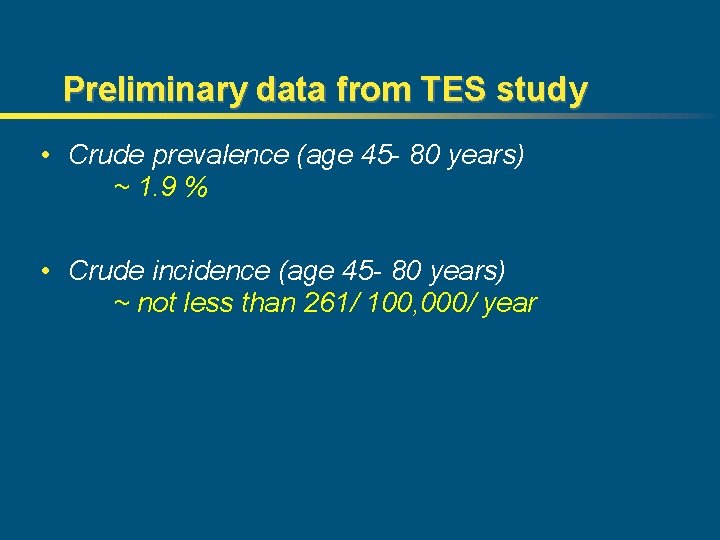
Preliminary data from TES study • Crude prevalence (age 45 - 80 years) ~ 1. 9 % • Crude incidence (age 45 - 80 years) ~ not less than 261/ 100, 000/ year
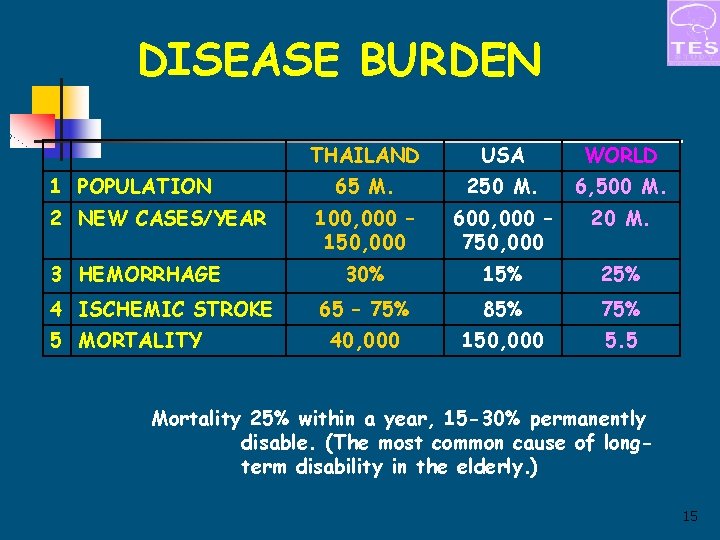
DISEASE BURDEN 1 POPULATION 2 NEW CASES/YEAR 3 HEMORRHAGE 4 ISCHEMIC STROKE 5 MORTALITY THAILAND USA WORLD 65 M. 250 M. 6, 500 M. 100, 000 – 150, 000 600, 000 – 750, 000 20 M. 30% 15% 25% 65 – 75% 85% 75% 40, 000 150, 000 5. 5 Mortality 25% within a year, 15 -30% permanently disable. (The most common cause of longterm disability in the elderly. ) 15
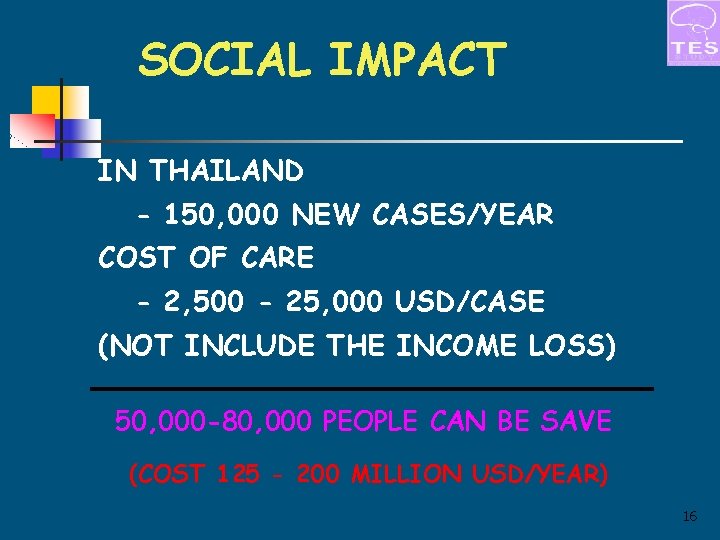
SOCIAL IMPACT IN THAILAND - 150, 000 NEW CASES/YEAR COST OF CARE - 2, 500 - 25, 000 USD/CASE (NOT INCLUDE THE INCOME LOSS) 50, 000 -80, 000 PEOPLE CAN BE SAVE (COST 125 - 200 MILLION USD/YEAR) 16
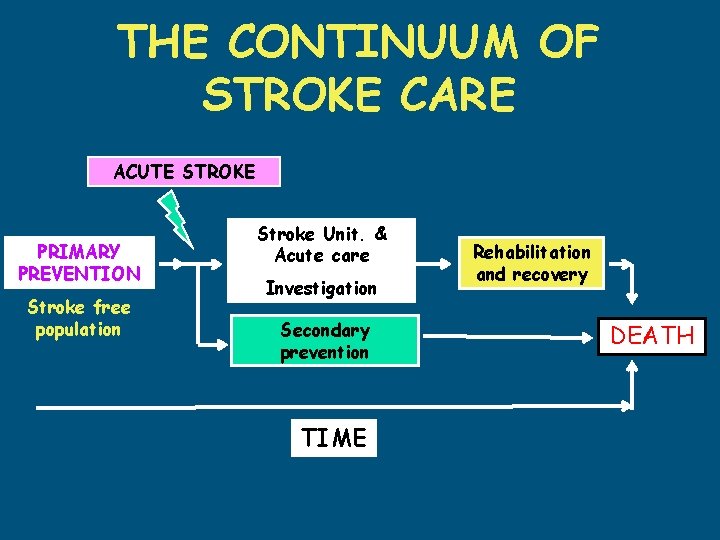
THE CONTINUUM OF STROKE CARE ACUTE STROKE PRIMARY PREVENTION Stroke free population Stroke Unit. & Acute care Investigation Secondary prevention TIME Rehabilitation and recovery DEATH
Management of Ischemic Stroke . 18
Management ischemic stroke • • • Diagnosis & differential diagnosis General supportive care Acute treatment Treatment of neurological complication Secondary prevention
Management ischemic stroke • • • Diagnosis & differential diagnosis General supportive care Acute treatment Treatment of neurological complication Secondary prevention
Ischemic stroke Diagnosis & differential diagnosis • Sudden onset, focal deficit, risk factors • Brain imaging • Cardiac test • Blood tests ( blood sugar, BUN, Cr, electrolytes, etc. )
Ischemic stroke Brain imaging • CT should be done in all case • May be except in lacunar syndromes - Pure motor hemiparesis - Pure sensory stroke - Motor sensory stroke - Ataxic hemiparesis - Dysarthria clumsy hand syndrome
Ischemic stroke General supportive care • Airway, Breathing, Circulation • • Fever Hypertension IV fluid Treatment of underlying diseases
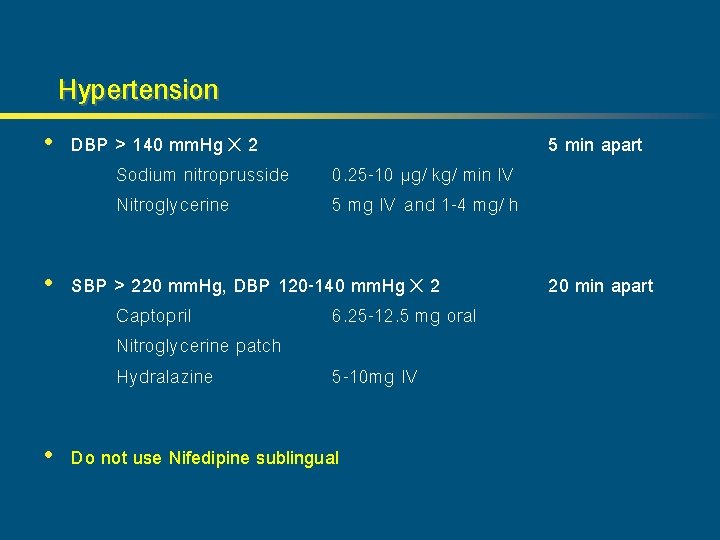
Hypertension • DBP > 140 mm. Hg X 2 Sodium nitroprusside Nitroglycerine 0. 25 -10 µg/ kg/ min IV 5 mg IV and 1 -4 mg/ h • SBP > 220 mm. Hg, DBP 120 -140 mm. Hg X 2 Captopril 6. 25 -12. 5 mg oral Nitroglycerine patch Hydralazine 5 -10 mg IV • Do not use Nifedipine sublingual 5 min apart 20 min apart
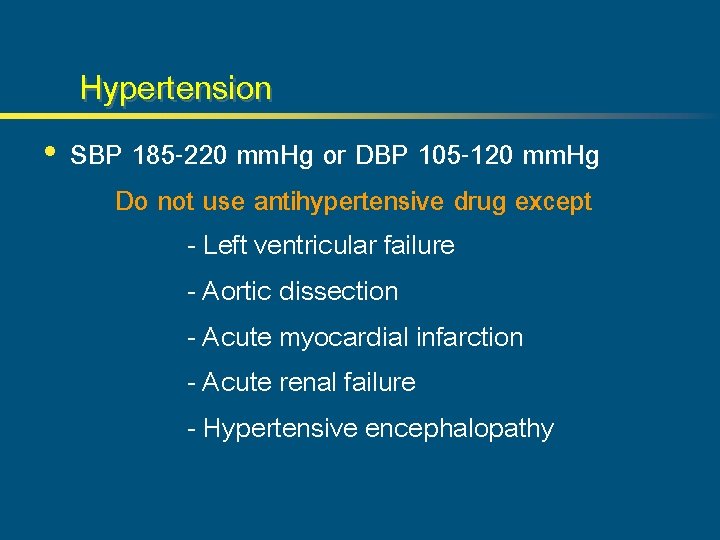
Hypertension • SBP 185 -220 mm. Hg or DBP 105 -120 mm. Hg Do not use antihypertensive drug except - Left ventricular failure - Aortic dissection - Acute myocardial infarction - Acute renal failure - Hypertensive encephalopathy
Management ischemic stroke • Diagnosis & differential diagnosis • General supportive care • Acute treatment • Treatment of neurological complication • Secondary prevention
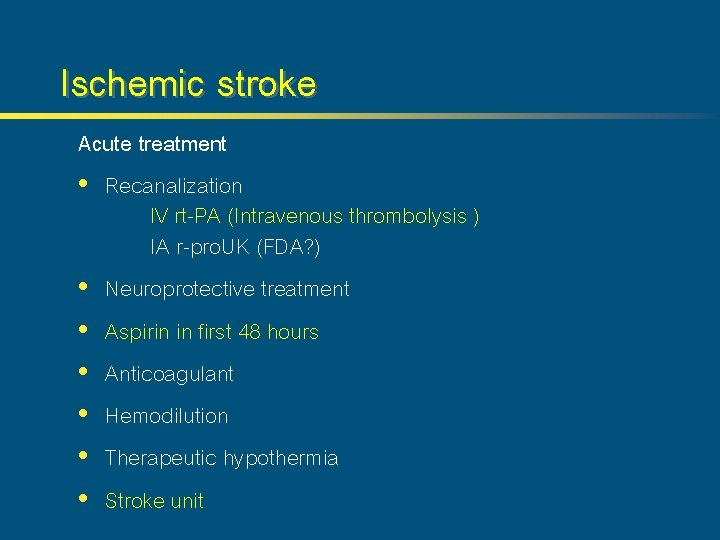
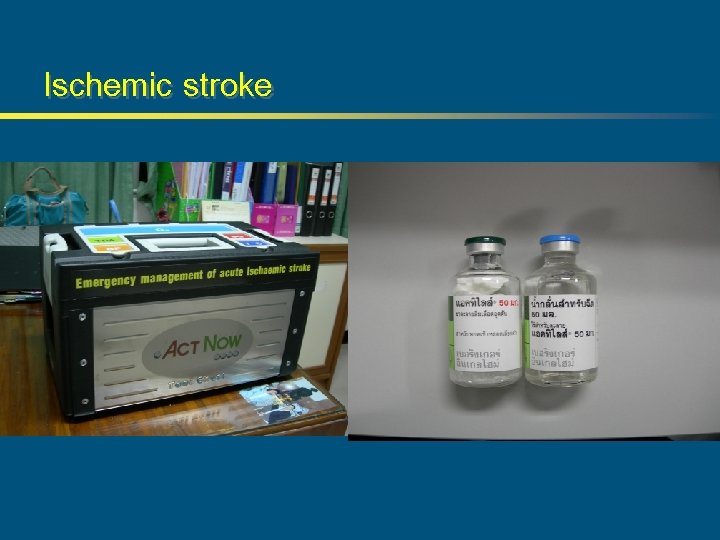
Ischemic stroke Acute treatment • Recanalization IV rt-PA (Intravenous thrombolysis ) IA r-pro. UK (FDA? ) • Neuroprotective treatment • Aspirin in first 48 hours • Anticoagulant • Hemodilution • Therapeutic hypothermia • Stroke unit
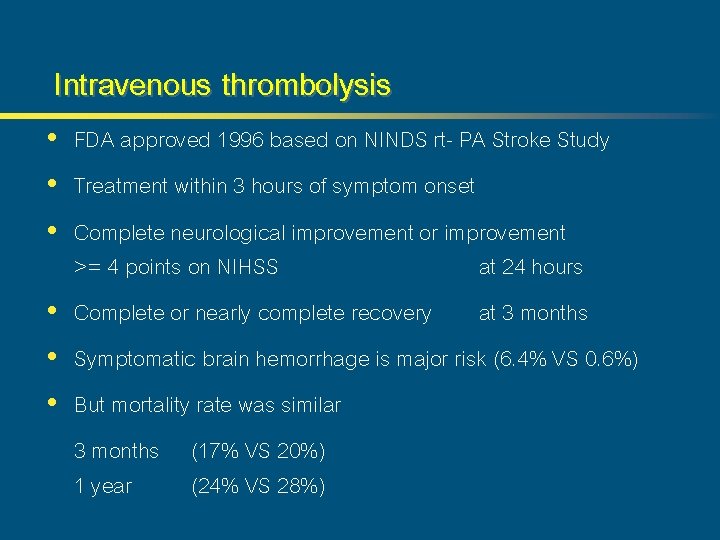
Intravenous thrombolysis • FDA approved 1996 based on NINDS rt- PA Stroke Study • Treatment within 3 hours of symptom onset • Complete neurological improvement or improvement >= 4 points on NIHSS at 24 hours • Complete or nearly complete recovery at 3 months • Symptomatic brain hemorrhage is major risk (6. 4% VS 0. 6%) • But mortality rate was similar 3 months (17% VS 20%) 1 year (24% VS 28%)
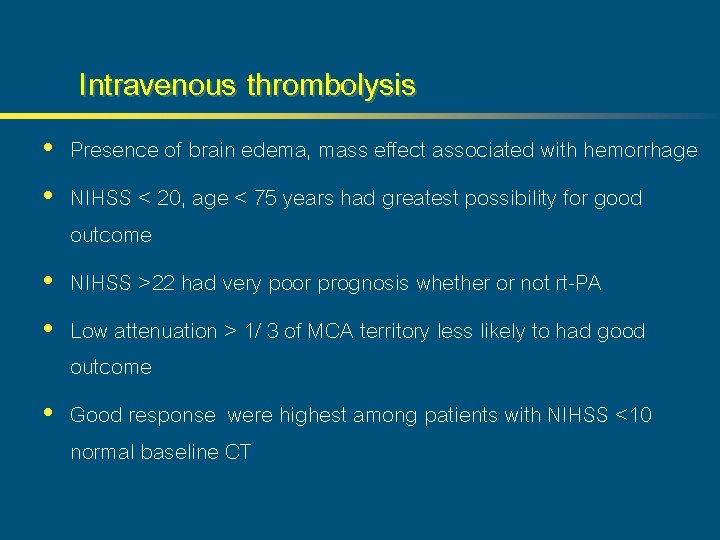
Intravenous thrombolysis • Presence of brain edema, mass effect associated with hemorrhage • NIHSS < 20, age < 75 years had greatest possibility for good outcome • NIHSS >22 had very poor prognosis whether or not rt-PA • Low attenuation > 1/ 3 of MCA territory less likely to had good outcome • Good response were highest among patients with NIHSS <10 normal baseline CT
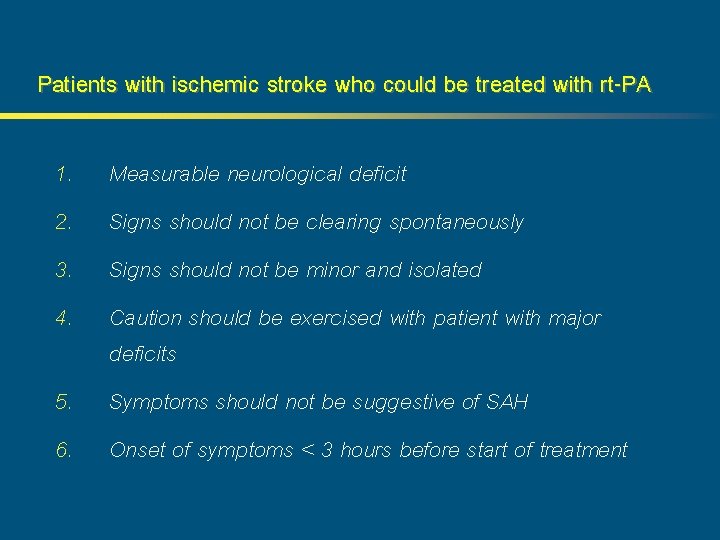
Patients with ischemic stroke who could be treated with rt-PA 1. 2. 3. 4. Measurable neurological deficit 5. 6. Symptoms should not be suggestive of SAH Onset of symptoms < 3 hours before start of treatment Signs should not be clearing spontaneously Signs should not be minor and isolated Caution should be exercised with patient with major deficits
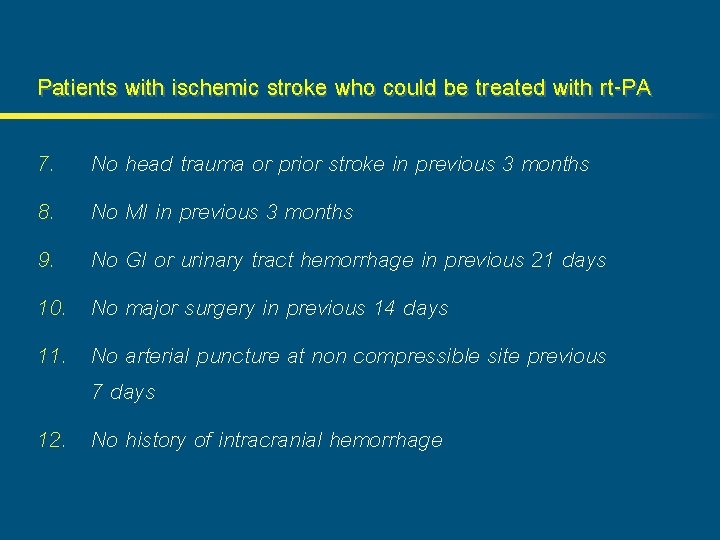
Patients with ischemic stroke who could be treated with rt-PA 7. 8. 9. 10. 11. No head trauma or prior stroke in previous 3 months No MI in previous 3 months No GI or urinary tract hemorrhage in previous 21 days No major surgery in previous 14 days No arterial puncture at non compressible site previous 7 days 12. No history of intracranial hemorrhage
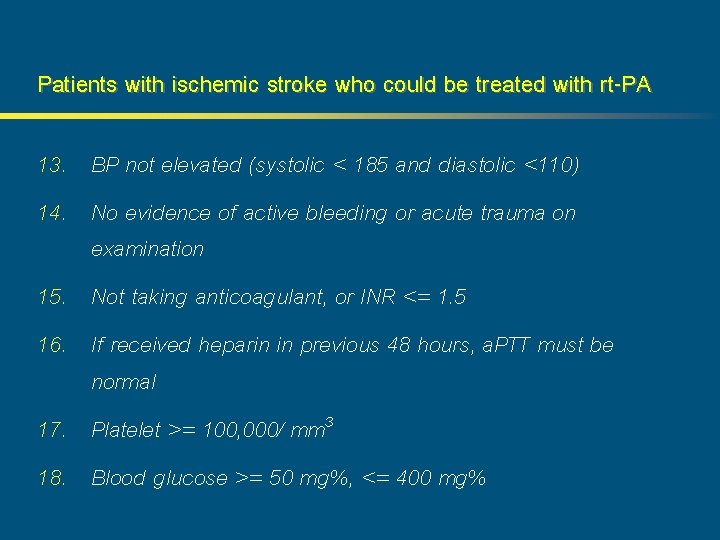
Patients with ischemic stroke who could be treated with rt-PA 13. BP not elevated (systolic < 185 and diastolic <110) 14. No evidence of active bleeding or acute trauma on examination 15. Not taking anticoagulant, or INR <= 1. 5 16. If received heparin in previous 48 hours, a. PTT must be normal 17. Platelet >= 100, 000/ mm 3 18. Blood glucose >= 50 mg%, <= 400 mg%
Patients with ischemic stroke who could be treated with rt-PA 19. No seizure with postictal deficit 20. CT dose not show a multilobar infarction ( hypodensity > 1/ 3 cerebral hemisphere ) 21. Patient or family understand the potential risks and benefits of treatment
Regimens for iv rt-PA treatment • Infusion 0. 9 mg/ kg (max 90 mg) over 1 hour, 10 % bolus dose over 1 minute • Admit to ICU or stroke unit • Neurological assessments every 15 minutes during infusion every 30 minutes next 6 hours every hours until 24 hours • If severe headache, acute hypertension, nausea, vomiting, discontinue infusion, and emergency CT brain
Regimens for iv rt-PA treatment • Measure BP every 15 minutes for first 2 hours every 30 minutes for next 6 hours every 1 hours until 24 hours • If systolic BP >=180 mm. Hg or diastolic BP >=105 mm. Hg, increase frequency of BP measurement, administer antihypertensive drug to maintain BP at or below this levels • If diastolic BP >140 mm. Hg, sodium nitroprusside 0. 5 mg/ kg/ min
Regimens for iv rt-PA treatment • Delayed placement of NG tube, bladder catheters, intra- arterial catheters • Anticoagulants and antiplatelet agents should be delayed for 24 hours after treatment • Staffs, CT, Neurosurgeon, Laboratory test available 24 hours • Cryoprecipitate or fresh frozen plasma, platelet concentration
Ischemic stroke
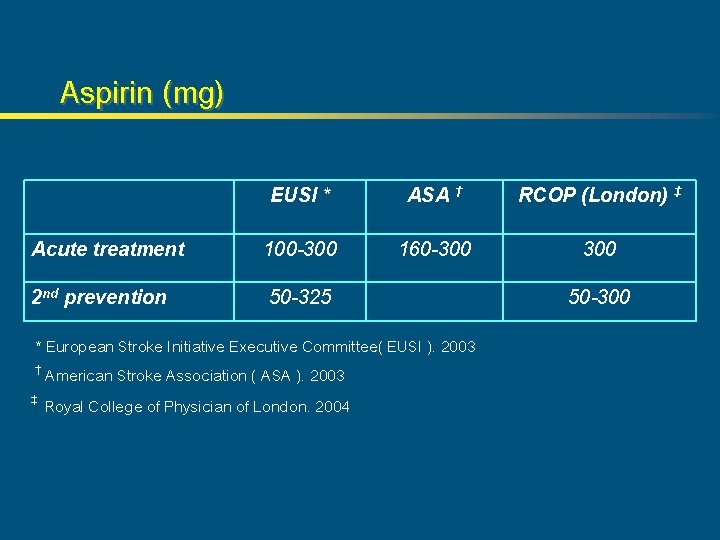
Aspirin (mg) EUSI * ASA † RCOP (London) ‡ Acute treatment 100 -300 160 -300 2 nd prevention 50 -325 * European Stroke Initiative Executive Committee( EUSI ). 2003 † American Stroke Association ( ASA ). 2003 ‡ Royal College of Physician of London. 2004 50 -300
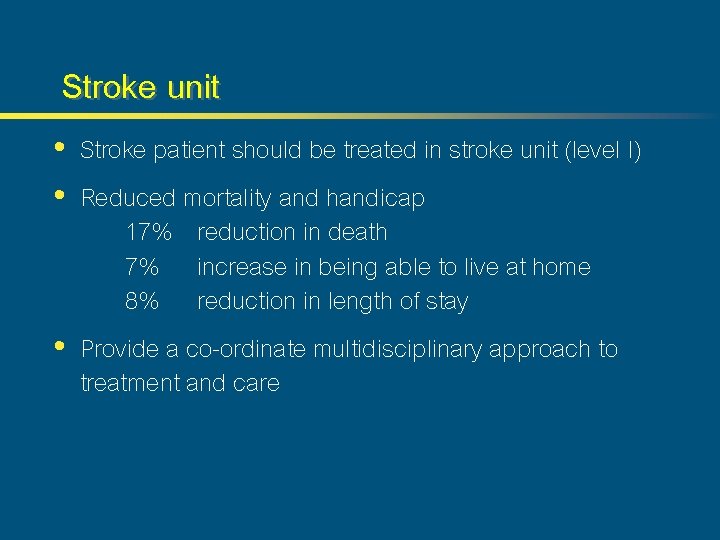
Stroke unit • Stroke patient should be treated in stroke unit (level I) • Reduced mortality and handicap 17% reduction in death 7% increase in being able to live at home 8% reduction in length of stay • Provide a co-ordinate multidisciplinary approach to treatment and care
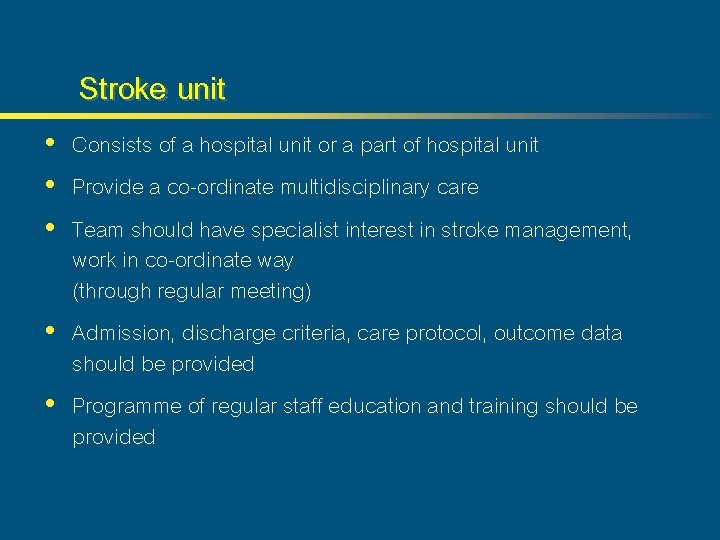
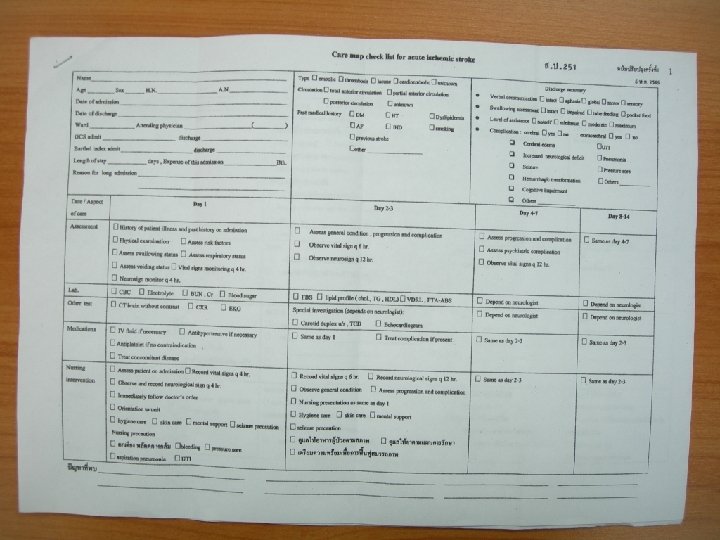
Stroke unit • Consists of a hospital unit or a part of hospital unit • Provide a co-ordinate multidisciplinary care • Team should have specialist interest in stroke management, work in co-ordinate way (through regular meeting) • Admission, discharge criteria, care protocol, outcome data should be provided • Programme of regular staff education and training should be provided
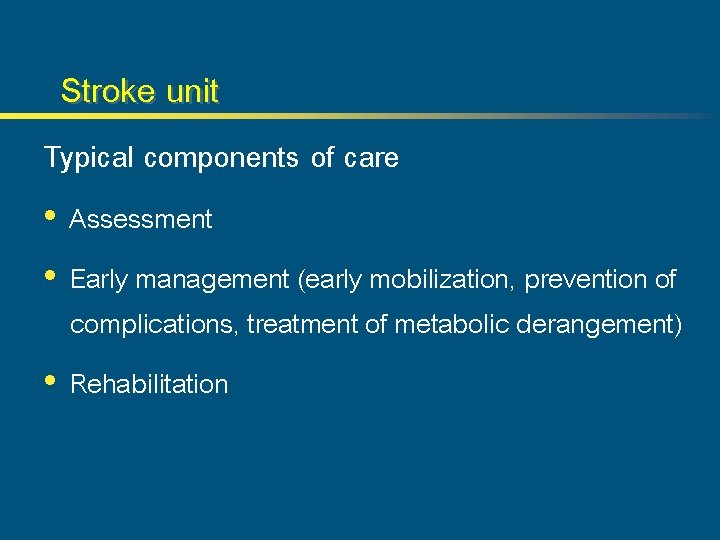
Stroke unit Typical components of care • Assessment • Early management (early mobilization, prevention of complications, treatment of metabolic derangement) • Rehabilitation
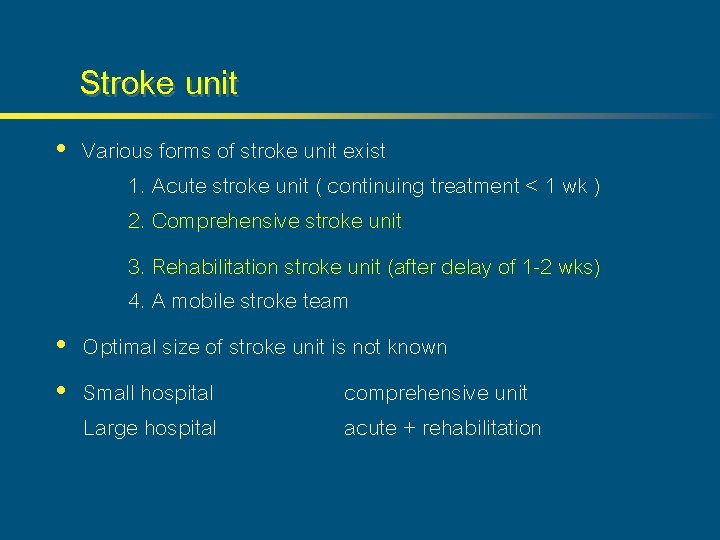
Stroke unit • Various forms of stroke unit exist 1. Acute stroke unit ( continuing treatment < 1 wk ) 2. Comprehensive stroke unit 3. Rehabilitation stroke unit (after delay of 1 -2 wks) 4. A mobile stroke team • Optimal size of stroke unit is not known • Small hospital comprehensive unit Large hospital acute + rehabilitation
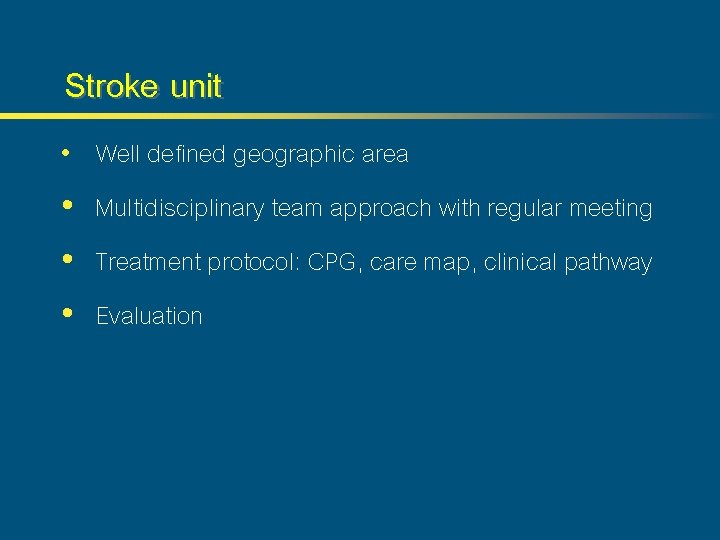
Stroke unit Well defined geographic area • Multidisciplinary team approach with regular meeting • • Treatment protocol: CPG, care map, clinical pathway • Evaluation
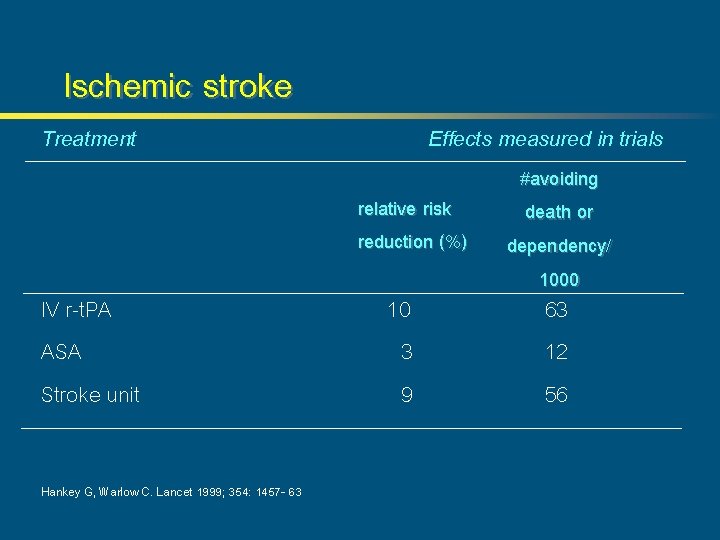
Ischemic stroke Treatment Effects measured in trials relative risk reduction (%) IV r-t. PA ASA Stroke unit Hankey G, Warlow C. Lancet 1999; 354: 1457 - 63 10 3 9 #avoiding death or dependency/ 1000 63 12 56
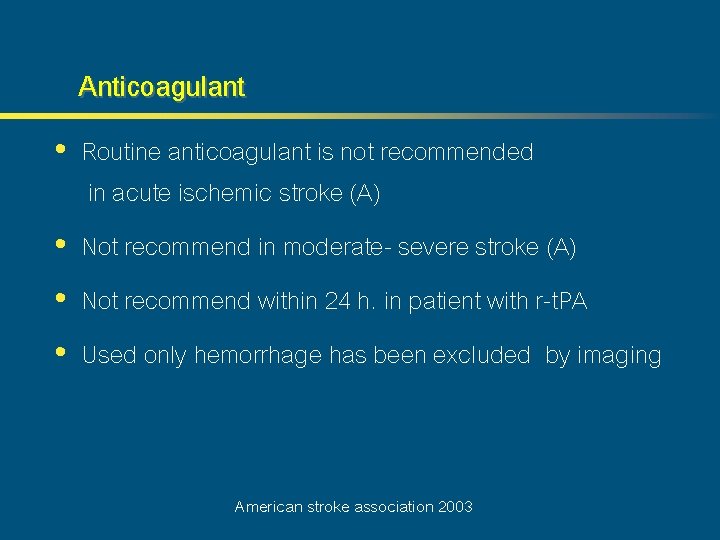
Anticoagulant • Routine anticoagulant is not recommended in acute ischemic stroke (A) • Not recommend in moderate- severe stroke (A) • Not recommend within 24 h. in patient with r-t. PA • Used only hemorrhage has been excluded by imaging American stroke association 2003
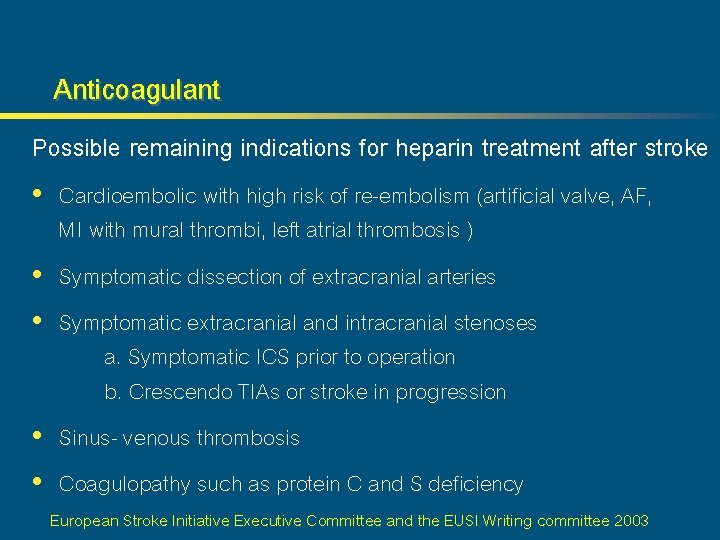
Anticoagulant Possible remaining indications for heparin treatment after stroke • Cardioembolic with high risk of re-embolism (artificial valve, AF, MI with mural thrombi, left atrial thrombosis ) • Symptomatic dissection of extracranial arteries • Symptomatic extracranial and intracranial stenoses a. Symptomatic ICS prior to operation b. Crescendo TIAs or stroke in progression • Sinus- venous thrombosis • Coagulopathy such as protein C and S deficiency European Stroke Initiative Executive Committee and the EUSI Writing committee 2003
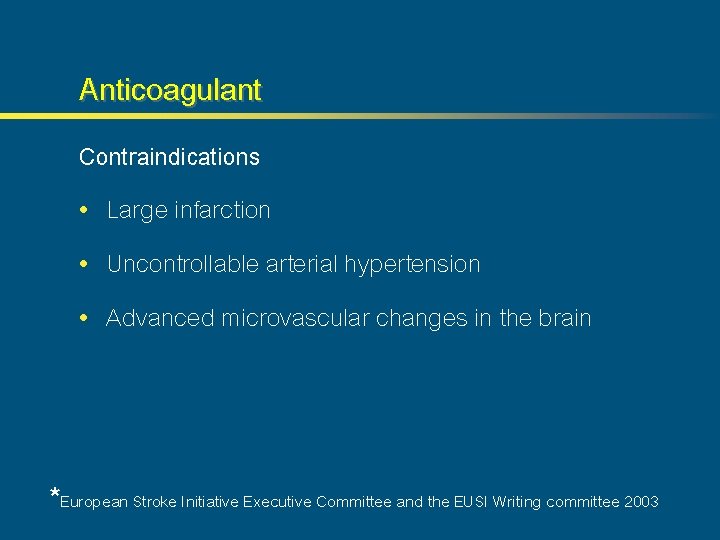
Anticoagulant Contraindications • Large infarction • Uncontrollable arterial hypertension • Advanced microvascular changes in the brain *European Stroke Initiative Executive Committee and the EUSI Writing committee 2003
Management ischemic stroke • Diagnosis & differential diagnosis • General supportive care • Acute treatment • Treatment of neurological complication • Secondary prevention
Treatment of neurological complication • Cerebral edema and increased intracranial pressure • Seizures • Hemorrhagic transformation
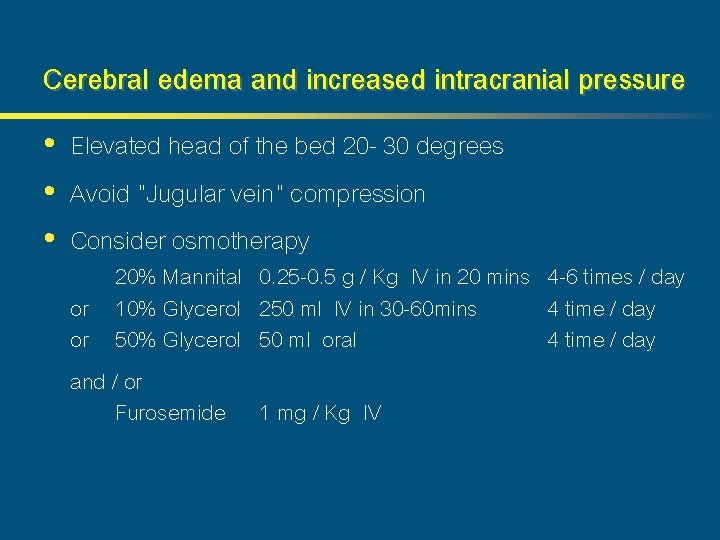
Cerebral edema and increased intracranial pressure • Elevated head of the bed 20 - 30 degrees • Avoid “Jugular vein” compression • Consider osmotherapy 20% Mannital or 10% Glycerol or 50% Glycerol and / or Furosemide 0. 25 -0. 5 g / Kg IV in 20 mins 4 -6 times / day 250 ml IV in 30 -60 mins 4 time / day 50 ml oral 4 time / day 1 mg / Kg IV
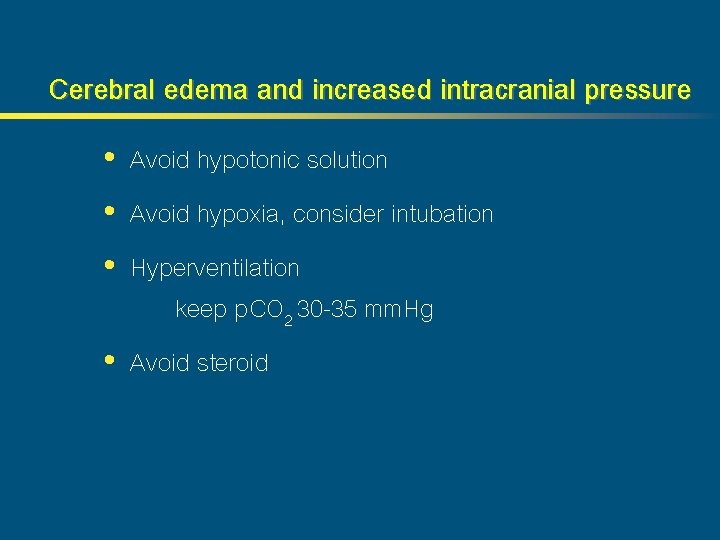
Cerebral edema and increased intracranial pressure • Avoid hypotonic solution • Avoid hypoxia, consider intubation • Hyperventilation keep p. CO 2 30 -35 mm. Hg • Avoid steroid
Treatment of neurological complication • Cerebral edema and increased intracranial pressure • Seizures • Hemorrhagic transformation
Management ischemic stroke • • Diagnosis & differential diagnosis General supportive care Acute treatment Treatment of neurological complication • Secondary prevention
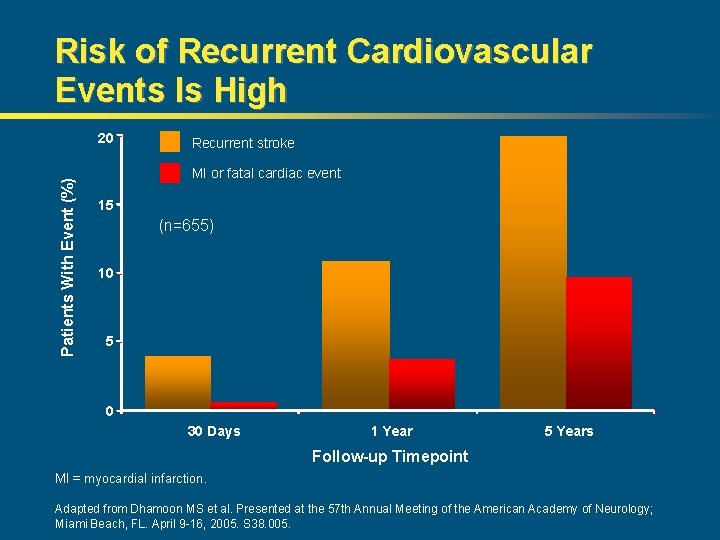
Risk of Recurrent Cardiovascular Events Is High Patients With Event (%) 20 Recurrent stroke MI or fatal cardiac event 15 (n=655) 10 5 0 30 Days 1 Year 5 Years Follow-up Timepoint MI = myocardial infarction. Adapted from Dhamoon MS et al. Presented at the 57 th Annual Meeting of the American Academy of Neurology; Miami Beach, FL. April 9 -16, 2005. S 38. 005.
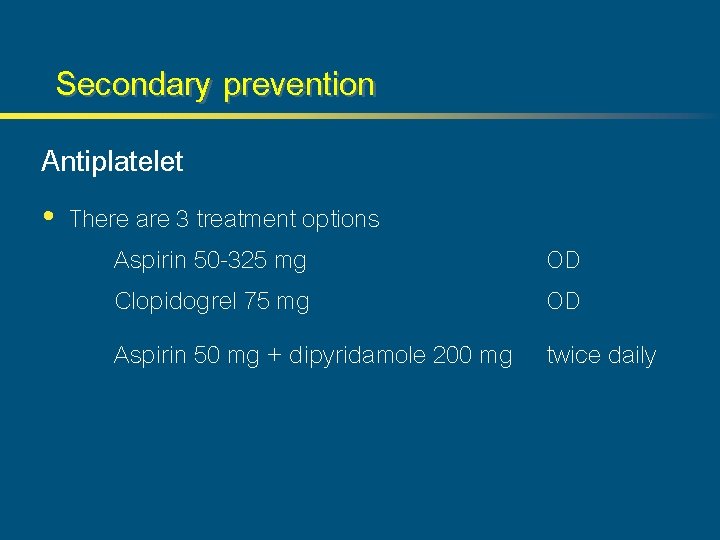
Secondary prevention Antiplatelet • There are 3 treatment options Aspirin 50 -325 mg OD Clopidogrel 75 mg OD Aspirin 50 mg + dipyridamole 200 mg twice daily
Secondary prevention Anticoagulant • Cardioembolic stroke INR 2 -3 • Should not be used in non cardioembolic stroke Control risk factors • HT, DM, Smoking, Hyperlipidemia, Life style, Stress, Obesity
Secondary prevention Carotid endarterectomy • CEA is indicated for patient with stenosis 70 -99 % valid only for center with perioperative complication < 6 % (level I) • CEA may be indicated for patient with stenosis 50 -69 % valid only for center with perioperative complication < 6 % (level III) • CEA is not recommended for patient with stenosis < 50 %
Secondary prevention Extracranial-Intracranial Anastomosis • Is not benificial in preventing stroke in patient with MCA or ICA stenosis or occlusion Carotid Angioplasty and stenting • May be indicated for patient with contraindication to CEA or with stenosis at surgical inaccessible sites • May be indicated for patient with re-stenosis after CEA or stenosis following radiation
Management ischemic stroke • • • Diagnosis & differential diagnosis General supportive care Acute treatment Treatment of neurological complication Secondary prevention
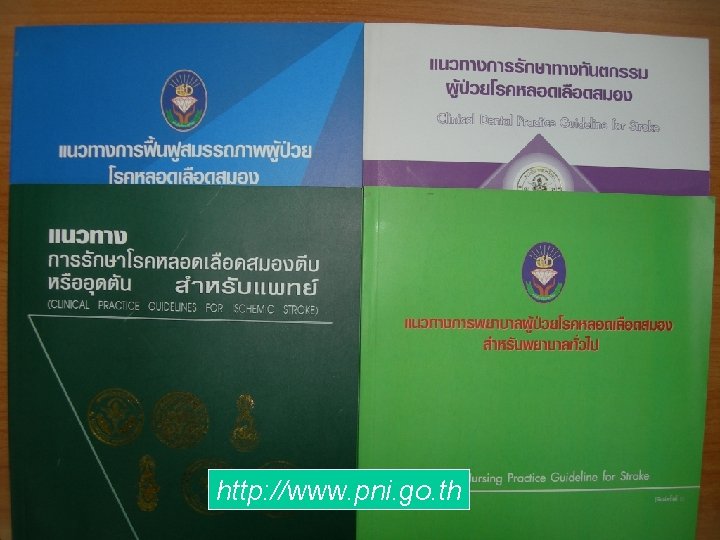
http: //www. pni. go. th

Conclusions • Stroke is a major health problem in Thailand • Stroke unit, r-t. PA are the major advances • To improve the quality of care : Multidisciplinary/ network approach CQI activities are very importance
- Slides: 62