
MANAGEMENT OF IRIDOCYCLITIS Prepared by Naufal B Abidin
MANAGEMENT OF IRIDOCYCLITIS Prepared by: • Naufal B. Abidin • Farhan B. Ibrahim • Mohd. Hazwan B. Zulkifli (4 th year medical students)
DEFINITION Acute or chronic inflammation of the iris and ciliary body characterized by exudates into the anterior chamber, discoloration of the iris, and constricted, sluggish pupil. Symptoms include radiating pain, photophobia, lacrimation, and interference with vision
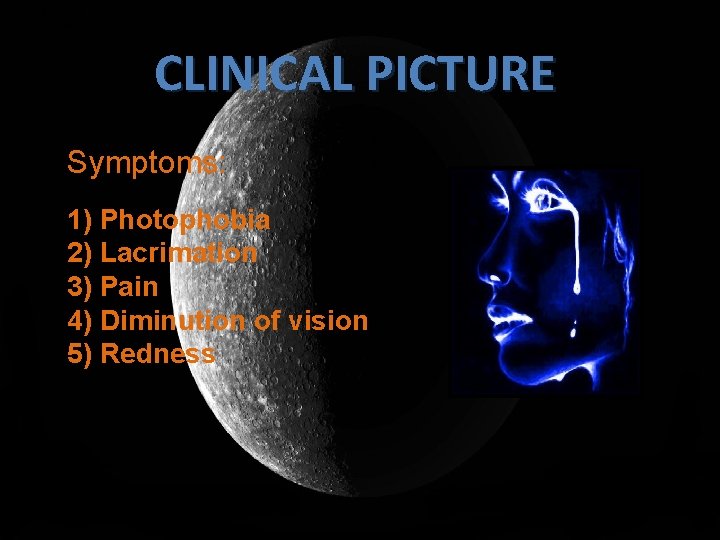
1)Photophobia 2)Lacrimation CLINICAL PICTURE Symptoms: 1) Photophobia 2) Lacrimation 3) Pain 4) Diminution of vision 5) Redness

1)Lids : edematous 2)Conjunctiva : ciliary injection SIGNS 1) Lids : edematous 2) Conjunctiva : ciliary injection 3) Cornea : show keratic precipitates due to deposition of cell on its posterior surface 4) Anterior chamber : Aqueous flare, hyphaema and hypophyon. 5) Pupil 6) Muddy Iris 7) Vitreous 8) High intra ocullar pressure.

Ciliary Injection
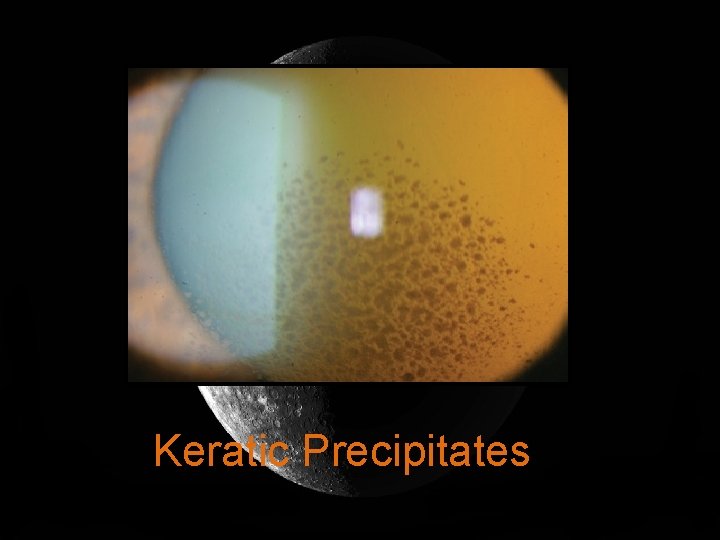
Keratic Precipitates
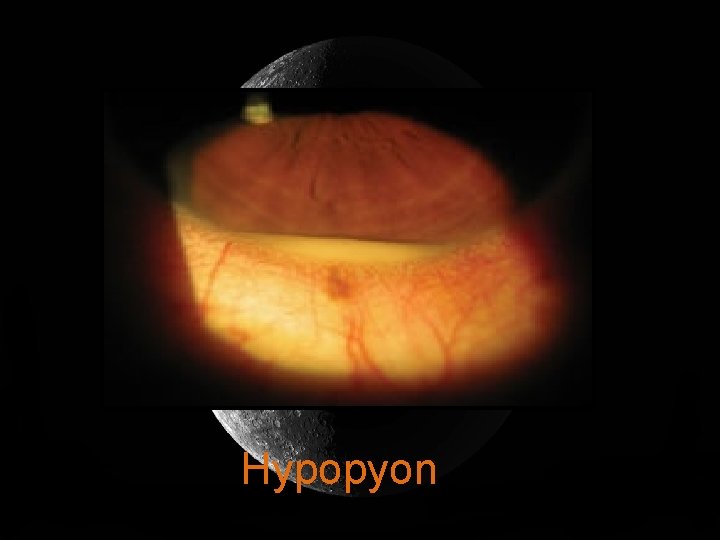
Hypopyon
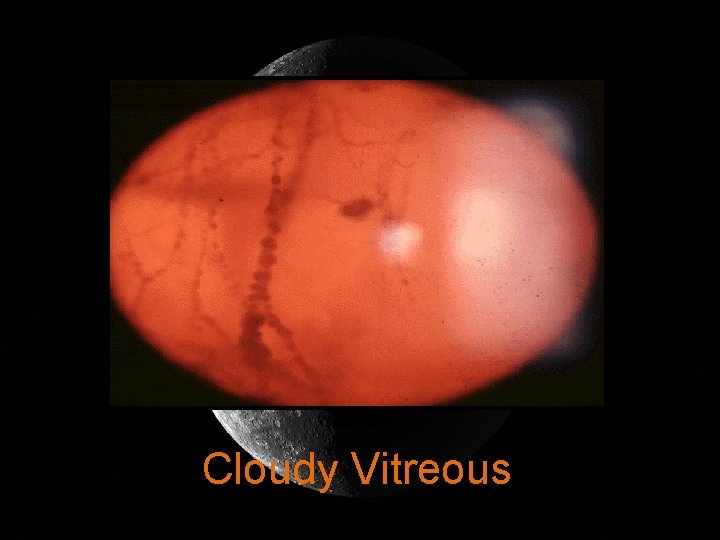
Cloudy Vitreous
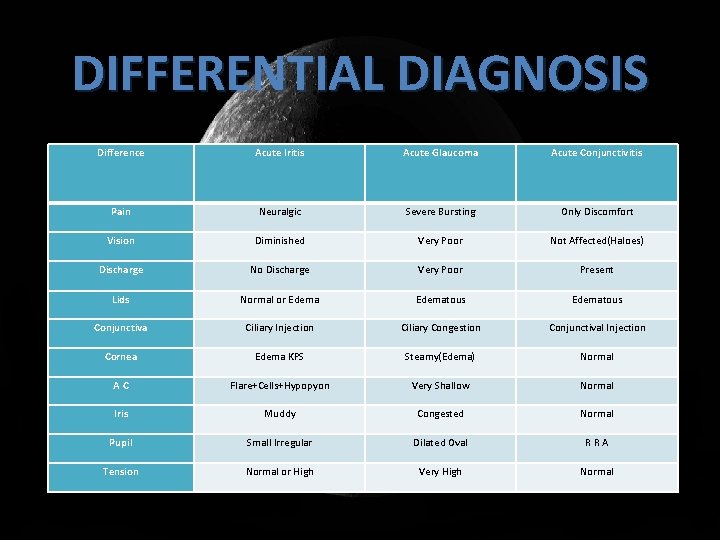
DIFFERENTIAL DIAGNOSIS Difference Acute Iritis Acute Glaucoma Acute Conjunctivitis Pain Neuralgic Severe Bursting Only Discomfort Vision Diminished Very Poor Not Affected(Haloes) Discharge No Discharge Very Poor Present Lids Normal or Edematous Conjunctiva Ciliary Injection Ciliary Congestion Conjunctival Injection Cornea Edema KPS Steamy(Edema) Normal AC Flare+Cells+Hypopyon Very Shallow Normal Iris Muddy Congested Normal Pupil Small Irregular Dilated Oval RRA Tension Normal or High Very High Normal
INVESTIGATIONS Children and adults with uveitis and other inflammatory eye diseases may be eligible for this study. Candidates will be screened with a medical history, brief physical examination, thorough eye examination and blood tests. The eye examination includes measurements of visual acuity (ability to see the vision chart), eye pressure and dilation of the pupils to examine the lens and retina (back part of the eye). Patients may also undergo the following procedures: • Fundus photography - Special photographs of the inside of the eye to help evaluate the status of the retina and evaluate changes that may occur in the future. From 2 to 20 pictures may be taken, depending on the eye condition. The camera flashes a bright light into the eye for each picture. • Fluorescein angiography - Procedure to evaluate the eye's blood vessels. A yellow dye injected into an arm vein travels to the blood vessels in the eyes. Pictures of the retina are taken using a camera that flashes a blue light into the eye. The pictures show if any dye has leaked from the vessels into the retina, indicating possible blood vessel abnormality. Participants will be followed at least 3 years. Follow-up visits are scheduled according to the standard of care for the individual patient's eye problem. Vision will be checked at each visit, and some of the screening tests described above may be repeated to follow the progress of disease and evaluate the response to treatment. Condition : Choroiditis , Iridocyclitis , Iritis , Retinal Disease
ANOTHER CLASSIFICATIONS 1. Clinical a)History of Syphilis, TB, Gonorrhea b)Local examination for characteristic signs e. g Rubeosis Iridis in Diabetic Iritis c)Search for septi foci d)Systemic manifestations of associated diseases 2. Radiological : X-ray chest for TB or Sarcoidosis and spine for Ankylosing Spondylitis 3. Laboratory a)Urine : For sugar, pus cells, albumin, uric acid b)Stool : For parasites c)Tuberculine test d)Blood : For culture, W. R, Blood film for Malaria, etc. e)ELISA or Casoni Test : For Hydatid Disease f)ELISA test and Plasma Titer : Taxoplasmosis, toxocariasis
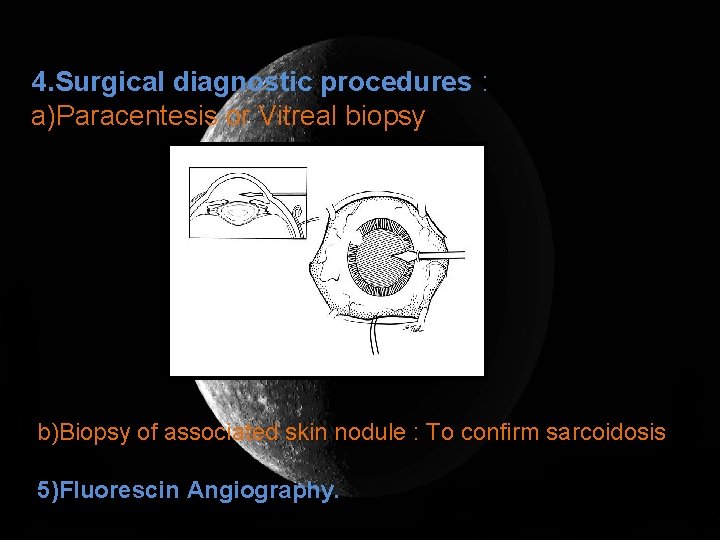
4. Surgical diagnostic procedures : a)Paracentesis or Vitreal biopsy b)Biopsy of associated skin nodule : To confirm sarcoidosis 5)Fluorescin Angiography.
OTHER UNDERLYING CONDITIONS RELATED TO IRIDOCYCLITIS • Anisocoria • Cataracts • Eye pain • Glaucoma, secondary • Heterochromic iris • Hyperlacrimation • Iris abnormality • Photophobia • Pupillary constriction
SYMPTOMS Conditions listing Iridocyclitis as a symptom may also be potential underlying conditions: • Behcet's Disease • Besnier-Boeck-Schaumann disease • Leprosy • Systemic Juvenile Rheumatoid Arthritis • Vogt-Koyanagi-Harada Syndrome
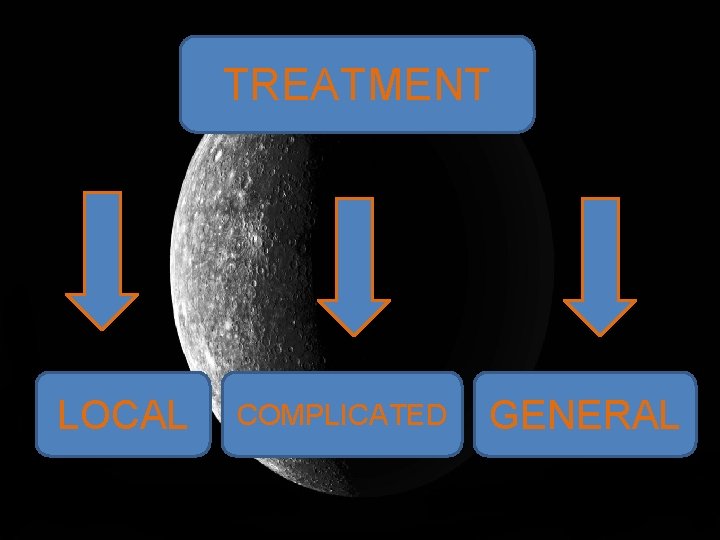
TREATMENT LOCAL COMPLICATED GENERAL
2. Dark glasses: TREATMENT (A)Local Treatment: 1. 2. 3. 4. 5. Hot fomentation: Dark glasses. Mydriatics and cycloplegics (Atropine Sulphate 1%) Local cortisone Bandage and local antibiotics. (B) General Treatment : 1. Treatment of the cause. 2. Anti inflammatory drugs ( steroidal or non-steroidal). 3. Eradication of septic foci. 4. Immunosuppressive agents (cytotoxic drugs).
(C) Treatment of complication: 1. Secondary Glaucoma. 2. Posterior Synechiae 3. Complicated cataract with total posterior synechia. 4. Iris bombe: YAG or Argon laser iridotomies or surgical iridotomy 5. Cyclic membrane: pars plana victrotomy. 6. Shrunken Globe: Enucleation with orbital implants. 7. Cystoid macular edema: 8. Permanent vitrous opacification: pars plana victrectomy 9. Retinal detachment: pars plan victrectomy and endolaser treatment with internal gas or silicon oil tamponade.

THANK YOU!!
- Slides: 18