
Management of Invasive Devices Catheters Peripheral Vascular Cannulae
- Slides: 41
Management of Invasive Devices: Catheters & Peripheral Vascular Cannulae (Learning Session Three) ANTT: Consolidating Standard Aseptic Practice
Why the need for ANTT?
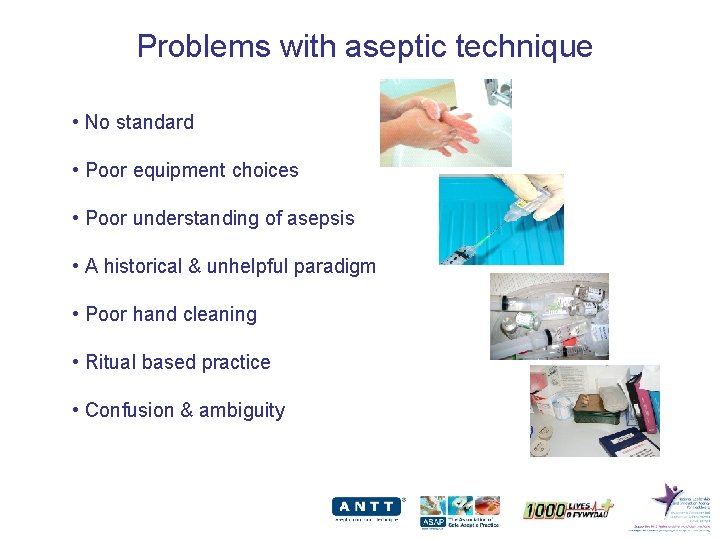
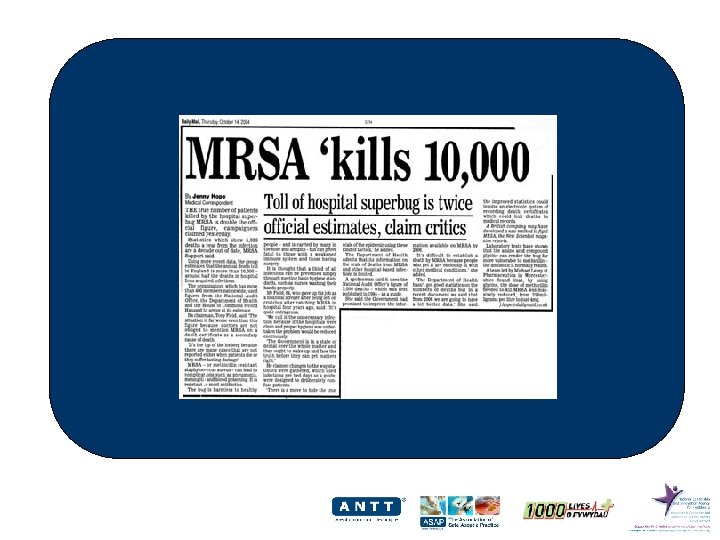
Problems with aseptic technique • No standard • Poor equipment choices • Poor understanding of asepsis • A historical & unhelpful paradigm • Poor hand cleaning • Ritual based practice • Confusion & ambiguity
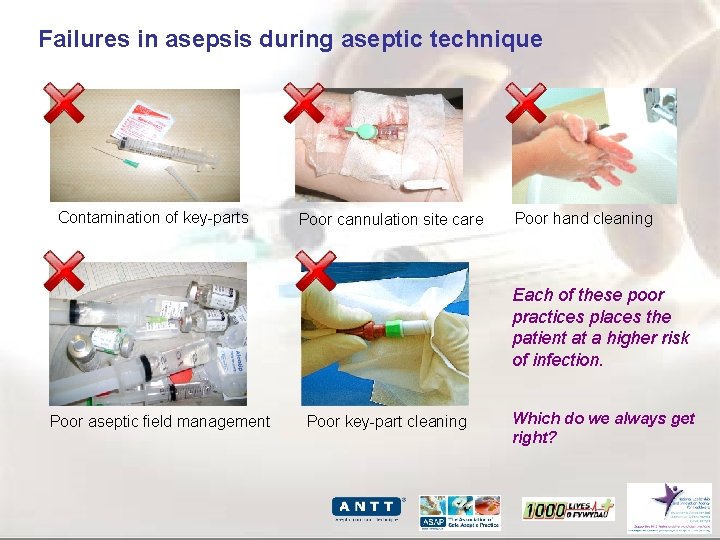
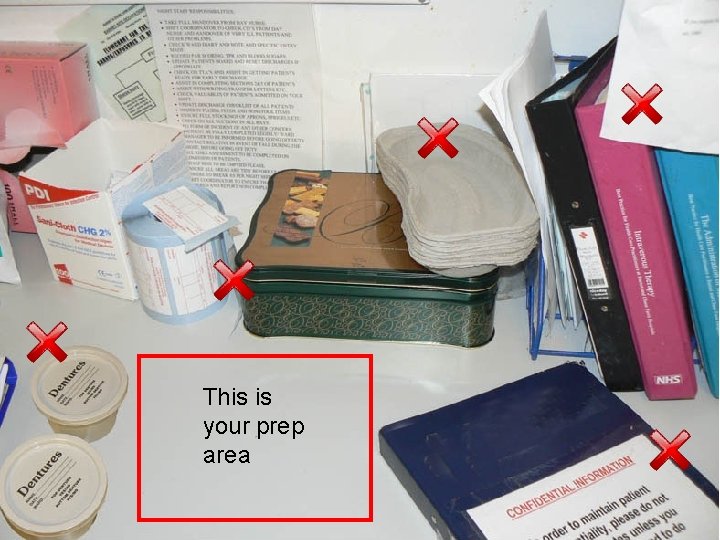
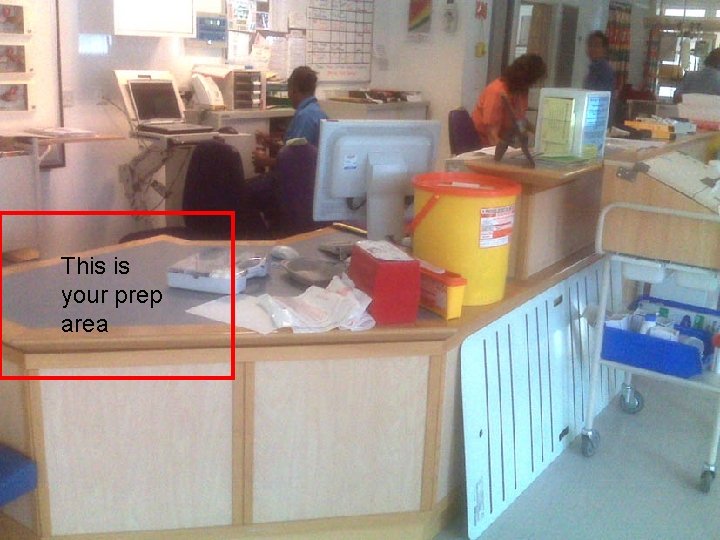
Failures in asepsis during aseptic technique Contamination of key-parts Poor cannulation site care Poor hand cleaning Each of these poor practices places the patient at a higher risk of infection. Poor aseptic field management Poor key-part cleaning Which do we always get right?
This is your prep area
This is your prep area
Aseptic Technique ‘Guidance’ ? DOH ‘Do aseptic technique’ NPSA ‘Use aseptic technique’ QCC ‘Use a standard aseptic technique’ WHO ‘Use aseptic technique’ Royal Marsden Manual ‘Use aseptic technique’ RCN IV Standards ‘Use aseptic technique’
What Does Aseptic Technique Mean to You?
What is ANTT?
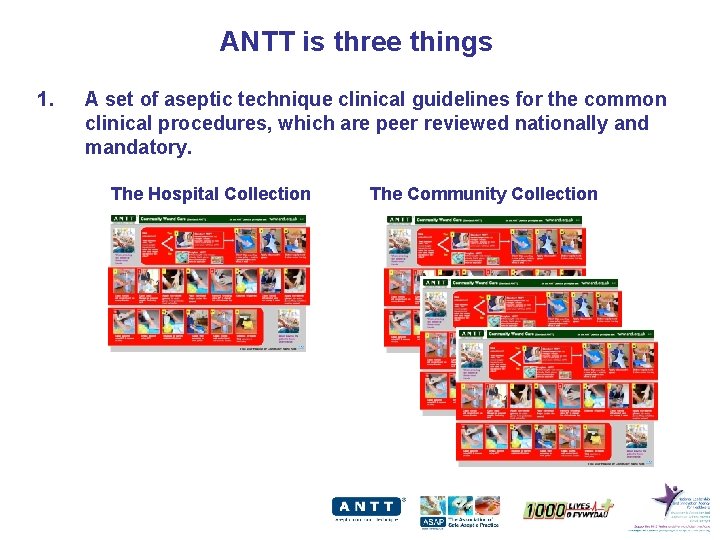
ANTT is three things 1. A set of aseptic technique clinical guidelines for the common clinical procedures, which are peer reviewed nationally and mandatory. The Hospital Collection The Community Collection
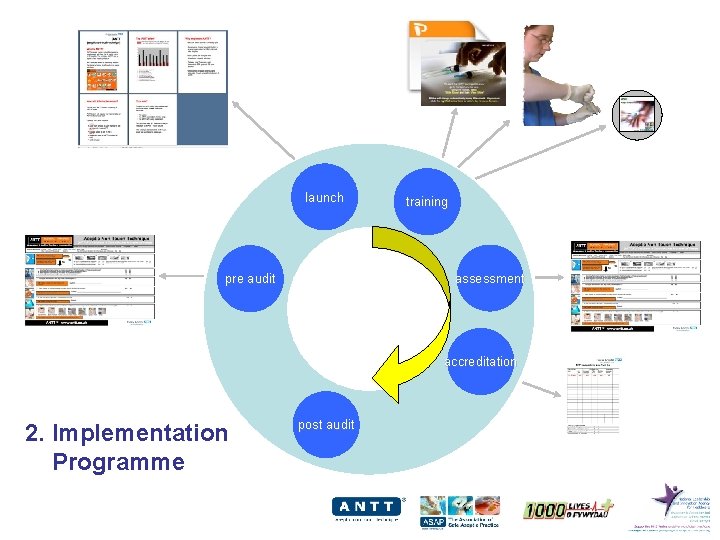
launch pre audit training ANTT Implementation audit cycle assessment accreditation 2. Implementation Programme post audit
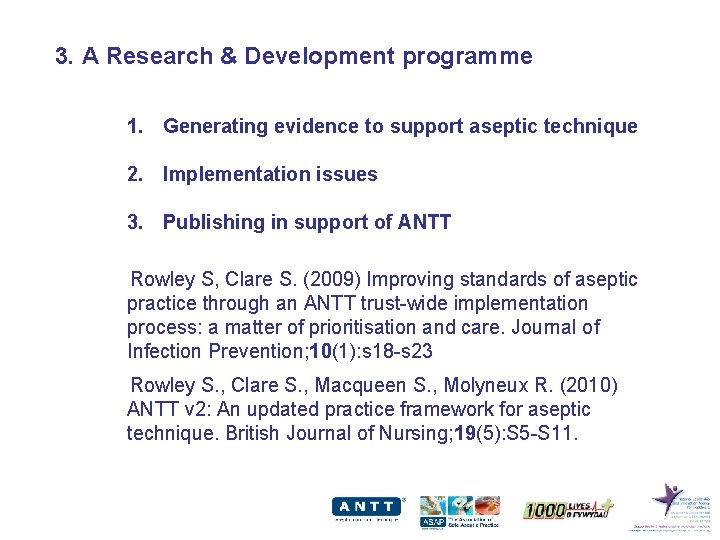
3. A Research & Development programme 1. Generating evidence to support aseptic technique 2. Implementation issues 3. Publishing in support of ANTT Rowley S, Clare S. (2009) Improving standards of aseptic practice through an ANTT trust-wide implementation process: a matter of prioritisation and care. Journal of Infection Prevention; 10(1): s 18 -s 23 Rowley S. , Clare S. , Macqueen S. , Molyneux R. (2010) ANTT v 2: An updated practice framework for aseptic technique. British Journal of Nursing; 19(5): S 5 -S 11.
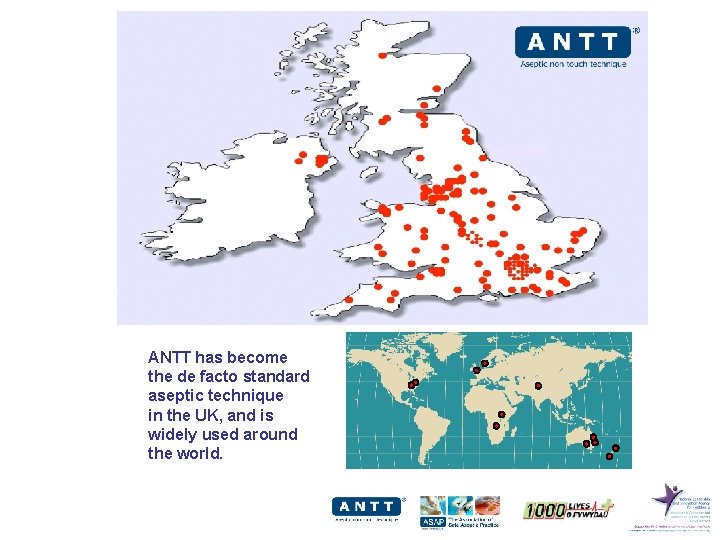
ANTT has become the de facto standard aseptic technique in the UK, and is widely used around the world.
How ANTT Works
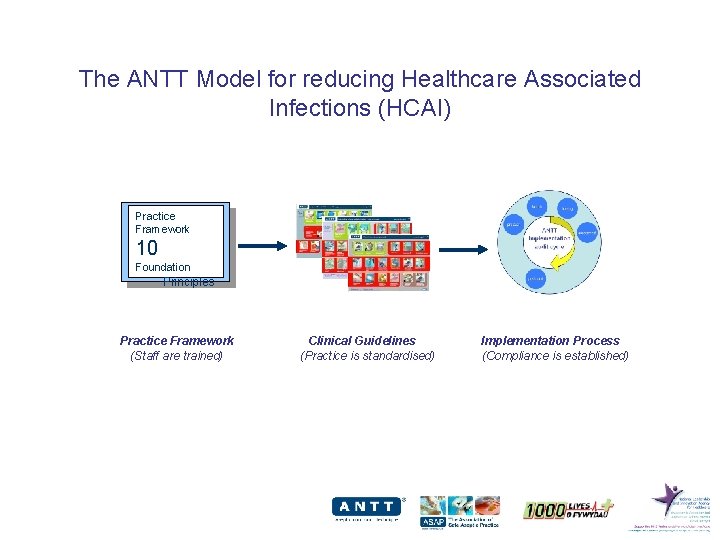
The ANTT Model for reducing Healthcare Associated Infections (HCAI) 1 2 3 Practice Framework 10 Foundation Principles Practice Framework (Staff are trained) Clinical Guidelines (Practice is standardised) Implementation Process (Compliance is established)
The Theory Practice Framework
ANTT principles & practice ‘From the community to the operating theatre’.
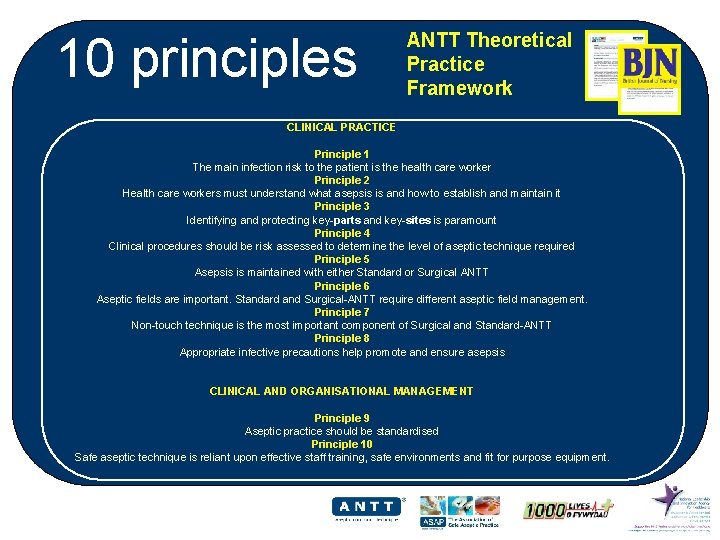
10 principles ANTT Theoretical Practice Framework CLINICAL PRACTICE Principle 1 The main infection risk to the patient is the health care worker Principle 2 Health care workers must understand what asepsis is and how to establish and maintain it Principle 3 Identifying and protecting key-parts and key-sites is paramount Principle 4 Clinical procedures should be risk assessed to determine the level of aseptic technique required Principle 5 Asepsis is maintained with either Standard or Surgical ANTT Principle 6 Aseptic fields are important. Standard and Surgical-ANTT require different aseptic field management. Principle 7 Non-touch technique is the most important component of Surgical and Standard-ANTT Principle 8 Appropriate infective precautions help promote and ensure asepsis CLINICAL AND ORGANISATIONAL MANAGEMENT Principle 9 Aseptic practice should be standardised Principle 10 Safe aseptic technique is reliant upon effective staff training, safe environments and fit for purpose equipment.
Principle 1 The ANTT Theory & Practice Framework The main infection risk to the patient is the healthcare worker.
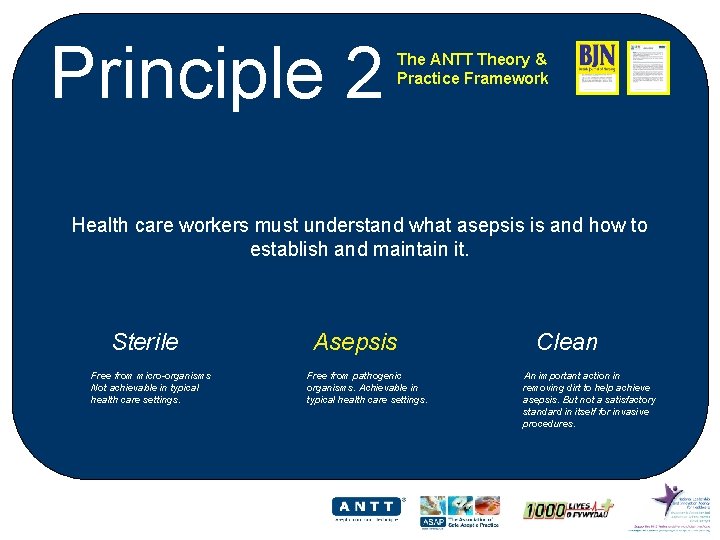
Principle 2 The ANTT Theory & Practice Framework Health care workers must understand what asepsis is and how to 2 establish. Principle and maintain it. Health care workers must understand what asepsis is and how to establish and maintain it Sterile Free from micro-organisms Not achievable in typical health care settings. Asepsis Free from pathogenic organisms. Achievable in typical health care settings. Clean An important action in removing dirt to help achieve asepsis. But not a satisfactory standard in itself for invasive procedures.
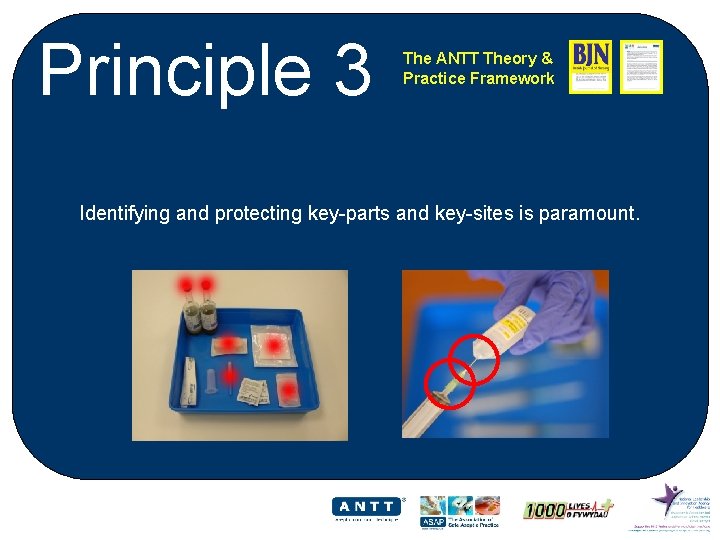
Principle 3 The ANTT Theory & Practice Framework Identifying and protecting key-parts and key-sites is paramount.
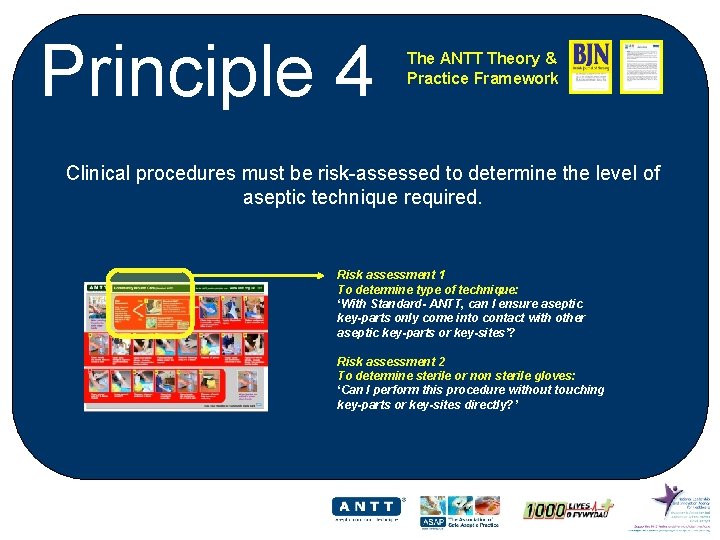
Principle 4 The ANTT Theory & Practice Framework Clinical procedures must be risk-assessed to determine the level of aseptic technique required. Risk assessment 1 To determine type of technique: ‘With Standard- ANTT, can I ensure aseptic key-parts only come into contact with other aseptic key-parts or key-sites’? Risk assessment 2 To determine sterile or non sterile gloves: ‘Can I perform this procedure without touching key-parts or key-sites directly? ’
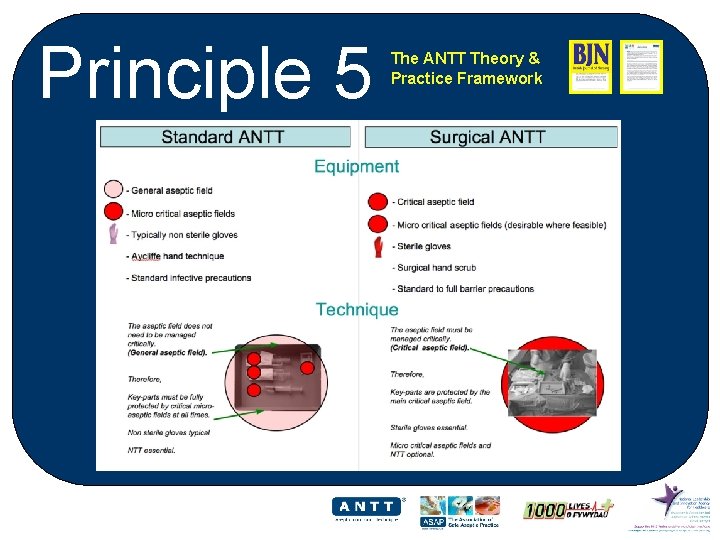
Principle 5 The ANTT Theory & Practice Framework
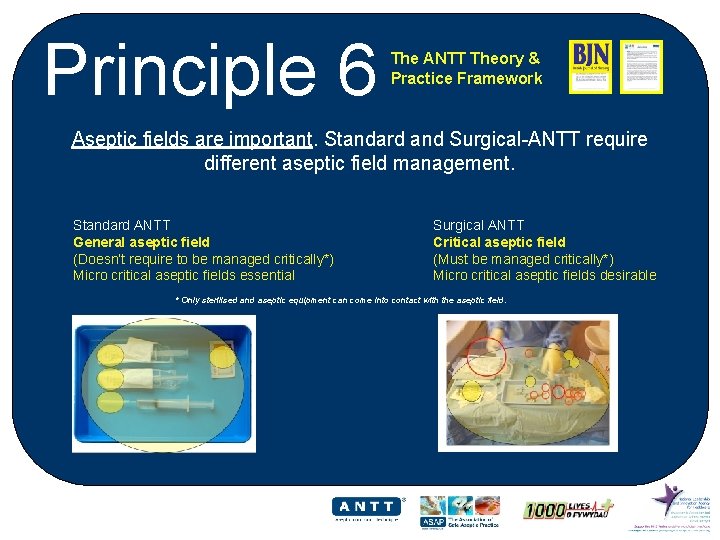
Principle 6 The ANTT Theory & Practice Framework Aseptic fields are important. Standard and Surgical-ANTT require different aseptic field management. Standard ANTT General aseptic field (Doesn’t require to be managed critically*) Micro critical aseptic fields essential Surgical ANTT Critical aseptic field (Must be managed critically*) Micro critical aseptic fields desirable * Only sterilised and aseptic equipment can come into contact with the aseptic field.
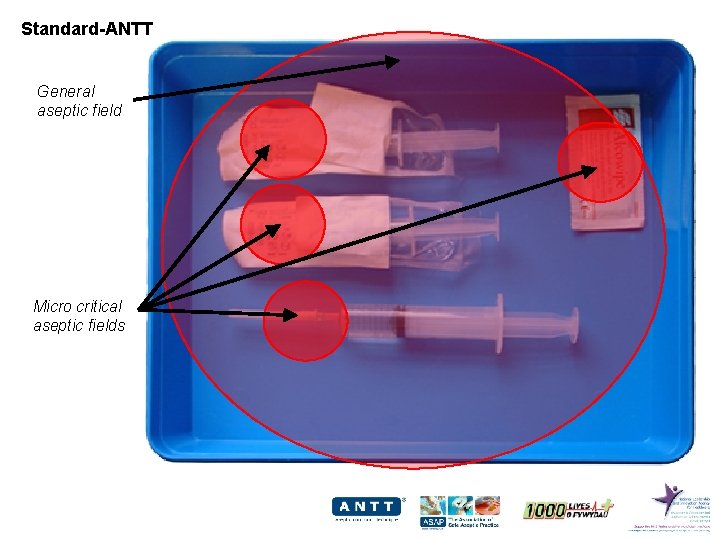
Standard-ANTT General aseptic field Micro critical aseptic fields
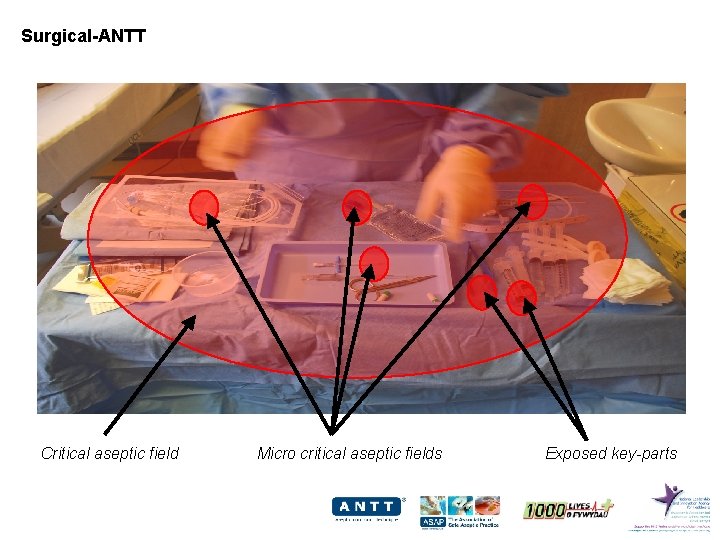
Surgical-ANTT Critical aseptic field Micro critical aseptic fields Exposed key-parts
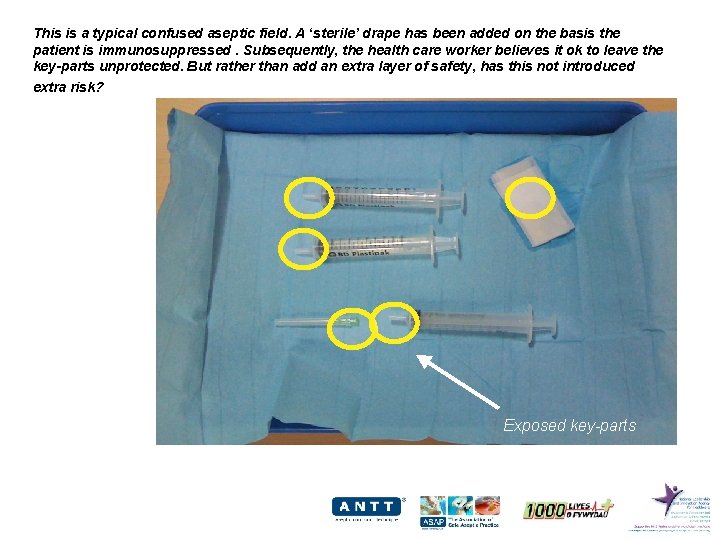
This is a typical confused aseptic field. A ‘sterile’ drape has been added on the basis the patient is immunosuppressed. Subsequently, the health care worker believes it ok to leave the key-parts unprotected. But rather than add an extra layer of safety, has this not introduced extra risk? Exposed key-parts
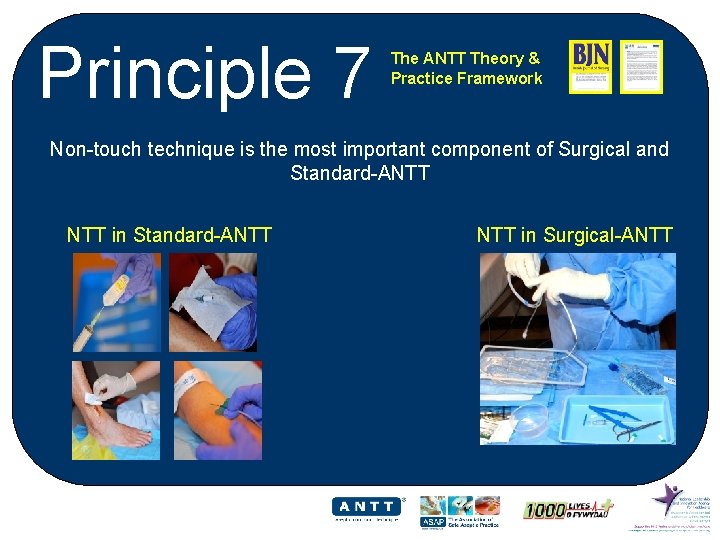
Principle 7 The ANTT Theory & Practice Framework Non-touch technique is the most important component of Surgical and Standard-ANTT NTT in Surgical-ANTT
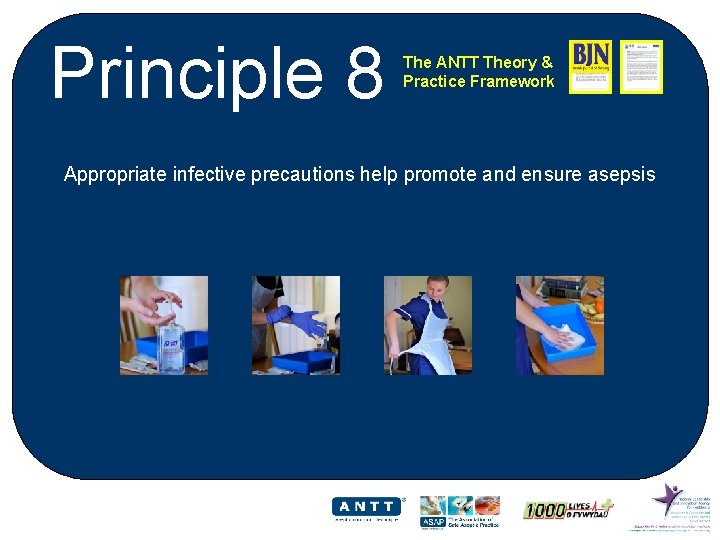
Principle 8 The ANTT Theory & Practice Framework Appropriate infective precautions help promote and ensure asepsis
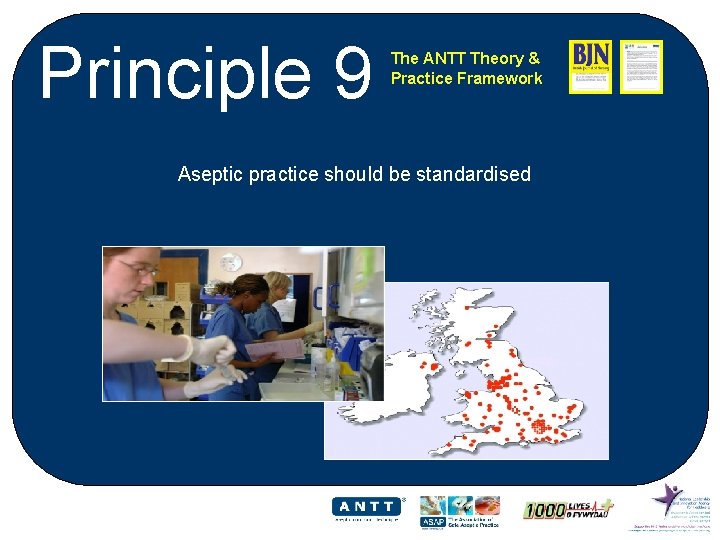
Principle 9 The ANTT Theory & Practice Framework Aseptic practice should be standardised
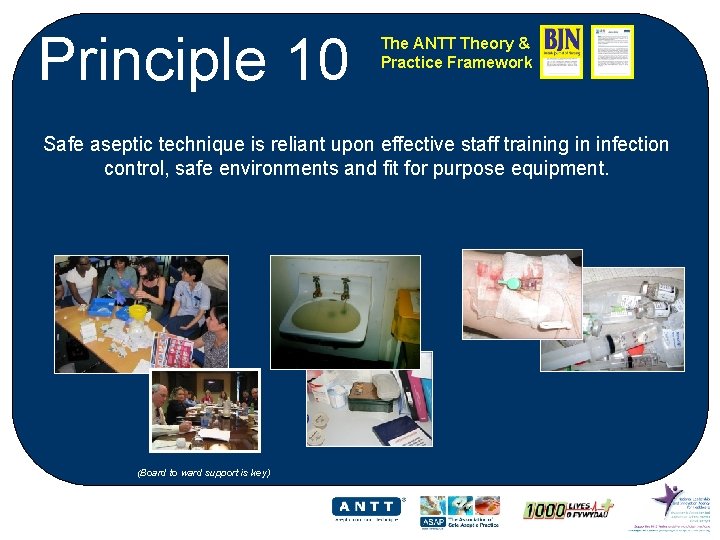
Principle 10 The ANTT Theory & Practice Framework Safe aseptic technique is reliant upon effective staff training in infection control, safe environments and fit for purpose equipment. (Board to ward support is key)
ANTT Guidelines
ANTT Guidelines • Are designed by experts in each clinical competency • The sequence of procedure and infection control steps are risk assessed using a unique tool designed by ANTT • Peer reviewed by experts and users nationally
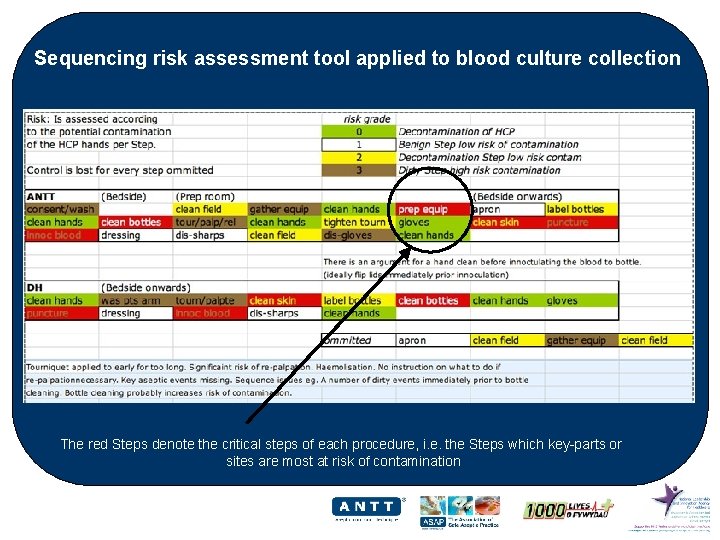
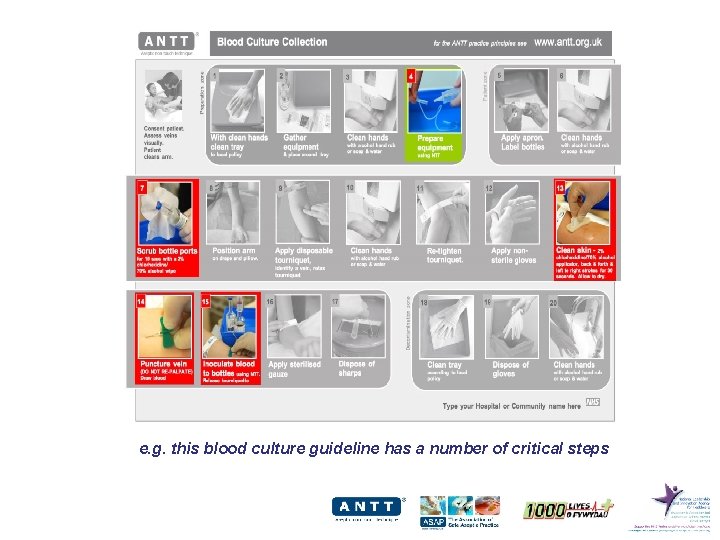
Sequencing risk assessment tool applied to blood culture collection The red Steps denote the critical steps of each procedure, i. e. the Steps which key-parts or sites are most at risk of contamination
e. g. this blood culture guideline has a number of critical steps
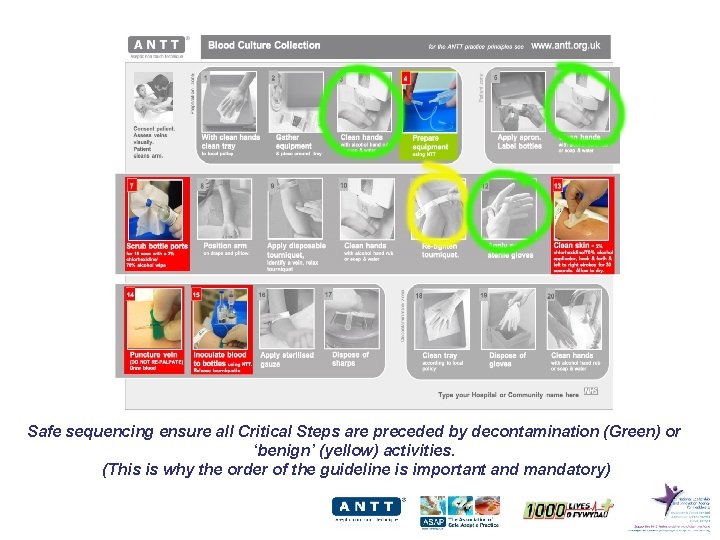
Safe sequencing ensure all Critical Steps are preceded by decontamination (Green) or ‘benign’ (yellow) activities. (This is why the order of the guideline is important and mandatory)
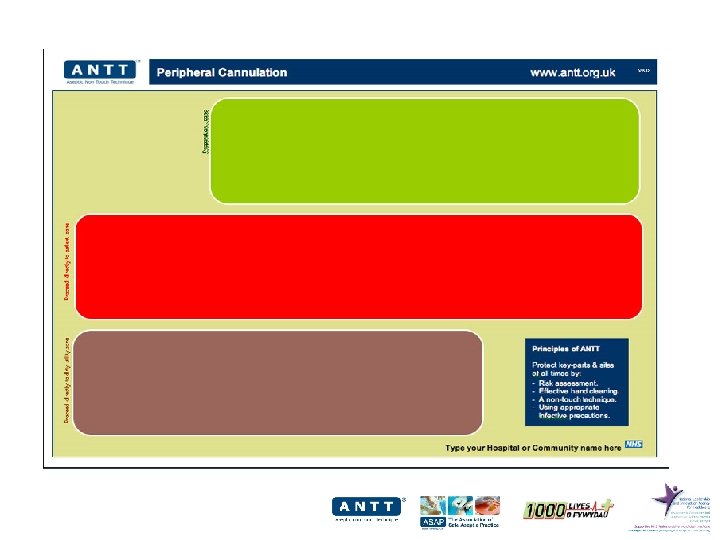
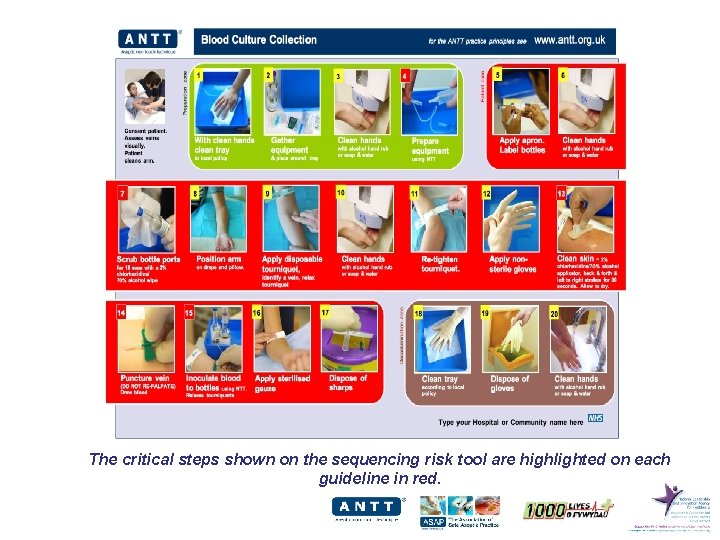
The critical steps shown on the sequencing risk tool are highlighted on each guideline in red.
Standardising practice in this way with mandatory guidelines for the common clinical procedures has many benefits for patients and health care organisations: • It significantly reduces the number of practice variables. (This is all the more important in large clinical workforces) • It facilitates easier audit and monitoring. • It facilitates a peer-pressure effect.
www. antt. org. uk enquiries@antt. org. uk