
Management of Hip Fractures in the Elderly EvidenceBased
Management of Hip Fractures in the Elderly: Evidence-Based Clinical Practice Guideline Adopted by the American Academy of Orthopaedic Surgeons (AAOS) Board of Directors September 5, 2014
The American Academy of Orthopaedic Surgeons 2014 Clinical Practice Guideline on the Management of Hip Fractures in the Elderly W. Timothy Brox, MD; Karl C. Roberts, MD; Sudeep Taksali, MD; Douglas G. Wright, MD; John J. Wixted, MD; Creighton C. Tubb, MD; Joshua C. Patt, MD; Kimberly J. Templeton, MD; Eitan Dickman, MD; Robert A. Adler, MD; William B. Macaulay, MD; James M. Jackman, DO; Thiru Annaswamy, MD; Alan M. Adelman, MD, MS; Catherine G. Hawthorne, MD; Steven A. Olson, MD; Daniel Ari Mendelson, MD; Meryl S. Le. Boff, MD; Pauline A. Camacho, MD, MACE; David Jevsevar, MD, MBA; Kevin Shea, MD; Kevin J. Bozic, MD, MBA; C. Conrad Johnston, MD; Frederick E. Sieber, MD; AAOS Staff: William Shaffer, MD; Deborah Cummins, Ph. D; Jayson N. Murray, MA; Patrick Donnelly, MA; Kaitlyn Sevarino, MBA; Anne Woznica, MLIS, AHIP; Peter Shores, MPH; Yasseline Martinez; Leeaht Gross, MPH © 2019 American Academy of Orthopaedic Surgeons
WHAT IS A CLINICAL PRACTICE GUIDELINE? Clinical Practice Guideline A clinical practice guideline is a series of recommendations created to inform clinicians of best practices, based on best available evidence © 2019 American Academy of Orthopaedic Surgeons
GOALS AND RATIONALE OF A CLINICAL PRACTICE GUIDELINE § Improve treatment based on current best evidence § Guides qualified physicians through treatment decisions to improve quality and efficiency of care § Identify areas for future research CPG recommendations are not meant to be fixed protocols; patients’ needs, local resources, and clinician independent medical judgement must be considered for any specific procedure or treatment © 2019 American Academy of Orthopaedic Surgeons
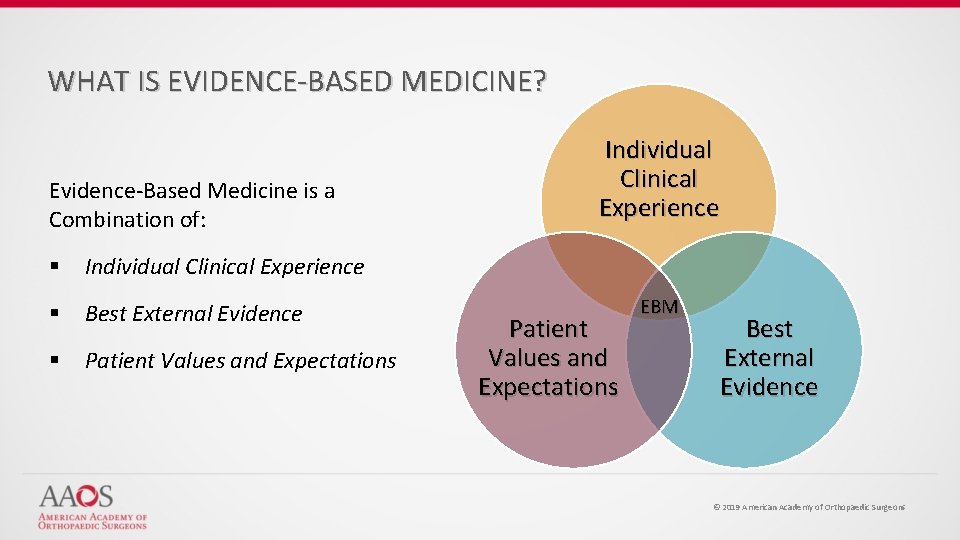
WHAT IS EVIDENCE-BASED MEDICINE? Evidence-Based Medicine is a Combination of: § Individual Clinical Experience § Best External Evidence § Patient Values and Expectations Individual Clinical Experience Patient Values and Expectations EBM Best External Evidence © 2019 American Academy of Orthopaedic Surgeons
WHAT IS EVIDENCE-BASED MEDICINE? Evidence-Based Medicine Evidence-based medicine is the conscientious, explicit, and judicious use of current best evidence from clinical care research in the management of individual patients Haynes, Sackett et al, 1996 Transferring evidence from research into practice Sacket et al, 1996, BMJ EBM: what it is and isn’t © 2019 American Academy of Orthopaedic Surgeons
IOM STANDARDS FOR DEVELOPING TRUSTWORTHY GUIDELINES § § § § Establish Transparency Management of Conflict of Interest Guideline Development Group Composition Clinical Practice Guideline-Systematic Review Intersection Establish Evidence of Foundations for and Rating Strength of Recommendations Articulation of Recommendations External Review Updating © 2019 American Academy of Orthopaedic Surgeons

CLINICAL PRACTICE GUIDELINE PROCESS FLOWCHART 1. Select CPG Topic 2. Assemble Work Group Members (WG) 3. WG formulates PICO questions, set inclusion criteria at Introductory Meeting 4. Literature Review and Appraisal AAOS staff methodologists, in conjunction with work group (WG) members, review and appraise literature 5. Final Meeting WG meets in-person to: • Review quality appraisals and evidence tables • Assign grade/rating for each recommendation based on evidence • Develop final recommendations • Construct risk/harms statements • Define future research needs 7. Approval Process 8. Communication, Dissemination, and Implementation 6. Review Periods Peer Review and Public Comment review periods © 2019 American Academy of Orthopaedic Surgeons
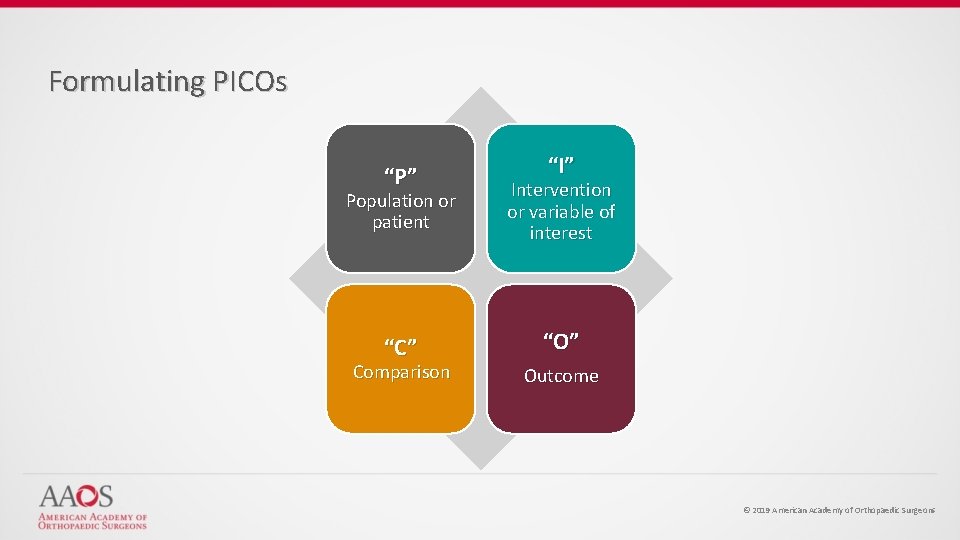
Formulating PICOs “P” “I” Population or patient Intervention or variable of interest “C” “O” Comparison Outcome © 2019 American Academy of Orthopaedic Surgeons
Inclusion/Exclusion Criteria Standard inclusion criteria include: § § Must study humans Must be published in English Must be published in or after 1966 Can not be performed on cadavers Work group members define additional exclusion criteria based on PICO question © 2019 American Academy of Orthopaedic Surgeons
Literature Searches § Databases used: § Pub. Med § EMBASE (Excerpta Medica data. BASE) § CINAHL (Cumulative Index of Nursing and Allies Health Literature) § Cochrane Central Register of Controlled Trials § Search using key terms from work group’s PICO questions and inclusion criteria § Secondary manual search of the bibliographies of all retrieved publications for relevant citations § Recalled articles evaluated for inclusion based on the study selection criteria © 2019 American Academy of Orthopaedic Surgeons
Best Evidence Synthesis § Include only highest quality evidence for any given outcome if available § If there are fewer than two occurrences of an outcome of this quality, the next lowest quality is considered until at least two occurrences have been acquired. © 2019 American Academy of Orthopaedic Surgeons
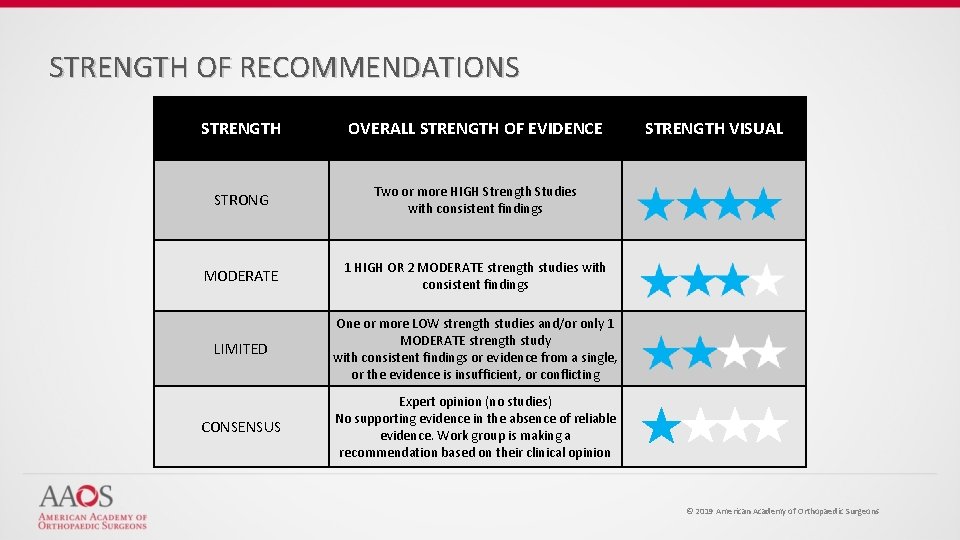
STRENGTH OF RECOMMENDATIONS STRENGTH OVERALL STRENGTH OF EVIDENCE STRONG Two or more HIGH Strength Studies with consistent findings MODERATE 1 HIGH OR 2 MODERATE strength studies with consistent findings LIMITED One or more LOW strength studies and/or only 1 MODERATE strength study with consistent findings or evidence from a single, or the evidence is insufficient, or conflicting CONSENSUS Expert opinion (no studies) No supporting evidence in the absence of reliable evidence. Work group is making a recommendation based on their clinical opinion STRENGTH VISUAL © 2019 American Academy of Orthopaedic Surgeons
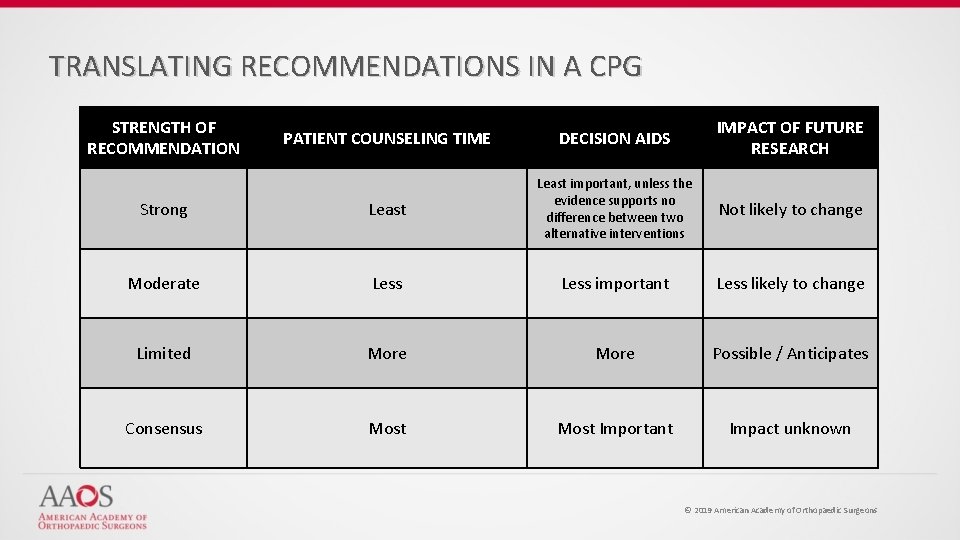
TRANSLATING RECOMMENDATIONS IN A CPG STRENGTH OF RECOMMENDATION PATIENT COUNSELING TIME DECISION AIDS IMPACT OF FUTURE RESEARCH Strong Least important, unless the evidence supports no difference between two alternative interventions Not likely to change Moderate Less important Less likely to change Limited More Possible / Anticipates Consensus Most Important Impact unknown © 2019 American Academy of Orthopaedic Surgeons
Assessing Quality of Evidence • All included studies undergo a quality assessment. • Each study’s design is evaluated for risk of bias and receives a final quality grade, depending on the number of study design flaws. • Study quality tables are made available to the work group in the final data report and the final publication of the guideline/systematic review. © 2019 American Academy of Orthopaedic Surgeons
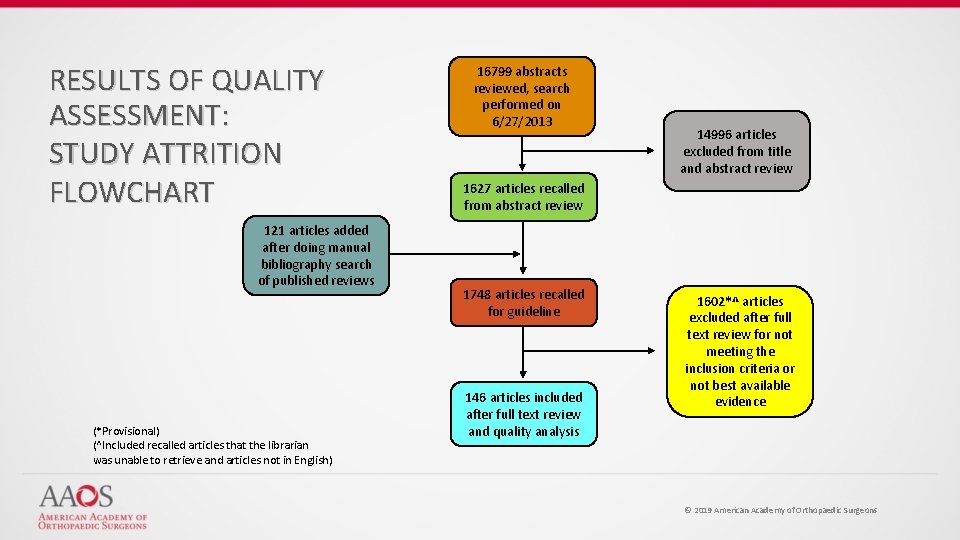
RESULTS OF QUALITY ASSESSMENT: STUDY ATTRITION FLOWCHART 121 articles added after doing manual bibliography search of published reviews (*Provisional) (^Included recalled articles that the librarian was unable to retrieve and articles not in English) 16799 abstracts reviewed, search performed on 6/27/2013 14996 articles excluded from title and abstract review 1627 articles recalled from abstract review 1748 articles recalled for guideline 146 articles included after full text review and quality analysis 1602*^ articles excluded after full text review for not meeting the inclusion criteria or not best available evidence © 2019 American Academy of Orthopaedic Surgeons
Voting on the Recommendations and recommendation strengths voted on by work group during final meeting Approved and adopted by simple majority (60%) when voting on every recommendation If disagreement, further discussion to whether the disagreement could be resolved © 2019 American Academy of Orthopaedic Surgeons
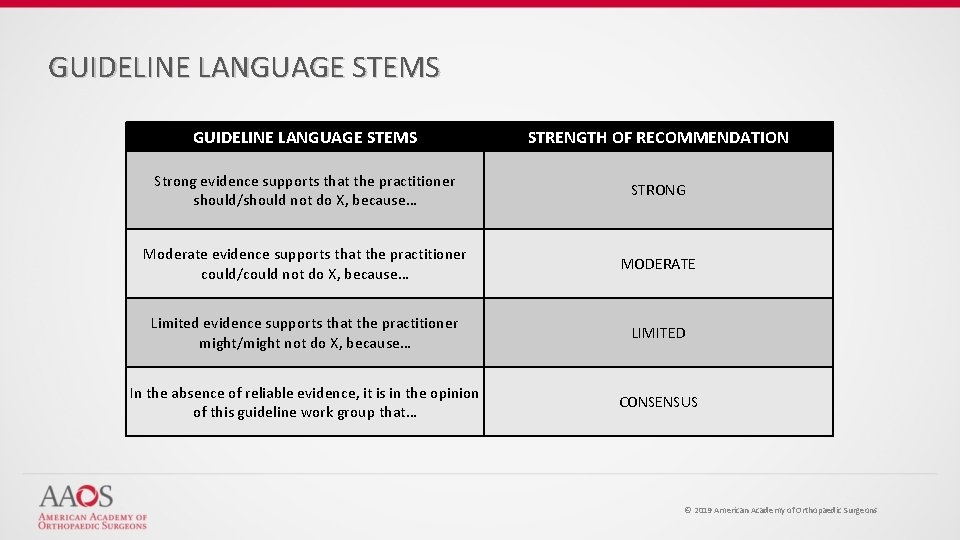
GUIDELINE LANGUAGE STEMS STRENGTH OF RECOMMENDATION Strong evidence supports that the practitioner should/should not do X, because… STRONG Moderate evidence supports that the practitioner could/could not do X, because… MODERATE Limited evidence supports that the practitioner might/might not do X, because… LIMITED In the absence of reliable evidence, it is in the opinion of this guideline work group that… CONSENSUS © 2019 American Academy of Orthopaedic Surgeons
PEER REVIEW Guideline draft sent for peer review to external experts Comments and draft of responses reviewed by work group members Recommendation changes required a majority vote by work group A detailed report of all resulting revisions is published with the guideline document © 2019 American Academy of Orthopaedic Surgeons
PUBLIC COMMENT Following peer review modifications, CPG undergoes public commentary period Comments are solicited from: AAOS Board of Directors AAOS Council on Research and Quality AAOS Committee on Evidence-Based Quality and Value AAOS Board of Councilors AAOS Board of Specialty Societies 200 commentators have the opportunity to provide input © 2019 American Academy of Orthopaedic Surgeons
FINAL MEETING The work group is charged with: § § Review of data summaries Final recommendation language Rationale and risk/harm construction Future research © 2019 American Academy of Orthopaedic Surgeons
Management of Hip Fractures in the Elderly Clinical Practice Guideline Overview § Based on a systematic review of published studies § Addresses low-energy hip fracture in patients 65 years of age and older § Highlights limitations in literature and areas requiring future research § Trained physicians and surgeons are intended users © 2019 American Academy of Orthopaedic Surgeons
Advanced Imaging § Moderate evidence supports MRI as the advanced imaging of choice for diagnosis of presumed hip fracture not apparent on initial radiographs Strength of Recommendation: Moderate © 2019 American Academy of Orthopaedic Surgeons
Preoperative Regional Analgesia § Strong evidence supports regional analgesia to improve preoperative pain control in patients with hip fracture Strength of Recommendation: Strong © 2019 American Academy of Orthopaedic Surgeons
Preoperative Traction § Moderate evidence does not support routine use of preoperative traction for patients with a hip fracture Strength of Recommendation: Moderate © 2019 American Academy of Orthopaedic Surgeons
Surgical Timing § Moderate evidence supports that hip fracture surgery within 48 hours of admission is associated with better outcomes Strength of Recommendation: Moderate © 2019 American Academy of Orthopaedic Surgeons
Aspirin and Clopidogrel § Limited evidence supports not delaying hip fracture surgery for patients on aspirin and/or clopidogrel Strength of Recommendation: Limited © 2019 American Academy of Orthopaedic Surgeons
Anesthesia § Strong evidence supports similar outcomes for general or spinal anesthesia for patients undergoing hip fracture surgery Strength of Recommendation: Strong © 2019 American Academy of Orthopaedic Surgeons

Stable Femoral Neck Fractures § Moderate evidence supports operative fixation for patients with stable (non -displaced) femoral neck fractures Strength of Recommendation: Moderate © 2019 American Academy of Orthopaedic Surgeons
Displaced Femoral Neck Fractures § Strong evidence supports arthroplasty for patients with unstable (displaced) femoral neck fractures Strength of Recommendation: Strong © 2019 American Academy of Orthopaedic Surgeons
Unipolar vs. Bipolar § Moderate evidence supports that the outcomes of unipolar and bipolar hemiarthroplasty for unstable (displaced) femoral neck fractures are similar Strength of Recommendation: Moderate © 2019 American Academy of Orthopaedic Surgeons
Hemi vs. Total Hip Arthroplasty § Moderate evidence supports a benefit to total hip arthroplasty in properly selected patients with unstable (displaced) femoral neck fractures Strength of Recommendation: Moderate © 2019 American Academy of Orthopaedic Surgeons
Cemented Femoral Stems § Moderate evidence supports the preferential use of cemented femoral stems in patients undergoing arthroplasty for femoral neck fractures Strength of Recommendation: Moderate © 2019 American Academy of Orthopaedic Surgeons
Surgical Approach § Moderate evidence supports higher dislocation rates with a posterior approach in the treatment of displaced femoral neck fractures with hip arthroplasty Strength of Recommendation: Moderate © 2019 American Academy of Orthopaedic Surgeons
Stable Intertrochanteric Fractures § Moderate evidence supports the use of either a sliding hip screw or a cephalomedullary device in patients with stable intertrochanteric fractures Strength of Recommendation: Moderate © 2019 American Academy of Orthopaedic Surgeons
Unstable Intertrochanteric Fractures § Moderate evidence supports using a cephalomedullary device for the treatment of patients with unstable intertrochanteric fractures Strength of Recommendation: Moderate © 2019 American Academy of Orthopaedic Surgeons
VTE Prophylaxis § Moderate evidence supports use of venous thromboembolism prophylaxis (VTE) in hip fracture patients Strength of Recommendation: Moderate © 2019 American Academy of Orthopaedic Surgeons
Transfusion Threshold § Strong evidence supports a blood transfusion threshold of no higher than 8 g/dl in asymptomatic postoperative hip fracture patients Strength of Recommendation: Strong © 2019 American Academy of Orthopaedic Surgeons

Occupational and Physical Therapy § Moderate evidence supports that supervised occupational and physical therapy across the continuum of care, including home, improves functional outcomes and fall prevention Strength of Recommendation: Moderate © 2019 American Academy of Orthopaedic Surgeons
Intensive Physical Therapy § Strong evidence supports intensive physical therapy post-discharge to improve functional outcomes in hip fracture patients Strength of Recommendation: Strong © 2019 American Academy of Orthopaedic Surgeons
Nutrition § Moderate evidence supports that postoperative nutritional supplementation reduces mortality and improves nutritional status in hip fracture patients Strength of Recommendation: Moderate © 2019 American Academy of Orthopaedic Surgeons
Interdisciplinary Care Program § Strong evidence supports use of an interdisciplinary care program in those patients with mild to moderate dementia who have sustained a hip fracture to improve functional outcomes Strength of Recommendation: Strong © 2019 American Academy of Orthopaedic Surgeons
Postoperative Multimodal Analgesia § Strong evidence supports multimodal pain management after hip fractures surgery Strength of Recommendation: Strong © 2019 American Academy of Orthopaedic Surgeons
Calcium and Vitamin D § Moderate evidence supports use of supplemental vitamin D and calcium in patients following hip fracture surgery Strength of Recommendation: Moderate © 2019 American Academy of Orthopaedic Surgeons
Screening § Limited evidence supports preoperative assessment of secrum levels of albumin and creatinine for risk assessment of hip fracture patients Strength of Recommendation: Limited © 2019 American Academy of Orthopaedic Surgeons
Osteoporosis Evaluation and Treatment § Moderate evidence supports that patients be evaluated and treated for osteoporosis after sustaining a hip fracture Strength of Recommendation: Moderate © 2019 American Academy of Orthopaedic Surgeons
Long Cephalomedullary Nails § In the absence of reliable evidence, OTA recommends that long cephalomedullary nails be used for subtrochanteric and reverse obliquity fractures Strength of Recommendation: Consensus © 2019 American Academy of Orthopaedic Surgeons
Negative Plain Films and Exam § In the absence of reliable evidence, OTA recommends that patients with a negative physical examination and negative plain films should be evaluated for other causes of symptoms Strength of Recommendation: Consensus © 2019 American Academy of Orthopaedic Surgeons
Initial Patient Evaluation § In the absence of reliable evidence, OTA recommends that patients with a presumed hip fracture be initially evaluated with radiographs to include an AP of the pelvis and hip and a cross table lateral of the hip Strength of Recommendation: Consensus © 2019 American Academy of Orthopaedic Surgeons

Future Research § Review of published literature does indicate that men and women are different with regard to rate of hip fracture incidence, morbidity after hip fracture and medical comorbidity profiles § Due to paucity of sex segregated data reporting in published 22 research for this disease topic, the workgroup strongly suggests that studies publish both overall results and sex segregated results § Availability of sex segregated results will allow meta-analyzed data by sex, affording guideline developers the ability to make specific recommendations for men and women, which may lead to improved patient care © 2019 American Academy of Orthopaedic Surgeons
Future Research – Advanced Imaging § Additional research is needed to clarify the role, if any, as well as accuracy and timing, of bone scan in identifying occult hip fractures. Studies are also needed to clarify the role, if any, of CT in this situation, and the relative accuracy and safety of bone scan vs CT vs MRI for the diagnosis of occult hip fractures. There needs to be further clarification of the technique and relative accuracy of “limited” MRIs in the diagnosis of occult hip fractures. © 2019 American Academy of Orthopaedic Surgeons
Future Research – Preoperative Regional Analgesia § The studies available to date report improved pain scores preoperatively. Future research should focus on the impact of early regional analgesic technique on patient outcome. Several important outcomes need to be studied: assessment of total opioid usage pre- and post-op, incidence of delirium during hospital stay, and length of stay; There may be others. © 2019 American Academy of Orthopaedic Surgeons
Future Research – Surgical Timing § Future research improving controls for bias relating to increased medical severity of patients delayed for surgery is needed to better identify critical timing related issues regarding patient specific populations. © 2019 American Academy of Orthopaedic Surgeons
Future Research – Clopidogrel and/or Aspirin § Future research with regard to risks and benefits of delayed surgery should include patient oriented outcome measures such as death, return to prior living situation and treatment complications such as transfusions, wound infections and return to operating room. Some of these factors may be addressed with treatment registries. It is also appropriate to address the risks and benefits of delayed surgery for patients on antiplatelet medication specific to this patient population and to quantify risks of those who are on these medicines (e. g. bleeding, transfusions, etc. ). Appropriately targeted randomized trials would be helpful. © 2019 American Academy of Orthopaedic Surgeons
Future Research – Stable Femoral Neck Fractures § Given high failure rates with non-operative treatment, clinical equipoise is lacking, making a study on non-operative treatment of hip fractures unethical. While there are clearly hip fracture patients with end of life issues who may be appropriate for non-operative treatment, surgical fixation may decrease pain, facilitate hygiene and nursing, and improve mobilization for end of life comfort. Special consideration for end of life issues, risks and limited benefits of surgery and the balancing of surgical goals with patient and family wishes. © 2019 American Academy of Orthopaedic Surgeons
Future Research – Hemi Versus Total Hip Arthroplasty § Further areas of investigation include whether potential delays in surgery occur when total hip arthroplasty is the chosen treatment, and whether this has an effect on postoperative morbidity. Another important but unanswered question is whether the demand for total hip arthroplasty following fracture can be met by surgeons who currently employ hemiarthroplasty, or if the increasing use of total hip arthroplasty by less experienced surgeons will offset potential benefits seen in previous studies. © 2019 American Academy of Orthopaedic Surgeons
Future Research – Surgical Approach § With respects to the posterior approach versus the direct lateral approach for arthroplasty in femoral neck fracture surgery, the existing evidence only compares posterior and lateral approaches and only allows comparison of dislocation as the primary end point. Future well designed RCTs should include a comparison of the increasingly popular anterior approach with either the posterior and/or the lateral approach. Any future studies related to surgical approach should also include functional data associated with the approaches. This may have important implications for patient selection and recovery needs such as assistive devices or therapy needs. © 2019 American Academy of Orthopaedic Surgeons
Future Research – Stable Intertrochanteric Fractures § Future research should included randomized, prospective trials comparing modern cephalomedullary nails with extramedullary devices in a large cohort of patients with only stable intertrochanteric fractures (OTA 31. A 1) should specifically assess functional outcomes, radiographic parameters, complications, and cost. These studies should control for patient demographics as well as quality of fracture reduction and placement of fixation (tip-to-apex distance). The potential difficulty with conversion to total hip arthroplasty for failed fracture treatment also should be considered when comparing fixation methods. © 2019 American Academy of Orthopaedic Surgeons
Future Research – Subtrochanteric or Reverse Obliquity Fractures § Continued comparative studies between modern cephalomedullary and extramedullary devices in unstable subtrochanteric and reverse obliquity fractures (OTA 31. A 3) which control for fracture reduction and implant position (specifically tip-to-apex distance) may further clarify the utility of cephalomedullary devices for this fracture cohort. © 2019 American Academy of Orthopaedic Surgeons
Future Research – Unstable Intertrochanteric Fractures § The current trend for increasing use of cephalomedullary devices in the treatment of intertrochanteric fractures (Yli-Kyyny, Injury 2012; 2008, Jeffery Anglen, JBJS) in the absence of strong supporting evidence as well as the recent concerns regarding increased complication rates with conversion of failed cephalomedullary implants to total hip arthroplasty (Pui et al JOA 2013) warrants caution and further investigation. High level trials comparing modern cephalomedullary devices with sliding hip screws in a large cohort of patients with intertrochanteric fractures classified as OTA 31. A 2 should specifically assess functional outcomes, radiographic outcomes, complications, and cost. These studies should control for patient demographics, quality of fracture reduction, hardware placement (specifically tip-to-apex distance) and the changing experience of practicing surgeons. © 2019 American Academy of Orthopaedic Surgeons
Future Research – VTE Prophylaxis § The issue of VTE prophylaxis in patients who have sustained a hip fracture is complex. There are many unanswered questions that have the potential to have a significant impact on clinical outcomes for this patient population. A multi-armed randomized controlled study would be optimal. Such a study would potentially need to evaluate the comparative effectiveness of a multitude of chemical agents, at different dosages, with multiple time points (such as pre and post-op), and include assorted durations of therapy, while utilizing contemporary diagnostic methodologies. Barriers to such a study include the low incidence of the complication implicating a requirement for a substantially large sample size. Furthermore, such a study carries ethical concerns given the potential risks associated with under-treatment. Potentially, well organized patient outcome registries may ultimately help improve our knowledge in this area. © 2019 American Academy of Orthopaedic Surgeons
Future Research - Occupational and Physical Therapy § Further studies to establish more precise dosages and durations of rehabilitative therapies, as well as to determine the most appropriate settings would be beneficial. Further nutritional research needs to elucidate which type of protein supplementation is most beneficial and should clarify risks associated with malnutrition and benefits of supplementation, especially in diabetic patients. © 2019 American Academy of Orthopaedic Surgeons
Future Research – Nutrition and Interdisciplinary Care Programs § Further studies in regards to nutritional supplementation to establish more precise dosages and durations of rehabilitative therapies, as well as to determine the most appropriate settings would be beneficial. Further nutritional research needs to elucidate which type of protein supplementation is most beneficial and should clarify risks associated with malnutrition and benefits of supplementation, especially in diabetic patients. § Further studies on interdisciplinary care programs in patients with mild to moderate dementia who have sustained a hip fractures to establish more precise dosages and durations of rehabilitative therapies, as well as to determine the most appropriate settings would be beneficial. Further nutritional research needs to elucidate which type of protein supplementation is most beneficial and should clarify risks associated with malnutrition and benefits of supplementation, especially in diabetic patients. © 2019 American Academy of Orthopaedic Surgeons
Future Research – Postoperative Multimodal Analgesia § Further study is necessary to define which modalities offer the most benefit at the lowest cost and risk. Further study is necessary to determine which combinations offer the most synergy. Additional study is necessary to determine if any particular modality improves functional and system outcomes as well as pain and satisfaction. © 2019 American Academy of Orthopaedic Surgeons
Future Research – Calcium/Vitamin D and Screening § Further placebo controlled randomized clinical trials controlling for non-compliance are needed to clarify benefits and risks of calcium and vitamin D supplementation in patients 65 and older, as well as to identify target levels to achieve optimal benefits as there appears to be a dose dependent relationship in outcomes. Measurement of the serum calcium, albumin, 25 hydoxyvitamin D, and creatinine levels may reveal secondary causes of osteoporosis (e. g. hyperparathyroidism, malignancy, vitamin D deficiency or chronic kidney disease) and could guide use of calcium, vitamin D, or nutritional supplements which may improve outcomes. § Further studies are needed to evaluate the importance of pre-op assessment to risk stratify and optimize elderly patients with hip fractures. Measurement of the serum calcium, albumin, 25 hydoxyvitamin D, and creatinine levels may reveal secondary causes of osteoporosis (e. g. hyperparathyroidism, malignancy, vitamin D deficiency or chronic kidney disease) and could guide use of calcium, vitamin D, or nutritional supplements which may improve outcomes. © 2019 American Academy of Orthopaedic Surgeons

Future Research – Osteoporosis Evaluation and Treatment § With respects to osteoporosis, cost-effectiveness research on use of a fracture liaison service in open health care systems would be helpful for evaluation and treatment of osteoporosis and to test whether a fracture liaison service reduces the risk of hip fracture readmission rates after a hip fracture. Further investigations of the long term patient specific outcomes of bisphonate therapies are also appropriate, including assessment of alternative osteoporosis treatments. In addition, the relative roles of the orthopaedic surgeon and the patient's primary care provider in evaluating and treating low bone mass after hip fracture, and how these compare to the use of a fracture liaison service, should be studied. © 2019 American Academy of Orthopaedic Surgeons
This Guideline has been endorsed by the following organizations: © 2019 American Academy of Orthopaedic Surgeons

Acknowledgements: Guideline Work Group: Timothy W. Brox, MD, Chair Karl C. Roberts, MD, Vice-Chair Sudeep Taksali, MD Douglas G. Wright, MD John J. Wixted, MD Creighton C. Tubb, MD Joshua C. Patt, MD Kimberly J. Templeton, MD Eitan Dickman, MD Robert A. Adler, MD William B. Macaulay, MD James M. Jackman, DO Thiru Annaswamy, MD Alan M. Adelman, MD, MS Catherine G. Hawthorne, MD Steven A. Olson, MD Daniel Ari Mendelson, MD Meryl S. Le. Boff, MD Pauline A. Camacho, MD, MACE AAOS Guidelines Oversight Chair: David Jevsevar, MD, MBA AAOS Clinical Practice Guidelines Section Leader: Kevin Shea, MD AAOS Council on Research and Quality Chair: Kevin J. Bozic, MD, MBA Additional Contributing Members: C. Conrad Johnston, MD Frederick E. Sieber, MD AAOS Staff: William Shaffer, MD Deborah Cummins, Ph. D Jayson N. Murray, MA Patrick Donnelly, MA Peter Shores, MPH Anne Woznica, MLS Yasseline Martinez Kaitlyn Sevarino, MBA Former Staff: Leeaht Gross, MPH Catherine Boone © 2019 American Academy of Orthopaedic Surgeons
Please Cite Clinical Practice Guideline as: American Academy of Orthopaedic Surgeons. Evidence-Based Clinical Practice Guidelines on the Management of Hip Fractures in the Elderly http: //www. orthoguidelines. org/topic? id=1017. Published September 5, 2014. © 2019 American Academy of Orthopaedic Surgeons
Case Study An 81 -year-old woman presents to the emergency department after slipping on the ice in her driveway. She reports right hip pain and an inability to bear weight. She has no prior history of hip pain and is ambulatory with the use of a cane. She lives with her husband performs all activities of daily living independently. Her medical history includes mild senile dementia, hypertension, stable coronary artery disease, and a history of transient ischemic attack. She is currently on low-dose aspirin, clopidogrel, metoprolol, lisinopril, and pravastatin. © 2019 American Academy of Orthopaedic Surgeons
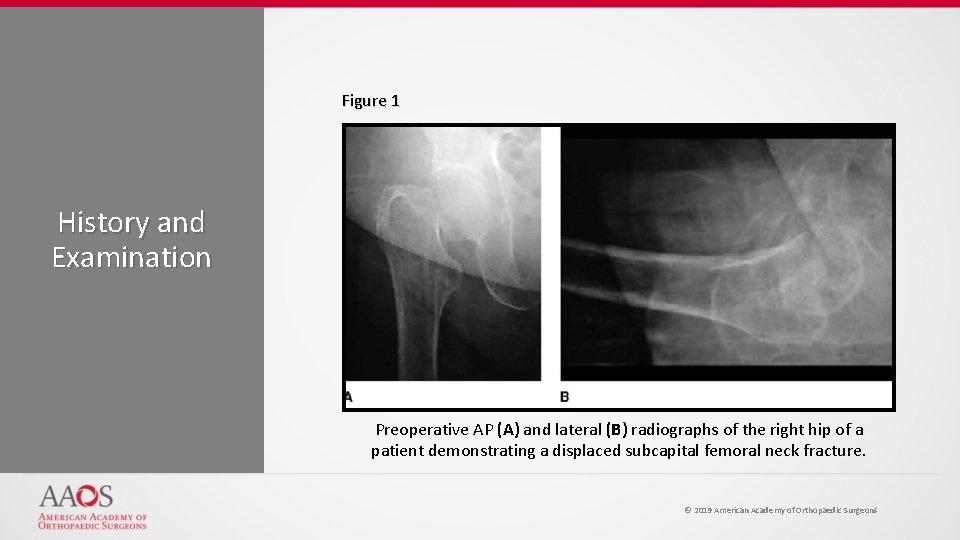
Figure 1 History and Examination Preoperative AP (A) and lateral (B) radiographs of the right hip of a patient demonstrating a displaced subcapital femoral neck fracture. © 2019 American Academy of Orthopaedic Surgeons
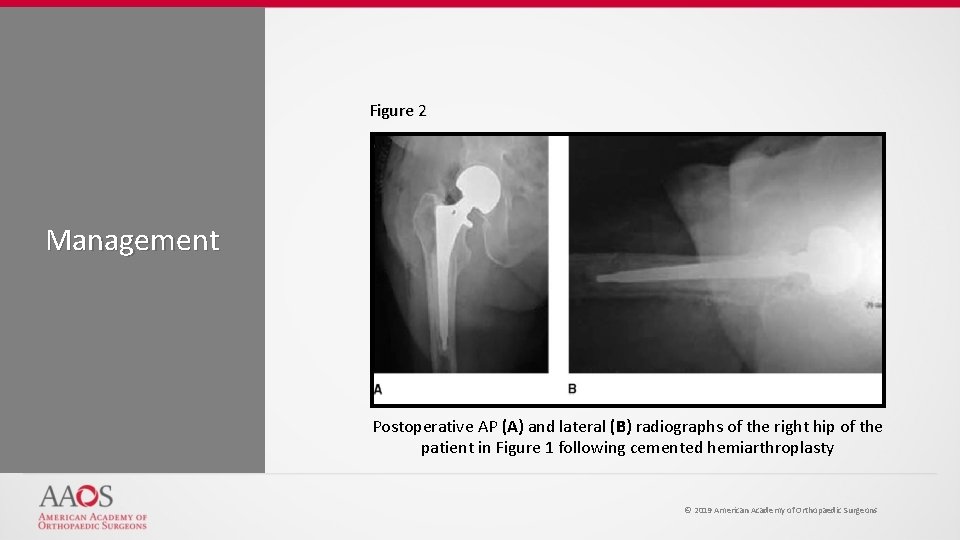
Figure 2 Management Postoperative AP (A) and lateral (B) radiographs of the right hip of the patient in Figure 1 following cemented hemiarthroplasty © 2019 American Academy of Orthopaedic Surgeons
Outcome § Three months following her fracture, the patient regains independence; however, her mobility decreases, causing her to require the long-term use of a walker. © 2019 American Academy of Orthopaedic Surgeons
Free for both i. OS and Android or at www. orthoguidelines. org or at Provides easy access to all AAOS: • • • Clinical Practice Guidelines Full Guideline PDF’s Appropriate Use Criteria Case Studies Clinician Checklists Impactful Statements Plain Language Summaries Evidence-based Databases Evidence-based Methods, Appraisals and Standards © 2019 American Academy of Orthopaedic Surgeons
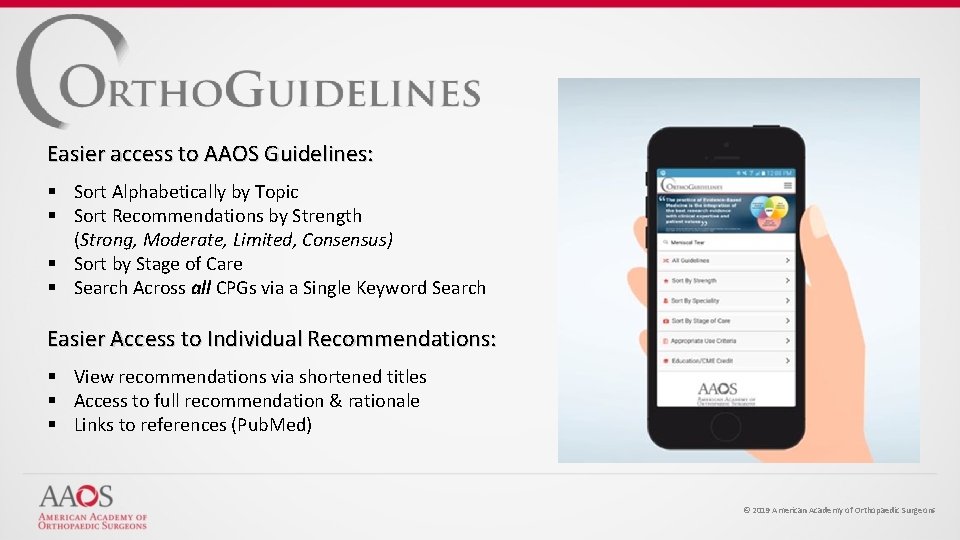
Easier access to AAOS Guidelines: § Sort Alphabetically by Topic § Sort Recommendations by Strength (Strong, Moderate, Limited, Consensus) § Sort by Stage of Care § Search Across all CPGs via a Single Keyword Search Easier Access to Individual Recommendations: § View recommendations via shortened titles § Access to full recommendation & rationale § Links to references (Pub. Med) © 2019 American Academy of Orthopaedic Surgeons
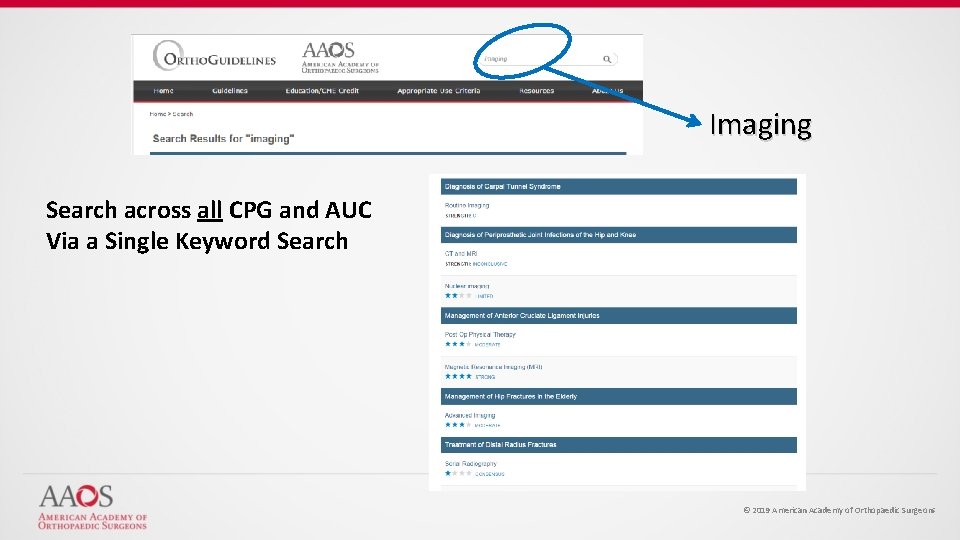
Imaging Search across all CPG and AUC Via a Single Keyword Search © 2019 American Academy of Orthopaedic Surgeons
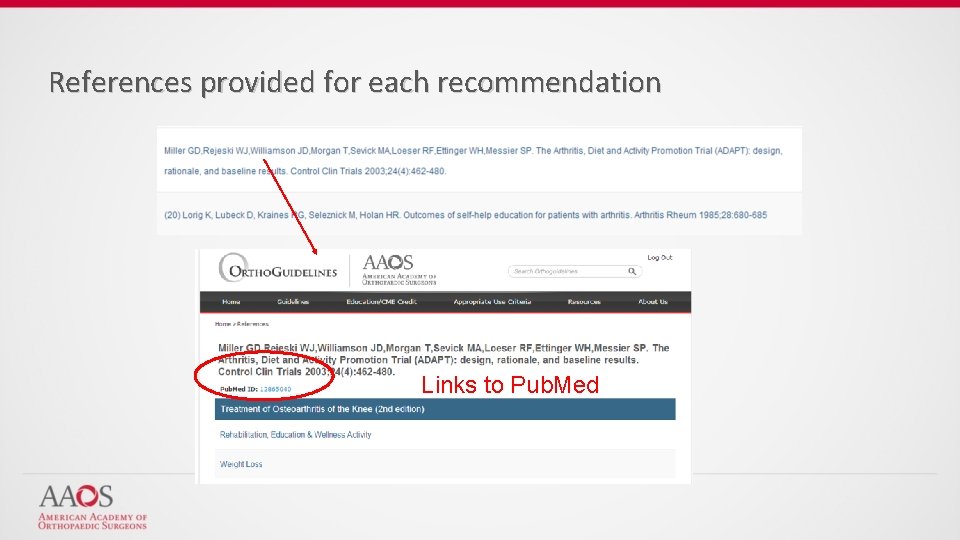
References provided for each recommendation Links to Pub. Med

Appropriate Use Criteria Tool
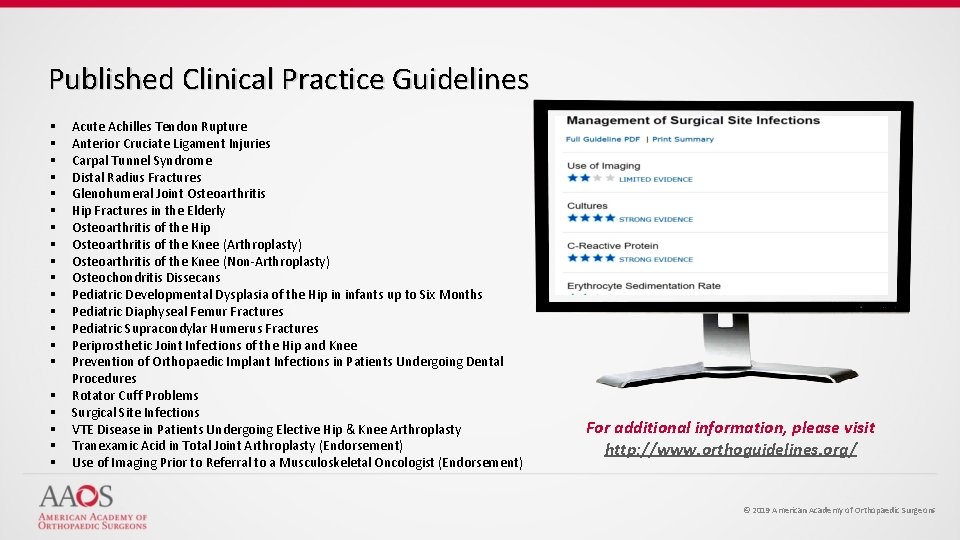
Published Clinical Practice Guidelines § § § § § Acute Achilles Tendon Rupture Anterior Cruciate Ligament Injuries Carpal Tunnel Syndrome Distal Radius Fractures Glenohumeral Joint Osteoarthritis Hip Fractures in the Elderly Osteoarthritis of the Hip Osteoarthritis of the Knee (Arthroplasty) Osteoarthritis of the Knee (Non-Arthroplasty) Osteochondritis Dissecans Pediatric Developmental Dysplasia of the Hip in infants up to Six Months Pediatric Diaphyseal Femur Fractures Pediatric Supracondylar Humerus Fractures Periprosthetic Joint Infections of the Hip and Knee Prevention of Orthopaedic Implant Infections in Patients Undergoing Dental Procedures Rotator Cuff Problems Surgical Site Infections VTE Disease in Patients Undergoing Elective Hip & Knee Arthroplasty Tranexamic Acid in Total Joint Arthroplasty (Endorsement) Use of Imaging Prior to Referral to a Musculoskeletal Oncologist (Endorsement) For additional information, please visit http: //www. orthoguidelines. org/ © 2019 American Academy of Orthopaedic Surgeons
- Slides: 79