
Management of Emergency Response to Subway Accidents Stephan
Management of Emergency Response to Subway Accidents Stephan A. Parker Transportation Research Board Of The National Academies

Derailment, collision, flooding, snow Photo Source: WMATA
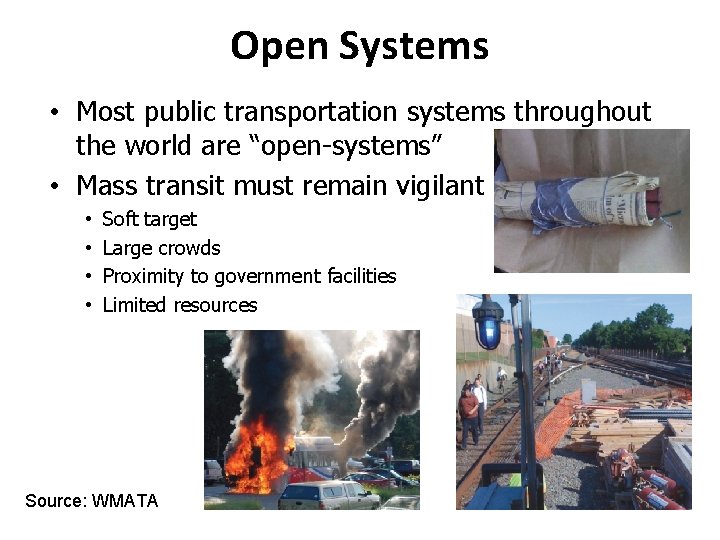
Open Systems • Most public transportation systems throughout the world are “open-systems” • Mass transit must remain vigilant • • Soft target Large crowds Proximity to government facilities Limited resources Source: WMATA

Emergency Mobilization and Operations Guide • Early recognition of emergency events • Expedite response • Coordinate application and integration of additional organized, qualified resources from other agencies • Ensure that public transportation resources are available to support the response

Developing an Emergency Operations Plan • Emergency Operations Plan Elements • Developing the Emergency Operations Plan • Emergency Planning Principles Applied to Public Transportation Photo Source: WMATA
Terrorism Response: Capabilities Assessment, Prevention, and Awareness • • Assessment of Existing Capabilities Prevention Awareness Incident Response Protocols
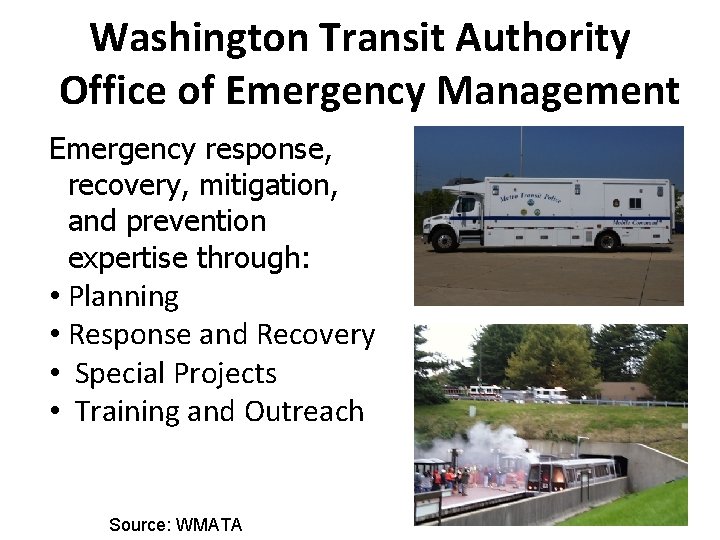
Washington Transit Authority Office of Emergency Management Emergency response, recovery, mitigation, and prevention expertise through: • Planning • Response and Recovery • Special Projects • Training and Outreach Source: WMATA

Emergency Mobilization and Operations at WMATA • Effective organizational safety and security culture • Annual training for all employees • Mass communication to all employees • Public awareness and outreach • Law Enforcement/Public Safety Collaboration • Emergency Preparedness • Passenger Information Display Systems • Local and regional drills with key stakeholders Source: WMATA
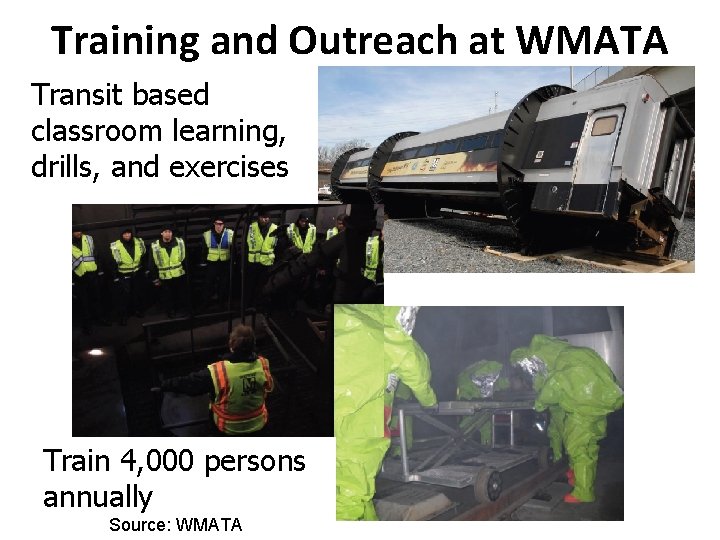
Training and Outreach at WMATA Transit based classroom learning, drills, and exercises Train 4, 000 persons annually Source: WMATA

Special Project: WMATA Rescue Carts Emergency Tunnel Evacuation Cart Metro Emergency Recon Vehicle Source: WMATA
- Slides: 10