
Management of Effective English Language Education QUALITY ASSURANCE
- Slides: 12
Management of Effective English Language Education QUALITY ASSURANCE Breakout Session QQ I 22 NOVE MBER 2017, DU BLIN
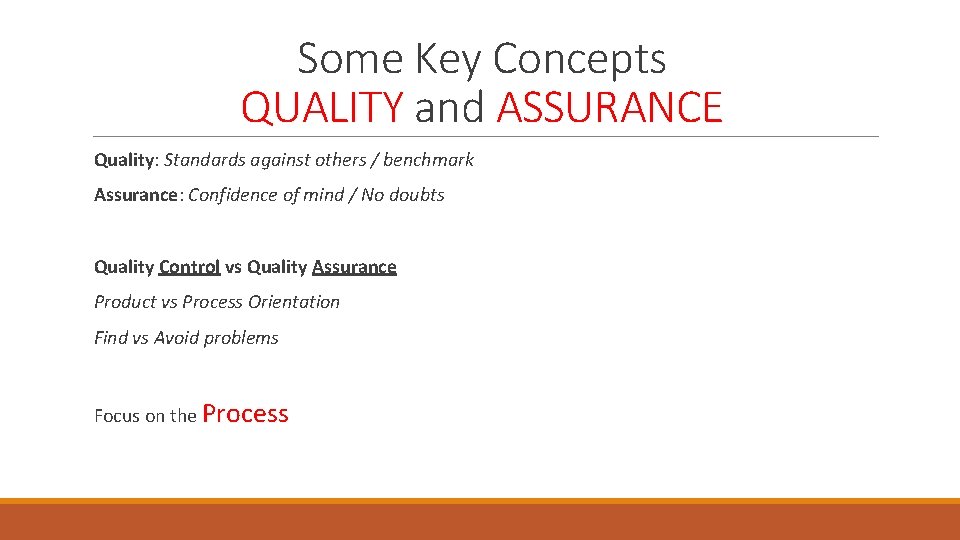
Some Key Concepts QUALITY and ASSURANCE Quality: Standards against others / benchmark Assurance: Confidence of mind / No doubts Quality Control vs Quality Assurance Product vs Process Orientation Find vs Avoid problems Focus on the Process
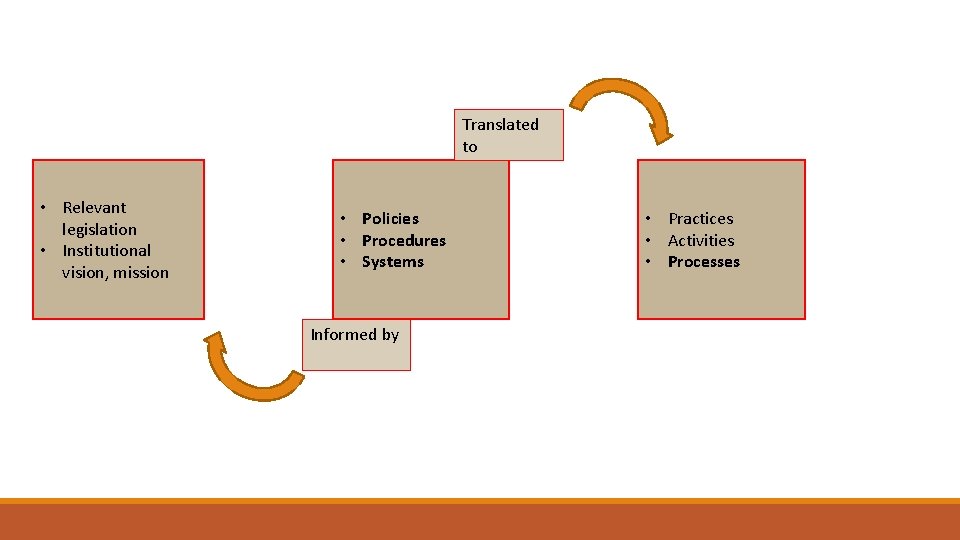
Translated to • Relevant legislation • Institutional vision, mission • Policies • Procedures • Systems Informed by • Practices • Activities • Processes
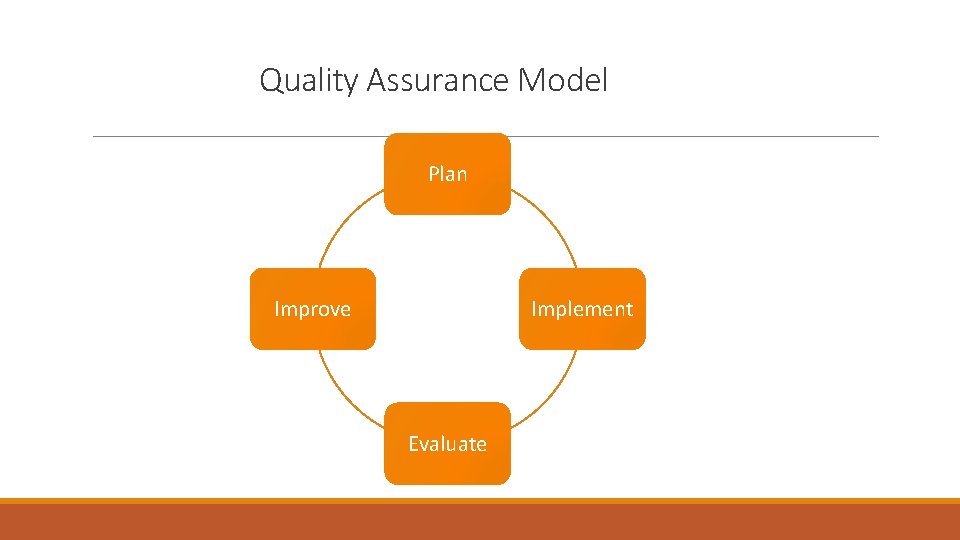
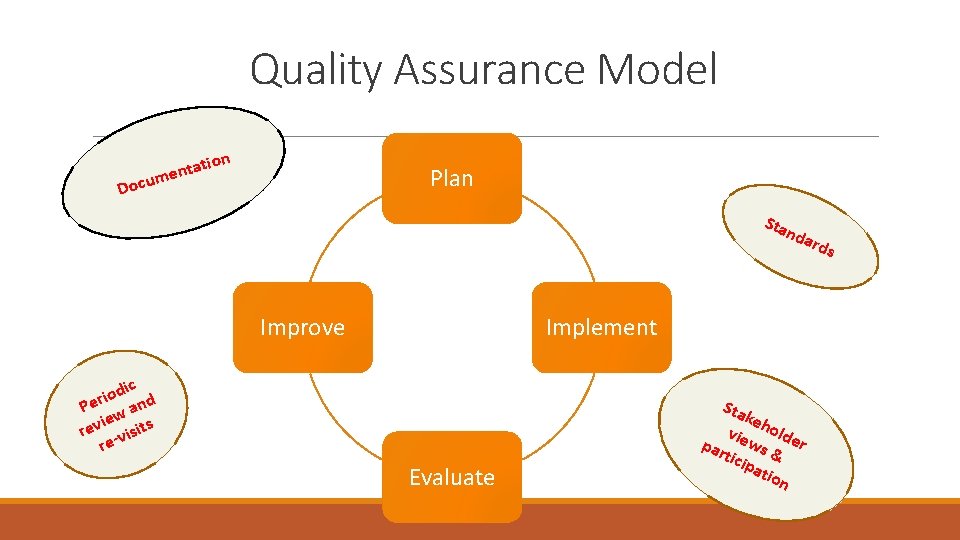
Quality Assurance Model Plan Improve Implement Evaluate
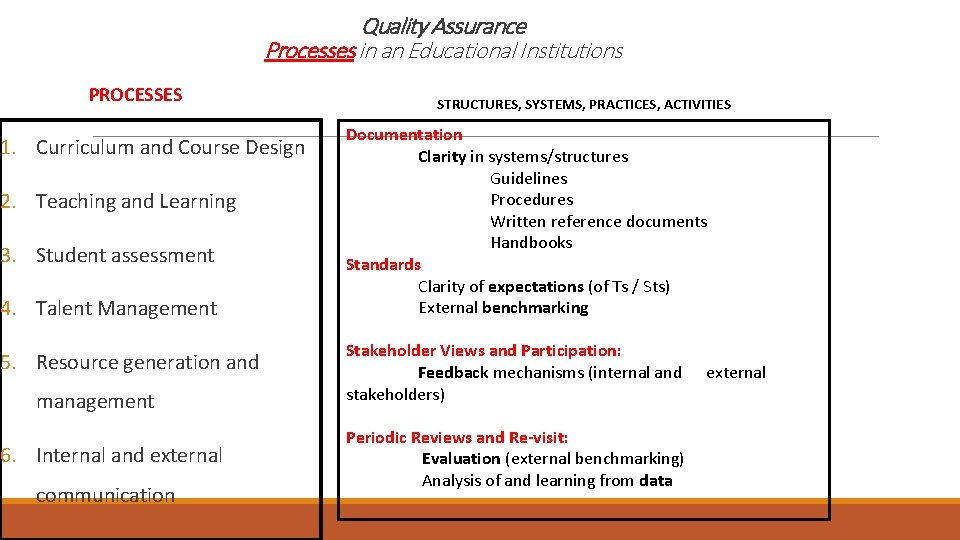
Quality Assurance Processes in an Educational Institutions PROCESSES 1. Curriculum and Course Design 2. Teaching and Learning 3. Student assessment 4. Talent Management 5. Resource generation and management 6. Internal and external communication STRUCTURES, SYSTEMS, PRACTICES, ACTIVITIES Documentation Clarity in systems/structures Guidelines Procedures Written reference documents Handbooks Standards Clarity of expectations (of Ts / Sts) External benchmarking Stakeholder Views and Participation: Feedback mechanisms (internal and stakeholders) Periodic Reviews and Re-visit: Evaluation (external benchmarking) Analysis of and learning from data external
Quality Assurance Model tion nta e m u c Do Plan Sta nda Improve Implement ic d o i Per w and ie rev -visits re Evaluate Sta keh vie olde r par ws tici & pat ion rds
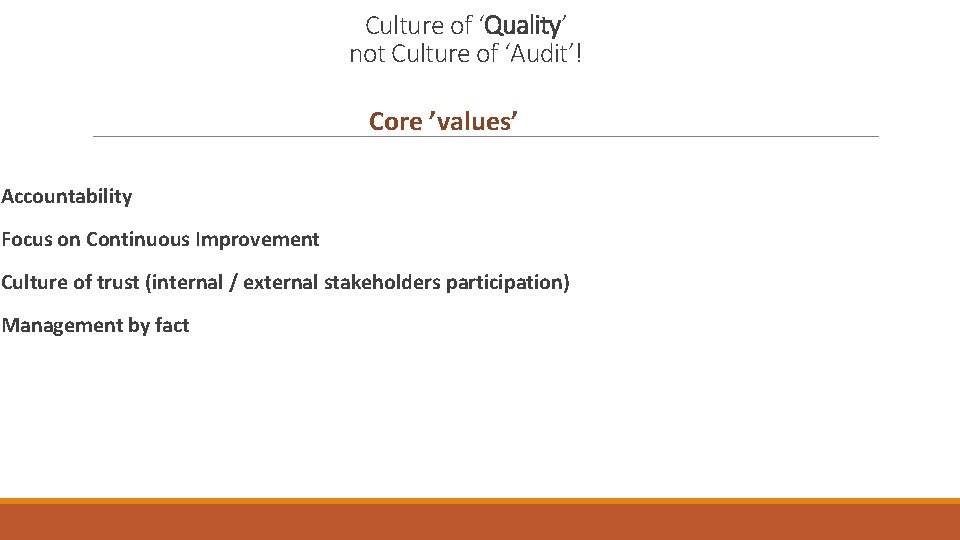
Culture of ‘Quality’ not Culture of ‘Audit’! Core ’values’ Accountability Focus on Continuous Improvement Culture of trust (internal / external stakeholders participation) Management by fact
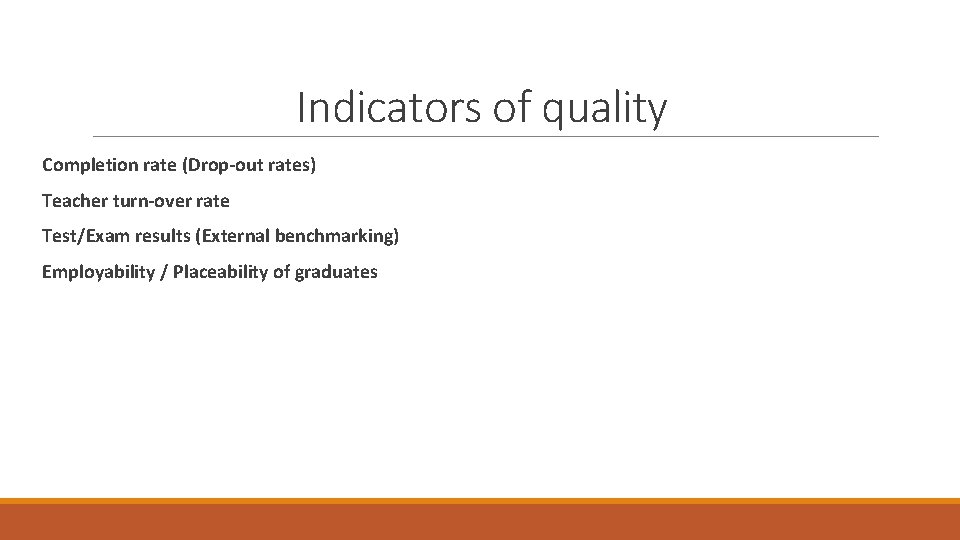
Indicators of quality Completion rate (Drop-out rates) Teacher turn-over rate Test/Exam results (External benchmarking) Employability / Placeability of graduates
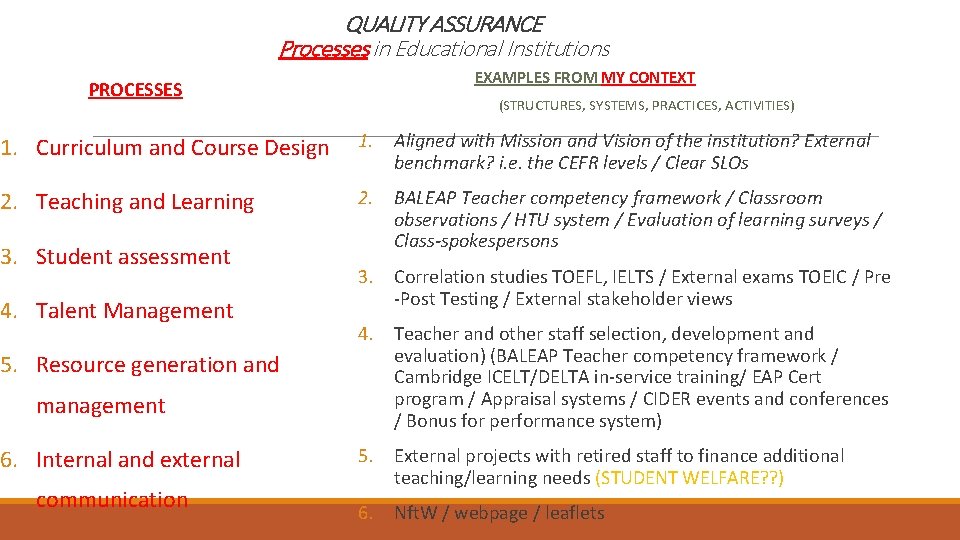
QUALITY ASSURANCE Processes in Educational Institutions PROCESSES EXAMPLES FROM MY CONTEXT (STRUCTURES, SYSTEMS, PRACTICES, ACTIVITIES) 1. Curriculum and Course Design 1. Aligned with Mission and Vision of the institution? External benchmark? i. e. the CEFR levels / Clear SLOs 2. Teaching and Learning 2. BALEAP Teacher competency framework / Classroom observations / HTU system / Evaluation of learning surveys / Class-spokespersons 3. Student assessment 4. Talent Management 5. Resource generation and management 6. Internal and external communication 3. Correlation studies TOEFL, IELTS / External exams TOEIC / Pre -Post Testing / External stakeholder views 4. Teacher and other staff selection, development and evaluation) (BALEAP Teacher competency framework / Cambridge ICELT/DELTA in-service training/ EAP Cert program / Appraisal systems / CIDER events and conferences / Bonus for performance system) 5. External projects with retired staff to finance additional teaching/learning needs (STUDENT WELFARE? ? ) 6. Nft. W / webpage / leaflets
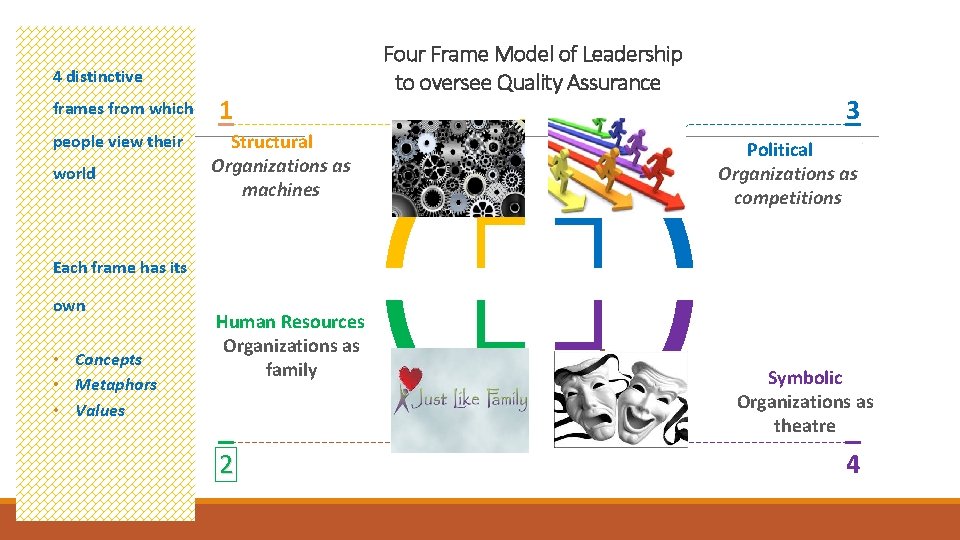
4 distinctive frames from which people view their world 1 Dummy Title Structural Organizations as machines Each frame has its own • Concepts • Metaphors • Values Four Frame Model of Leadership to oversee Quality Assurance Human Resources Organizations as family 2 Dummy Title 3 Political Organizations as competitions . GOOD TO GREAT Symbolic Organizations as theatre 4
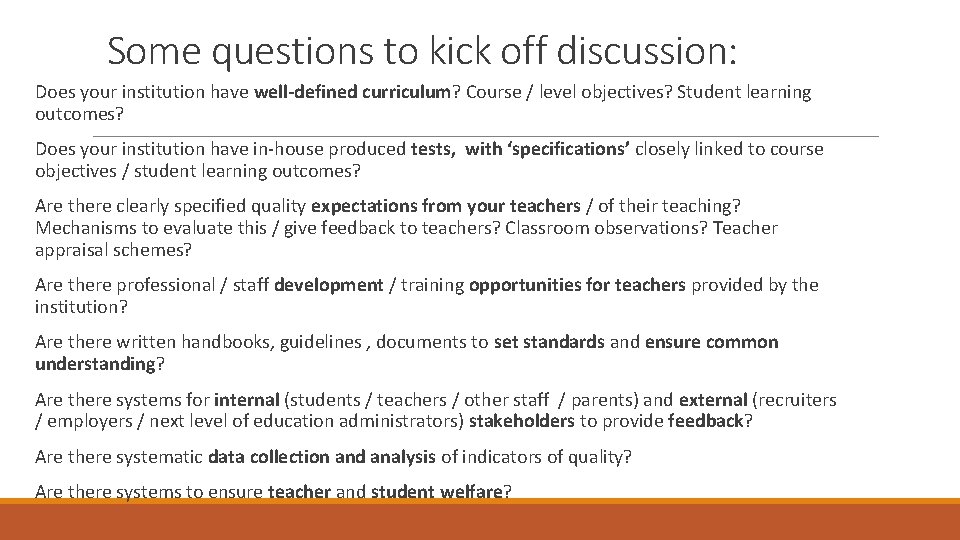
Some questions to kick off discussion: Does your institution have well-defined curriculum? Course / level objectives? Student learning outcomes? Does your institution have in-house produced tests, with ‘specifications’ closely linked to course objectives / student learning outcomes? Are there clearly specified quality expectations from your teachers / of their teaching? Mechanisms to evaluate this / give feedback to teachers? Classroom observations? Teacher appraisal schemes? Are there professional / staff development / training opportunities for teachers provided by the institution? Are there written handbooks, guidelines , documents to set standards and ensure common understanding? Are there systems for internal (students / teachers / other staff / parents) and external (recruiters / employers / next level of education administrators) stakeholders to provide feedback? Are there systematic data collection and analysis of indicators of quality? Are there systems to ensure teacher and student welfare?
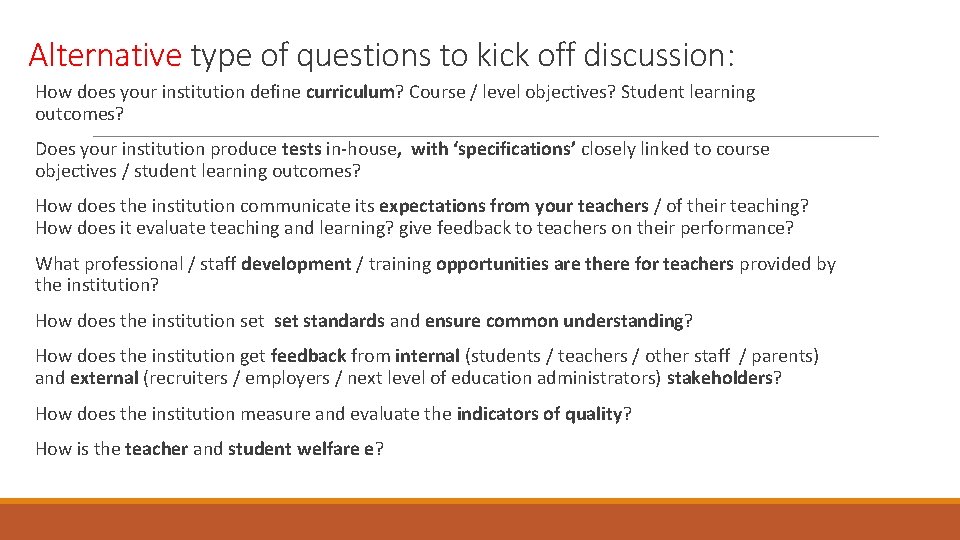
Alternative type of questions to kick off discussion: How does your institution define curriculum? Course / level objectives? Student learning outcomes? Does your institution produce tests in-house, with ‘specifications’ closely linked to course objectives / student learning outcomes? How does the institution communicate its expectations from your teachers / of their teaching? How does it evaluate teaching and learning? give feedback to teachers on their performance? What professional / staff development / training opportunities are there for teachers provided by the institution? How does the institution set standards and ensure common understanding? How does the institution get feedback from internal (students / teachers / other staff / parents) and external (recruiters / employers / next level of education administrators) stakeholders? How does the institution measure and evaluate the indicators of quality? How is the teacher and student welfare e?