
MANAGEMENT OF DYSPHAGIA Dysphagia Difficulty in swallowing which


- Slides: 45
MANAGEMENT OF DYSPHAGIA
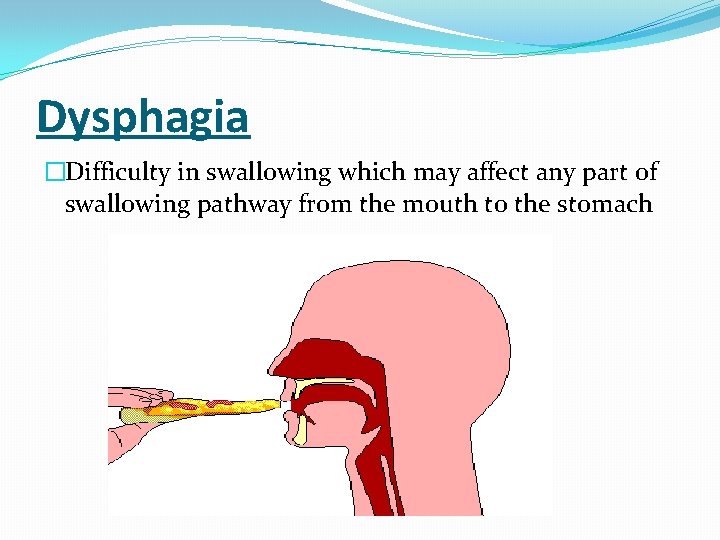
Dysphagia �Difficulty in swallowing which may affect any part of swallowing pathway from the mouth to the stomach
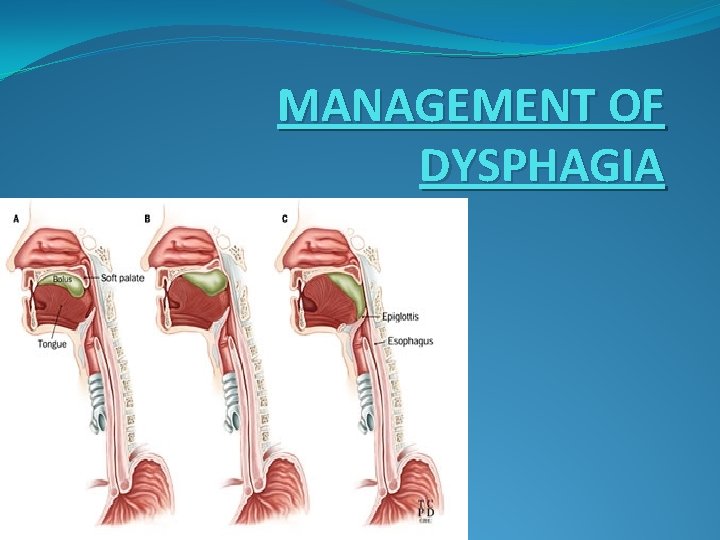
Physiology of swallowing �Oral phase �Preparation of bolus �Pharyngeal phase �Closure of the nasopharynx �Closure of oropharyngeal isthmus �Closure of larynx �Contraction of pharyngeal muscles �Oesophageal phase
Causes of Dysphagia �Preoesophaygeal causes �Oral phase � Disturbance �Trismus in mastication �Fractures of mandible �Tumours of upper or lower jaw �Disorders of TM joint � Disturbance in lubrication �Xerostomia �Mikulicz disease
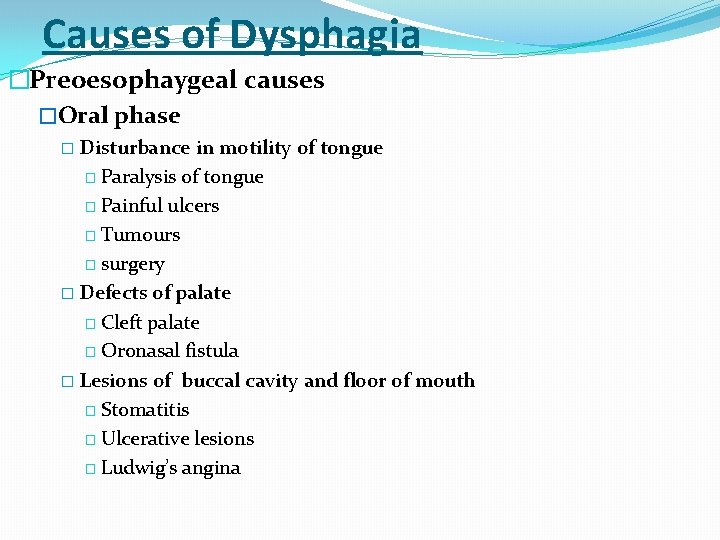
Causes of Dysphagia �Preoesophaygeal causes �Oral phase � Disturbance in motility of tongue � Paralysis of tongue � Painful ulcers � Tumours � surgery � Defects of palate � Cleft palate � Oronasal fistula � Lesions of buccal cavity and floor of mouth � Stomatitis � Ulcerative lesions � Ludwig’s angina
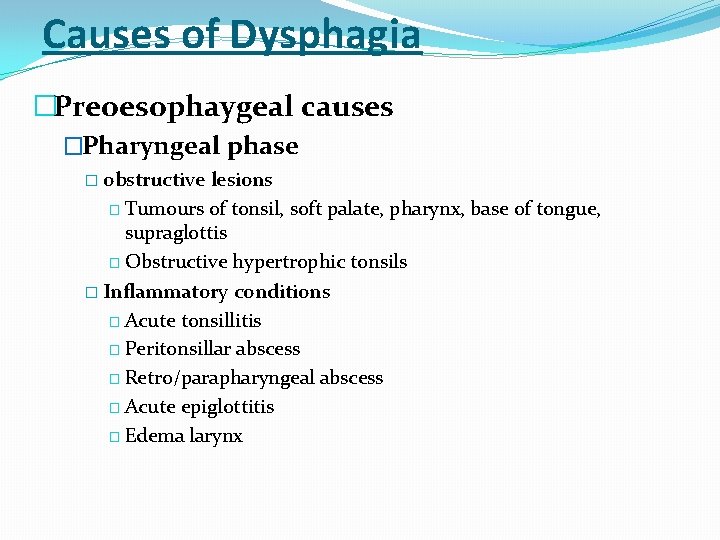
Causes of Dysphagia �Preoesophaygeal causes �Pharyngeal phase � obstructive lesions � Tumours of tonsil, soft palate, pharynx, base of tongue, supraglottis � Obstructive hypertrophic tonsils � Inflammatory conditions � Acute tonsillitis � Peritonsillar abscess � Retro/parapharyngeal abscess � Acute epiglottitis � Edema larynx
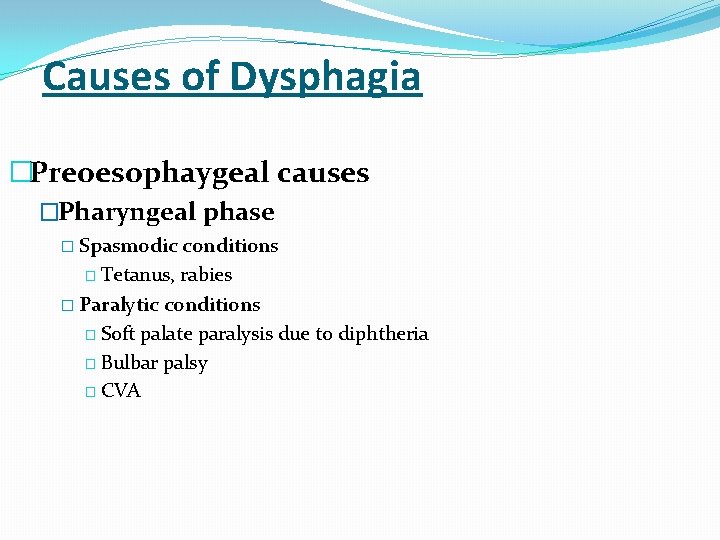
Causes of Dysphagia �Preoesophaygeal causes �Pharyngeal phase � Spasmodic conditions � Tetanus, rabies � Paralytic conditions � Soft palate paralysis due to diphtheria � Bulbar palsy � CVA
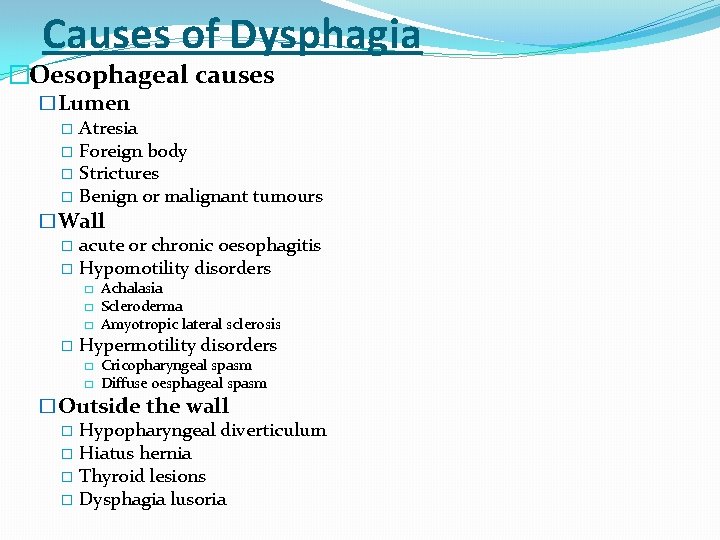
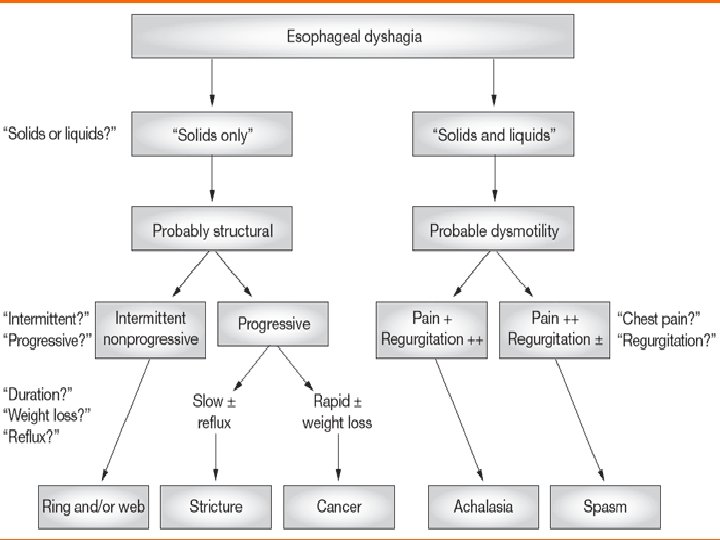
Causes of Dysphagia �Oesophageal causes �Lumen � Atresia � Foreign body � Strictures � Benign or malignant tumours �Wall � acute or chronic oesophagitis � Hypomotility disorders � � Achalasia Scleroderma Amyotropic lateral sclerosis Hypermotility disorders � � Cricopharyngeal spasm Diffuse oesphageal spasm �Outside the wall � Hypopharyngeal diverticulum � Hiatus hernia � Thyroid lesions � Dysphagia lusoria
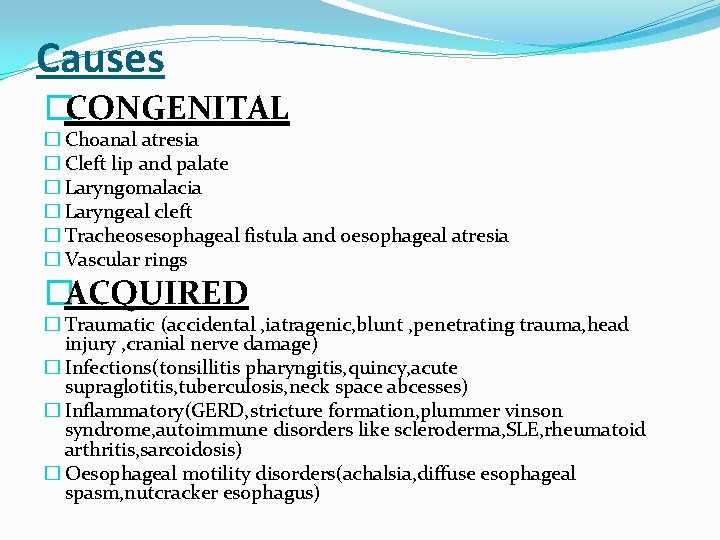
Causes �CONGENITAL � Choanal atresia � Cleft lip and palate � Laryngomalacia � Laryngeal cleft � Tracheosesophageal fistula and oesophageal atresia � Vascular rings �ACQUIRED � Traumatic (accidental , iatragenic, blunt , penetrating trauma, head injury , cranial nerve damage) � Infections(tonsillitis pharyngitis, quincy, acute supraglotitis, tuberculosis, neck space abcesses) � Inflammatory(GERD, stricture formation, plummer vinson syndrome, autoimmune disorders like scleroderma, SLE, rheumatoid arthritis, sarcoidosis) � Oesophageal motility disorders(achalsia, diffuse esophageal spasm, nutcracker esophagus)
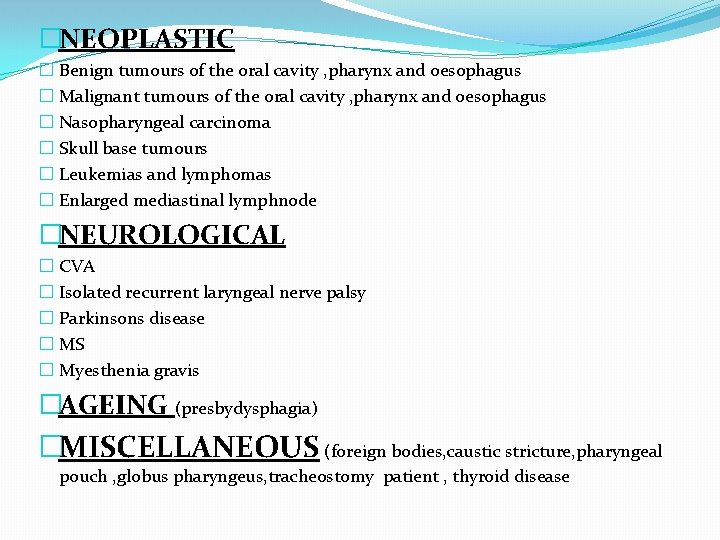
�NEOPLASTIC � Benign tumours of the oral cavity , pharynx and oesophagus � Malignant tumours of the oral cavity , pharynx and oesophagus � Nasopharyngeal carcinoma � Skull base tumours � Leukemias and lymphomas � Enlarged mediastinal lymphnode �NEUROLOGICAL � CVA � Isolated recurrent laryngeal nerve palsy � Parkinsons disease � MS � Myesthenia gravis �AGEING (presbydysphagia) �MISCELLANEOUS (foreign bodies, caustic stricture, pharyngeal pouch , globus pharyngeus, tracheostomy patient , thyroid disease
Evaluation of Dysphagia �History �Review of Systems �Physical Exam �Imaging Studies
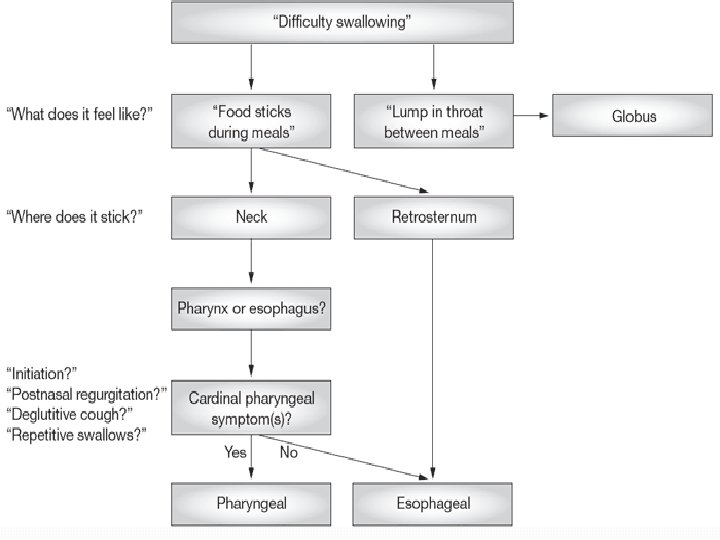
History �Age �Onset �Duration �Level of sensation of dysphagia �Type of food �Weight loss �Ingestion of caustic substances �Previous surgery/trauma
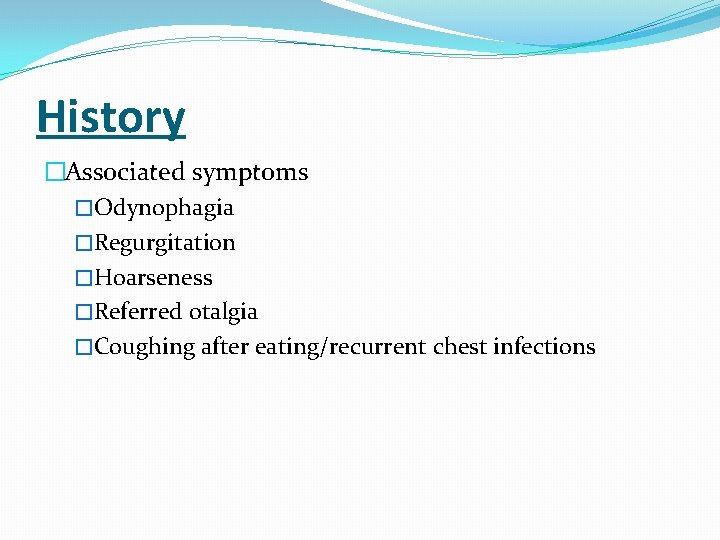
History �Associated symptoms �Odynophagia �Regurgitation �Hoarseness �Referred otalgia �Coughing after eating/recurrent chest infections
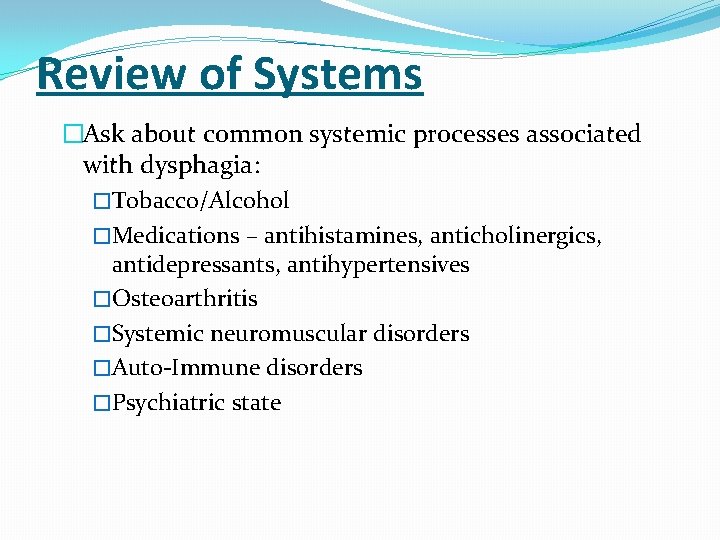
Review of Systems �Ask about common systemic processes associated with dysphagia: �Tobacco/Alcohol �Medications – antihistamines, anticholinergics, antidepressants, antihypertensives �Osteoarthritis �Systemic neuromuscular disorders �Auto-Immune disorders �Psychiatric state
Examination �General physical examination �Weight loss �Malnutrition �Pallor �Koilonychia �Jaundice �Voice quality �Oral cavity examination �Mouth opening �Tongue movements �Gag reflex
Examination �IDL/Nasolaryngoscopy �Pooling of secretions �Any visible growth �Status of VC �Neck �Lymph nodes �Other neck masses �Laryngeal crepitus �Integrity of laryngeal cartilages
Investigations �Blood tests �Full blood count �ESR and C reactive protein �Liver function tests �Renal function tests �Serum electrolytes �Thyroid function tests
Investigations �X Rays �Barium swallow �CT scans �MRI �FEES �Videoflouroscopy �Manometry � 24 hour ambulatory oesophageal p. H monitoring
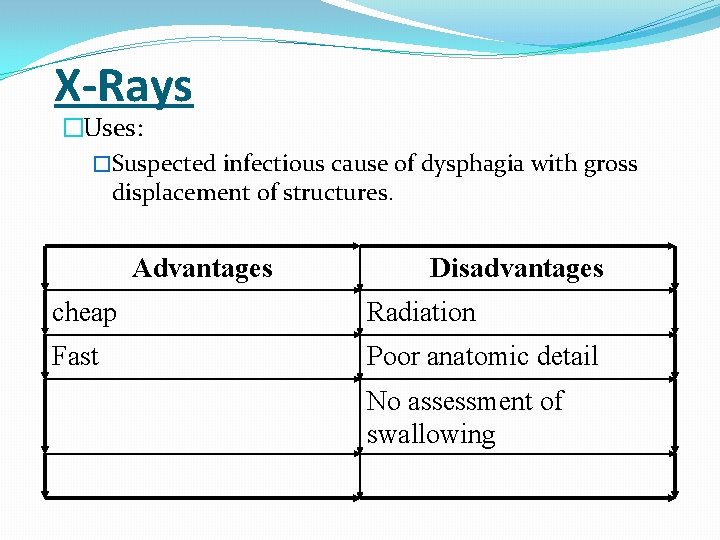
X-Rays �Uses: �Suspected infectious cause of dysphagia with gross displacement of structures. Advantages Disadvantages cheap Radiation Fast Poor anatomic detail No assessment of swallowing
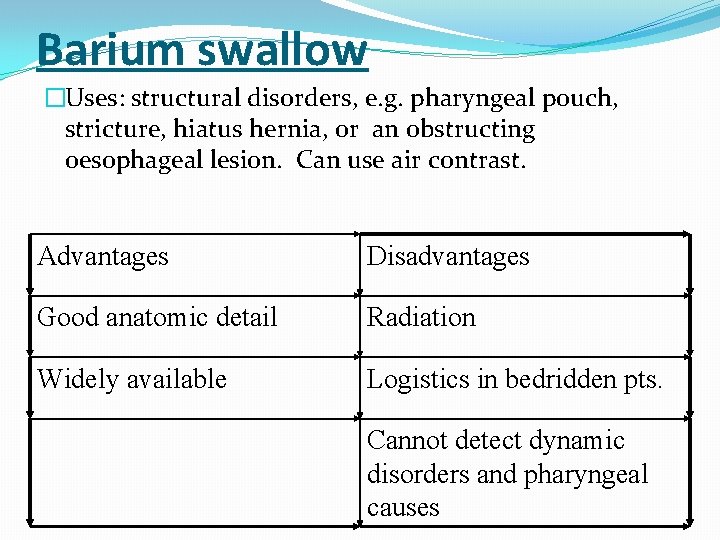
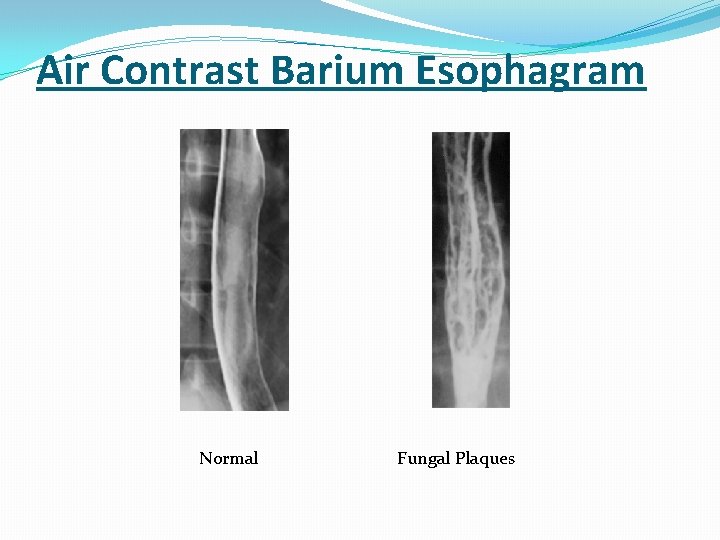
Barium swallow �Uses: structural disorders, e. g. pharyngeal pouch, stricture, hiatus hernia, or an obstructing oesophageal lesion. Can use air contrast. Advantages Disadvantages Good anatomic detail Radiation Widely available Logistics in bedridden pts. Cannot detect dynamic disorders and pharyngeal causes
Air Contrast Barium Esophagram Normal Fungal Plaques
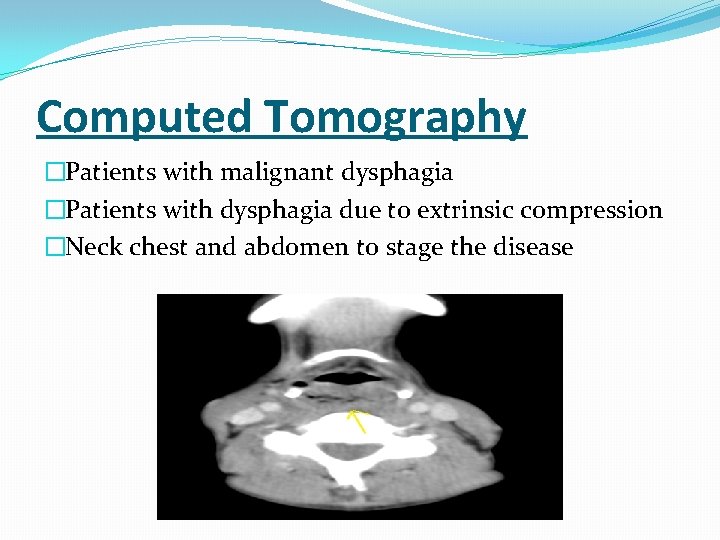
Computed Tomography �Patients with malignant dysphagia �Patients with dysphagia due to extrinsic compression �Neck chest and abdomen to stage the disease
Magnetic resonance imaging �When neurological causes of dysphagia are suspected �Multiple sclerosis �Cerebral tumours �Intracranial extension of nasopharyngeal carcinoma
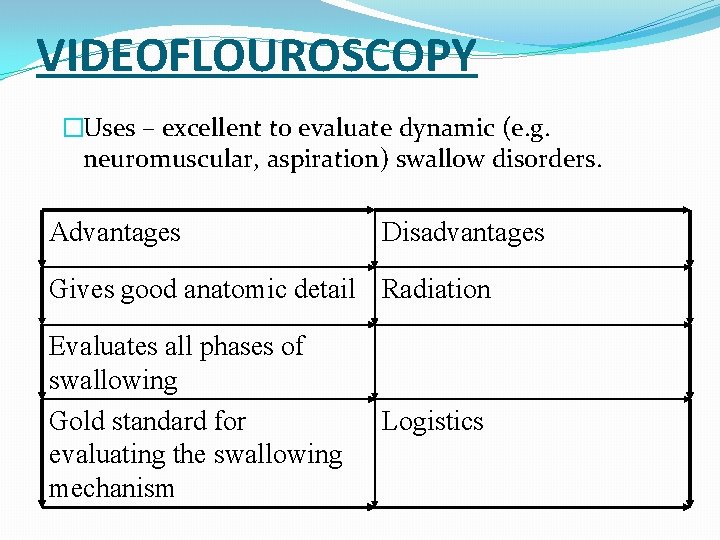
VIDEOFLOUROSCOPY �Uses – excellent to evaluate dynamic (e. g. neuromuscular, aspiration) swallow disorders. Advantages Disadvantages Gives good anatomic detail Radiation Evaluates all phases of swallowing Gold standard for evaluating the swallowing mechanism Logistics
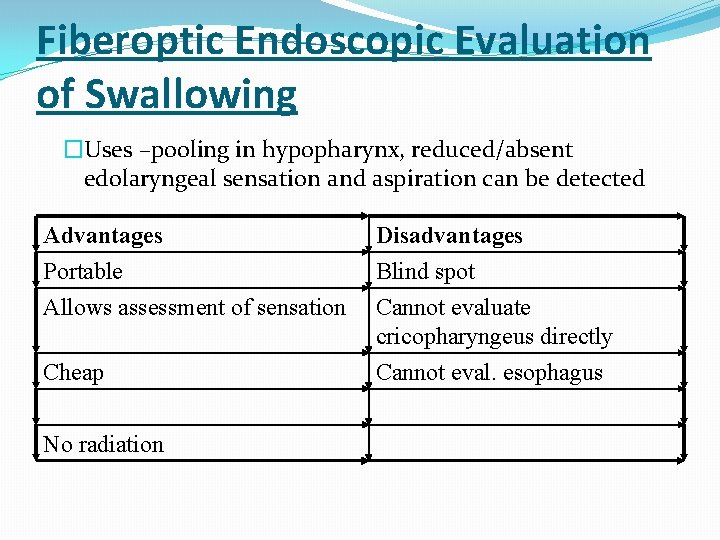
Fiberoptic Endoscopic Evaluation of Swallowing �Uses –pooling in hypopharynx, reduced/absent edolaryngeal sensation and aspiration can be detected Advantages Portable Allows assessment of sensation Disadvantages Blind spot Cannot evaluate cricopharyngeus directly Cheap Cannot eval. esophagus No radiation
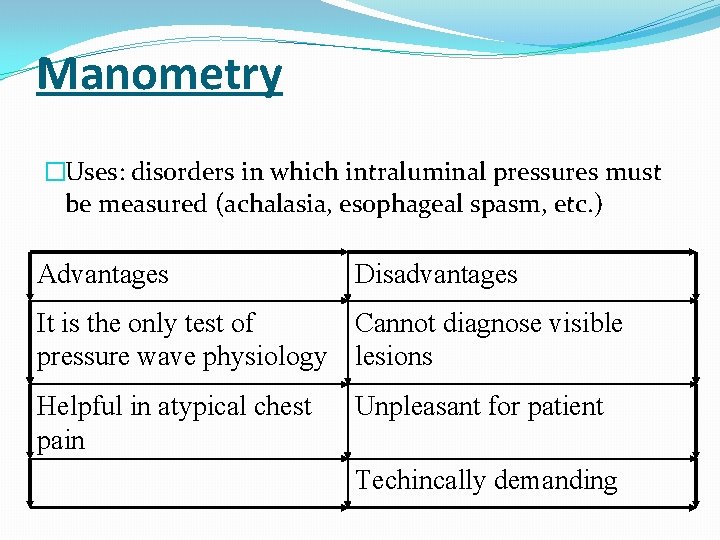
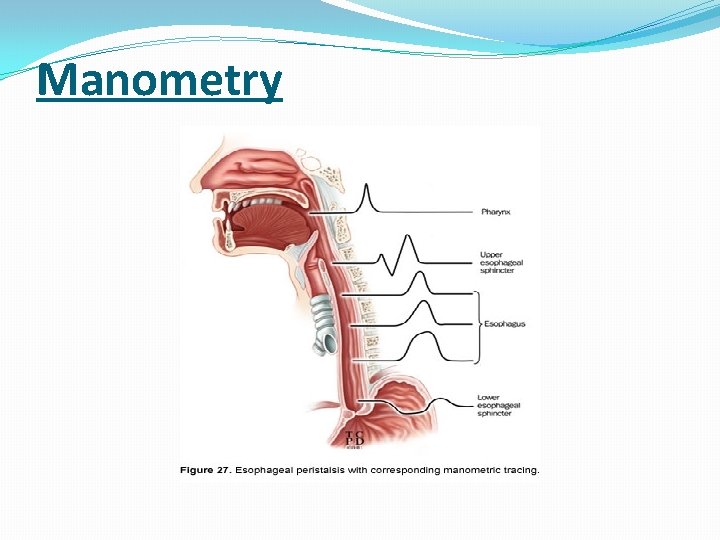
Manometry �Uses: disorders in which intraluminal pressures must be measured (achalasia, esophageal spasm, etc. ) Advantages Disadvantages It is the only test of Cannot diagnose visible pressure wave physiology lesions Helpful in atypical chest pain Unpleasant for patient Techincally demanding
Manometry
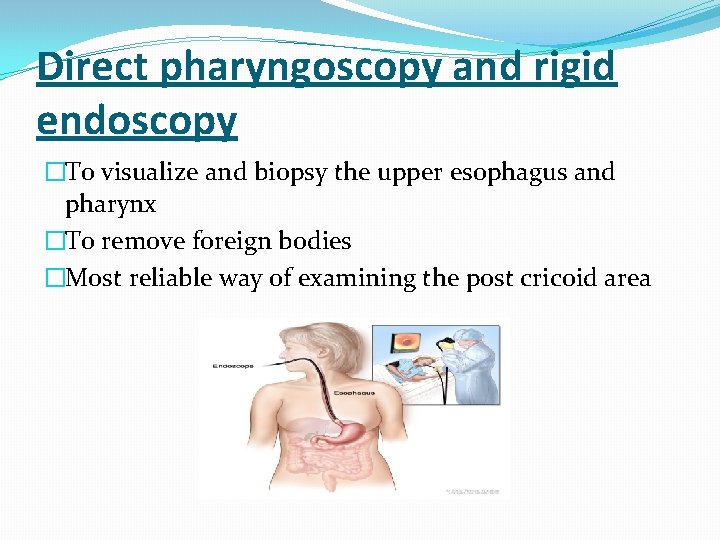
Direct pharyngoscopy and rigid endoscopy �To visualize and biopsy the upper esophagus and pharynx �To remove foreign bodies �Most reliable way of examining the post cricoid area
24 hours ambulatory oesophageal p. H monitoring �Most accurate method of diagnosing gastro esophageal reflux �p. H sensor placed 5 cm above the LES �Normal p. H 5 -7 �In GERD less than 4
Common causes of Dysphagia
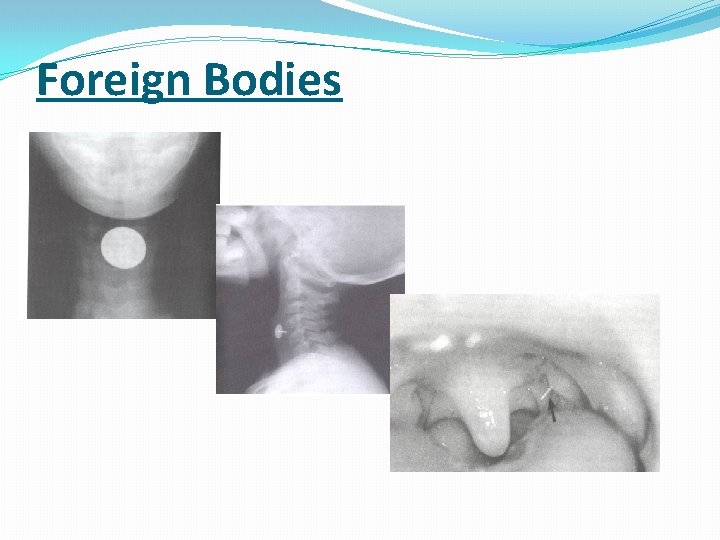
Foreign Bodies
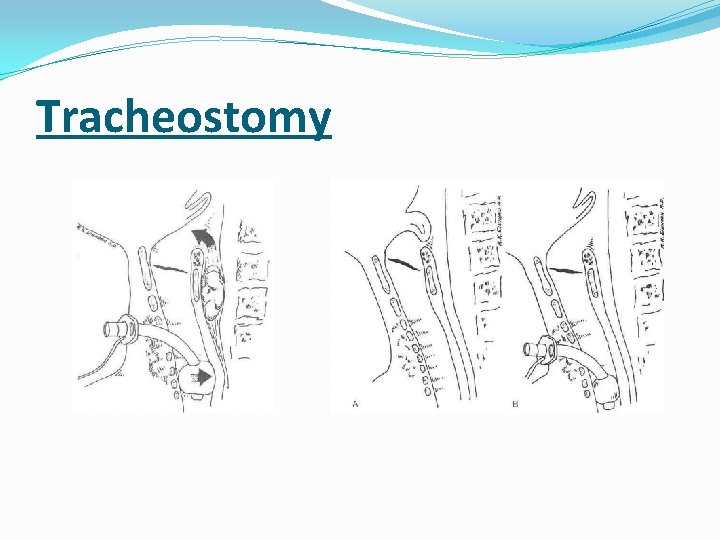
Tracheostomy
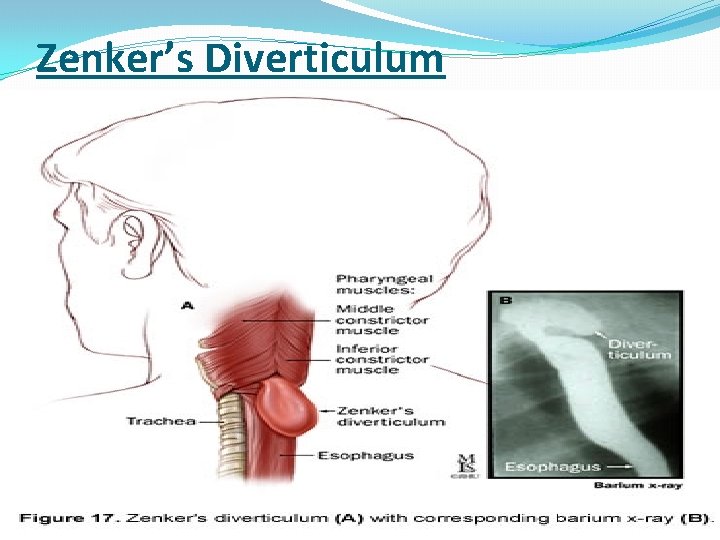
Zenker’s Diverticulum
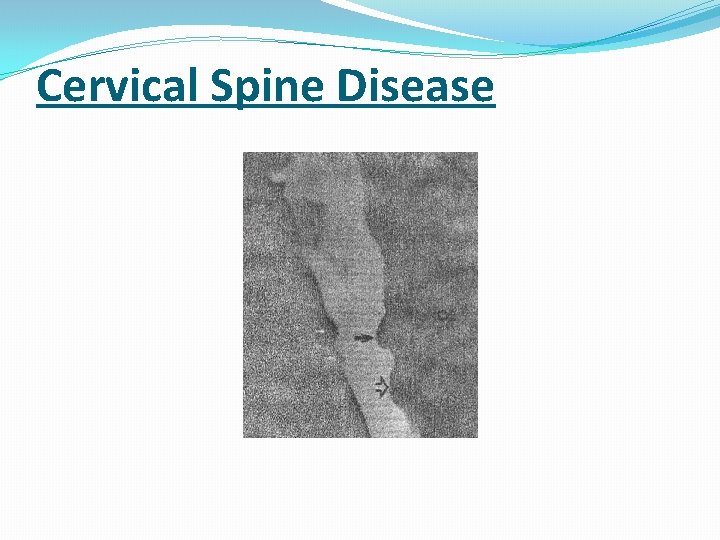
Cervical Spine Disease
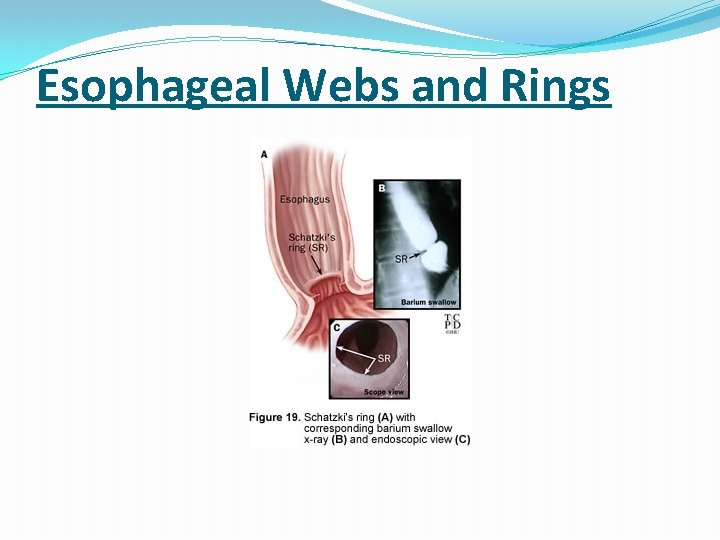
Esophageal Webs and Rings
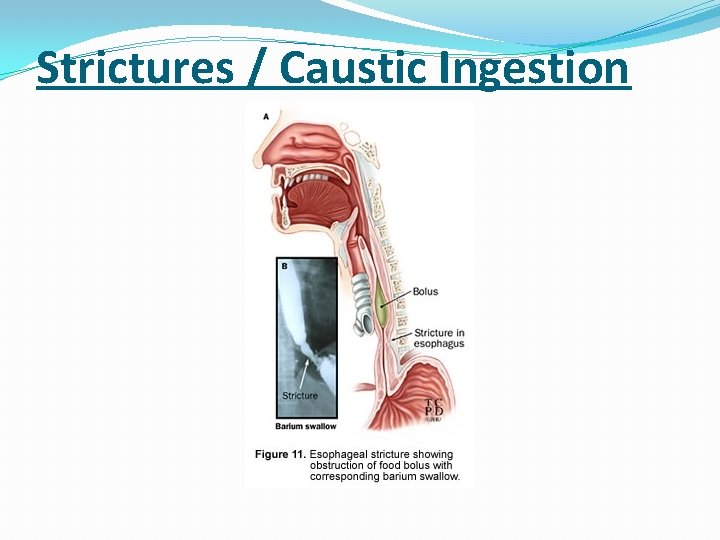
Strictures / Caustic Ingestion
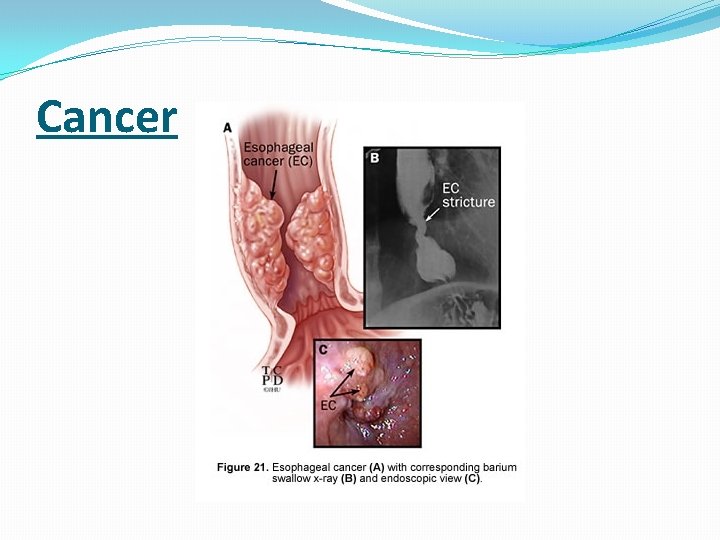
Cancer
Systemic Disorders that Cause Dysphagia �Stroke – present in up to 47% �Amyotrophic Lateral Sclerosis �Parkinson’s Disease �Multiple Sclerosis �Muscular Dystrophy �Myasthenia Gravis
Autoimmune Disorders �Systemic Sclerosis �Systemic Lupus Erythematosis �Dermatomyosits �Mixed Connective Tissue Disease �Mucosal Pemphigoid, Epidermolysis Bulosa �Sjogren’s Syndrome (xerostomia) �Rheumatoid Arthritis (cricoarytenoid joint fixation)
DYSPHAGIA REHABILITATION STRATAGIES �Compensatory (not aimed at changing swallowing physiology) �Rehabilitative (aimed at changing swallowing physiology)
COMPENSATORY STRATEGIES � POSTURAL TECNIQUES � Head back � Chin down � Head rotation towards damaged side � Lying down on one side � Head tilt towards stronger side � Head rotated � CHANGES IN VOLUME AND SPEED OF FOOD PRESENTATION � TECHNIQUES TO IMPROVE ORAL SENSORY AWARENESS � TECHNIQUES TO IMPROVE SPEED OF TRIGGERING PHARYNGEAL SWALLOW � DIETRY CHANGES � PROSTHETICS
THANK YOU