
Management of Duodenal Trauma Dr Chow Chi Woo

- Slides: 26
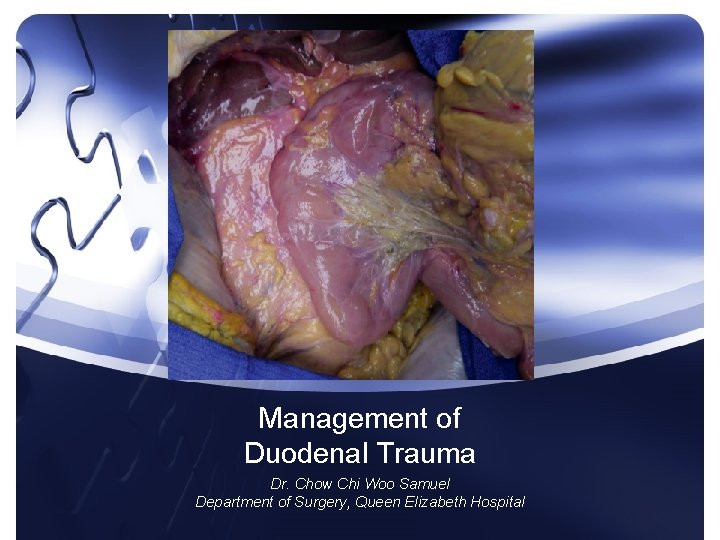
Management of Duodenal Trauma Dr. Chow Chi Woo Samuel Department of Surgery, Queen Elizabeth Hospital
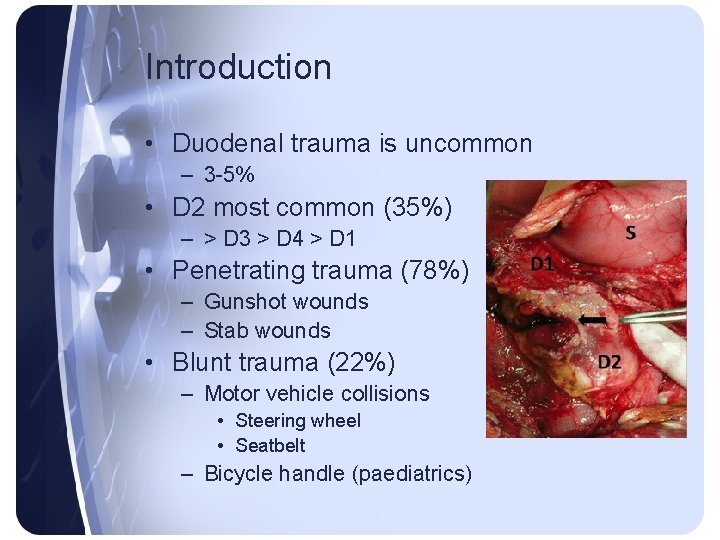
Introduction • Duodenal trauma is uncommon – 3 -5% • D 2 most common (35%) – > D 3 > D 4 > D 1 • Penetrating trauma (78%) – Gunshot wounds – Stab wounds • Blunt trauma (22%) – Motor vehicle collisions • Steering wheel • Seatbelt – Bicycle handle (paediatrics)
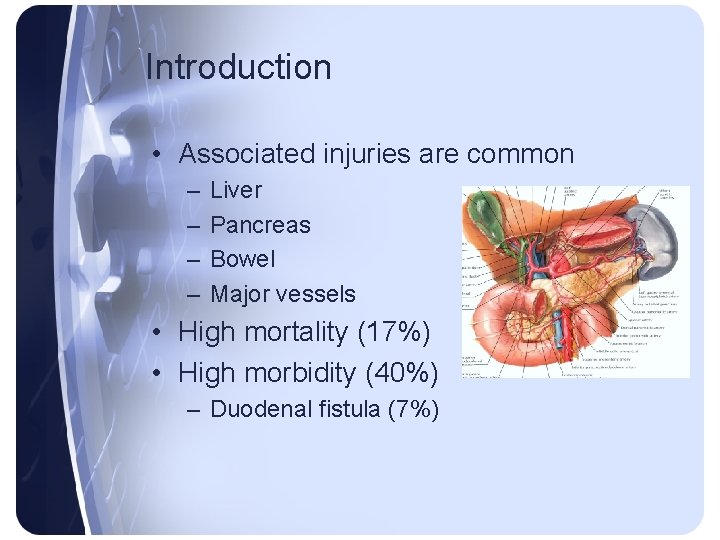
Introduction • Associated injuries are common – – Liver Pancreas Bowel Major vessels • High mortality (17%) • High morbidity (40%) – Duodenal fistula (7%)
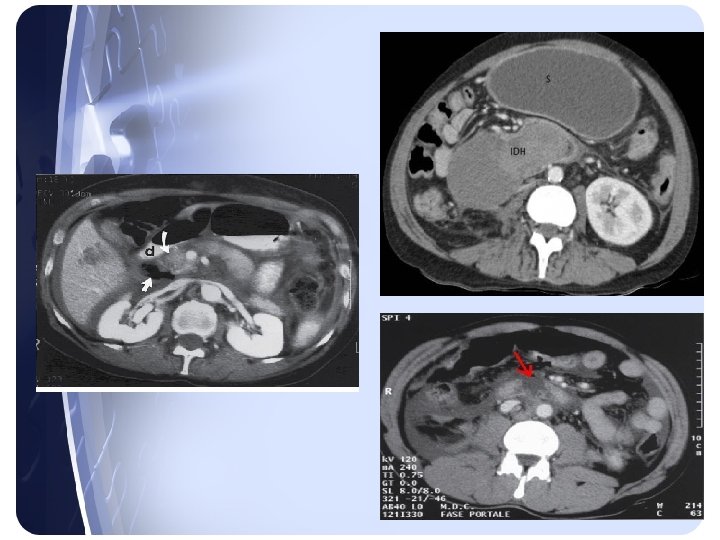
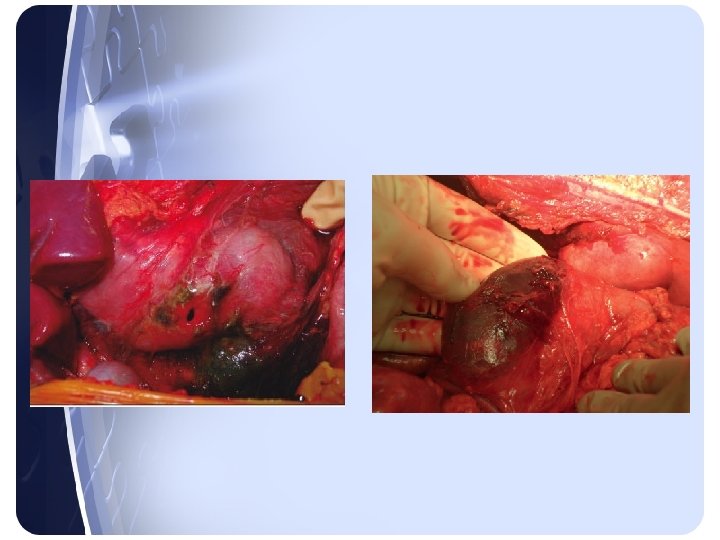
Diagnosis • High index of suspicion • Symptoms/signs usually not helpful Blunt trauma Radiological Imaging 1. X-ray 2. CT scan (IV + oral contrast) 3. Fluoroscopy Penetrating trauma Intra-operative features 1. Bile staining at retroperitoneum 2. Periduodenal hematoma 3. Periduodenal crepitus
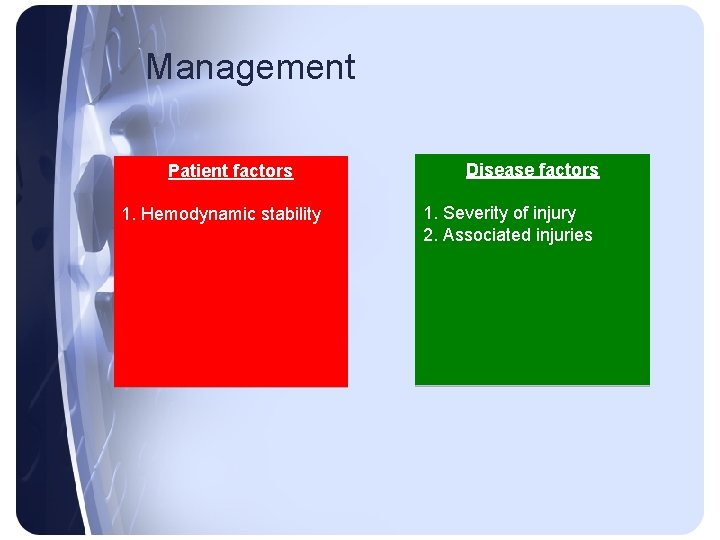
Management Patient factors 1. Hemodynamic stability Disease factors 1. Severity of injury 2. Associated injuries
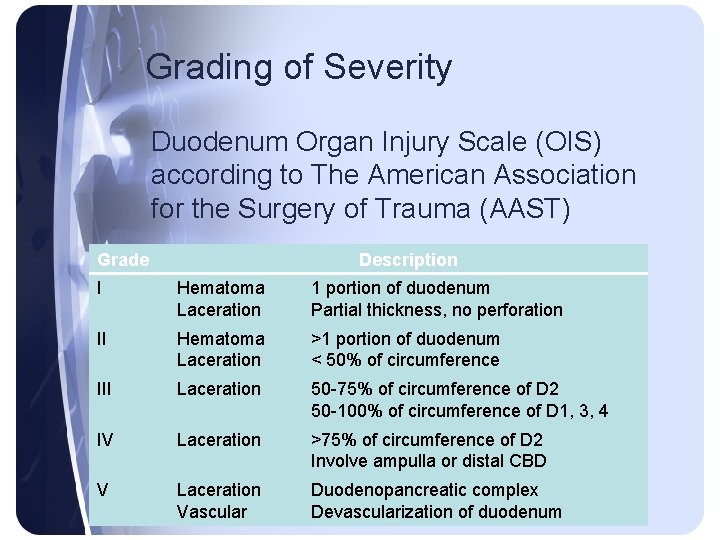
Grading of Severity Duodenum Organ Injury Scale (OIS) according to The American Association for the Surgery of Trauma (AAST) Grade Description I Hematoma Laceration 1 portion of duodenum Partial thickness, no perforation II Hematoma Laceration >1 portion of duodenum < 50% of circumference III Laceration 50 -75% of circumference of D 2 50 -100% of circumference of D 1, 3, 4 IV Laceration >75% of circumference of D 2 Involve ampulla or distal CBD V Laceration Vascular Duodenopancreatic complex Devascularization of duodenum
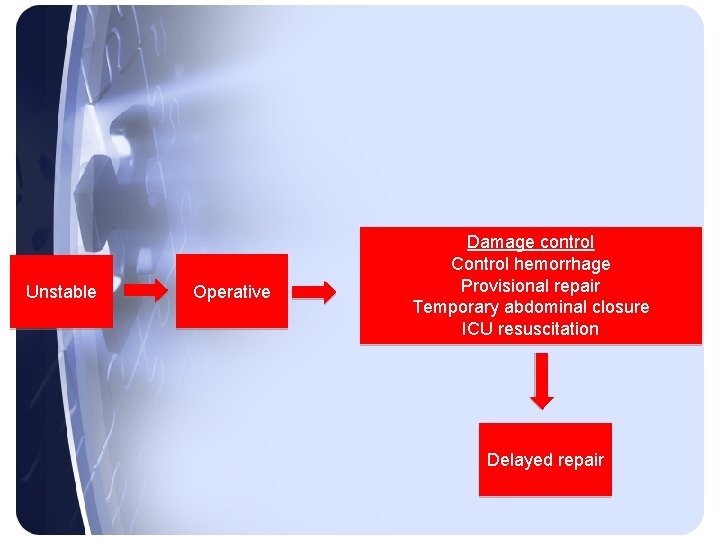
Unstable Operative Damage control Control hemorrhage Provisional repair Temporary abdominal closure ICU resuscitation Delayed repair
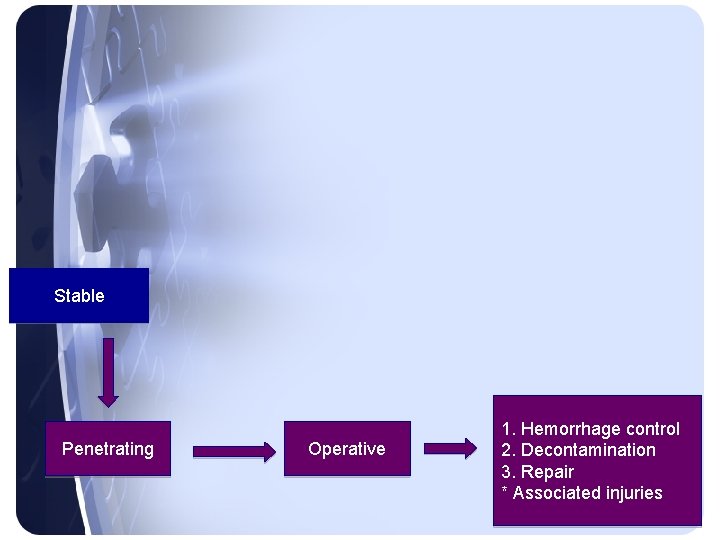
Stable Penetrating Operative 1. Hemorrhage control 2. Decontamination 3. Repair * Associated injuries
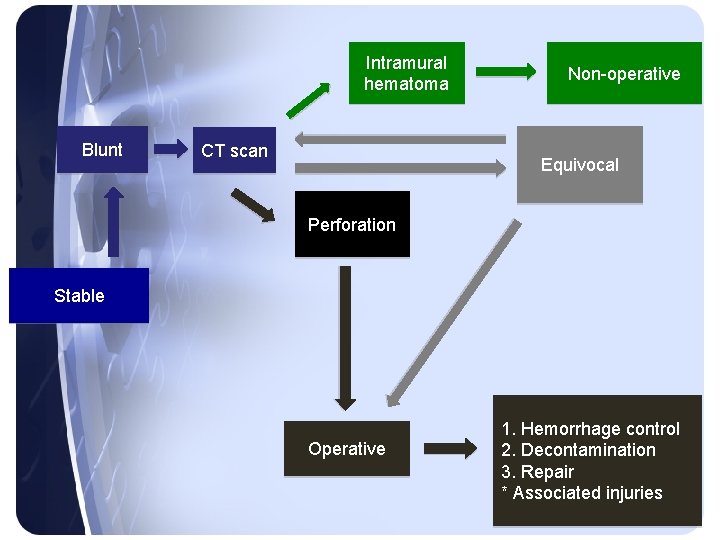
Intramural hematoma Blunt CT scan Non-operative Equivocal Perforation Stable Operative 1. Hemorrhage control 2. Decontamination 3. Repair * Associated injuries
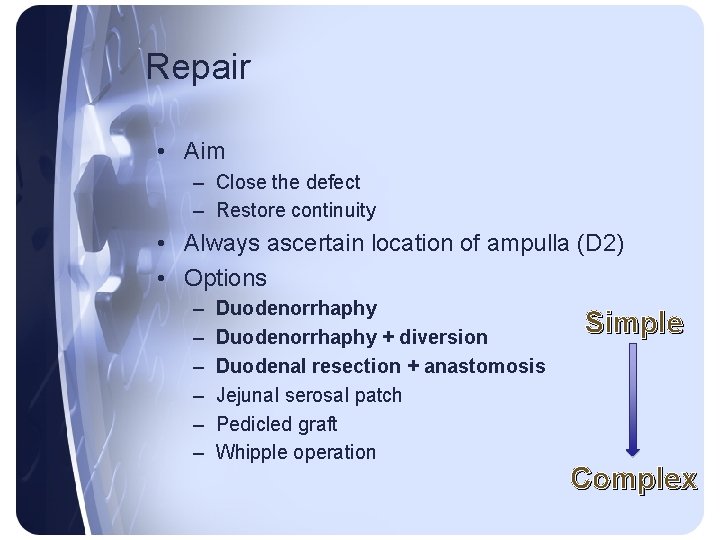
Repair • Aim – Close the defect – Restore continuity • Always ascertain location of ampulla (D 2) • Options – – – Duodenorrhaphy + diversion Duodenal resection + anastomosis Jejunal serosal patch Pedicled graft Whipple operation Simple Complex
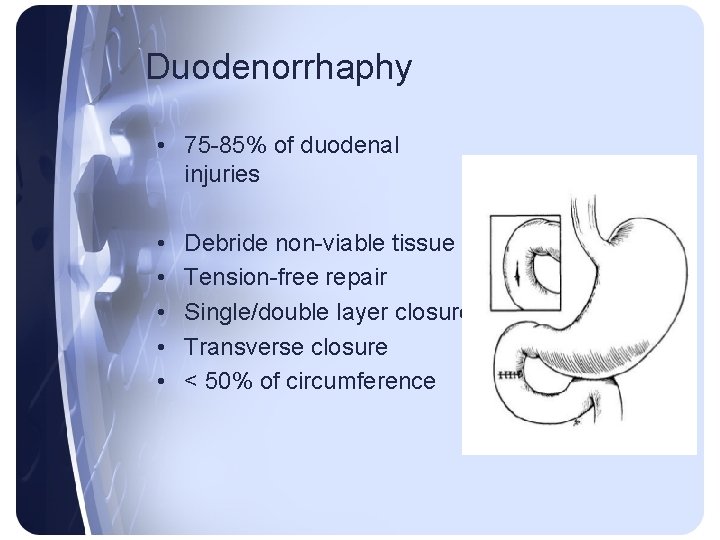
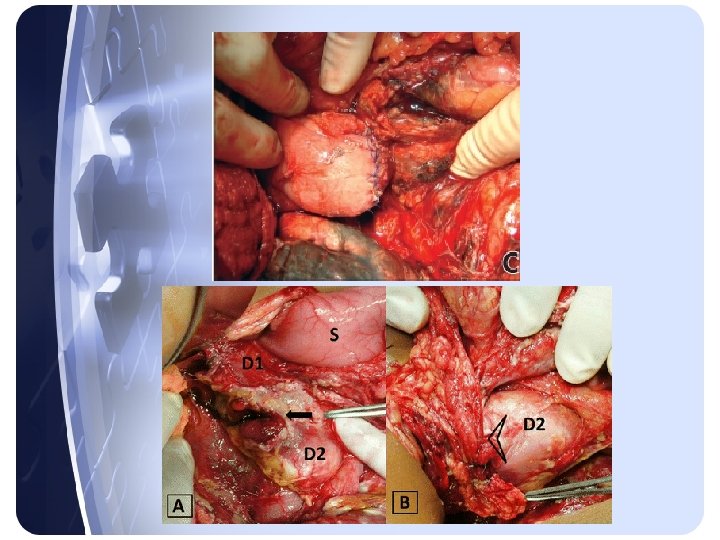
Duodenorrhaphy • 75 -85% of duodenal injuries • • • Debride non-viable tissue Tension-free repair Single/double layer closure Transverse closure < 50% of circumference
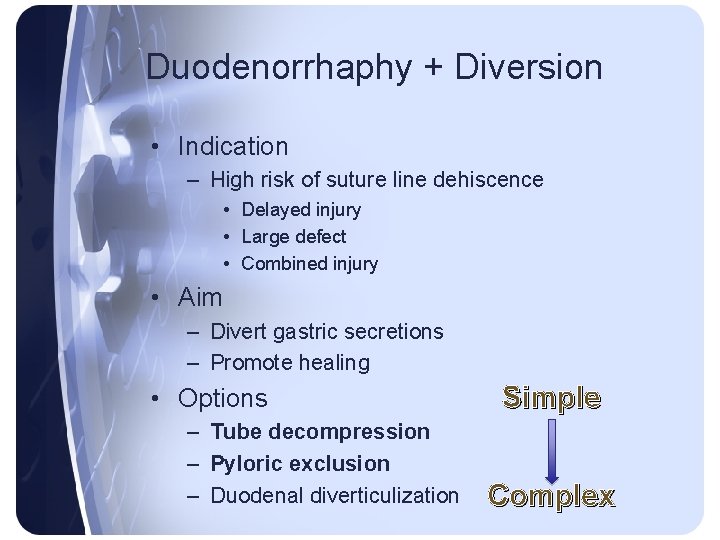
Duodenorrhaphy + Diversion • Indication – High risk of suture line dehiscence • Delayed injury • Large defect • Combined injury • Aim – Divert gastric secretions – Promote healing • Options – Tube decompression – Pyloric exclusion – Duodenal diverticulization Simple Complex
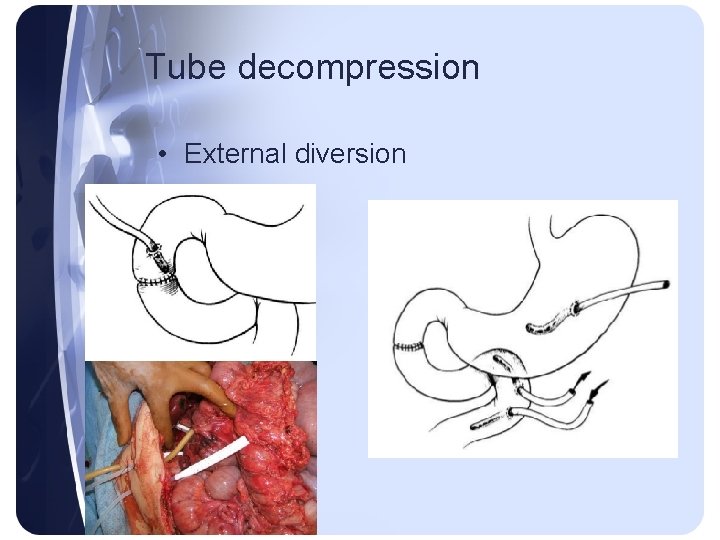
Tube decompression • External diversion
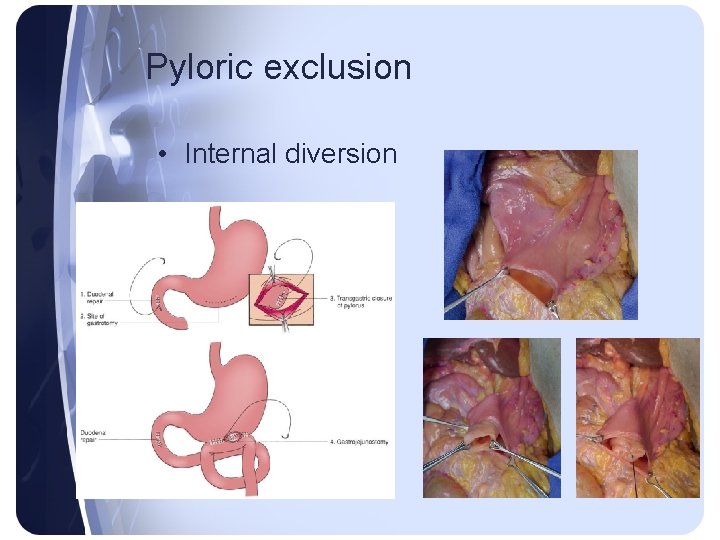
Pyloric exclusion • Internal diversion
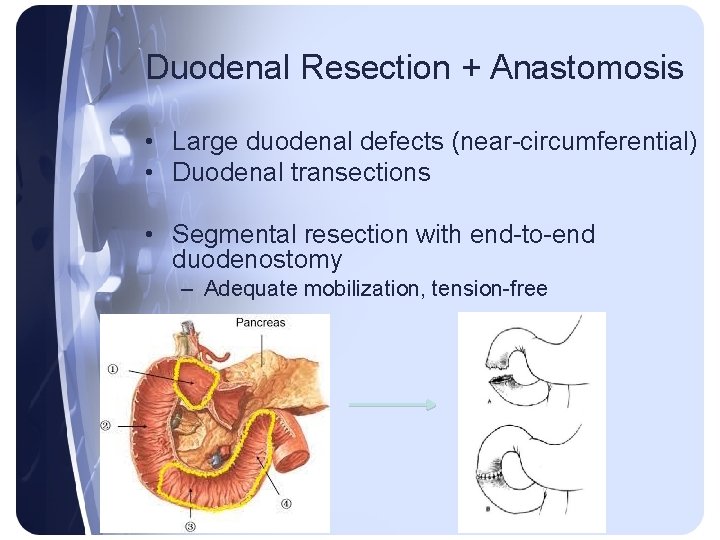
Duodenal Resection + Anastomosis • Large duodenal defects (near-circumferential) • Duodenal transections • Segmental resection with end-to-end duodenostomy – Adequate mobilization, tension-free
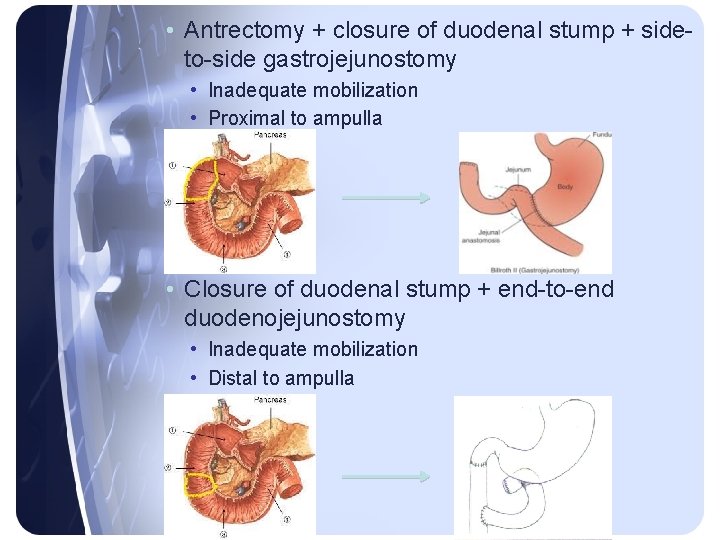
• Antrectomy + closure of duodenal stump + sideto-side gastrojejunostomy • Inadequate mobilization • Proximal to ampulla • Closure of duodenal stump + end-to-end duodenojejunostomy • Inadequate mobilization • Distal to ampulla
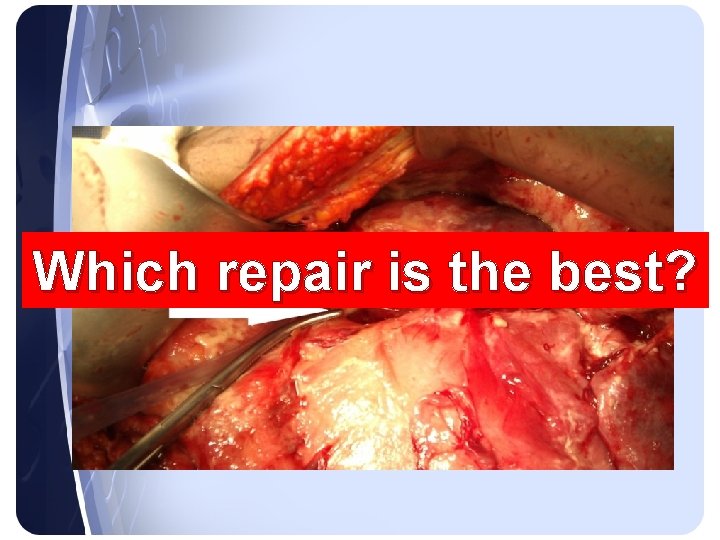
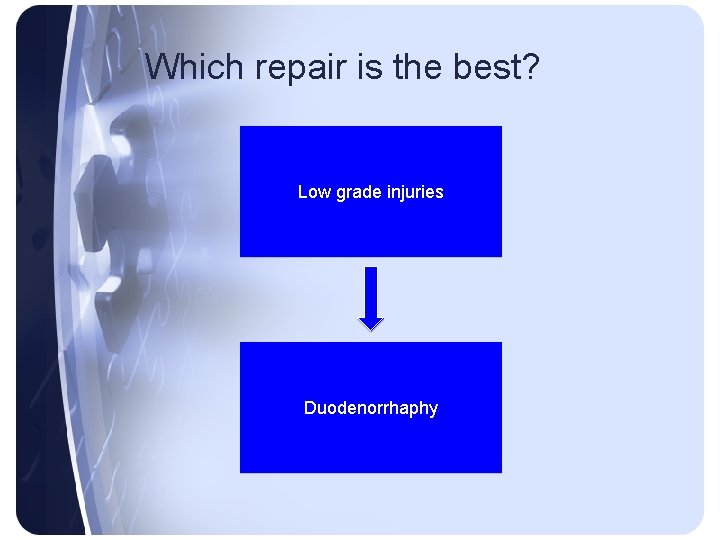
Which repair is the best?
Which repair is the best? Low grade injuries Duodenorrhaphy
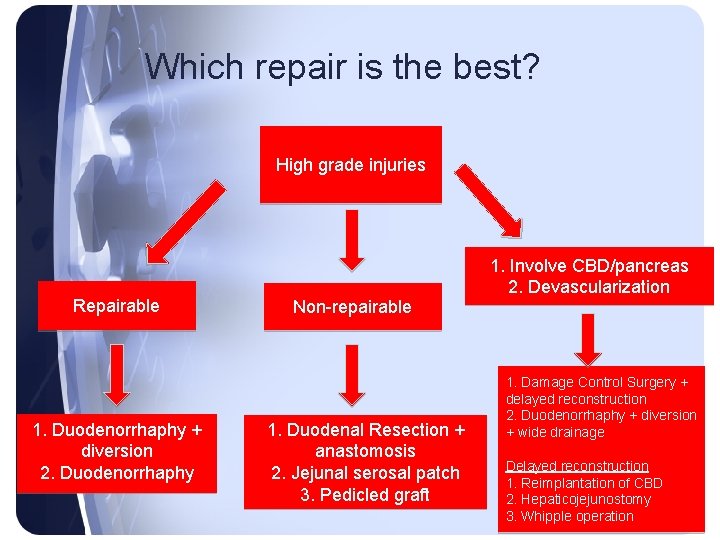
Which repair is the best? High grade injuries Repairable 1. Duodenorrhaphy + diversion 2. Duodenorrhaphy Non-repairable 1. Duodenal Resection + anastomosis 2. Jejunal serosal patch 3. Pedicled graft 1. Involve CBD/pancreas 2. Devascularization 1. Damage Control Surgery + delayed reconstruction 2. Duodenorrhaphy + diversion + wide drainage Delayed reconstruction 1. Reimplantation of CBD 2. Hepaticojejunostomy 3. Whipple operation
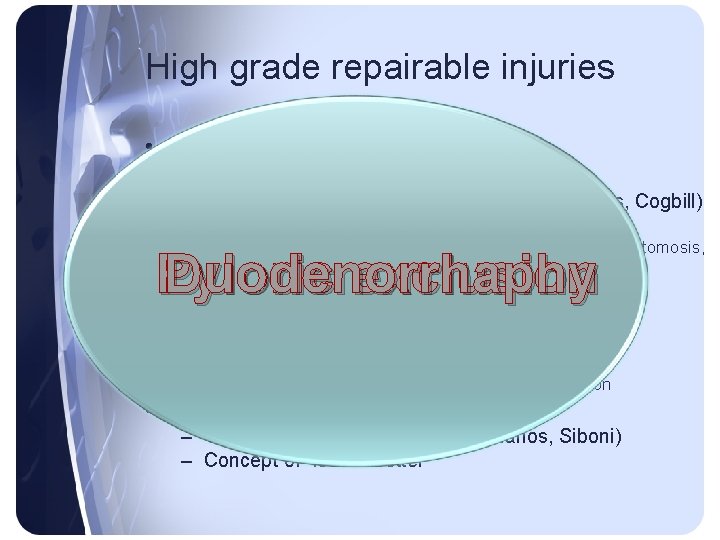
High grade repairable injuries • Optimal repair remains debatable • Duodenorrhaphy + pyloric exclusion – Classically recommended (Vaughan, Degiannis, Cogbill) – Problems • Increased operative time and hospital stay, extra anastomosis, suture line ulcers Pyloric Duodenorrhaphy exclusion • Duodenorrhaphy + tube decompression – Role downplayed (Seamon) – Controversial (Stone, Hasson, Ivatury, Girgin) – Problems • Increased hospital stay, dislodgement, obstruction • Duodenorrhaphy – Gaining popularity (Du. Bose, Velmahos, Siboni) – Concept of “less is better”
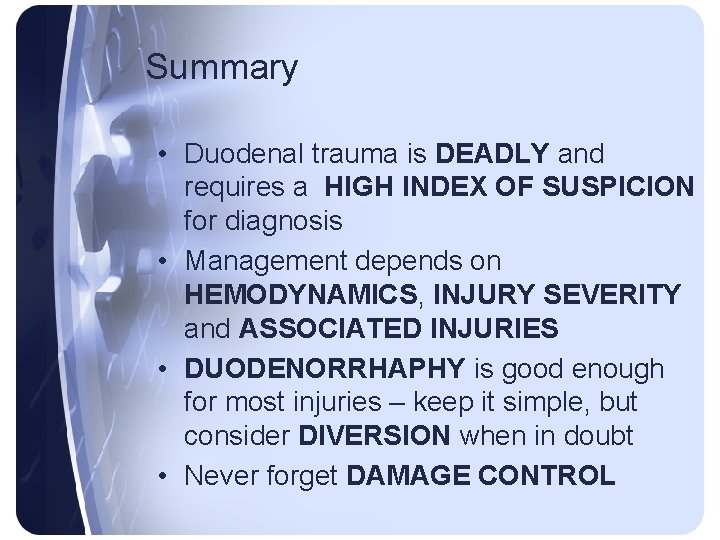
Summary • Duodenal trauma is DEADLY and requires a HIGH INDEX OF SUSPICION for diagnosis • Management depends on HEMODYNAMICS, INJURY SEVERITY and ASSOCIATED INJURIES • DUODENORRHAPHY is good enough for most injuries – keep it simple, but consider DIVERSION when in doubt • Never forget DAMAGE CONTROL
References 1. 2. 3. 4. 5. 6. 7. 8. 9. 10. 11. 12. Vaughan GD, Frazier OH, Graham DY, et al. . The use of pyloric exclusion in the management of severe duodenal injuries. Am J Surg. 1977; 134(6): 785 -90. Degiannis E, Krawczykowski D, Velmahos GC, et al. Pyloric exclusion in severe penetrating injuries of the duodenum. World J Surg. 1993; 17(6): 751 -4 Cogbill T H, Moore E E, Feliciano D V. et al. Conservative management of duodenal trauma: a multicenter perspective. J Trauma. (1990); 30: 1469– 1475. Seamon MJ, Pieri PG, Fisher CA, et al. A ten-year retrospective review: does pyloric exclusion improve clinical outcome after penetrating duodenal and combined pancreaticoduodenal injuries? J Trauma. 2007; 62(4): 829 -33. Stone HH, Fabian TC. Management of duodenal wounds. J Trauma 1979; 19: 334 -9 Hasson JE, Stern D, Moss GS. Penetrating duodenal trauma. J Trauma. 1984 Jun; 24(6): 471– 474. Ivatury RR, Gaudino J, Ascer E, et al. Treatment of penetrating duodenal injuries: primary repair vs. repair with decompressive enter- ostomy/serosal patch. J Trauma 1985; 25: 337 -41 Girgin S, Gedik E, Yağmur Y, et al. Management of duodenal injury: our experience and the value of tube duodenostomy. Ulus Travma Acil Cerrahi Derg. 2009; 15: 467 -72. Siboni S, Benjamin E, Haltmeier T, et al. Isolated Blunt Duodenal Trauma: Simple Repair, Low Mortality. Am Surg. 2015 Oct; 81(10)961 -4 Velmahos GC, Constantinou C, Kasotakis G. Safety of repair for severe duodenal injuries. World J Surg 2008; 32: 7 -12. Du. Bose JJ, Inaba K, Teixeira PG, et al. Pyloric exclusion in the treatment of severe duodenal injuries: results from the National Trauma Data Bank. Am Surg. 2008; 74: 925– 9. Ivatury RR, Malhotra AK, Aboutanos MB, et al. Duodenal Injuries: A Review. Eur J Trauma Emerg Surg 2007; 33: 231 -7 Ordoñez C, García A, Parra MW, et al. Complex penetrating duodenal injuries: less is better. J Trauma Acute Care Surg. 2014; 76(5): 1177 -83.
Question Time