
Management of Concussion in the Community College Athlete




- Slides: 31
Management of Concussion in the Community College Athlete Nancy Resendes Chinn, Ed. D. Monica Ohkubo, MA , ATC, EMT-B Santa Rosa Junior College
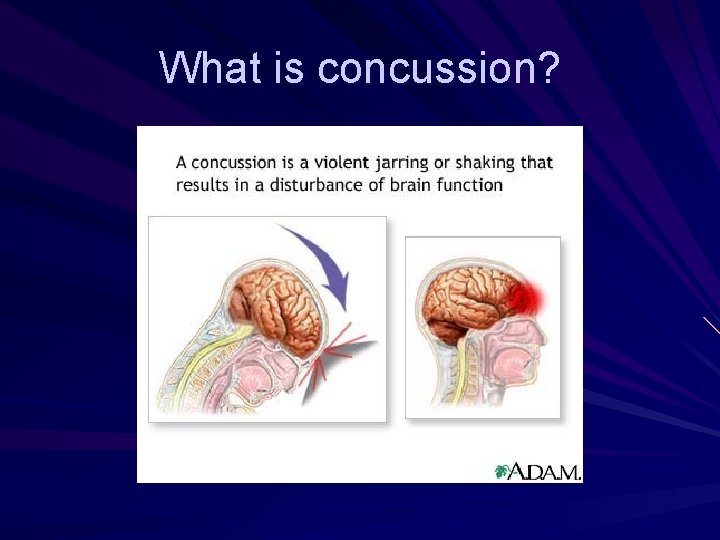
What is concussion?
Concussion • May be caused by a direct blow to the head, face, neck or body, with a force transmitted to the head. • Does not usually result in a loss of consciousness. • Injury from concussion rarely shows up in CT scan or MRI.
Symptoms of Concussion Headache Dizziness Loss of balance Sensitivity to light/noise Blurred vision Confusion Fatigue Nausea Irritability Difficulty with concentration and memory
Concussions are Serious Injuries They can affect performance in sports and create difficulties in the classroom. Returning to play too soon after a concussion can result in permanent disabilities.
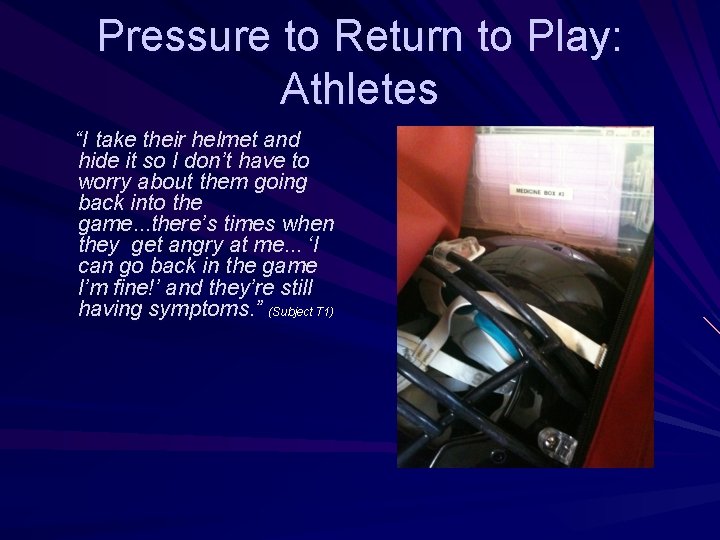
Challenges of Identification of Concussion in the Student-Athlete The incident resulting in the concussion may not have been observed. Athletes may try to hide their symptoms in order to return to play.
Failure to identify a concussion when it happens can result in a greater likelihood of sustaining a second more serious injury.
“He didn’t share his symptoms for a desire to stay in and play more. . . He took a hit in another game, then the symptoms were worse. This kid was bound for Arizona State on a scholarship. . . I saw him in physical therapy with some permanent deficits. It was a live consequence for him. ” (Subject T 5)
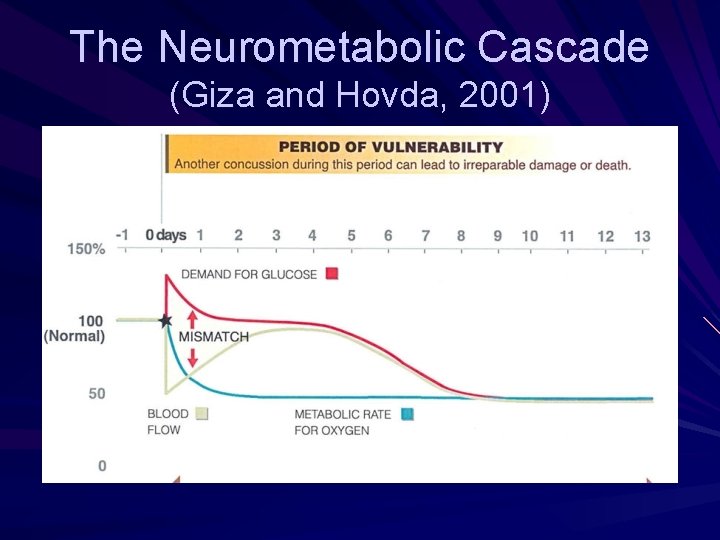
The Neurometabolic Cascade (Giza and Hovda, 2001) Identification of changes at cellular level including altered glucose metabolization, cerebral blood flow, and impaired axonal functioning. Correlates with post-concussion cerebral vulnerability.
The Neurometabolic Cascade (Giza and Hovda, 2001)
National Athletic Training Association Standards “Baseline testing on concussion assessment measures is recommended. . . The use of objective concussion assessment tools will help the certified athletic trainer in more accurately identifying deficits caused by injury, and recovery from injury. ”
International Conference on Concussion in Sports. . . all athletes, regardless of level of participation, should be managed using the same treatment and return to play paradigm. . . it is recommended that in all organized high-risk sports consideration be given to having this [baseline] cognitive evaluation regardless of age or level of performance. ” (Mc. Crory et al. , 2009, p. 190)
The Community College Student. Athlete & Concussion • Developmental considerations • Cognitive demands of academics • Culture of risk in sport
Pressure to Return to Play: Athletes “I take their helmet and hide it so I don’t have to worry about them going back into the game. . . there’s times when they get angry at me. . . ‘I can go back in the game I’m fine!’ and they’re still having symptoms. ” (Subject T 1)
Santa Rosa Junior College Sports Medicine Concussion Management Program: From Research to Practice
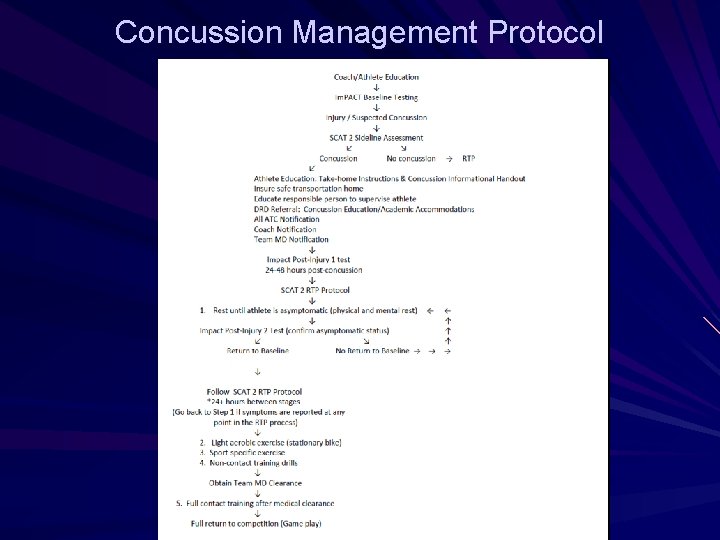
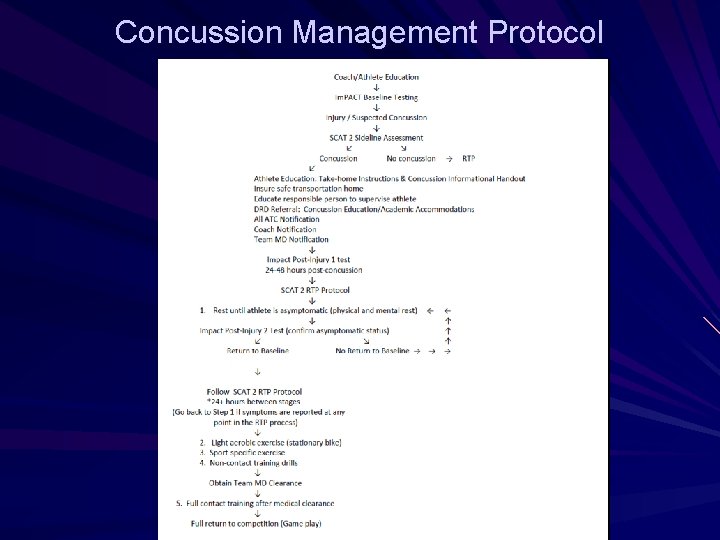
Concussion Management Protocol
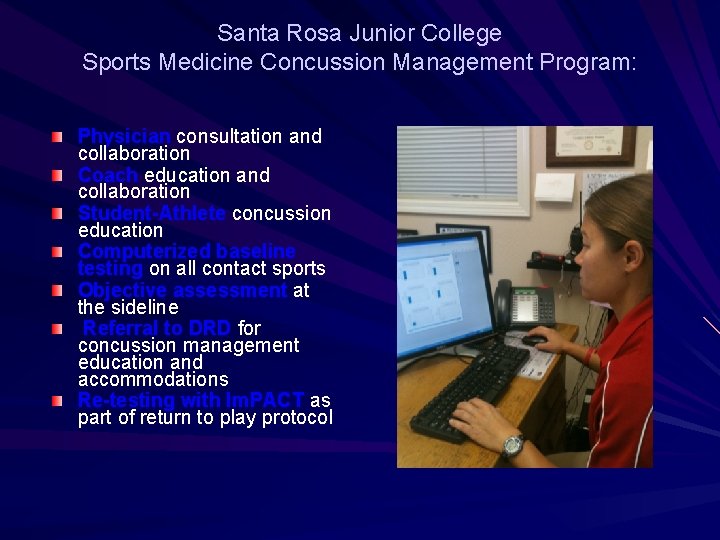
Santa Rosa Junior College Sports Medicine Concussion Management Program: Physician consultation and collaboration Coach education and collaboration Student-Athlete concussion education Computerized baseline testing on all contact sports Objective assessment at the sideline Referral to DRD for concussion management education and accommodations Re-testing with Im. PACT as part of return to play protocol
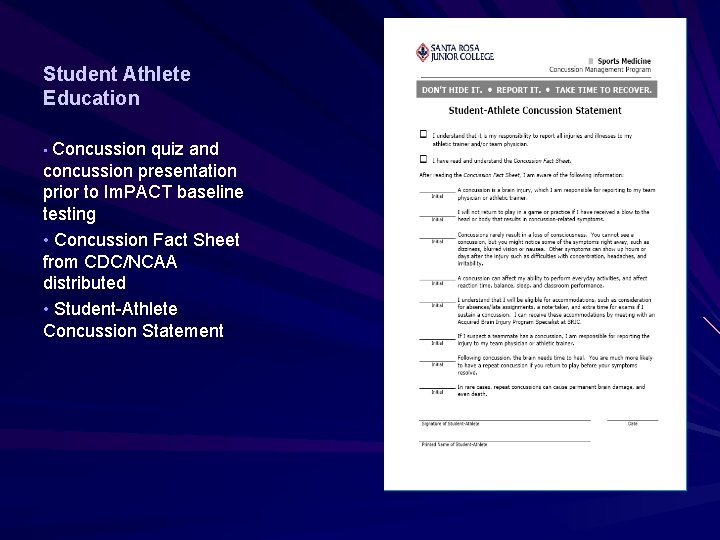
Student Athlete Education • Concussion quiz and concussion presentation prior to Im. PACT baseline testing • Concussion Fact Sheet from CDC/NCAA distributed • Student-Athlete Concussion Statement
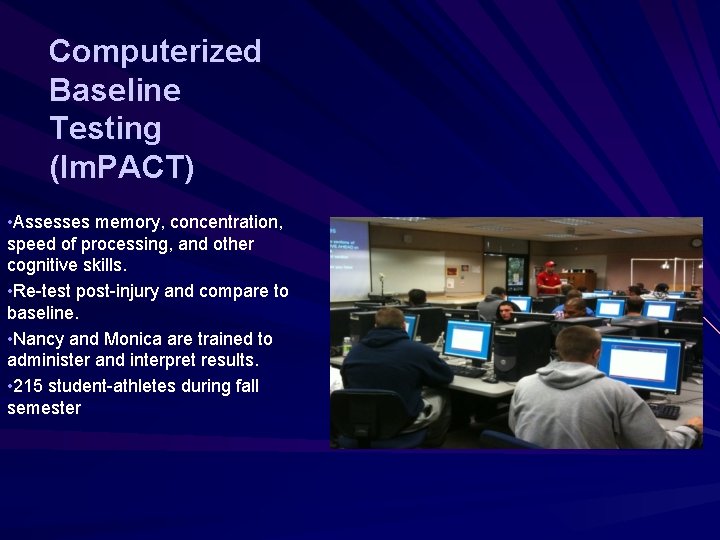
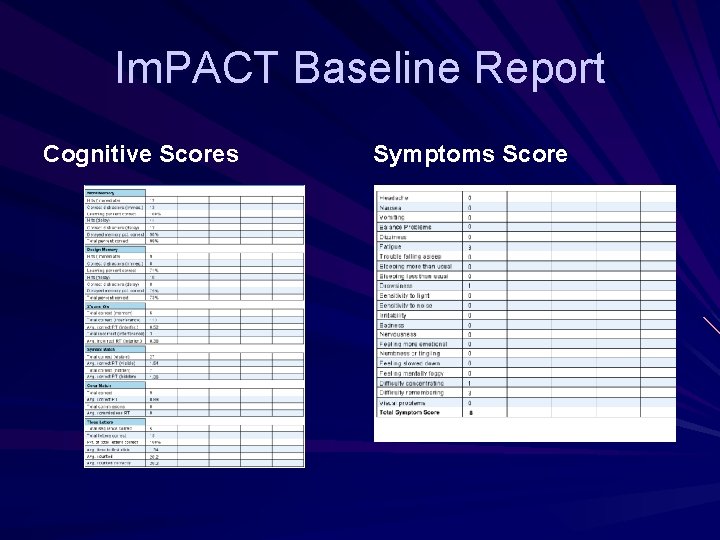
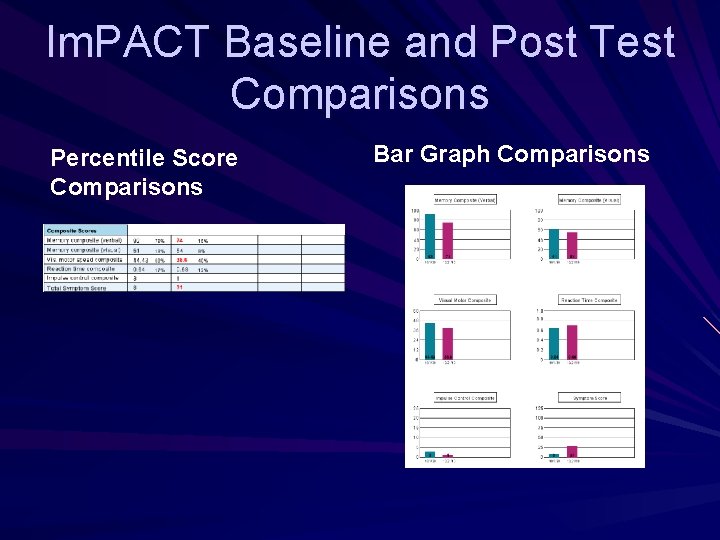
Computerized Baseline Testing (Im. PACT) • Assesses memory, concentration, speed of processing, and other cognitive skills. • Re-test post-injury and compare to baseline. • Nancy and Monica are trained to administer and interpret results. • 215 student-athletes during fall semester
Im. PACT Baseline Report Cognitive Scores Symptoms Score
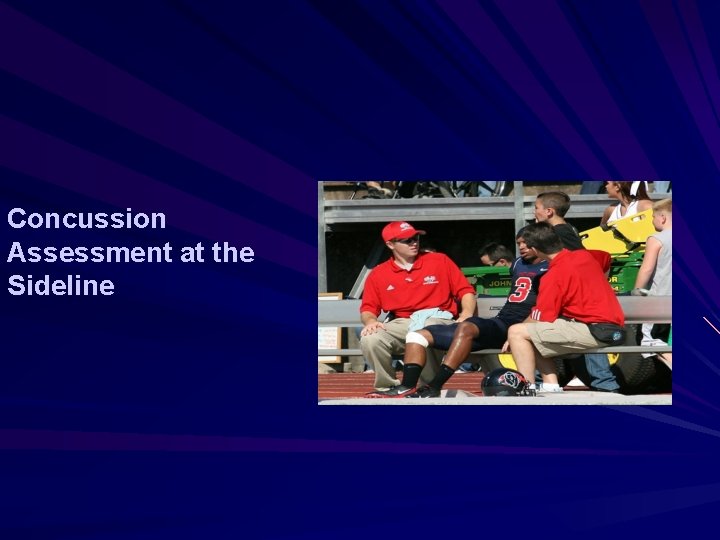
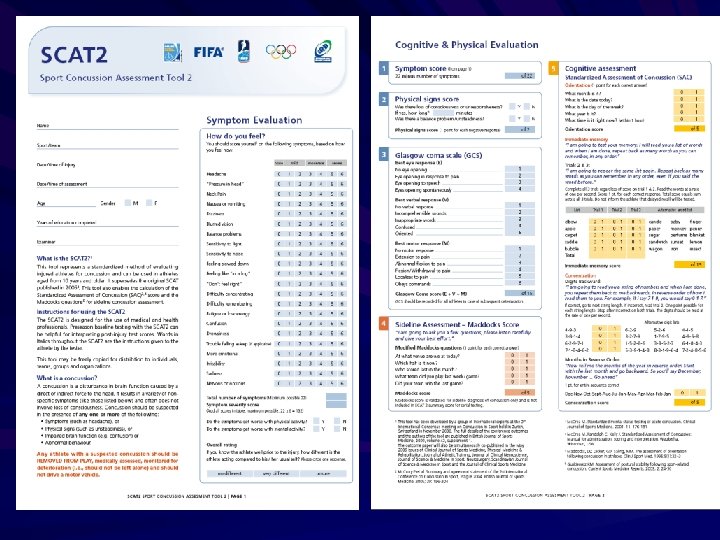
Concussion Assessment at the Sideline
Identification of Concussions at SRJC In fall of 2009, 20 concussions were identified In fall of 2010, 24 concussions were identified So far since Spring 2011, 24
Conversation on the football sideline between two student -athletes: “Hey man, why did you have to sit out last week? ” “Concussion. ” “Right on. ”
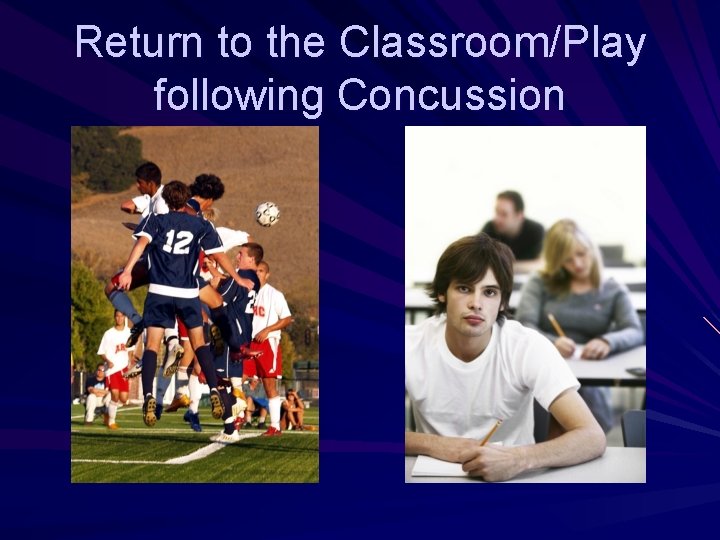
Return to the Classroom/Play following Concussion
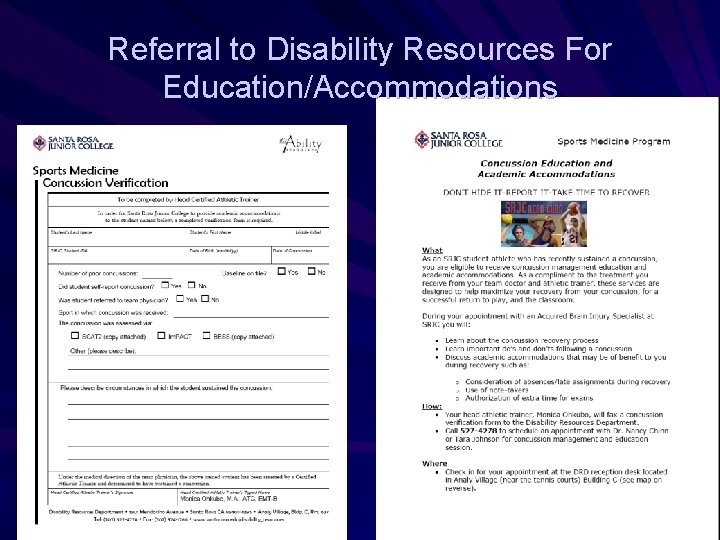
Referral to Disability Resources For Education/Accommodations
Benefits of Meeting with DRD Concussion Specialist Support Concussion management education Academic accommodations: – Note-taker – Wearing sunglasses in class – Consideration for late assignments – Taking exams in quiet room with extra time
Im. PACT Baseline and Post Test Comparisons Percentile Score Comparisons Bar Graph Comparisons
http: //s 3. amazonaws. com /ncaa/web_video/health_ and_safety/concussion/co ncussion. html
Concussion Management Protocol