
Management of ascites in cirrhosis BSG 2006 Definition
Management of ascites in cirrhosis BSG 2006
• • Definition Pathogenesis Diagnosis- asctitic fluid analysis Treatment- salt restriction/diuretic Therapeutic paracentesis TIPSS SBP
Setting the scene • Occurs in 50% of patients over 10 yrs • Associated with 50% mortality over two yrs • Indicates the need to consider liver transplantation • Mortality from cirrhosis is 12. 7 per 100, 000 population • Approx 4% of population have abnormal LFT, 10 -20% of those develop cirrhosis over 10 -20 yrs
• Uncomplicated ascites- not infected and not associated with HRS • Refractory ascites- cannot be mobilised or early recurrence of which ( that is after therapeutic paracentesis) cannot be prevented by medical treatment • Diuretic resistant ascites- refractory to dietary salt restriction and intensive diuretic treatment ( spironolactone 400 mg and frusemide 160 mg per day and salt restricted diet of less than 90 mmol/day ( 5. 2 g/day) • Diuretic intolerant ascites- refractory to therapy due to the development of diuretic induced complications
Grading of ascites 1. Grade I: Only detectable by US 2. Grade II: Moderate symmetrical distension of the abdomen 3. Grade III: Marked abdominal distension
Pathogensis • Portal hypertension • Sodium and water retention
Role of portal hypertension • PH increases the hydrostatic pressure with the hepatic sinusoid and favours transudation of fluid into the peritoneal cavity • PH occurs as a consequence of structural changes within the liver in cirrhosis and increased splanchnic blood flow
• Progressive collagen deposition and nodule formation alter vascular architecture and increases the resistance to portal flow • Collagen is formed within the space of Disse and sinusoids become less distensible
• Increased splanchnic flow because of vasodilation due to release of NO
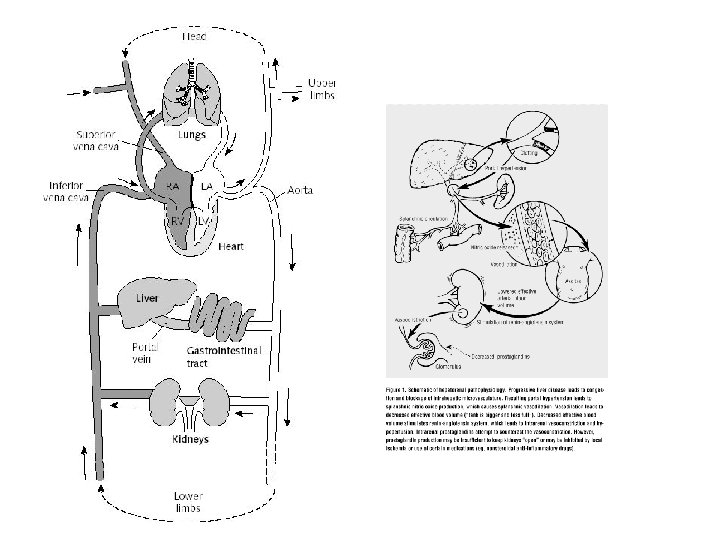
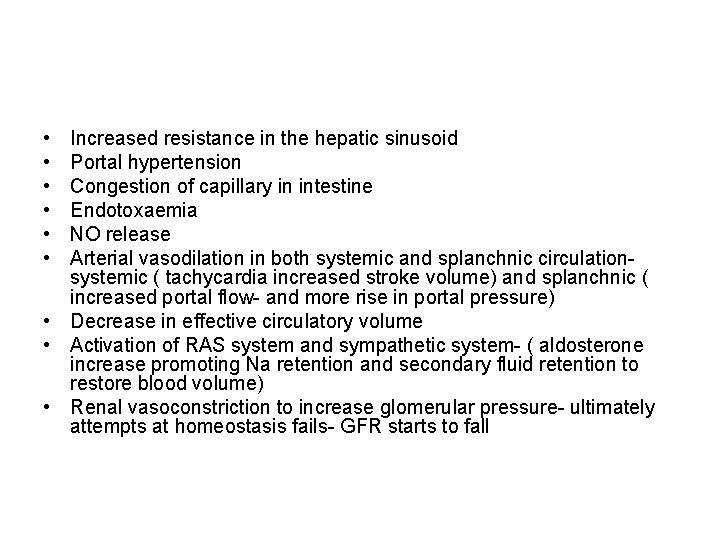
• • • Increased resistance in the hepatic sinusoid Portal hypertension Congestion of capillary in intestine Endotoxaemia NO release Arterial vasodilation in both systemic and splanchnic circulationsystemic ( tachycardia increased stroke volume) and splanchnic ( increased portal flow- and more rise in portal pressure) • Decrease in effective circulatory volume • Activation of RAS system and sympathetic system- ( aldosterone increase promoting Na retention and secondary fluid retention to restore blood volume) • Renal vasoconstriction to increase glomerular pressure- ultimately attempts at homeostasis fails- GFR starts to fall
• Sinusoidal endothelial cells form and extremely porous membrane – almost completely permeable to macromolecule • Old theory that low albumin is the cause of ascites is false as there is no oncotic gradient ( it works for peripheral oedema but not for ascites) • Portal hypertension is critical to development to ascites and develops when wedged hepatic portal venous pressure is more than 12 mm • TIPSS relieves ascites by reducing portal hypertension though low albumin and cirrhotic liver persists
• Presinusoidal portal hypertension does not produce ascites ( portal vein thrombosis) • Post sinusoidal portal hypertension does produce back pressure and cause similar haemodynamic changes and causes ascites ( hepatic vein thrombosis)
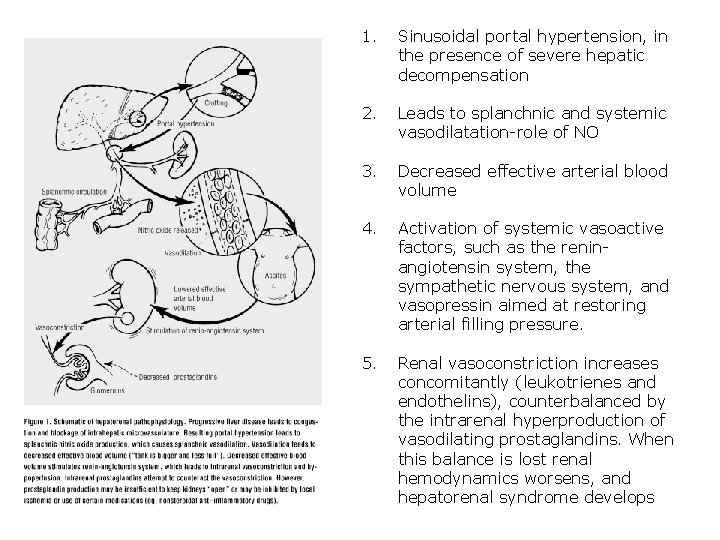
1. Sinusoidal portal hypertension, in the presence of severe hepatic decompensation 2. Leads to splanchnic and systemic vasodilatation-role of NO 3. Decreased effective arterial blood volume 4. Activation of systemic vasoactive factors, such as the reninangiotensin system, the sympathetic nervous system, and vasopressin aimed at restoring arterial filling pressure. 5. Renal vasoconstriction increases concomitantly (leukotrienes and endothelins), counterbalanced by the intrarenal hyperproduction of vasodilating prostaglandins. When this balance is lost renal hemodynamics worsens, and hepatorenal syndrome develops
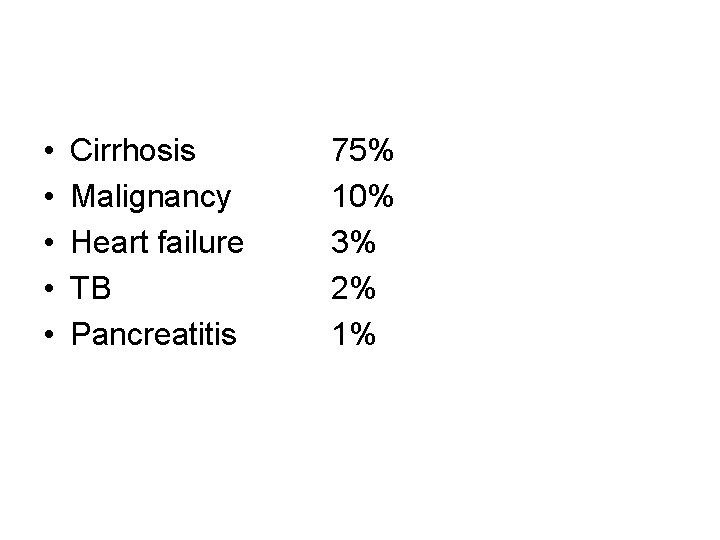
• • • Cirrhosis Malignancy Heart failure TB Pancreatitis 75% 10% 3% 2% 1%
• Blood tests- FBC/U&E/LFT/INR • Ultrasound- liver/spleen/portal vein/LN • Ascitic fluid analysis
Abdominal paracentesis • • • 15 cm lateral to umbilicus Avoid enlarged spleen and liver Avoid sp and inf epigastric arteries No data to support use of FFP Most clinicians would give pooled platelets if <40 Complication: – Haematoma<1% – Bowel perforation/haemoperitoneum <0. 1% • 10 -20 ml of fluid in a syringe with blue/green needle
• • Blood culture bottle- culture EDTA tube- cell type Yellow top tube- albumin/amylase Yellow top tube- blood ( for serum albumin)
Ascitic fluid neutrophil count and culture • SBP is present in 15% patients admitted to hospital • Ascitic neutrophil count of >250 cells/mm 3 is diagnostic of SBP in absence of perforated viscus or inflammation of intraabdominal organs • RBC count is usually <1000 cells/mm 3 • In 2% of cirrhotic bloody ascites >50, 000 • In bloody ascites 50% no cause and 30% HCC
• The prevalence of occult ascitic fluid infection in asymptomatic outpatients undergoing large volume paracentesis for resistant ascites is low • As a result, the routine culture of fluid during paracentesis in such patients is probably not warranted. • Obtain a cell count and differential on all samples of ascitic fluid while obtaining cultures only in symptomatic patients.
• Culture in sterile container will identify onl. Y 40% of cases of SBP • Whereas culture in blood culture bottle will identify 72 -90 % • Gram stain and AFFB stain inappropriate • Fluid culture for mycobacteria 50% sensitivity
• Cytology is 60 -90% accurate in malignant ascites if several hundred ml of fluid is sent and concentration technique is used • But it is not investigation of choice in HCC
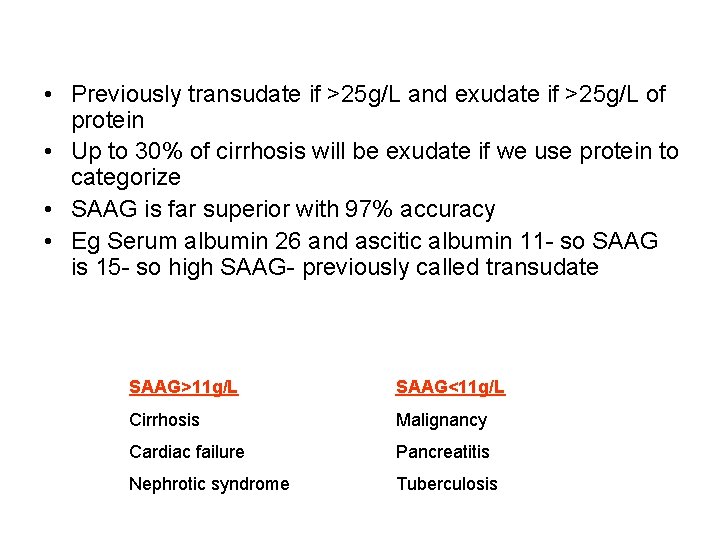
• Previously transudate if >25 g/L and exudate if >25 g/L of protein • Up to 30% of cirrhosis will be exudate if we use protein to categorize • SAAG is far superior with 97% accuracy • Eg Serum albumin 26 and ascitic albumin 11 - so SAAG is 15 - so high SAAG- previously called transudate SAAG>11 g/L SAAG<11 g/L Cirrhosis Malignancy Cardiac failure Pancreatitis Nephrotic syndrome Tuberculosis
• Amylase in pancreatic ascites • Triglyceride in chylous ascites • Bilirubin in post op ascites
Treatment-bed rest • No clinical data to back up the finding that upright position is asscociated with reduced GFR and reduced Na excretion and reduced diuretic efficacy • Bed rest promote muscle atrophy and other complications and extends hospital stay • So bed rest not recommended
Treatment- salt restriction • Typical UK diet has 150 mmol/day- 15% added salt and 70% is manufactured salt • Suggestion is no added salt diet and avoidance of prepared food • So that patient gets 90 mmol/day ( 5. 2 gm) • Lowers diuretic requirement, faster resolution of ascites and shorter hospital stay • Avoid high salt content of fluid and medicine except in HRS
Treatment- water restriction • No role in uncomplicated ascites • Most hepatologists restrict fluid in ascites associated with hyponatraemia- but is illogical • The downside is water restriction causes increase in the central effective hypovolaemia- more ADH- more water retension and further dilutional hyponatraemia • So hepatologist including the authors of the BSG guidelines suggest further plasma expansion to inhibit ADH secretion • Data emerging supporting use of specific vasopressin 2 receptor antagonists • To be effective the intake should be less than urine output rather than arbitrary 1. 5 L/day • If the serum sodium concentration does not increase within the first 24 to 48 hours, the degree of fluid restriction has been insufficient.
Treatment- diuretic • Spironolactone is drug of choice • Aldosterone antagonist acting in distal tubule to increase natriuresis and conserve potassium • Initial dose 100 mg and increasing up to 400 mg • Lag of 3 -5 days • Better natriuresis and diuresis than a loop diuretic • Antiandrogenic effect- gynaecomazia- tamoxifen 20 mg bd • Hyperkalaemia frequently limits the use
Treatment- diuretic • Frusemide has low efficacy in cirrhosis • Use only if 400 mg of spironolactone fails to achieve weight loss • Start at 40 mg a day and increasing by 40 mg every 3 rd day to max of 160 mg • Watch out for metabolic alkalosis and electrolyte disturbance
Treatment- diuretic • Stepped care approach • Till oedema is present no need to slow down the daily weight loss • Once oedema is resolved – daily weight loss should be less than 0. 5 kg per day • Over diuresis is associated with intravascular volume depletion, leading to renal impairment, hepatic encephalopathy and hyponatraemia • 10% will have refractory ascites • Dietary history to exclude salt ingestion- 24 hr urinary Na excretion should be less than recommended intake • Drug history - NSAID
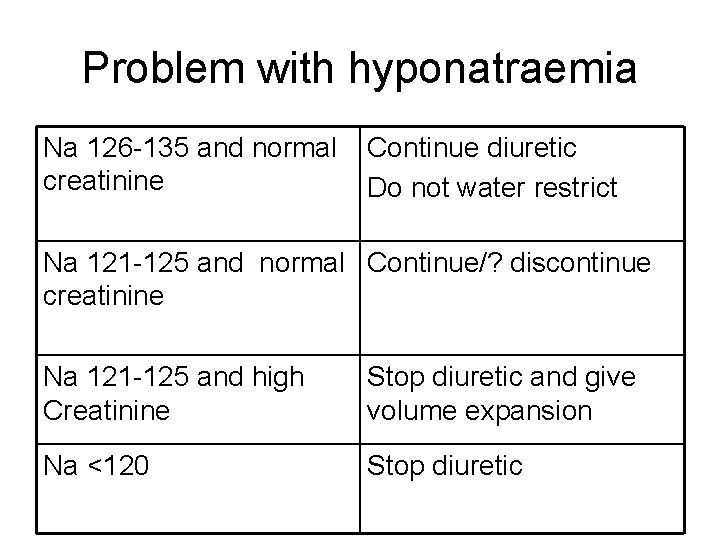
Problem with hyponatraemia Na 126 -135 and normal creatinine Continue diuretic Do not water restrict Na 121 -125 and normal Continue/? discontinue creatinine Na 121 -125 and high Creatinine Stop diuretic and give volume expansion Na <120 Stop diuretic
Controversy regarding normal saline • Give only if renal function is worsening – creatinine >150 or 120 and rising • Gelofusion/Haemaccel/ 4. 5% albumin –all have 153 mmol of Na per L • This will worsen salt retention but better to have ascites than to develop HRS
Therapeutic paracentesis • Total paracentesis is associated with significant haemodynamic changes • Large volume paracentesis causes marked reduction of IAP and IVC pressure - decrease in right heart pressure and • This changes are maximal at 3 hrs
• International ascites club recommend if <5 L is removed synthetic plasma expander can be used and as good as albumin ( some hepatologist suggests no albumin/plasma expander if <5 L) • Compared to albumin, artificial plasma expander cause more activation of RAS , causes more hyponatraemia and results in longer hospital stay • 20% albumin should be infused after paracentesis of >5 L at dose of 8 g/L of ascites drained ( 100 ml of 20% albumin= 20 gm, so 3 L of ascites fluid removal needs 3 x 8=24 gm of albumin replacement = 125 ml but we tend to round it to 100 ml) • So if >10 L remember to give an extra 100 ml of albumin • 25% albumin can be given if the patient is hypervolemic while 5 percent albumin can be given if dehydration is suspected.
• Use Z technique- puncture site on the skin does not overlie the puncture site on peritoneum • Left flank is preferrable to right flank • After drain is out patient lie on opposite • Colostomy bag if continuous leakage ( some use purse string suture) • As rapidly as possible- should not be left overnight • No upper limit of 8 litres or maximum time of 6 hours has been mentioned in the guidelines
• 10% of patients will have refractory ascites and will need paracentesis • Following paracentesis ascites will recur in 93% if diuretic is not reinstituted and only 18% if treated with spironolactone • Reintroduction of diuretics after 1 -2 days does not appear to increase the risk of post paracentesis circulatory dysfunction
TIPSS • Highly effective treatment • Complete resolution in 75% of cases • No effect on survival in one study and reduced on otherscompared with therapeutic paracentesis • HE occurs in 25% of patients , more if >60 yrs • May precipitate heart failure as increase cardiac preload • TIPSS should be considered for patients who require frequent paracentesis ( >3 a month) • It also shown to resolve hepatic hydrothorax in 60 -70% • MELD was originally developed to predict survival after TIPSS insertion
Prognosis • Mortality of 50% within 2 yr of diagnosis • Once refractory to medical therapy 50% die within 6 months • Time for referral to transplant centre as paracentesis and TIPSS does not improve long term survival except improving quality of life
- Slides: 38