
MANAGEMENT OF ABNORMAL PAP SMEAR DR ALIFAH BT
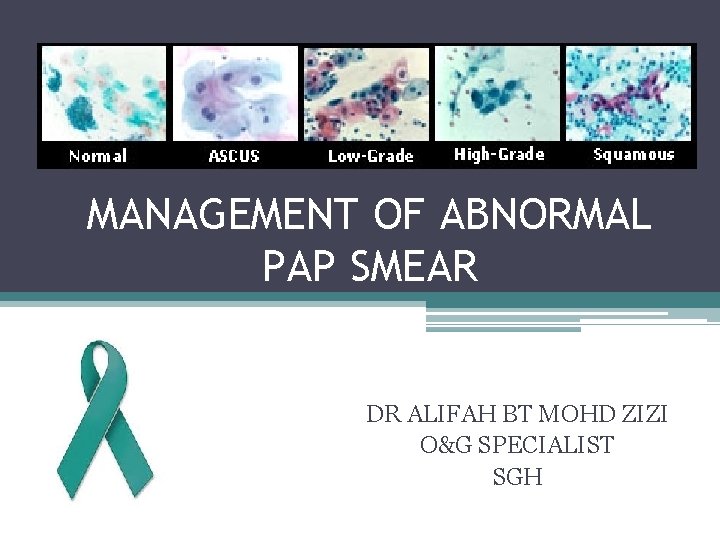
MANAGEMENT OF ABNORMAL PAP SMEAR DR ALIFAH BT MOHD ZIZI O&G SPECIALIST SGH
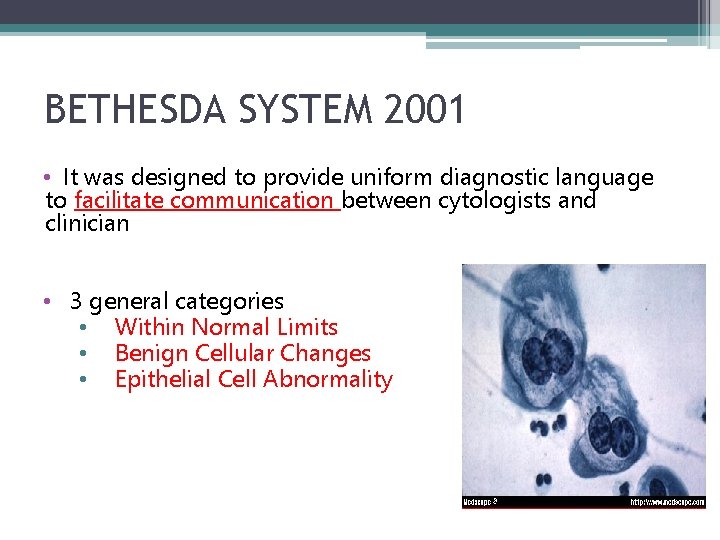
BETHESDA SYSTEM 2001 • It was designed to provide uniform diagnostic language to facilitate communication between cytologists and clinician • 3 general categories • Within Normal Limits • Benign Cellular Changes • Epithelial Cell Abnormality
BETHESDA SYSTEM 2001 • Adequacy of the sample is paramount • 8000 – 12, 000 squamous cells for conventional PS/10 HPF • 5000 cells/10 HFP for liquid-based sample • Presence of endocervical cells (at least 10) recommended (not required for women < 40 y. o) is
WHAT IS ABNORMAL PAP SMEAR? 1. Abnormal due to inadequacy 2. Abnormal due to inflammation 3. Abnormal due to infection 4. Abnormal due to dysplastic changes
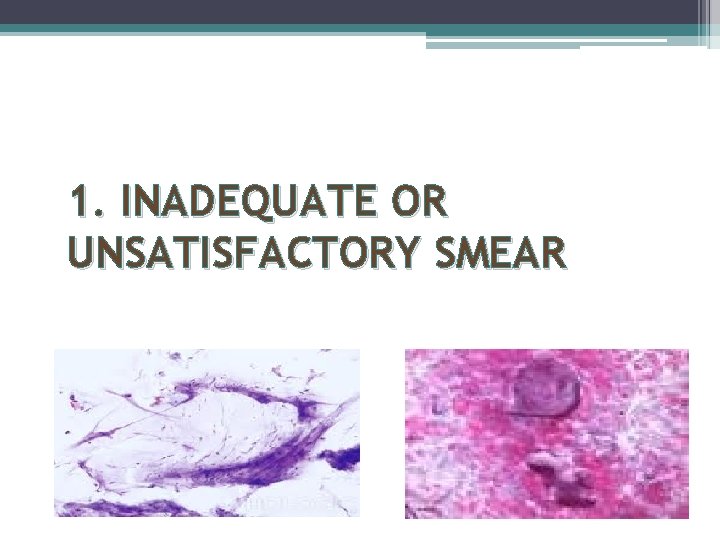
1. INADEQUATE OR UNSATISFACTORY SMEAR
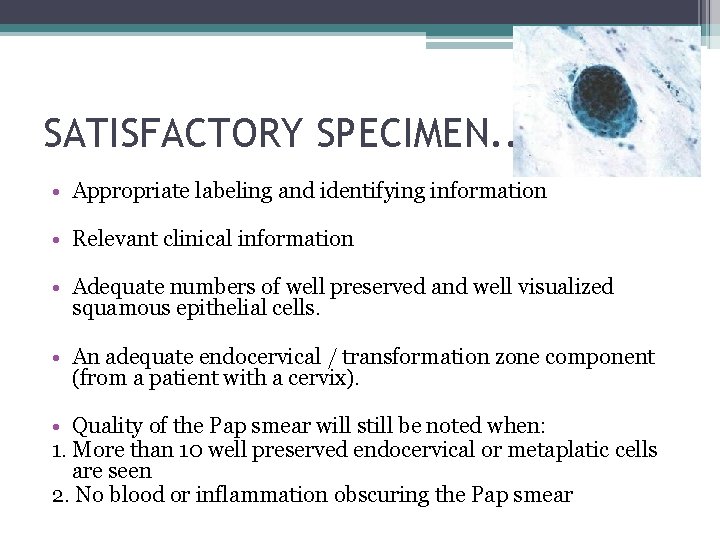
SATISFACTORY SPECIMEN. . • Appropriate labeling and identifying information • Relevant clinical information • Adequate numbers of well preserved and well visualized squamous epithelial cells. • An adequate endocervical / transformation zone component (from a patient with a cervix). • Quality of the Pap smear will still be noted when: 1. More than 10 well preserved endocervical or metaplatic cells are seen 2. No blood or inflammation obscuring the Pap smear
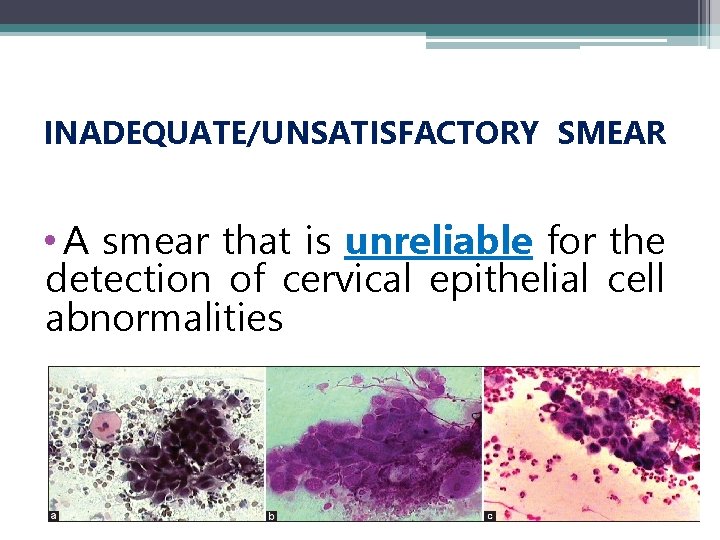
INADEQUATE/UNSATISFACTORY SMEAR • A smear that is unreliable for the detection of cervical epithelial cell abnormalities
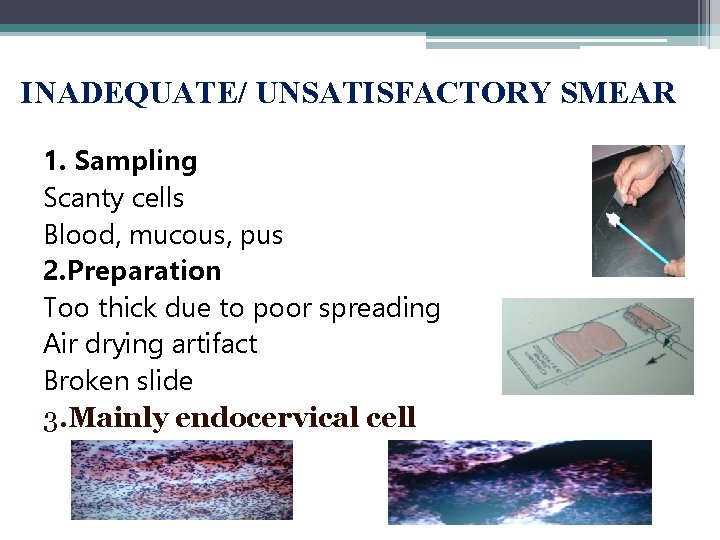
INADEQUATE/ UNSATISFACTORY SMEAR 1. Sampling Scanty cells Blood, mucous, pus 2. Preparation Too thick due to poor spreading Air drying artifact Broken slide 3. Mainly endocervical cell
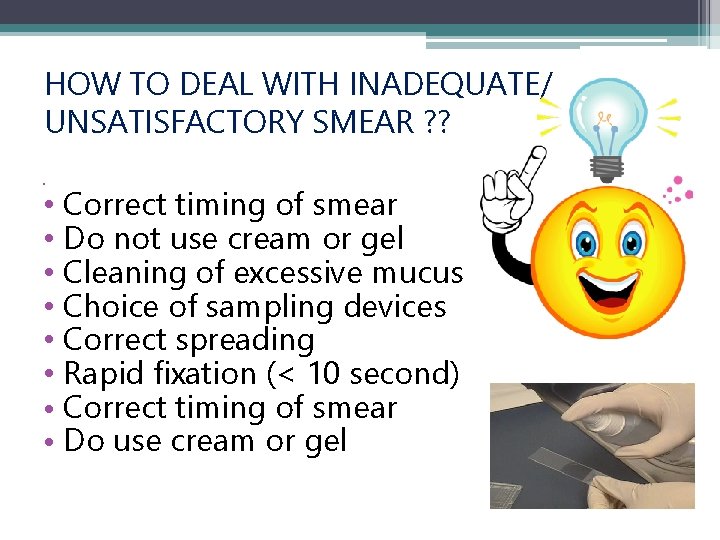
HOW TO DEAL WITH INADEQUATE/ UNSATISFACTORY SMEAR ? ? • Correct timing of smear • Correct timing of smear • Do not use cream or gel • Cleaning of excessive mucus • Choice of sampling devices • Correct spreading • Rapid fixation (< 10 second) • Correct timing of smear • Do use cream or gel
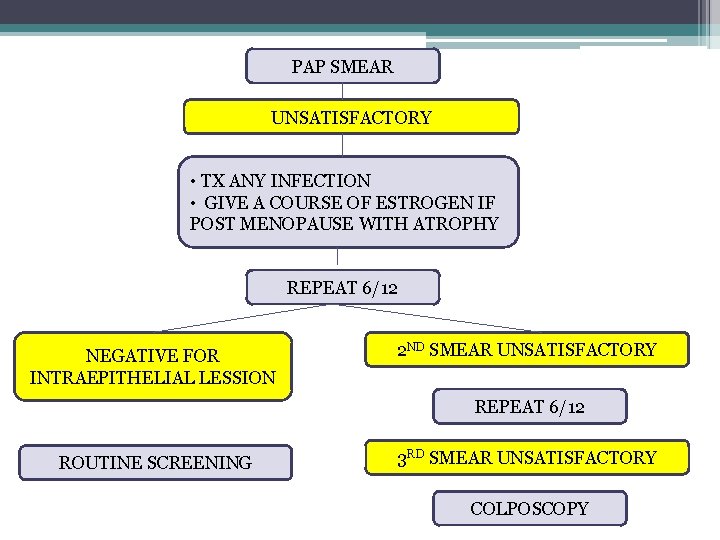
PAP SMEAR UNSATISFACTORY • TX ANY INFECTION • GIVE A COURSE OF ESTROGEN IF POST MENOPAUSE WITH ATROPHY REPEAT 6/12 NEGATIVE FOR INTRAEPITHELIAL LESSION 2 ND SMEAR UNSATISFACTORY REPEAT 6/12 ROUTINE SCREENING 3 RD SMEAR UNSATISFACTORY COLPOSCOPY
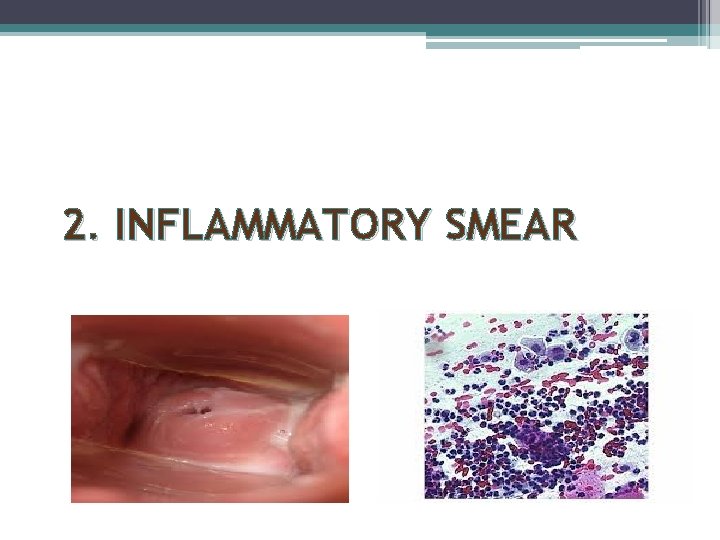
2. INFLAMMATORY SMEAR
• Inflammation on Pap smear results, does not indicate any particular pathology • Therefore, does not necessitate routine treatment.
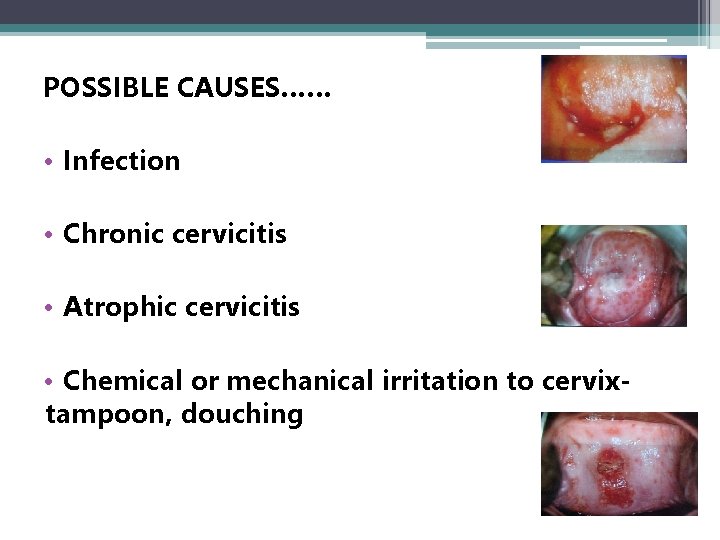
POSSIBLE CAUSES…… • Infection • Chronic cervicitis • Atrophic cervicitis • Chemical or mechanical irritation to cervixtampoon, douching
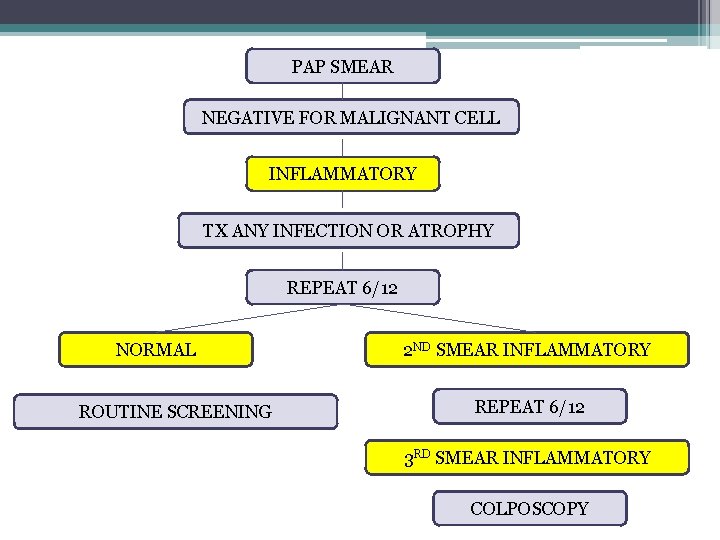
PAP SMEAR NEGATIVE FOR MALIGNANT CELL INFLAMMATORY TX ANY INFECTION OR ATROPHY REPEAT 6/12 NORMAL ROUTINE SCREENING 2 ND SMEAR INFLAMMATORY REPEAT 6/12 3 RD SMEAR INFLAMMATORY COLPOSCOPY
3. ABNORMAL SMEAR DUE TO INFECTION
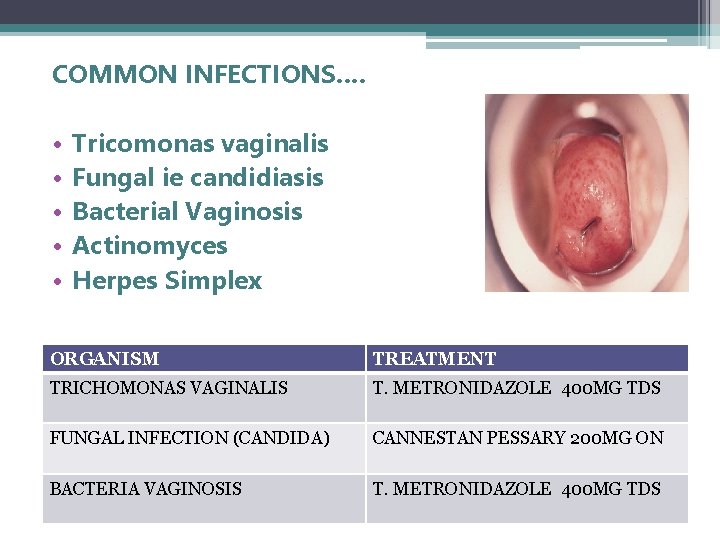
COMMON INFECTIONS…. • • • Tricomonas vaginalis Fungal ie candidiasis Bacterial Vaginosis Actinomyces Herpes Simplex ORGANISM TREATMENT TRICHOMONAS VAGINALIS T. METRONIDAZOLE 400 MG TDS FUNGAL INFECTION (CANDIDA) CANNESTAN PESSARY 200 MG ON BACTERIA VAGINOSIS T. METRONIDAZOLE 400 MG TDS
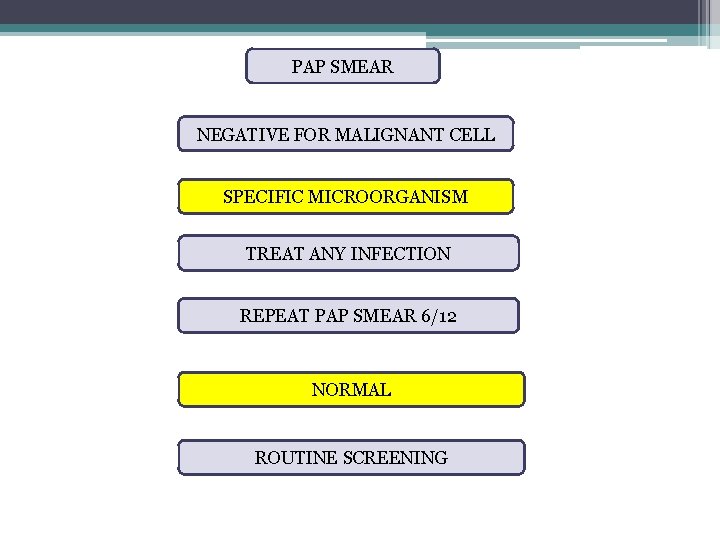
PAP SMEAR NEGATIVE FOR MALIGNANT CELL SPECIFIC MICROORGANISM TREAT ANY INFECTION REPEAT PAP SMEAR 6/12 NORMAL ROUTINE SCREENING
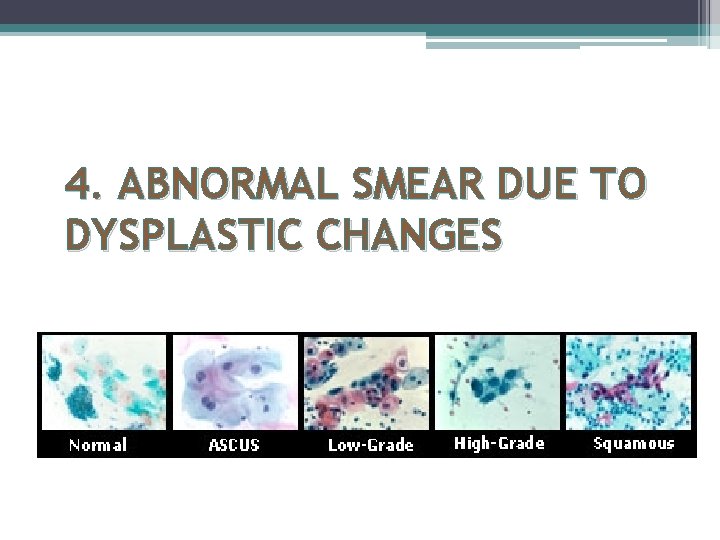
4. ABNORMAL SMEAR DUE TO DYSPLASTIC CHANGES
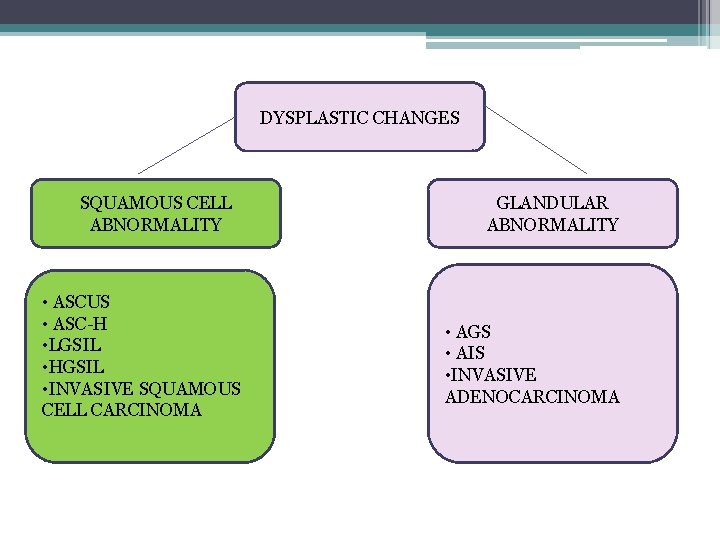
DYSPLASTIC CHANGES SQUAMOUS CELL ABNORMALITY • ASCUS • ASC-H • LGSIL • HGSIL • INVASIVE SQUAMOUS CELL CARCINOMA GLANDULAR ABNORMALITY • AGS • AIS • INVASIVE ADENOCARCINOMA
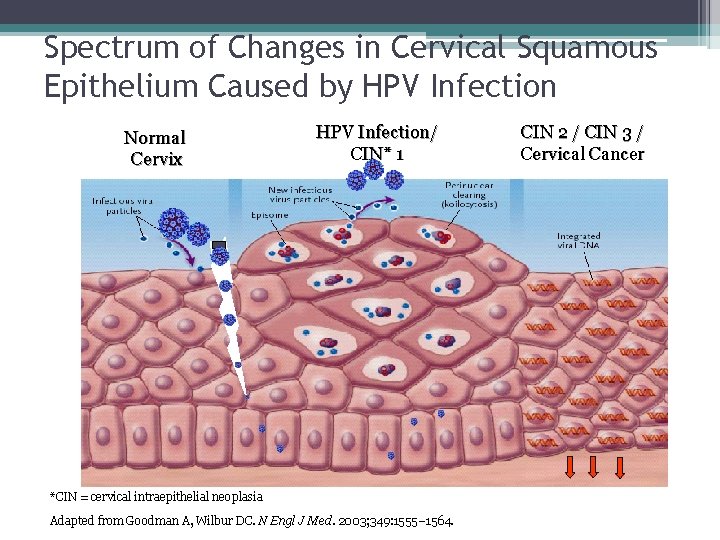
Spectrum of Changes in Cervical Squamous Epithelium Caused by HPV Infection Normal Cervix HPV Infection/ CIN* 1 *CIN = cervical intraepithelial neoplasia Adapted from Goodman A, Wilbur DC. N Engl J Med. 2003; 349: 1555– 1564. CIN 2 / CIN 3 / Cervical Cancer
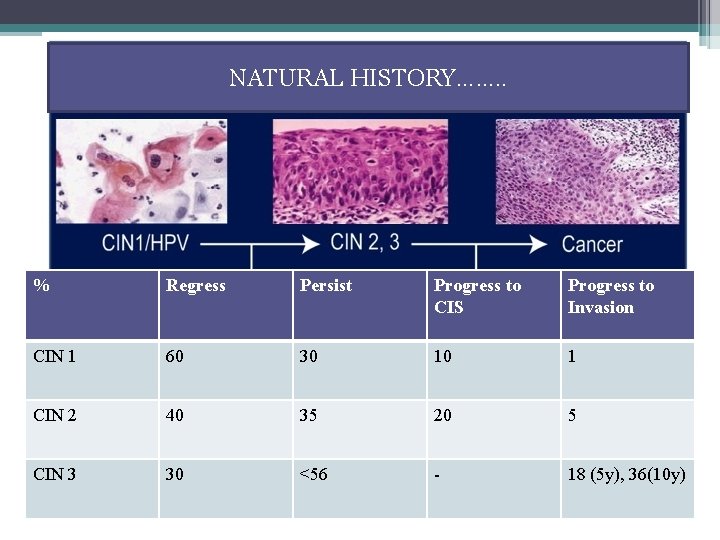
NATURAL HISTORY……. . % Regress Persist Progress to CIS Progress to Invasion CIN 1 60 30 10 1 CIN 2 40 35 20 5 CIN 3 30 <56 - 18 (5 y), 36(10 y) •
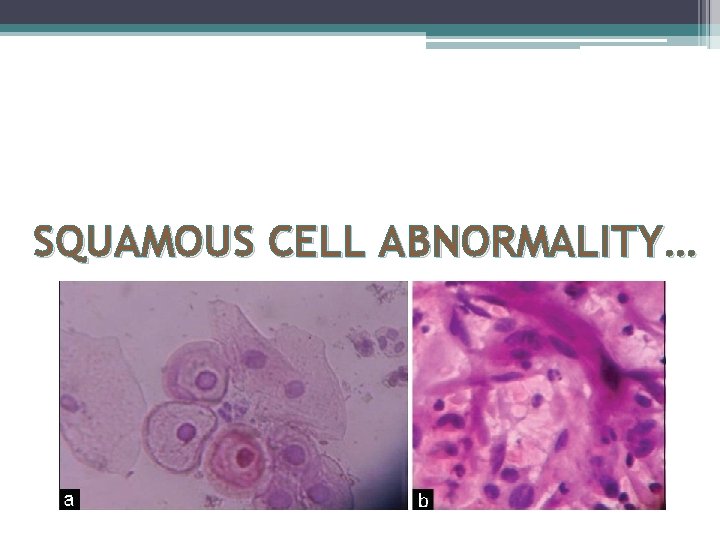
SQUAMOUS CELL ABNORMALITY…
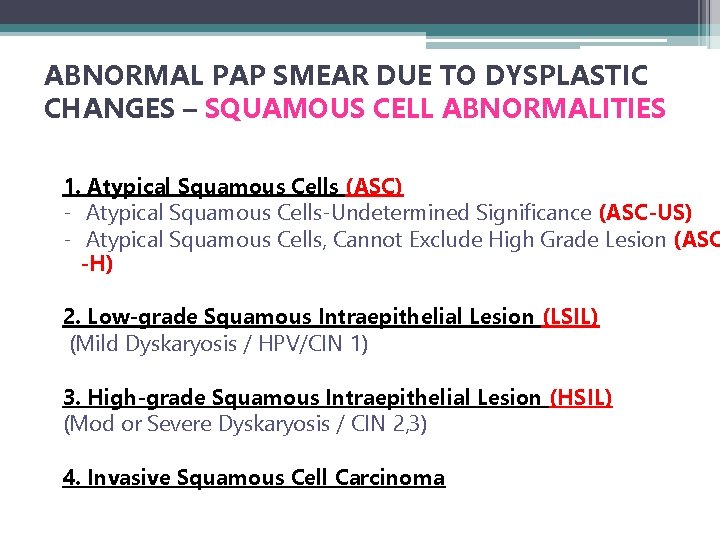
ABNORMAL PAP SMEAR DUE TO DYSPLASTIC CHANGES – SQUAMOUS CELL ABNORMALITIES 1. Atypical Squamous Cells (ASC) - Atypical Squamous Cells-Undetermined Significance (ASC-US) - Atypical Squamous Cells, Cannot Exclude High Grade Lesion (ASC -H) 2. Low-grade Squamous Intraepithelial Lesion (LSIL) (Mild Dyskaryosis / HPV/CIN 1) 3. High-grade Squamous Intraepithelial Lesion (HSIL) (Mod or Severe Dyskaryosis / CIN 2, 3) 4. Invasive Squamous Cell Carcinoma
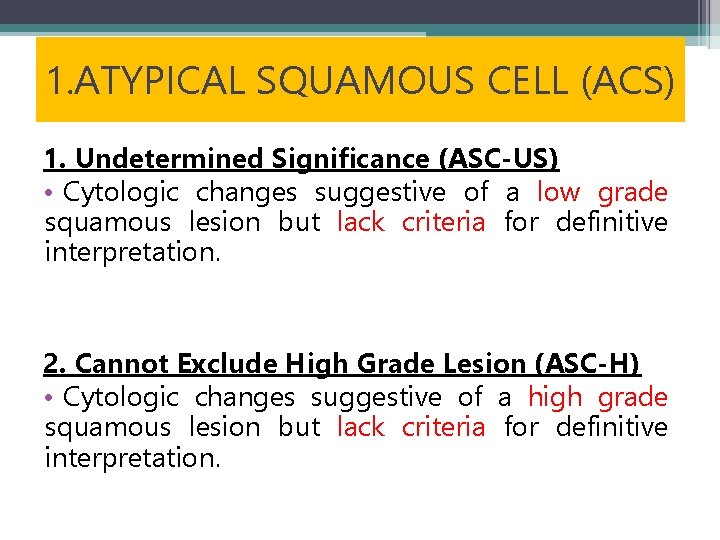
1. ATYPICAL SQUAMOUS CELL (ACS) 1. Undetermined Significance (ASC-US) • Cytologic changes suggestive of a low grade squamous lesion but lack criteria for definitive interpretation. 2. Cannot Exclude High Grade Lesion (ASC-H) • Cytologic changes suggestive of a high grade squamous lesion but lack criteria for definitive interpretation.

PAP SMEAR ATYPICAL SQUAMOUS CELL (ASC) ASCUS HPV DNA TESTING POSITIVE COLPOSCOPY NEGATIVE REPEAT 6/12 NEGATIVE FOR INTRAEPITHELIAL LESSION RESUME NORMAL SCREENING
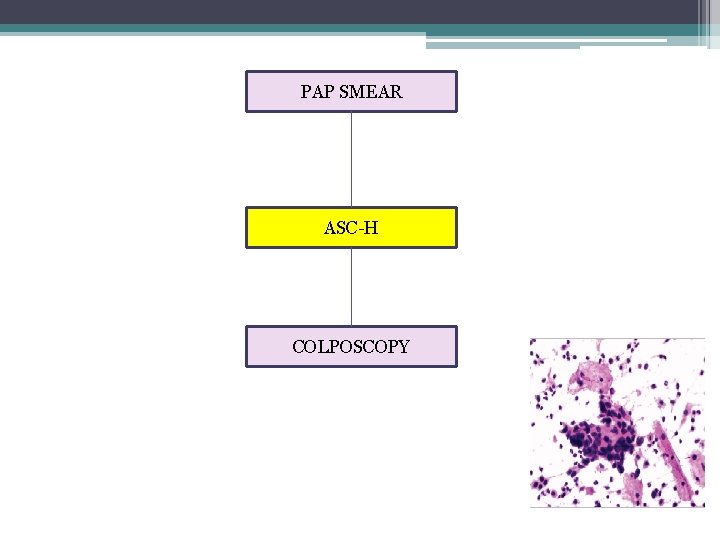
PAP SMEAR ASC-H COLPOSCOPY
2. LOW GRADE INTRAEPITHELIAL LESSION (LGSIL) / CIN 1 • CIN I being the morphologic manifestation of a self-limited sexually transmitted HPV infection • • 60% of CIN I regress spontaneously 30% of CIN I persists. 10% of CIN I lesions progress to CIN III, 1% may ultimately progress to invasive cancer.
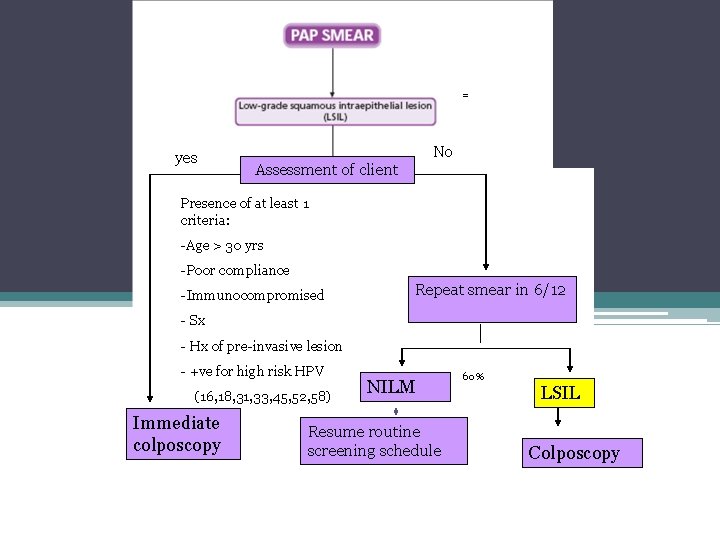
= yes No Assessment of client Presence of at least 1 criteria: -Age > 30 yrs -Poor compliance -Immunocompromised Repeat smear in 6/12 - Sx - Hx of pre-invasive lesion - +ve for high risk HPV (16, 18, 31, 33, 45, 52, 58) Immediate colposcopy NILM Resume routine screening schedule 60% LSIL Colposcopy
MANAGEMENT APPROACH - A lesion that persist after 1 -2 years or any progression during follow up suggest need of treatment - If HPV testing is available, +ve HPV: indication for treatment - Treatment- local ablative/ excission -Follow up after treatment for CIN 1 -repeat smear in 6/12 -repeat smear and colposcopy in 12/12 -If normal, yearly pap smear x 2 years then back to normal routine
3. HIGH GRADE INTRAEPITHELIAL LESSION (HGSIL)/ CIN 2 -3 • CIN 2 -3 is a cervical cancer precursor 1. CIN 2 • 40% of • 30% of • 20% of • 5% of CIN II regress CIN II persist CIN II progress to CIN III 2. CIN 3 • 33% of CIN III regress • 18% of CIN III progress to invasive disease over a 10 years • 36% of CIN III progress to invasive disease over a 20 years
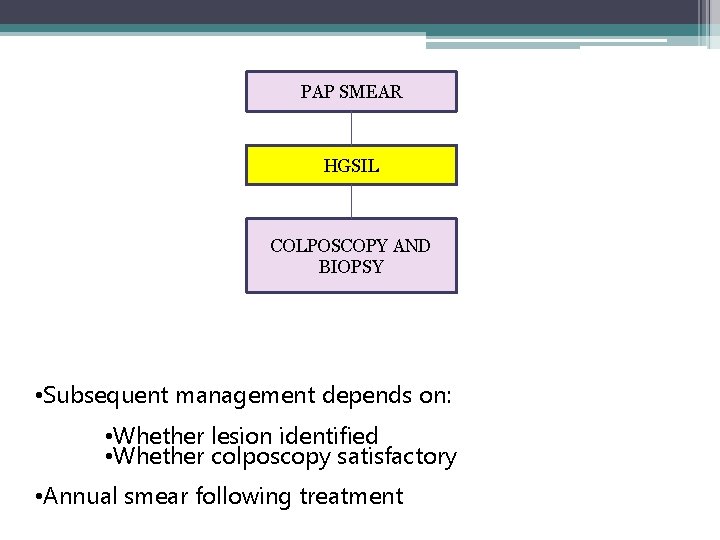
PAP SMEAR HGSIL COLPOSCOPY AND BIOPSY • Subsequent management depends on: • Whether lesion identified • Whether colposcopy satisfactory • Annual smear following treatment
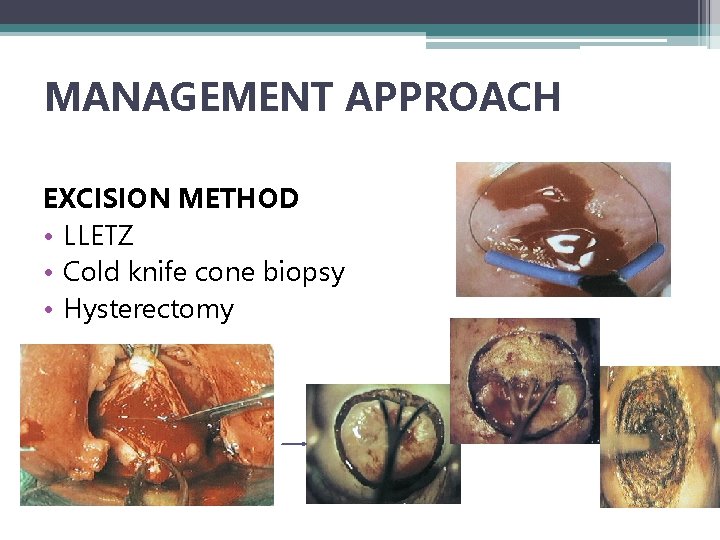
MANAGEMENT APPROACH EXCISION METHOD • LLETZ • Cold knife cone biopsy • Hysterectomy
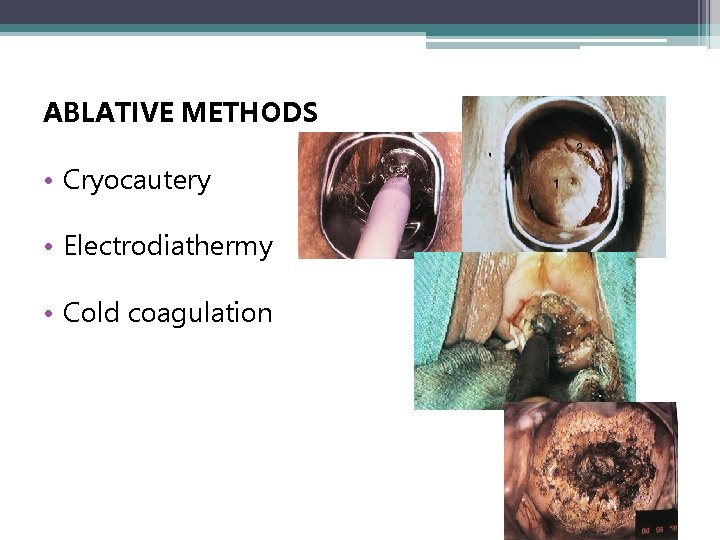
ABLATIVE METHODS • Cryocautery • Electrodiathermy • Cold coagulation
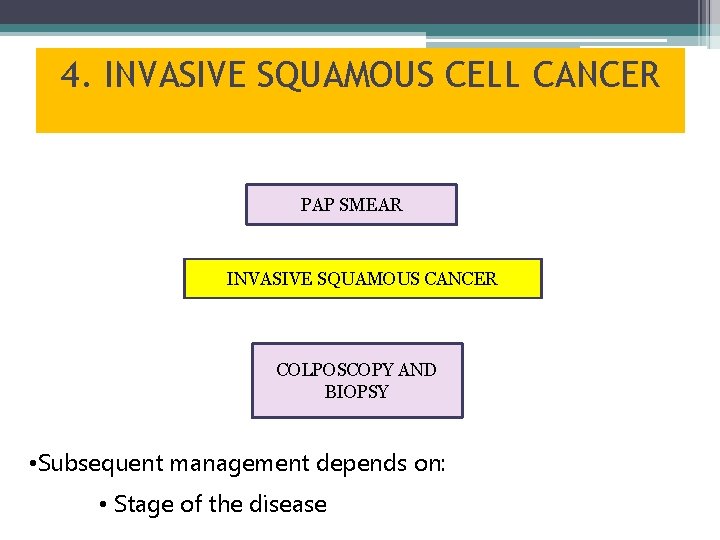
4. INVASIVE SQUAMOUS CELL CANCER PAP SMEAR INVASIVE SQUAMOUS CANCER COLPOSCOPY AND BIOPSY • Subsequent management depends on: • Stage of the disease

GLANDULAR ABNORMALITY
ABNORMAL PAP SMEAR DUE TO DYSPLASTIC CHANGES- GLANDULAR CELL ABNORMALITIES 1. Atypical Glandular Cells (AGS) (undetermined or favour neoplastic) 2. Adenocarcinoma in Situ (AIS) 3. Invasive Adenocarcinoma
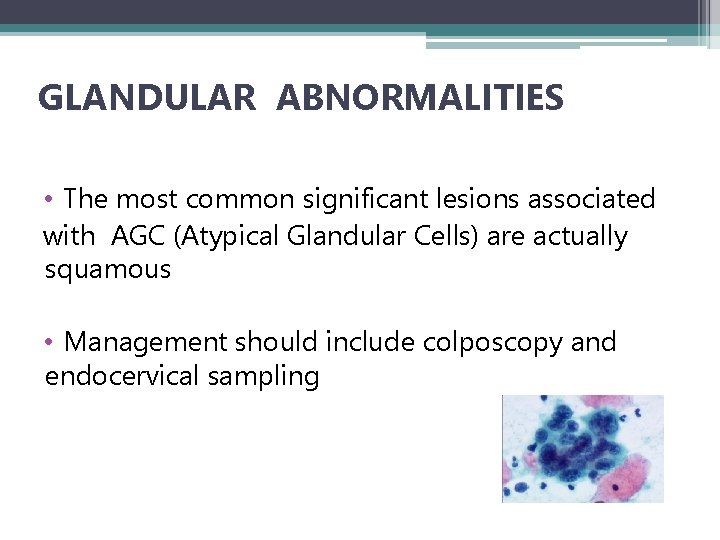
GLANDULAR ABNORMALITIES • The most common significant lesions associated with AGC (Atypical Glandular Cells) are actually squamous • Management should include colposcopy and endocervical sampling
ATYPICAL ENDOMETRIAL CELLS • Always perform endometrial sampling • If endometrial sampling is negative : colposcopy with endocervical sampling
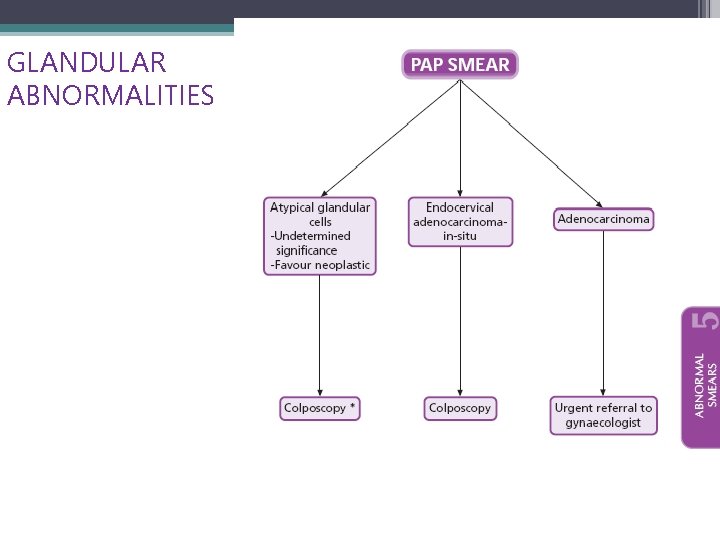
GLANDULAR ABNORMALITIES

OTHERS…
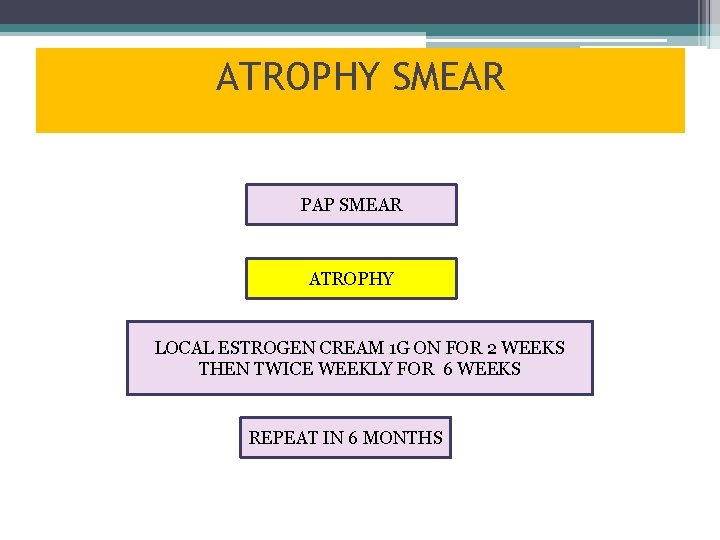
ATROPHY SMEAR PAP SMEAR ATROPHY LOCAL ESTROGEN CREAM 1 G ON FOR 2 WEEKS THEN TWICE WEEKLY FOR 6 WEEKS REPEAT IN 6 MONTHS
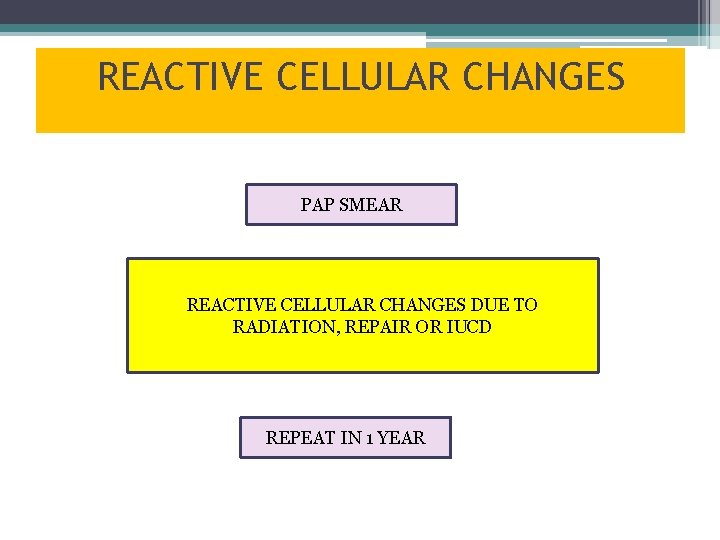
REACTIVE CELLULAR CHANGES PAP SMEAR REACTIVE CELLULAR CHANGES DUE TO RADIATION, REPAIR OR IUCD REPEAT IN 1 YEAR
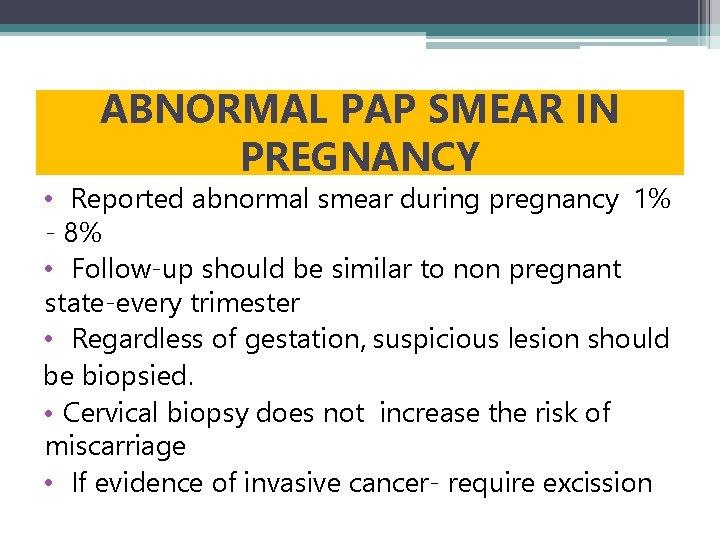
ABNORMAL PAP SMEAR IN PREGNANCY • Reported abnormal smear during pregnancy 1% - 8% • Follow-up should be similar to non pregnant state-every trimester • Regardless of gestation, suspicious lesion should be biopsied. • Cervical biopsy does not increase the risk of miscarriage • If evidence of invasive cancer- require excission

THANK YOU…….
- Slides: 44