
Management Issues in Distributed Learning Content Management Systems

Management Issues in Distributed Learning Content Management Systems Gerd Kortemeyer Michigan State University 1 LON-CAPA
Example System: LON-CAPA Issues: Content Exchange Content Assembly Content Catalogization Content Rights and Licenses Commercial Content Protected Content Integrity Content Quality Control Scalability Content Replication Load Balancing Distributed Authorizations Distributed Coding 2 Maintenance and Security LON-CAPA Overview
Example System For illustration, examples from the Learning. Online Network with CAPA will be used Cross-Institutional Learning Content Management and Assessment System Today, I will only focus on Content Management Implemented components, from bottom up (“Just Do It”): a cross-institutional distributed content repository a tool to seamlessly assemble this content a course management system to readily deploy this content 3 LON-CAPA
Example System Initial development started in 1992 at Michigan State University Distributed Content Management component since 2000 Model System for National Science Foundation Information Technology Research Project “Investigation of a model for online resource creation and sharing in educational settings” Faculty are the authors and users of the content material (sort of grassroots). 4 LON-CAPA
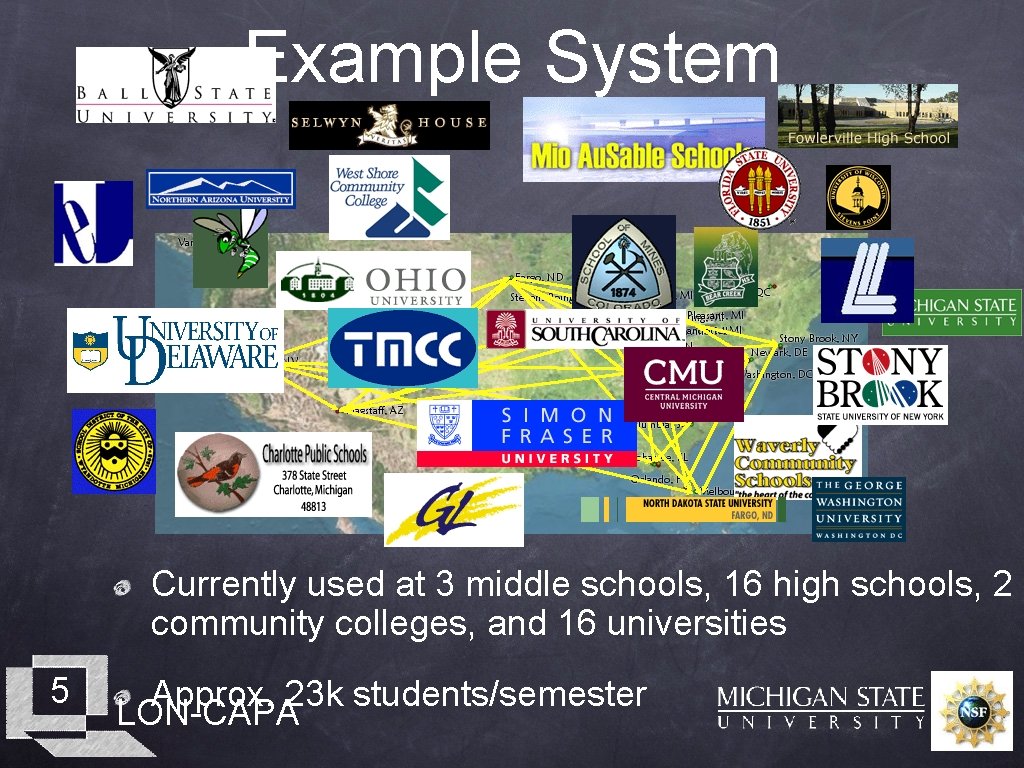
Example System Currently used at 3 middle schools, 16 high schools, 2 community colleges, and 16 universities 5 Approx. 23 k students/semester LON-CAPA
Example System 20, 900 content pages 18, 600 homework and exam problems 12, 500 images 2, 100 content assemblies 1, 100 simulations and animations 500 movies Publisher libraries, “back of the chapter problems” 6 LON-CAPA
Example System 7 LON-CAPA
Content Exchange Providing high quality learning content in an online environment is time and cost intensive Typical scenario today: Online material is developed by only one instructor Online material is used in only one course No assessment of learning effectiveness In-effective use of time and resources 8 LON-CAPA
Content Exchange Much better scenario: Online material is developed and reviewed by more than one instructor Online material is shared among instructors Online material gets used across many courses and disciplines Continual assessment of learning effectiveness 9 LON-CAPA
Content Exchange Issue: Content Compatibility Content developed at institution A needs to run at institution B Three approaches Standardize content Standardize APIs for content handlers Standardize on one platform 10 LON-CAPA
Content Exchange Approach 1: Attempt to define how the content is coded: IMS, SCORM, QTI, etc Advantage: Portability between vendors Problems: content has to run in lowest common denominator system restrictive on content no standard is perfect: long loop to implement innovations no guarantee that this will really work all the time 11 LON-CAPA
Content Exchange Approach 2: Attempt to define how content handlers interact (APIs; “content can come with its own handler”): OKI Advantage: only mildly restrictive on content Problem: restrictive on overall system functionality no standard is perfect: long loop to implement innovations where is it? 12 LON-CAPA
Content Exchange Approach 3: Attempt to have the same platform everywhere: LON-CAPA (content-level), Black. Board Building Blocks (APIlevel), etc Advantages: content that runs on machine A is guaranteed to run on machine B faster turn-around on innovations Problem: potentially costly solution for commercial products creating dependencies, “all eggs in one basket” 13 LON-CAPA
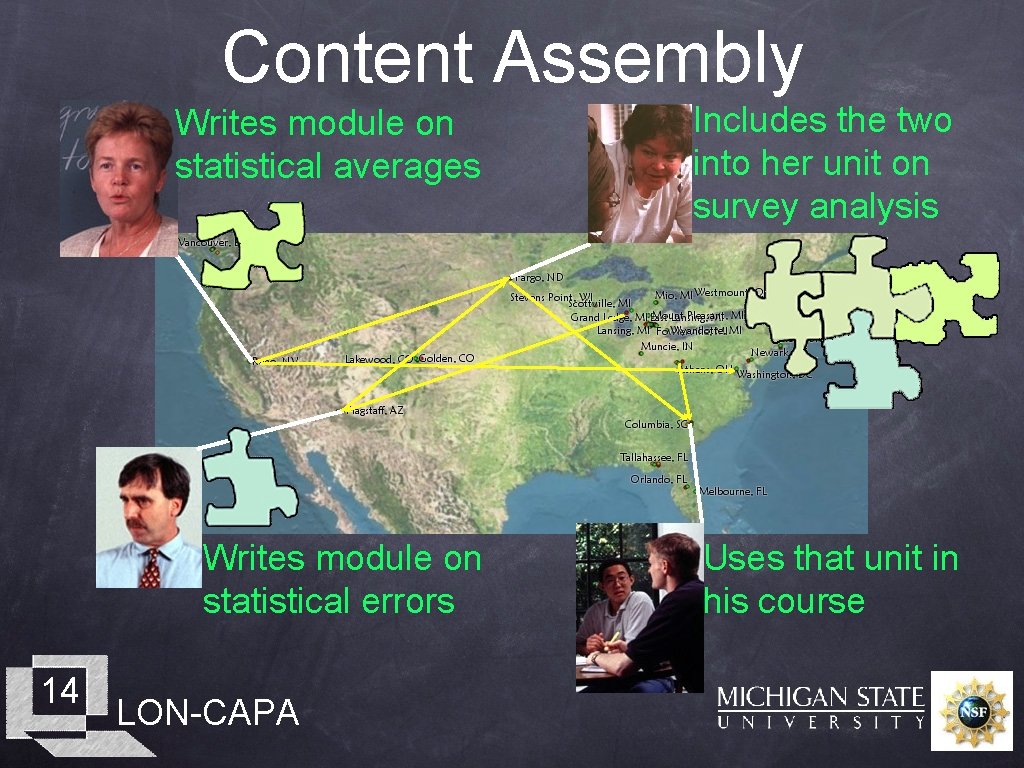
Content Assembly 14 Writes module on statistical averages Includes the two into her unit on survey analysis Writes module on statistical errors Uses that unit in his course LON-CAPA
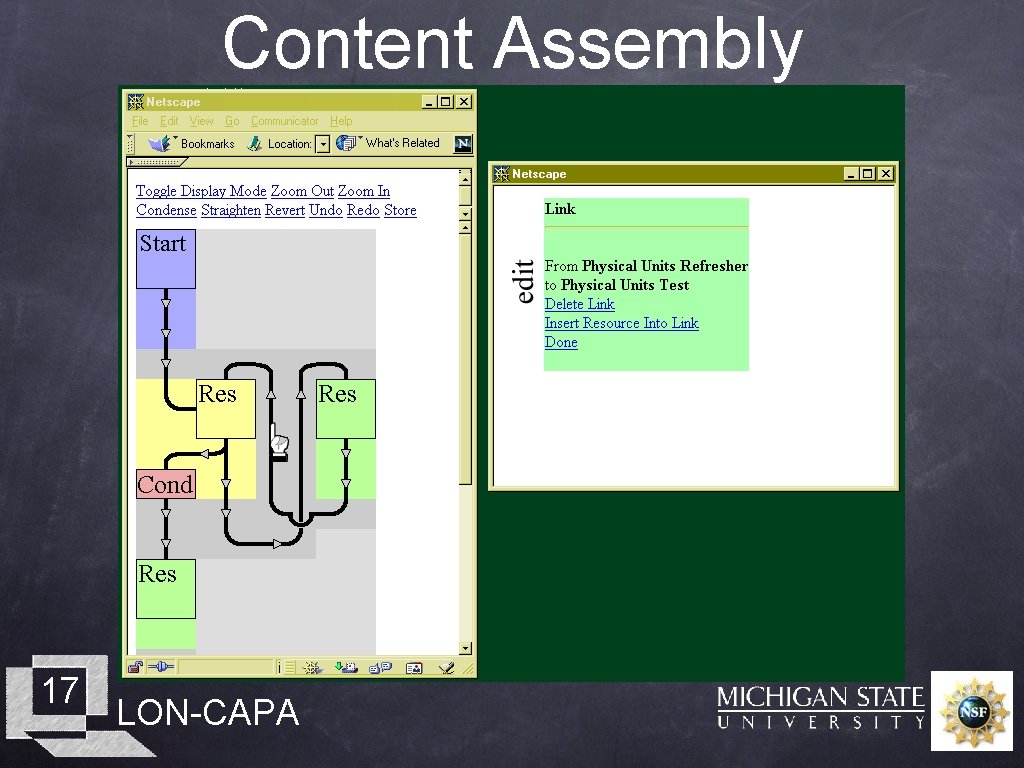
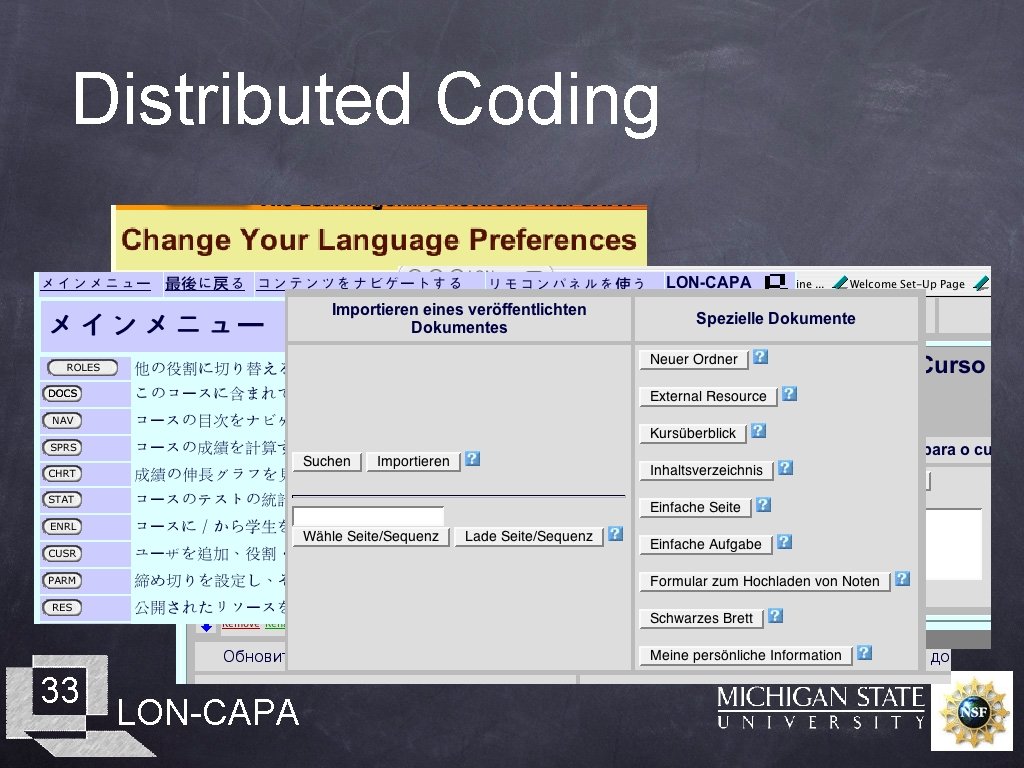
Content Assembly Made possible (in LON-CAPA) through: Reuse: Separation of content for navigation/interface and presentations Self-contained content can be reused on low level of granularity Content Assemblies themselves can be reused Navigation is provided by the system based on the assembly data, not by the content On-the-fly rendering: XML structures for multi-lingual presentation, server-side style files 15 LON-CAPA
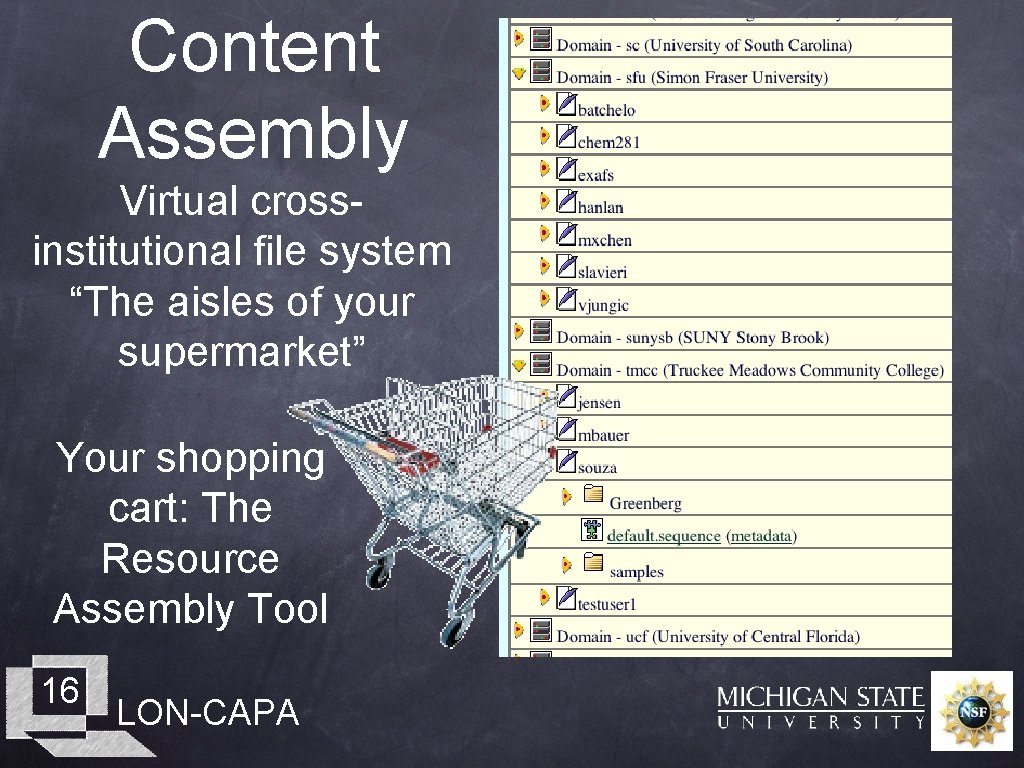
Content Assembly Virtual crossinstitutional file system “The aisles of your supermarket” Your shopping cart: The Resource Assembly Tool 16 LON-CAPA
Content Assembly 17 LON-CAPA
Content Rights and Licenses Very important: distinguish between copyright and different rights of use (“licenses”) Who has the right to use a resource? Who has the right to deterimine that somebody else may use it? Who has the right to modify a resource? 18 LON-CAPA
Content Rights and Licenses LON-CAPA: Authors keep copyright LON-CAPA: Authors (currently) grant right of use private only for own institution (after other instructor selects it) network-wide (after other instructor selects it) public customized: for certain institutions, courses, . . . access keys 19 LON-CAPA
Content Rights and Licenses Setting custom access rights Allowing access by key only (publisher content) 20 LON-CAPA
Content Catalogization Sharable content is useless if you cannot find it Metadata (“data about data”) needed What standard? Dublin Core? IMS? Too much data: nobody will fill it out Too restrictive data: cannot be used to store additional data, for example geo-coordinates Who does the cataloging? Librarian: not scalable Author: potentially inconsistent, unreliable 21 LON-CAPA
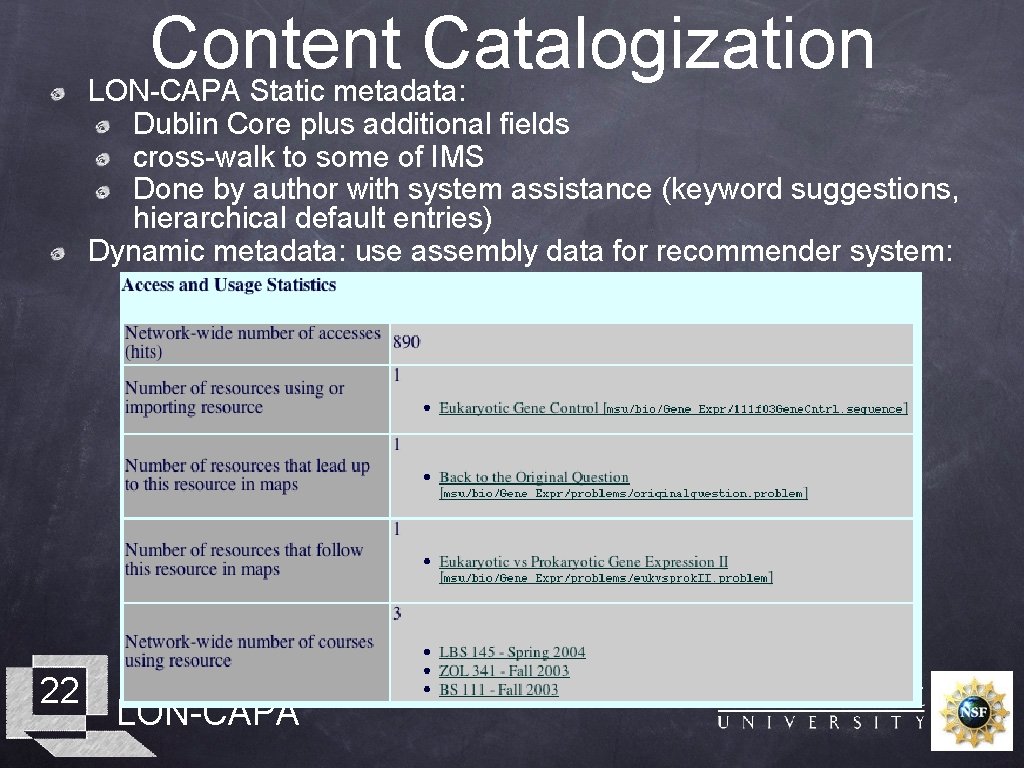
Content Catalogization LON-CAPA Static metadata: Dublin Core plus additional fields cross-walk to some of IMS Done by author with system assistance (keyword suggestions, hierarchical default entries) Dynamic metadata: use assembly data for recommender system: 22 LON-CAPA
Content Integrity What if you use somebody else’s resource in your course … … and it goes away? … it changes in an undesirable way? LON-CAPA: once-published resource cannot be deleted Persistent system-wide URLs versioning: can choose to fix course to current version of a resource, can check on changed resources and selectively adopt new versions resource users cannot edit resource unless explicitly given co-author rights to the original source 23 LON-CAPA
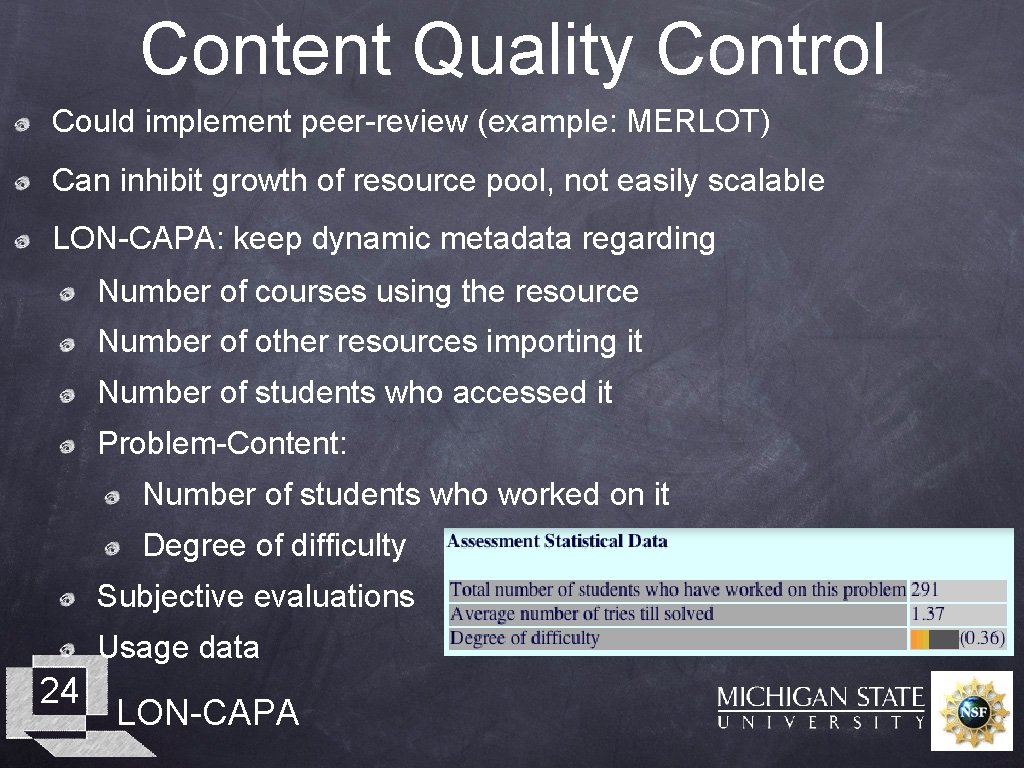
Content Quality Control Could implement peer-review (example: MERLOT) Can inhibit growth of resource pool, not easily scalable LON-CAPA: keep dynamic metadata regarding Number of courses using the resource Number of other resources importing it Number of students who accessed it Problem-Content: Number of students who worked on it Degree of difficulty Subjective evaluations Usage data 24 LON-CAPA
Scalability Success can be a problem: Successful resources: server load Number of users: processing load Success must not be a problem: scalability 25 LON-CAPA
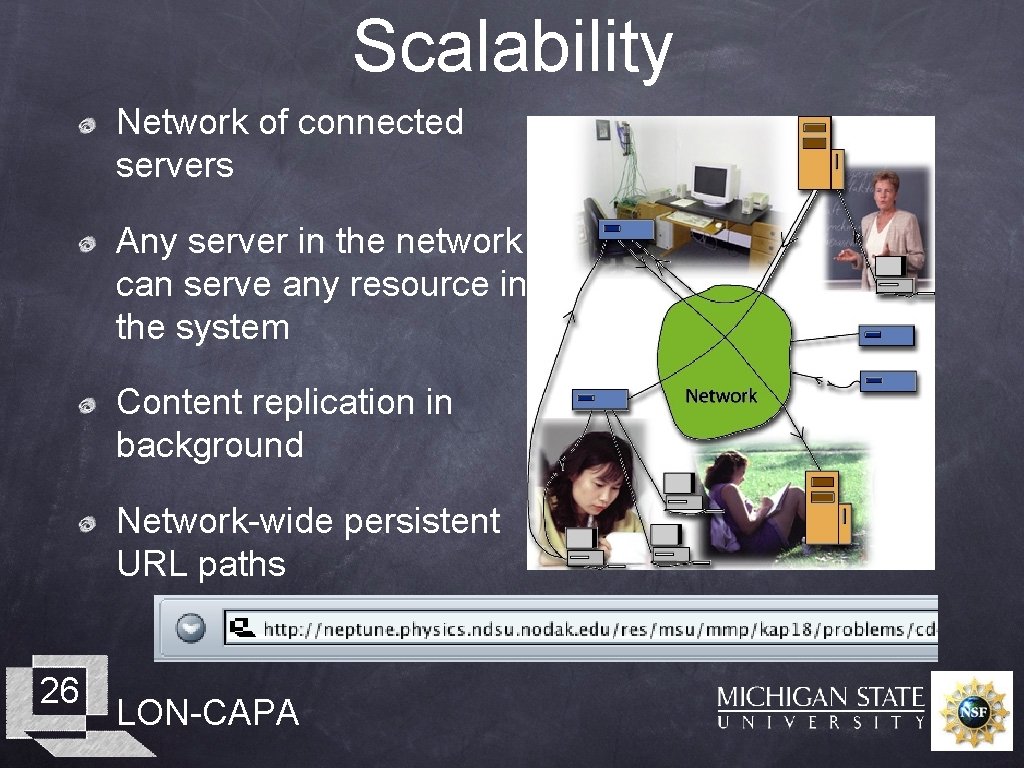
Scalability Network of connected servers Any server in the network can serve any resource in the system Content replication in background Network-wide persistent URL paths 26 LON-CAPA
Scalability North Dakota State University server serving resource from Michigan State University First time the resource is accessed, it is copied in the background (replicated) closer to user MSU not stuck with serving the resource will continue to work if connection to MSU down Leaves behind subscription on MSU server When resource updated at MSU, NDSU copy is either updated or deleted, depending on usage pattern 27 LON-CAPA
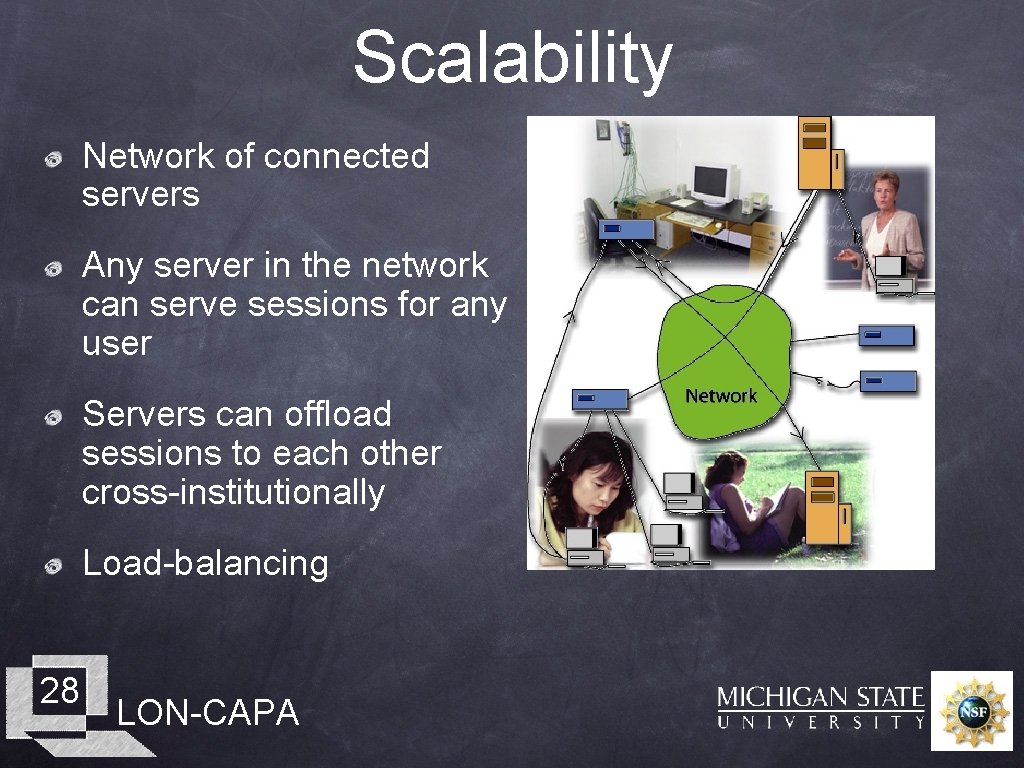
Scalability Network of connected servers Any server in the network can serve sessions for any user Servers can offload sessions to each other cross-institutionally Load-balancing 28 LON-CAPA
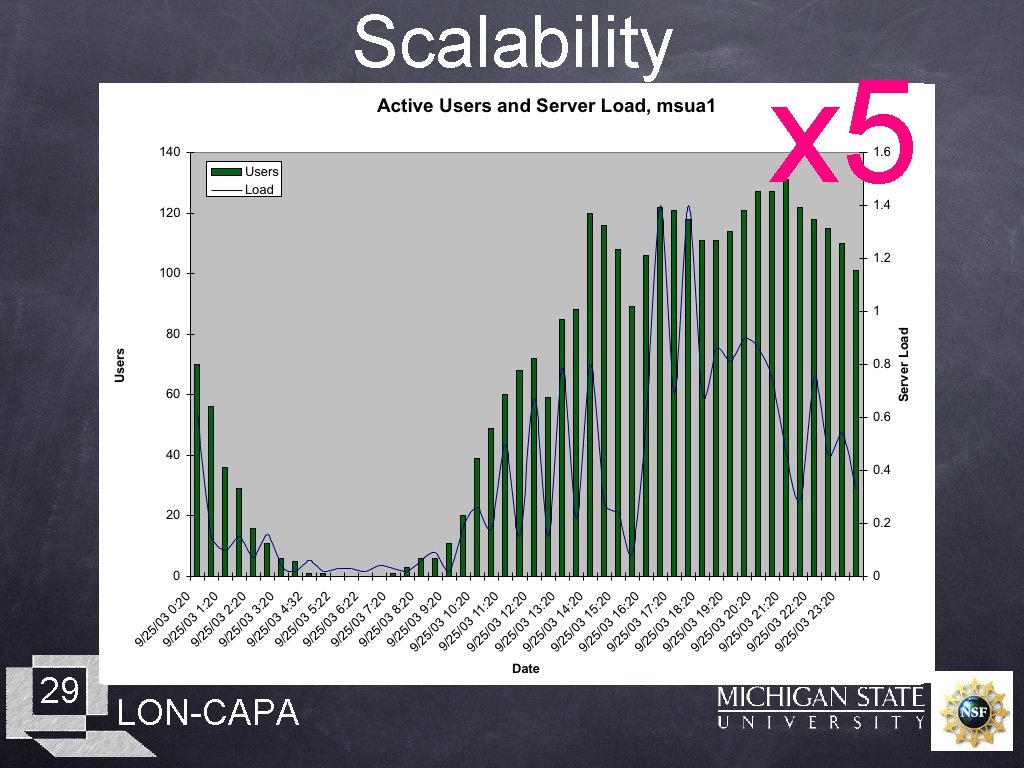
Scalability 29 LON-CAPA x 5
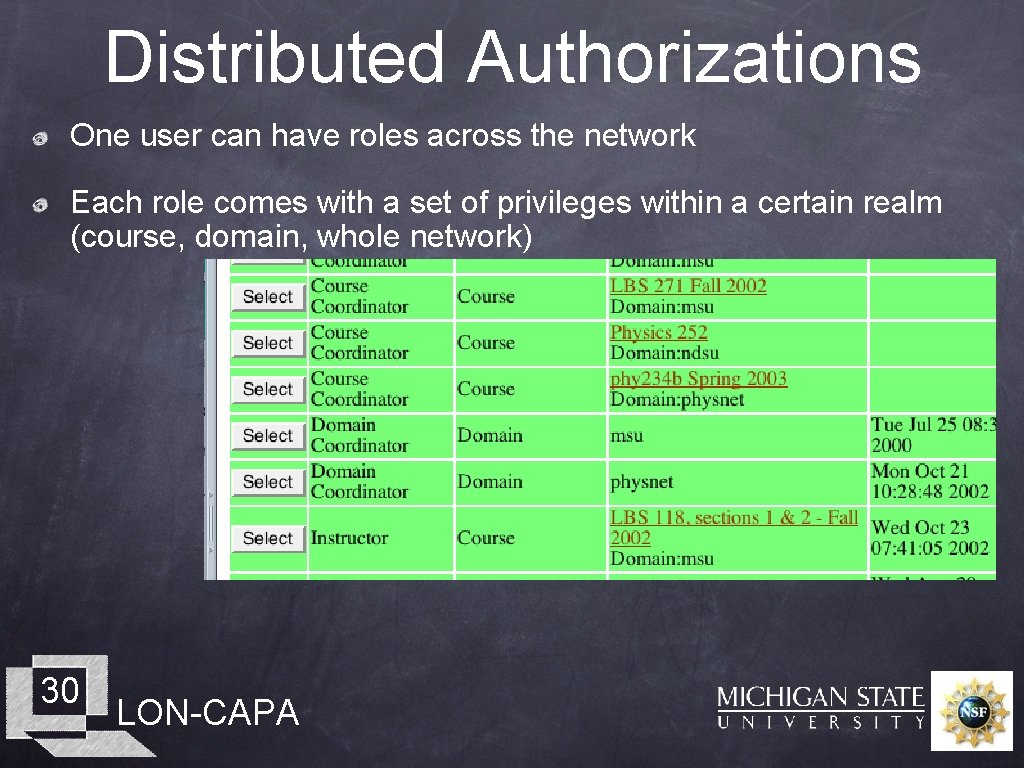
Distributed Authorizations One user can have roles across the network Each role comes with a set of privileges within a certain realm (course, domain, whole network) 30 LON-CAPA
Distributed Coding Open-source free software GNU General Public License No license fees Can be modified, extended, improved, adapted. . . Runs on Linux, no license fees for operating system Developed by educators for educators Central CVS code repository Releases defined centrally 31 LON-CAPA
Distributed Coding Code contributions by Florida State University Ohio University Simon Fraser University Vancouver Hebrew University Jerusalem UNICAMP São Paulo Nagoya University 32 LON-CAPA
Distributed Coding 33 LON-CAPA
Maintenance and Security Danger in distributed network: trust relationships between machines: one rogue machine can leak problem source codes or be abused to grant higher authorizations to users Monitoring processes Local system administrators need to keep machines up-to-date Remote maintenance options Frequent release schedule and quick updates Mechanisms to quickly take machine offline 34 LON-CAPA
Funding Michigan State University Mellon Foundation Sloan Foundation National Science Foundation Ohio University, Florida State University, Ohio University, Nagoya University, UNICAMP, Simon Fraser University, Hebrew University of Jerusalem People who drive too fast 35 LON-CAPA
- Slides: 35