
MANAGEMENT INFORMATION SYSTEMS How to Design A Winning



- Slides: 23
MANAGEMENT INFORMATION SYSTEMS How to Design A Winning Business Model by Ramon Casadesus-Masanell and Joan E. Ricart Harvard Business Review Prepare by 資訊管理系碩專一 蔡銘祥、廖至仁
Preface Strategy has been the primary building block of competitiveness over the past three decades. While the convergence of information and communication technologies in the 1990 s resulted in a short-lived fascination with Business models. Deregulation, technological change, globalization and sustainability have rekindled interest in Business Models today.
What force companies to modify or create business model Crack open markets in developing countries The economic slowdown in the developed world The rise of new technology-based and low-cost rivals
Why Business Model Fail? The studies of this paper over the past seven years Focus on creating innovative and evaluate efficacy in isolation Without think about the competition Ignore dynamic elements of business model
What is a Business Model? Joan Magretta(Management writer) The story that explains how an enterprise works. Peter Drucker Who is your customer, what does the customer value, and how do you deliver value at an appropriate cost? Clay Christensen(Harvard Business School) A customer value proposition, a profit formula, key resources, and key processes.
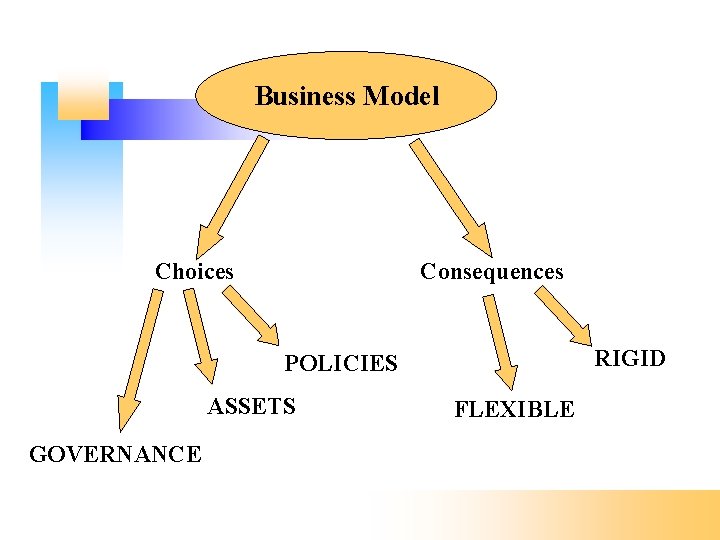
What is a Business Model? Studies suggest: One component of a business model must be the choices that executives make about how the organization should operate—choices. Managerial choices have consequences. For instance, pricing affects sales volume which shapes the company’s scale economies and bargaining power.
Business Model Choices Consequences RIGID POLICIES ASSETS GOVERNANCE FLEXIBLE
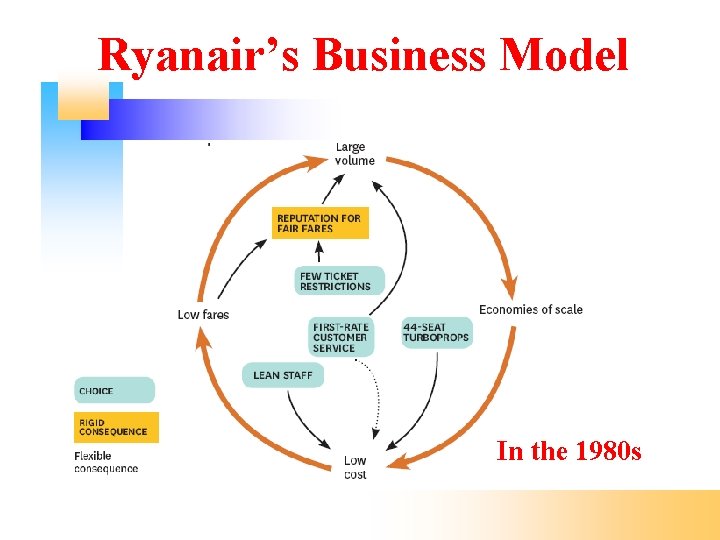
Ryanair’s Business Model In the 1980 s
How Business Models Generate Virtuous Cycles
Three Characteristcs of a Good Business Model Is it aligned with company goals? The choices made while designing a business model should deliver consequences that enable an organization to achieve its goals. Example: Is it self-reinforcing? The choices that executives make while creating a business model should complement on another ; there must be internal consistency.
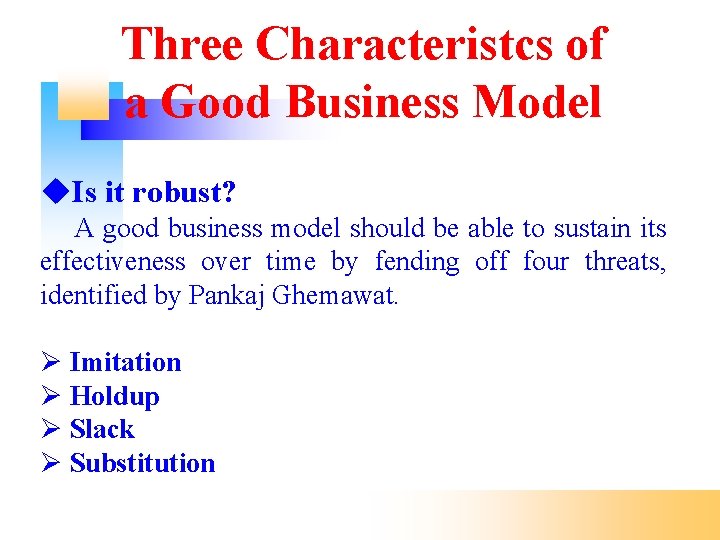
Three Characteristcs of a Good Business Model Is it robust? A good business model should be able to sustain its effectiveness over time by fending off four threats, identified by Pankaj Ghemawat. Imitation Holdup Slack Substitution
Competitive Advantage of High-Tech Companies
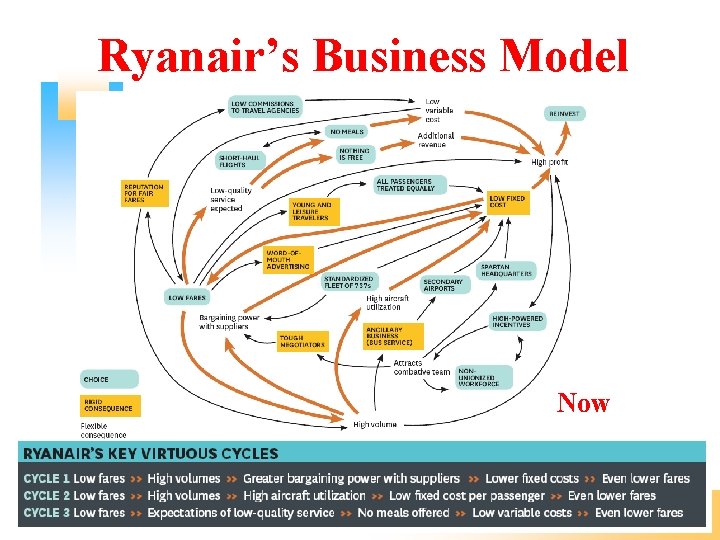
Ryanair’s Business Model Now
Virtuous cycles can only be created by a low-cost, no-frills player?
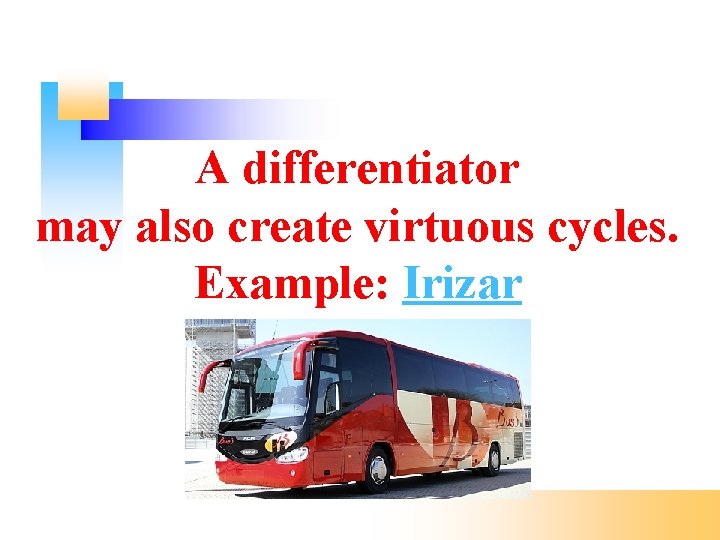
A differentiator may also create virtuous cycles. Example: Irizar
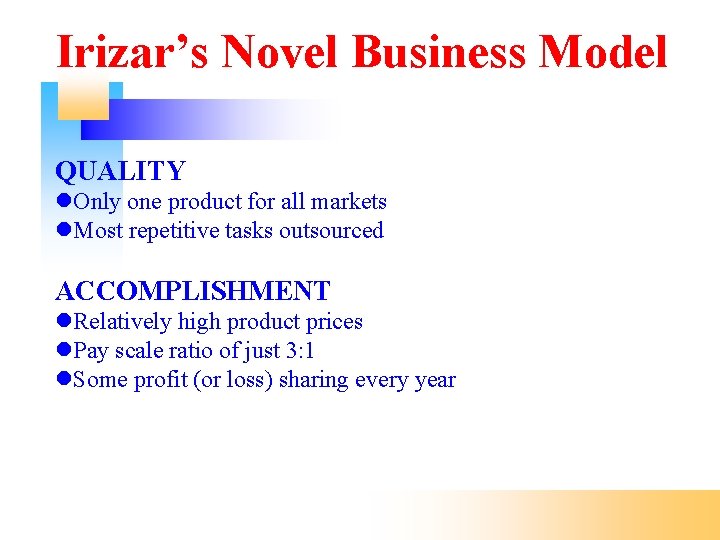
Irizar’s Novel Business Model QUALITY Only one product for all markets Most repetitive tasks outsourced ACCOMPLISHMENT Relatively high product prices Pay scale ratio of just 3: 1 Some profit (or loss) sharing every year
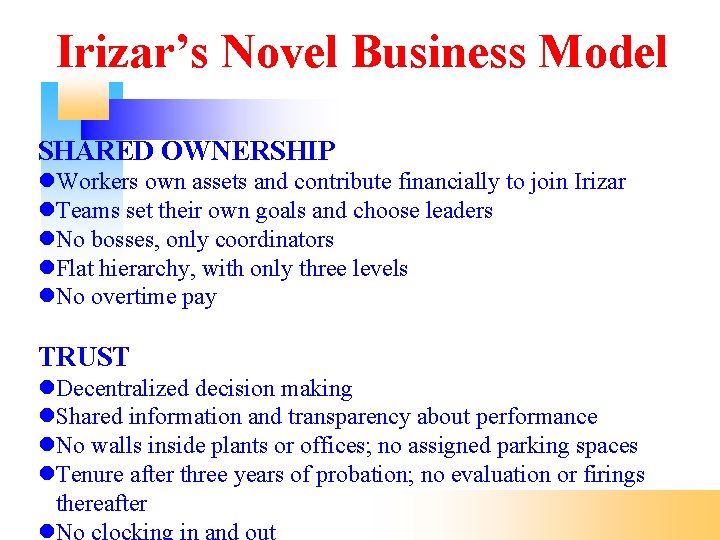
Irizar’s Novel Business Model SHARED OWNERSHIP Workers own assets and contribute financially to join Irizar Teams set their own goals and choose leaders No bosses, only coordinators Flat hierarchy, with only three levels No overtime pay TRUST Decentralized decision making Shared information and transparency about performance No walls inside plants or offices; no assigned parking spaces Tenure after three years of probation; no evaluation or firings thereafter No clocking in and out
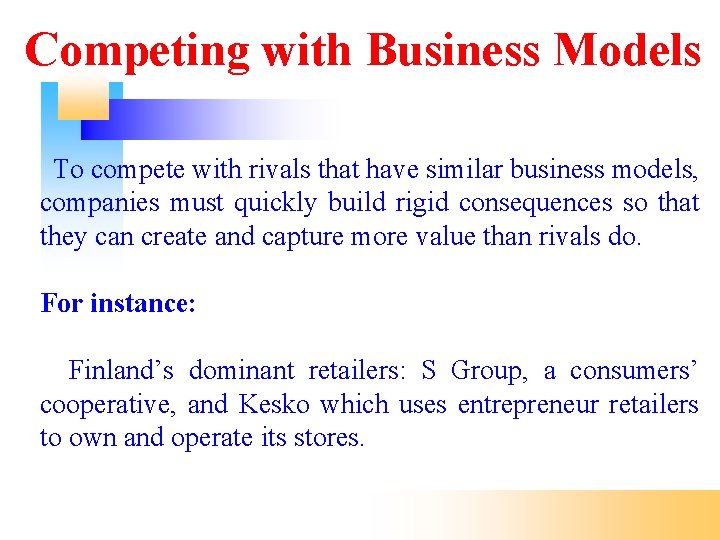
Competing with Business Models To compete with rivals that have similar business models, companies must quickly build rigid consequences so that they can create and capture more value than rivals do. For instance: Finland’s dominant retailers: S Group, a consumers’ cooperative, and Kesko which uses entrepreneur retailers to own and operate its stores.
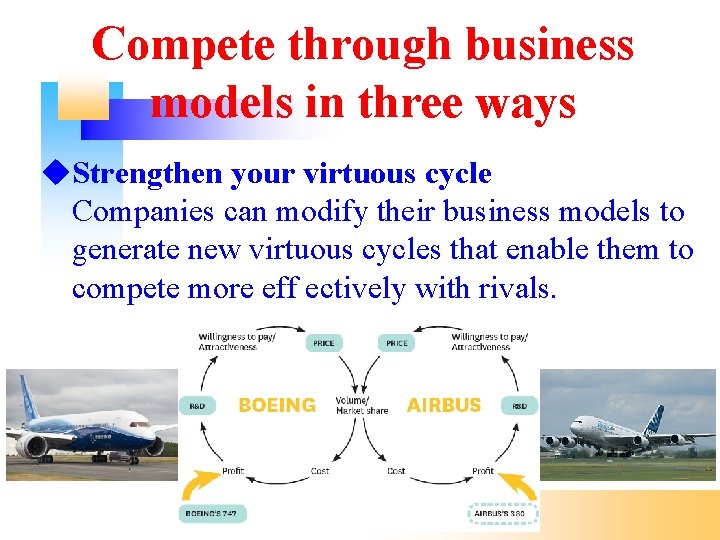
Compete through business models in three ways Strengthen your virtuous cycle Companies can modify their business models to generate new virtuous cycles that enable them to compete more eff ectively with rivals.
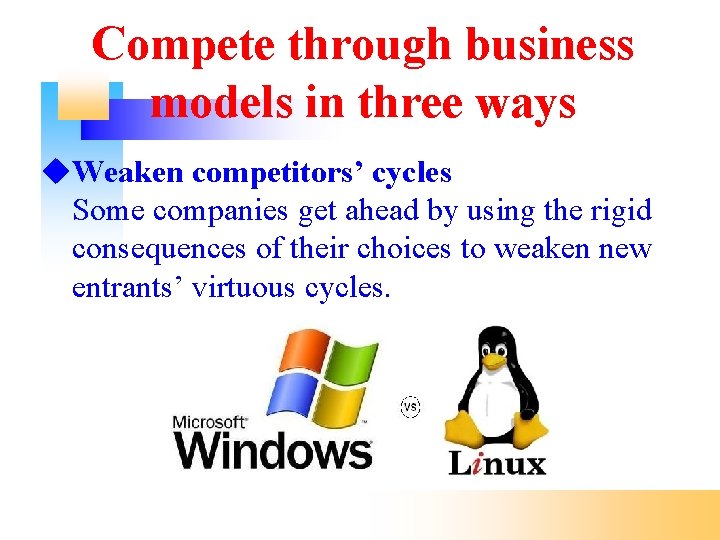
Compete through business models in three ways Weaken competitors’ cycles Some companies get ahead by using the rigid consequences of their choices to weaken new entrants’ virtuous cycles.
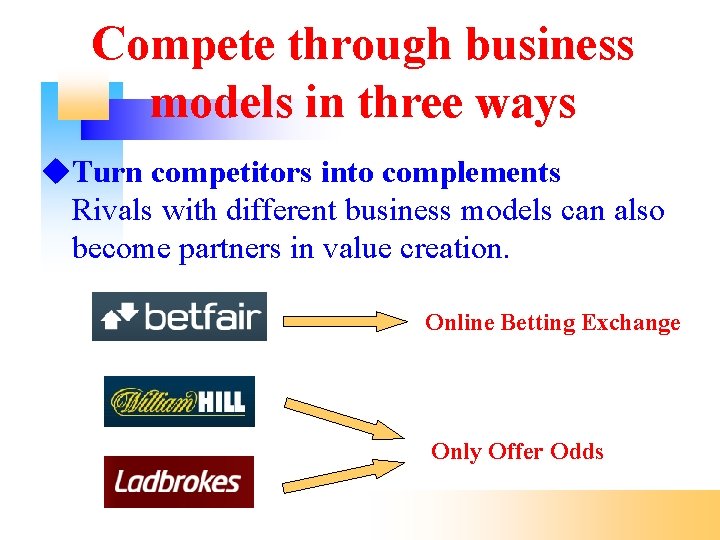
Compete through business models in three ways Turn competitors into complements Rivals with different business models can also become partners in value creation. Online Betting Exchange Only Offer Odds
Business Models vs. Strategy vs. Tactics Business models: refer to the logic of the company -how it operates and creates and captures value for stakeholders in a competitive marketplace Strategy: is the plan to create a unique and valuable position involving a distinctive set of activities Tactics: the residual choices open to a company by virtue of the business model that it employs.
Summary