
Management Information Systems CSC 373 33 0 Introduction
- Slides: 18
Management Information Systems (CSC 373) 3(3, 0) Introduction to the Course
Lecturer’s Profile Ayisha Qureshi Lecturer, Computer Science CIIT, Islamabad Masters in Information Systems HEC, Lausanne
Books • Principles of Information Systems (A Managerial Approach) by Ralph Stair, George Reynolds • Management Information Systems (Managing the Digital Firm, Twelfth Edition) by Kennecth C. Laudon, Jane P. Laudon
MIS • What is Management Information Systems? – An organized approach to the study of the information needs of an organization's management at every level in making operational, tactical, and strategic decisions. Its objective is to design and implement procedures, processes, and routines that provide suitably detailed reports in an accurate, consistent, and timely manner. – In a management information system, modern, computerized systems continuously gather relevant data, both from inside and outside an organization. This data is then processed, integrated, and stored in a centralized database (or data warehouse) where it is constantly updated and made available to all who have the authority to access it, in a form that suits their purpose. – (business dictionary)
MIS • Why do business students need to study MIS? – Information and Communication Technologies dominate the business world – Business dynamics changing in the face of emerging technologies and new software – Competition is increasing – Enable students to access the problems and opportunities when using Information Technology in business – Also understand transformational changes within and outside the industry
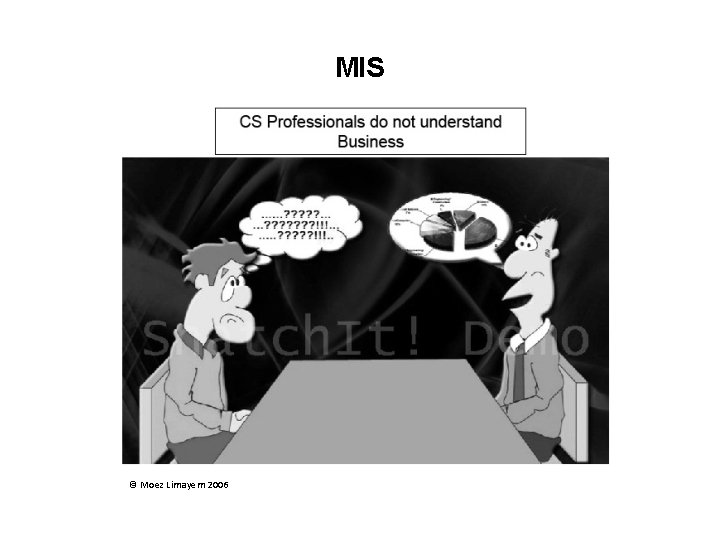
MIS © Moez Limayem 2006
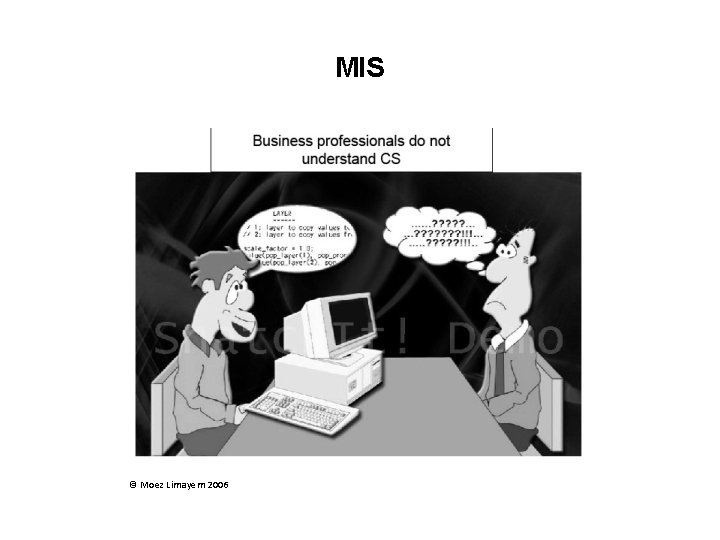
MIS © Moez Limayem 2006
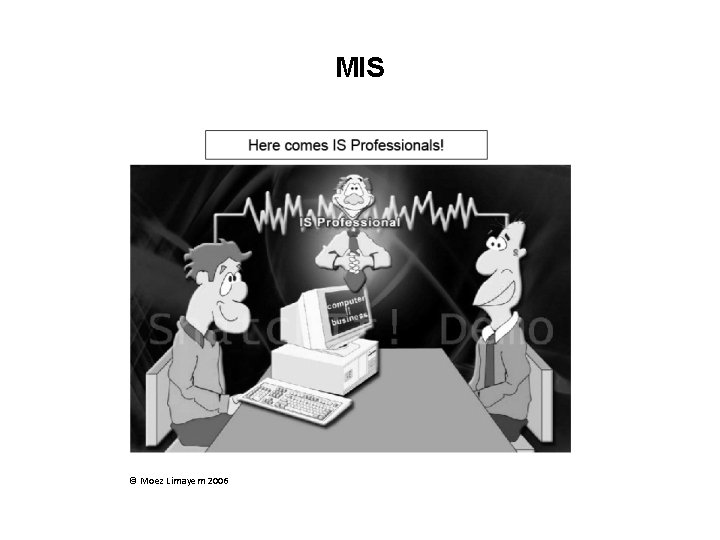
MIS © Moez Limayem 2006
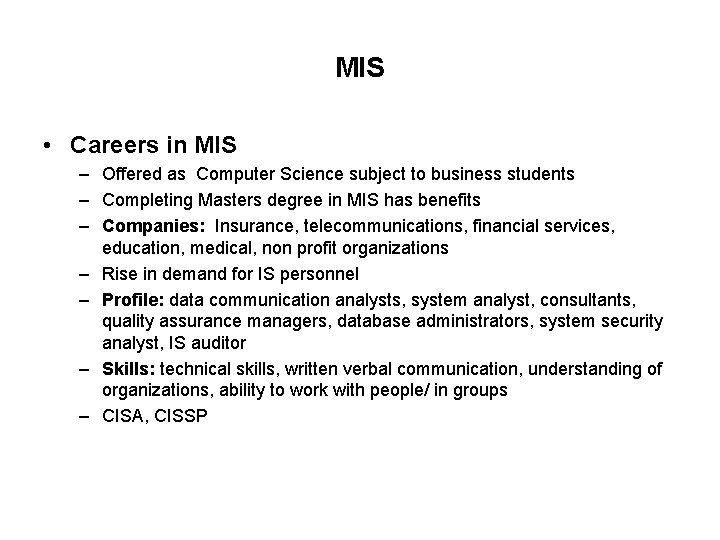
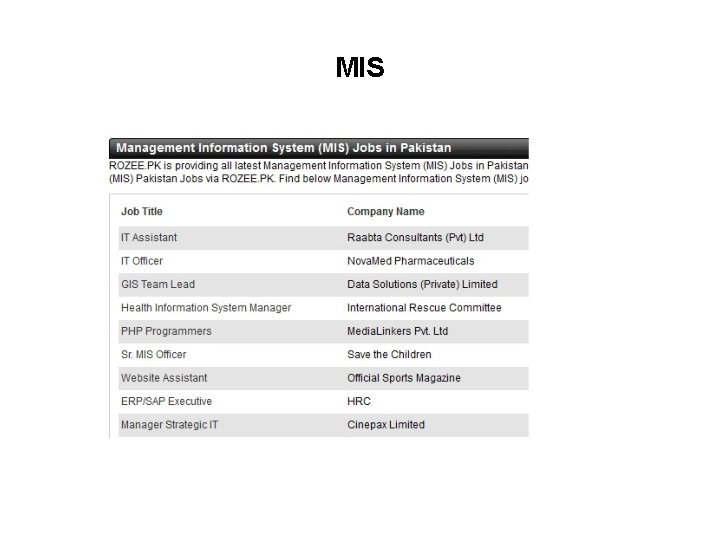
MIS • Careers in MIS – Offered as Computer Science subject to business students – Completing Masters degree in MIS has benefits – Companies: Insurance, telecommunications, financial services, education, medical, non profit organizations – Rise in demand for IS personnel – Profile: data communication analysts, system analyst, consultants, quality assurance managers, database administrators, system security analyst, IS auditor – Skills: technical skills, written verbal communication, understanding of organizations, ability to work with people/ in groups – CISA, CISSP
MIS
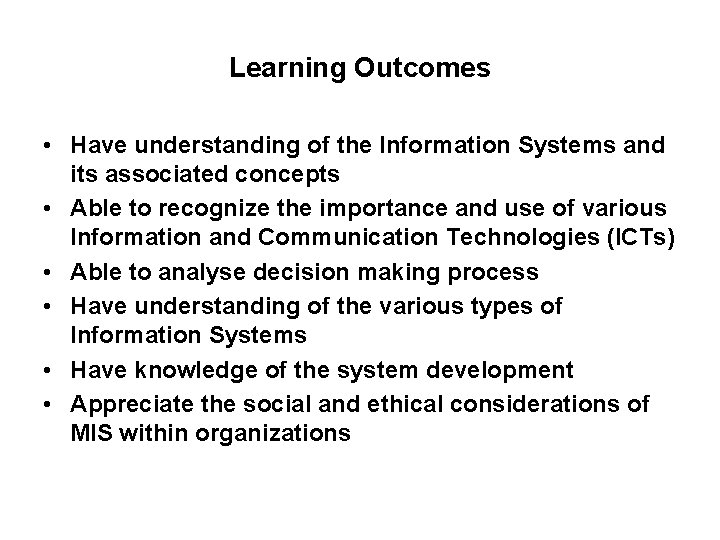
Learning Outcomes • Have understanding of the Information Systems and its associated concepts • Able to recognize the importance and use of various Information and Communication Technologies (ICTs) • Able to analyse decision making process • Have understanding of the various types of Information Systems • Have knowledge of the system development • Appreciate the social and ethical considerations of MIS within organizations
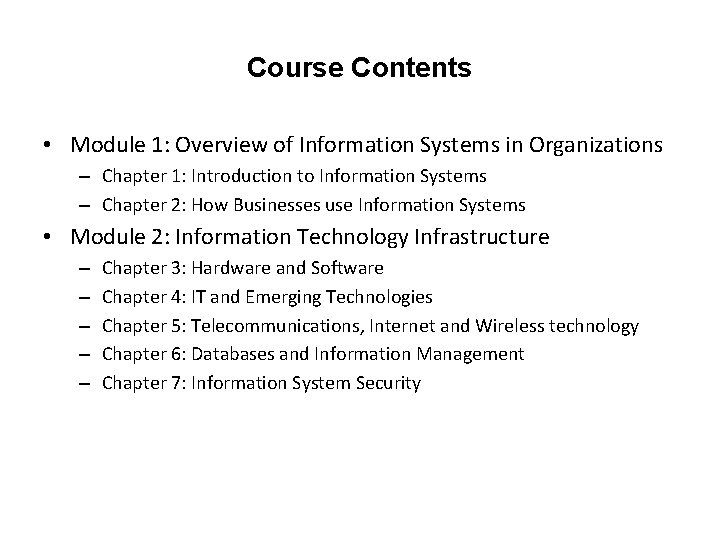
Course Contents • Module 1: Overview of Information Systems in Organizations – Chapter 1: Introduction to Information Systems – Chapter 2: How Businesses use Information Systems • Module 2: Information Technology Infrastructure – – – Chapter 3: Hardware and Software Chapter 4: IT and Emerging Technologies Chapter 5: Telecommunications, Internet and Wireless technology Chapter 6: Databases and Information Management Chapter 7: Information System Security
Course Contents • Module 3: Business Information Systems – – Chapter 8: Electronic and Mobile Commerce Chapter 9: Enterprise Systems Chapter 10: Information and Decision Support Systems Chapter 11: Knowledge Management • Module 4: Systems Development – Chapter 12: Managing Projects – Chapter 13: Investigation and Analysis – Chapter 14: Systems Development Cycle • Module 5: IS in Business and Society – Chapter 16: Social and Ethical Issues in IS
Assignments • 4 assignments per semester • 10% of total marks • Content: – Detailed questions – Internet Search
Quiz • • 4 quizzes per semester 10% of total marks Multiple choice Content: – Lectures – Case Studies
Graded Discussion Points • Based on Case Studies – Required to read and understand the case study – Discuss on the discussion board – Come up with possible answers to the case-study questions • Based on Lectures – Any topic will be given to discuss further • Queries – Ask related question for further understanding • 5% of total marks
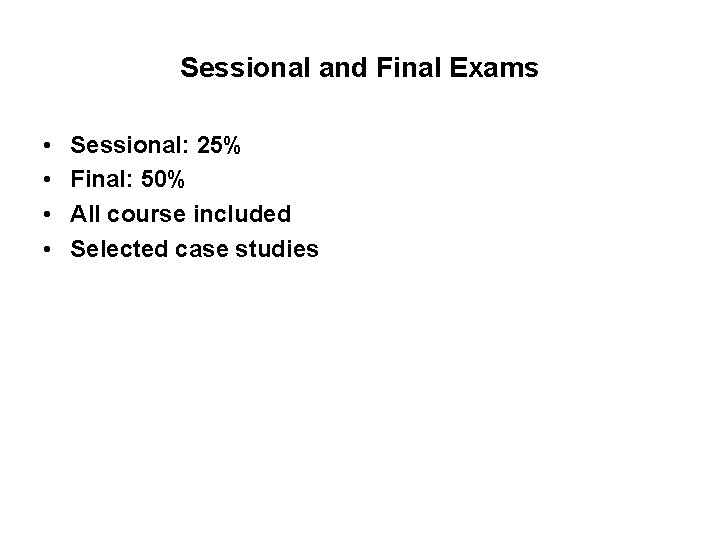
Sessional and Final Exams • • Sessional: 25% Final: 50% All course included Selected case studies
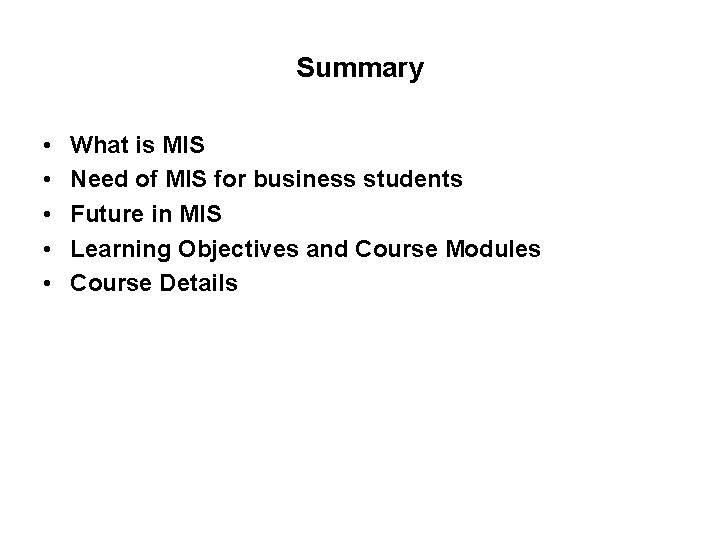
Summary • • • What is MIS Need of MIS for business students Future in MIS Learning Objectives and Course Modules Course Details