
Management Fundamentals Concepts Applications Skills Development 1 st
- Slides: 15
Management Fundamentals Concepts, Applications, Skills Development 1 st Edition Robert N. Lussier Published by: South-Western College Publishing ISBN: 0 -324 -01339 -6 “Copyright © 2000 South-Western College Publishing. All rights reserved. Reproduction or translation of this work beyond that permitted in Section 117 of the 1976 United States Copyright Act without the express written permission of the copyright owner is unlawful. Request for further information should be addressed to the Permissions Department, South-Western College Publishing. The purchaser may make back-up copies for his/her own use only and not for distribution or resale. The Publisher assumes no responsibility for errors, omissions, or damages, caused by the use of these programs or from the use of the information contained herein. ” This presentation created by: MANAGEMENT TRAINING SPECIALISTS 5320 -D Camp Bowie Blvd / Fort Worth, Texas 76107 / 817 737 -2893 e-mail: 2 conz@airmail. net
Management Fundamentals Concepts, Applications, Skills Development Chapter 10 Group and Team Development 10 A
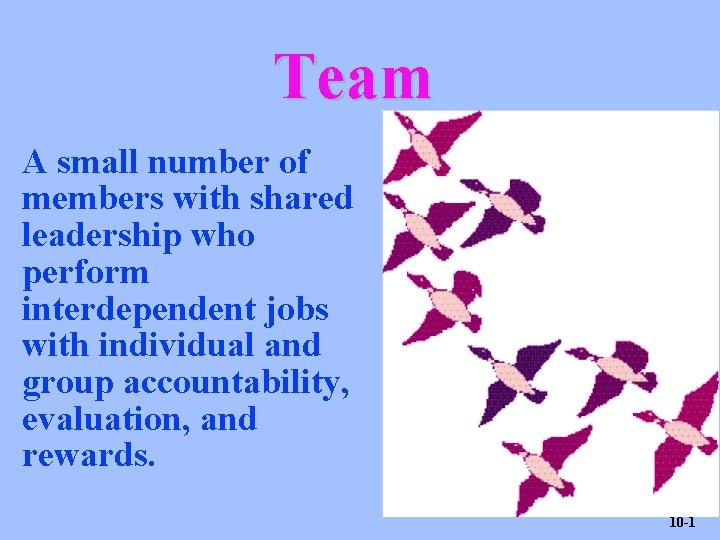
Team A small number of members with shared leadership who perform interdependent jobs with individual and group accountability, evaluation, and rewards. 10 -1
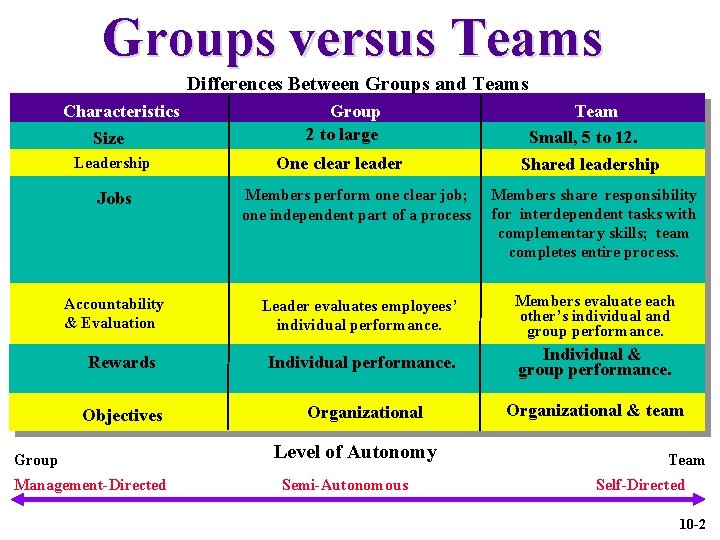
Groups versus Teams Differences Between Groups and Teams Characteristics Size Leadership Group 2 to large One clear leader Team Small, 5 to 12. Shared leadership Jobs Members perform one clear job; one independent part of a process Members share responsibility for interdependent tasks with complementary skills; team completes entire process. Accountability & Evaluation Leader evaluates employees’ individual performance. Members evaluate each other’s individual and group performance. Rewards Individual performance. Individual & group performance. Objectives Organizational & team Group Management-Directed Level of Autonomy Semi-Autonomous Team Self-Directed 10 -2
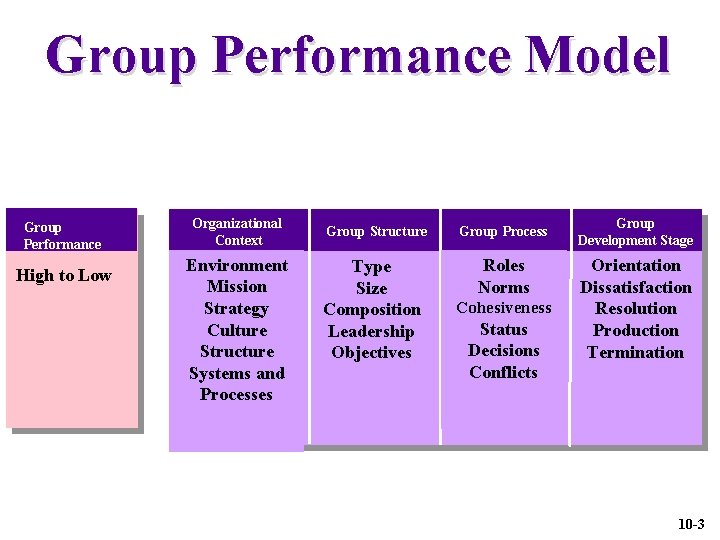
Group Performance Model Group Performance High to Low Organizational Context Environment Mission Strategy Culture Structure Systems and Processes Group Structure Type Size Composition Leadership Objectives Group Process Roles Norms Cohesiveness Status Decisions Conflicts Group Development Stage Orientation Dissatisfaction Resolution Production Termination 10 -3
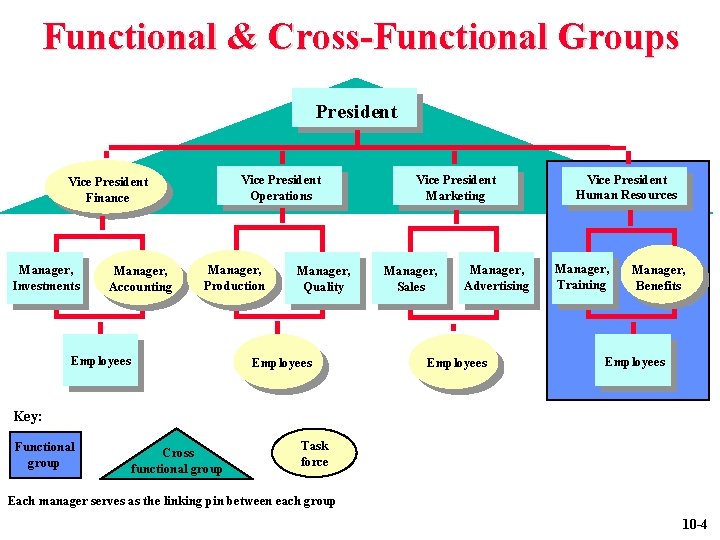
Functional & Cross-Functional Groups President Vice President Operations Vice President Finance Manager, Investments Manager, Accounting Manager, Production Employees Manager, Quality Employees Vice President Marketing Manager, Sales Manager, Advertising Employees Vice President Human Resources Manager, Training Manager, Benefits Employees Key: Functional group Cross functional group Task force Each manager serves as the linking pin between each group 10 -4
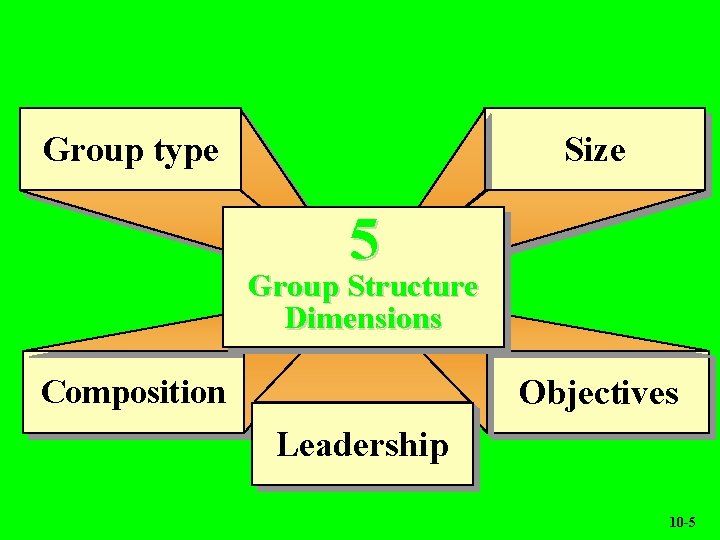
Size Group type 5 Group Structure Dimensions Objectives Composition Leadership 10 -5
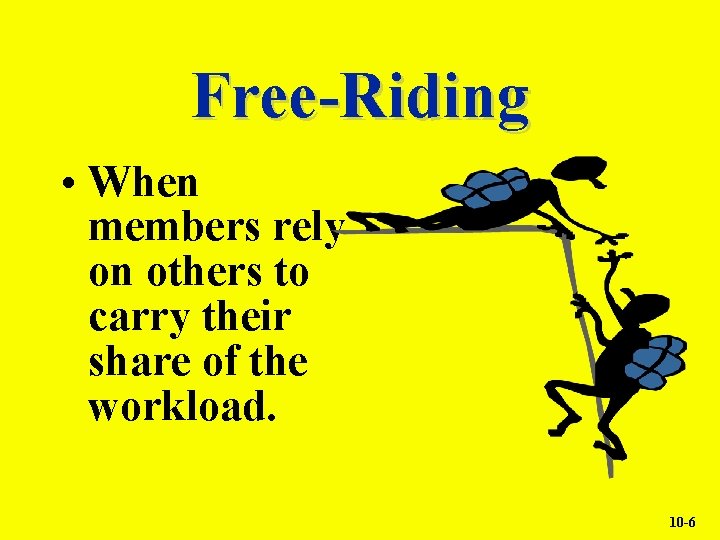
Free-Riding • When members rely on others to carry their share of the workload. 10 -6
How Group Norms Develop • Spontaneously as the members interact through the group’s routine. 10 -7
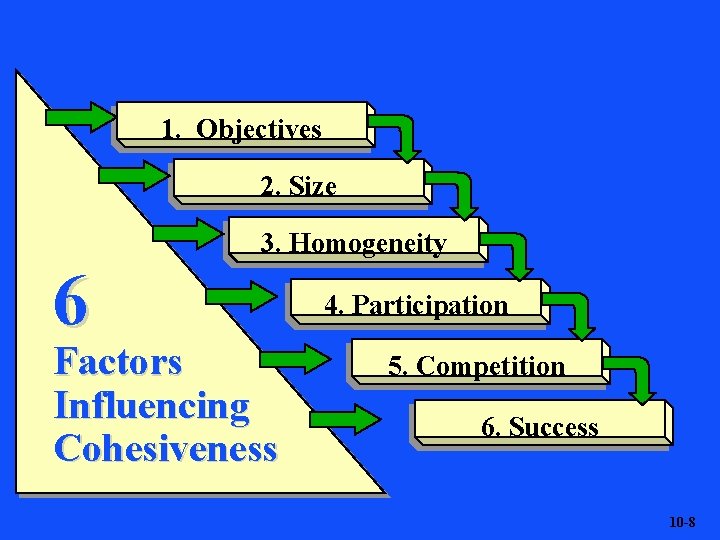
1. Objectives 2. Size 3. Homogeneity 6 Factors Influencing Cohesiveness 4. Participation 5. Competition 6. Success 10 -8
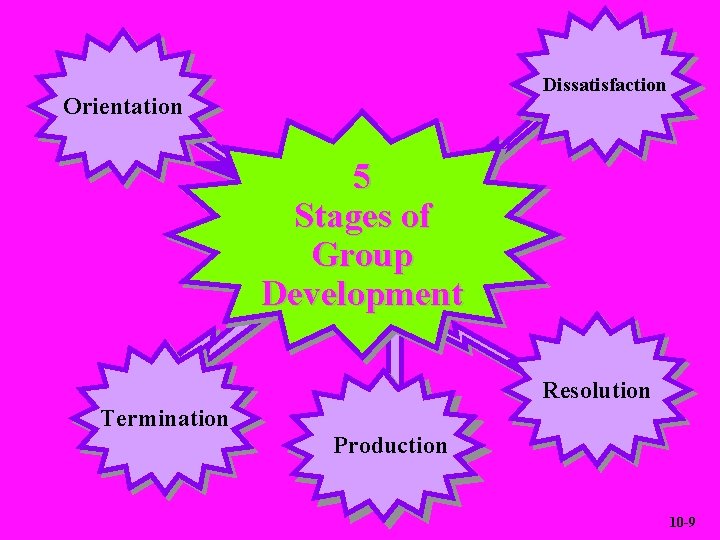
Dissatisfaction Orientation 5 Stages of Group Development Resolution Termination Production 10 -9
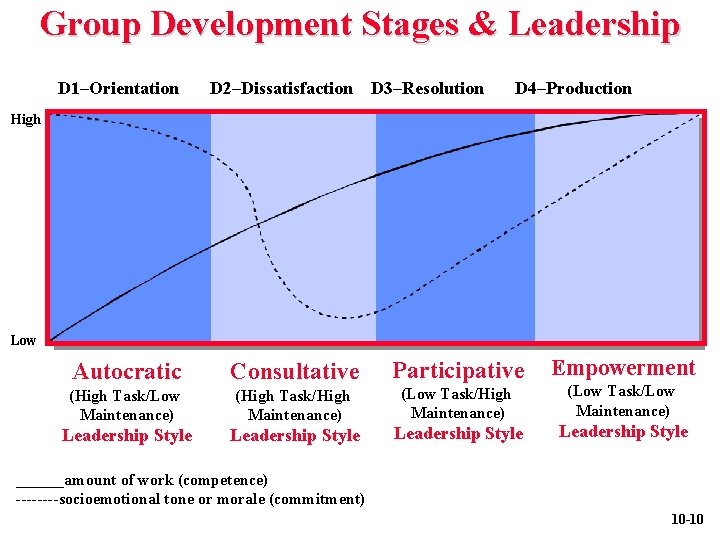
Group Development Stages & Leadership D 1–Orientation D 2–Dissatisfaction D 3–Resolution D 4–Production High Low Autocratic Consultative Participative (High Task/Low Maintenance) (High Task/High Maintenance) (Low Task/High Maintenance) Leadership Style Empowerment (Low Task/Low Maintenance) Leadership Style ______amount of work (competence) ----socioemotional tone or morale (commitment) 10 -10
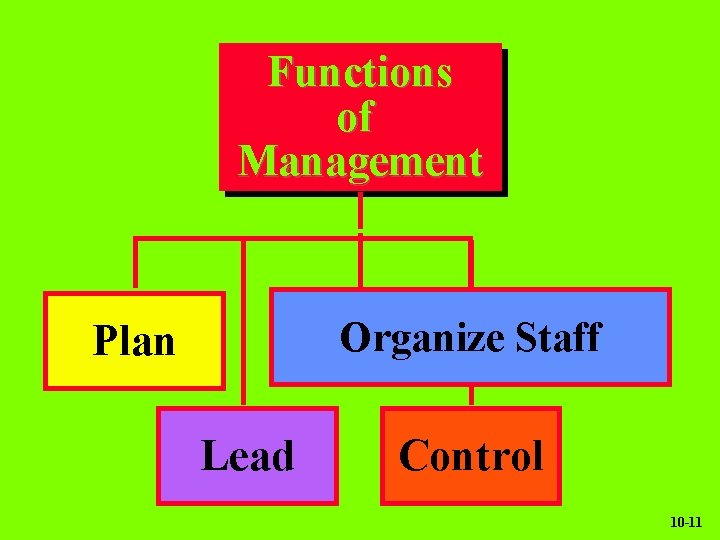
Functions of Management Organize Staff Plan Lead Control 10 -11
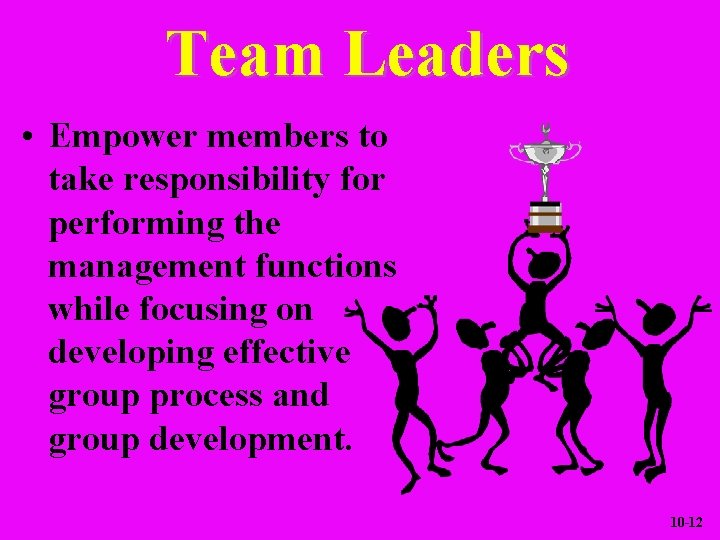
Team Leaders • Empower members to take responsibility for performing the management functions while focusing on developing effective group process and group development. 10 -12
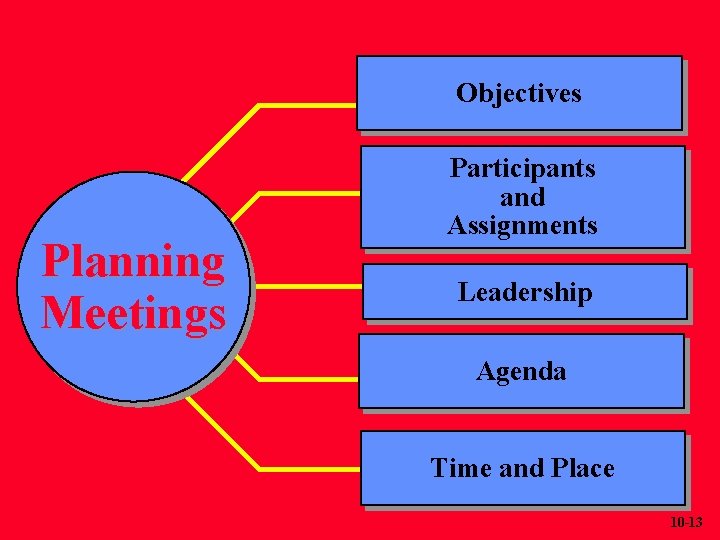
Objectives Planning Meetings Participants and Assignments Leadership Agenda Time and Place 10 -13