
Management Development Management Development Management Development relates to

![Specimen of Staff Assessment Form [Descriptive Essay Type] Staff Appraisal Name. . . .](https://slidetodoc.com/presentation_image_h2/7ed6249f810ca5b68c57bfcd7a7adaa2/image-21.jpg "Specimen of Staff Assessment Form [Descriptive Essay Type] Staff Appraisal Name. . . .")
- Slides: 30
Management Development
Management Development • Management Development relates to the development and growth of the employees in an organisation through a systematic process.
Objectives of Management Development • Improving the performance of managers • Identifying the talents in employees and to develop them to make them capable of handling managerial tasks. • Motivating and Updating managers from time to time • Improving the analytical and logical skills of employees.
Management Development Methods • On the job methods • Off the job methods
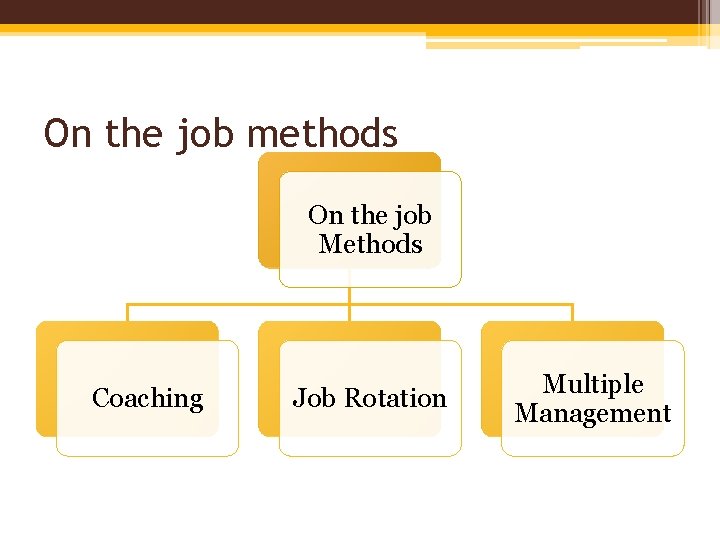
On the job methods On the job Methods Coaching Job Rotation Multiple Management
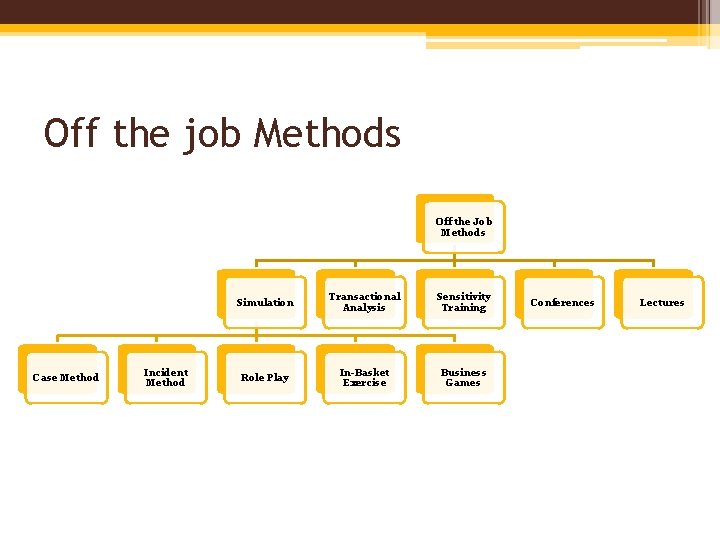
Off the job Methods Off the Job Methods Case Method Incident Method Simulation Transactional Analysis Sensitivity Training Role Play In-Basket Exercise Business Games Conferences Lectures
Unit - 2 Performance Appraisal
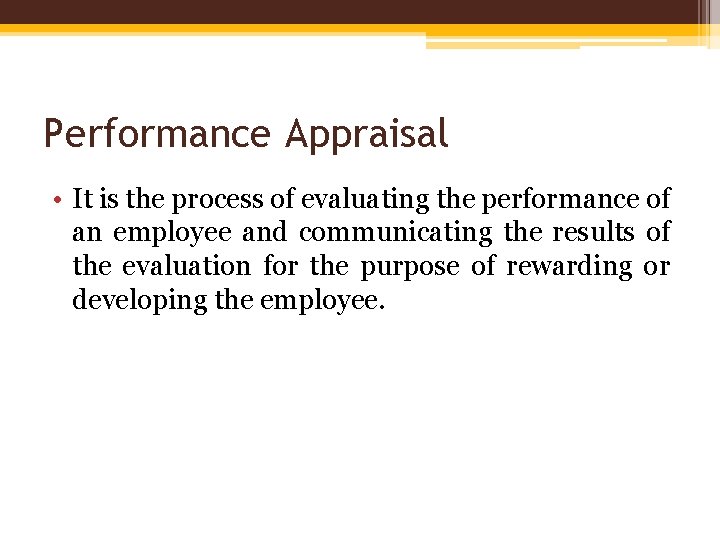
Performance Appraisal • It is the process of evaluating the performance of an employee and communicating the results of the evaluation for the purpose of rewarding or developing the employee.
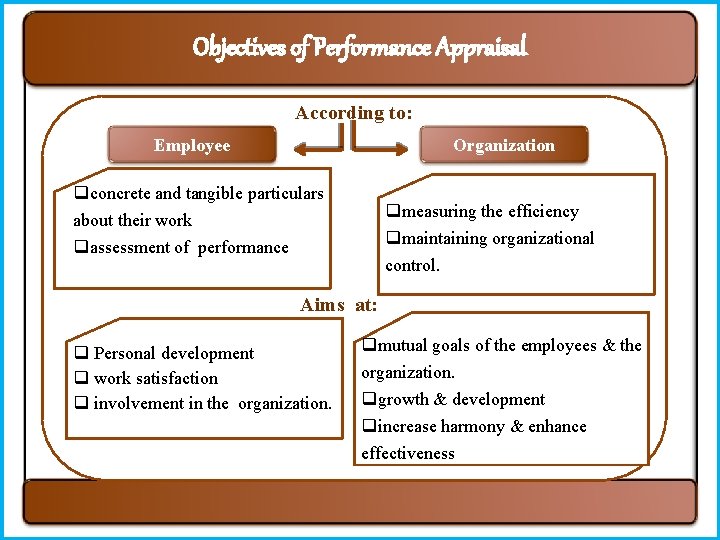
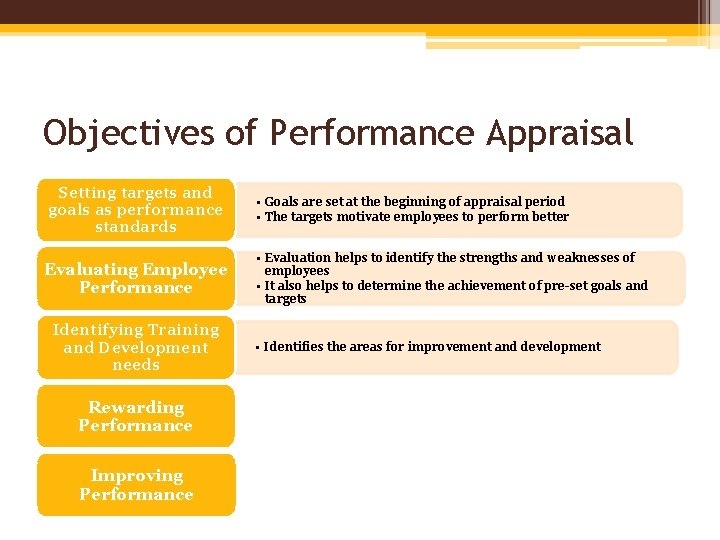
Objectives of Performance Appraisal According to: Employee Organization qconcrete and tangible particulars about their work qassessment of performance qmeasuring the efficiency qmaintaining organizational control. Aims at: q Personal development q work satisfaction q involvement in the organization. qmutual goals of the employees & the organization. qgrowth & development qincrease harmony & enhance effectiveness
Objectives of Performance Appraisal Setting targets and goals as performance standards Evaluating Employee Performance Identifying Training and Development needs Rewarding Performance Improving Performance • Goals are set at the beginning of appraisal period • The targets motivate employees to perform better • Evaluation helps to identify the strengths and weaknesses of employees • It also helps to determine the achievement of pre-set goals and targets • Identifies the areas for improvement and development
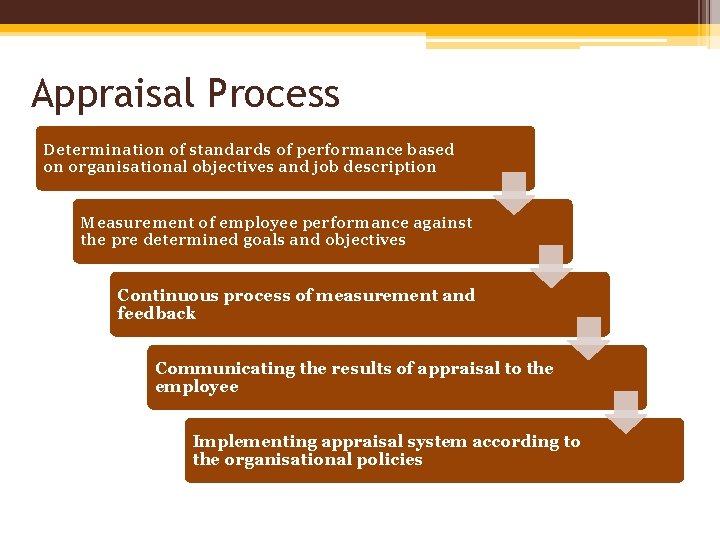
Appraisal Process Determination of standards of performance based on organisational objectives and job description Measurement of employee performance against the pre determined goals and objectives Continuous process of measurement and feedback Communicating the results of appraisal to the employee Implementing appraisal system according to the organisational policies
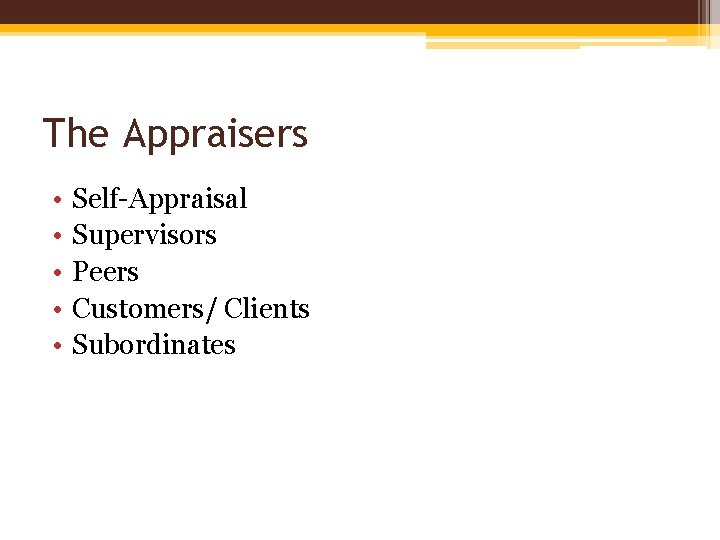
The Appraisers • • • Self-Appraisal Supervisors Peers Customers/ Clients Subordinates
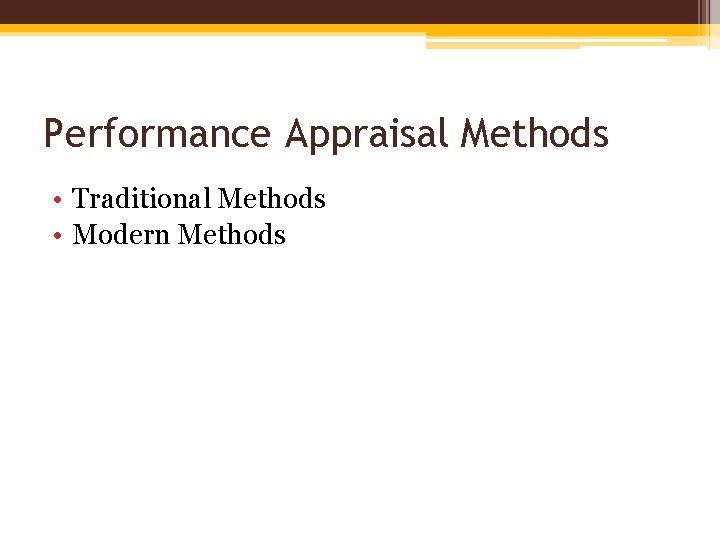
Performance Appraisal Methods • Traditional Methods • Modern Methods
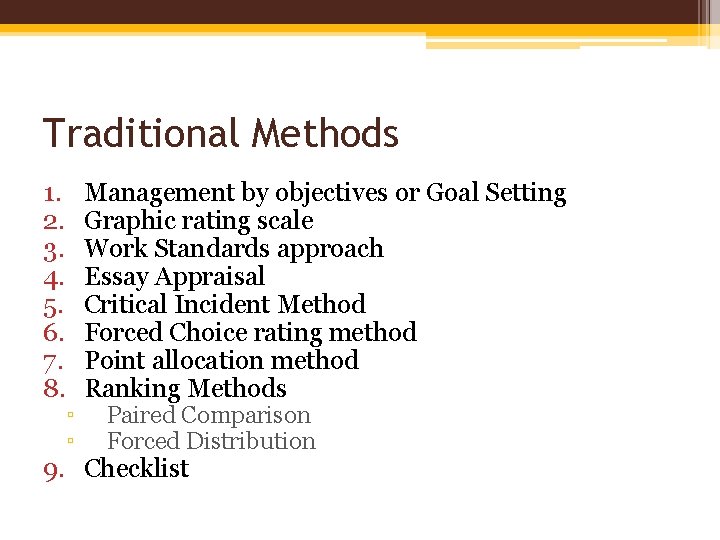
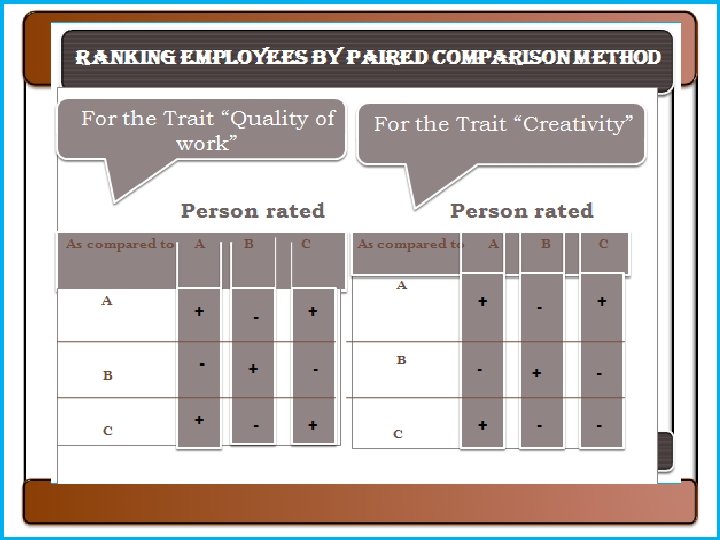
Traditional Methods 1. 2. 3. 4. 5. 6. 7. 8. ▫ ▫ Management by objectives or Goal Setting Graphic rating scale Work Standards approach Essay Appraisal Critical Incident Method Forced Choice rating method Point allocation method Ranking Methods Paired Comparison Forced Distribution 9. Checklist
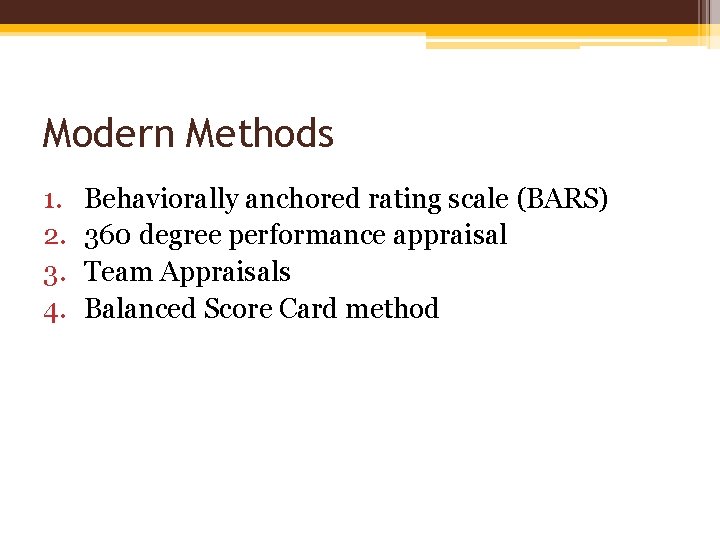
Modern Methods 1. 2. 3. 4. Behaviorally anchored rating scale (BARS) 360 degree performance appraisal Team Appraisals Balanced Score Card method
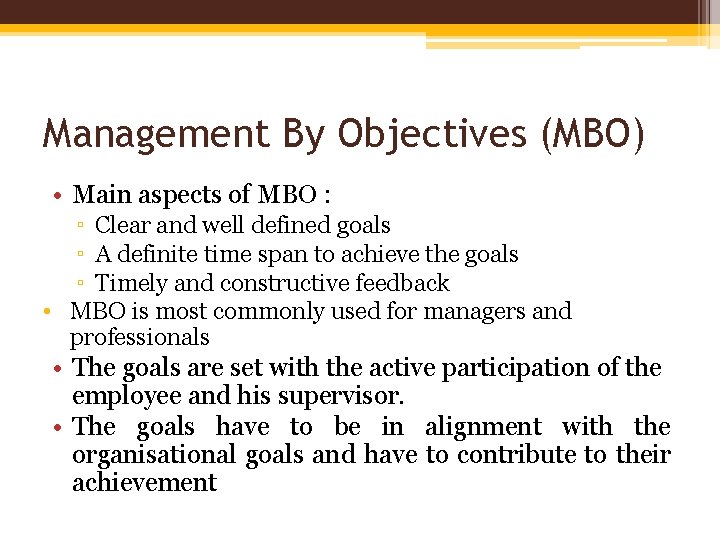
Management By Objectives (MBO) • Main aspects of MBO : ▫ Clear and well defined goals ▫ A definite time span to achieve the goals ▫ Timely and constructive feedback • MBO is most commonly used for managers and professionals • The goals are set with the active participation of the employee and his supervisor. • The goals have to be in alignment with the organisational goals and have to contribute to their achievement
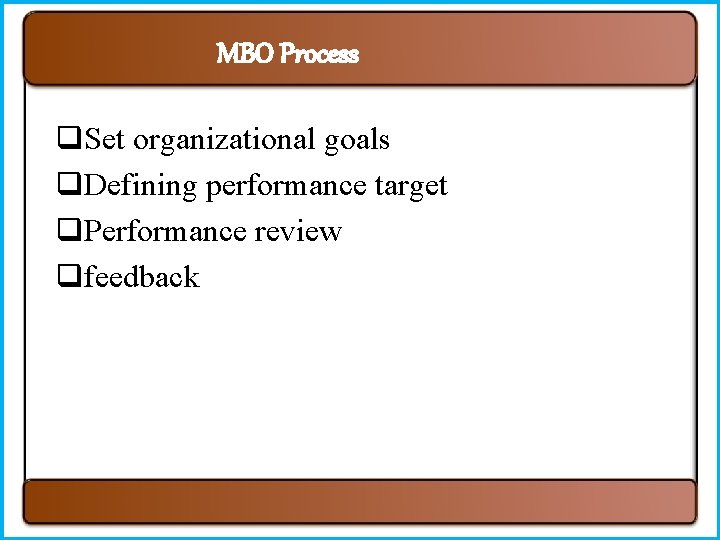
MBO Process q. Set organizational goals q. Defining performance target q. Performance review qfeedback
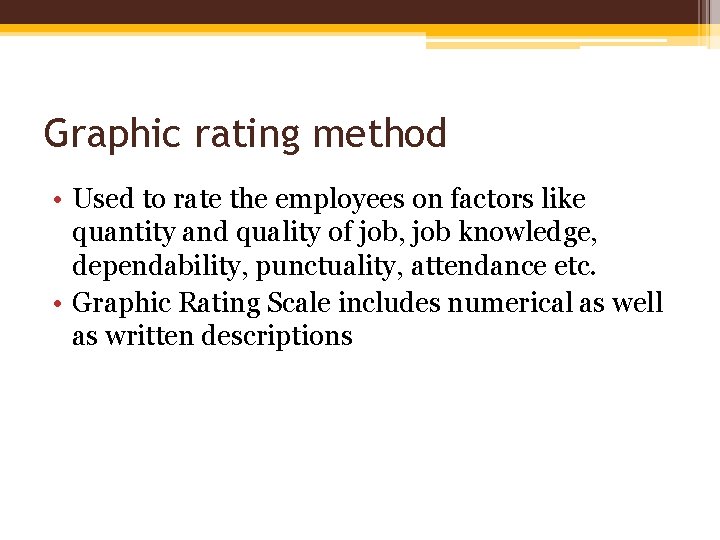
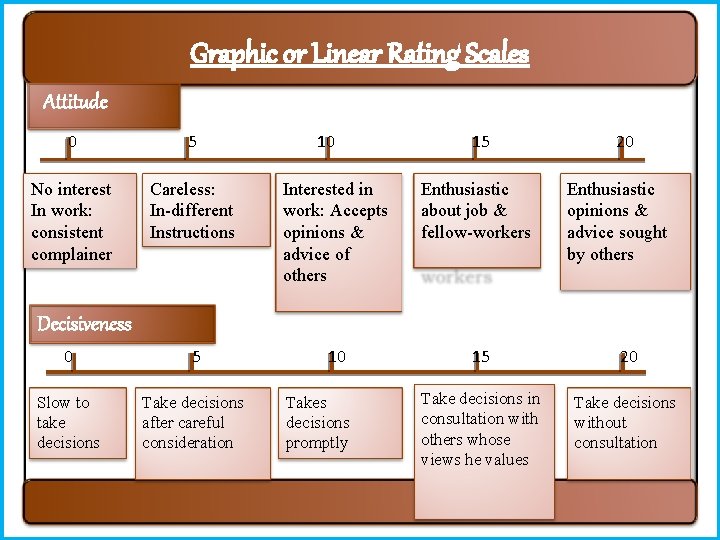
Graphic rating method • Used to rate the employees on factors like quantity and quality of job, job knowledge, dependability, punctuality, attendance etc. • Graphic Rating Scale includes numerical as well as written descriptions
Graphic or Linear Rating Scales Attitude 0 5 10 15 20 No interest In work: consistent complainer Careless: In-different Instructions Interested in work: Accepts opinions & advice of others Enthusiastic about job & fellow-workers 0 5 10 15 20 Slow to take decisions Take decisions after careful consideration Take decisions in consultation with others whose views he values Take decisions without consultation Enthusiastic opinions & advice sought by others Decisiveness Takes decisions promptly
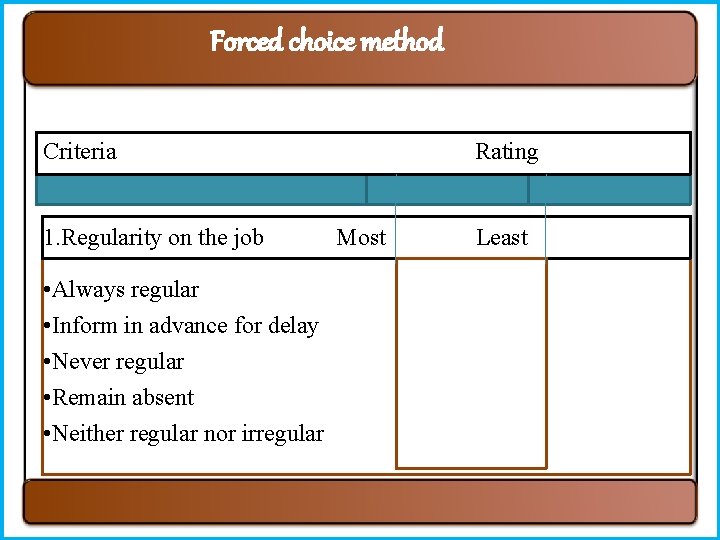
Forced choice method Criteria 1. Regularity on the job • Always regular • Inform in advance for delay • Never regular • Remain absent • Neither regular nor irregular Rating Most Least
Specimen of Staff Assessment Form [Descriptive Essay Type] Staff Appraisal Name. . . . Job Title. . . . Department. . . Date of Review. . . . Age. . . . Years in present job Section I Appraisal Of Performance Note to Appraiser 1. Appraisal must cover the period of the preceding 12 months 2. Consideration to every function & responsibility of the job 3. An objective factual assessment of an employee’s improvement or deterioration Section II Promotability & Potential Promotability 1. Promotion now 2. Within 2 years 3. Within 5 years 4. Unlikely to qualify for promotion Section III Career Development Section IV Notes on Interview with employee Section V Comments on & Endorsement by Reviewing Authority
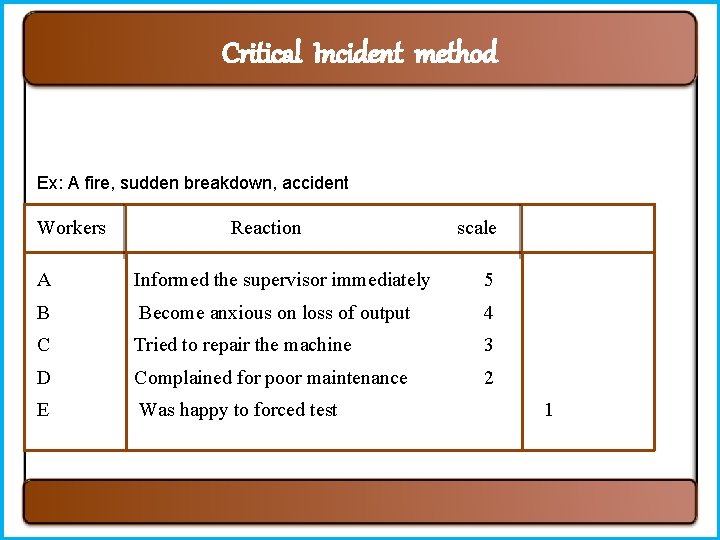
Critical Incident method Ex: A fire, sudden breakdown, accident Workers Reaction scale A Informed the supervisor immediately 5 B Become anxious on loss of output 4 C Tried to repair the machine 3 D Complained for poor maintenance 2 E Was happy to forced test 1
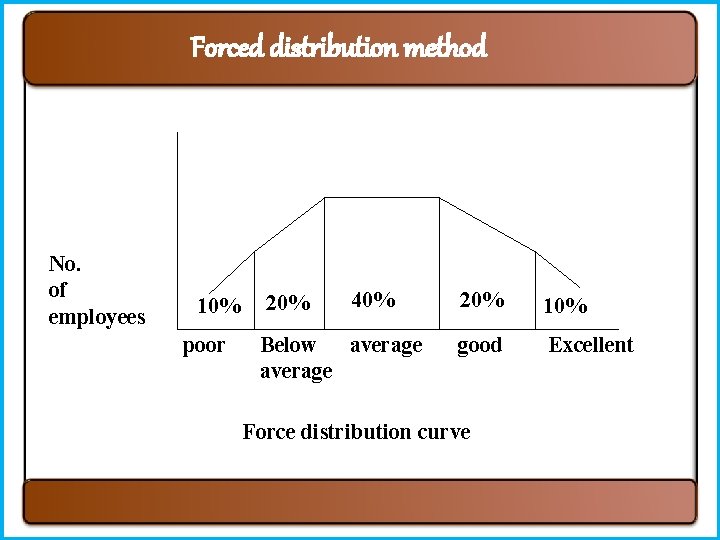
Forced distribution method No. of employees 10% poor 20% 40% Below average 20% 10% good Excellent Force distribution curve
Group appraisal method
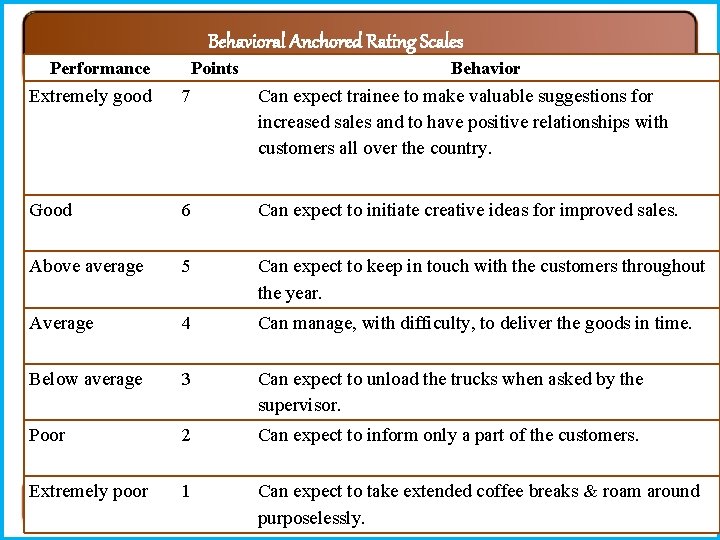
Behavioral Anchored Rating Scales Performance Points Behavior Extremely good 7 Can expect trainee to make valuable suggestions for increased sales and to have positive relationships with customers all over the country. Good 6 Can expect to initiate creative ideas for improved sales. Above average 5 Can expect to keep in touch with the customers throughout the year. Average 4 Can manage, with difficulty, to deliver the goods in time. Below average 3 Can expect to unload the trucks when asked by the supervisor. Poor 2 Can expect to inform only a part of the customers. Extremely poor 1 Can expect to take extended coffee breaks & roam around purposelessly.
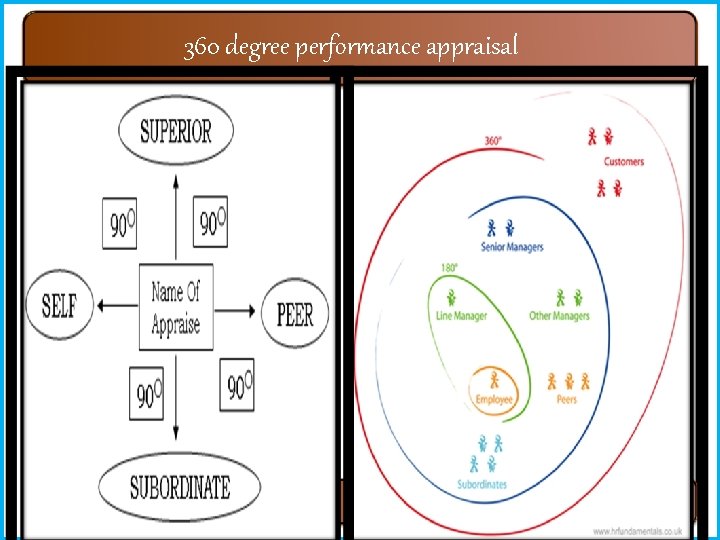
360 degree performance appraisal
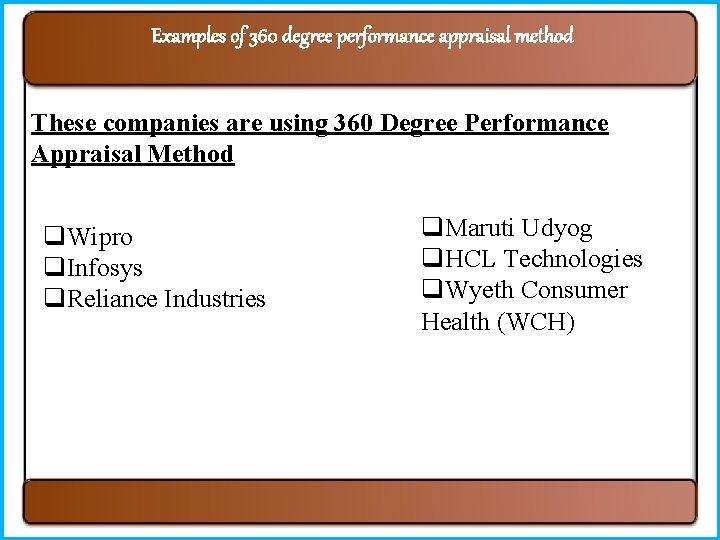
Examples of 360 degree performance appraisal method These companies are using 360 Degree Performance Appraisal Method q. Wipro q. Infosys q. Reliance Industries q. Maruti Udyog q. HCL Technologies q. Wyeth Consumer Health (WCH)
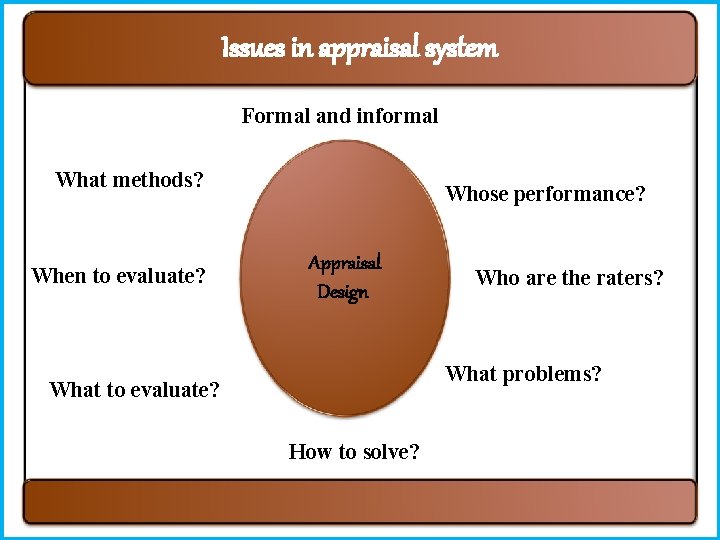
Issues in appraisal system Formal and informal What methods? When to evaluate? Whose performance? Appraisal Design Who are the raters? What problems? What to evaluate? How to solve?
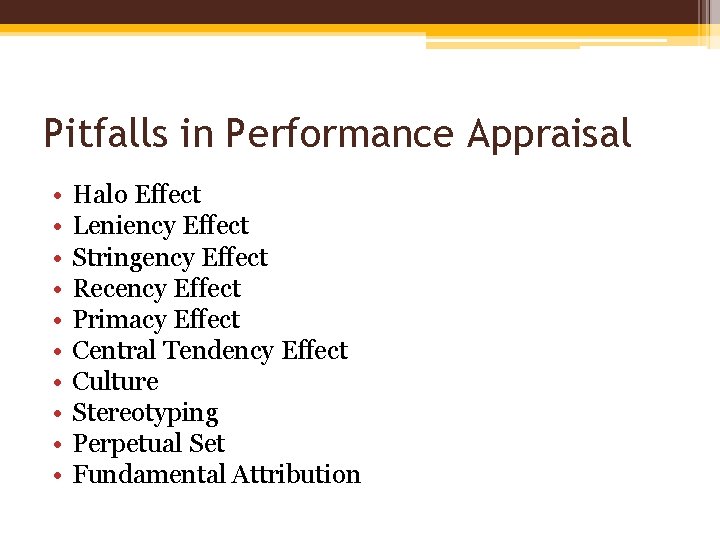
Pitfalls in Performance Appraisal • • • Halo Effect Leniency Effect Stringency Effect Recency Effect Primacy Effect Central Tendency Effect Culture Stereotyping Perpetual Set Fundamental Attribution