
Management Decision Making COGNITIVE BIASES PRESENTED BY RAMANDEEP
Management Decision Making COGNITIVE BIASES PRESENTED BY: RAMANDEEP SINGH NAVJOT KAUR PRABHKARANJIT SINGH SANGEET KAPOOR
Cognitive Bias A cognitive bias is a systematic error in thinking that affects the decisions and judgments that people make. Sometimes these biases are related to memory. The way you remember an event may be biased for a number of reasons and that in turn can lead to biased thinking and decision-making
Types of Cognitive Bias According to D Arnott, there are 37 types of cognitive biases. The most important biases which helps the management to make decisions are: 1. Confirmation Bias 2. Availability Heuristic 3. Halo Effect 4. Self Serving Bias 5. Anchoring Bias 6. Actor observer Bias 7. Optimism Bias 8. False consensus Bias
Confirmation Bias A confirmation bias is a type of cognitive bias that involves favouring information that confirms previously existing beliefs or biases.
Example of confirmation bias imagine that a person holds a belief that left-handed people are more creative than right-handed people. Whenever this person encounters a person that is both left-handed and creative, they place greater importance on this "evidence" supporting their already existing belief. Confirmation biases impact how people gather information, but they also influence how people interpret and recall information.
Availability Heuristic An availability heuristic is a mental shortcut that relies on immediate examples that come to mind. When you are trying to make a decision, a number of related events or situations might immediately spring to the forefront of your thoughts.
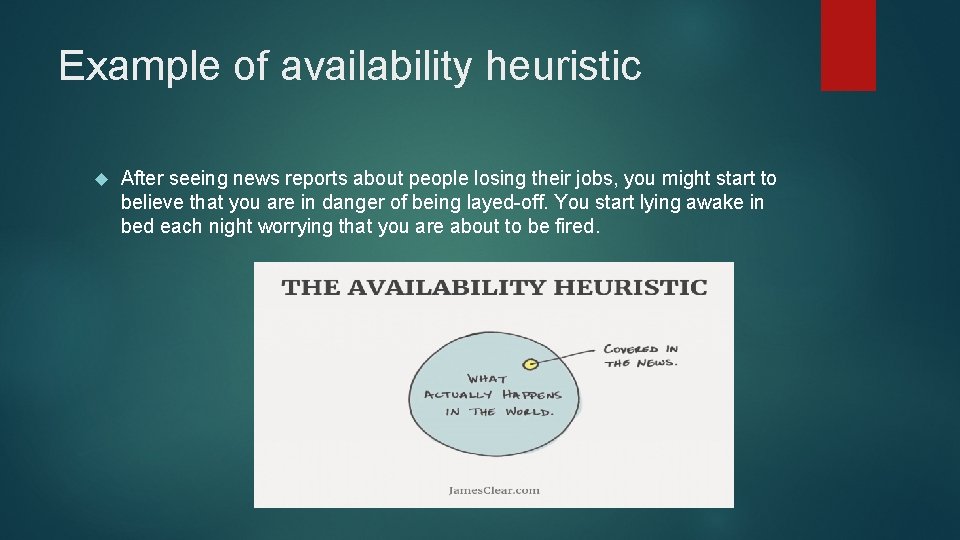
Example of availability heuristic After seeing news reports about people losing their jobs, you might start to believe that you are in danger of being layed-off. You start lying awake in bed each night worrying that you are about to be fired.
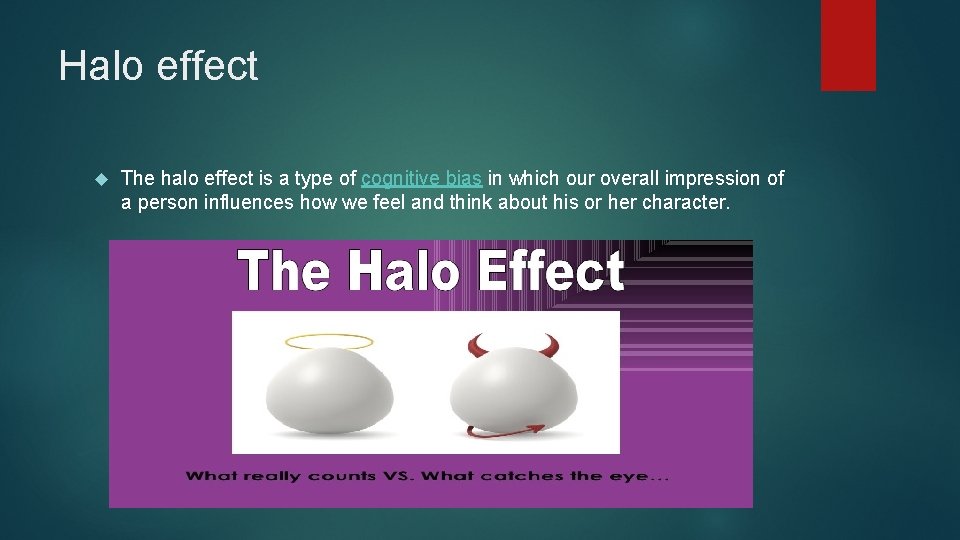
Halo effect The halo effect is a type of cognitive bias in which our overall impression of a person influences how we feel and think about his or her character.
Example of halo effect One great example of the halo effect in action is our overall impression of celebrities. Since we perceive them as attractive, successful, and often likable, we also tend to see them as intelligent, kind, and funny.
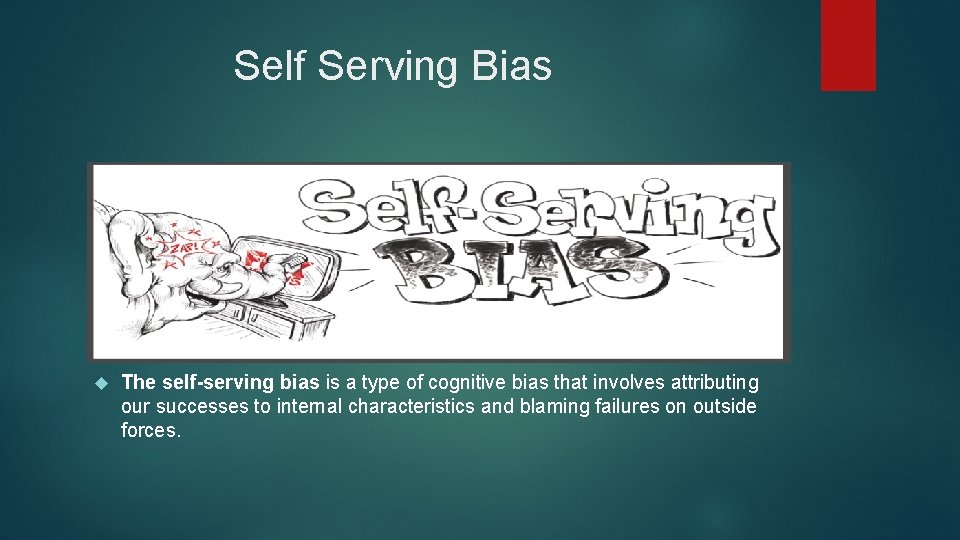
Self Serving Bias The self-serving bias is a type of cognitive bias that involves attributing our successes to internal characteristics and blaming failures on outside forces.
Example of self serving bias Following a car accident, both parties involved blame the other driver for causing the crash. A student fails an exam. She blames the teacher and accuses the professor of including "trick questions" on the test.
Anchoring Bias When people are trying to make a decision, they often use an anchor or focal point as a reference or starting point. Psychologists have found that people have a tendency to rely too heavily on the very first piece of information they learn, which can have a serious impact on the decision they end up making. In psychology, this type of cognitive bias is known as the anchoring bias or anchoring effect.
Example of Anchoring Bias So, for example, imagine that you are buying a new car. You read online that the average price of the vehicle you are interested in is $27, 000 dollars. When you are shopping at the local car lot, the dealer offers you the same vehicle for $26, 500, which you quickly accept - after all, it's $500 less than what you were expecting to pay. Except, the car dealer across town is offering the exact same vehicle for just $24, 000, a full $2, 500 less than what you paid and $3, 000 less than the average price you found online.
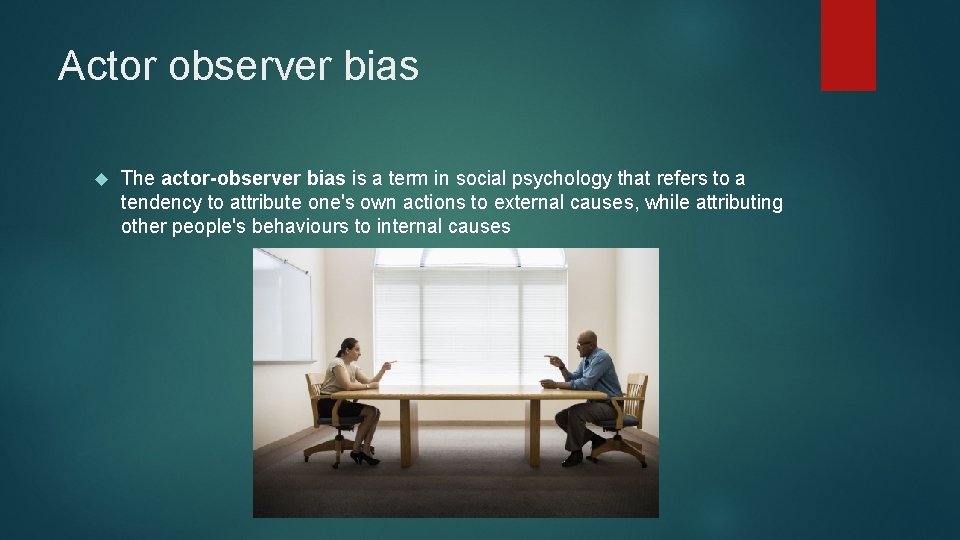
Actor observer bias The actor-observer bias is a term in social psychology that refers to a tendency to attribute one's own actions to external causes, while attributing other people's behaviours to internal causes
Example of actor observer Bias For example, in a situation where a person experiences something negative, the individual will often blame the situation or circumstances. When something negative happens to another person, people will often blame the individual for their personal choices, behaviours and actions
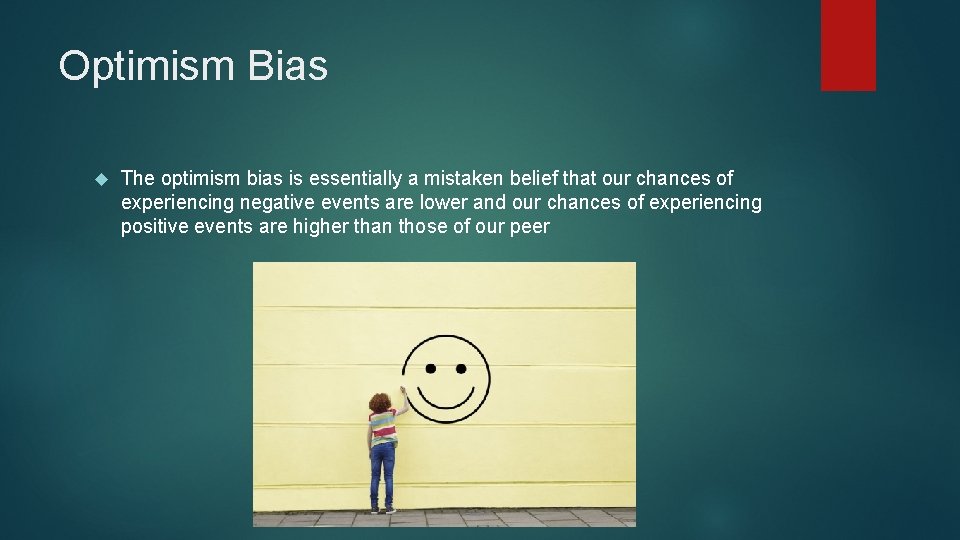
Optimism Bias The optimism bias is essentially a mistaken belief that our chances of experiencing negative events are lower and our chances of experiencing positive events are higher than those of our peer
Example of optimism bias This bias leads us to believe that we are less likely to suffer from misfortune and more likely to attain success than reality would suggest. We believe that we will live longer than the average, that our children will be smarter than the average, and that we will be more successful in life than the average.
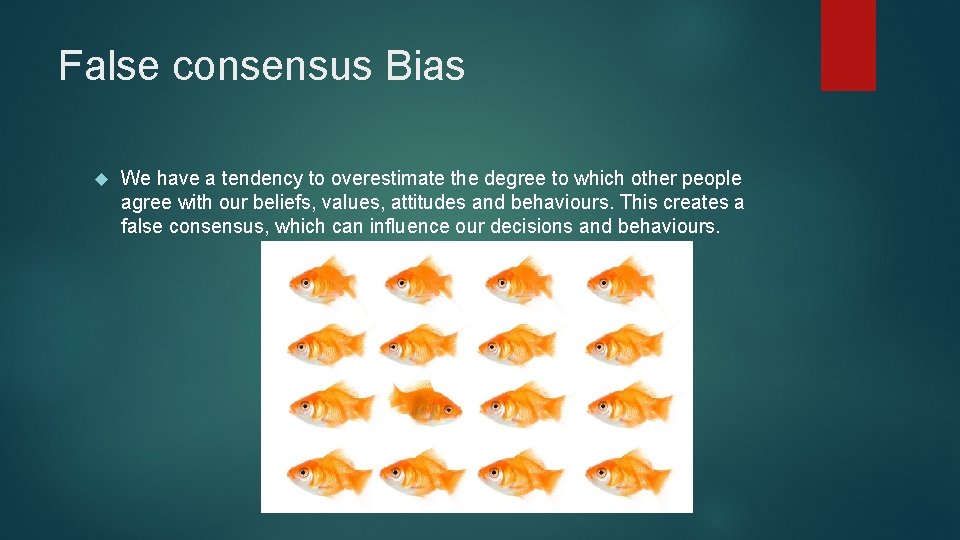
False consensus Bias We have a tendency to overestimate the degree to which other people agree with our beliefs, values, attitudes and behaviours. This creates a false consensus, which can influence our decisions and behaviours.
conclusion So these are some biases which some time effects on decision making process and often riddled with errors and influence by wide Varity of biases.
- Slides: 19