
Management Chapter 12 Motivating for high Performance Motivation
- Slides: 22
Management Chapter 12 Motivating for high Performance
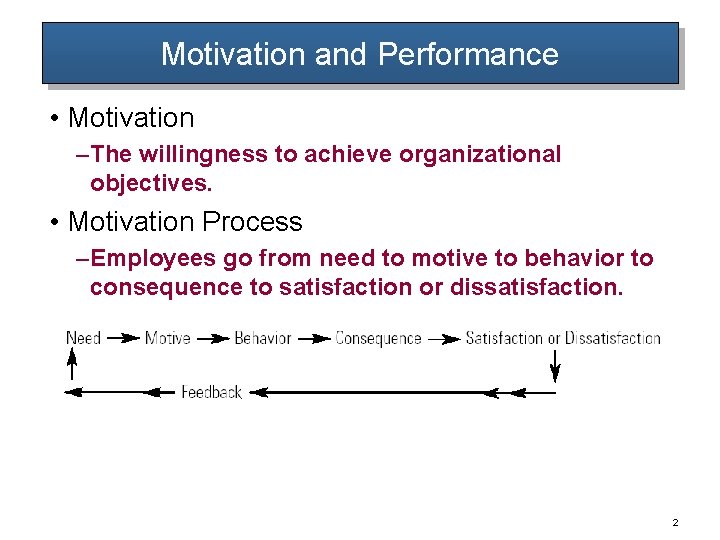
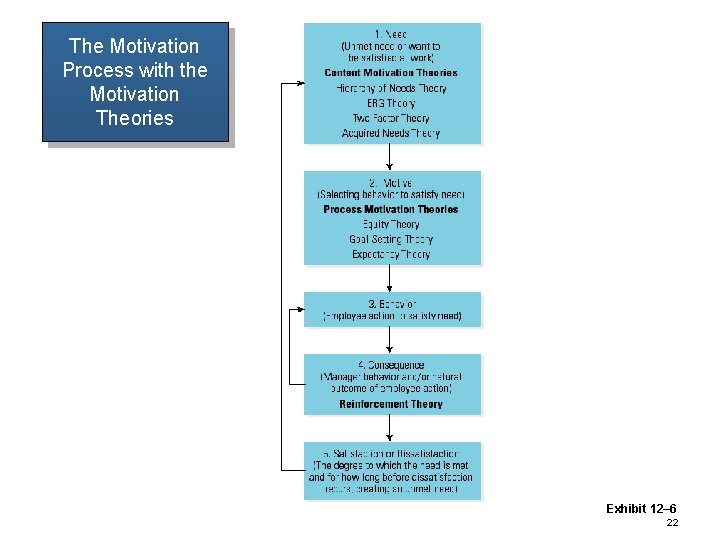
Motivation and Performance • Motivation – The willingness to achieve organizational objectives. • Motivation Process – Employees go from need to motive to behavior to consequence to satisfaction or dissatisfaction. 2
How Motivation Affects Performance • Expectations, Motivation, and Performance – Self-fulfilling prophecy • “If you believe you can, or if you believe you can’t, then you are right”—Henry Ford • If you think you will be successful, then you will be. • The Performance Formula – Performance = Ability x Motivation x Resources • For maximum performance levels, all three factors must be high. 3
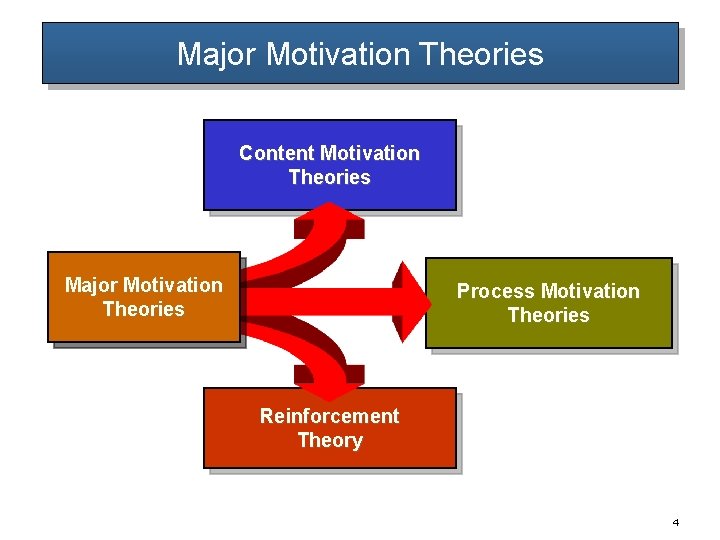
Major Motivation Theories Content Motivation Theories Major Motivation Theories Process Motivation Theories Reinforcement Theory 4
Motivation: Content Theories • Content Motivation Theories – Focus on identifying and understanding employees’ needs. • Hierarchy of needs theory • ERG theory • Two-factor theory • Acquired needs theory 5
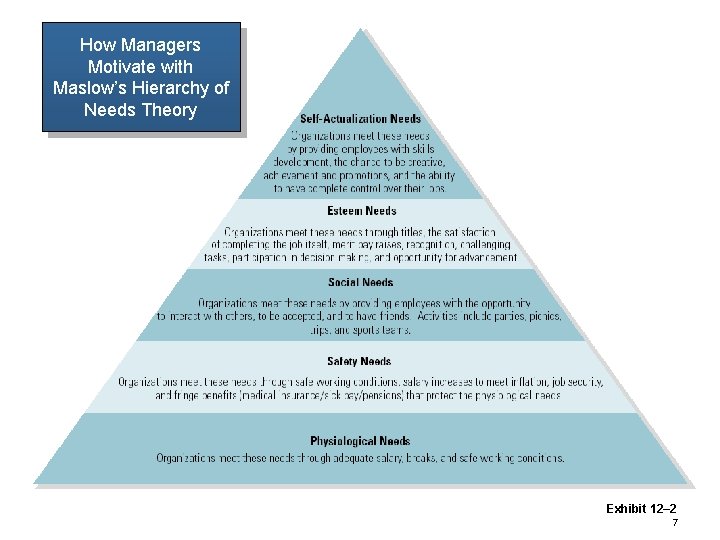
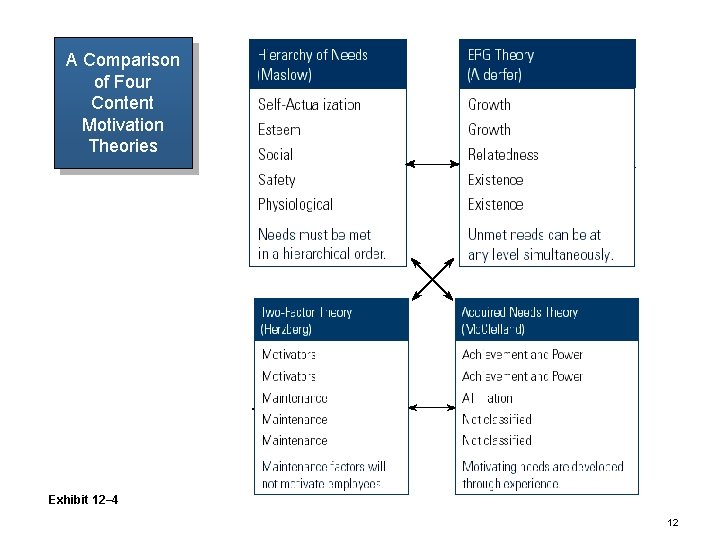
Maslow’s Hierarchy of Needs Theory • Hierarchy of Needs – Only unmet needs motivate. – People’s needs are arranged in order of importance for basic to complex. • Satisfaction of lower level needs precedes satisfaction of higher levels needs. – There are five classifications of needs: • Physiological Needs: These are people’s primary or basic needs: air, food, shelter, etc. • Safety Needs: Once the physiological needs are met, the individual is concerned with safety and security. • Social Needs: After establishing safety, people look for love, friendship, acceptance, and affection. • Esteem Needs: They include status, self-respect, recognition, and a feeling of self-confidence and prestige. • Self-Actualization Needs: These include developing one’s full potential through growth, achievement, and advancement. 6
How Managers Motivate with Maslow’s Hierarchy of Needs Theory Exhibit 12– 2 7
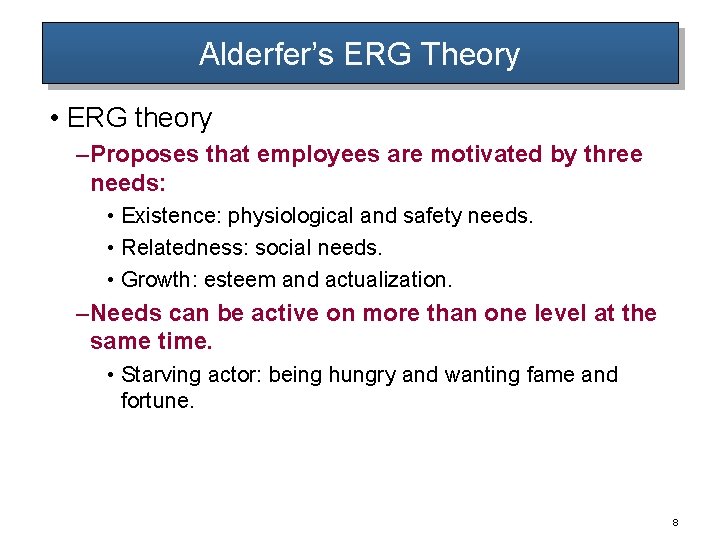
Alderfer’s ERG Theory • ERG theory – Proposes that employees are motivated by three needs: • Existence: physiological and safety needs. • Relatedness: social needs. • Growth: esteem and actualization. – Needs can be active on more than one level at the same time. • Starving actor: being hungry and wanting fame and fortune. 8
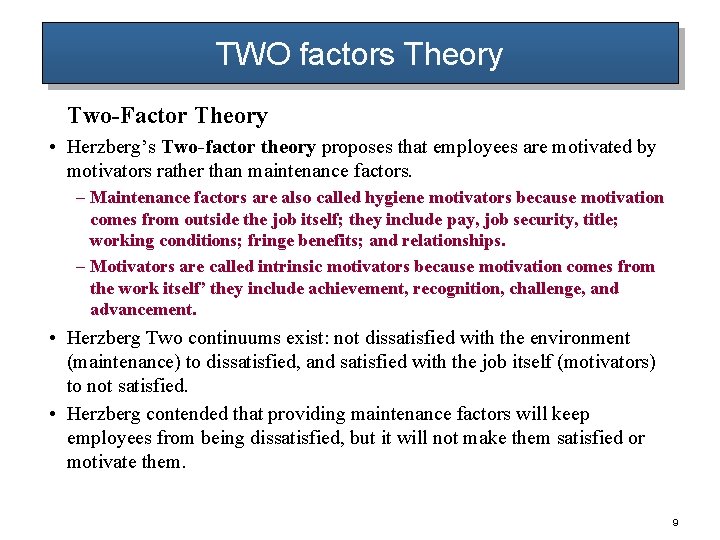
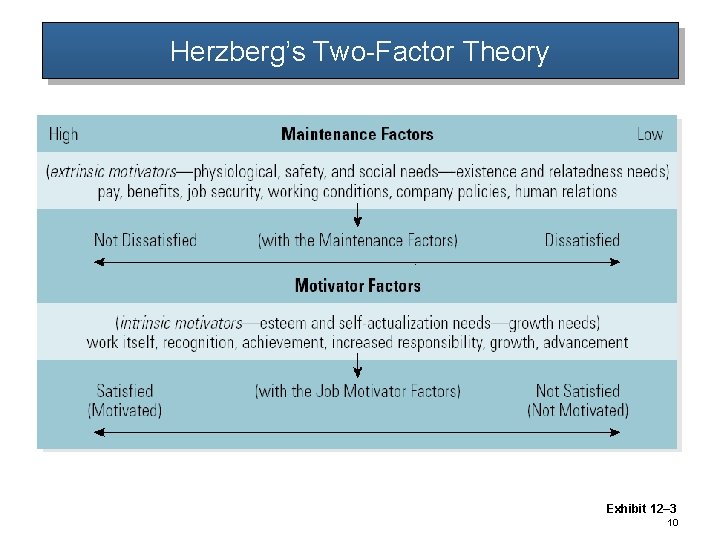
TWO factors Theory Two-Factor Theory • Herzberg’s Two-factor theory proposes that employees are motivated by motivators rather than maintenance factors. – Maintenance factors are also called hygiene motivators because motivation comes from outside the job itself; they include pay, job security, title; working conditions; fringe benefits; and relationships. – Motivators are called intrinsic motivators because motivation comes from the work itself’ they include achievement, recognition, challenge, and advancement. • Herzberg Two continuums exist: not dissatisfied with the environment (maintenance) to dissatisfied, and satisfied with the job itself (motivators) to not satisfied. • Herzberg contended that providing maintenance factors will keep employees from being dissatisfied, but it will not make them satisfied or motivate them. 9
Herzberg’s Two-Factor Theory Exhibit 12– 3 10
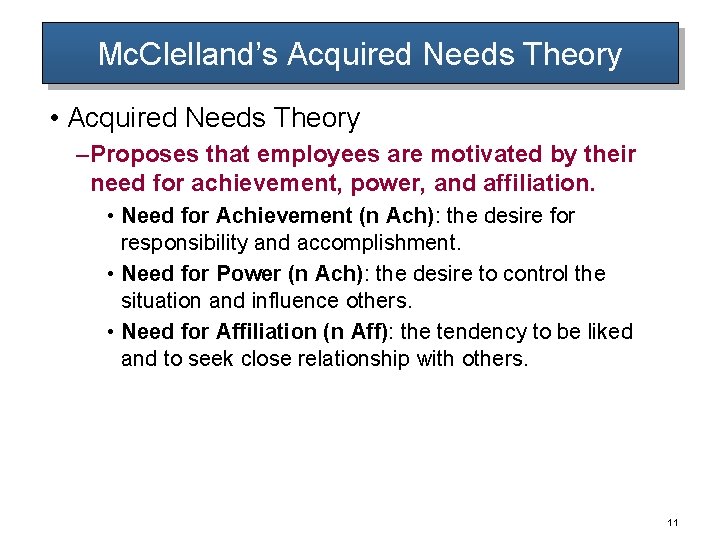
Mc. Clelland’s Acquired Needs Theory • Acquired Needs Theory – Proposes that employees are motivated by their need for achievement, power, and affiliation. • Need for Achievement (n Ach): the desire for responsibility and accomplishment. • Need for Power (n Ach): the desire to control the situation and influence others. • Need for Affiliation (n Aff): the tendency to be liked and to seek close relationship with others. 11
A Comparison of Four Content Motivation Theories Exhibit 12– 4 12
Motivation: Process Theories • Process Motivation Theories – Focus on understanding how employees choose behavior to fulfill their needs. • Equity theory • Goal-setting theory • Expectancy theory 13
Adams’s Equity Theory • Equity Theory – Proposes that employees are motivated when their perceived inputs equal outputs. – People compare their inputs (contributions to the organization) and outputs (rewards) to that of relevant others and conclude that they are: • Underrewarded • Overrewarded • Equitably rewarded 14
Goal-Setting Theory • Goal-Setting Theory – Proposes that achievable but difficult goals motivate employees, leading to higher levels of motivation and performance. • Goals provide an attractive challenge to high-performing individuals who have a strong need for achievement. • Goals provide a sense of purpose—why we are working to accomplish a given task. • Goals require action plans to achieve goals and measure progress. 15
Vroom’s Expectancy Theory • Expectancy Theory – Proposes that employees are motivated when they believe they can accomplish the task and the rewards for doing so are worth the effort. – Motivation = expectancy x valence • Expectancy: the person’s perception of his or her ability to accomplish an objective. • Valence: the value the person places on the outcome or reward for his or her performance. 16
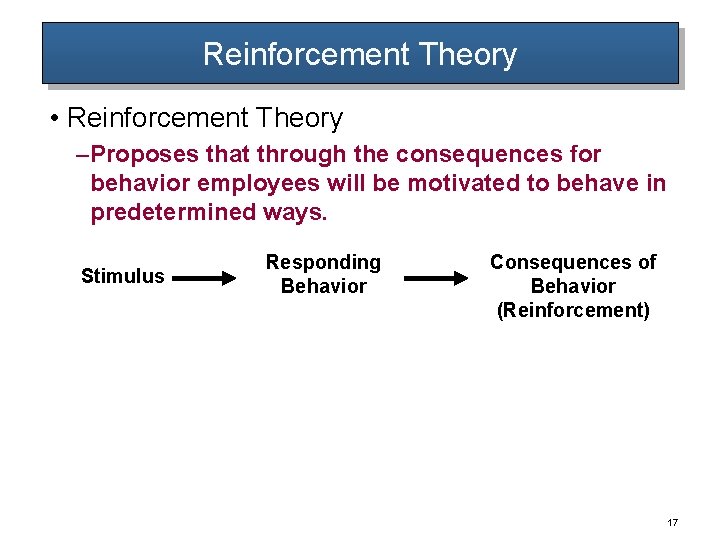
Reinforcement Theory • Reinforcement Theory – Proposes that through the consequences for behavior employees will be motivated to behave in predetermined ways. Stimulus Responding Behavior Consequences of Behavior (Reinforcement) 17
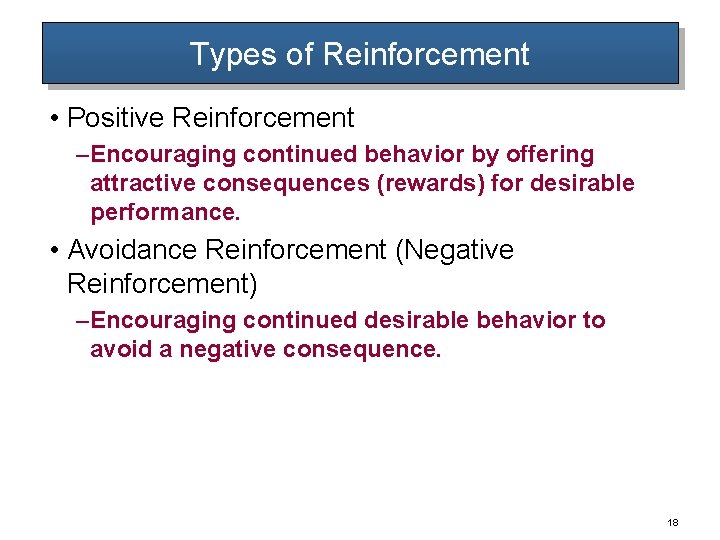
Types of Reinforcement • Positive Reinforcement – Encouraging continued behavior by offering attractive consequences (rewards) for desirable performance. • Avoidance Reinforcement (Negative Reinforcement) – Encouraging continued desirable behavior to avoid a negative consequence. 18
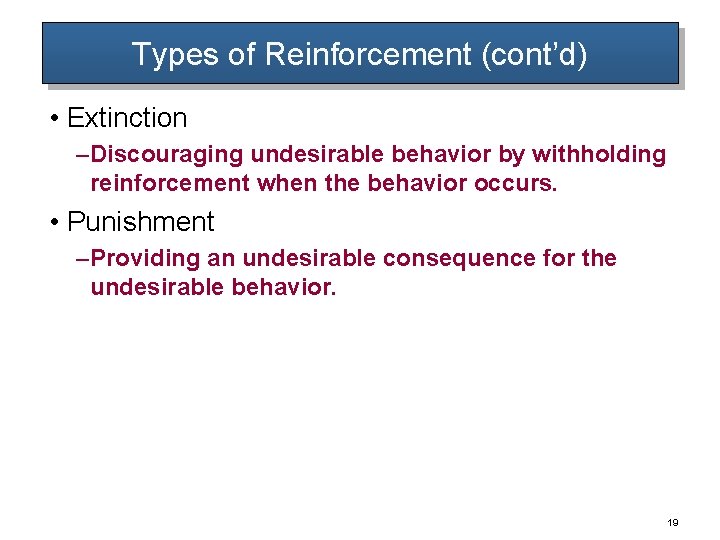
Types of Reinforcement (cont’d) • Extinction – Discouraging undesirable behavior by withholding reinforcement when the behavior occurs. • Punishment – Providing an undesirable consequence for the undesirable behavior. 19
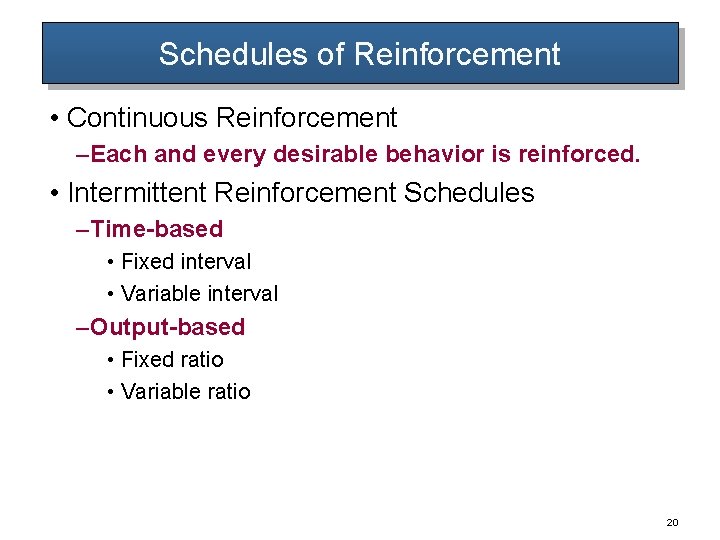
Schedules of Reinforcement • Continuous Reinforcement – Each and every desirable behavior is reinforced. • Intermittent Reinforcement Schedules – Time-based • Fixed interval • Variable interval – Output-based • Fixed ratio • Variable ratio 20
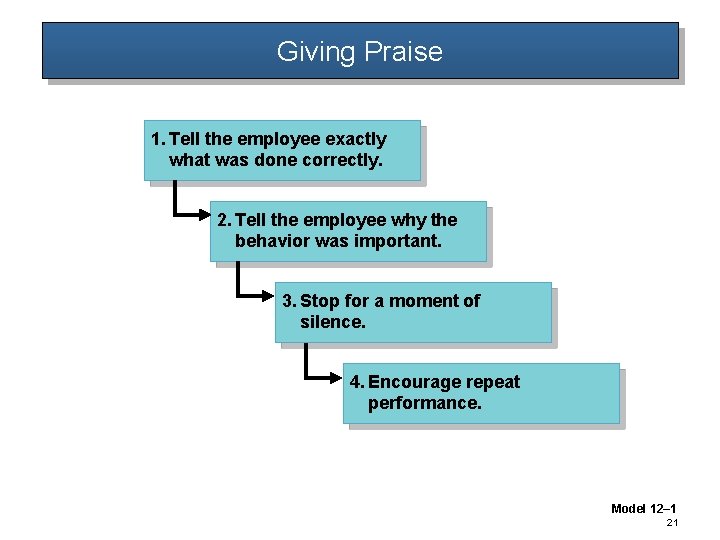
Giving Praise 1. Tell the employee exactly what was done correctly. 2. Tell the employee why the behavior was important. 3. Stop for a moment of silence. 4. Encourage repeat performance. Model 12– 1 21
The Motivation Process with the Motivation Theories Exhibit 12– 6 22